
Search
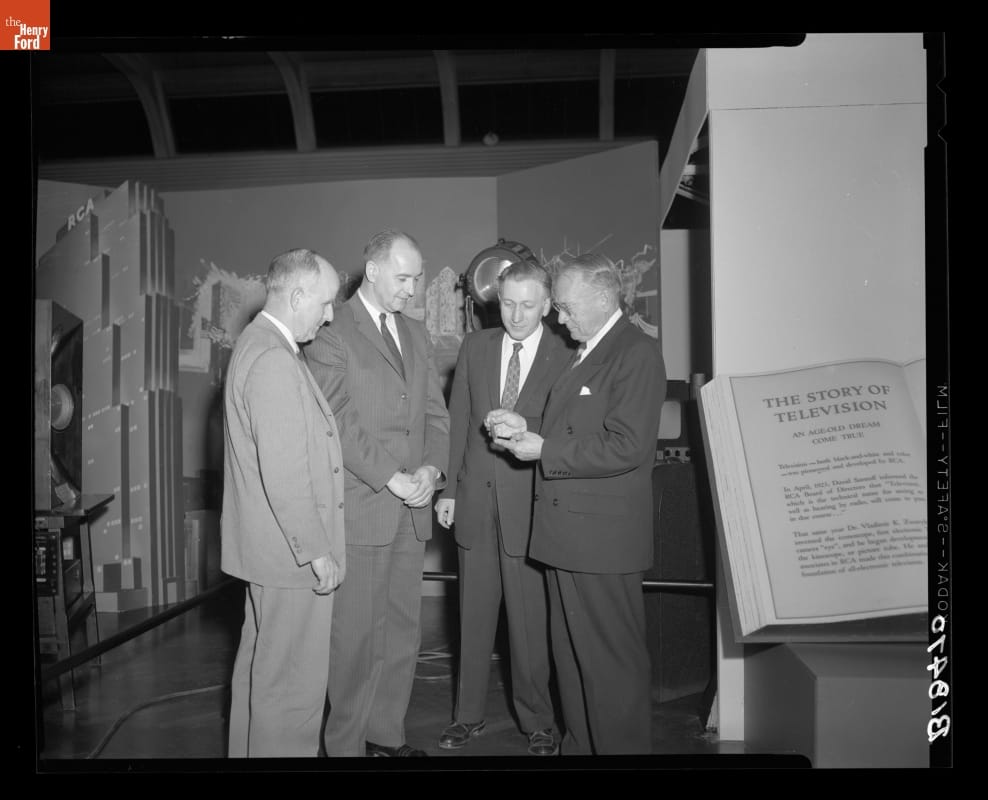
- Dr. Vladimir Zworykin Showing a Vidicon Television Camera Tube, Dearborn, Michigan, 1958 - Vladimir Zworykin was an early pioneer of television development, employed by Westinghouse and the Radio Corporation of America. Here he presents a Vidicon camera tube, to be donated to the museum. Vidicon tubes allowed bulky, expensive broadcast television cameras to become smaller and cheaper beginning in the 1950s. Zworykin's iconoscope and kinescope picture tubes were breakthroughs in television history.
- April 30, 1958
- Collections - Artifact
Dr. Vladimir Zworykin Showing a Vidicon Television Camera Tube, Dearborn, Michigan, 1958
Vladimir Zworykin was an early pioneer of television development, employed by Westinghouse and the Radio Corporation of America. Here he presents a Vidicon camera tube, to be donated to the museum. Vidicon tubes allowed bulky, expensive broadcast television cameras to become smaller and cheaper beginning in the 1950s. Zworykin's iconoscope and kinescope picture tubes were breakthroughs in television history.
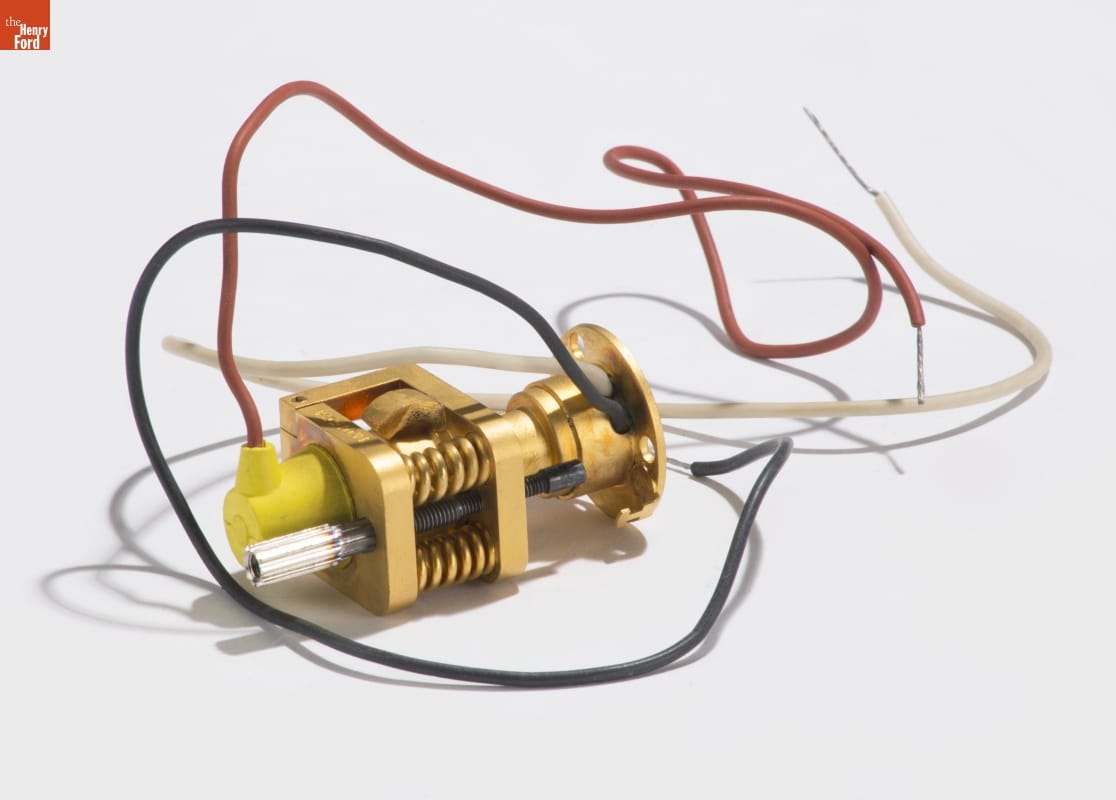
- Eimac Klystron Vacuum Tube, circa 1958 - The klystrom is a vacuum tube that amplifies high-range radio frequencies; it is an essential factor in the history of radar, microwave, and telecommunications. Klystroms also power UHF television, particle accelerators, and radiation therapy equipment. In 1937, brothers Russell and Sigurd Varian invented the klystrom, and founded Varian Associates -- one of the first technology companies in Silicon Valley.
- circa 1958
- Collections - Artifact
Eimac Klystron Vacuum Tube, circa 1958
The klystrom is a vacuum tube that amplifies high-range radio frequencies; it is an essential factor in the history of radar, microwave, and telecommunications. Klystroms also power UHF television, particle accelerators, and radiation therapy equipment. In 1937, brothers Russell and Sigurd Varian invented the klystrom, and founded Varian Associates -- one of the first technology companies in Silicon Valley.
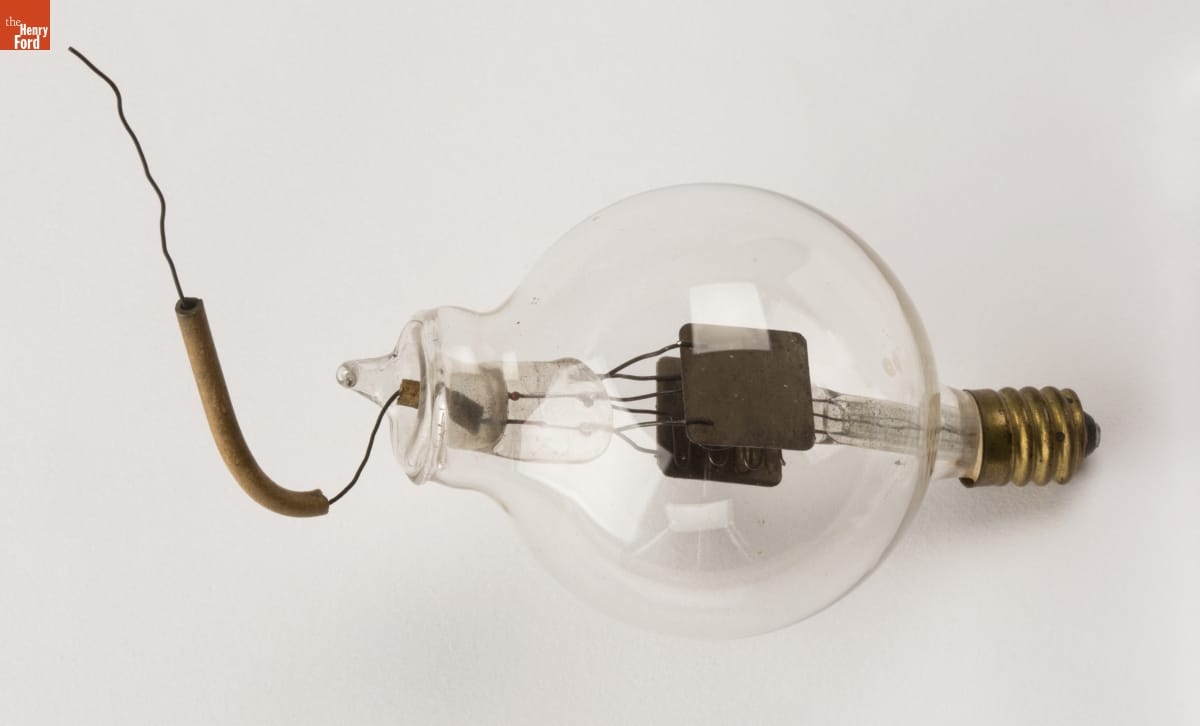
- De Forest Audion Tube, circa 1908 - Dr. Lee De Forest was an inventor, engineer, and the self-styled "Father of Radio." In 1906, De Forest invented the Audion tube, allowing the detection and amplification of weak radio signals. As the first triode vacuum tube, the Audion revolutionized radio broadcasting--and made it more practical. By the late 1920s, vacuum tube radios were the widespread in people's homes.
- circa 1908
- Collections - Artifact
De Forest Audion Tube, circa 1908
Dr. Lee De Forest was an inventor, engineer, and the self-styled "Father of Radio." In 1906, De Forest invented the Audion tube, allowing the detection and amplification of weak radio signals. As the first triode vacuum tube, the Audion revolutionized radio broadcasting--and made it more practical. By the late 1920s, vacuum tube radios were the widespread in people's homes.
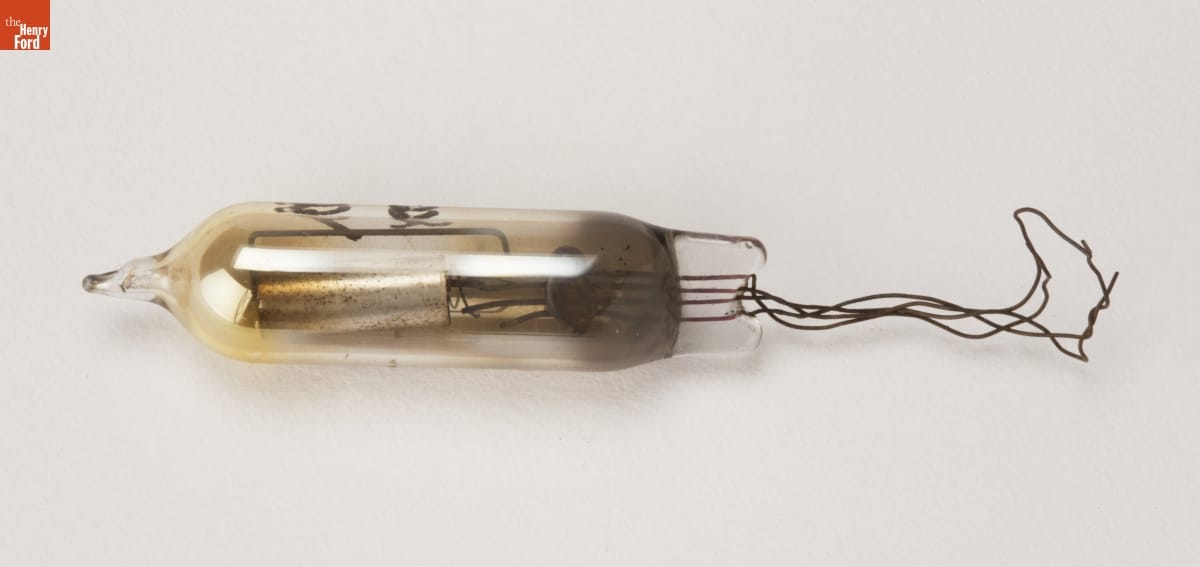
- Westinghouse Lamp Company Experimental Radio Tube, 1920-1921 - Radio engineer McMurdo Silver created six tiny experimental vacuum tubes while employed at Westinghouse Electric in the early 1920s. The tubes were near-duplicates of Western Electric's VT-5s--the original "peanut" tubes. Tubes like these were essential to the low-powered trench radios used in WWI. Silver went on to found Silver-Marshall Inc. and frequently contributed technical articles to radio hobbyist magazines.
- 1920-1921
- Collections - Artifact
Westinghouse Lamp Company Experimental Radio Tube, 1920-1921
Radio engineer McMurdo Silver created six tiny experimental vacuum tubes while employed at Westinghouse Electric in the early 1920s. The tubes were near-duplicates of Western Electric's VT-5s--the original "peanut" tubes. Tubes like these were essential to the low-powered trench radios used in WWI. Silver went on to found Silver-Marshall Inc. and frequently contributed technical articles to radio hobbyist magazines.
- Westinghouse Lamp Company Experimental Radio Tube, 1920-1921 - Radio engineer McMurdo Silver created six tiny experimental vacuum tubes while employed at Westinghouse Electric in the early 1920s. The tubes were near-duplicates of Western Electric's VT-5s--the original "peanut" tubes. Tubes like these were essential to the low-powered trench radios used in WWI. Silver went on to found Silver-Marshall Inc. and frequently contributed technical articles to radio hobbyist magazines.
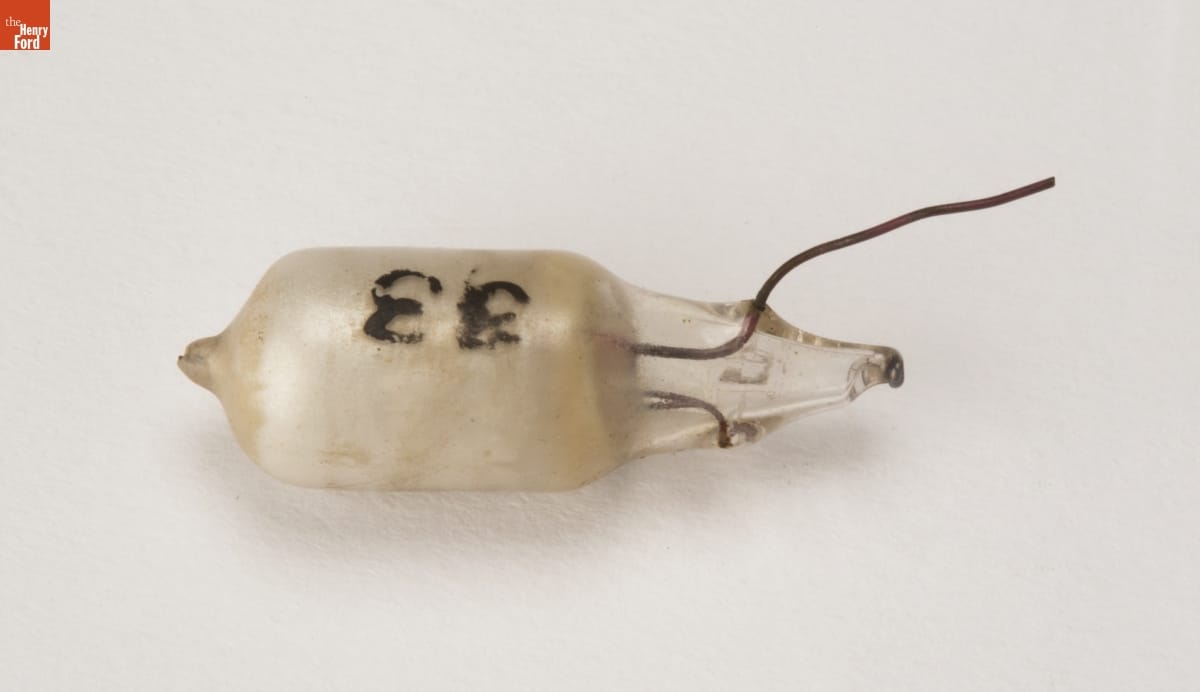
- 1920-1921
- Collections - Artifact
Westinghouse Lamp Company Experimental Radio Tube, 1920-1921
Radio engineer McMurdo Silver created six tiny experimental vacuum tubes while employed at Westinghouse Electric in the early 1920s. The tubes were near-duplicates of Western Electric's VT-5s--the original "peanut" tubes. Tubes like these were essential to the low-powered trench radios used in WWI. Silver went on to found Silver-Marshall Inc. and frequently contributed technical articles to radio hobbyist magazines.
- DeForest Audion Tube, Type D-01A, circa 1924 - Dr. Lee De Forest was an inventor, engineer, and the self-styled "Father of Radio." In 1906, De Forest invented the Audion tube, allowing the detection and amplification of weak radio signals. As the first triode vacuum tube, the Audion revolutionized radio broadcasting--and made it more practical. By the late 1920s, vacuum tube radios were the widespread in people's homes.
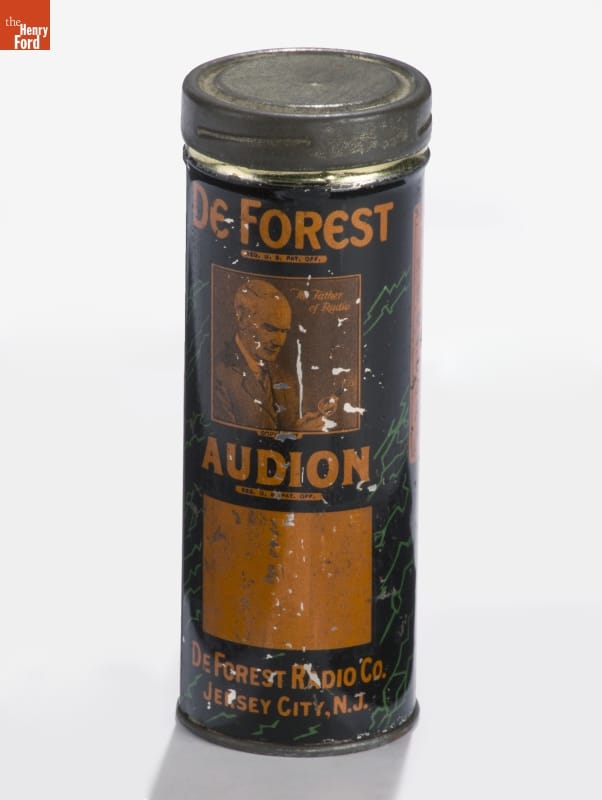
- circa 1924
- Collections - Artifact
DeForest Audion Tube, Type D-01A, circa 1924
Dr. Lee De Forest was an inventor, engineer, and the self-styled "Father of Radio." In 1906, De Forest invented the Audion tube, allowing the detection and amplification of weak radio signals. As the first triode vacuum tube, the Audion revolutionized radio broadcasting--and made it more practical. By the late 1920s, vacuum tube radios were the widespread in people's homes.
- Western Electric Transmitting Tube, Type 270-A, Used at Radio Station WWJ, Detroit, Michigan, circa 1935 - Vacuum tubes appear in older radios, televisions, amplifiers, computers, and other electronic devices. Their function: to amplify or transmit electronic signals. Typical tubes are sealed glass bulbs evacuated of gas, allowing electron flow to be influenced by an interior cathode, plate and grid. Perfected in 1906, the vacuum tube was the genesis of a communications revolution.
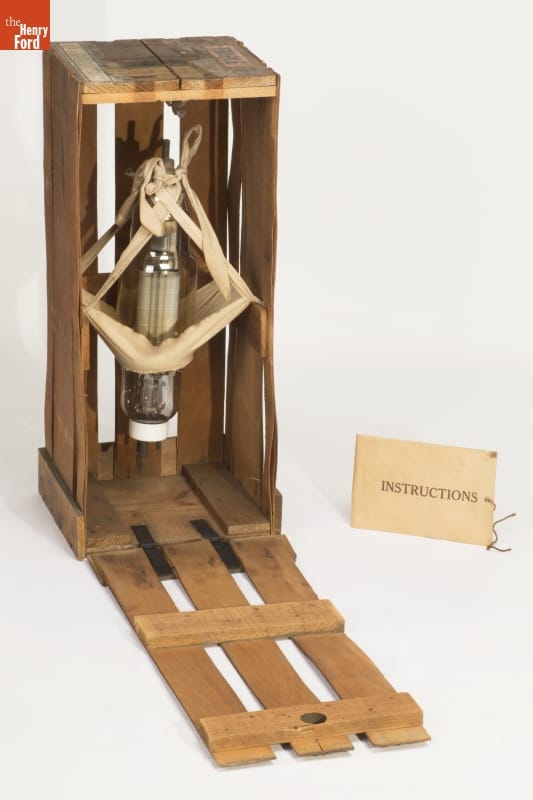
- 1936
- Collections - Artifact
Western Electric Transmitting Tube, Type 270-A, Used at Radio Station WWJ, Detroit, Michigan, circa 1935
Vacuum tubes appear in older radios, televisions, amplifiers, computers, and other electronic devices. Their function: to amplify or transmit electronic signals. Typical tubes are sealed glass bulbs evacuated of gas, allowing electron flow to be influenced by an interior cathode, plate and grid. Perfected in 1906, the vacuum tube was the genesis of a communications revolution.
- Vacuum Tube, Reference Number 2553, 1946 - George Devol was a problem solver and prolific inventor, particularly in the area of automation. Around 1940, Devol developed the "Sun Switch," a photoelectric switch, to regulate light levels. Lighting for streets, factories and other public, private and business areas could be turned on and off reliably and efficiently with this device. This technical drawing defined the design requirements for one of its components.
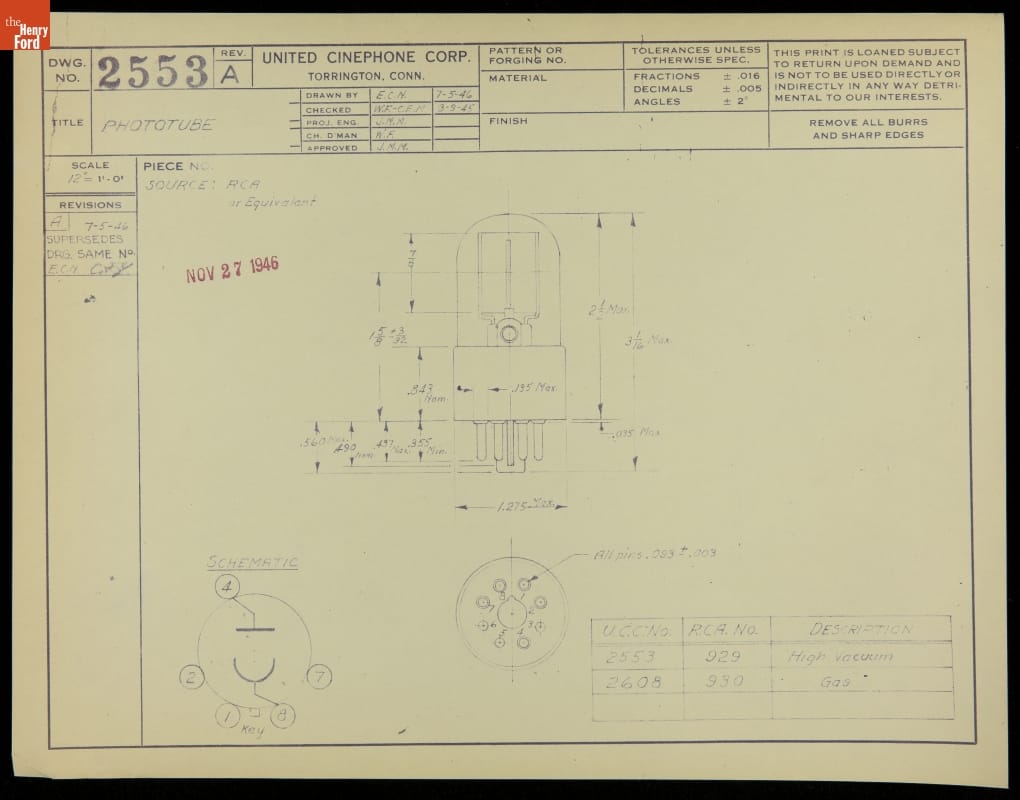
- July 05, 1946
- Collections - Artifact
Vacuum Tube, Reference Number 2553, 1946
George Devol was a problem solver and prolific inventor, particularly in the area of automation. Around 1940, Devol developed the "Sun Switch," a photoelectric switch, to regulate light levels. Lighting for streets, factories and other public, private and business areas could be turned on and off reliably and efficiently with this device. This technical drawing defined the design requirements for one of its components.
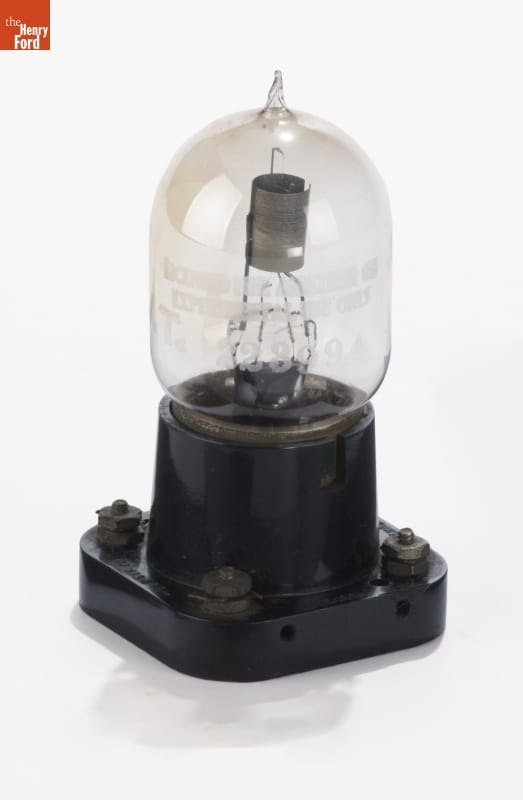
- Deforest Vacuum Tube, 1920 - Vacuum tubes appear in older radios, televisions, amplifiers, computers, and other electronic devices. Their function: to amplify and strengthen weak electronic signals. Typical tubes are sealed glass bulbs evacuated of gas, allowing electron flow to be influenced by an interior cathode, plate and grid. Perfected in 1906 by Lee De Forest, the vacuum tube was the genesis of a communications revolution.
- 1920
- Collections - Artifact
Deforest Vacuum Tube, 1920
Vacuum tubes appear in older radios, televisions, amplifiers, computers, and other electronic devices. Their function: to amplify and strengthen weak electronic signals. Typical tubes are sealed glass bulbs evacuated of gas, allowing electron flow to be influenced by an interior cathode, plate and grid. Perfected in 1906 by Lee De Forest, the vacuum tube was the genesis of a communications revolution.
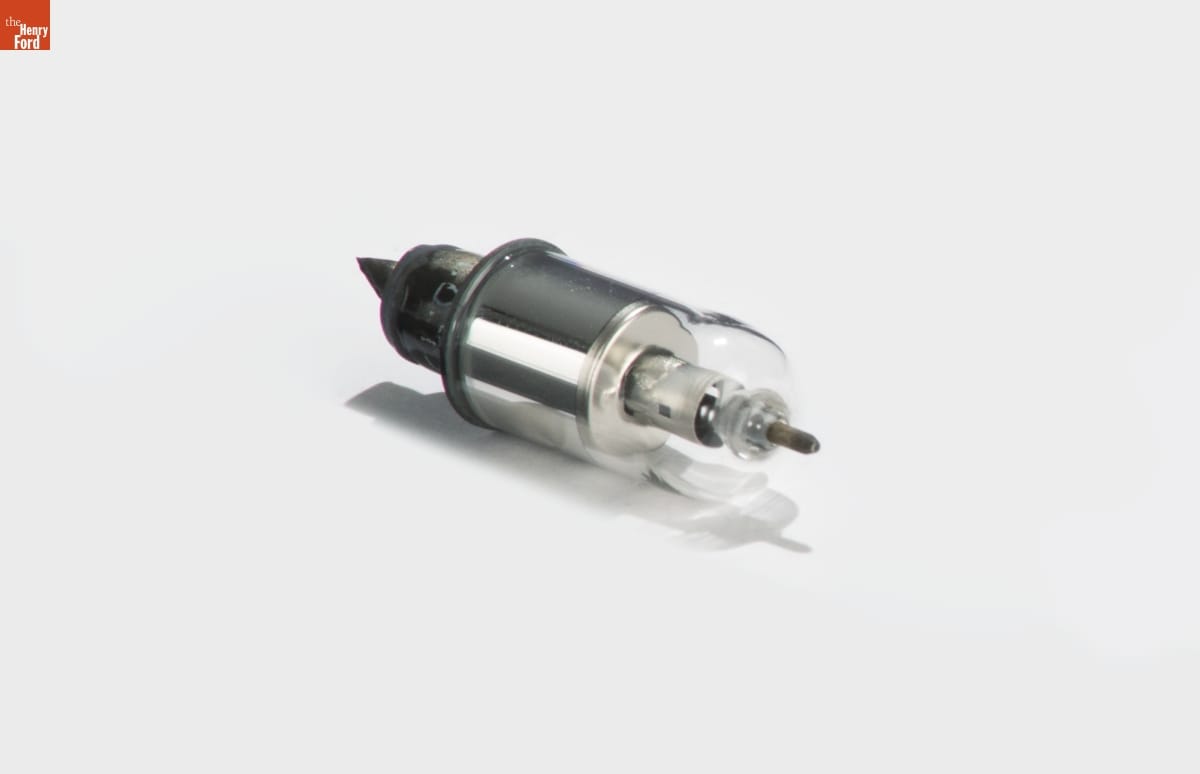
- Eimac Diode Vacuum Tube, 1946-1949 - Vacuum tubes appear in older radios, televisions, amplifiers, computers, and other electronic devices. Their function: to amplify and strengthen weak electronic signals. Typical tubes are sealed glass bulbs evacuated of gas, allowing electron flow to be influenced by an interior cathode, plate and grid. Perfected in 1906 by Lee De Forest, the vacuum tube was the genesis of a communications revolution.
- 1946-1949
- Collections - Artifact
Eimac Diode Vacuum Tube, 1946-1949
Vacuum tubes appear in older radios, televisions, amplifiers, computers, and other electronic devices. Their function: to amplify and strengthen weak electronic signals. Typical tubes are sealed glass bulbs evacuated of gas, allowing electron flow to be influenced by an interior cathode, plate and grid. Perfected in 1906 by Lee De Forest, the vacuum tube was the genesis of a communications revolution.