
Search
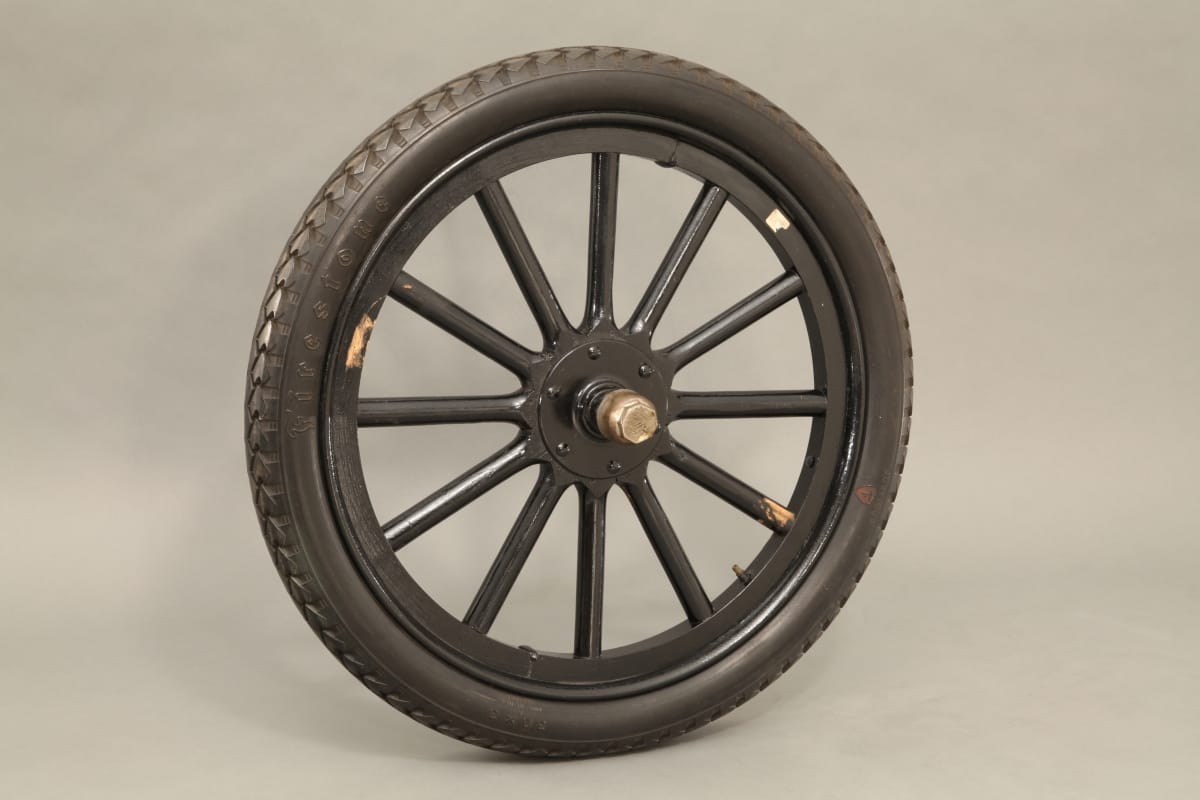
- Firestone Oldfield Tire, circa 1920 - Barney Oldfield partnered with Firestone in 1919 to produce a line of tires under his name. The famous racing driver claimed to have put all his years of experience into the design of his "Oldfield" brand tires. They received another important endorsement when driver Gaston Chevrolet used Oldfield tires in his victory at the 1920 Indianapolis 500.
- circa 1920
- Collections - Artifact
Firestone Oldfield Tire, circa 1920
Barney Oldfield partnered with Firestone in 1919 to produce a line of tires under his name. The famous racing driver claimed to have put all his years of experience into the design of his "Oldfield" brand tires. They received another important endorsement when driver Gaston Chevrolet used Oldfield tires in his victory at the 1920 Indianapolis 500.
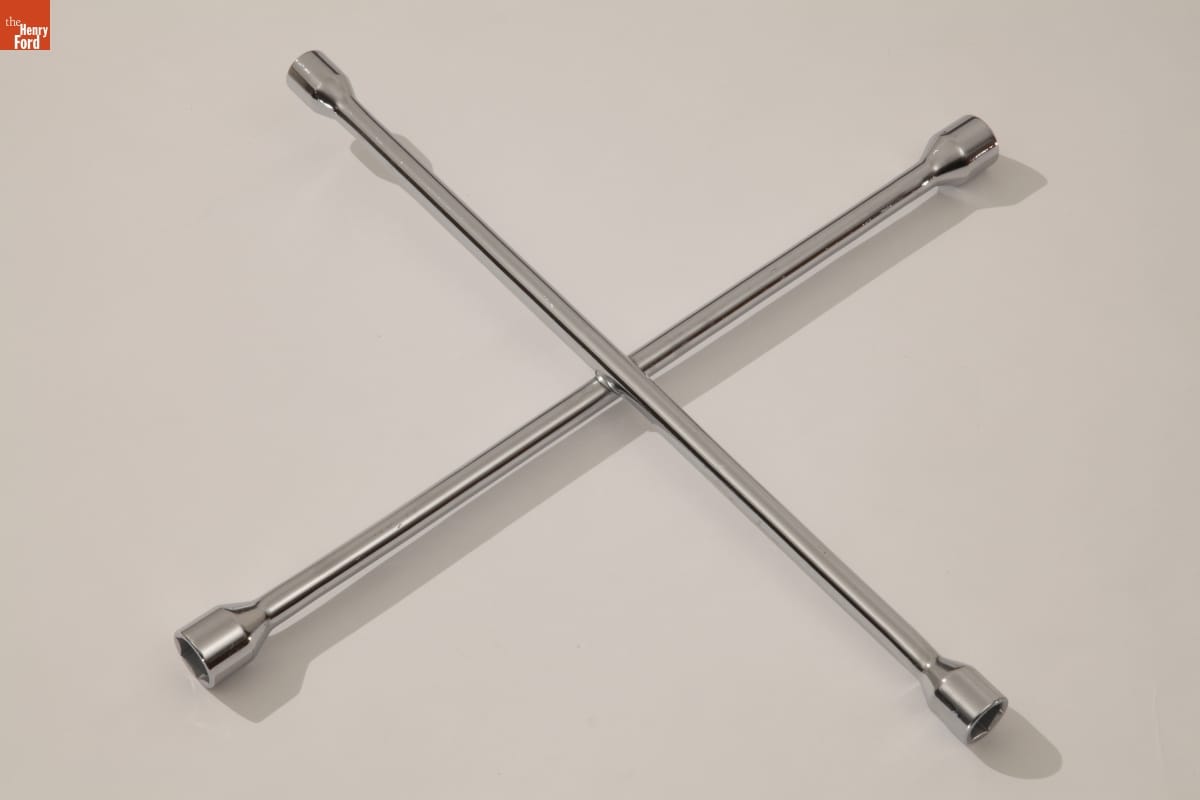
- Lug Wrench, 2011 - The X-shaped lug wrench, sometimes called a spider wrench, is an essential tool in the event of a flat tire. Its four differently sized sockets are designed for removing the lug nuts that hold a car's wheel onto its axle. The basic lug wrench allows a driver to remove a flat tire and replace it with a spare tire.
- 2011
- Collections - Artifact
Lug Wrench, 2011
The X-shaped lug wrench, sometimes called a spider wrench, is an essential tool in the event of a flat tire. Its four differently sized sockets are designed for removing the lug nuts that hold a car's wheel onto its axle. The basic lug wrench allows a driver to remove a flat tire and replace it with a spare tire.
- Morand Cushion Wheel for Mack Truck, circa 1919 - Joseph Morand applied for the patent on his cushion wheels in 1920. His system placed a series of rubber cushions between the solid-rubber tire and the outer rim of the wheel (referred to in this diagram as the wood felloe). Morand claimed that his design withstood heavy shocks and distributed their stresses throughout the wheel's circumference.

- circa 1919
- Collections - Artifact
Morand Cushion Wheel for Mack Truck, circa 1919
Joseph Morand applied for the patent on his cushion wheels in 1920. His system placed a series of rubber cushions between the solid-rubber tire and the outer rim of the wheel (referred to in this diagram as the wood felloe). Morand claimed that his design withstood heavy shocks and distributed their stresses throughout the wheel's circumference.
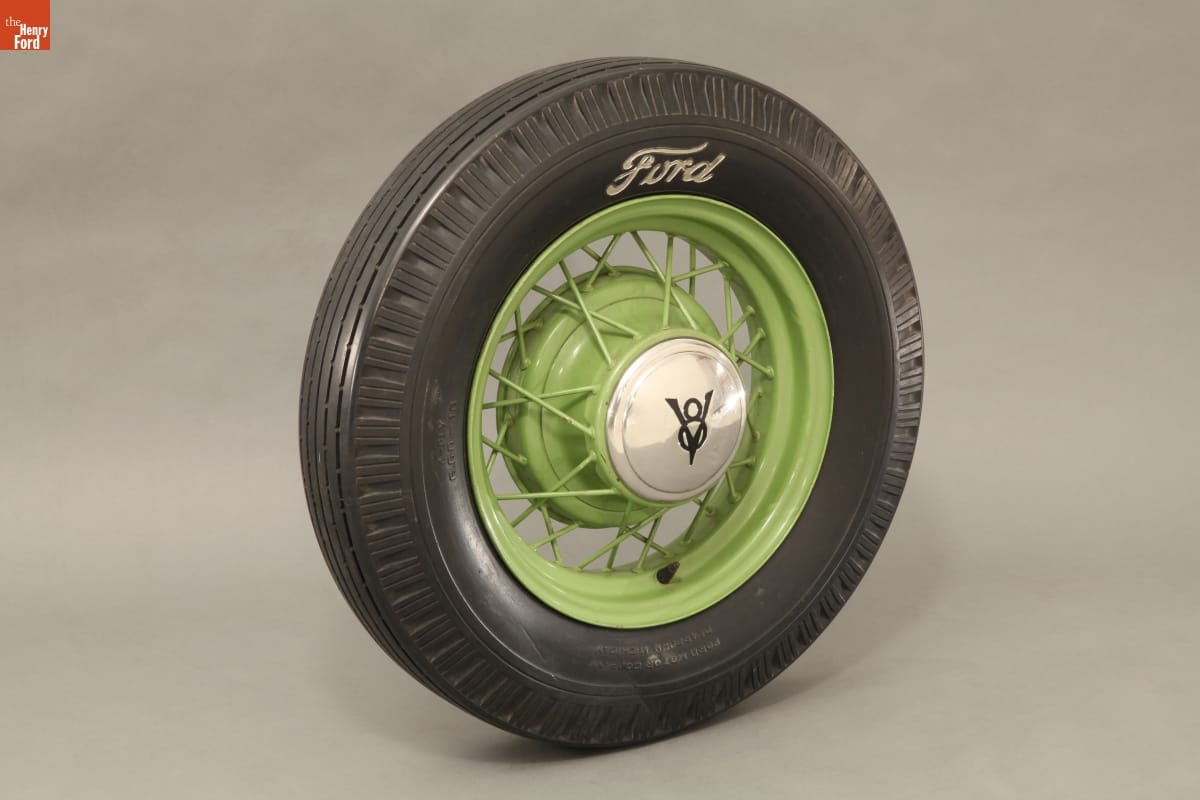
- Ford Blackwall Tire & Wheel, 1932-1935 - Henry Ford hoped to control virtually every item that went into Ford Motor Company vehicles, from raw materials to finished components. Construction on a tire plant at the Rouge started in 1937. By 1939 it was turning out up to 16,000 tires each day. Nearly eight million "Ford" branded tires were made before World War II ended production in 1942.
- 1941
- Collections - Artifact
Ford Blackwall Tire & Wheel, 1932-1935
Henry Ford hoped to control virtually every item that went into Ford Motor Company vehicles, from raw materials to finished components. Construction on a tire plant at the Rouge started in 1937. By 1939 it was turning out up to 16,000 tires each day. Nearly eight million "Ford" branded tires were made before World War II ended production in 1942.
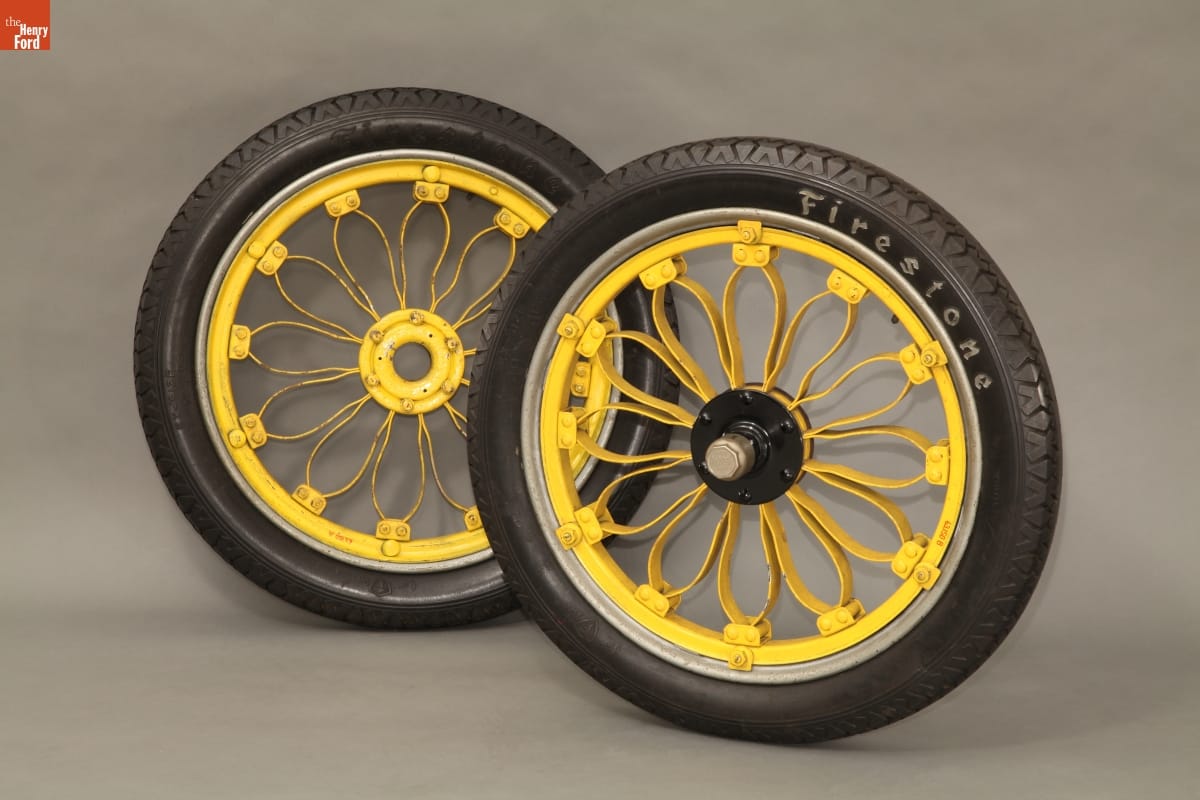
- Pair of Ford Model T Wheels with Tires, circa 1925 - These two tires are mounted on a pair of spring wheels. Instead of spokes, the wheel hubs are connected to the rims with leaf springs. The wheels were intended to supplement the Model T's own suspension in absorbing shocks from the road. Ford Motor Company never sold Model T spring wheels to the public, but some aftermarket manufacturers did.
- circa 1925
- Collections - Artifact
Pair of Ford Model T Wheels with Tires, circa 1925
These two tires are mounted on a pair of spring wheels. Instead of spokes, the wheel hubs are connected to the rims with leaf springs. The wheels were intended to supplement the Model T's own suspension in absorbing shocks from the road. Ford Motor Company never sold Model T spring wheels to the public, but some aftermarket manufacturers did.
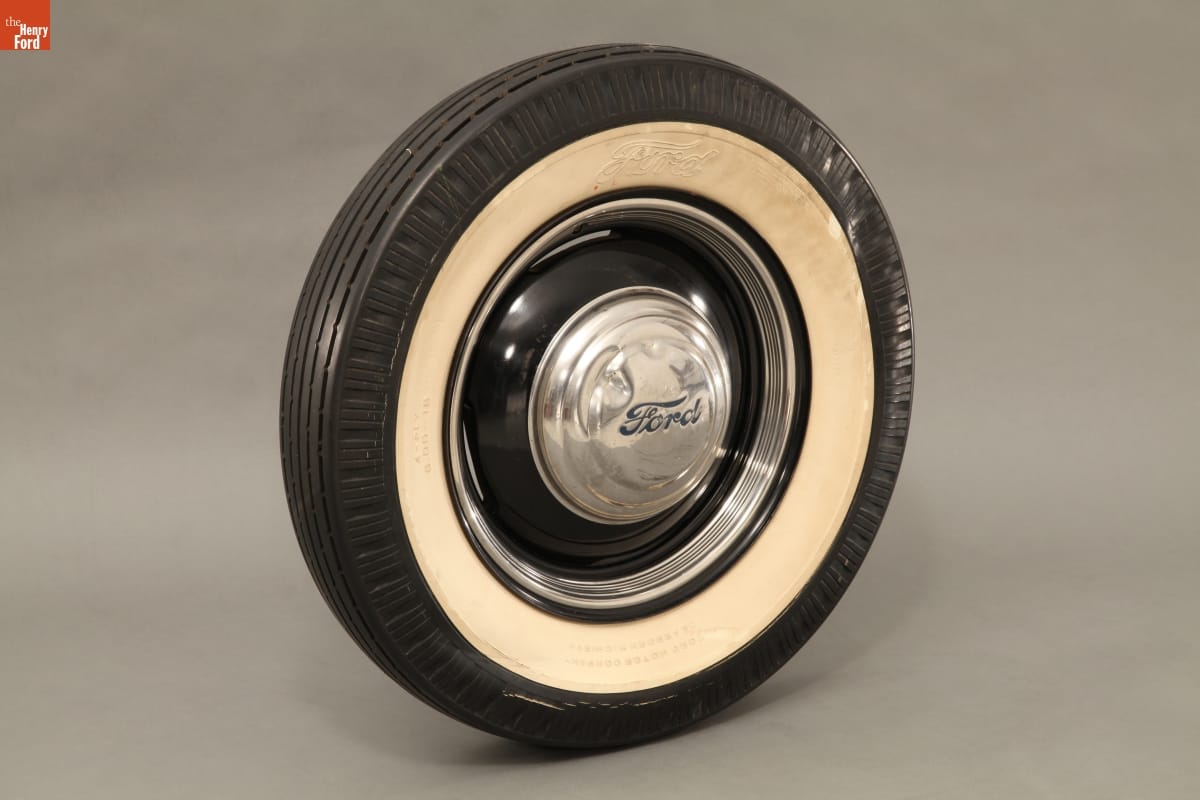
- Ford Whitewall Tire, 1941 - Henry Ford hoped to control virtually every item that went into Ford Motor Company vehicles, from raw materials to finished components. Construction on a tire plant at the Rouge started in 1937. By 1939 it was turning out up to 16,000 tires each day. Nearly eight million "Ford" branded tires were made before World War II ended production in 1942.
- 1941
- Collections - Artifact
Ford Whitewall Tire, 1941
Henry Ford hoped to control virtually every item that went into Ford Motor Company vehicles, from raw materials to finished components. Construction on a tire plant at the Rouge started in 1937. By 1939 it was turning out up to 16,000 tires each day. Nearly eight million "Ford" branded tires were made before World War II ended production in 1942.
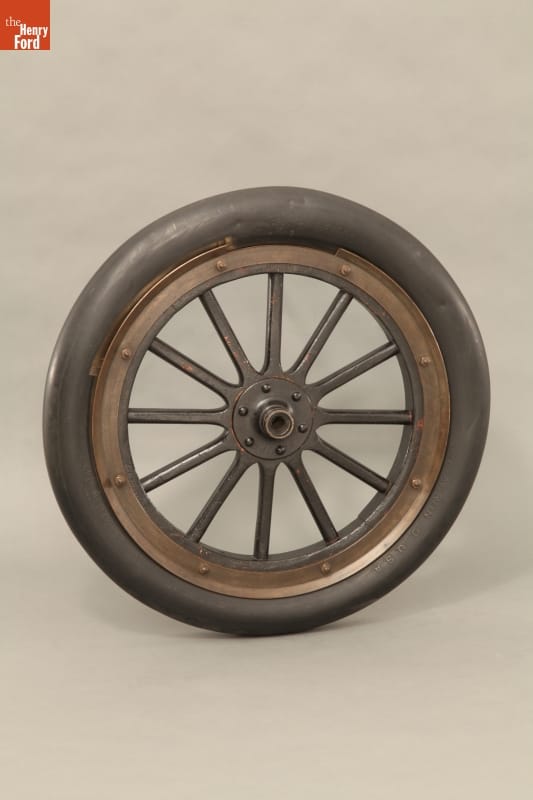
- Automobile Tire & Spoked Wheel, circa 1910 - The first pneumatic automobile tires were little more than upscaled versions of bicycle tires. They lacked any sort of tread, were prone to skidding, and lasted maybe 2,500 miles. These "clincher" tires, secured to the rim by a rubber bead, required a crowbar and a good deal of patience when stretching to mount or demount.
- circa 1910
- Collections - Artifact
Automobile Tire & Spoked Wheel, circa 1910
The first pneumatic automobile tires were little more than upscaled versions of bicycle tires. They lacked any sort of tread, were prone to skidding, and lasted maybe 2,500 miles. These "clincher" tires, secured to the rim by a rubber bead, required a crowbar and a good deal of patience when stretching to mount or demount.
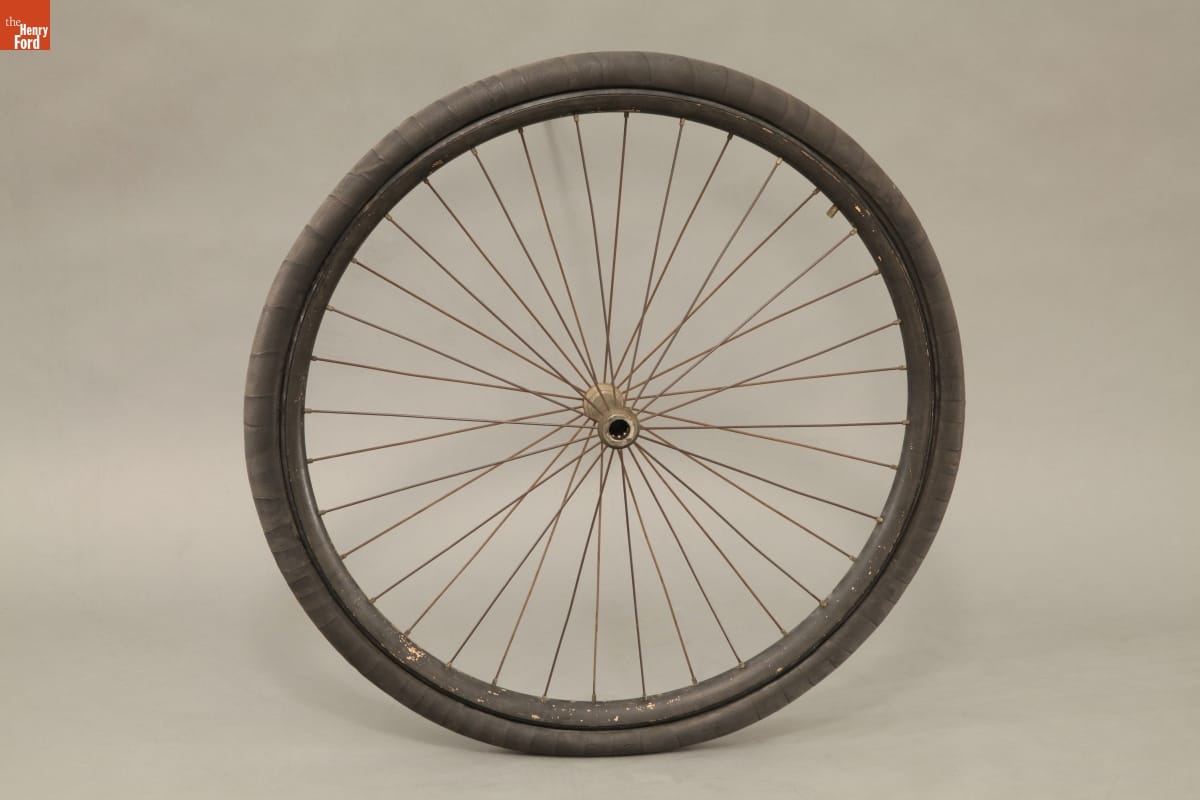
- Harness Racing Sulky Tire, circa 1890 - Harness racing was widely popular in the United States during the late 19th century. Competitions were staged at dirt tracks, state and county fairs, and sometimes even on public streets. The "bicycle" sulky -- named for its bicycle-style wheels -- quickly proved superior over wooden high-wheel sulkies when introduced in 1892.
- 1890
- Collections - Artifact
Harness Racing Sulky Tire, circa 1890
Harness racing was widely popular in the United States during the late 19th century. Competitions were staged at dirt tracks, state and county fairs, and sometimes even on public streets. The "bicycle" sulky -- named for its bicycle-style wheels -- quickly proved superior over wooden high-wheel sulkies when introduced in 1892.
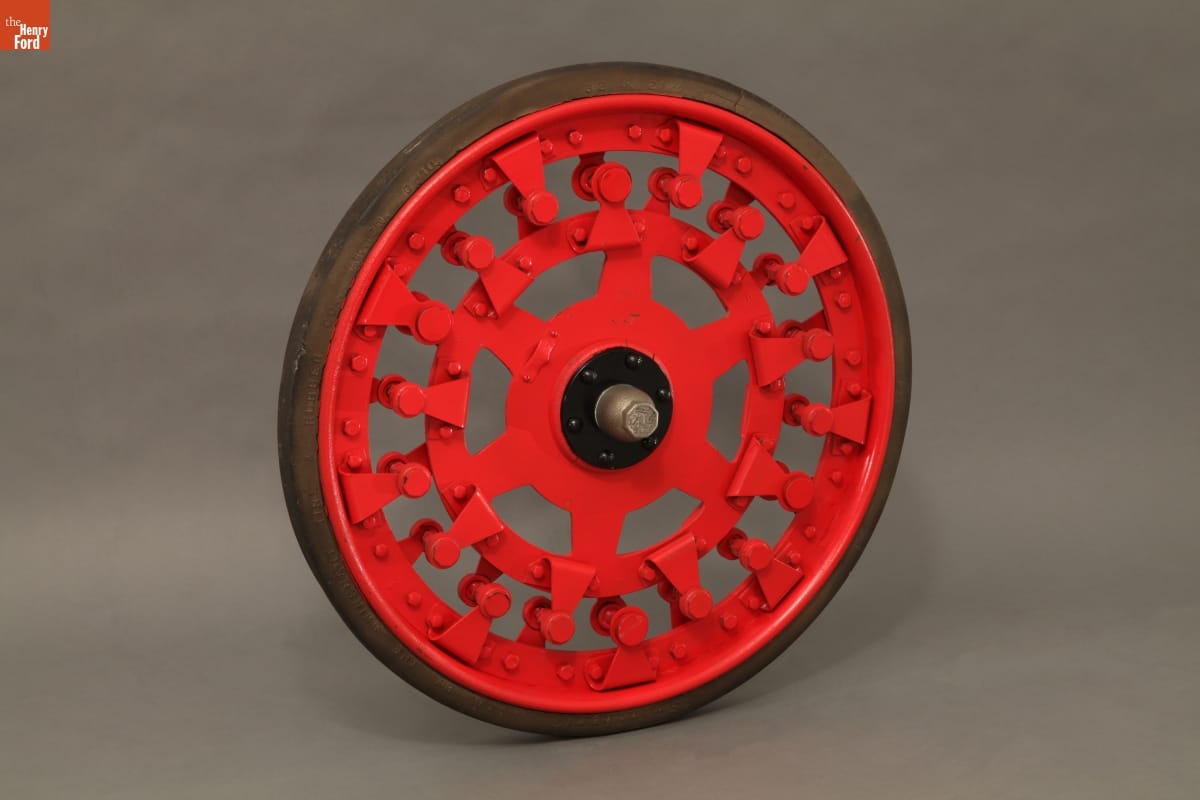
- Automobile Tire & Wheel, 1910-1920 - In the automobile's earliest years, solid rubber tires offered an alternative to pneumatic tires. Solid tires were long lasting and impervious to cuts and blowouts. But they were also heavy and gave an uncomfortable ride. Air-filled tires proved more popular for automotive use.
- 1910-1920
- Collections - Artifact
Automobile Tire & Wheel, 1910-1920
In the automobile's earliest years, solid rubber tires offered an alternative to pneumatic tires. Solid tires were long lasting and impervious to cuts and blowouts. But they were also heavy and gave an uncomfortable ride. Air-filled tires proved more popular for automotive use.
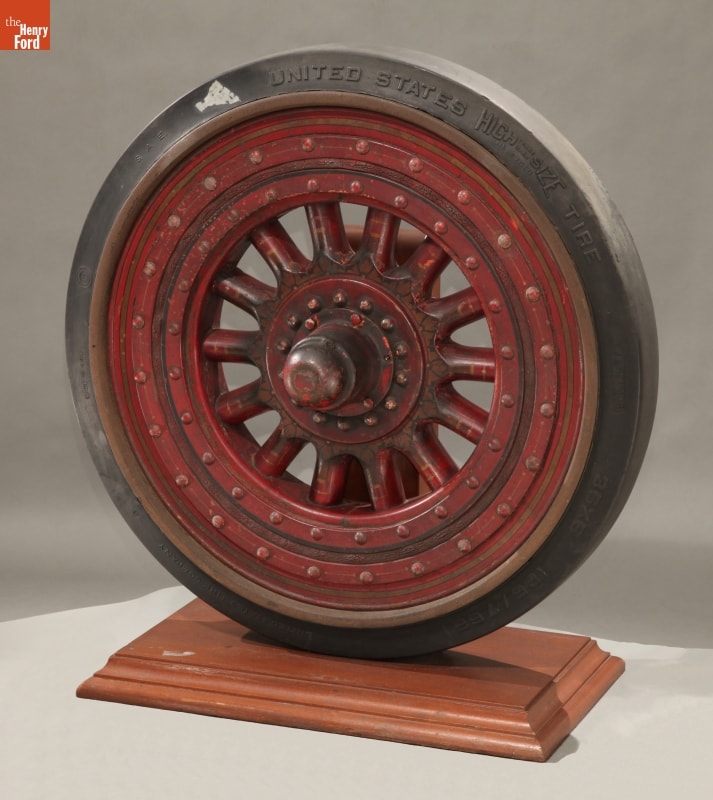
- Sewell Cushion Wheel Used on Detroit Fire Engine, 1920-1925 - This clever wheel, manufactured by the Sewell Cushion Wheel Company of Detroit, used two felloes -- or rims -- with a rubber cushion sandwiched between them. The design reduced the shock and vibration produced by the solid-rubber tire. Wheels like this were used on heavy commercial vehicles before the adoption of pneumatic truck tires.
- 1920-1925
- Collections - Artifact
Sewell Cushion Wheel Used on Detroit Fire Engine, 1920-1925
This clever wheel, manufactured by the Sewell Cushion Wheel Company of Detroit, used two felloes -- or rims -- with a rubber cushion sandwiched between them. The design reduced the shock and vibration produced by the solid-rubber tire. Wheels like this were used on heavy commercial vehicles before the adoption of pneumatic truck tires.