
Search
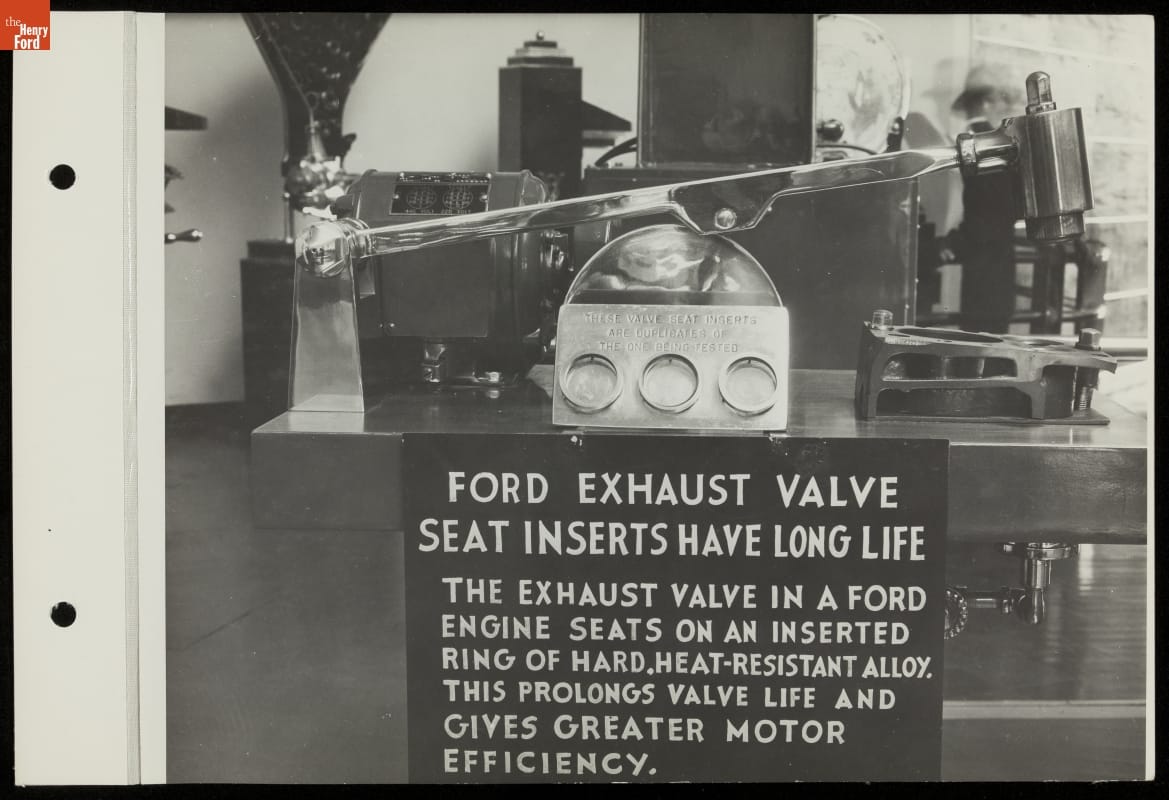
- Ford Automobile Manufacturing Exhibit, Ford Building, California Pacific International Exposition, San Diego, 1935 - Through the 1930s, Ford Motor Company poured resources into exhibitions at regional and world's fairs. Henry Ford believed strongly in the educational value of such displays, and a corporate presence at the fairs benefitted public relations. Ford's popular exhibits and demonstrations -- pictured here in the 1935 California Pacific International Exposition Ford Building -- generated lots of publicity.
- 1935
- Collections - Artifact
Ford Automobile Manufacturing Exhibit, Ford Building, California Pacific International Exposition, San Diego, 1935
Through the 1930s, Ford Motor Company poured resources into exhibitions at regional and world's fairs. Henry Ford believed strongly in the educational value of such displays, and a corporate presence at the fairs benefitted public relations. Ford's popular exhibits and demonstrations -- pictured here in the 1935 California Pacific International Exposition Ford Building -- generated lots of publicity.
- Qt-22 Mini Stock Muffler, 1965-1974 - Internal combustion engines produce exhaust gases that must be vented from the engine. Gases generally are routed from the engine through a manifold or header, and then through an exhaust pipe to the car's rear. Before they exit the pipe, the gases move through a muffler with baffles or plates that reduce -- or muffle -- the noise.
- 1965 - 1974
- Collections - Artifact
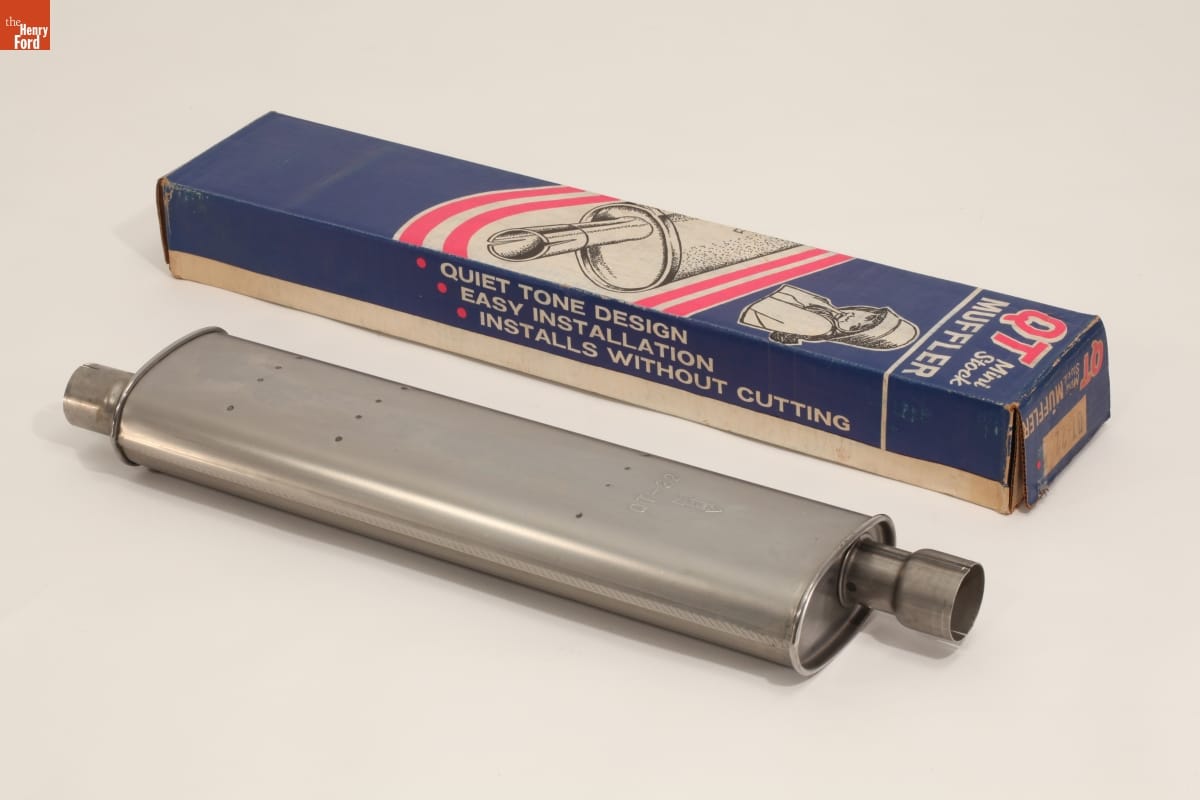
Qt-22 Mini Stock Muffler, 1965-1974
Internal combustion engines produce exhaust gases that must be vented from the engine. Gases generally are routed from the engine through a manifold or header, and then through an exhaust pipe to the car's rear. Before they exit the pipe, the gases move through a muffler with baffles or plates that reduce -- or muffle -- the noise.
- Muffler & Tailpipe Hanger Box, 1960-1970 - Internal combustion engines produce exhaust gases that must be vented from the engine. Gases generally are routed from the engine through a manifold or header, and then through an exhaust pipe to the car's rear. Before they exit the pipe, the gases move through a muffler with baffles or plates that reduce -- or muffle -- the noise.
- 1960-1970
- Collections - Artifact
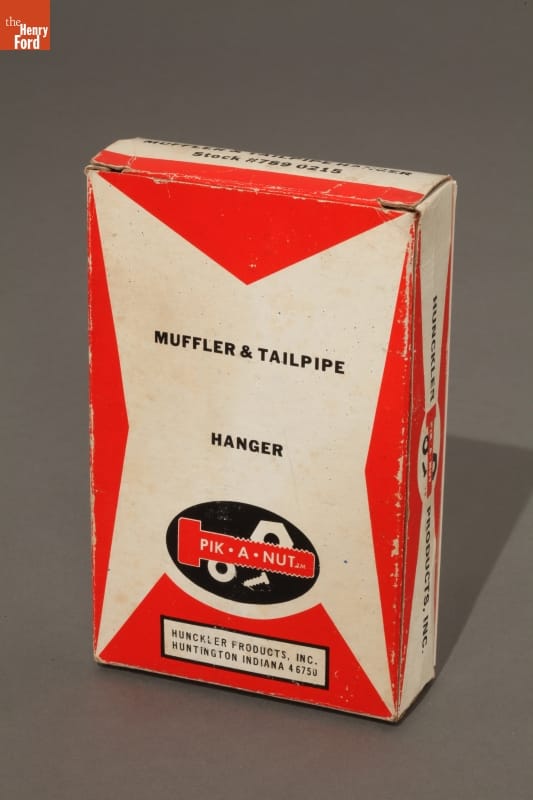
Muffler & Tailpipe Hanger Box, 1960-1970
Internal combustion engines produce exhaust gases that must be vented from the engine. Gases generally are routed from the engine through a manifold or header, and then through an exhaust pipe to the car's rear. Before they exit the pipe, the gases move through a muffler with baffles or plates that reduce -- or muffle -- the noise.
- Chevrolet Impala Front Exhaust Pipe, 1958 - Internal combustion engines produce exhaust gases -- including unburned hydrocarbons, carbon monoxide, and nitrogen oxides -- that must be vented from the engine. Gases generally are routed through a manifold or header, then through an exhaust pipe that ends at a port at the car's rear. A muffler near the end of the pipe reduces noise.
- 1958
- Collections - Artifact
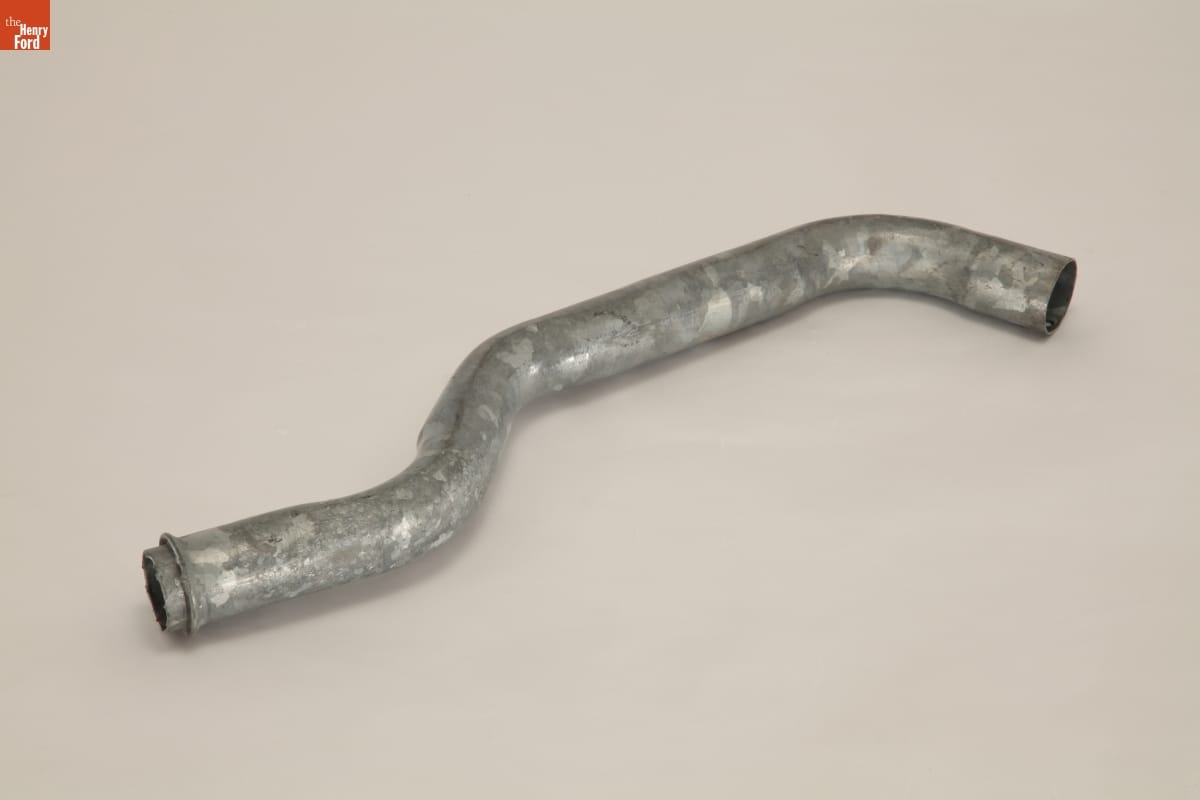
Chevrolet Impala Front Exhaust Pipe, 1958
Internal combustion engines produce exhaust gases -- including unburned hydrocarbons, carbon monoxide, and nitrogen oxides -- that must be vented from the engine. Gases generally are routed through a manifold or header, then through an exhaust pipe that ends at a port at the car's rear. A muffler near the end of the pipe reduces noise.
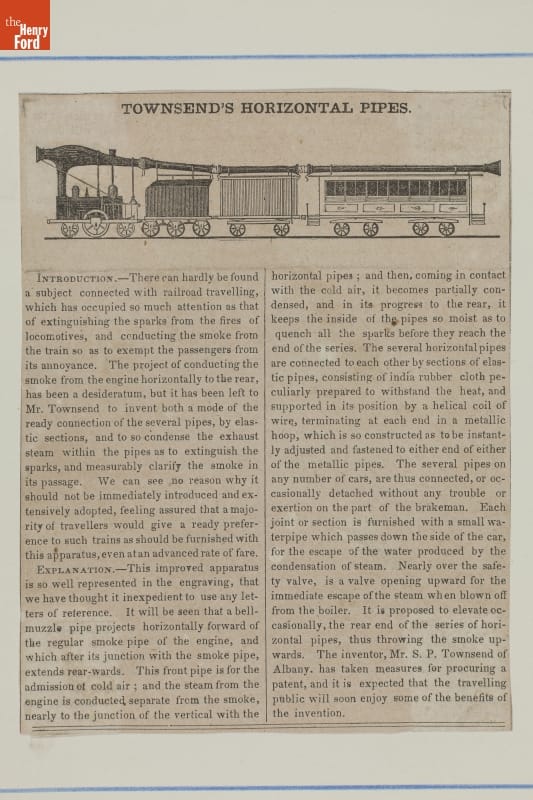
- "Townsend's Horizontal Pipes," 1847 - Sparks and embers were a constant hazard from wood-burning locomotives. Passengers complained about singed clothing, shippers about damaged goods, and trackside property owners about scorched buildings. Spark arrestors, fitted to locomotive smokestacks, helped control the problem. But not until coal -- which produced fewer sparks -- became the dominant locomotive fuel after the Civil War was the issue effectively solved.
- April 24, 1847
- Collections - Artifact
"Townsend's Horizontal Pipes," 1847
Sparks and embers were a constant hazard from wood-burning locomotives. Passengers complained about singed clothing, shippers about damaged goods, and trackside property owners about scorched buildings. Spark arrestors, fitted to locomotive smokestacks, helped control the problem. But not until coal -- which produced fewer sparks -- became the dominant locomotive fuel after the Civil War was the issue effectively solved.
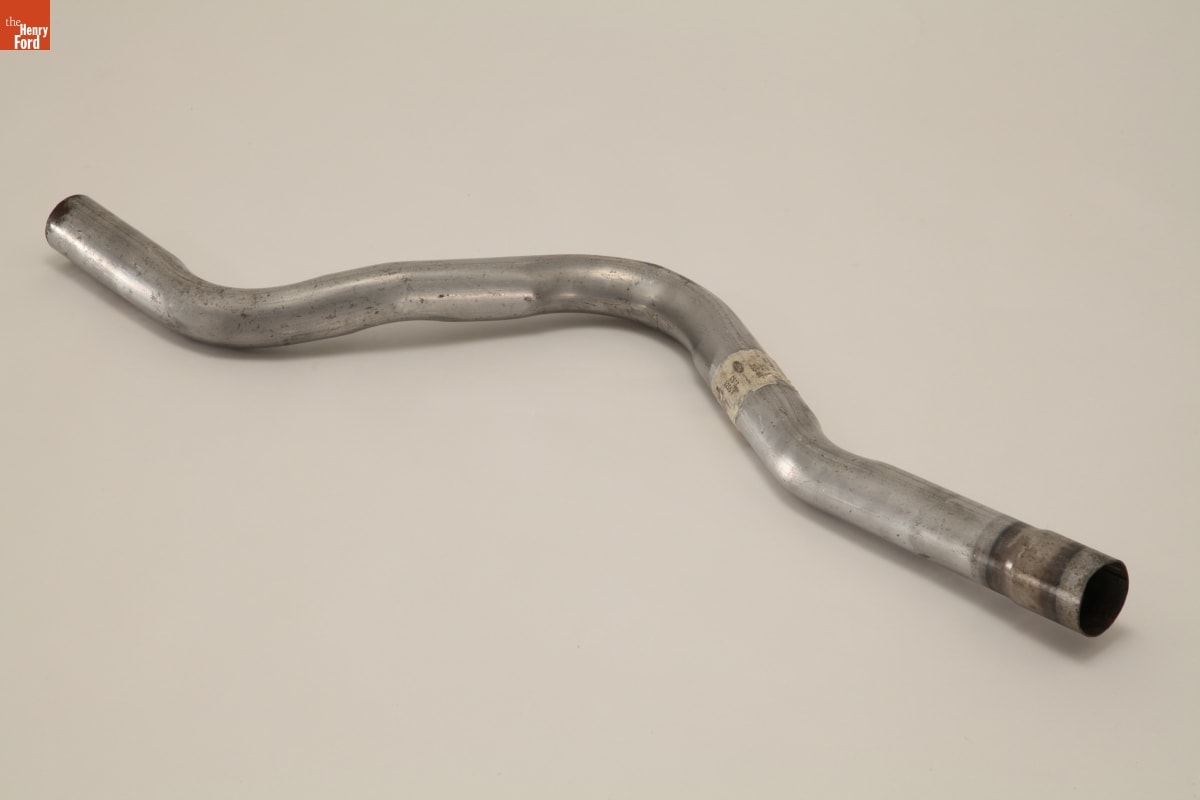
- Ford Station Wagon Rear Exhaust Pipe, 1965 - Internal combustion engines produce exhaust gases -- including unburned hydrocarbons, carbon monoxide, and nitrogen oxides -- that must be vented from the engine. Gases generally are routed through a manifold or header, then through an exhaust pipe that ends at a port at the car's rear. A muffler near the end of the pipe reduces noise.
- 1965
- Collections - Artifact
Ford Station Wagon Rear Exhaust Pipe, 1965
Internal combustion engines produce exhaust gases -- including unburned hydrocarbons, carbon monoxide, and nitrogen oxides -- that must be vented from the engine. Gases generally are routed through a manifold or header, then through an exhaust pipe that ends at a port at the car's rear. A muffler near the end of the pipe reduces noise.
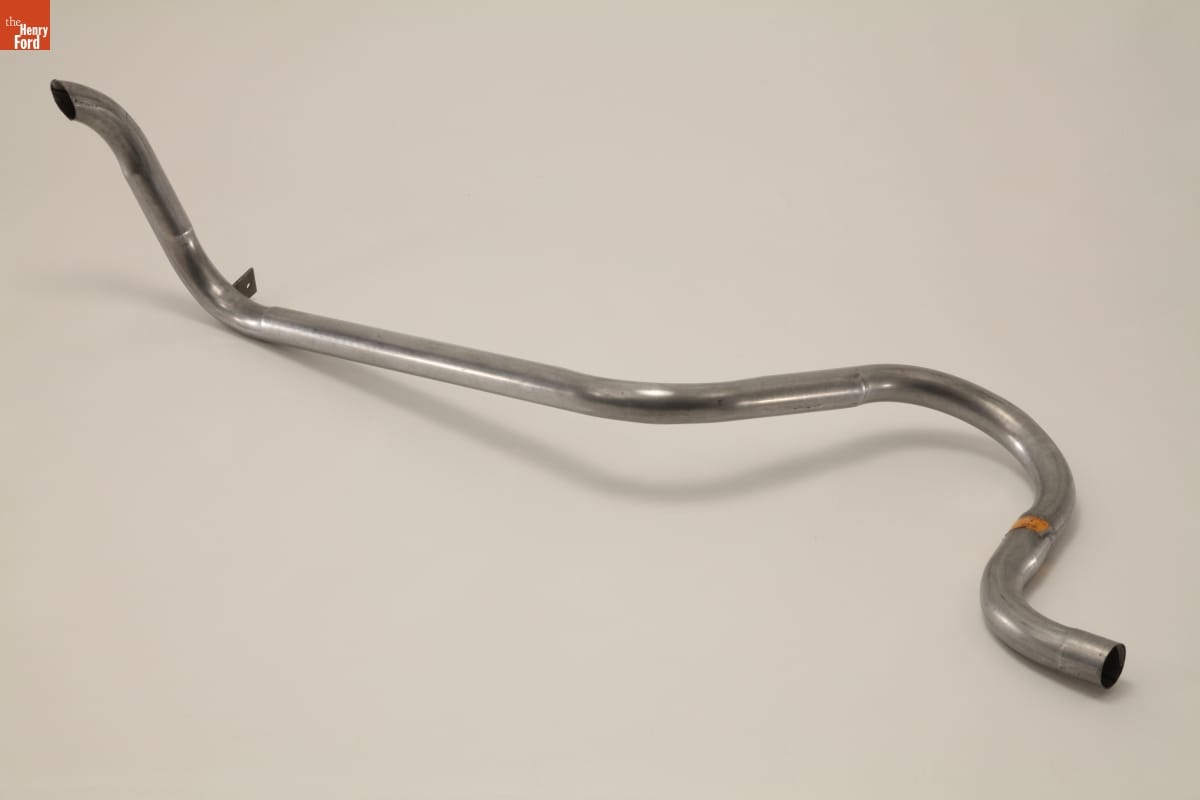
- Studebaker Lark Exhaust Pipe, 1962 - Internal combustion engines produce exhaust gases -- including unburned hydrocarbons, carbon monoxide, and nitrogen oxides -- that must be vented from the engine. Gases generally are routed through a manifold or header, then through an exhaust pipe that ends at a port at the car's rear. A muffler near the end of the pipe reduces noise.
- 1962
- Collections - Artifact
Studebaker Lark Exhaust Pipe, 1962
Internal combustion engines produce exhaust gases -- including unburned hydrocarbons, carbon monoxide, and nitrogen oxides -- that must be vented from the engine. Gases generally are routed through a manifold or header, then through an exhaust pipe that ends at a port at the car's rear. A muffler near the end of the pipe reduces noise.
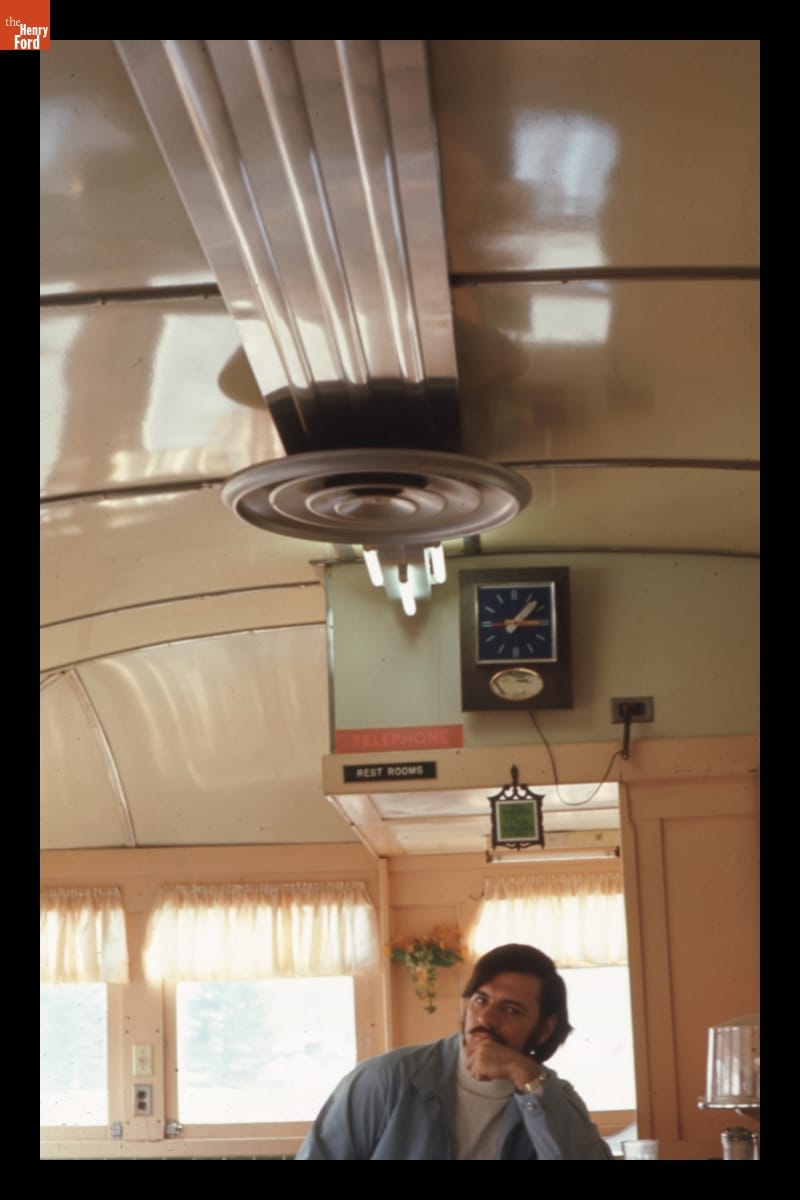
- Vent Detail in 9 & 20 Diner, Castleton-on-Hudson, New York, 1970-1979 -
- 1970-1979
- Collections - Artifact
Vent Detail in 9 & 20 Diner, Castleton-on-Hudson, New York, 1970-1979
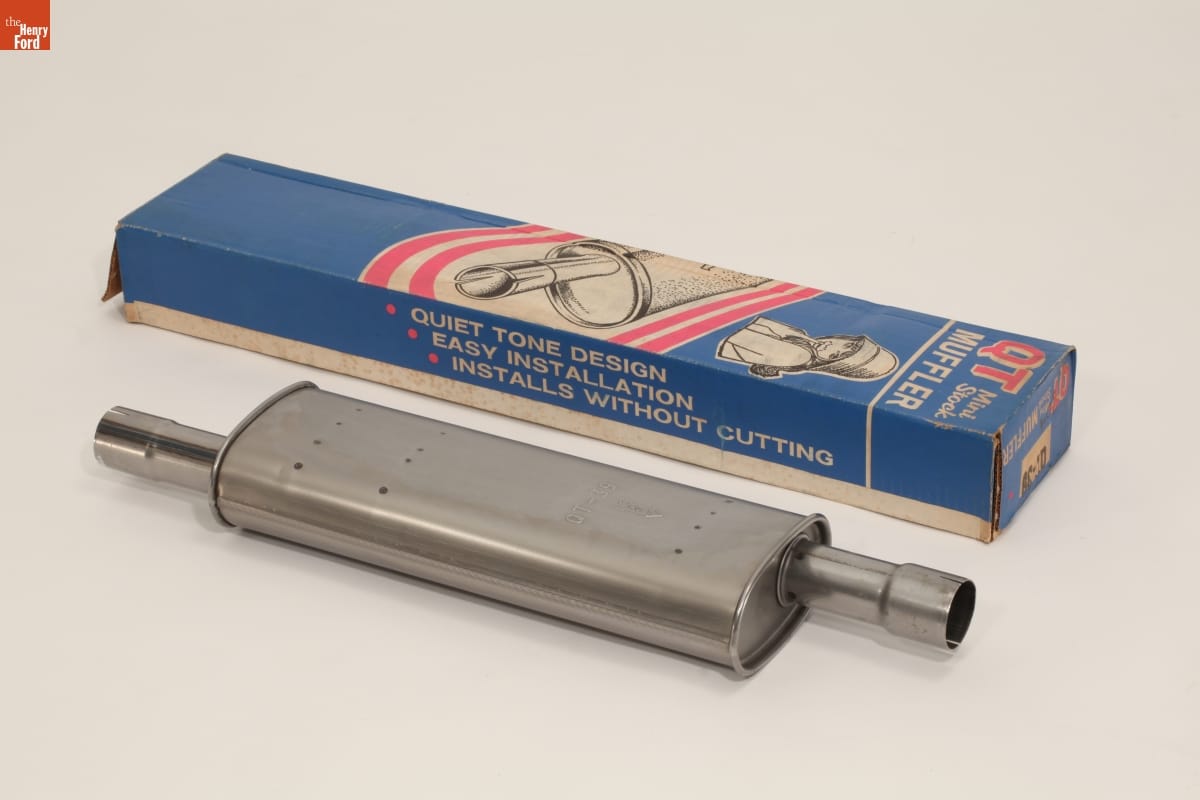
- Qt-39 Mini Stock Muffler, 1959-1972 - Internal combustion engines produce exhaust gases that must be vented from the engine. Gases generally are routed from the engine through a manifold or header, and then through an exhaust pipe to the car's rear. Before they exit the pipe, the gases move through a muffler with baffles or plates that reduce -- or muffle -- the noise.
- 1959-1972
- Collections - Artifact
Qt-39 Mini Stock Muffler, 1959-1972
Internal combustion engines produce exhaust gases that must be vented from the engine. Gases generally are routed from the engine through a manifold or header, and then through an exhaust pipe to the car's rear. Before they exit the pipe, the gases move through a muffler with baffles or plates that reduce -- or muffle -- the noise.
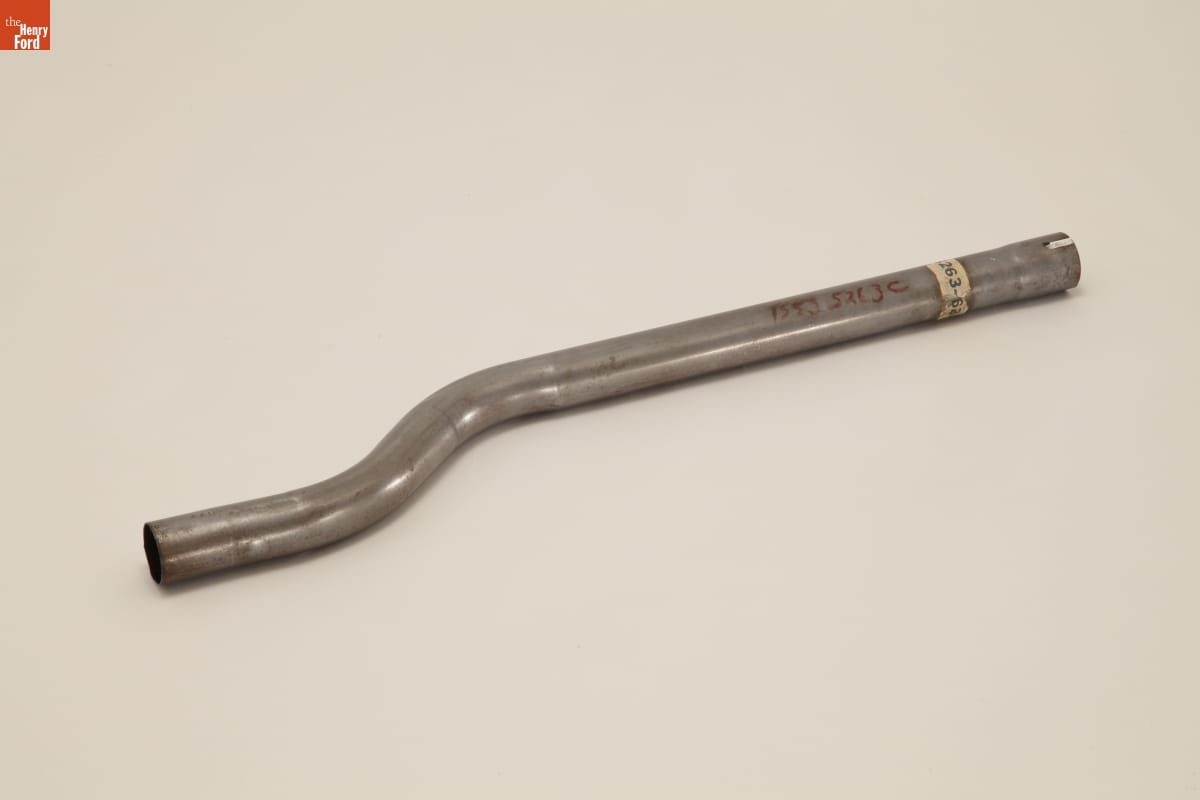
- Ford Thunderbird Rear Exhaust Pipe, 1955 - Ford Motor Company introduced the Thunderbird, a two-seat "personal car," for 1955. Its 392-cubic-inch V-8 engine was rated at 193 horsepower on manual-transmission cars, but a higher compression ratio boosted that rating to 198 for automatics. Dual exhaust pipes were routed through ports in the rear fascia, located on each side of the license plate and attached to the rear bumper.
- 1955
- Collections - Artifact
Ford Thunderbird Rear Exhaust Pipe, 1955
Ford Motor Company introduced the Thunderbird, a two-seat "personal car," for 1955. Its 392-cubic-inch V-8 engine was rated at 193 horsepower on manual-transmission cars, but a higher compression ratio boosted that rating to 198 for automatics. Dual exhaust pipes were routed through ports in the rear fascia, located on each side of the license plate and attached to the rear bumper.