
Search
- Bowl, 1830-1835 -
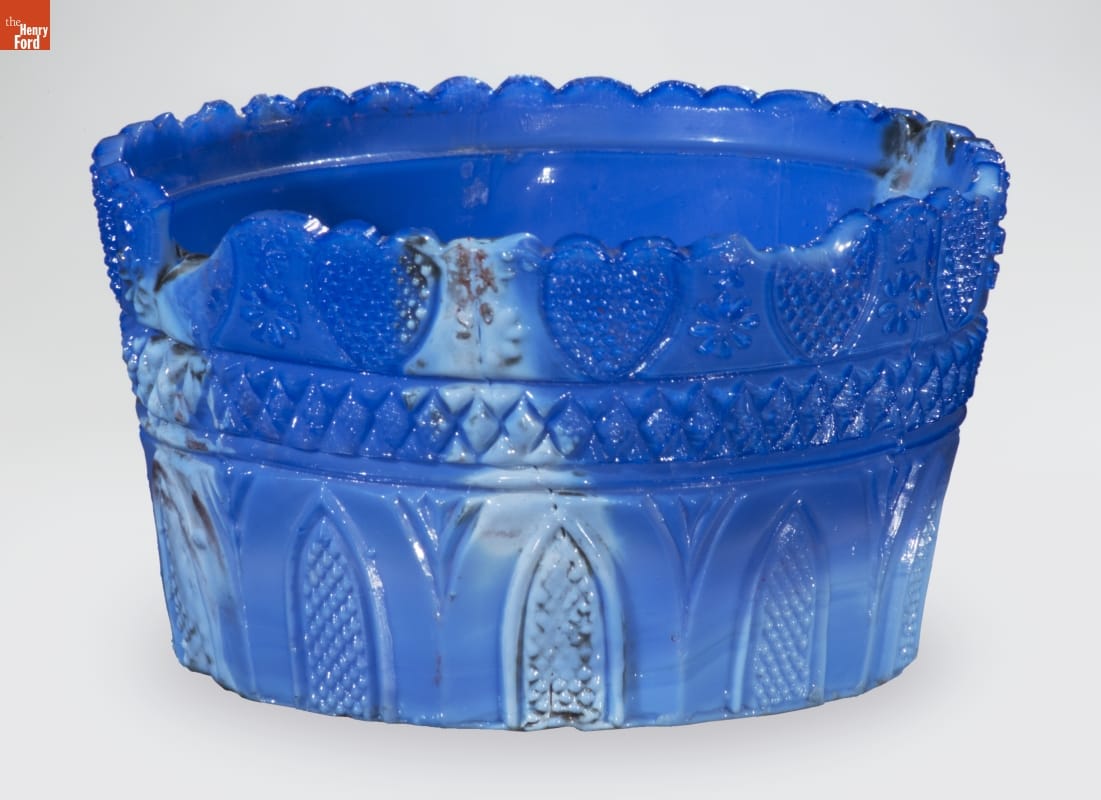
- 1830-1835
- Collections - Artifact
Bowl, 1830-1835
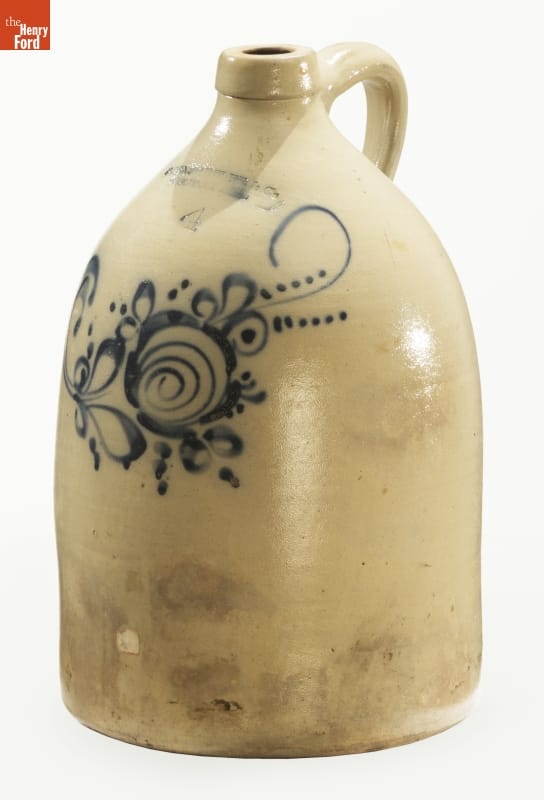
- Four Gallon Stoneware Jug, 1850-1875 - This jug was made of a durable, leak-proof pottery called stoneware, shaped on a potter's wheel. The orange-peel-like outer glaze was created when the potter threw handfuls of common rock salt into a white-hot kiln during the piece's firing. Salt-glazed stoneware pieces were decorated with an amazing array of designs, including the flower and other embellishments on this piece.
- 1850-1875
- Collections - Artifact
Four Gallon Stoneware Jug, 1850-1875
This jug was made of a durable, leak-proof pottery called stoneware, shaped on a potter's wheel. The orange-peel-like outer glaze was created when the potter threw handfuls of common rock salt into a white-hot kiln during the piece's firing. Salt-glazed stoneware pieces were decorated with an amazing array of designs, including the flower and other embellishments on this piece.
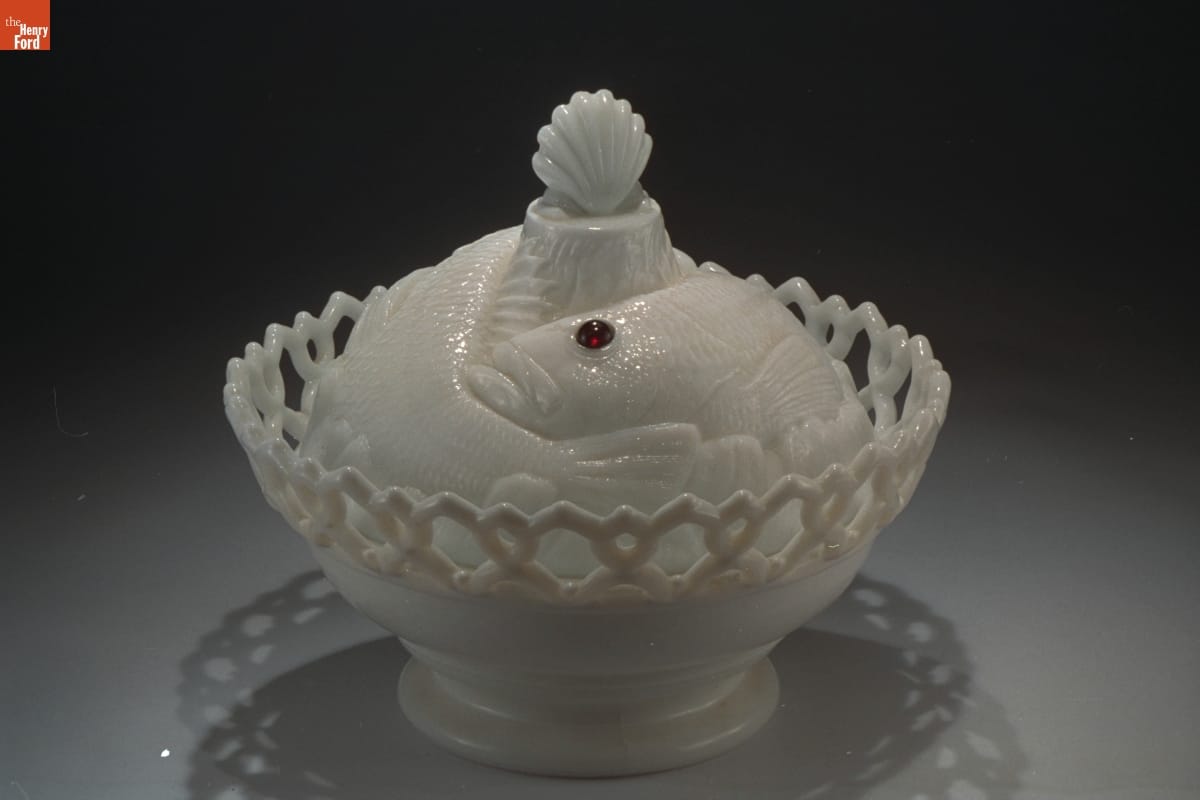
- Covered Dish, 1889-1893 - Nineteenth-century American glassmakers experimented with new methods to create products for a growing consumer market. In the 1820s, pressing glass into metal molds by machine was perfected, and by the mid-1800s, manufacturers were creating a variety of inexpensive pressed glass housewares. America's middle-class consumers could now decorate their homes with attractive glass bowls, creamers, dishes, plates, vases, and other tableware.
- 1889-1893
- Collections - Artifact
Covered Dish, 1889-1893
Nineteenth-century American glassmakers experimented with new methods to create products for a growing consumer market. In the 1820s, pressing glass into metal molds by machine was perfected, and by the mid-1800s, manufacturers were creating a variety of inexpensive pressed glass housewares. America's middle-class consumers could now decorate their homes with attractive glass bowls, creamers, dishes, plates, vases, and other tableware.
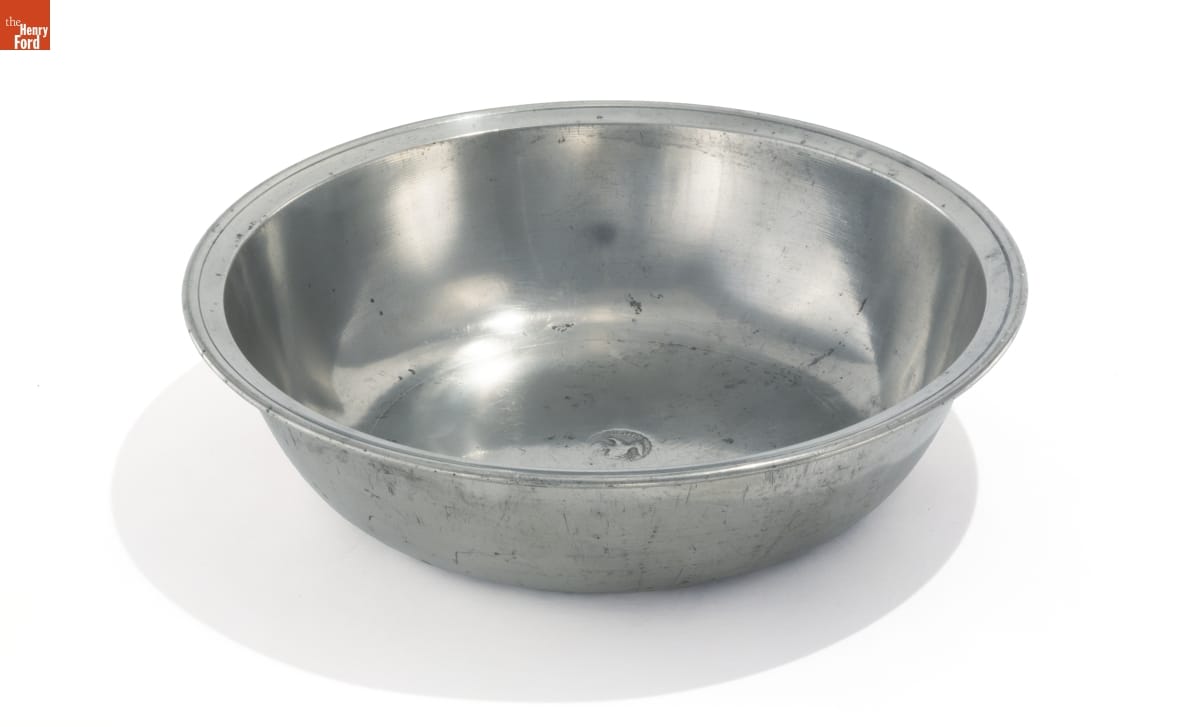
- Basin, 1817-1856 - Pewter goods could be found in many American homes and public buildings in the late 18th and early 19th centuries. Most Americans of modest means could afford to have pewter spoons, ladles, tankards, dishes, plates or other items. Basins, such as this one, generally held puddings, stews or other semi-liquid foods served at meals.
- 1817-1856
- Collections - Artifact
Basin, 1817-1856
Pewter goods could be found in many American homes and public buildings in the late 18th and early 19th centuries. Most Americans of modest means could afford to have pewter spoons, ladles, tankards, dishes, plates or other items. Basins, such as this one, generally held puddings, stews or other semi-liquid foods served at meals.
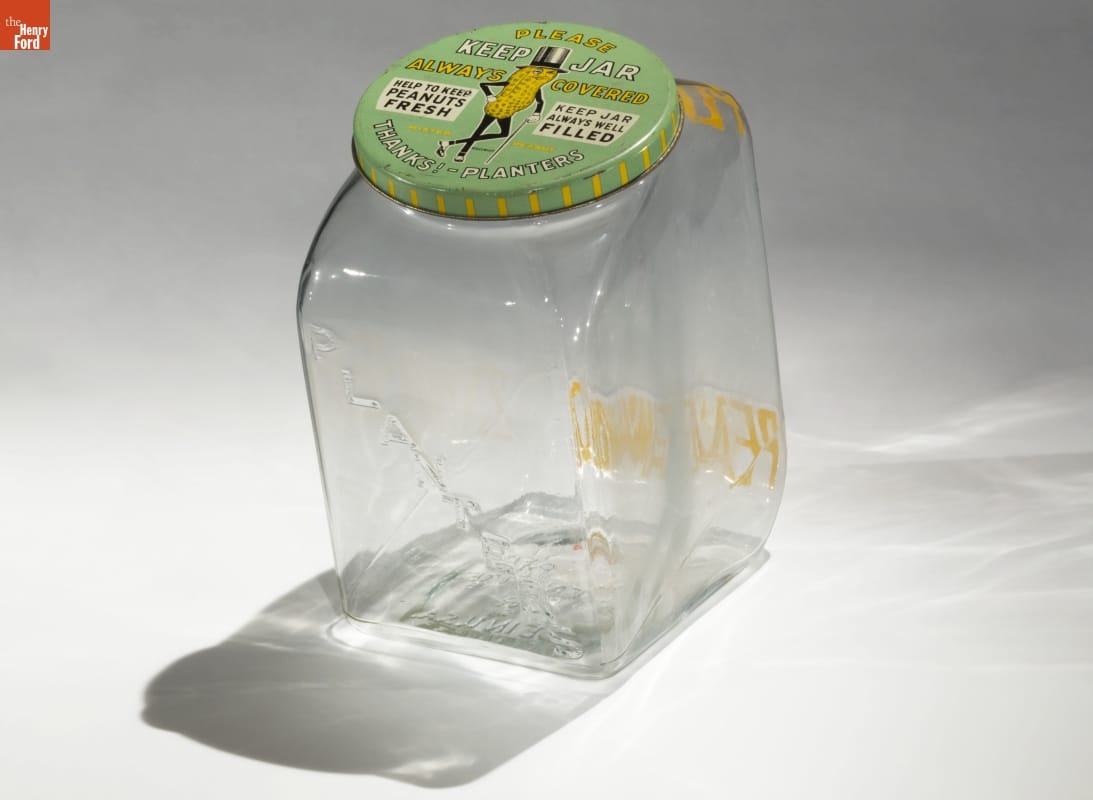
- Planters Peanuts Jar, 1935-1945 - Planters Peanuts created its "spokesperson," Mr. Peanut, in 1916. A commercial artist started with a schoolboy's sketch -- submitted as part of a contest -- and added gentlemanly accessories, including a cane, monocle, top hat, gloves, and spats. The iconic illustrated character, pictured on the lid of this circa-1940 jar, has changed little over more than 100 years.
- 1935-1945
- Collections - Artifact
Planters Peanuts Jar, 1935-1945
Planters Peanuts created its "spokesperson," Mr. Peanut, in 1916. A commercial artist started with a schoolboy's sketch -- submitted as part of a contest -- and added gentlemanly accessories, including a cane, monocle, top hat, gloves, and spats. The iconic illustrated character, pictured on the lid of this circa-1940 jar, has changed little over more than 100 years.
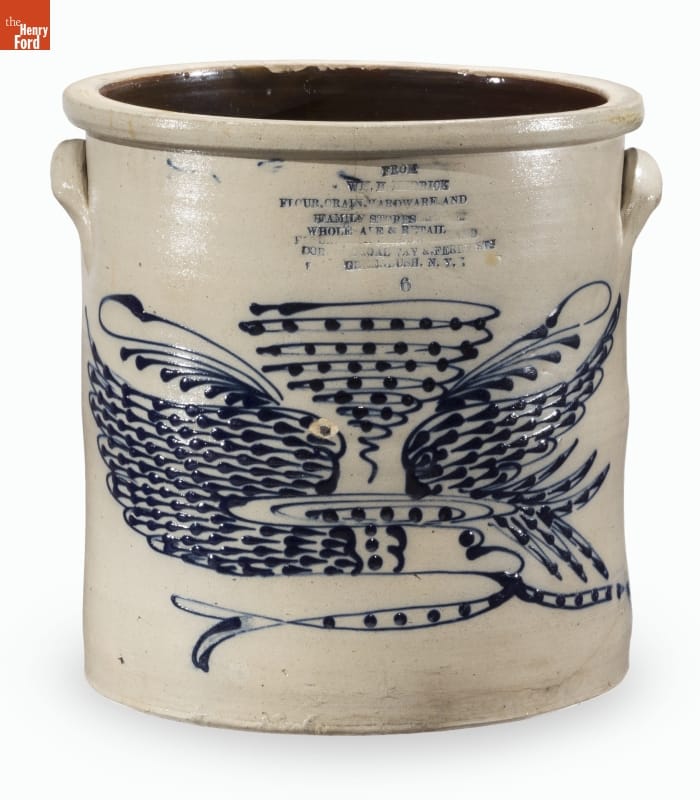
- Six Gallon Stoneware Crock, 1870-1890 - This crock was made of a durable, leak-proof pottery called stoneware, shaped on a potter's wheel. The orange-peel-like outer glaze was created when the potter threw handfuls of common rock salt into a white-hot kiln during the piece's firing. Salt-glazed stoneware pieces were decorated with an amazing array of designs, including the patriotic motifs on this piece.
- 1870-1890
- Collections - Artifact
Six Gallon Stoneware Crock, 1870-1890
This crock was made of a durable, leak-proof pottery called stoneware, shaped on a potter's wheel. The orange-peel-like outer glaze was created when the potter threw handfuls of common rock salt into a white-hot kiln during the piece's firing. Salt-glazed stoneware pieces were decorated with an amazing array of designs, including the patriotic motifs on this piece.
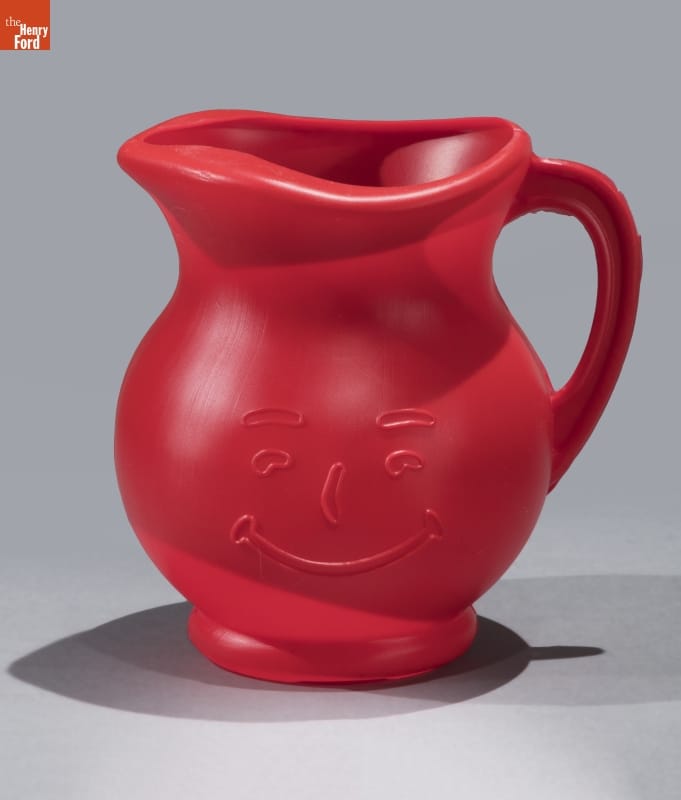
- Kool-Aid Pitcher, circa 1994 - In the 1920s, Nebraska businessman Edwin Perkins developed a popular soft drink concentrate. The glass bottles he shipped it in were heavy and often leaked or broke, so Perkins reworked his liquid recipe to create a powdered mix that could be packaged in paper envelopes. Kool-Aid quickly became an American favorite. In the 1950s, General Foods Corporation purchased Perkins's company and introduced the iconic Kool-Aid pitcher.
- circa 1994
- Collections - Artifact
Kool-Aid Pitcher, circa 1994
In the 1920s, Nebraska businessman Edwin Perkins developed a popular soft drink concentrate. The glass bottles he shipped it in were heavy and often leaked or broke, so Perkins reworked his liquid recipe to create a powdered mix that could be packaged in paper envelopes. Kool-Aid quickly became an American favorite. In the 1950s, General Foods Corporation purchased Perkins's company and introduced the iconic Kool-Aid pitcher.
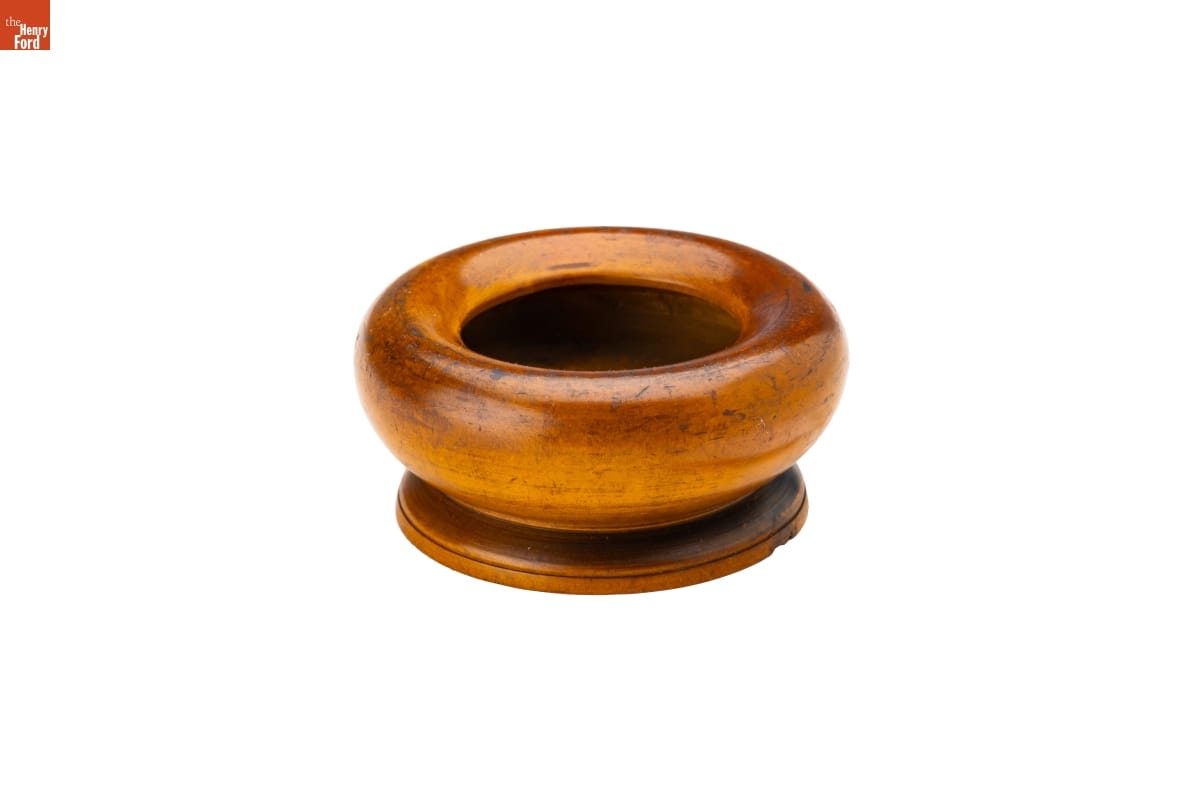
- Wafer Cup -
- Collections - Artifact
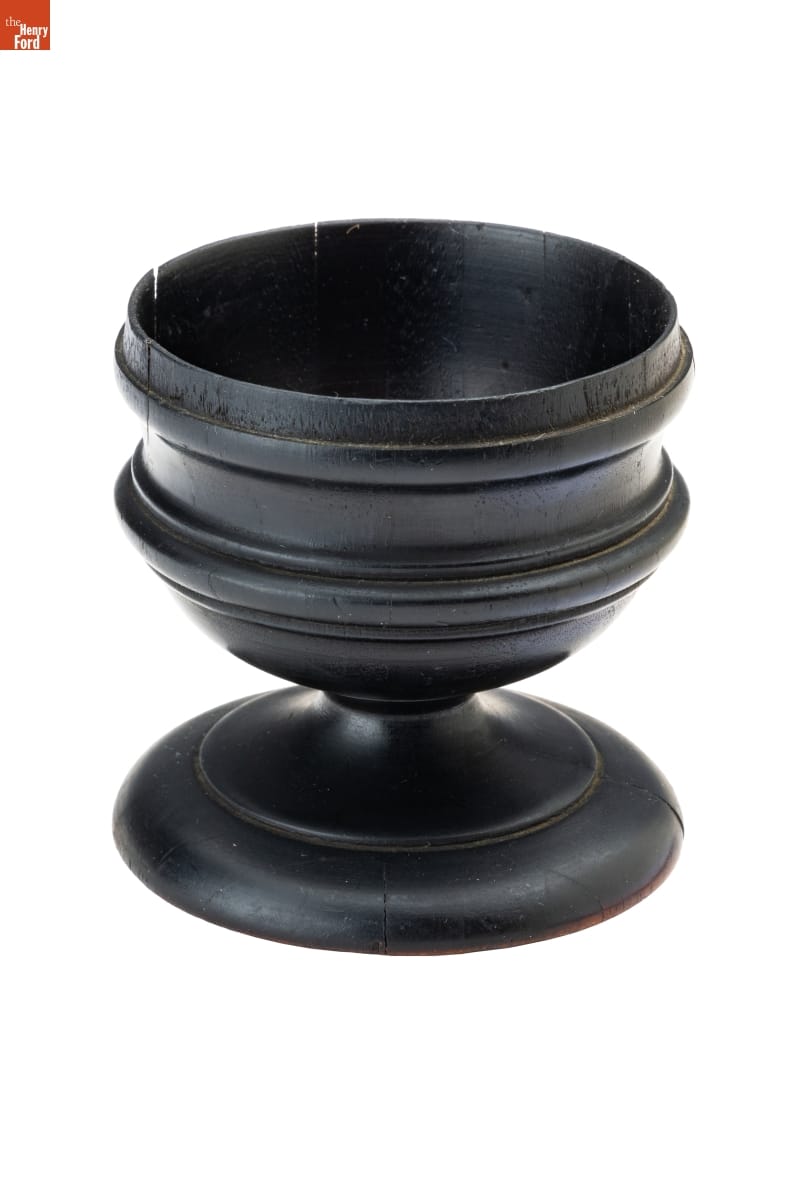
Wafer Cup
- Wafer Cup -
- Collections - Artifact
Wafer Cup
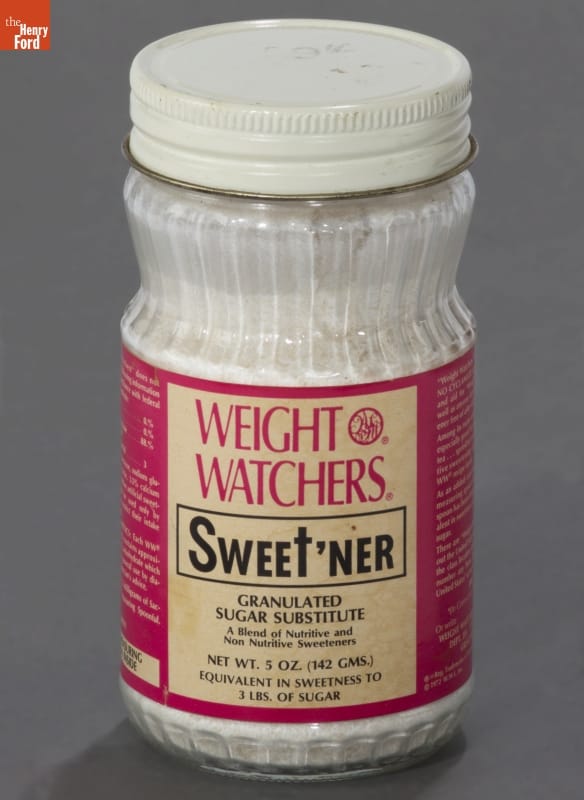
- Weight Watchers "Sweet'ner" Jar, circa 1972 - Jean Nidetch, a 40-year-old homemaker who struggled with dieting, founded Weight Watchers in 1963. The program she devised brought dieters together to share stories of their weight loss struggles and highlight successful eating strategies. By the early 1970s, the consumption of sugar was generally not permitted. Weight Watchers instead promoted artificial sweeteners, even introducing this branded product around 1972.
- circa 1972
- Collections - Artifact
Weight Watchers "Sweet'ner" Jar, circa 1972
Jean Nidetch, a 40-year-old homemaker who struggled with dieting, founded Weight Watchers in 1963. The program she devised brought dieters together to share stories of their weight loss struggles and highlight successful eating strategies. By the early 1970s, the consumption of sugar was generally not permitted. Weight Watchers instead promoted artificial sweeteners, even introducing this branded product around 1972.