
Search
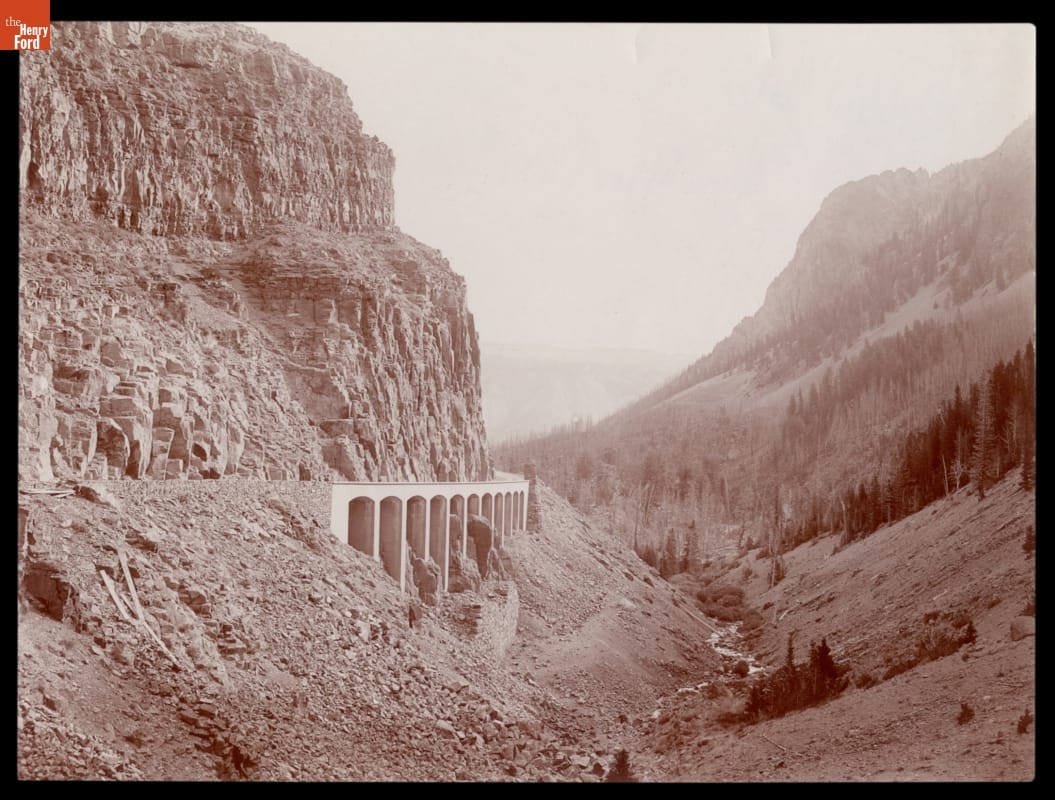
- Golden Gate from the Upper End, Yellowstone National Park, 1901-1902 - Yellowstone National Park, established 1872, was America's first national park. Near the north entrance on the Grand Loop Road, the so-called "Golden Gate" is a pass that marks the north edge of Yellowstone Plateau. The highway bridge is pinned to cliffs made of crumbly volcanic yellow tuff--hence the name.
- 1901-1902
- Collections - Artifact
Golden Gate from the Upper End, Yellowstone National Park, 1901-1902
Yellowstone National Park, established 1872, was America's first national park. Near the north entrance on the Grand Loop Road, the so-called "Golden Gate" is a pass that marks the north edge of Yellowstone Plateau. The highway bridge is pinned to cliffs made of crumbly volcanic yellow tuff--hence the name.
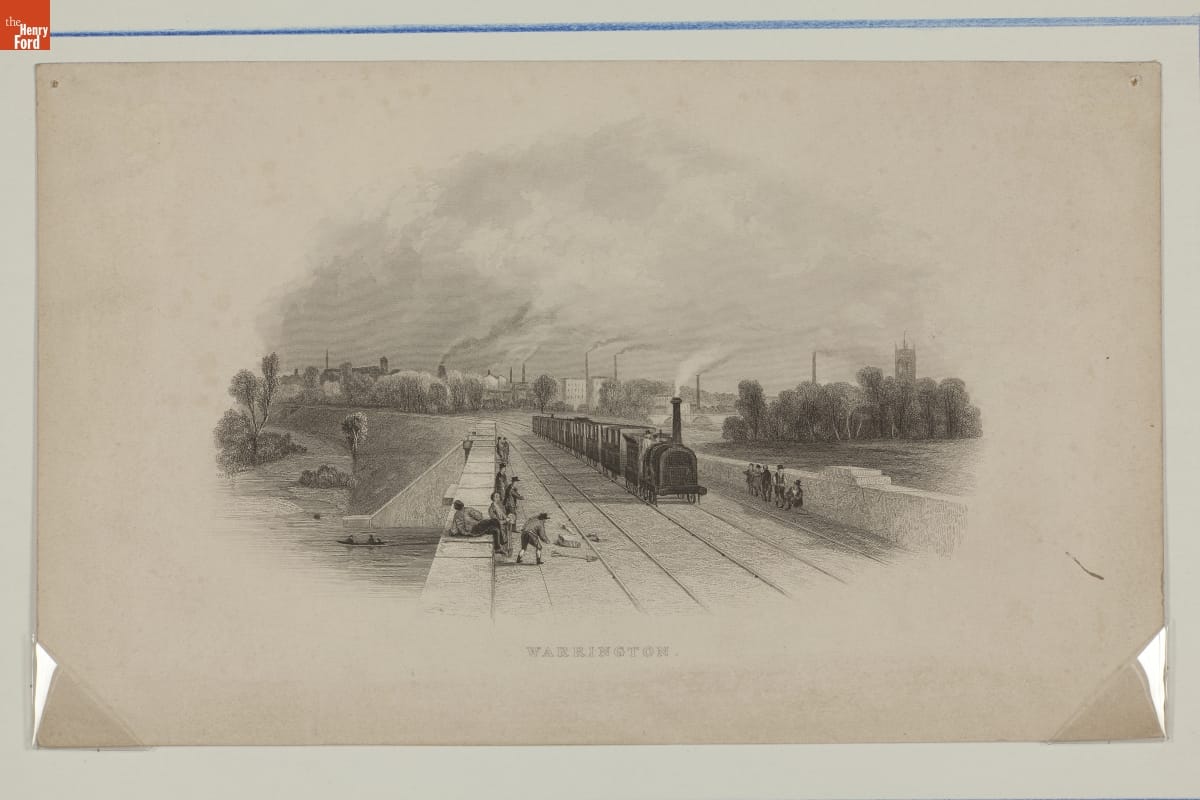
- "Warrington" (England), circa 1850 - In contrast to the slapdash construction found on many 19th-century American railroads, British lines were built to very high standards. Double track was common, grades and curves were kept as gentle as possible, and durable stone viaducts were built in preference to wooden bridges. This illustration shows a train crossing the River Mersey at Warrington, England.
- circa 1850
- Collections - Artifact
"Warrington" (England), circa 1850
In contrast to the slapdash construction found on many 19th-century American railroads, British lines were built to very high standards. Double track was common, grades and curves were kept as gentle as possible, and durable stone viaducts were built in preference to wooden bridges. This illustration shows a train crossing the River Mersey at Warrington, England.
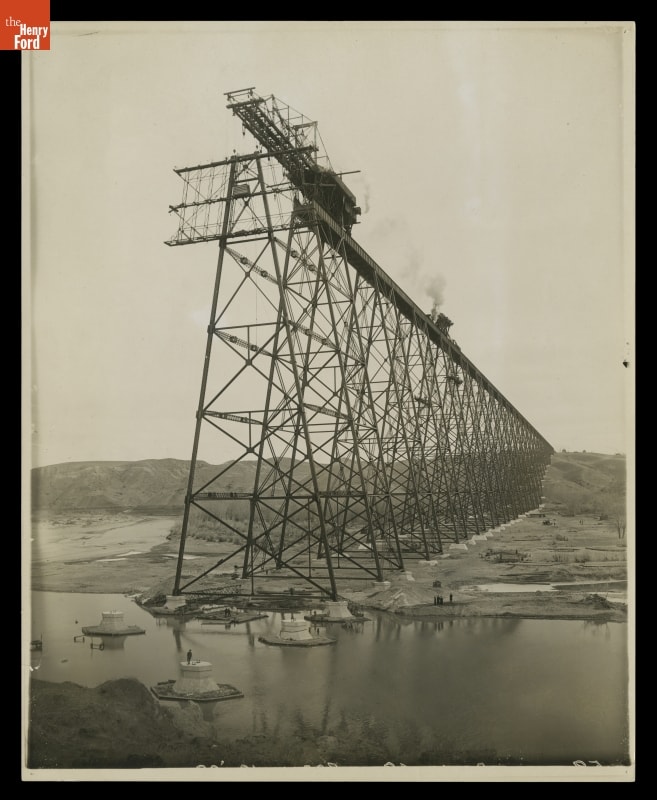
- Erecting Lethbridge Iron Viaduct, Lethbridge, Alberta, Canada, 1908-1909 - From 1895 to 1924, the Detroit Publishing Company was one of the major image publishers in the world. The company's wide-ranging stock of original photographs documented life and landscapes from across the nation and around the globe. From the tens of thousands of negatives, the company created prints, postcards, lantern slides, panoramas, and other merchandise for sale to educators, businessmen, advertisers, homeowners and travelers.
- 1907-1909
- Collections - Artifact
Erecting Lethbridge Iron Viaduct, Lethbridge, Alberta, Canada, 1908-1909
From 1895 to 1924, the Detroit Publishing Company was one of the major image publishers in the world. The company's wide-ranging stock of original photographs documented life and landscapes from across the nation and around the globe. From the tens of thousands of negatives, the company created prints, postcards, lantern slides, panoramas, and other merchandise for sale to educators, businessmen, advertisers, homeowners and travelers.
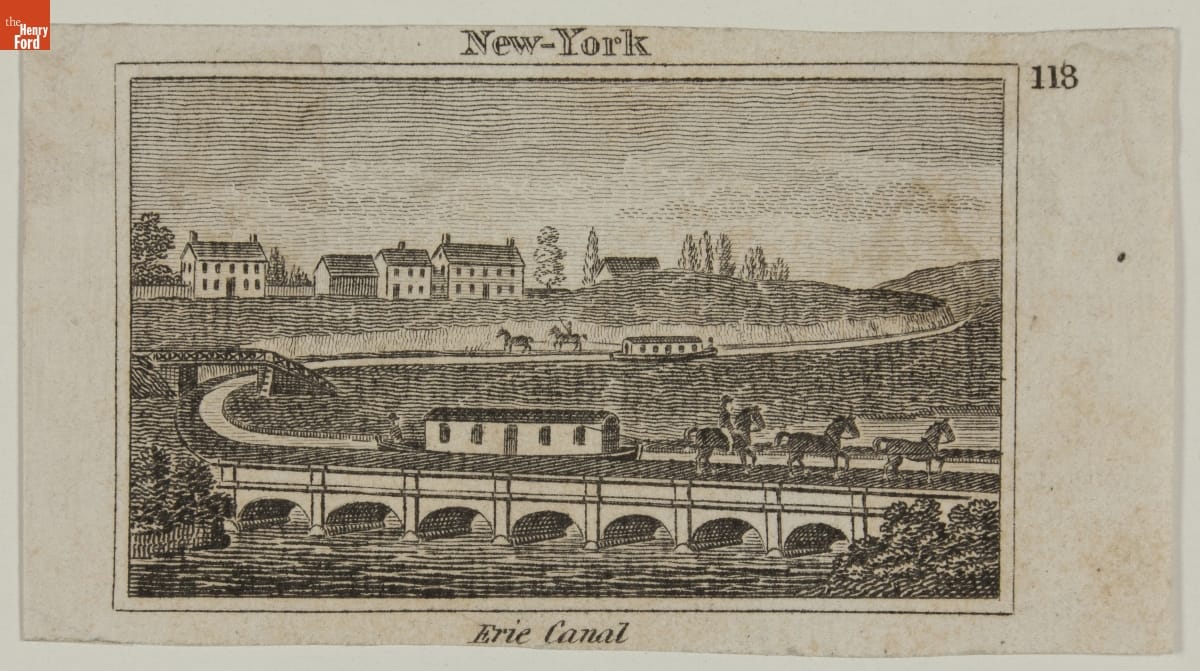
- Canal Boat Crossing a River Using a Viaduct, circa 1830 - The construction of Erie Canal, connecting the Hudson River to Lake Erie, began in 1817 and completed in 1825, opened the Midwest of the United States to settlement and commerce. This small print shows a packet boat crossing a river by means of a viaduct on the Erie Canal.
- circa 1830
- Collections - Artifact
Canal Boat Crossing a River Using a Viaduct, circa 1830
The construction of Erie Canal, connecting the Hudson River to Lake Erie, began in 1817 and completed in 1825, opened the Midwest of the United States to settlement and commerce. This small print shows a packet boat crossing a river by means of a viaduct on the Erie Canal.
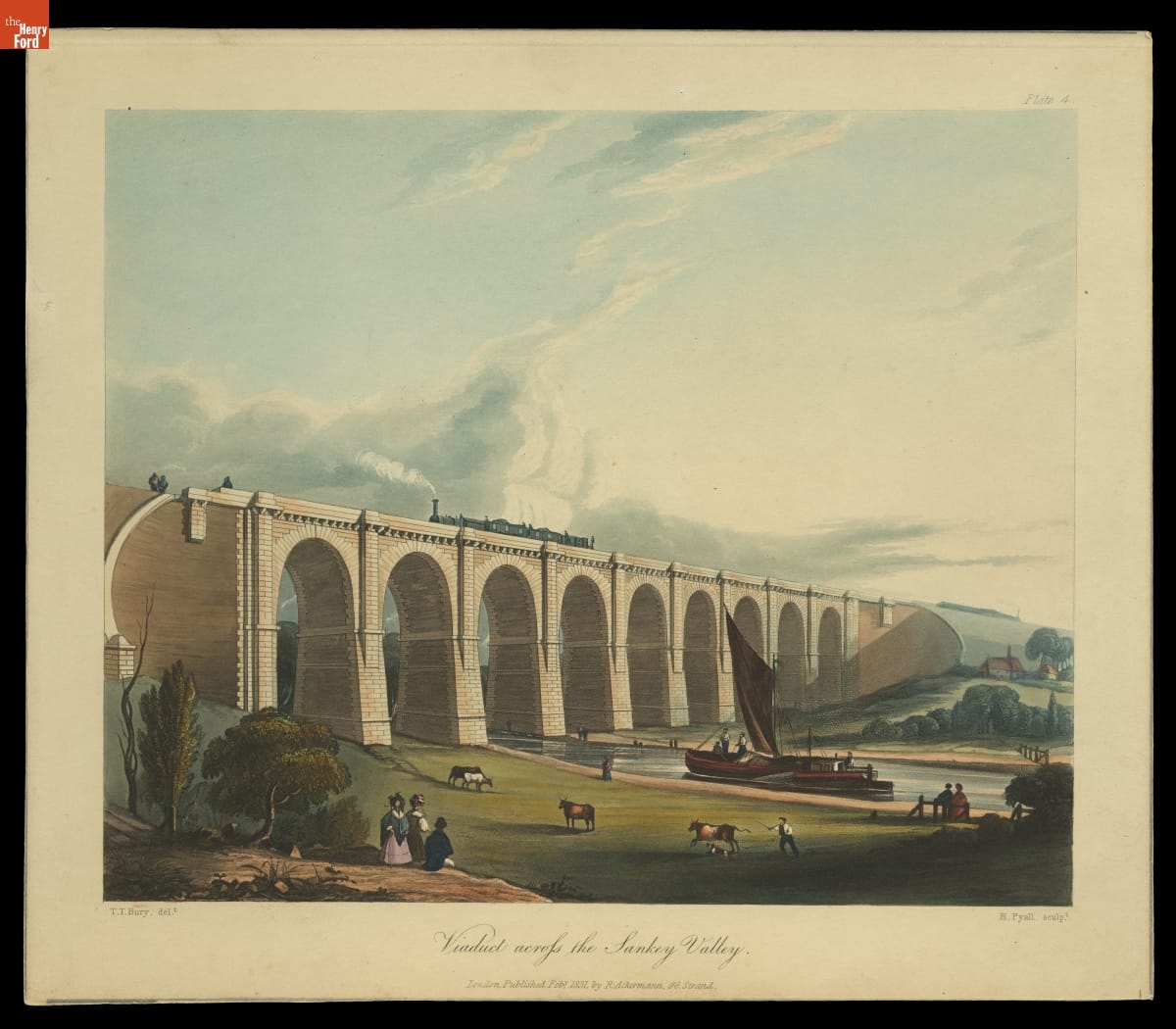
- Aquatint, "Viaduct across the Sankey Valley," 1831 - The Liverpool and Manchester Railway, connecting its namesake cities in the United Kingdom, opened in 1830. It was the world's first inter-city railroad, and the first to operate exclusively with steam locomotives. The 31-mile, double-track line was built to a high standard. Engineering highlights included Wapping Tunnel under Liverpool and the 600-foot-long Sankey Viaduct across the Sankey Valley.
- February 01, 1831
- Collections - Artifact
Aquatint, "Viaduct across the Sankey Valley," 1831
The Liverpool and Manchester Railway, connecting its namesake cities in the United Kingdom, opened in 1830. It was the world's first inter-city railroad, and the first to operate exclusively with steam locomotives. The 31-mile, double-track line was built to a high standard. Engineering highlights included Wapping Tunnel under Liverpool and the 600-foot-long Sankey Viaduct across the Sankey Valley.
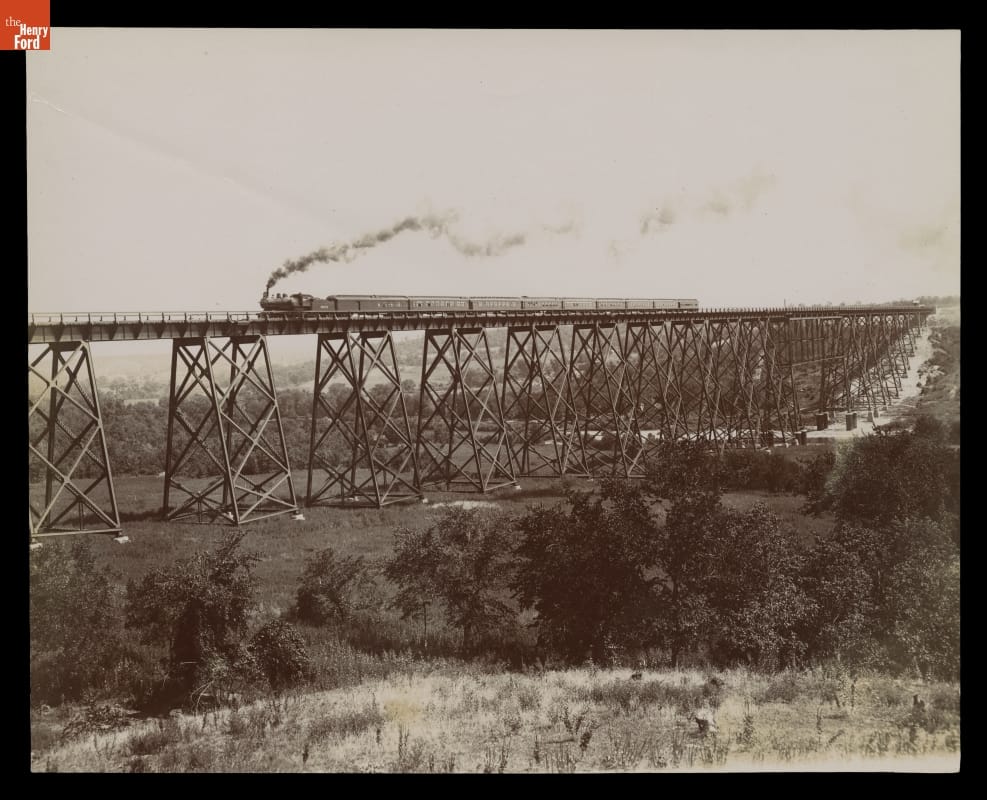
- Chicago & Northwestern Railway Viaduct over Des Moines River, Boone, Iowa, 1901 - A Chicago & North Western Railway passenger train crossed the new Kate Shelley High Bridge near Boone, Iowa, in 1901. The viaduct's name honored a heroic teenage girl. During an 1881 thunderstorm, an earlier bridge at the site was damaged by a flood. Kate Shelley walked more than two miles through the storm to warn an approaching passenger train of the danger.
- 1901
- Collections - Artifact
Chicago & Northwestern Railway Viaduct over Des Moines River, Boone, Iowa, 1901
A Chicago & North Western Railway passenger train crossed the new Kate Shelley High Bridge near Boone, Iowa, in 1901. The viaduct's name honored a heroic teenage girl. During an 1881 thunderstorm, an earlier bridge at the site was damaged by a flood. Kate Shelley walked more than two miles through the storm to warn an approaching passenger train of the danger.
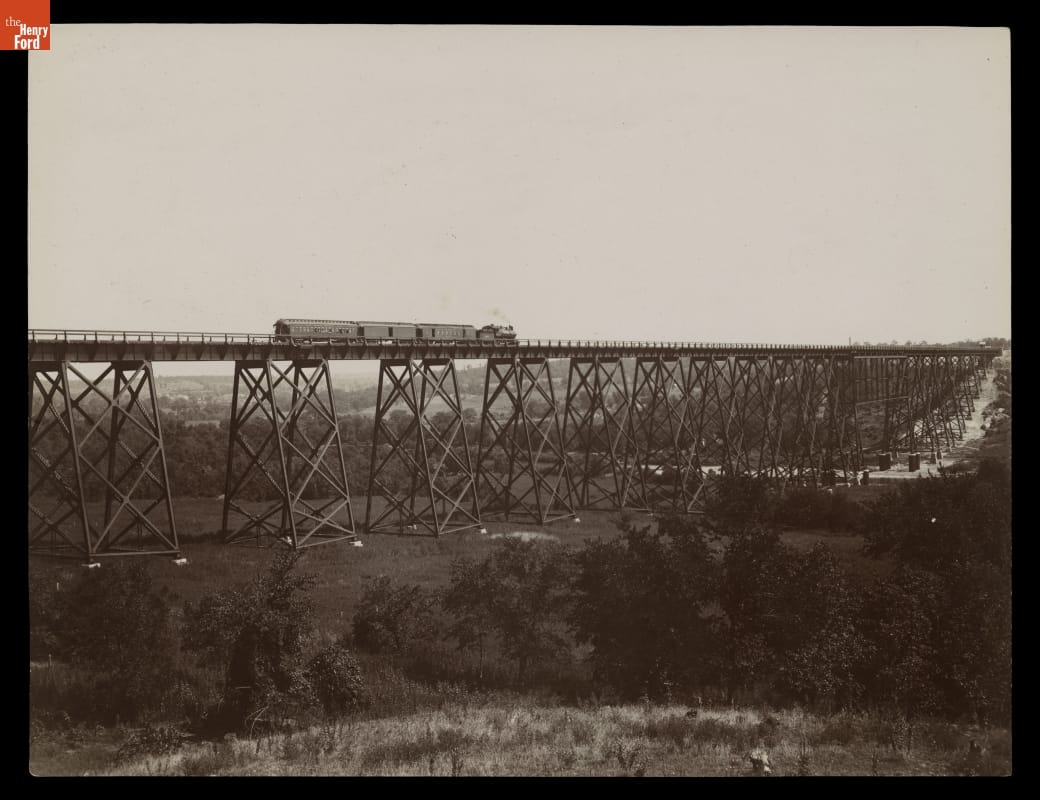
- Steel Viaduct over Des Moines River, C. & N. W. Railway, 1900-1910 - A Chicago & North Western Railway passenger train crossed the new Kate Shelley High Bridge near Boone, Iowa, in 1901. The viaduct's name honored a heroic teenage girl. During an 1881 thunderstorm, an earlier bridge at the site was damaged by a flood. Kate Shelley walked more than two miles through the storm to warn an approaching passenger train of the danger.
- 1900-1910
- Collections - Artifact
Steel Viaduct over Des Moines River, C. & N. W. Railway, 1900-1910
A Chicago & North Western Railway passenger train crossed the new Kate Shelley High Bridge near Boone, Iowa, in 1901. The viaduct's name honored a heroic teenage girl. During an 1881 thunderstorm, an earlier bridge at the site was damaged by a flood. Kate Shelley walked more than two miles through the storm to warn an approaching passenger train of the danger.
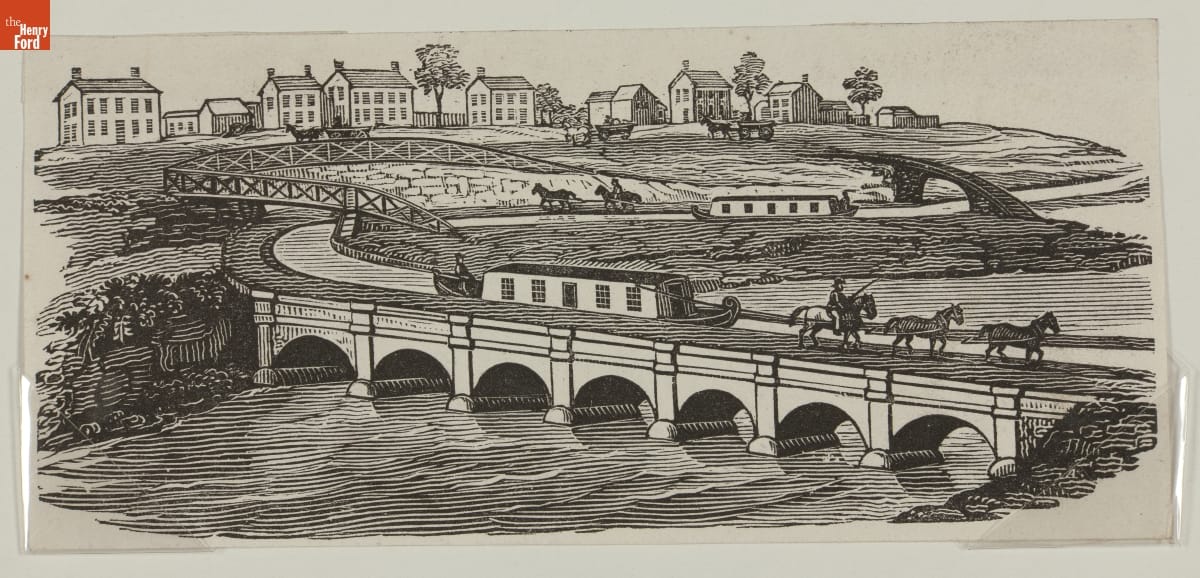
- Wood Engraving, Canal Boat Passing over a River on a Stone Viaduct, circa 1830 - The first half of the 19th century was the heyday of canal construction in the United States. This wood engraving by Alexander Robb, a Philadelphia artist, illustrates a view of a passenger canal boat passing over a river by means of a stone viaduct, a familiar sight by 1830.
- circa 1830
- Collections - Artifact
Wood Engraving, Canal Boat Passing over a River on a Stone Viaduct, circa 1830
The first half of the 19th century was the heyday of canal construction in the United States. This wood engraving by Alexander Robb, a Philadelphia artist, illustrates a view of a passenger canal boat passing over a river by means of a stone viaduct, a familiar sight by 1830.