
Search
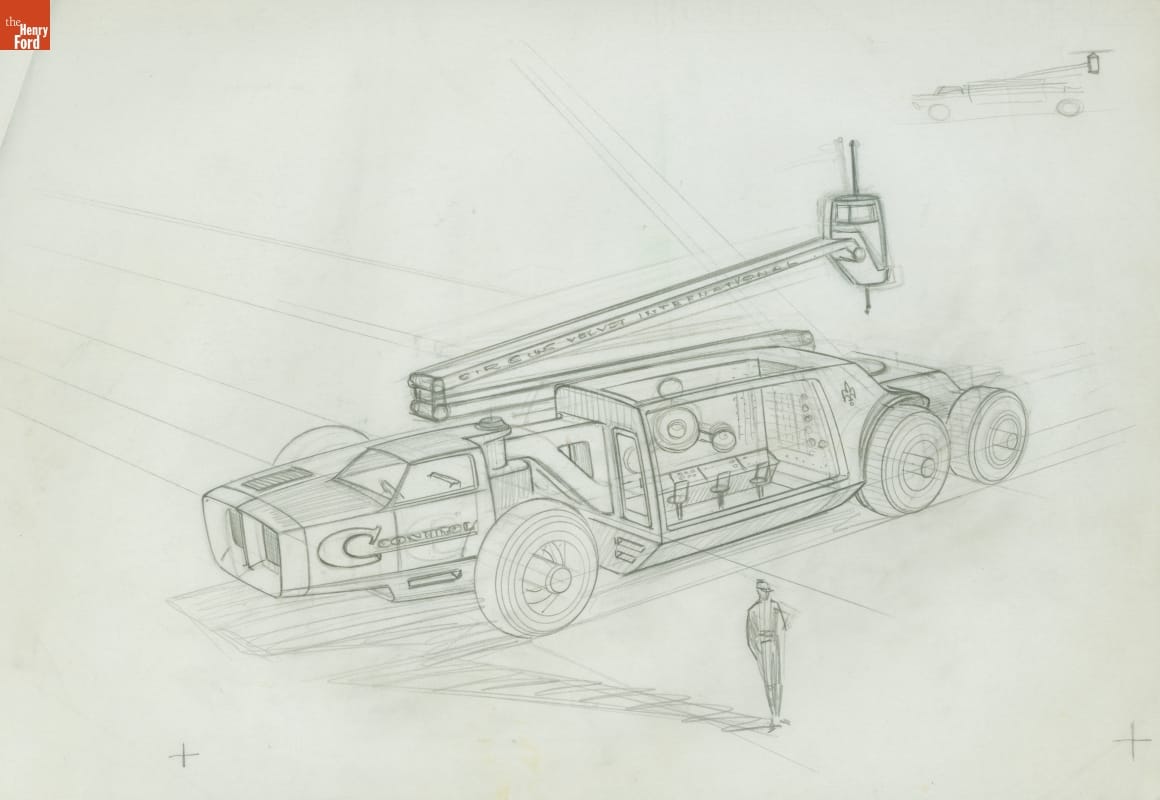
- Circus Performance Control Vehicle, 1967 - In 1966, automobile designer Virgil Exner was approached by a wealthy man with an unusual dream: to build a motorized circus with vehicles for transporting performers and constructing the big top. Exner was eager to begin the novel - though soon abandoned - project and created several concepts, including this control vehicle designed to erect the big top.
- 1967
- Collections - Artifact
Circus Performance Control Vehicle, 1967
In 1966, automobile designer Virgil Exner was approached by a wealthy man with an unusual dream: to build a motorized circus with vehicles for transporting performers and constructing the big top. Exner was eager to begin the novel - though soon abandoned - project and created several concepts, including this control vehicle designed to erect the big top.
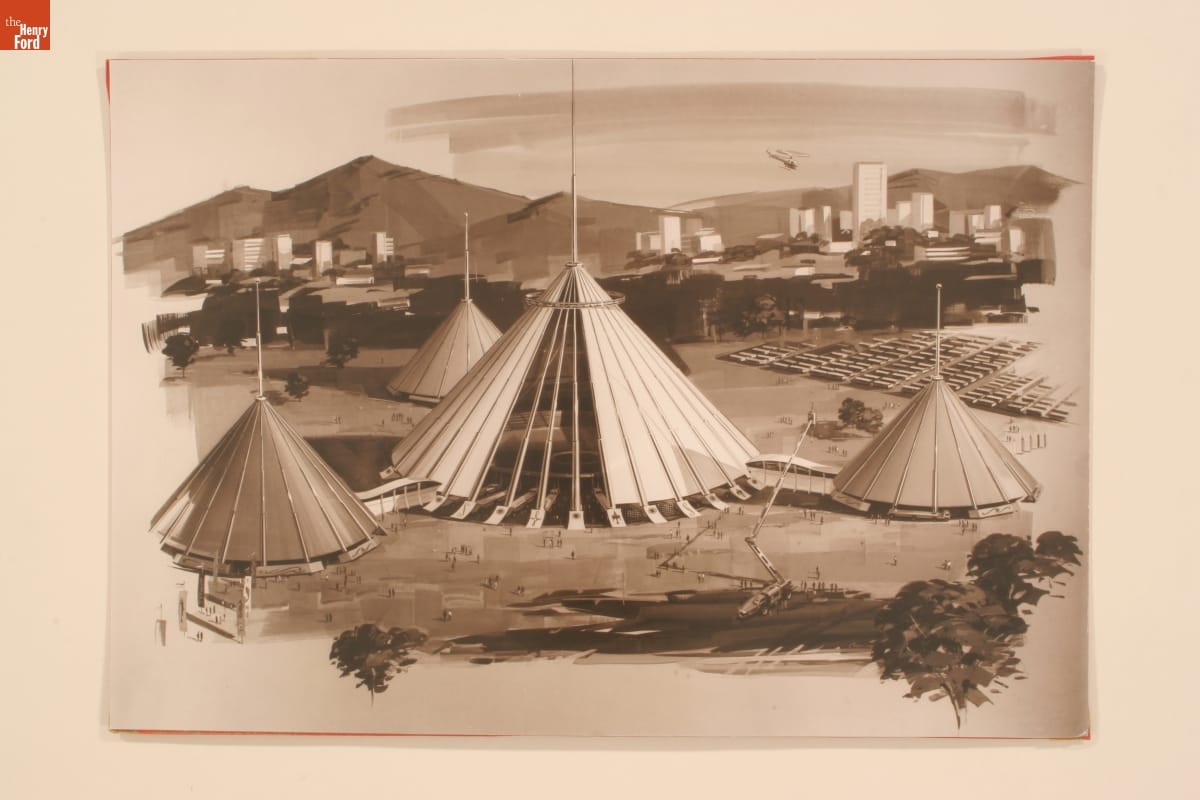
- "Circus Velvet," circa 1967 - In 1966, automobile designer Virgil Exner was approached by a wealthy man with an unusual dream: to build a motorized circus with vehicles for transporting performers and constructing the big top. Exner was eager to begin the novel, though soon abandoned, project. He created several concept vehicles and structures for the spectacle, known as Circus Velvet.
- circa 1967
- Collections - Artifact
"Circus Velvet," circa 1967
In 1966, automobile designer Virgil Exner was approached by a wealthy man with an unusual dream: to build a motorized circus with vehicles for transporting performers and constructing the big top. Exner was eager to begin the novel, though soon abandoned, project. He created several concept vehicles and structures for the spectacle, known as Circus Velvet.
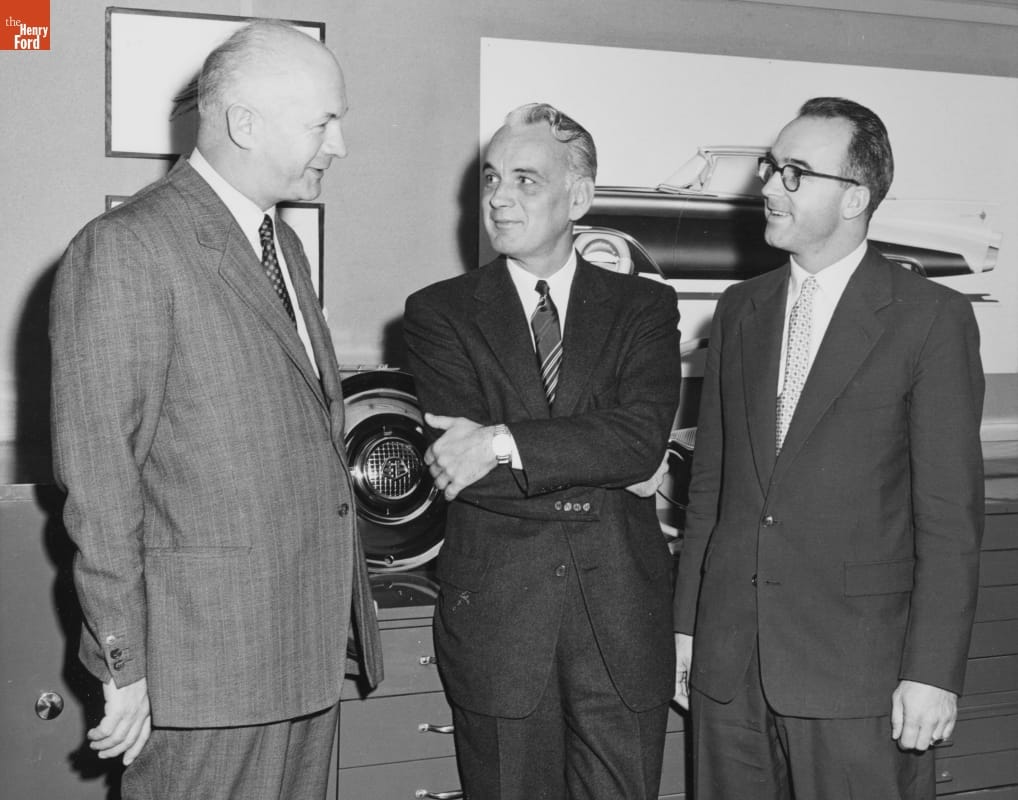
- Virgil M. Exner with Chrysler Corporation Associates, 1955 - Virgil Exner's long career in design included time with General Motors, Raymond Loewy Associates, and Studebaker. Exner is best remembered for his work at Chrysler, where he headed design efforts from 1953 to 1961. Following his retirement from Chrysler, Exner consulted on multiple projects including concept cars, motorboats, and revivals of the Duesenberg and Stutz automobile brands.
- 1955
- Collections - Artifact
Virgil M. Exner with Chrysler Corporation Associates, 1955
Virgil Exner's long career in design included time with General Motors, Raymond Loewy Associates, and Studebaker. Exner is best remembered for his work at Chrysler, where he headed design efforts from 1953 to 1961. Following his retirement from Chrysler, Exner consulted on multiple projects including concept cars, motorboats, and revivals of the Duesenberg and Stutz automobile brands.
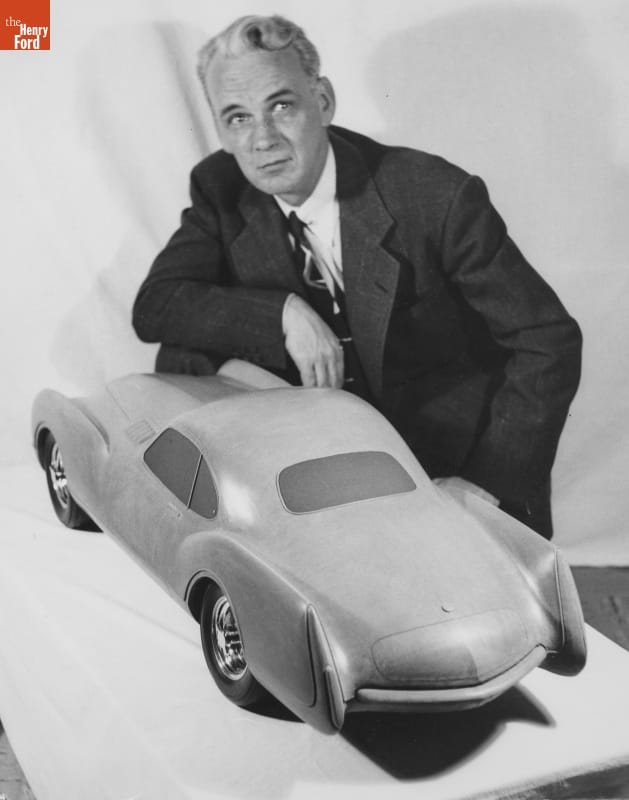
- Virgil Exner with Concept Car Model, 1951 - Automobile designer Virgil Exner posed with a Chrysler concept car model in 1951. Exner's influential career included design work with General Motors, Raymond Loewy Associates, and Studebaker. He is best remembered for his work at Chrysler. Exner's "Forward Look," featured on Chrysler vehicles from 1955-1961, remade the company's stodgy image with sleek, smooth lines inspired by jet aircraft.
- 1951
- Collections - Artifact
Virgil Exner with Concept Car Model, 1951
Automobile designer Virgil Exner posed with a Chrysler concept car model in 1951. Exner's influential career included design work with General Motors, Raymond Loewy Associates, and Studebaker. He is best remembered for his work at Chrysler. Exner's "Forward Look," featured on Chrysler vehicles from 1955-1961, remade the company's stodgy image with sleek, smooth lines inspired by jet aircraft.
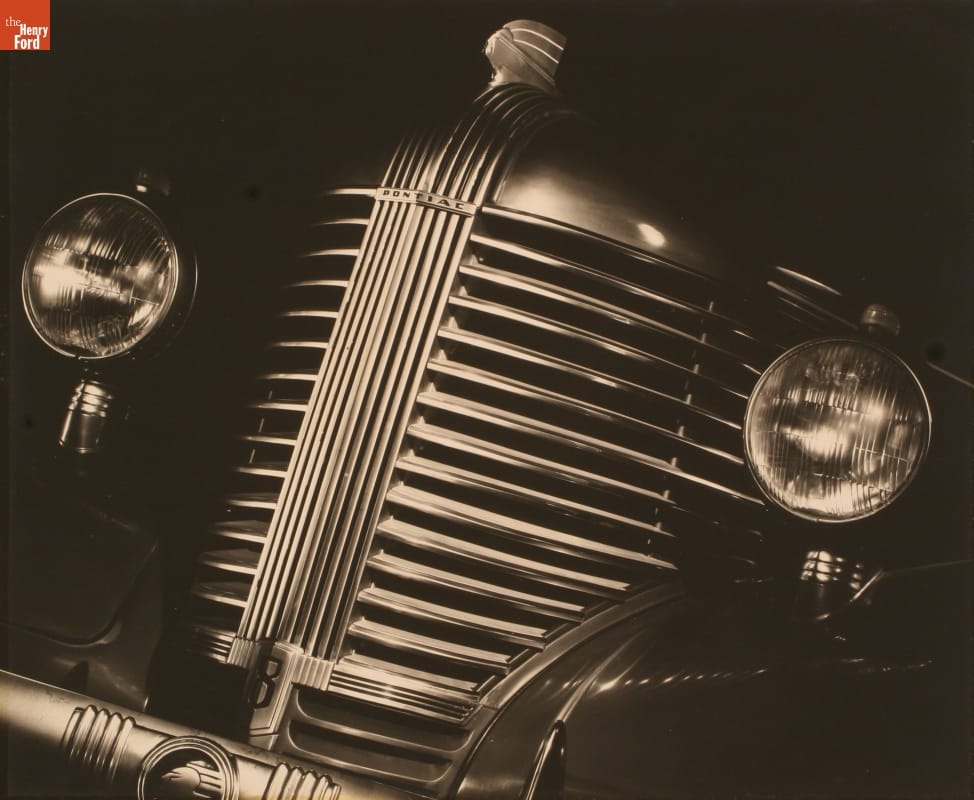
- Detail Image, 1938 Pontiac Front Grille - Before the mid-1930s, automobiles were essentially designed by the engineers who built them. But as style became more important to the buying public, engineers increasingly worked in partnership with stylists. This photograph of the highly stylized 1938 Pontiac grille illustrates the trendsetting work of stylists in General Motors' revolutionary Art and Colour Section, headed by influential designer Harley Earl.
- 1938
- Collections - Artifact
Detail Image, 1938 Pontiac Front Grille
Before the mid-1930s, automobiles were essentially designed by the engineers who built them. But as style became more important to the buying public, engineers increasingly worked in partnership with stylists. This photograph of the highly stylized 1938 Pontiac grille illustrates the trendsetting work of stylists in General Motors' revolutionary Art and Colour Section, headed by influential designer Harley Earl.
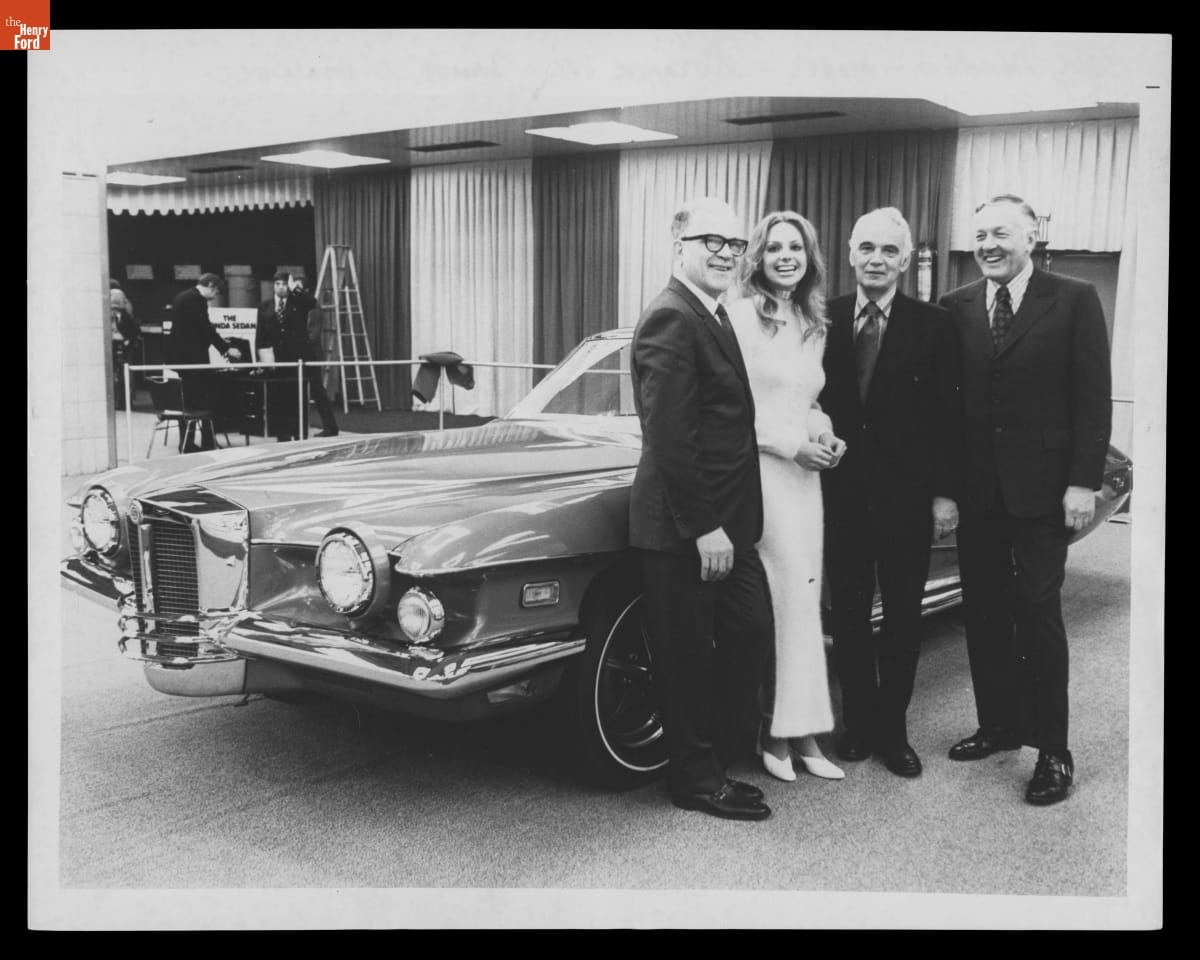
- Virgil M. Exner, Unidentified Model, James O'Donnell and Paul Farago with Stutz Blackhawk Car, 1970 - Banker James O'Donnell and former Chrysler design head Virgil Exner revived the Stutz Motor Company and built new models under the brand from 1971 through 1987. The Blackhawk coupe was based on a General Motors platform but included luxury features like gold-plated trim and mink carpeting. The high-end car appealed to celebrity owners like Sammy Davis, Jr., and Elvis Presley.
- 1970
- Collections - Artifact
Virgil M. Exner, Unidentified Model, James O'Donnell and Paul Farago with Stutz Blackhawk Car, 1970
Banker James O'Donnell and former Chrysler design head Virgil Exner revived the Stutz Motor Company and built new models under the brand from 1971 through 1987. The Blackhawk coupe was based on a General Motors platform but included luxury features like gold-plated trim and mink carpeting. The high-end car appealed to celebrity owners like Sammy Davis, Jr., and Elvis Presley.
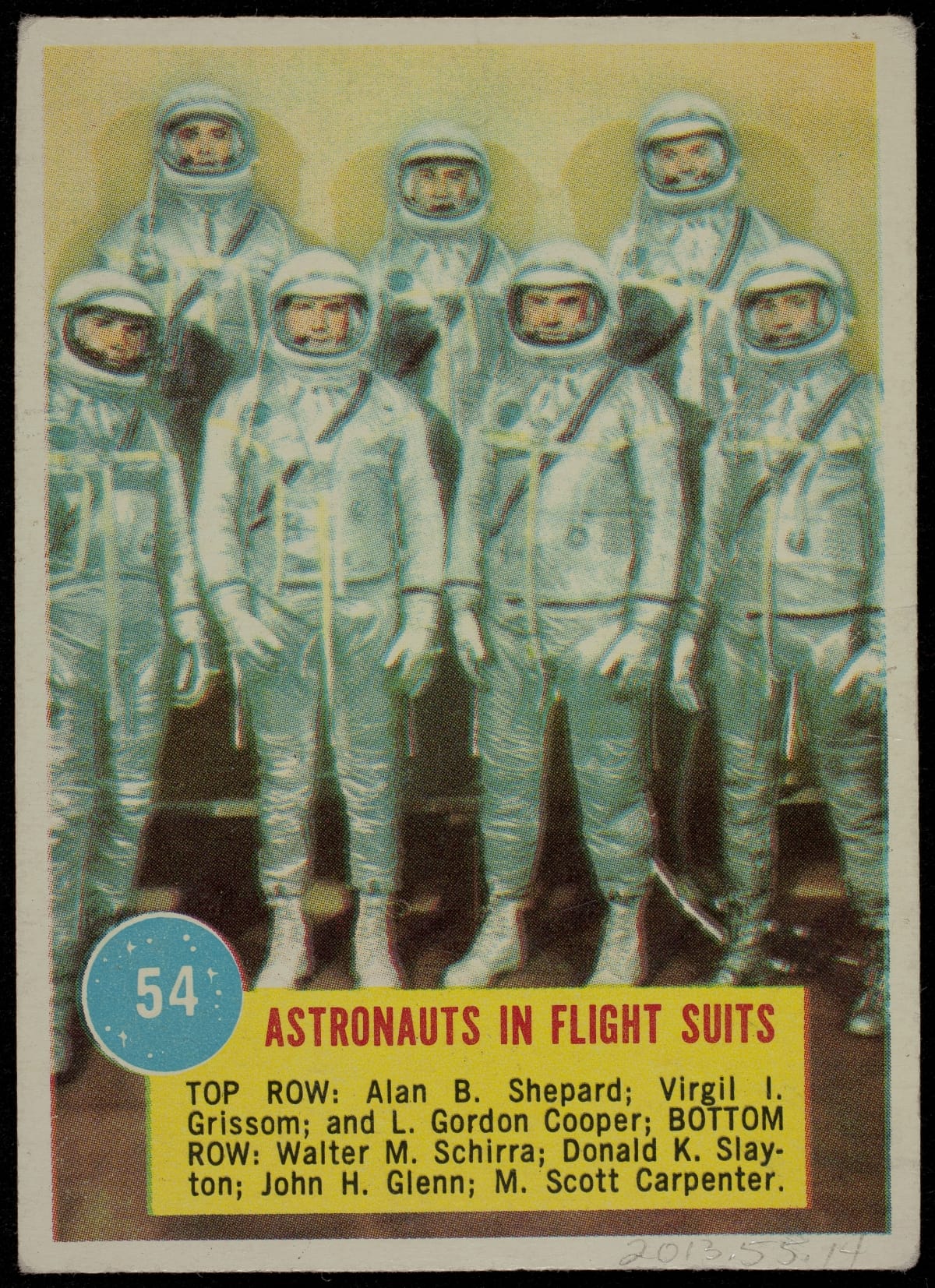
- Topps Astronaut Trading Card, "Astronauts in Flight Suits," 1963 - President John F. Kennedy's vision to explore the "new frontier" of space ignited the public's imagination. Pictorial souvenir cards like this helped generate excitement about the latest achievements in the space program. The U.S. astronauts and their accomplishments dominate the card fronts, while the backs show drawings that blend elements of science fiction and fantasy-requiring 3-D glasses to view.
- 1960-1962
- Collections - Artifact
Topps Astronaut Trading Card, "Astronauts in Flight Suits," 1963
President John F. Kennedy's vision to explore the "new frontier" of space ignited the public's imagination. Pictorial souvenir cards like this helped generate excitement about the latest achievements in the space program. The U.S. astronauts and their accomplishments dominate the card fronts, while the backs show drawings that blend elements of science fiction and fantasy-requiring 3-D glasses to view.
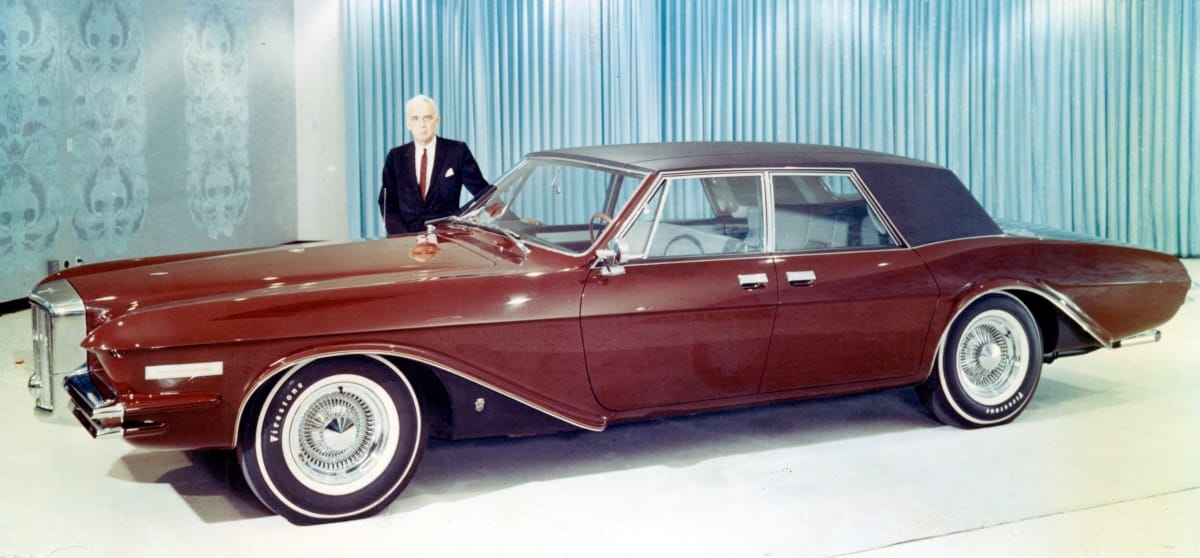
- Virgil Exner with 1966 Duesenberg Sedan - Virgil Exner's long career in automotive design included work with General Motors, Raymond Loewy Associates, and Studebaker. He is best remembered for his work at Chrysler, where he headed design from 1953 to 1961. Exner designed a revived Duesenberg in 1966, with a prototype built by Ghia. Financial difficulties canceled plans for commercial production of the car.
- circa 1966
- Collections - Artifact
Virgil Exner with 1966 Duesenberg Sedan
Virgil Exner's long career in automotive design included work with General Motors, Raymond Loewy Associates, and Studebaker. He is best remembered for his work at Chrysler, where he headed design from 1953 to 1961. Exner designed a revived Duesenberg in 1966, with a prototype built by Ghia. Financial difficulties canceled plans for commercial production of the car.
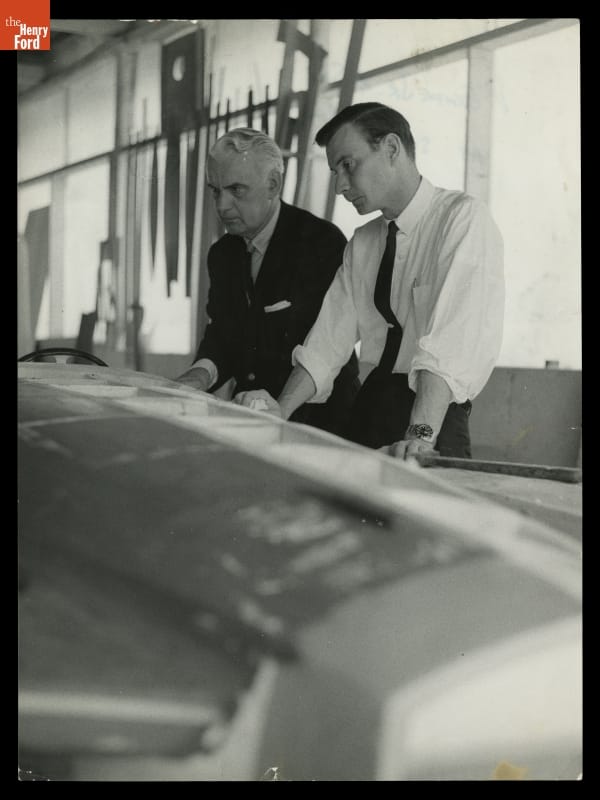
- Virgil M. Exner and Virgil Exner, Jr. Overseeing Design of Mercer-Cobra Automobile, 1964 - Virgil Exner's long career in automotive design included work with General Motors, Raymond Loewy Associates, and Studebaker. He is best remembered for his tenure at Chrysler, where he headed design from 1953 to 1961. Exner designed the Mercer-Cobra concept car in 1963. The Copper Development Association later funded a promotional prototype -- finished with much copper and brass.
- 1964
- Collections - Artifact
Virgil M. Exner and Virgil Exner, Jr. Overseeing Design of Mercer-Cobra Automobile, 1964
Virgil Exner's long career in automotive design included work with General Motors, Raymond Loewy Associates, and Studebaker. He is best remembered for his tenure at Chrysler, where he headed design from 1953 to 1961. Exner designed the Mercer-Cobra concept car in 1963. The Copper Development Association later funded a promotional prototype -- finished with much copper and brass.
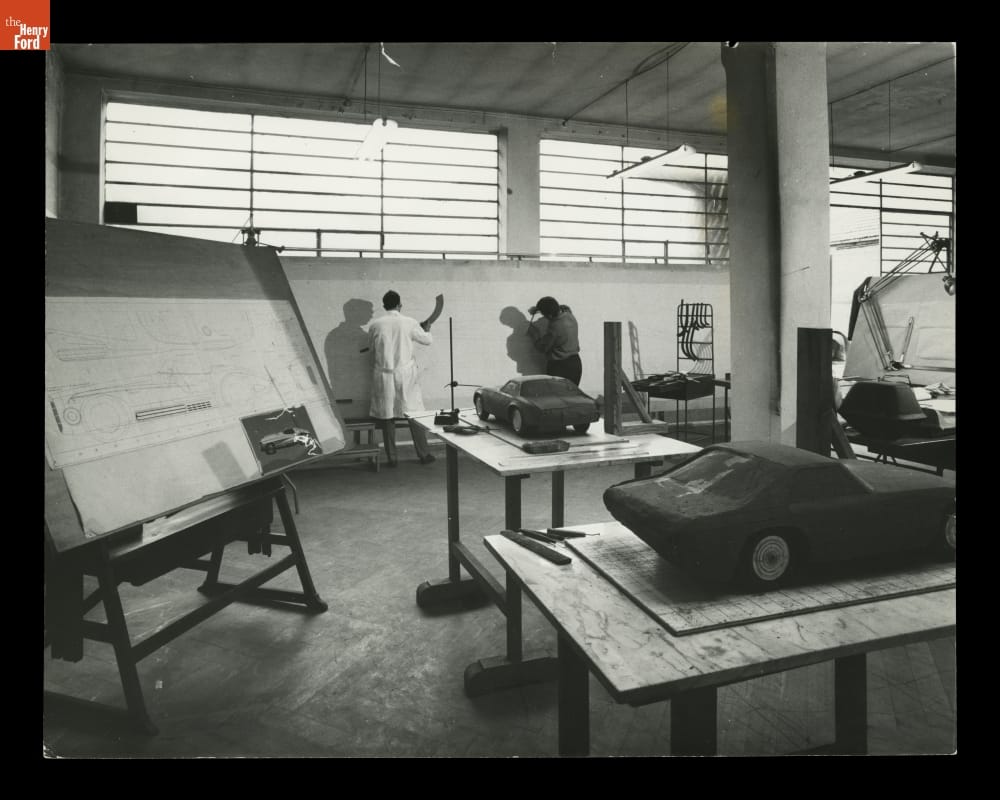
- Technicians Working on Mercer-Cobra, Torino, Italy, 1964 - Virgil Exner's long career in automotive design included work with General Motors, Raymond Loewy Associates, and Studebaker. He is best remembered for his tenure at Chrysler, where he headed design from 1953 to 1961. Exner designed the Mercer-Cobra concept car in 1963. The Copper Development Association later funded a promotional prototype -- finished with much copper and brass.
- 1964
- Collections - Artifact
Technicians Working on Mercer-Cobra, Torino, Italy, 1964
Virgil Exner's long career in automotive design included work with General Motors, Raymond Loewy Associates, and Studebaker. He is best remembered for his tenure at Chrysler, where he headed design from 1953 to 1961. Exner designed the Mercer-Cobra concept car in 1963. The Copper Development Association later funded a promotional prototype -- finished with much copper and brass.