
Search
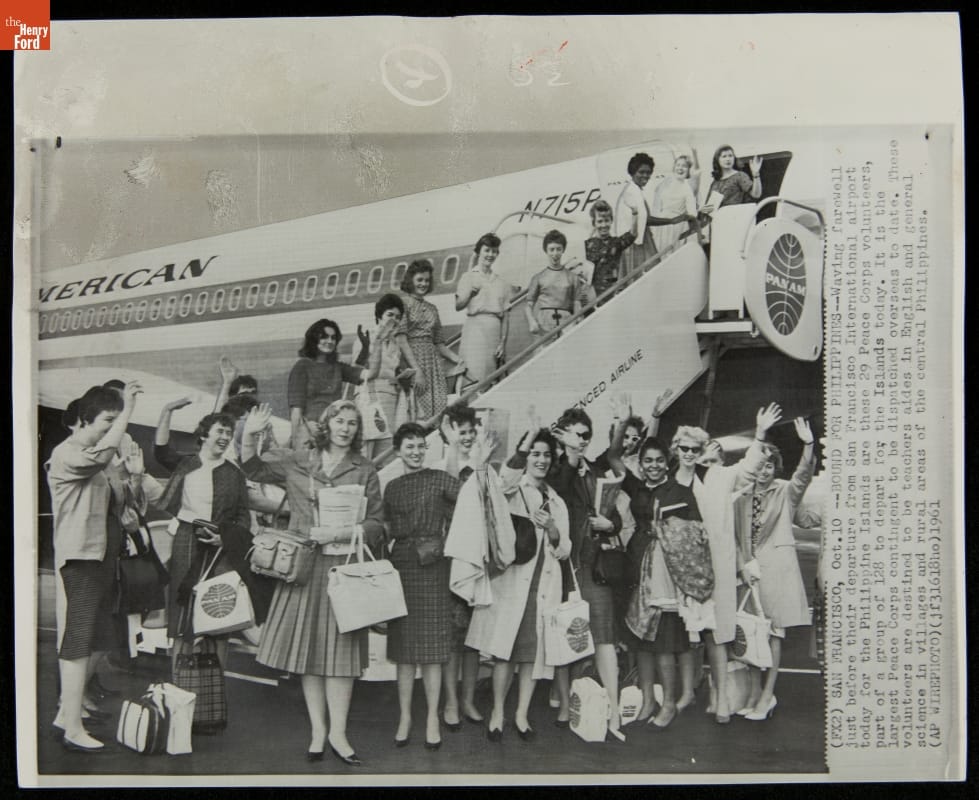
- Wire Photograph, Peace Corps Volunteers at San Francisco International Airport, "Bound for Philippines," 1961 - President John F. Kennedy recognized the Peace Corps as an opportunity to spread goodwill and as a positive weapon against the Cold War. Established March 1, 1961, by the end of the year, many Peace Corps volunteers had been trained and placed in overseas assignments. Here, a group leaves for the Philippines to serve as teachers' aides in country villages.
- October 12, 1961
- Collections - Artifact
Wire Photograph, Peace Corps Volunteers at San Francisco International Airport, "Bound for Philippines," 1961
President John F. Kennedy recognized the Peace Corps as an opportunity to spread goodwill and as a positive weapon against the Cold War. Established March 1, 1961, by the end of the year, many Peace Corps volunteers had been trained and placed in overseas assignments. Here, a group leaves for the Philippines to serve as teachers' aides in country villages.
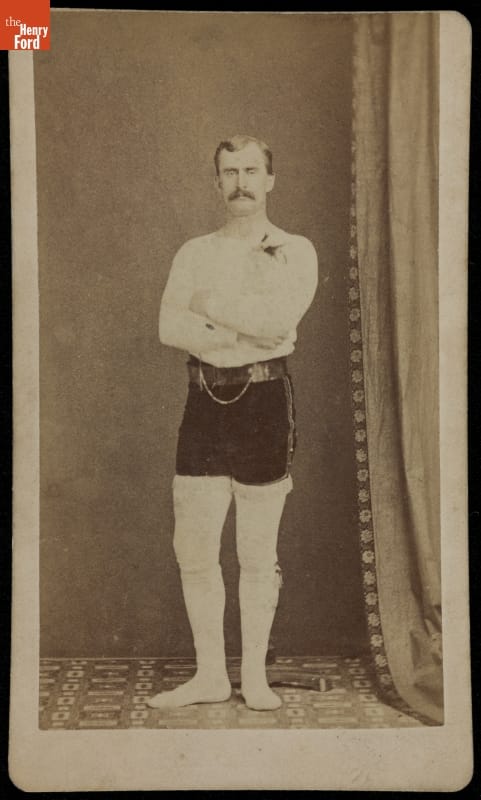
- Thomas Shaw of the Alert Hose Company, Big Rapids, Michigan, 1877 - This man, identified as Thomas Shaw, was a fireman with the Alert Hose Company of Big Rapids, Michigan. To 21st-century eyes his uniform may appear odd, but it was worn during firemen's tournaments and not for fighting fires. These competitions pitted rival firefighting companies against each other in engine and hose races and other tests of firefighting skills needed during fire emergencies.
- 1877
- Collections - Artifact
Thomas Shaw of the Alert Hose Company, Big Rapids, Michigan, 1877
This man, identified as Thomas Shaw, was a fireman with the Alert Hose Company of Big Rapids, Michigan. To 21st-century eyes his uniform may appear odd, but it was worn during firemen's tournaments and not for fighting fires. These competitions pitted rival firefighting companies against each other in engine and hose races and other tests of firefighting skills needed during fire emergencies.
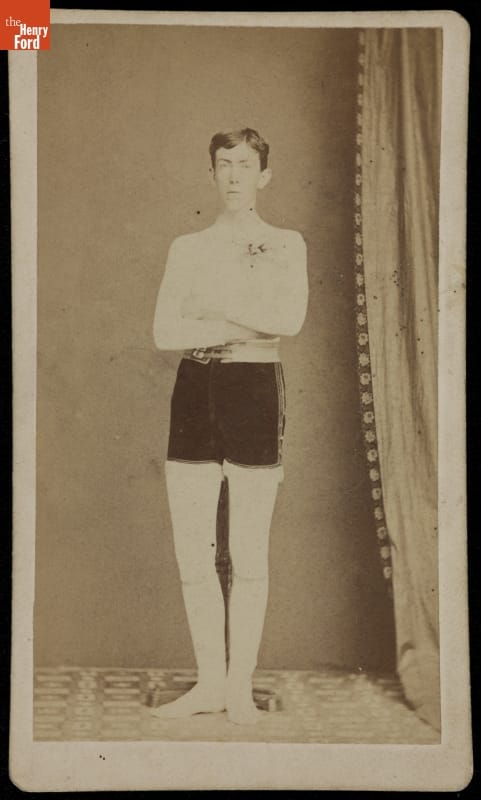
- W. E. Drew of the Alert Hose Company, Big Rapids, Michigan, 1877 - This man, identified as W. E. Drew, was a fireman with the Alert Hose Company of Big Rapids, Michigan. To 21st-century eyes his uniform may appear odd, but it was worn during firemen's tournaments and not for fighting fires. These competitions pitted rival firefighting companies against each other in engine and hose races and other tests of firefighting skills needed during fire emergencies.
- 1877
- Collections - Artifact
W. E. Drew of the Alert Hose Company, Big Rapids, Michigan, 1877
This man, identified as W. E. Drew, was a fireman with the Alert Hose Company of Big Rapids, Michigan. To 21st-century eyes his uniform may appear odd, but it was worn during firemen's tournaments and not for fighting fires. These competitions pitted rival firefighting companies against each other in engine and hose races and other tests of firefighting skills needed during fire emergencies.
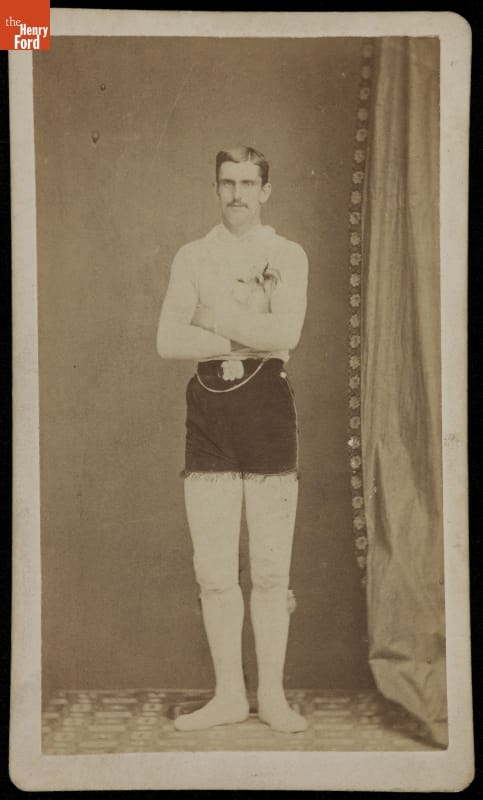
- Henry Shaw of the Alert Hose Company, Big Rapids, Michigan, 1877 - This man, identified as Henry Shaw, was a fireman with the Alert Hose Company of Big Rapids, Michigan. To 21st-century eyes his uniform may appear odd, but it was worn during firemen's tournaments and not for fighting fires. These competitions pitted rival firefighting companies against each other in engine and hose races and other tests of firefighting skills needed during fire emergencies.
- 1877
- Collections - Artifact
Henry Shaw of the Alert Hose Company, Big Rapids, Michigan, 1877
This man, identified as Henry Shaw, was a fireman with the Alert Hose Company of Big Rapids, Michigan. To 21st-century eyes his uniform may appear odd, but it was worn during firemen's tournaments and not for fighting fires. These competitions pitted rival firefighting companies against each other in engine and hose races and other tests of firefighting skills needed during fire emergencies.
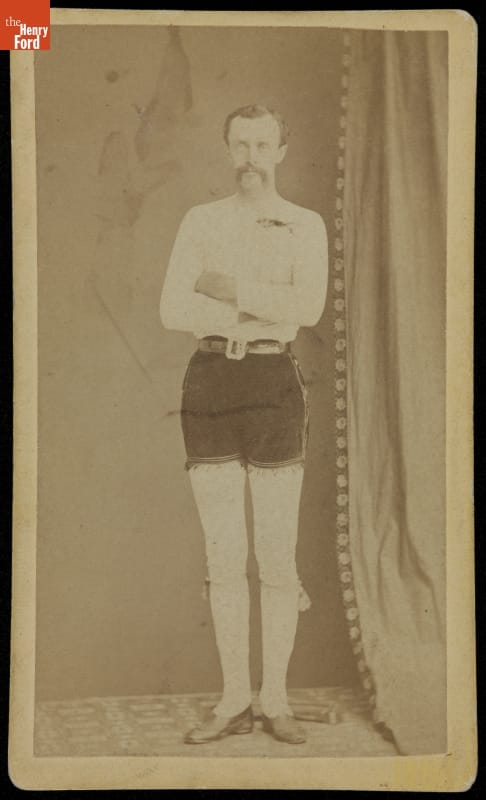
- Zip Hammond of the Alert Hose Company, Big Rapids, Michigan, 1877 - This man, identified as "Zip" Hammond, was a fireman with the Alert Hose Company of Big Rapids, Michigan. To 21st-century eyes his uniform may appear odd, but it was worn during firemen's tournaments and not for fighting fires. These competitions pitted rival firefighting companies against each other in engine and hose races and other tests of firefighting skills needed during fire emergencies.
- 1877
- Collections - Artifact
Zip Hammond of the Alert Hose Company, Big Rapids, Michigan, 1877
This man, identified as "Zip" Hammond, was a fireman with the Alert Hose Company of Big Rapids, Michigan. To 21st-century eyes his uniform may appear odd, but it was worn during firemen's tournaments and not for fighting fires. These competitions pitted rival firefighting companies against each other in engine and hose races and other tests of firefighting skills needed during fire emergencies.
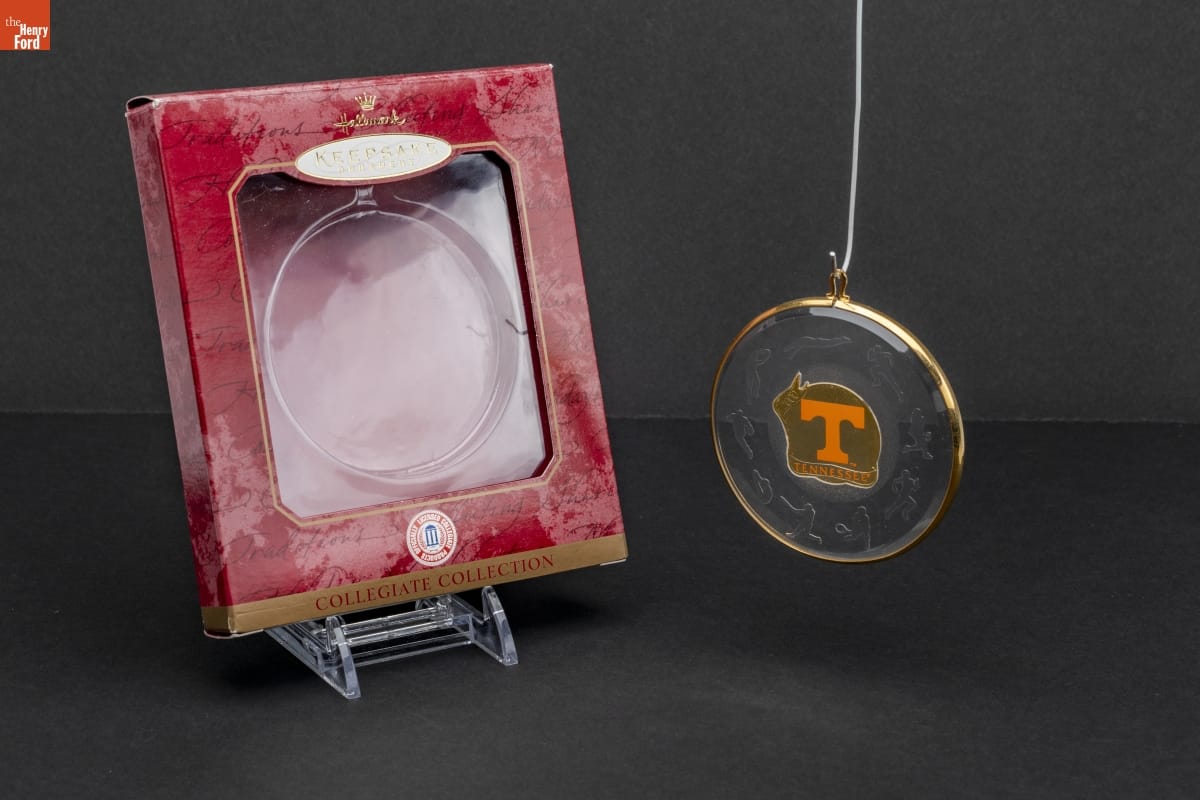
- Hallmark "Collegiate Collection: Tennessee Volunteers" Christmas Ornament, 2000 - Already known for greeting cards, Hallmark introduced a line of Christmas ornaments in 1973. The company's annual release of an increasing array of ornaments revolutionized Christmas decorating, appealing to customers' interest in marking memories and milestones as well as expressing one's personality and unique tastes.
- 2000
- Collections - Artifact
Hallmark "Collegiate Collection: Tennessee Volunteers" Christmas Ornament, 2000
Already known for greeting cards, Hallmark introduced a line of Christmas ornaments in 1973. The company's annual release of an increasing array of ornaments revolutionized Christmas decorating, appealing to customers' interest in marking memories and milestones as well as expressing one's personality and unique tastes.
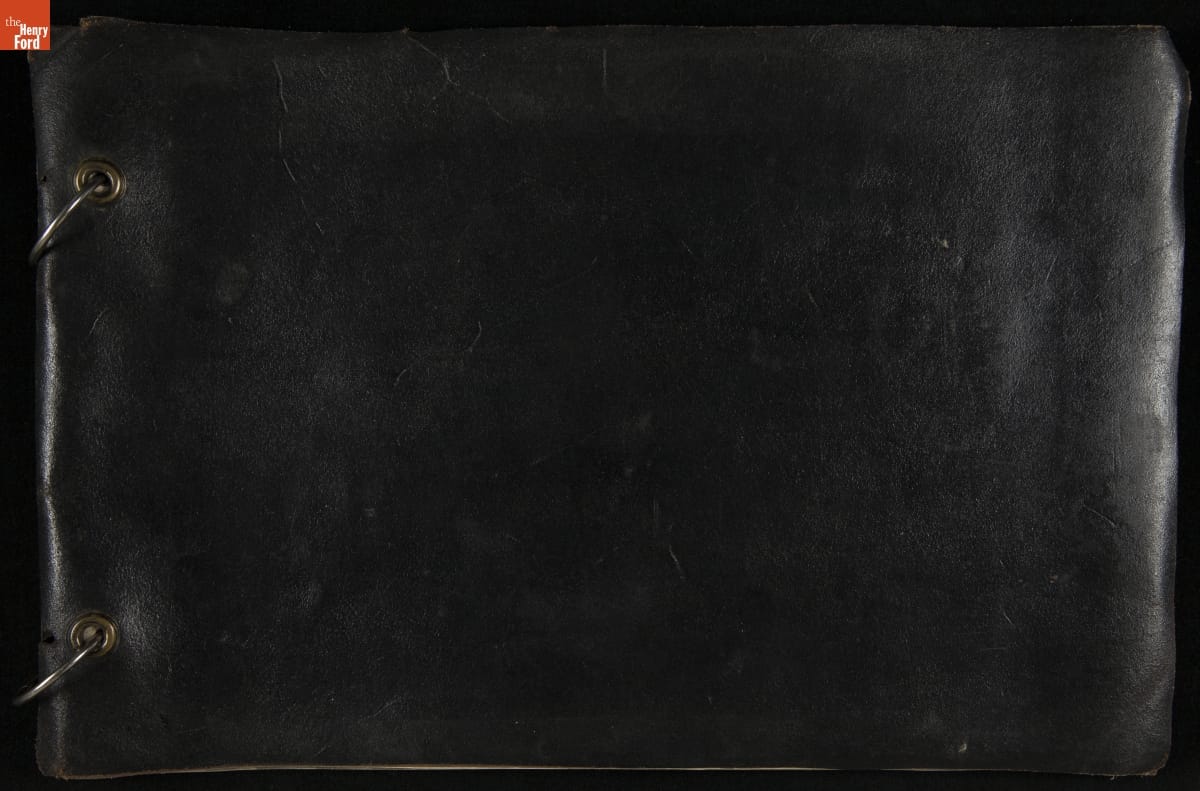
- Tattoo Flash Portfolio, circa 1918 - Tattoos communicate stories. Their content ranges from deeply personal and traditional--to regrettable and frivolous. In the early 1900s, "Professor" Waters apprenticed as a tattoo artist in carnivals and New York's Bowery District. He ran a successful supply shop in Detroit (1918-1939), patenting the standard "two-coil" tattoo machine in 1929. Designs from his flash sheets continue to inspire tattooists today.
- circa 1918
- Collections - Artifact
Tattoo Flash Portfolio, circa 1918
Tattoos communicate stories. Their content ranges from deeply personal and traditional--to regrettable and frivolous. In the early 1900s, "Professor" Waters apprenticed as a tattoo artist in carnivals and New York's Bowery District. He ran a successful supply shop in Detroit (1918-1939), patenting the standard "two-coil" tattoo machine in 1929. Designs from his flash sheets continue to inspire tattooists today.
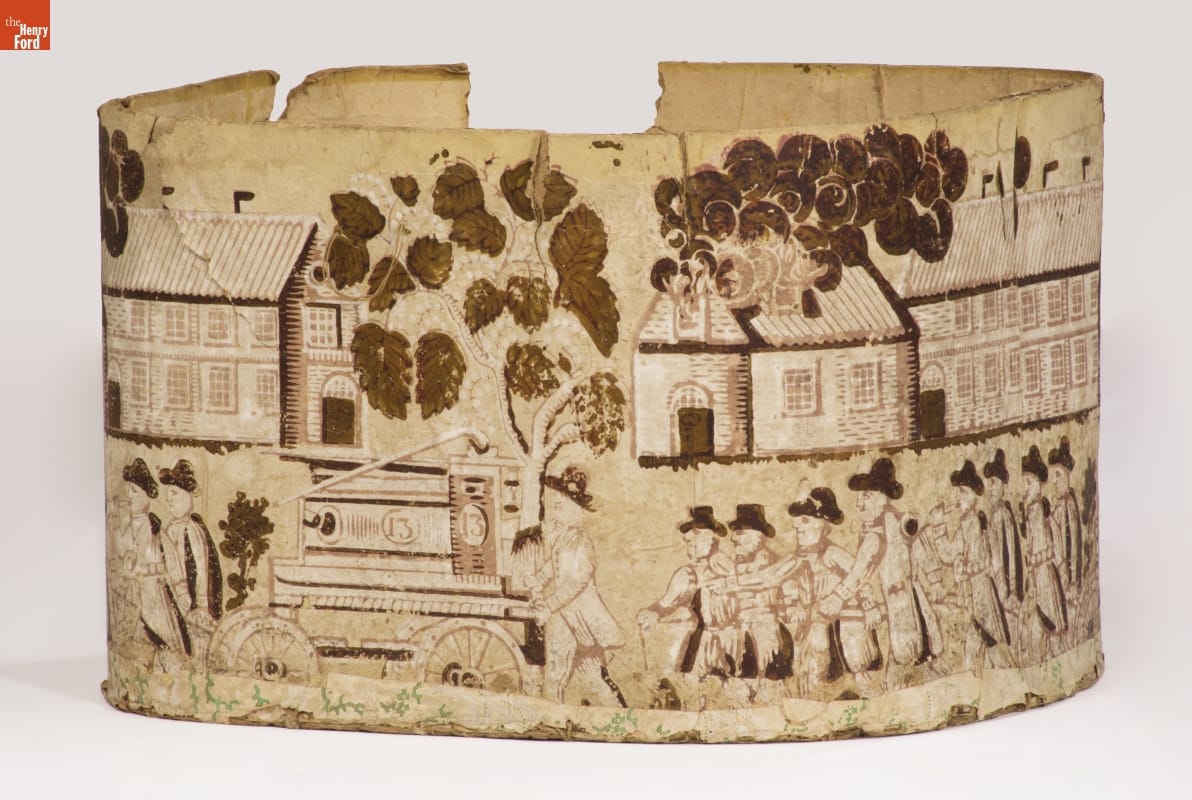
- Bandbox, circa 1835 - In the early 1800s, Americans used bandboxes to store clothing, accessories, and other small items. Bandboxes were handy containers in the home or when traveling by stage, boat, or rail. Manufacturers covered these inexpensive pasteboard or wooden boxes with colorful papers. This bandbox's paper depicts a scene of a New York City volunteer fire department using its new engine.
- circa 1835
- Collections - Artifact
Bandbox, circa 1835
In the early 1800s, Americans used bandboxes to store clothing, accessories, and other small items. Bandboxes were handy containers in the home or when traveling by stage, boat, or rail. Manufacturers covered these inexpensive pasteboard or wooden boxes with colorful papers. This bandbox's paper depicts a scene of a New York City volunteer fire department using its new engine.
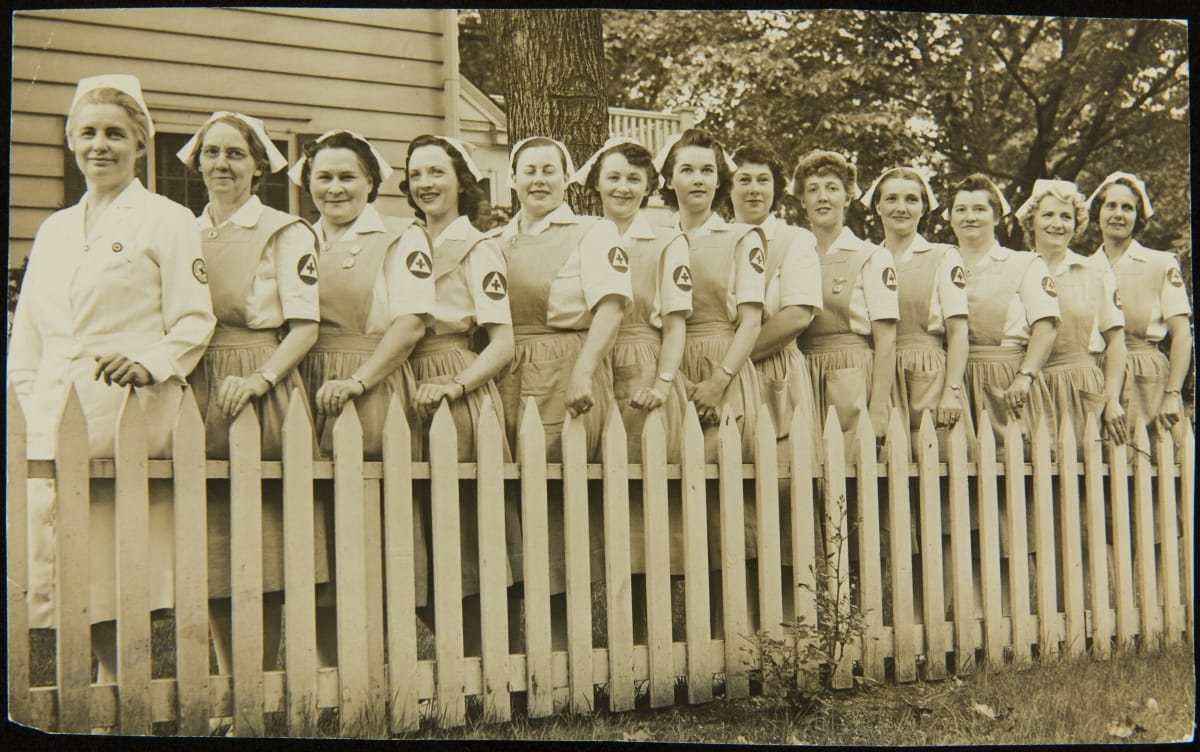
- Red Cross Volunteer Nurse's Aides, Part of the Office of Civilian Defense, Peoria, Illinois, May 20, 1942 -
- May 20, 1942
- Collections - Artifact
Red Cross Volunteer Nurse's Aides, Part of the Office of Civilian Defense, Peoria, Illinois, May 20, 1942
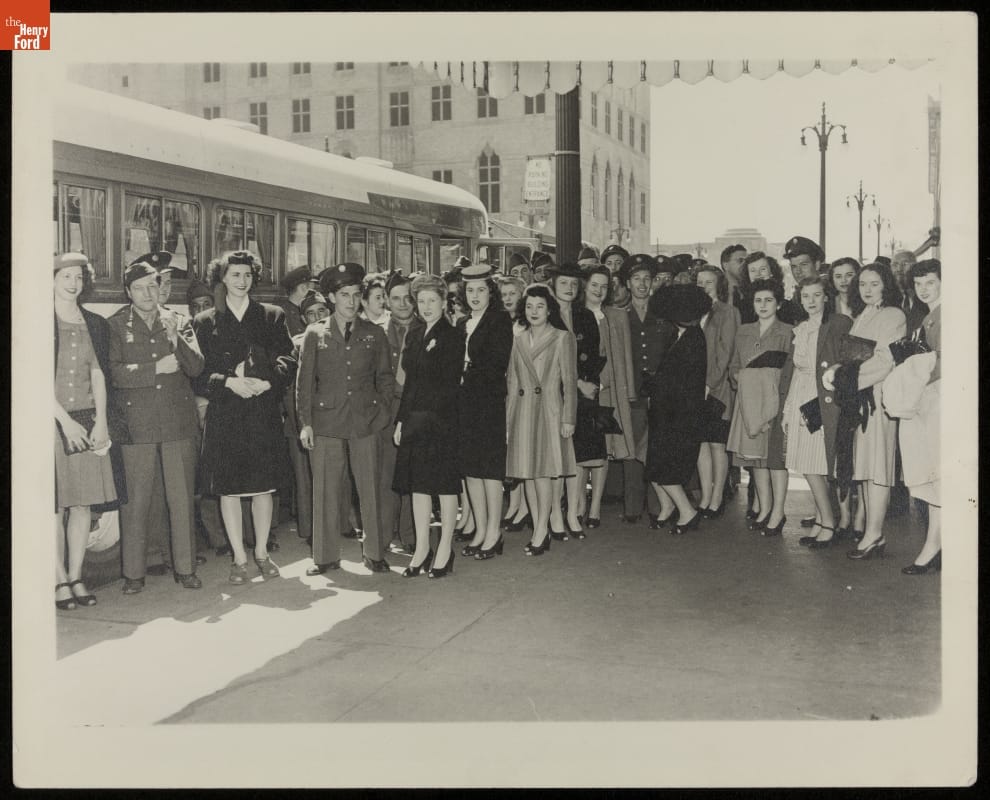
- Soldiers and Hostesses Participating in an AFL-USO Event, Detroit, Michigan, 1945 - At the end of September 1945, the United Services Organization and American Federation of Labor sponsored a two-day program for military veterans of Percy Jones Army Hospital in Battle Creek, Michigan. This photograph shows the young men in uniform with female "hostesses" -- local volunteers who accompanied the soldiers during portions of the entertainment-filled weekend.
- 1945
- Collections - Artifact
Soldiers and Hostesses Participating in an AFL-USO Event, Detroit, Michigan, 1945
At the end of September 1945, the United Services Organization and American Federation of Labor sponsored a two-day program for military veterans of Percy Jones Army Hospital in Battle Creek, Michigan. This photograph shows the young men in uniform with female "hostesses" -- local volunteers who accompanied the soldiers during portions of the entertainment-filled weekend.