
Search
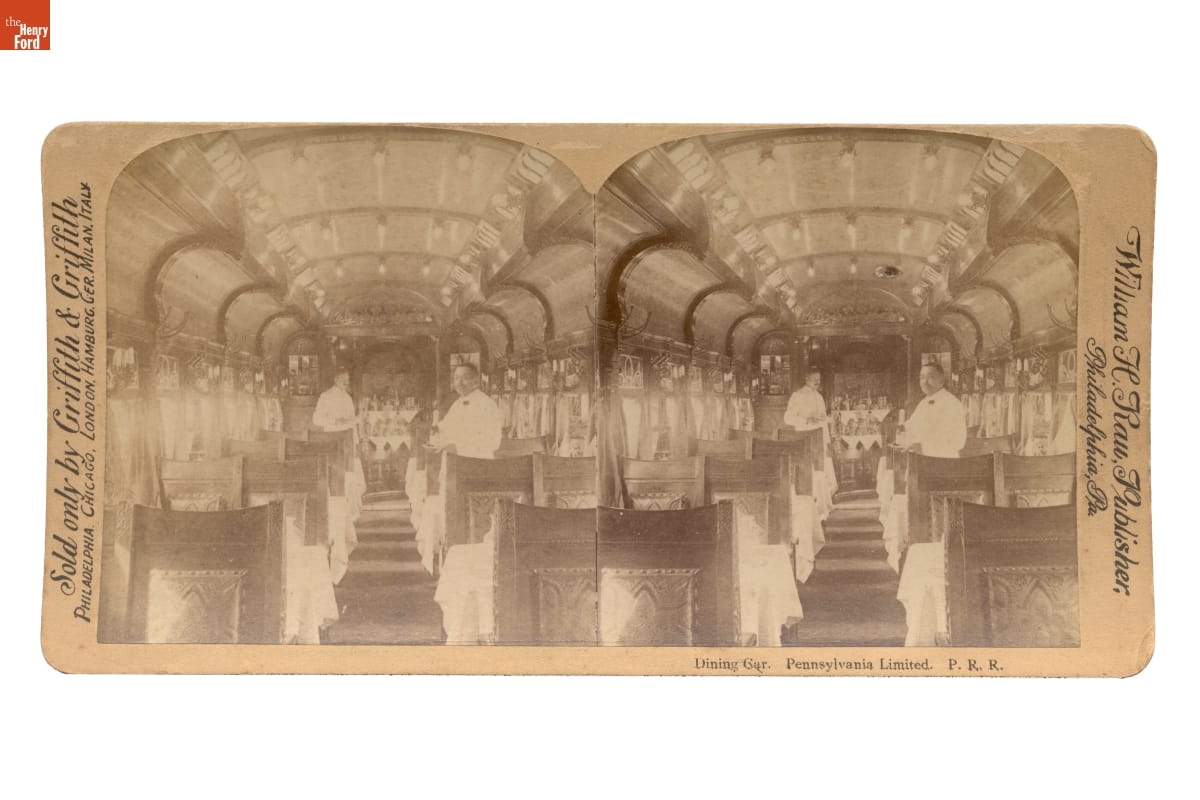
- Dining Car, Pennsylvania Limited, Pennsylvania Railroad, circa 1900 - Railroads took pride in their dining cars. They were expensive to operate, but quality food and service helped a railroad distinguish itself from competitors. For African Americans, working on a railroad dining car was one of the few avenues available to enter the Black middle class in the 19th and early 20th centuries.
- circa 1900
- Collections - Artifact
Dining Car, Pennsylvania Limited, Pennsylvania Railroad, circa 1900
Railroads took pride in their dining cars. They were expensive to operate, but quality food and service helped a railroad distinguish itself from competitors. For African Americans, working on a railroad dining car was one of the few avenues available to enter the Black middle class in the 19th and early 20th centuries.
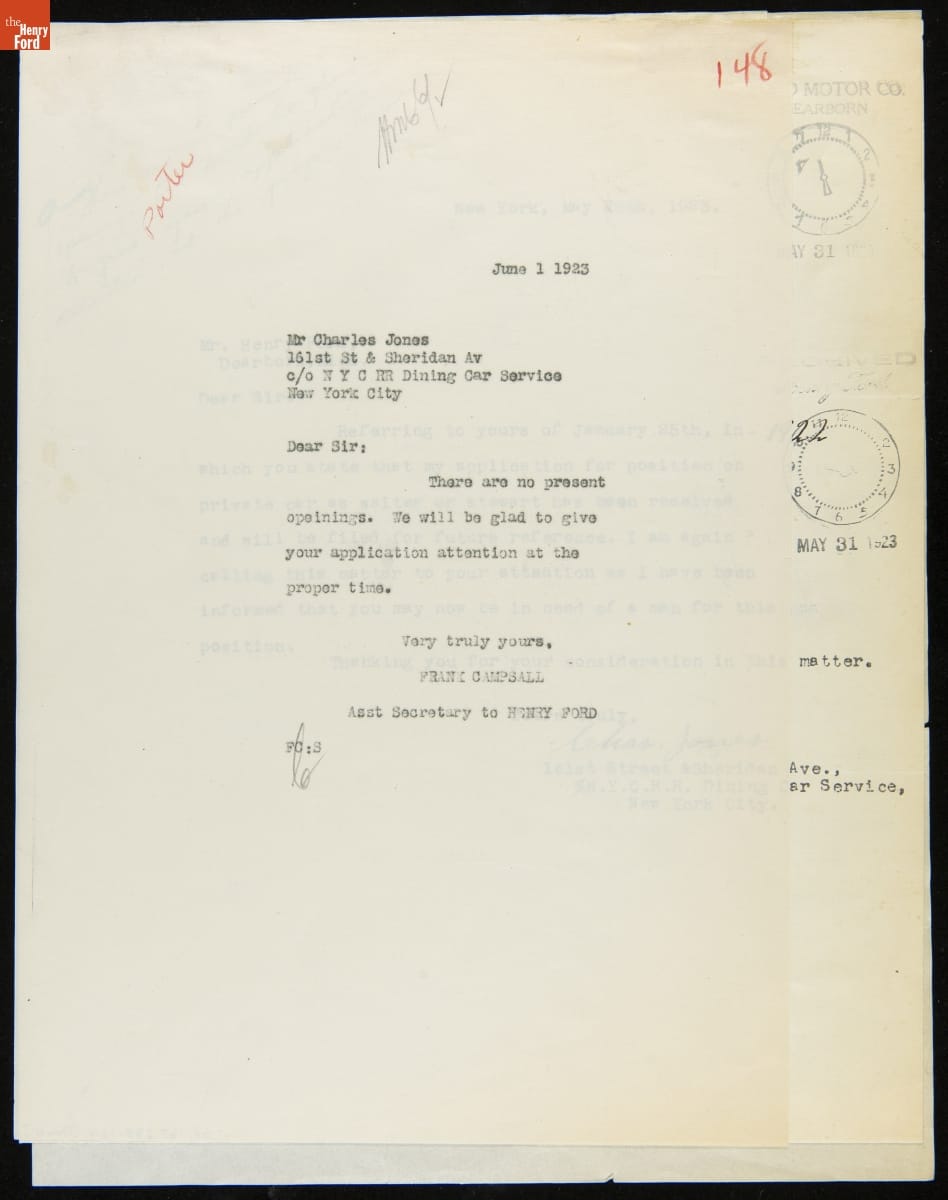
- Application Letters from Charles Jones for Work as Steward or Porter on the Fair Lane, Henry Ford's Private Rail Car, 1922-1923 - Henry and Clara Ford purchased <em>Fair Lane</em>, their private railroad passenger car, in 1921. When stories about the railcar appeared in newspapers, experienced railroad porters, stewards and cooks sent letters of interest about working for the Fords. Generally, <em>Fair Lane</em> was staffed by a porter to attend to passengers' needs, and a cook to prepare meals.
- January 1922-June 1923
- Collections - Artifact
Application Letters from Charles Jones for Work as Steward or Porter on the Fair Lane, Henry Ford's Private Rail Car, 1922-1923
Henry and Clara Ford purchased Fair Lane, their private railroad passenger car, in 1921. When stories about the railcar appeared in newspapers, experienced railroad porters, stewards and cooks sent letters of interest about working for the Fords. Generally, Fair Lane was staffed by a porter to attend to passengers' needs, and a cook to prepare meals.
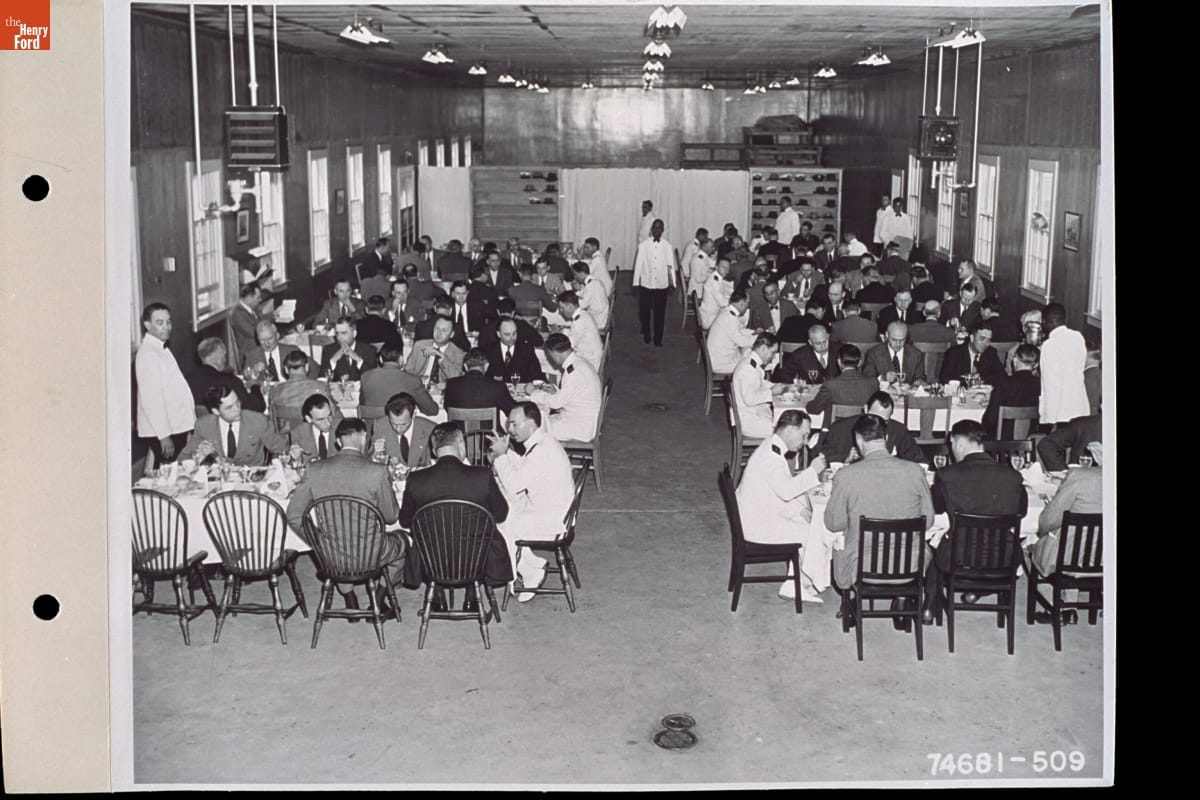
- Dining Room at the United States Navy Service School at the Ford Motor Company Rouge Plant, 1941-1943 -
- 1941-1943
- Collections - Artifact
Dining Room at the United States Navy Service School at the Ford Motor Company Rouge Plant, 1941-1943
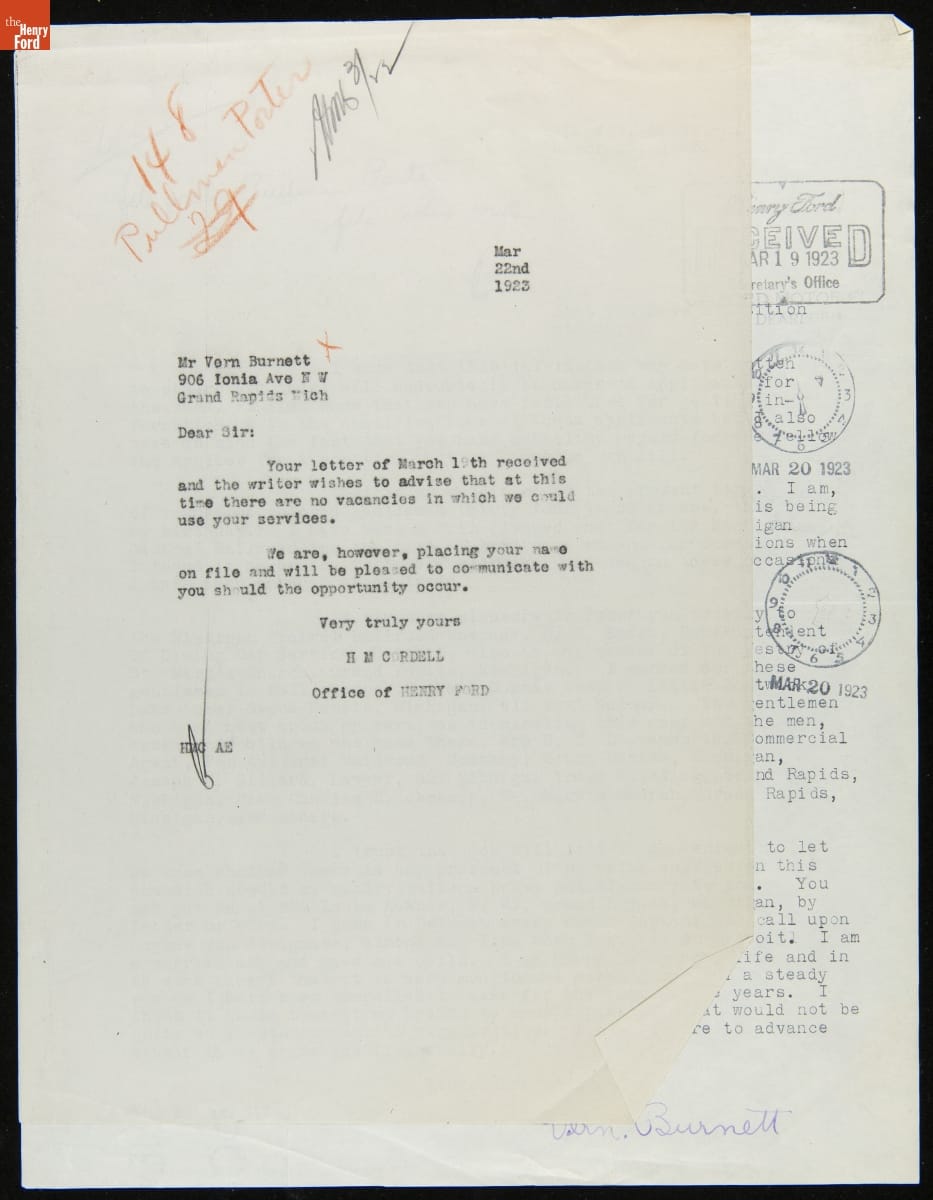
- Application Letter from Vern Burnett for Employment on the Fair Lane, Henry Ford's Private Rail Car, March 1923 - Henry and Clara Ford purchased <em>Fair Lane</em>, their private railroad passenger car, in 1921. When stories about the railcar appeared in newspapers, experienced railroad porters, stewards and cooks sent letters of interest about working for the Fords. Generally, <em>Fair Lane</em> was staffed by a porter to attend to passengers' needs, and a cook to prepare meals.
- March 01, 1923
- Collections - Artifact
Application Letter from Vern Burnett for Employment on the Fair Lane, Henry Ford's Private Rail Car, March 1923
Henry and Clara Ford purchased Fair Lane, their private railroad passenger car, in 1921. When stories about the railcar appeared in newspapers, experienced railroad porters, stewards and cooks sent letters of interest about working for the Fords. Generally, Fair Lane was staffed by a porter to attend to passengers' needs, and a cook to prepare meals.
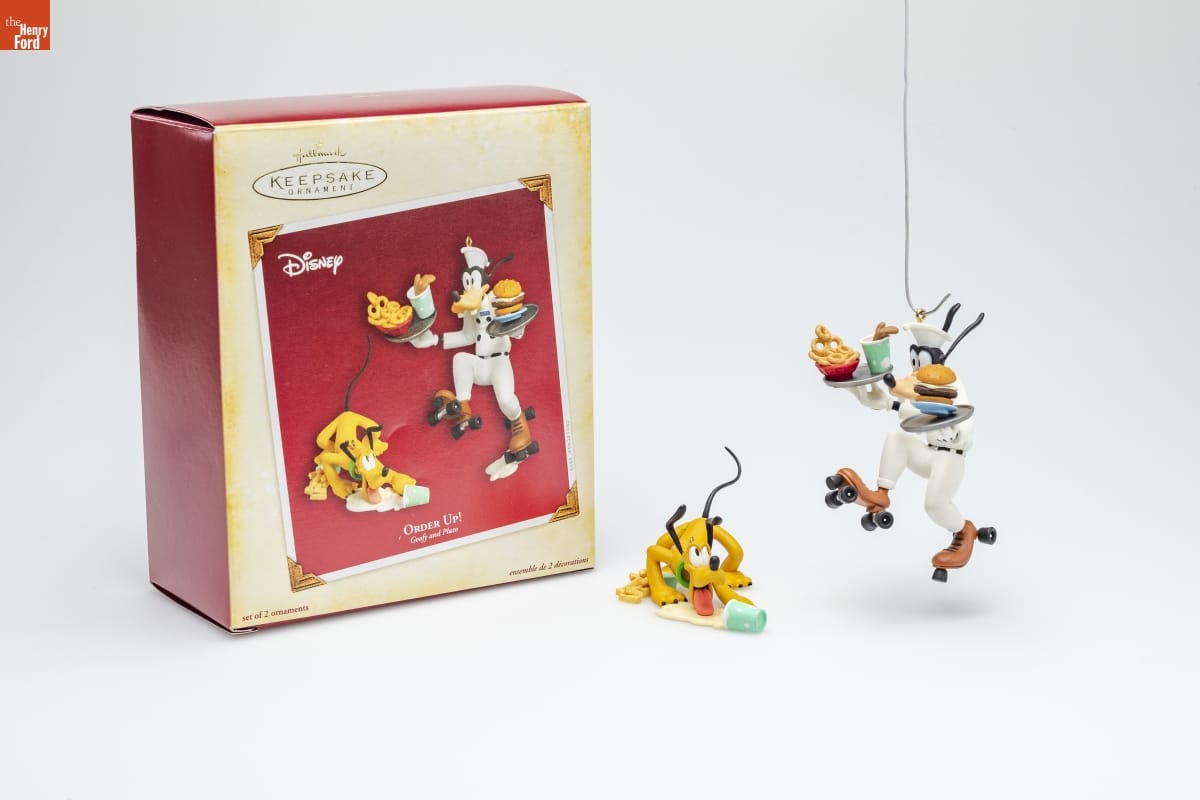
- Hallmark "Goofy and Pluto: Order Up!" Christmas Ornament, 2005 - Already known for greeting cards, Hallmark introduced a line of Christmas ornaments in 1973. The company's annual release of an increasing array of ornaments revolutionized Christmas decorating, appealing to customers' interest in marking memories and milestones as well as expressing one's personality and unique tastes.
- 2005
- Collections - Artifact
Hallmark "Goofy and Pluto: Order Up!" Christmas Ornament, 2005
Already known for greeting cards, Hallmark introduced a line of Christmas ornaments in 1973. The company's annual release of an increasing array of ornaments revolutionized Christmas decorating, appealing to customers' interest in marking memories and milestones as well as expressing one's personality and unique tastes.
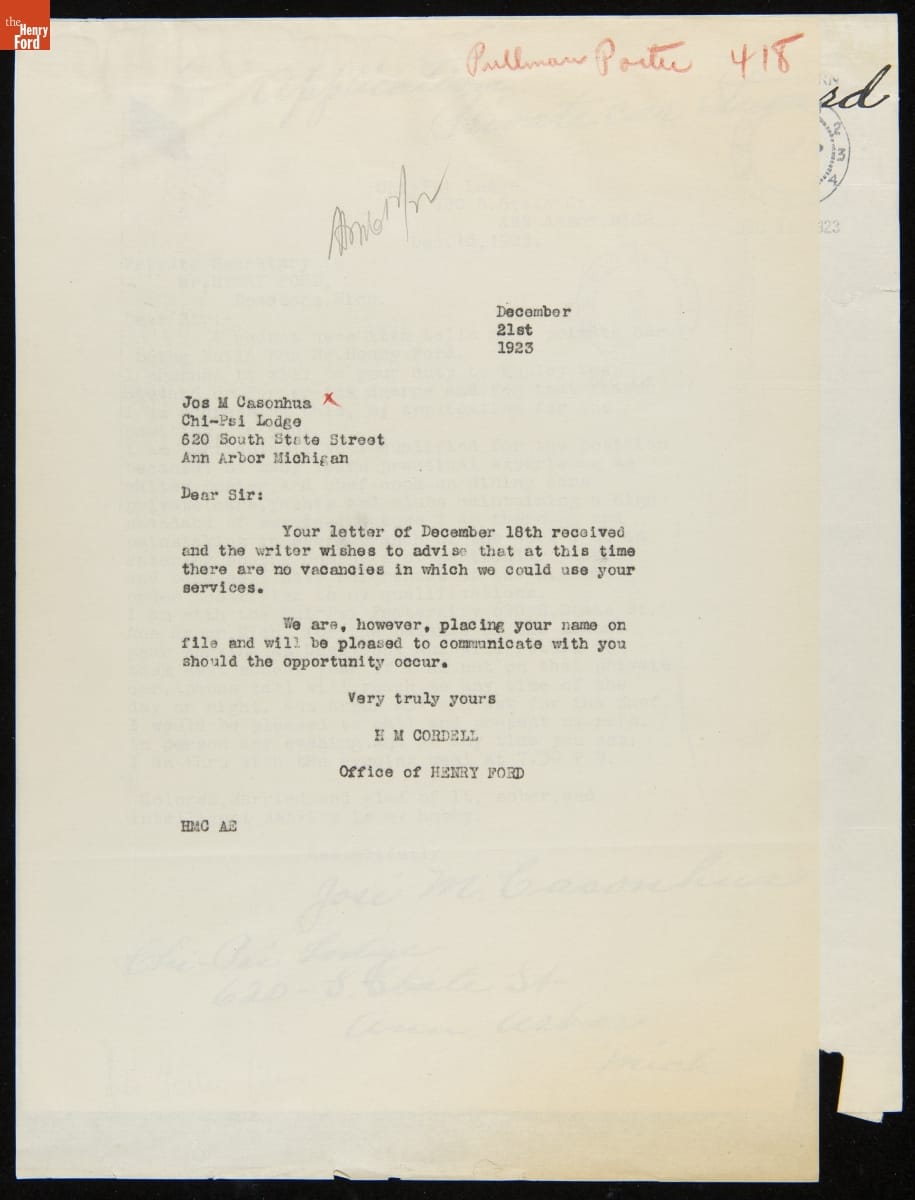
- Application Letter from Jose M. Casonhua for Employment on the Fair Lane, Henry Ford's Private Rail Car, December 1923 - Henry and Clara Ford purchased <em>Fair Lane</em>, their private railroad passenger car, in 1921. When stories about the railcar appeared in newspapers, experienced railroad porters, stewards and cooks sent letters of interest about working for the Fords. Generally, <em>Fair Lane</em> was staffed by a porter to attend to passengers' needs, and a cook to prepare meals.
- December 01, 1923
- Collections - Artifact
Application Letter from Jose M. Casonhua for Employment on the Fair Lane, Henry Ford's Private Rail Car, December 1923
Henry and Clara Ford purchased Fair Lane, their private railroad passenger car, in 1921. When stories about the railcar appeared in newspapers, experienced railroad porters, stewards and cooks sent letters of interest about working for the Fords. Generally, Fair Lane was staffed by a porter to attend to passengers' needs, and a cook to prepare meals.
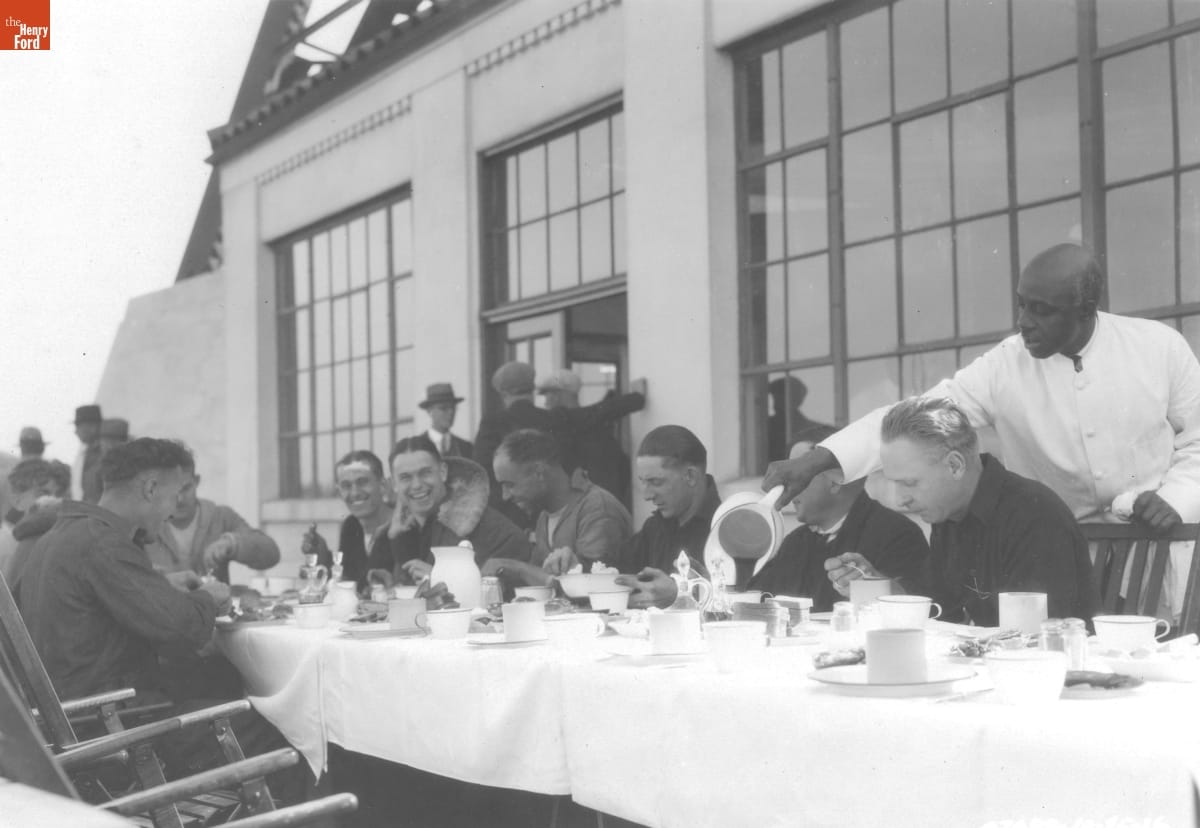
- Crew of the United States Navy Airship "Los Angeles" at Lunch at Ford Airport, Dearborn, Michigan, 1926 - In the 1920s and 1930s, the U.S. Navy experimented with rigid airships both as reconnaissance craft and as flying aircraft carriers. The airship <em>Los Angeles</em> visited Ford Airport on a training flight in October 1926. When the helium-lifted airships proved too fragile for military service, the Navy abandoned the program. <em>Los Angeles</em> was decommissioned and dismantled in 1939.
- 1926
- Collections - Artifact
Crew of the United States Navy Airship "Los Angeles" at Lunch at Ford Airport, Dearborn, Michigan, 1926
In the 1920s and 1930s, the U.S. Navy experimented with rigid airships both as reconnaissance craft and as flying aircraft carriers. The airship Los Angeles visited Ford Airport on a training flight in October 1926. When the helium-lifted airships proved too fragile for military service, the Navy abandoned the program. Los Angeles was decommissioned and dismantled in 1939.
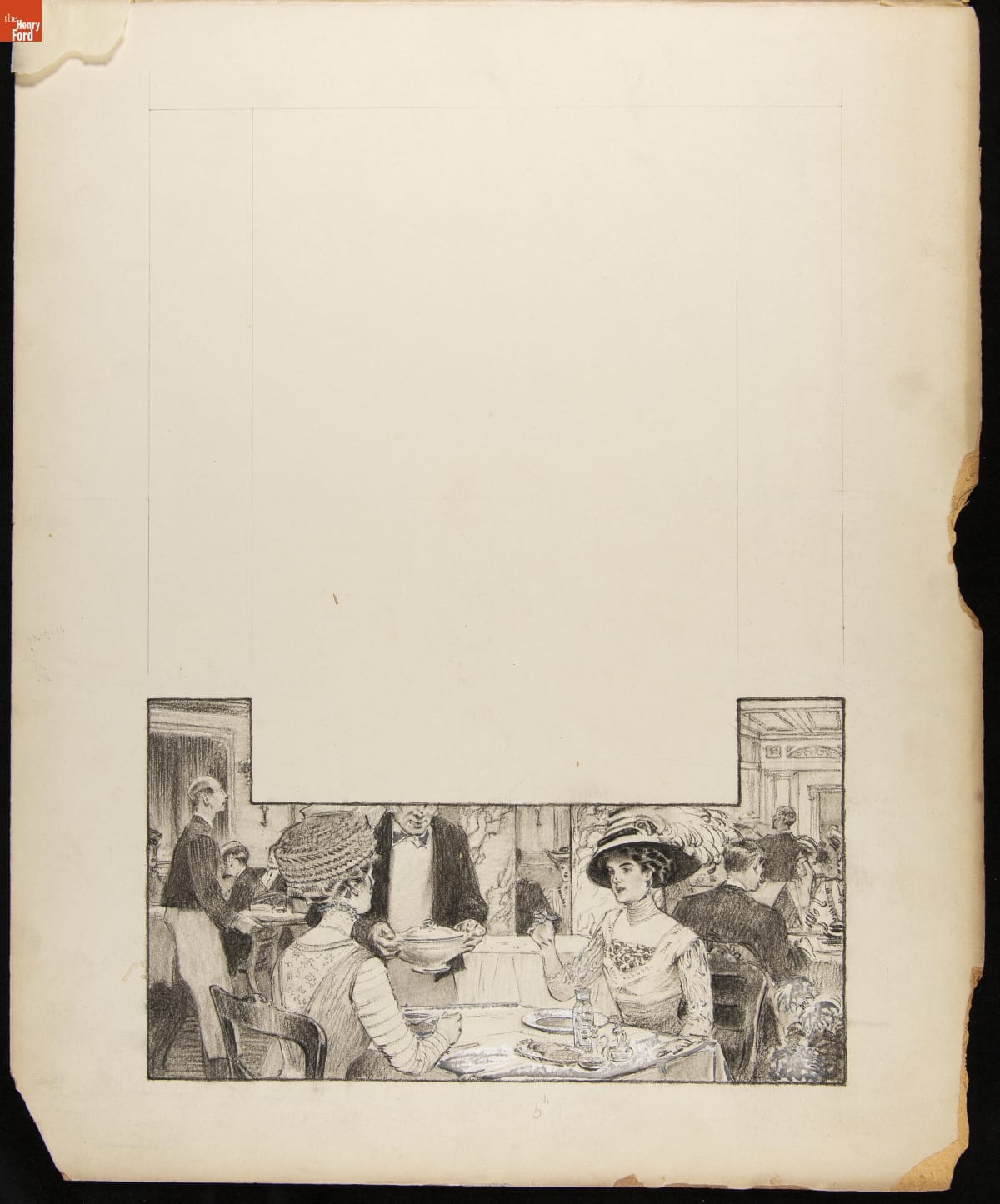
- Advertising Layout Drawing of Women Dining in a Restaurant, September 20, 1909 - The H.J. Heinz Company published pamphlets, brochures, and booklets that detailed the company's history and manufacturing process. Sometimes, hand-drawn images accompanied text within a publication. This advertising layout drawing of women eating in a restaurant would have surrounded text promoting Heinz products.
- September 20, 1909
- Collections - Artifact
Advertising Layout Drawing of Women Dining in a Restaurant, September 20, 1909
The H.J. Heinz Company published pamphlets, brochures, and booklets that detailed the company's history and manufacturing process. Sometimes, hand-drawn images accompanied text within a publication. This advertising layout drawing of women eating in a restaurant would have surrounded text promoting Heinz products.