
Search
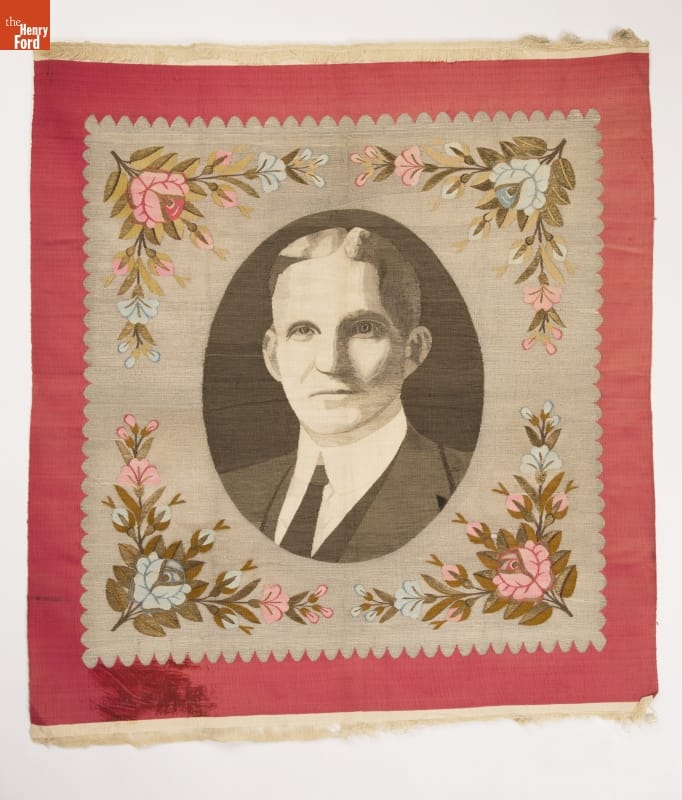
- Tapestry Portrait, Gift to Henry Ford, 1920-1940 - Over the years, Henry Ford received hundreds of gifts from people who felt a connection with the automotive entrepreneur. For many, he was "one of them," someone who also just happened to become a great industrialist. Perhaps the creator of this portrait was a satisfied Ford owner who used his own expertise to create this special memento.
- 1920
- Collections - Artifact
Tapestry Portrait, Gift to Henry Ford, 1920-1940
Over the years, Henry Ford received hundreds of gifts from people who felt a connection with the automotive entrepreneur. For many, he was "one of them," someone who also just happened to become a great industrialist. Perhaps the creator of this portrait was a satisfied Ford owner who used his own expertise to create this special memento.
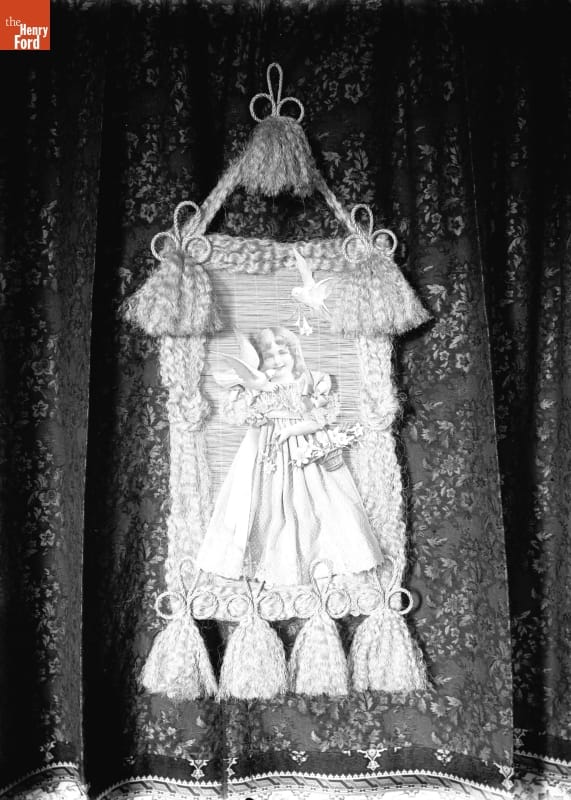
- Wallhanging, Jute and Straw with Cutout of Young Girl and Birds, 1890-1915 - In 1890, Jenny Young Chandler, 25 years old and recently widowed, began working for the <EM>New York Herald</EM>. As a photojournalist and feature writer, Chandler captured life in Brooklyn, New York, and vicinity. She also documented collections of private individuals and museums -- some of which were featured in magazine articles for collectors. By 1922, the time of her death, she had produced over 800 glass plate negatives.
- 1890-1915
- Collections - Artifact
Wallhanging, Jute and Straw with Cutout of Young Girl and Birds, 1890-1915
In 1890, Jenny Young Chandler, 25 years old and recently widowed, began working for the New York Herald. As a photojournalist and feature writer, Chandler captured life in Brooklyn, New York, and vicinity. She also documented collections of private individuals and museums -- some of which were featured in magazine articles for collectors. By 1922, the time of her death, she had produced over 800 glass plate negatives.
- Quilted Wall Hanging, circa 1995 -
- circa 1995
- Collections - Artifact
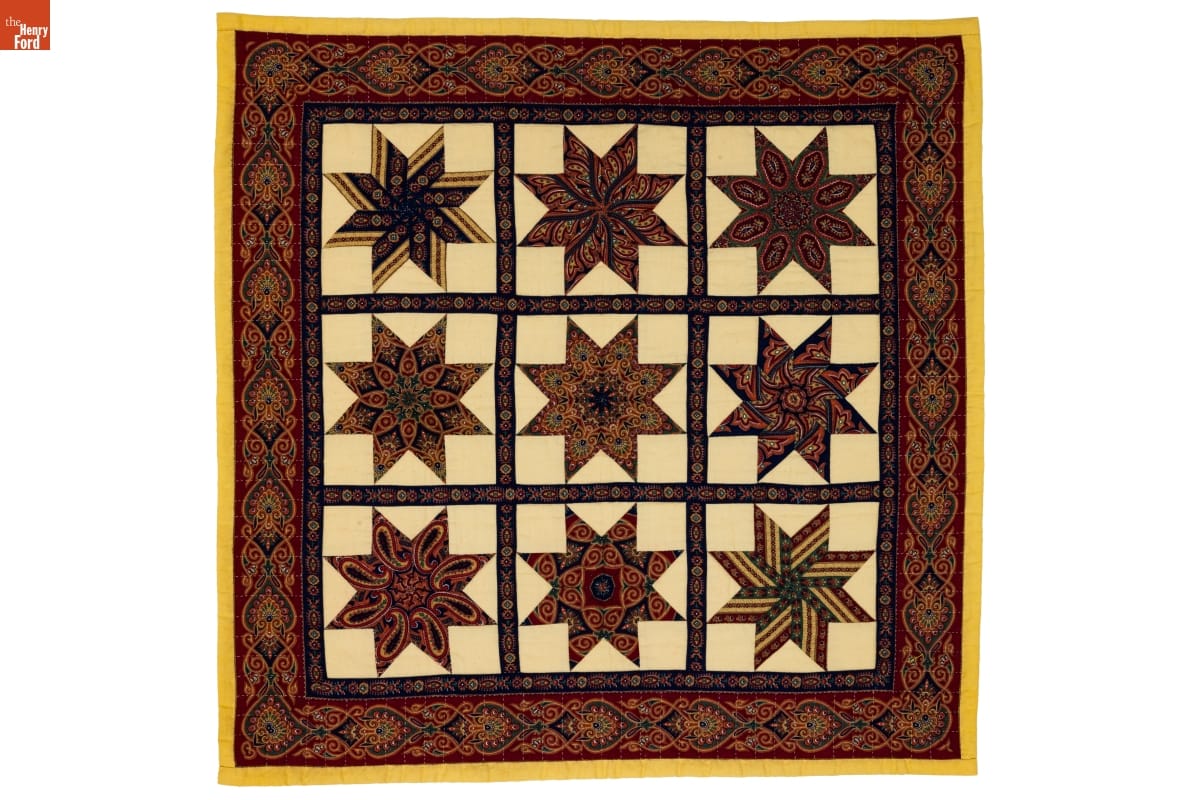
Quilted Wall Hanging, circa 1995
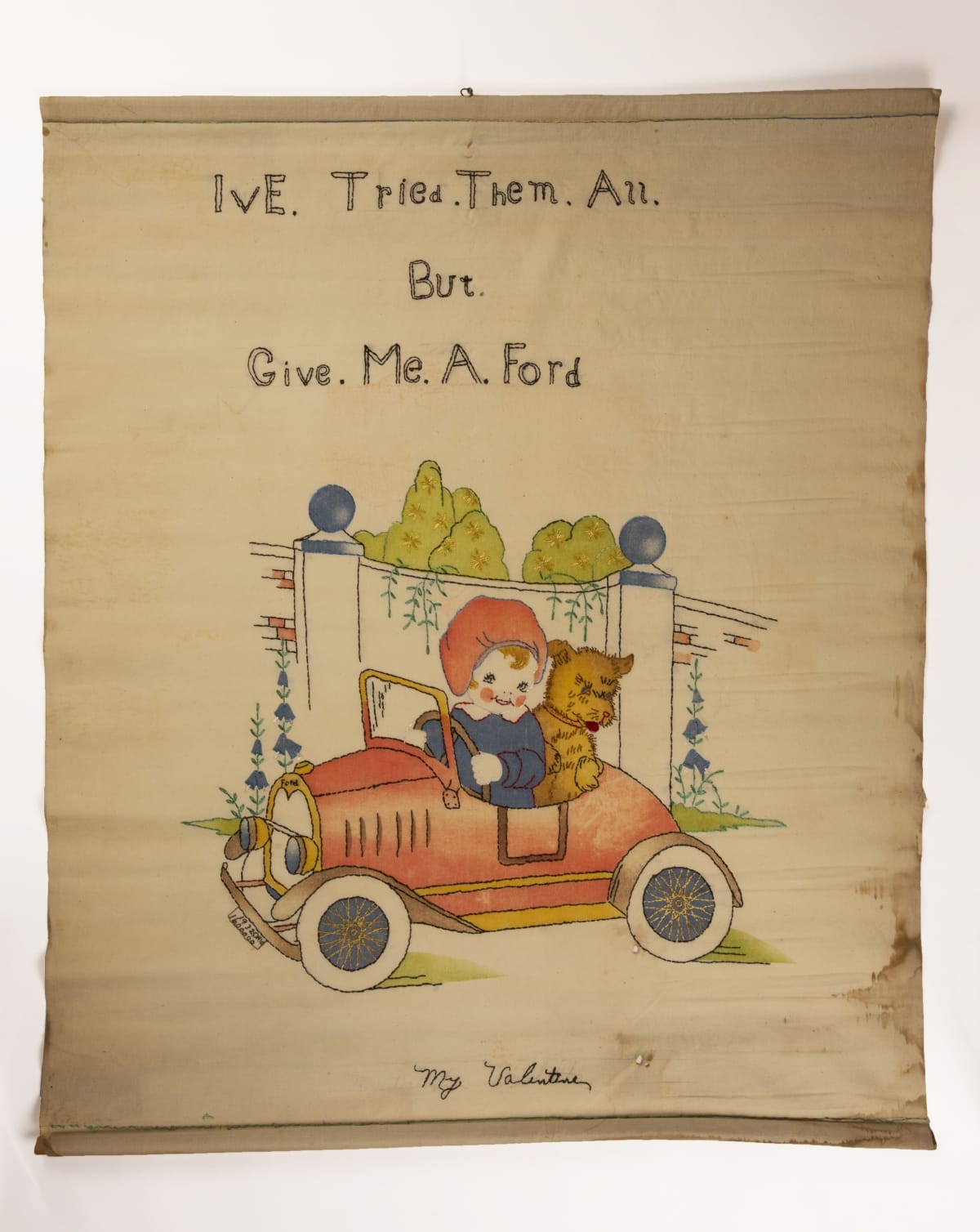
- Embroidered Wall Hanging, Valentine's Day Gift to Henry Ford, 1932 - For many women in the early 20th century, Henry Ford's affordable automobile represented freedom and financial security, especially if they were fortunate to be part of the Ford Motor Company family. Their expressions of thanks were often homemade, proud examples of their needle working skills. The embroidered motto reveals the donor's affection for Ford products.
- 1932
- Collections - Artifact
Embroidered Wall Hanging, Valentine's Day Gift to Henry Ford, 1932
For many women in the early 20th century, Henry Ford's affordable automobile represented freedom and financial security, especially if they were fortunate to be part of the Ford Motor Company family. Their expressions of thanks were often homemade, proud examples of their needle working skills. The embroidered motto reveals the donor's affection for Ford products.
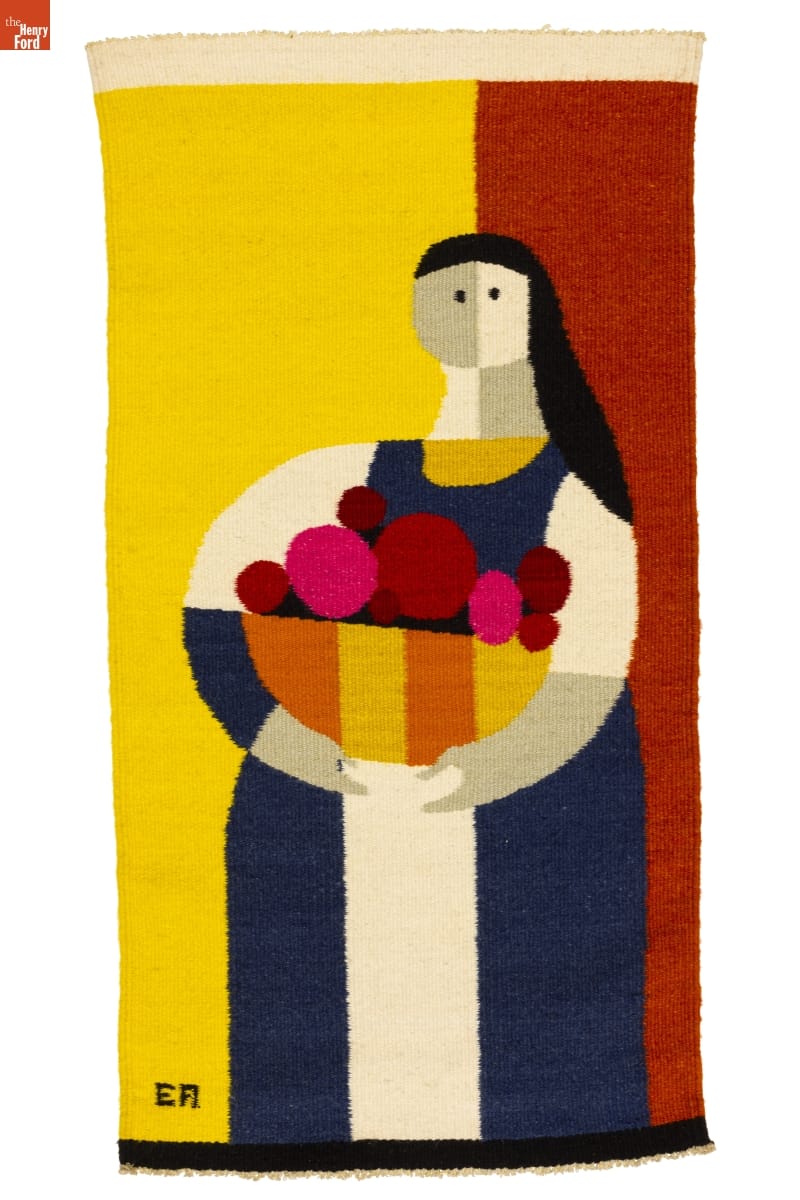
- "Campesina Tapestry" Woven Hanging, 1969 - Evelyn Ackerman's work epitomizes the handcrafted modernism of postwar California design. Her design practice was wide-ranging, including mosaic, woodcarving, metalwork, textiles, and more. Evelyn designed numerous woven hangings for ERA Industries--a business owned by Evelyn and her husband, ceramicist Jerry Ackerman--that were handcrafted by skilled weavers in Mexico to Evelyn's specifications. The "Campesina Tapestry" became one of the company's best-selling products.
- 1969
- Collections - Artifact
"Campesina Tapestry" Woven Hanging, 1969
Evelyn Ackerman's work epitomizes the handcrafted modernism of postwar California design. Her design practice was wide-ranging, including mosaic, woodcarving, metalwork, textiles, and more. Evelyn designed numerous woven hangings for ERA Industries--a business owned by Evelyn and her husband, ceramicist Jerry Ackerman--that were handcrafted by skilled weavers in Mexico to Evelyn's specifications. The "Campesina Tapestry" became one of the company's best-selling products.
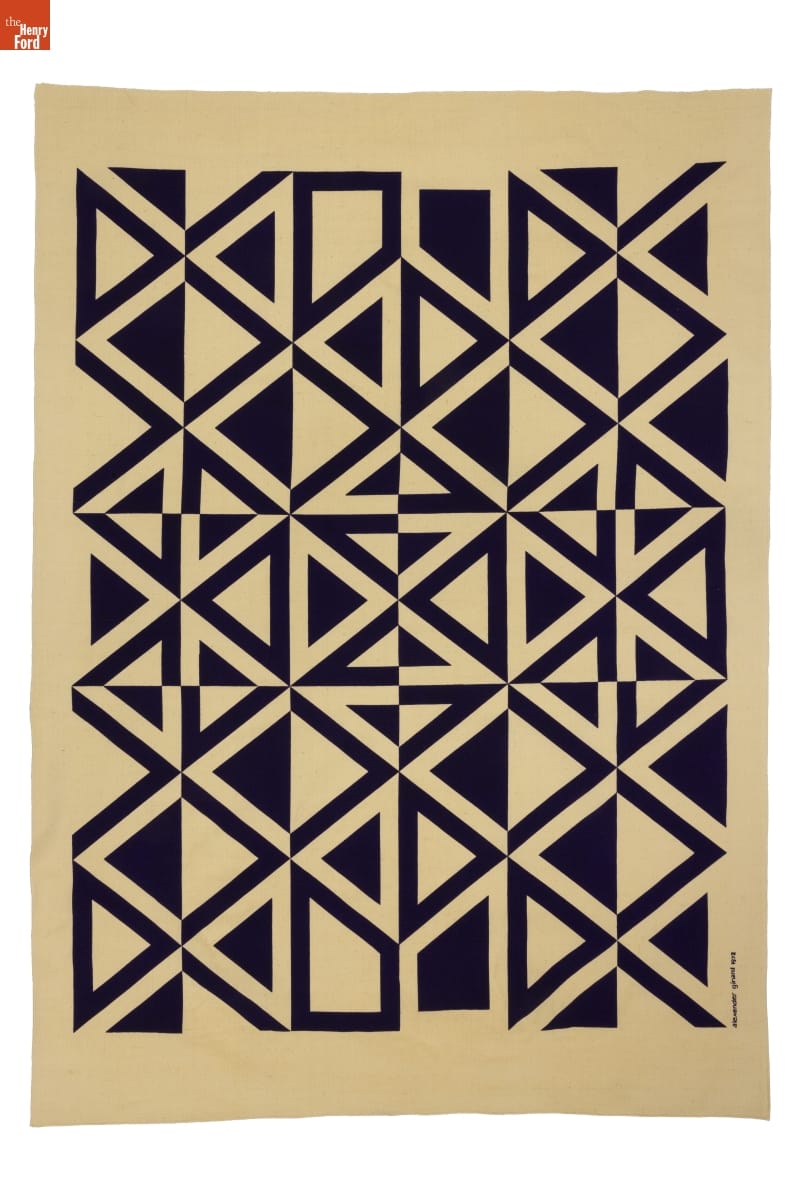
- Environmental Enrichment Panel, "Geometric C," Designed by Alexander Girard for Herman Miller, 1972 - Alexander Girard, Herman Miller Textile Division's Director of Design, created a series of forty folk art-inspired graphic panels aptly named "Environmental Enrichment Panels" in 1972. They were meant to enrich the office environment, adorning the moveable walls of Robert Propst's Action Office II -- more commonly known as the cubicle.
- 1972
- Collections - Artifact
Environmental Enrichment Panel, "Geometric C," Designed by Alexander Girard for Herman Miller, 1972
Alexander Girard, Herman Miller Textile Division's Director of Design, created a series of forty folk art-inspired graphic panels aptly named "Environmental Enrichment Panels" in 1972. They were meant to enrich the office environment, adorning the moveable walls of Robert Propst's Action Office II -- more commonly known as the cubicle.
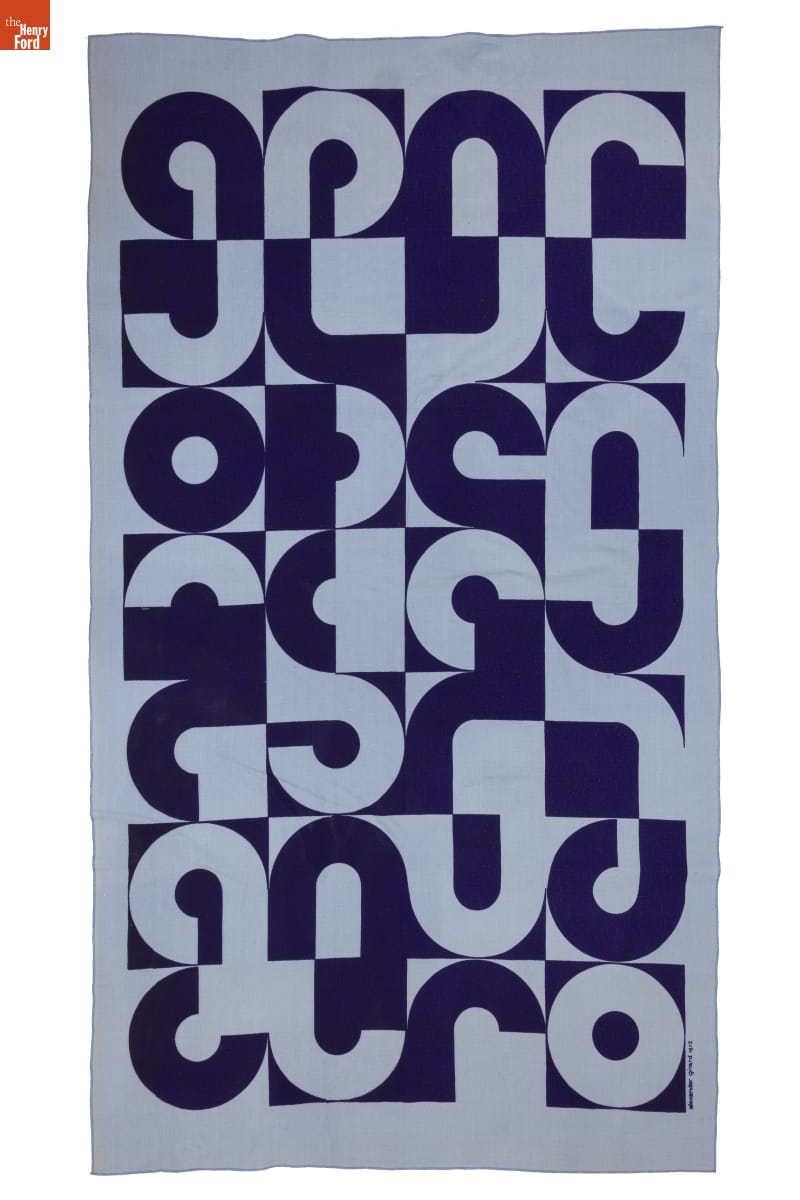
- Environmental Enrichment Panel, "Circle Sections B," Designed by Alexander Girard for Herman Miller, 1972 - Alexander Girard, Herman Miller Textile Division's Director of Design, created a series of forty folk art-inspired graphic panels aptly named "Environmental Enrichment Panels" in 1972. They were meant to enrich the office environment, adorning the moveable walls of Robert Propst's Action Office II -- more commonly known as the cubicle.
- 1972
- Collections - Artifact
Environmental Enrichment Panel, "Circle Sections B," Designed by Alexander Girard for Herman Miller, 1972
Alexander Girard, Herman Miller Textile Division's Director of Design, created a series of forty folk art-inspired graphic panels aptly named "Environmental Enrichment Panels" in 1972. They were meant to enrich the office environment, adorning the moveable walls of Robert Propst's Action Office II -- more commonly known as the cubicle.
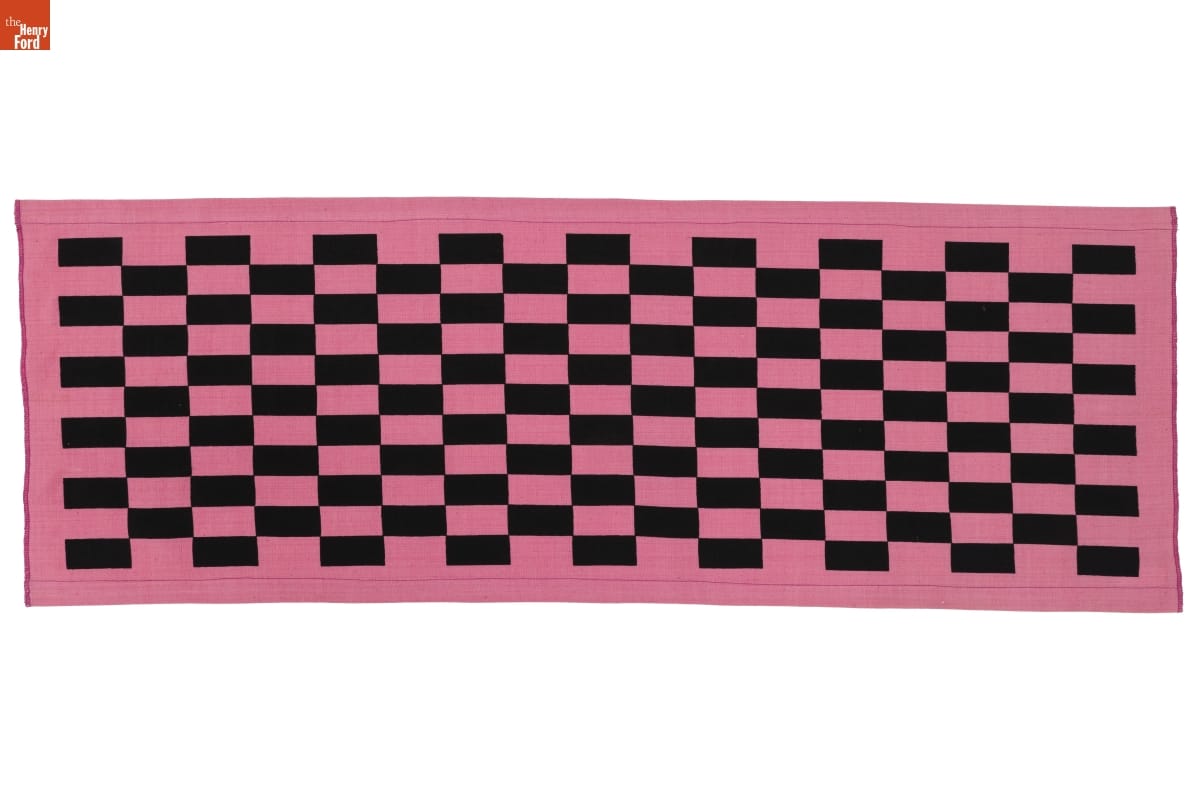
- Environmental Enrichment Panel, "Checks & Rectangular," Designed by Alexander Girard for Herman Miller, 1972 - Alexander Girard, Herman Miller Textile Division's Director of Design, created a series of forty folk art-inspired graphic panels aptly named "Environmental Enrichment Panels" in 1972. They were meant to enrich the office environment, adorning the moveable walls of Robert Propst's Action Office II -- more commonly known as the cubicle.
- 1972
- Collections - Artifact
Environmental Enrichment Panel, "Checks & Rectangular," Designed by Alexander Girard for Herman Miller, 1972
Alexander Girard, Herman Miller Textile Division's Director of Design, created a series of forty folk art-inspired graphic panels aptly named "Environmental Enrichment Panels" in 1972. They were meant to enrich the office environment, adorning the moveable walls of Robert Propst's Action Office II -- more commonly known as the cubicle.
- Environmental Enrichment Panel, "Geometric C," Designed by Alexander Girard for Herman Miller, 1972 - Alexander Girard, Herman Miller Textile Division's Director of Design, created a series of forty folk art-inspired graphic panels aptly named "Environmental Enrichment Panels" in 1972. They were meant to enrich the office environment, adorning the moveable walls of Robert Propst's Action Office II -- more commonly known as the cubicle.
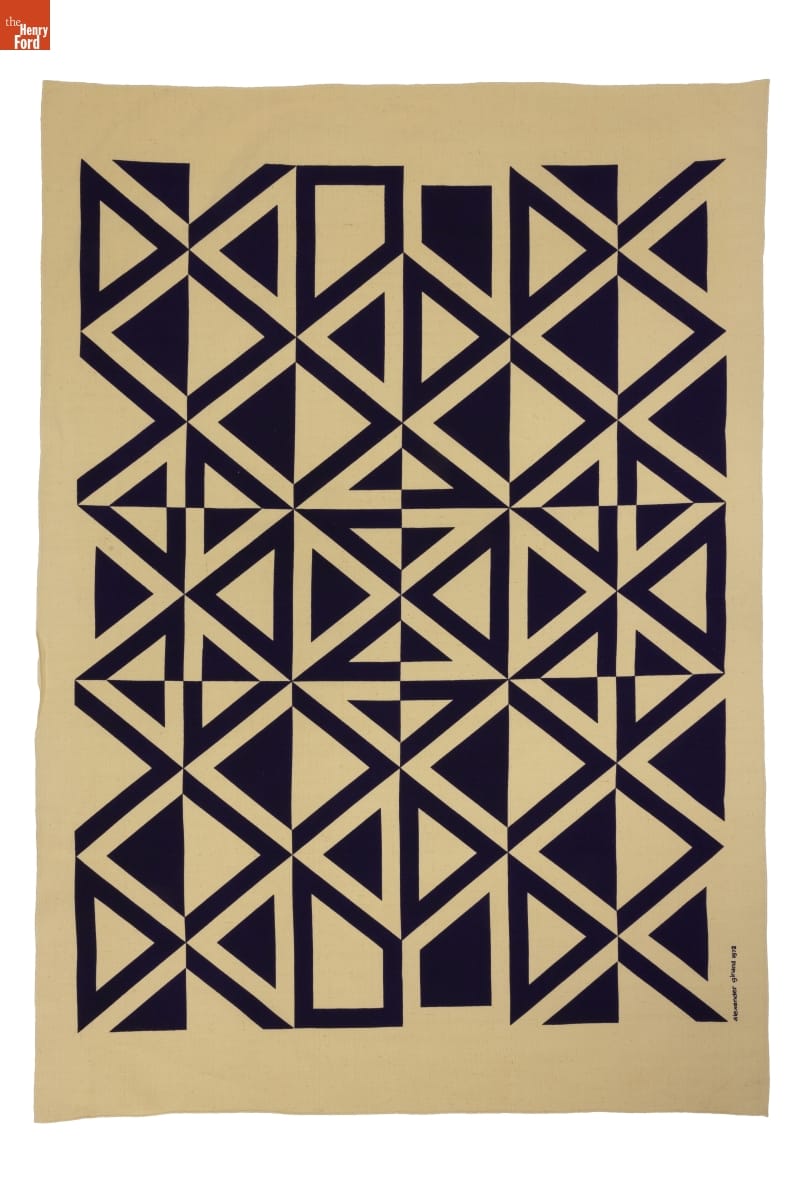
- 1972
- Collections - Artifact
Environmental Enrichment Panel, "Geometric C," Designed by Alexander Girard for Herman Miller, 1972
Alexander Girard, Herman Miller Textile Division's Director of Design, created a series of forty folk art-inspired graphic panels aptly named "Environmental Enrichment Panels" in 1972. They were meant to enrich the office environment, adorning the moveable walls of Robert Propst's Action Office II -- more commonly known as the cubicle.
- Environmental Enrichment Panel, "Brick," Designed by Alexander Girard for Herman Miller, 1972 - Alexander Girard, Herman Miller Textile Division's Director of Design, created a series of forty folk art-inspired graphic panels aptly named "Environmental Enrichment Panels" in 1972. They were meant to enrich the office environment, adorning the moveable walls of Robert Propst's Action Office II -- more commonly known as the cubicle.
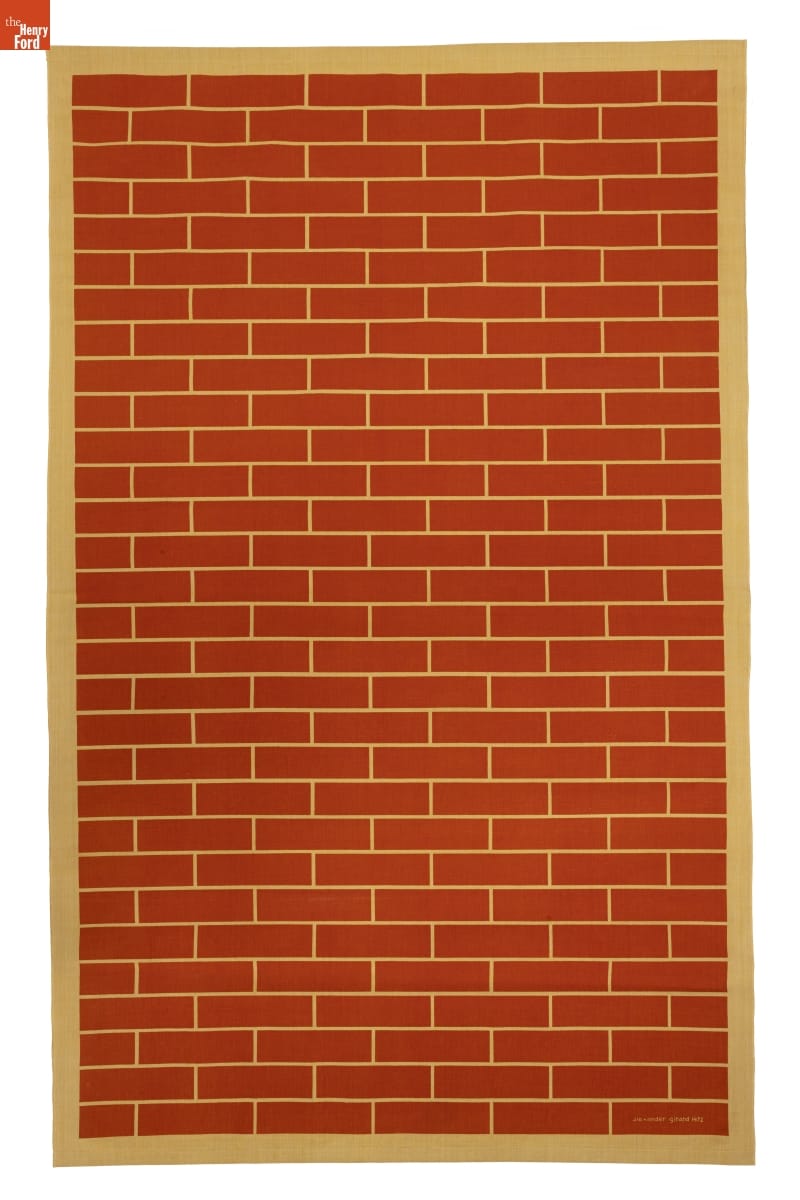
- 1972
- Collections - Artifact
Environmental Enrichment Panel, "Brick," Designed by Alexander Girard for Herman Miller, 1972
Alexander Girard, Herman Miller Textile Division's Director of Design, created a series of forty folk art-inspired graphic panels aptly named "Environmental Enrichment Panels" in 1972. They were meant to enrich the office environment, adorning the moveable walls of Robert Propst's Action Office II -- more commonly known as the cubicle.