
Search
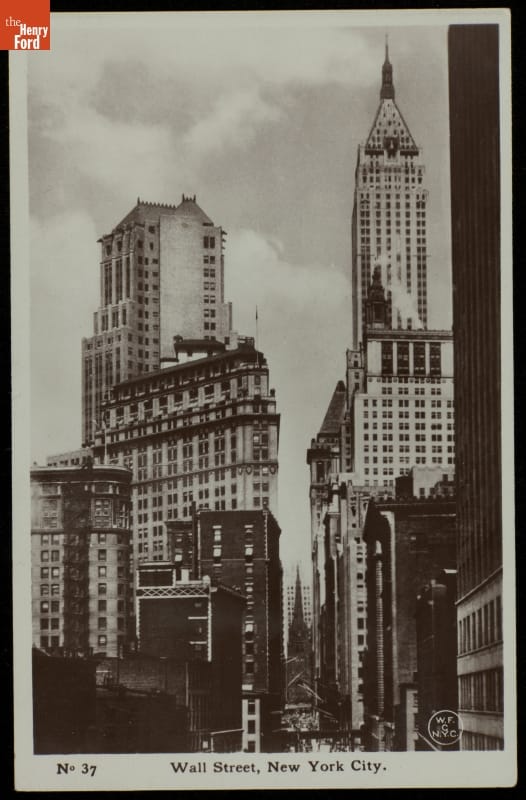
- "Wall Street, New York City," circa 1935 - This postcard shows Wall Street in Lower Manhattan, New York City's financial district and home to the world's largest stock exchange. Towering skyscrapers dwarf Trinity Church (center), once the highest point in New York.
- circa 1935
- Collections - Artifact
"Wall Street, New York City," circa 1935
This postcard shows Wall Street in Lower Manhattan, New York City's financial district and home to the world's largest stock exchange. Towering skyscrapers dwarf Trinity Church (center), once the highest point in New York.
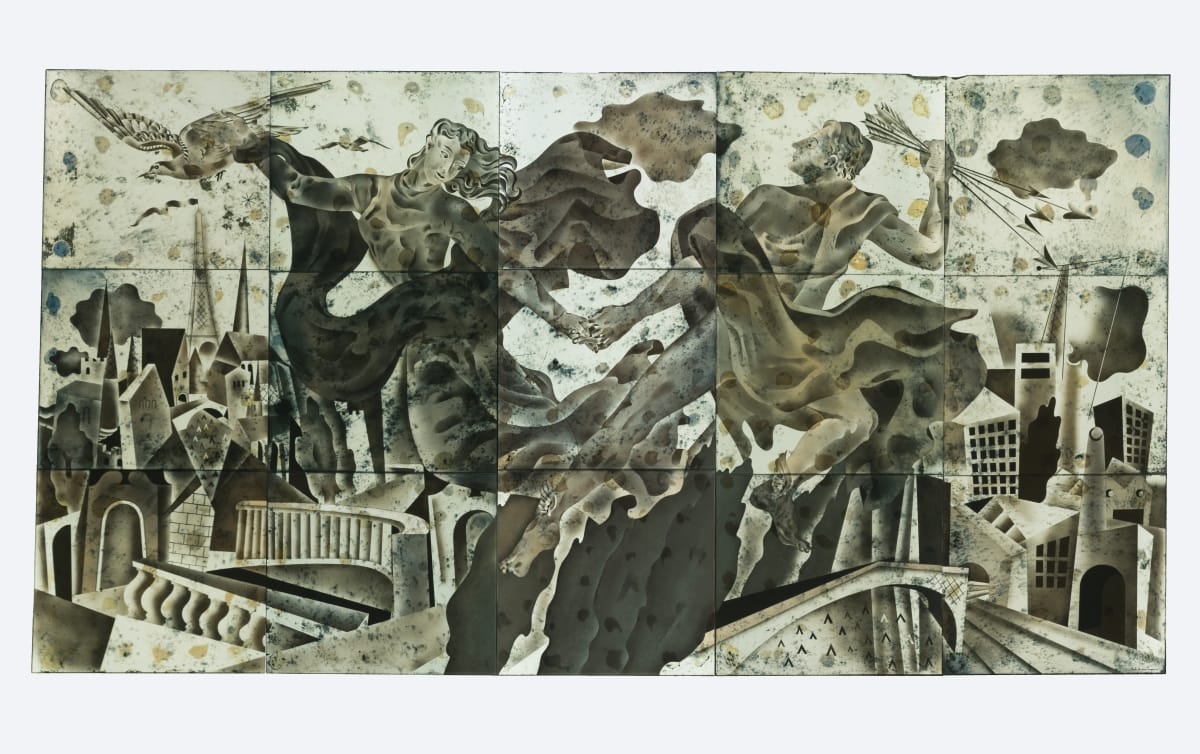
- Mural by Paule and Max Ingrand, circa 1935 -
- circa 1935
- Collections - Artifact
Mural by Paule and Max Ingrand, circa 1935
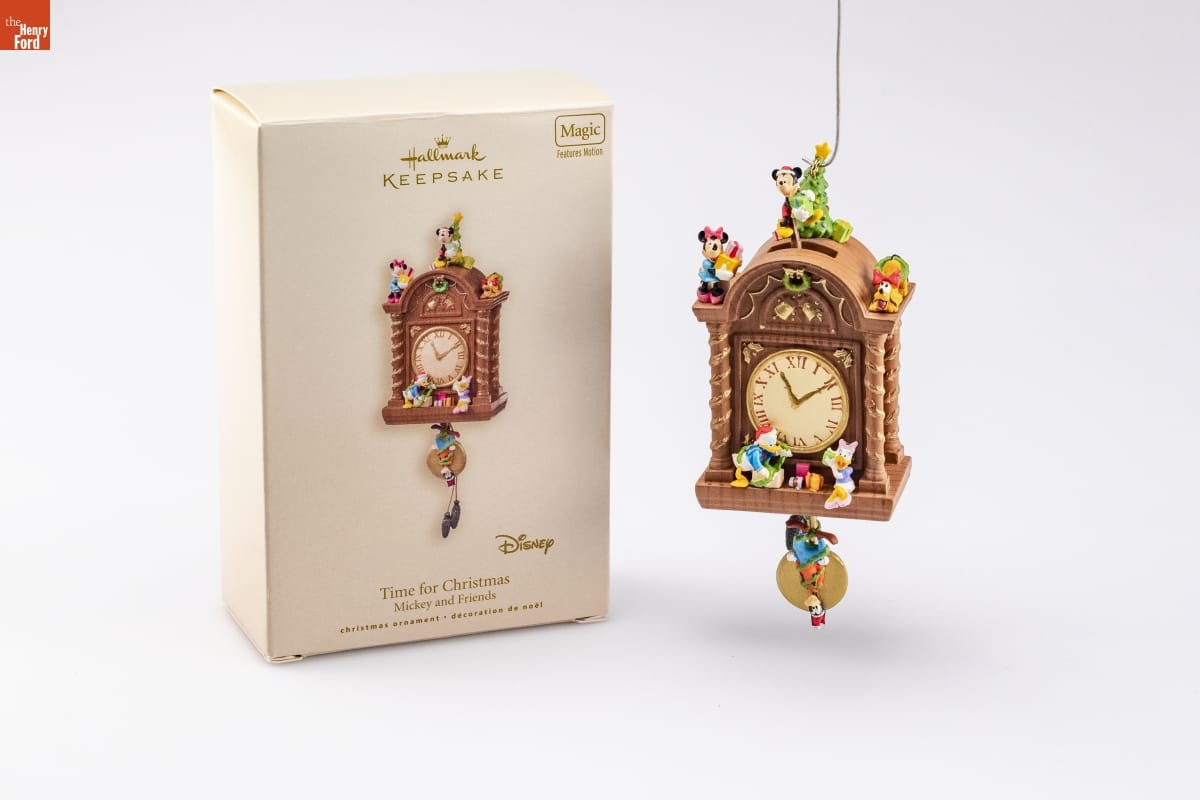
- Hallmark "Mickey and Friends: Time for Christmas" Christmas Ornament, 2007 - Already known for greeting cards, Hallmark introduced a line of Christmas ornaments in 1973. The company's annual release of an increasing array of ornaments revolutionized Christmas decorating, appealing to customers' interest in marking memories and milestones as well as expressing one's personality and unique tastes.
- 2007
- Collections - Artifact
Hallmark "Mickey and Friends: Time for Christmas" Christmas Ornament, 2007
Already known for greeting cards, Hallmark introduced a line of Christmas ornaments in 1973. The company's annual release of an increasing array of ornaments revolutionized Christmas decorating, appealing to customers' interest in marking memories and milestones as well as expressing one's personality and unique tastes.
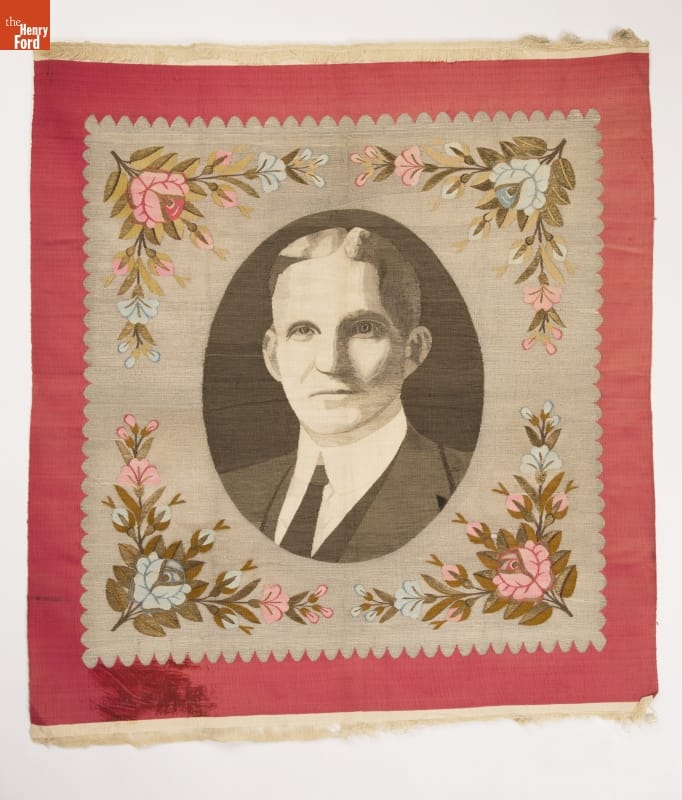
- Tapestry Portrait, Gift to Henry Ford, 1920-1940 - Over the years, Henry Ford received hundreds of gifts from people who felt a connection with the automotive entrepreneur. For many, he was "one of them," someone who also just happened to become a great industrialist. Perhaps the creator of this portrait was a satisfied Ford owner who used his own expertise to create this special memento.
- 1920
- Collections - Artifact
Tapestry Portrait, Gift to Henry Ford, 1920-1940
Over the years, Henry Ford received hundreds of gifts from people who felt a connection with the automotive entrepreneur. For many, he was "one of them," someone who also just happened to become a great industrialist. Perhaps the creator of this portrait was a satisfied Ford owner who used his own expertise to create this special memento.
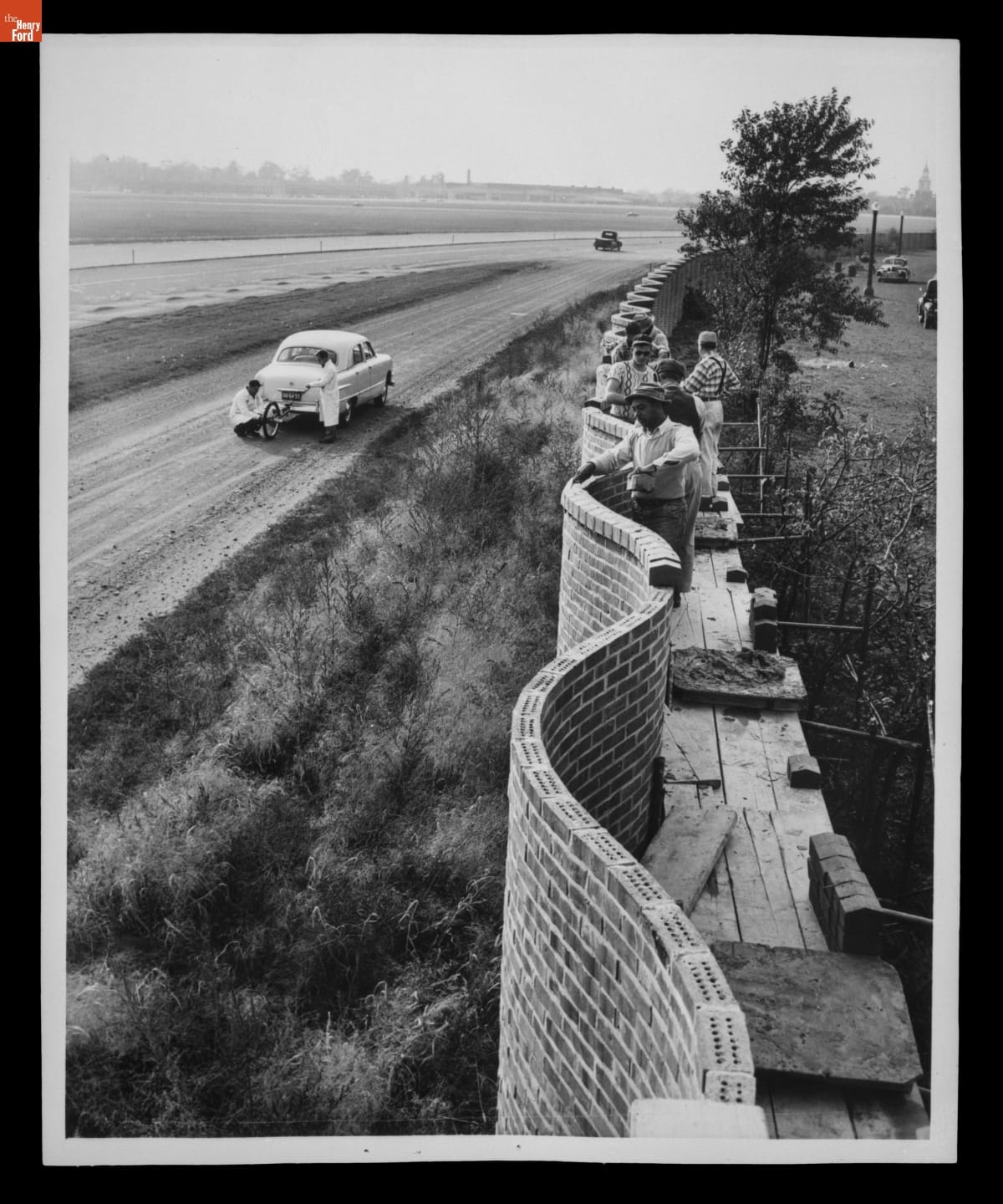
- Construction of Wall Between Ford Motor Company Test Track and Greenfield Village (Village Road), October 1951 - Ford Motor Company opened a formal proving ground, located on the former site of Ford Airport in Dearborn, Michigan, in the late 1930s. By the early 1950s, the facility included a water pit, a steep hill, and 11 miles of roadways with varying surfaces of concrete, cobblestone, macadam, gravel, and brick -- complete with potholes and simulated railroad crossings.
- October 18, 1951
- Collections - Artifact
Construction of Wall Between Ford Motor Company Test Track and Greenfield Village (Village Road), October 1951
Ford Motor Company opened a formal proving ground, located on the former site of Ford Airport in Dearborn, Michigan, in the late 1930s. By the early 1950s, the facility included a water pit, a steep hill, and 11 miles of roadways with varying surfaces of concrete, cobblestone, macadam, gravel, and brick -- complete with potholes and simulated railroad crossings.
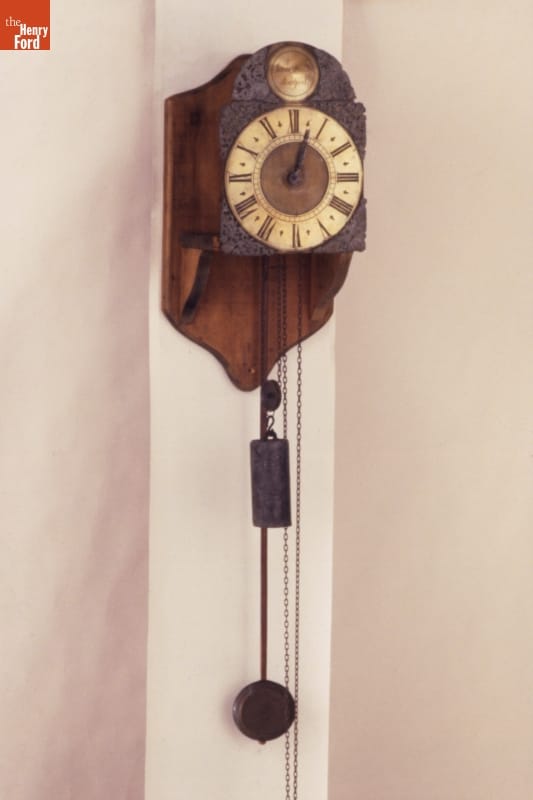
- Wall Clock, Made by Samuel Mulliken, circa 1745 -
- circa 1745
- Collections - Artifact
Wall Clock, Made by Samuel Mulliken, circa 1745
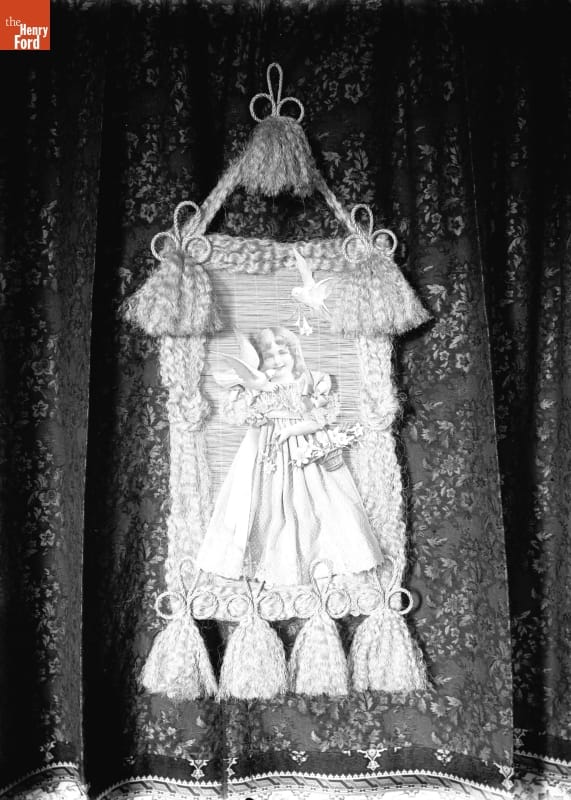
- Wallhanging, Jute and Straw with Cutout of Young Girl and Birds, 1890-1915 - In 1890, Jenny Young Chandler, 25 years old and recently widowed, began working for the <EM>New York Herald</EM>. As a photojournalist and feature writer, Chandler captured life in Brooklyn, New York, and vicinity. She also documented collections of private individuals and museums -- some of which were featured in magazine articles for collectors. By 1922, the time of her death, she had produced over 800 glass plate negatives.
- 1890-1915
- Collections - Artifact
Wallhanging, Jute and Straw with Cutout of Young Girl and Birds, 1890-1915
In 1890, Jenny Young Chandler, 25 years old and recently widowed, began working for the New York Herald. As a photojournalist and feature writer, Chandler captured life in Brooklyn, New York, and vicinity. She also documented collections of private individuals and museums -- some of which were featured in magazine articles for collectors. By 1922, the time of her death, she had produced over 800 glass plate negatives.
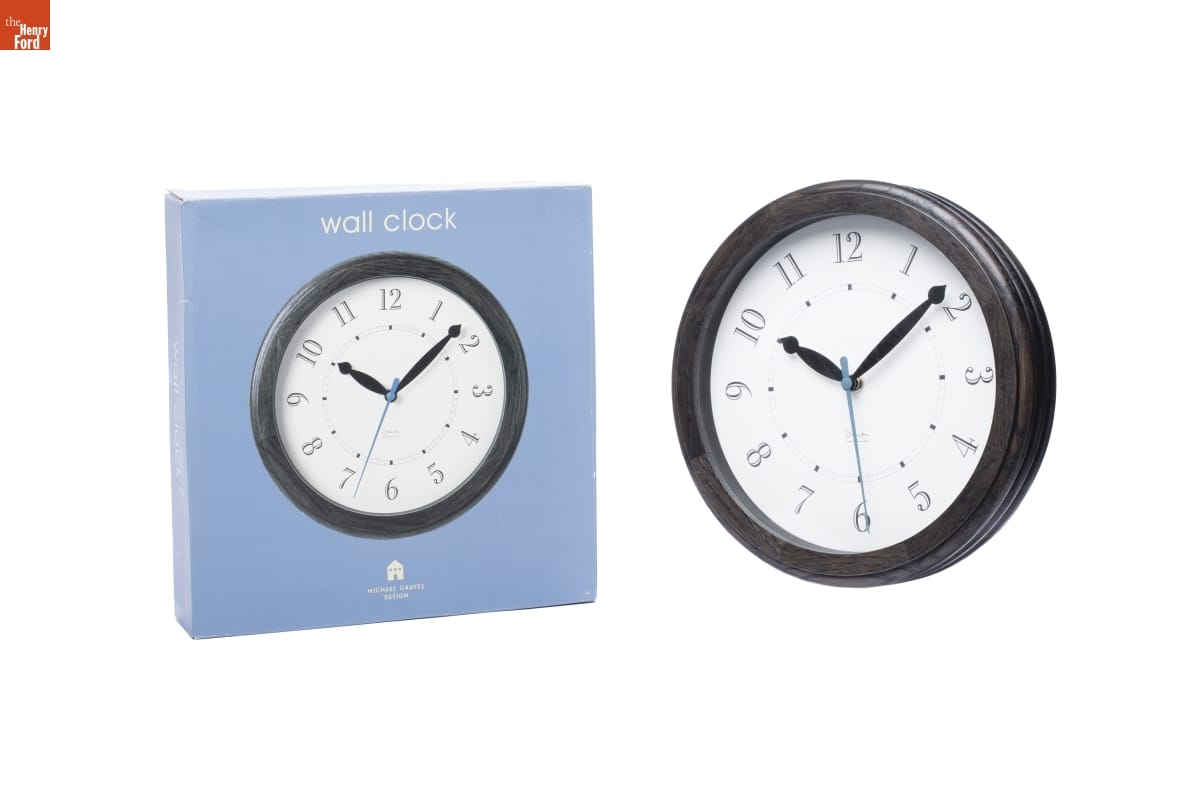
- Wall Clock, 2003 - Starting in the early 1980s--and already established as an internationally recognized architect--Michael Graves began to pursue a parallel career as a product designer. Over the following three and a half decades he and his collaborators designed everything from humble household goods to limited edition luxury items for clients as diverse as Steuben, Alessi, Target, J. C. Penney, and Disney.
- 2003
- Collections - Artifact
Wall Clock, 2003
Starting in the early 1980s--and already established as an internationally recognized architect--Michael Graves began to pursue a parallel career as a product designer. Over the following three and a half decades he and his collaborators designed everything from humble household goods to limited edition luxury items for clients as diverse as Steuben, Alessi, Target, J. C. Penney, and Disney.
- Floral Wallpaper Sample, 1870-1890 -
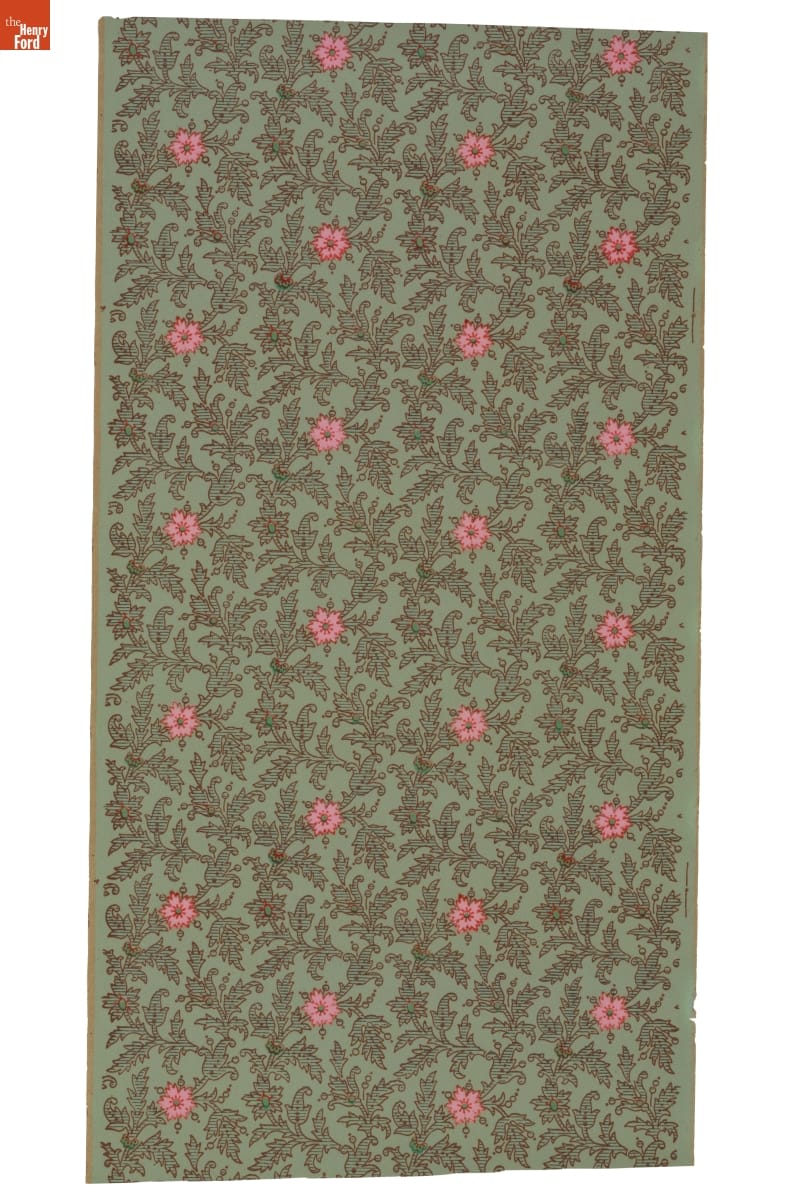
- 1870-1890
- Collections - Artifact
Floral Wallpaper Sample, 1870-1890
- Starburst Wallpaper Sample, 1865-1880 -
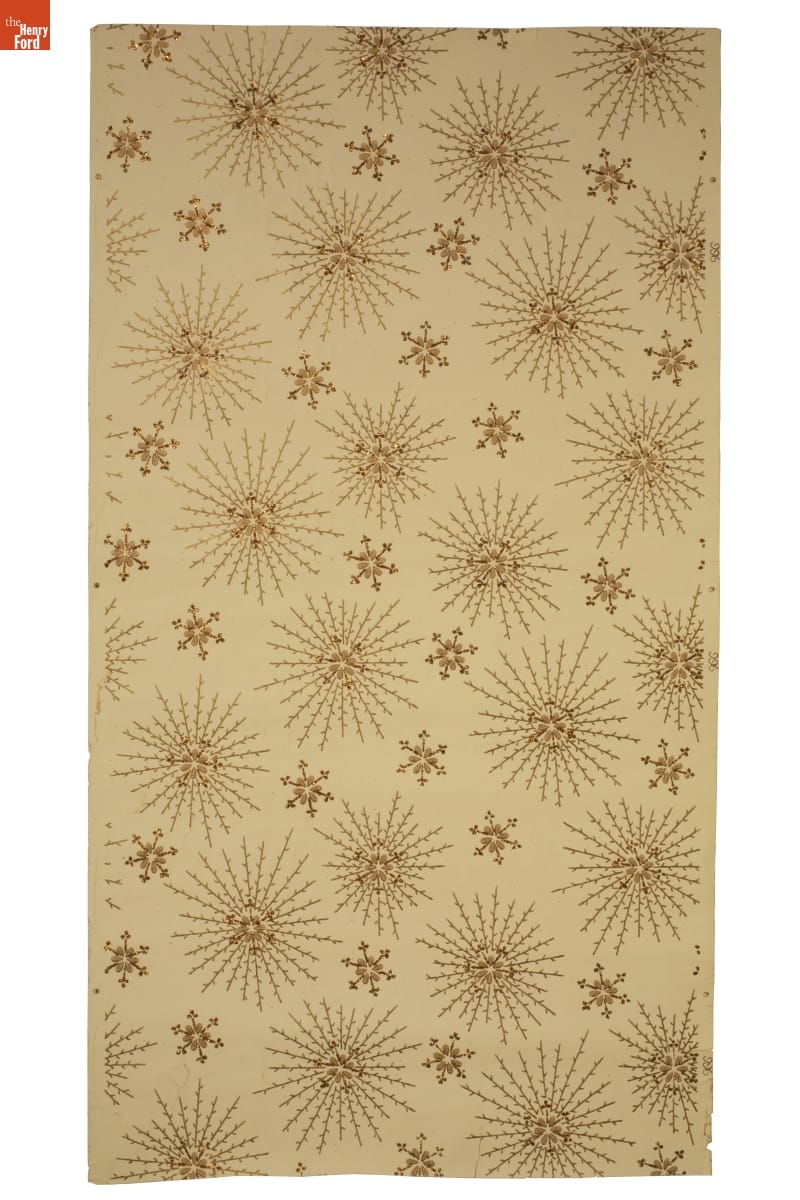
- 1865-1880
- Collections - Artifact
Starburst Wallpaper Sample, 1865-1880