
Search
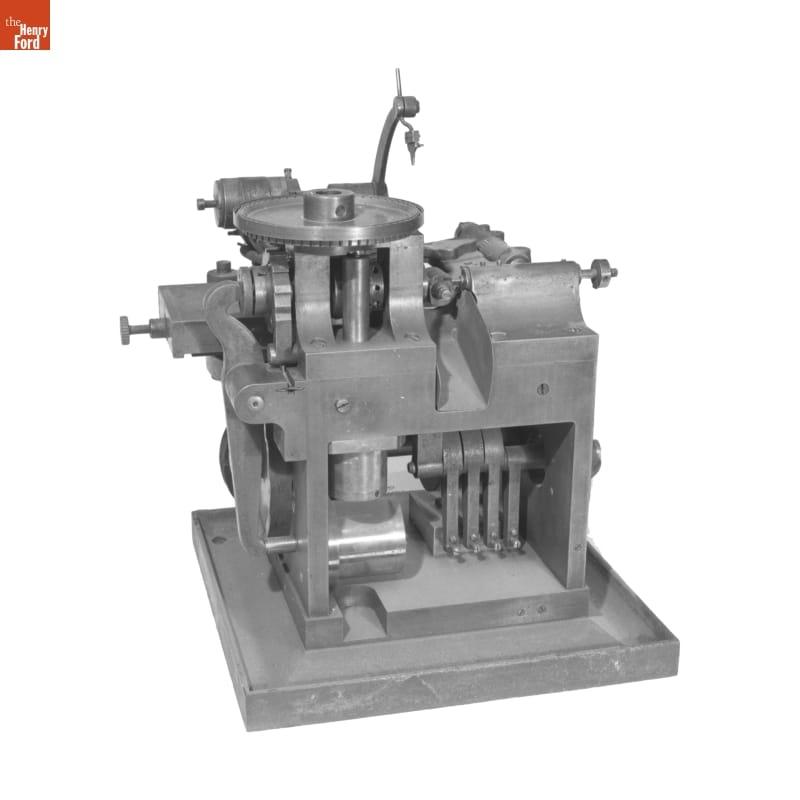
- Air-activated Gear Cutter, Used by the Waltham Watch Company, circa 1895 - The Waltham Watch Company was a world-famous example of a highly mechanized manufacturer of quality consumer goods. Specialized labor, new machines, and interchangeable parts combined to create the company's low-cost, high-grade watches. Duane Church, Waltham's superintendent of toolmakers, developed precision watchmaking machinery that produced interchangeable parts without the aid of gauges and templates. Church invented this gear cutter in the early 1890s.
- circa 1895
- Collections - Artifact
Air-activated Gear Cutter, Used by the Waltham Watch Company, circa 1895
The Waltham Watch Company was a world-famous example of a highly mechanized manufacturer of quality consumer goods. Specialized labor, new machines, and interchangeable parts combined to create the company's low-cost, high-grade watches. Duane Church, Waltham's superintendent of toolmakers, developed precision watchmaking machinery that produced interchangeable parts without the aid of gauges and templates. Church invented this gear cutter in the early 1890s.
- Engraving, "Ninety Years Ago - Buying a Watch," circa 1910 -
- circa 1910
- Collections - Artifact
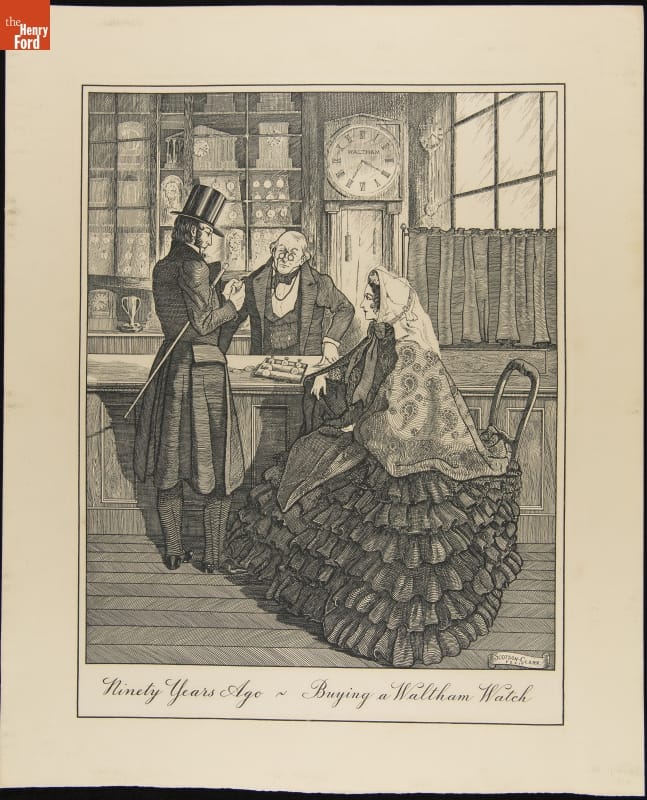
Engraving, "Ninety Years Ago - Buying a Watch," circa 1910
- "Scientific American," Vol. 51, July-December 1884 -

- July 1884-December 1884
- Collections - Artifact
"Scientific American," Vol. 51, July-December 1884
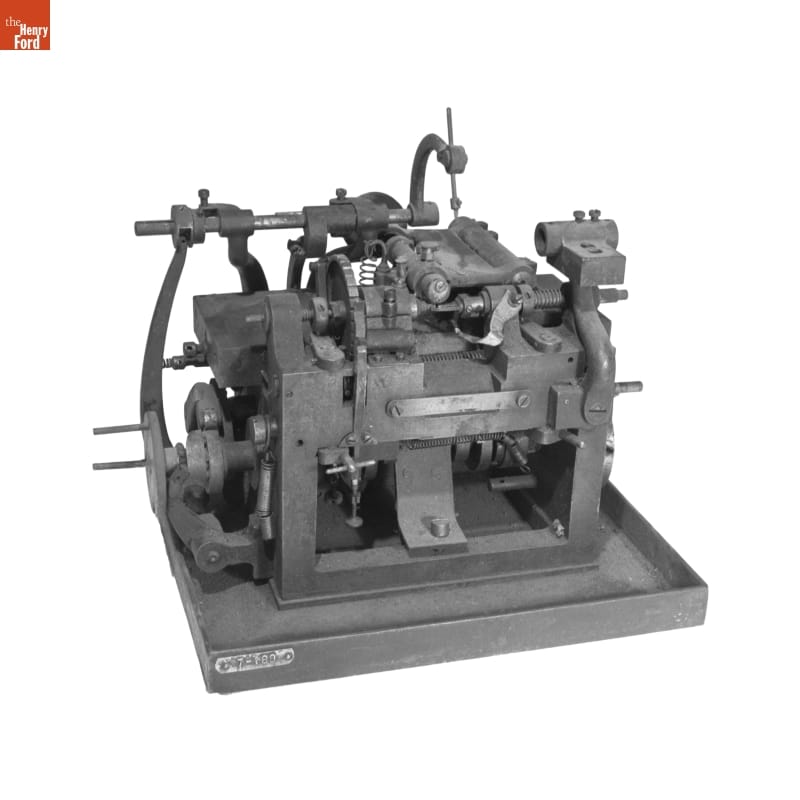
- Automatic Pinion Cutter, Used by the Waltham Watch Company, circa 1892 - The Waltham Watch Company was a world-famous example of a highly mechanized manufacturer of quality consumer goods. Specialized labor, new machines, and interchangeable parts combined to produce the company's low-cost, high-grade watches. Waltham mechanics first invented machines to cut pinions (small gears used in watch movements) in the 1860s. Duane Church, superintendent of toolmakers, developed this improved version in the 1890s.
- circa 1892
- Collections - Artifact
Automatic Pinion Cutter, Used by the Waltham Watch Company, circa 1892
The Waltham Watch Company was a world-famous example of a highly mechanized manufacturer of quality consumer goods. Specialized labor, new machines, and interchangeable parts combined to produce the company's low-cost, high-grade watches. Waltham mechanics first invented machines to cut pinions (small gears used in watch movements) in the 1860s. Duane Church, superintendent of toolmakers, developed this improved version in the 1890s.
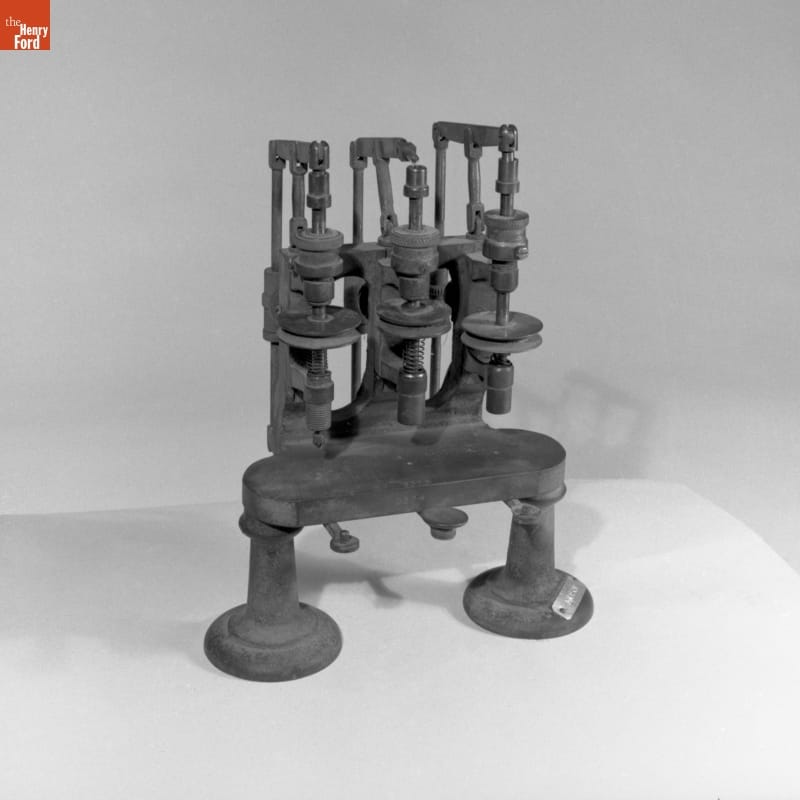
- Three Spindle Drill Press, Used by the Waltham Watch Company, circa 1880 - The Waltham Watch Company was a world-famous example of a highly mechanized manufacturer of quality consumer goods. Specialized labor, new machines, and interchangeable parts combined to produce the company's low-cost, high-grade watches. Workers used this type of drill press to put holes in watch face plates -- an operation later mechanized by an automatic plate drilling machine invented in 1890.
- circa 1880
- Collections - Artifact
Three Spindle Drill Press, Used by the Waltham Watch Company, circa 1880
The Waltham Watch Company was a world-famous example of a highly mechanized manufacturer of quality consumer goods. Specialized labor, new machines, and interchangeable parts combined to produce the company's low-cost, high-grade watches. Workers used this type of drill press to put holes in watch face plates -- an operation later mechanized by an automatic plate drilling machine invented in 1890.
- "Scientific American," Vol. 23, July-December 1870 -
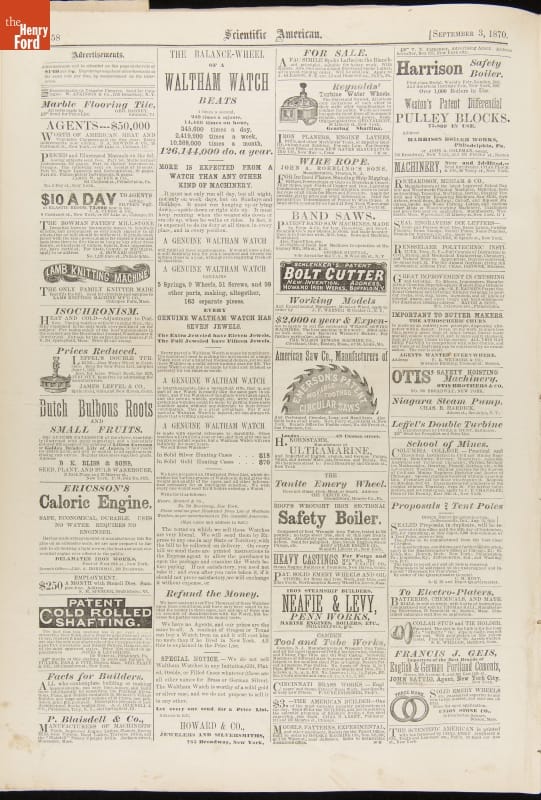
- July 1870-December 1870
- Collections - Artifact
"Scientific American," Vol. 23, July-December 1870
- Waltham Watch Company Display, Ford Exhibition Building, Century of Progress International Exposition, Chicago, Illinois, 1934 - Chicago's 1933-34 Century of Progress Exposition used the theme of progress to encourage optimism during the Depression. The Ford Exhibition Building, which sat on eleven acres at the fair and featured industrial demonstrations and informative displays like this, became the most talked-about exhibit of 1934.
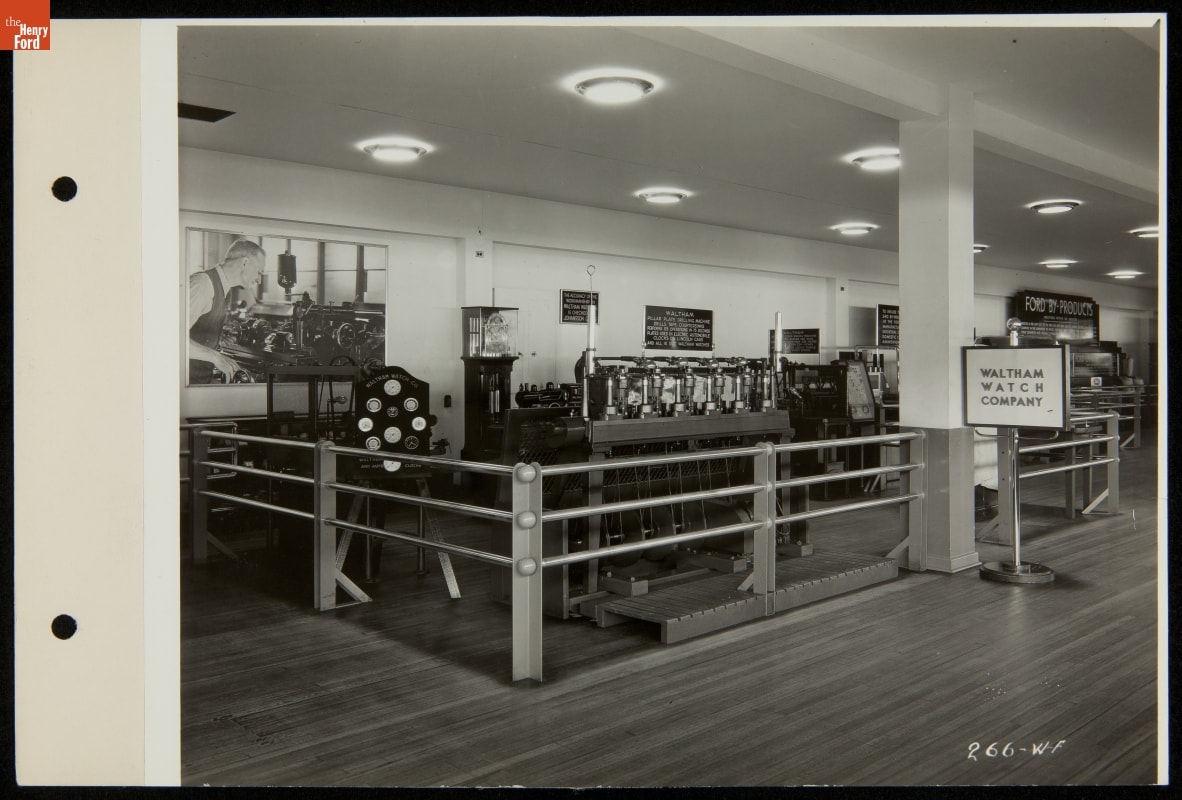
- 1934
- Collections - Artifact
Waltham Watch Company Display, Ford Exhibition Building, Century of Progress International Exposition, Chicago, Illinois, 1934
Chicago's 1933-34 Century of Progress Exposition used the theme of progress to encourage optimism during the Depression. The Ford Exhibition Building, which sat on eleven acres at the fair and featured industrial demonstrations and informative displays like this, became the most talked-about exhibit of 1934.