
Search
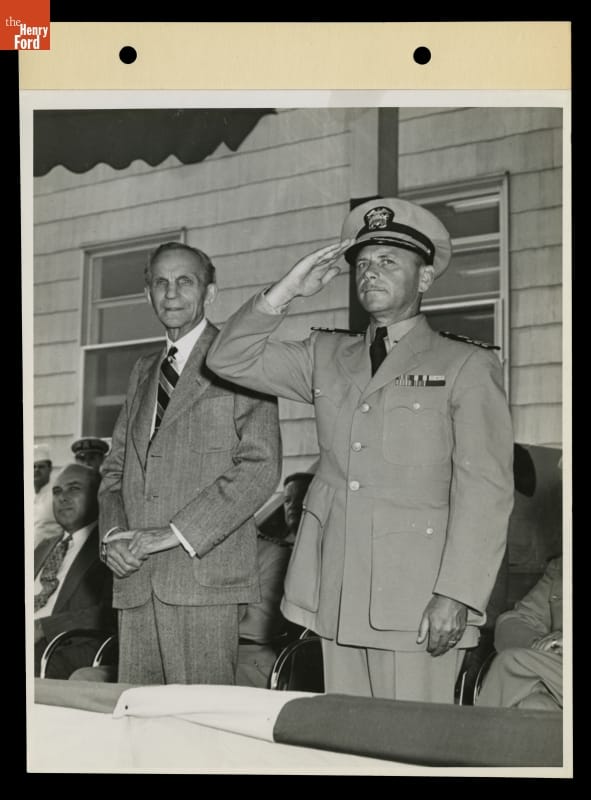
- Henry Ford on His 80th Birthday, U. S. Naval Training School at the Ford Rouge Plant, July 1943 - Personnel at the United States Naval Training School in Dearborn, Michigan, invited Henry Ford to celebrate his 80th birthday at the base. Ford was feted with gifts, a military drill, and a large cake modeled after the school buildings. The school -- built on land at Ford's Rouge Plant and leased to the Navy -- trained thousands of recruits in various skilled trades during World War II.
- July 28, 1943
- Collections - Artifact
Henry Ford on His 80th Birthday, U. S. Naval Training School at the Ford Rouge Plant, July 1943
Personnel at the United States Naval Training School in Dearborn, Michigan, invited Henry Ford to celebrate his 80th birthday at the base. Ford was feted with gifts, a military drill, and a large cake modeled after the school buildings. The school -- built on land at Ford's Rouge Plant and leased to the Navy -- trained thousands of recruits in various skilled trades during World War II.
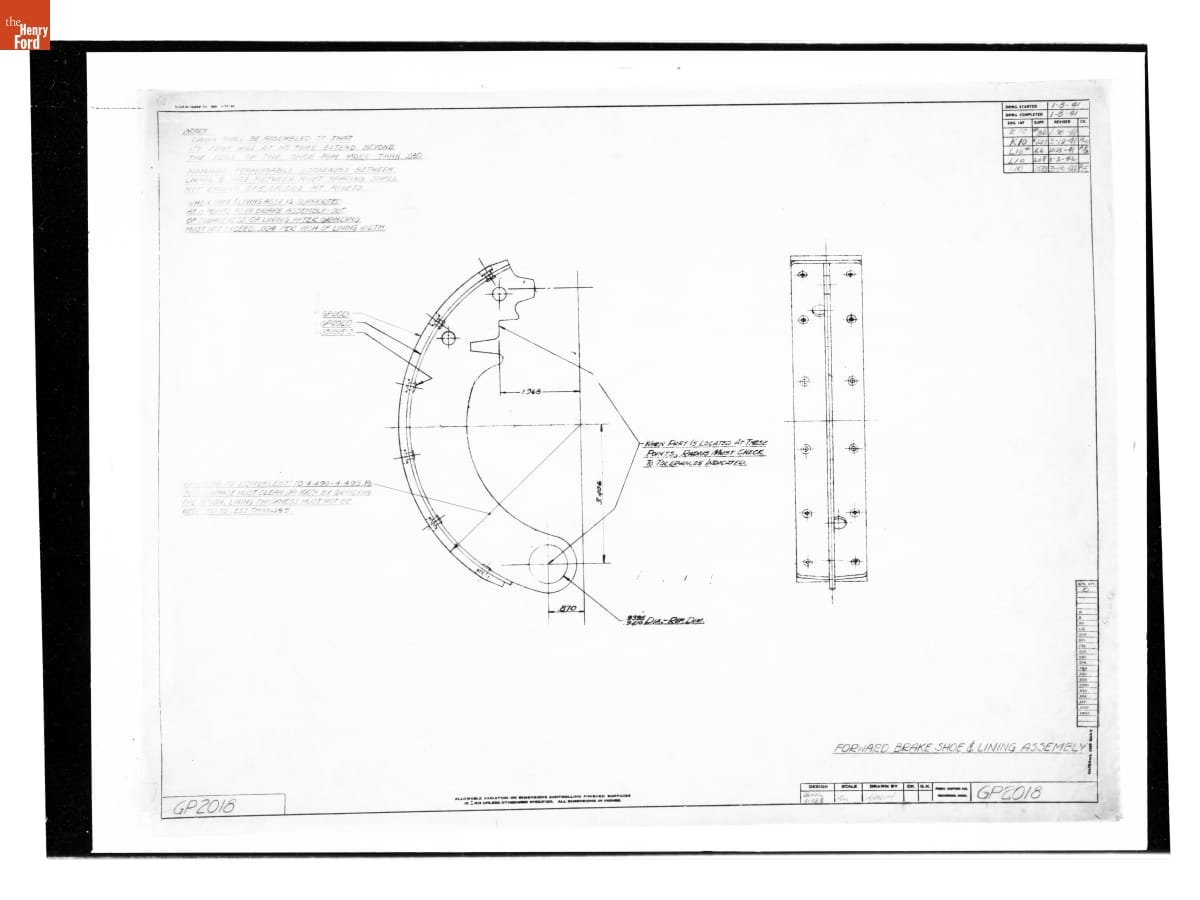
- Drawing, "Forward Brake Shoe & Lining Assembly," Ford GP, March 16, 1944 - The Ford Motor Company created over a million parts drawings from 1903 to 1957. Many of these drawings specify engineering requirements for the components of Ford-made vehicles--including automobiles, trucks, tractors, military vehicles and Tri-motor airplanes. Others document assembly components, stages of casting and forging, or experimental designs. Beginning in the 1940s, Ford transferred the drawings to microfilm.
- March 16, 1944
- Collections - Artifact
Drawing, "Forward Brake Shoe & Lining Assembly," Ford GP, March 16, 1944
The Ford Motor Company created over a million parts drawings from 1903 to 1957. Many of these drawings specify engineering requirements for the components of Ford-made vehicles--including automobiles, trucks, tractors, military vehicles and Tri-motor airplanes. Others document assembly components, stages of casting and forging, or experimental designs. Beginning in the 1940s, Ford transferred the drawings to microfilm.
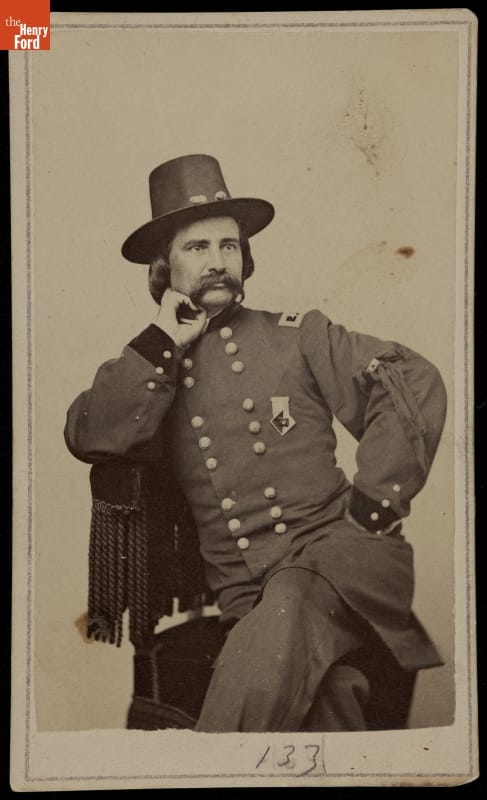
- Portrait of Union Army General John A. Logan, 1863-1865 - Cartes-de-visite, small, professionally made photographs on cardboard stock, remained popular in the United States from the Civil War in the 1860s through the 1880s. Many were given to friends and loved ones, but enterprising photographers also produced images of famous individuals to sell to the collecting-crazed public. Admired politicians or military officers, such as General John A. Logan, were popular subjects.
- 1863-1865
- Collections - Artifact
Portrait of Union Army General John A. Logan, 1863-1865
Cartes-de-visite, small, professionally made photographs on cardboard stock, remained popular in the United States from the Civil War in the 1860s through the 1880s. Many were given to friends and loved ones, but enterprising photographers also produced images of famous individuals to sell to the collecting-crazed public. Admired politicians or military officers, such as General John A. Logan, were popular subjects.
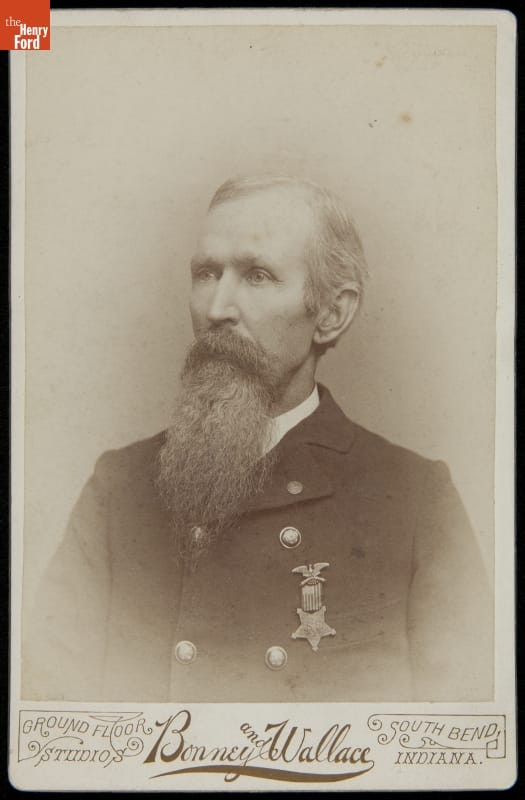
- Portrait of an American Civil War Veteran, circa 1890 -
- circa 1890
- Collections - Artifact
Portrait of an American Civil War Veteran, circa 1890
- Caricature of Abraham Lincoln, "That's What's the Matter," 1863 -
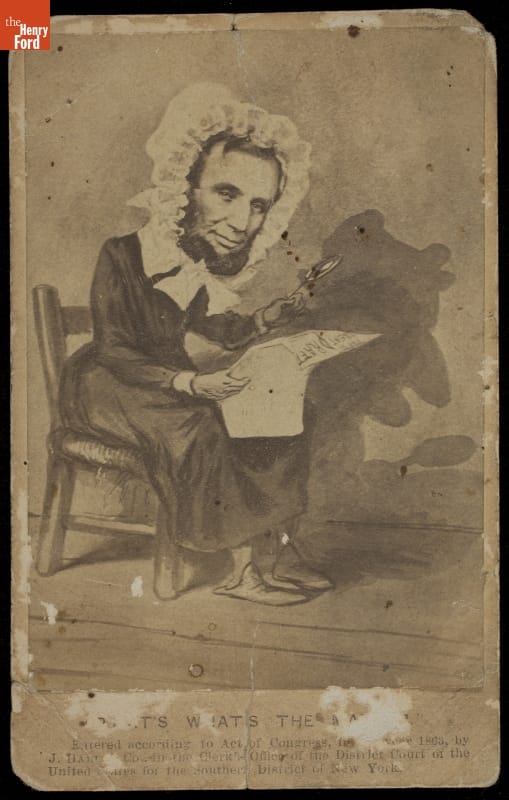
- 1863
- Collections - Artifact
Caricature of Abraham Lincoln, "That's What's the Matter," 1863
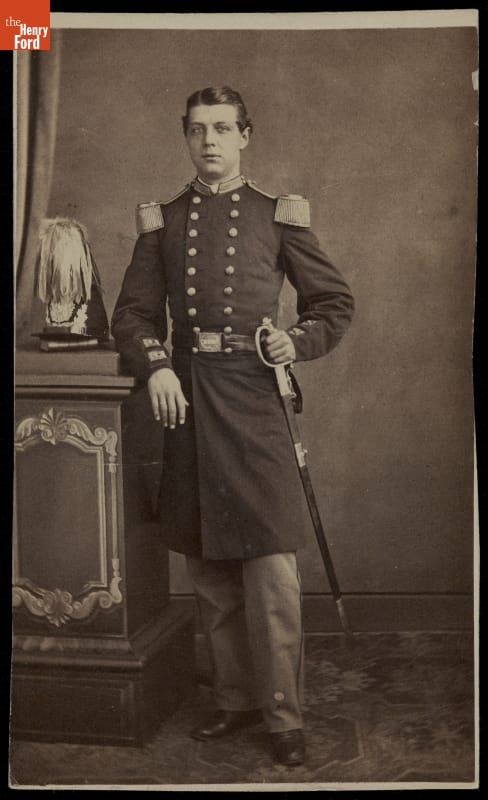
- Portrait of Robert O'Neill Ford, a U. S. Marine Corps 2nd Lieutenant, 1862-1864 - This carte-de-visite portrait shows a Union Marine Officer, Lieutenant Robert O'Neill Ford, who served on the USS <EM>Constellation</EM> in the Mediterranean Sea. Carte-de-visite was a small photographic print on cardboard stock made by professional photographers. Popular in the United States from the Civil War in the 1860s through the 1880s, people exchanged and collected CdVs to help them remember family and celebrities.
- 1862-1864
- Collections - Artifact
Portrait of Robert O'Neill Ford, a U. S. Marine Corps 2nd Lieutenant, 1862-1864
This carte-de-visite portrait shows a Union Marine Officer, Lieutenant Robert O'Neill Ford, who served on the USS Constellation in the Mediterranean Sea. Carte-de-visite was a small photographic print on cardboard stock made by professional photographers. Popular in the United States from the Civil War in the 1860s through the 1880s, people exchanged and collected CdVs to help them remember family and celebrities.
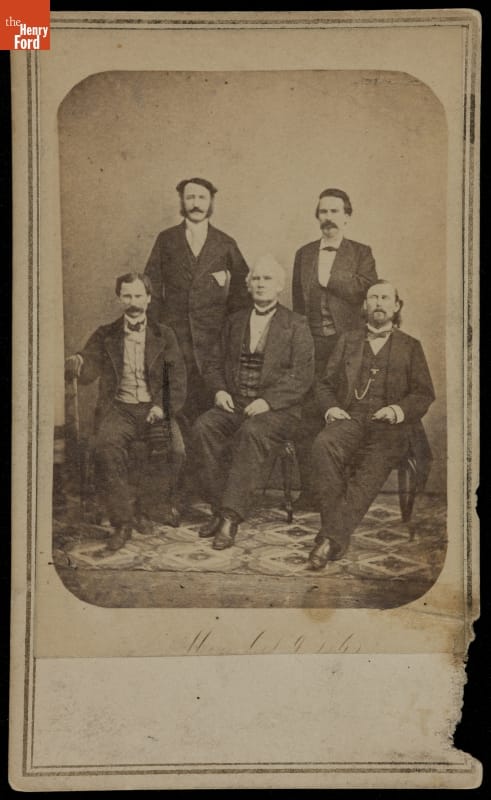
- Five Confederate Generals in Mexico, 1865 -
- October 09, 1865
- Collections - Artifact
Five Confederate Generals in Mexico, 1865
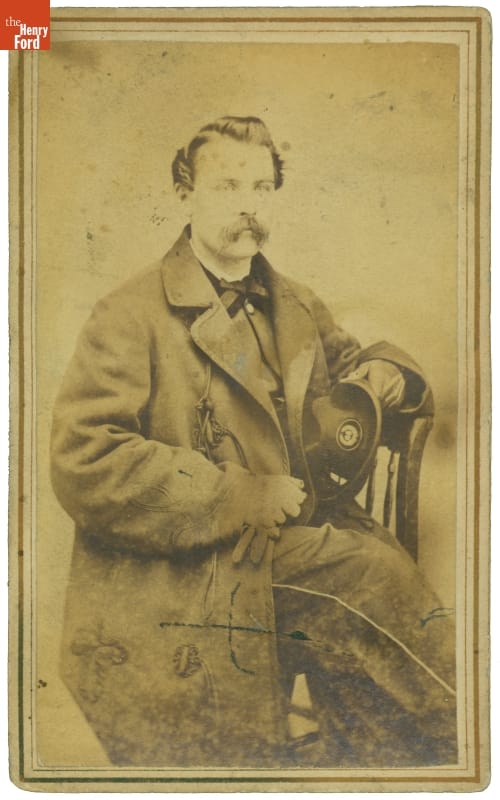
- Portrait of 1st Lieutenant DeLoss C. LeBaron, 18th Michigan Infantry, Company B, 1865 - A.J. Hoag of Tecumseh, Michigan, made this bust portrait of Union Army infantry officer DeLoss C. LeBaron. Professional photographers made cartes-de-visite beginning in the 1860s. Mounted on small cardboard stock, these early photographic prints proved popular in the United States from the Civil War through the 1880s. Americans exchanged and collected CdVs to help them remember family and celebrities.
- 1865
- Collections - Artifact
Portrait of 1st Lieutenant DeLoss C. LeBaron, 18th Michigan Infantry, Company B, 1865
A.J. Hoag of Tecumseh, Michigan, made this bust portrait of Union Army infantry officer DeLoss C. LeBaron. Professional photographers made cartes-de-visite beginning in the 1860s. Mounted on small cardboard stock, these early photographic prints proved popular in the United States from the Civil War through the 1880s. Americans exchanged and collected CdVs to help them remember family and celebrities.
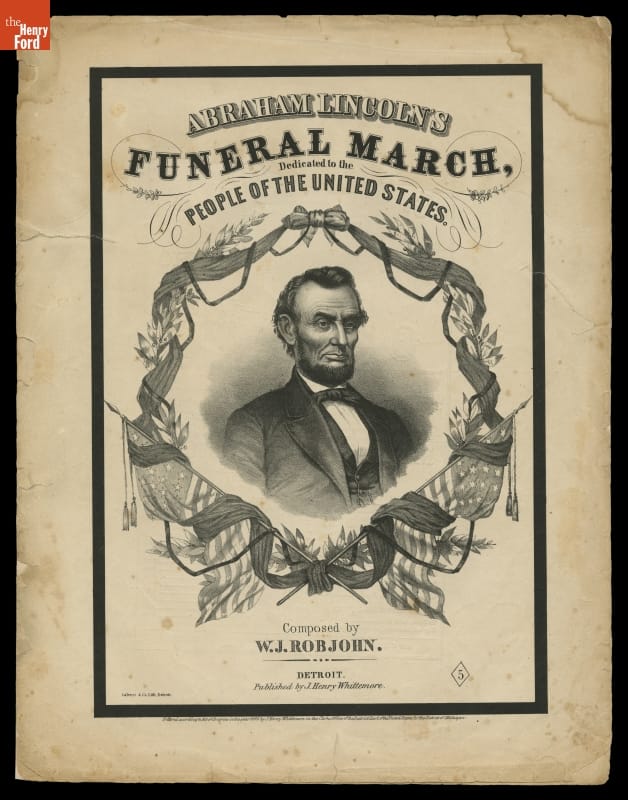
- Music Sheet, "Abraham Lincoln's Funeral March," 1865 - Abraham Lincoln's assassination on April 15, 1865 plunged Americans into deep mourning. This sheet music's somber composition and illustrated cover helped people to understand the tragic event. Printed in Detroit, it may have been used during that city's public mourning ceremony held April 25, 1865. The artist added a border depicting black cloth-draped U.S. flags and laurel leaves in the shape of a wreath around Lincoln's head.
- 1865
- Collections - Artifact
Music Sheet, "Abraham Lincoln's Funeral March," 1865
Abraham Lincoln's assassination on April 15, 1865 plunged Americans into deep mourning. This sheet music's somber composition and illustrated cover helped people to understand the tragic event. Printed in Detroit, it may have been used during that city's public mourning ceremony held April 25, 1865. The artist added a border depicting black cloth-draped U.S. flags and laurel leaves in the shape of a wreath around Lincoln's head.
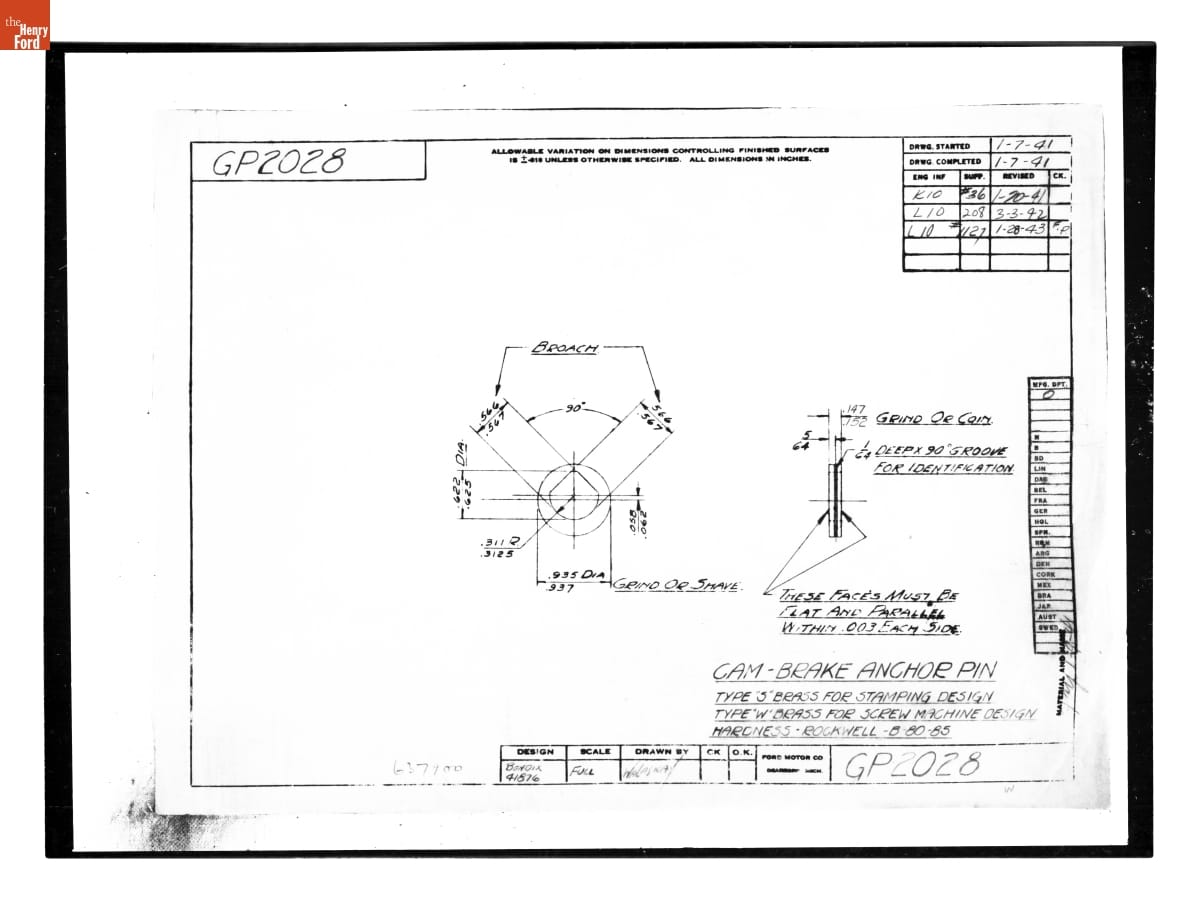
- Drawing, "Cam - Brake Anchor Pin," Ford GP, January 28, 1943 - The Ford Motor Company created over a million parts drawings from 1903 to 1957. Many of these drawings specify engineering requirements for the components of Ford-made vehicles--including automobiles, trucks, tractors, military vehicles and Tri-motor airplanes. Others document assembly components, stages of casting and forging, or experimental designs. Beginning in the 1940s, Ford transferred the drawings to microfilm.
- January 28, 1943
- Collections - Artifact
Drawing, "Cam - Brake Anchor Pin," Ford GP, January 28, 1943
The Ford Motor Company created over a million parts drawings from 1903 to 1957. Many of these drawings specify engineering requirements for the components of Ford-made vehicles--including automobiles, trucks, tractors, military vehicles and Tri-motor airplanes. Others document assembly components, stages of casting and forging, or experimental designs. Beginning in the 1940s, Ford transferred the drawings to microfilm.