
Search
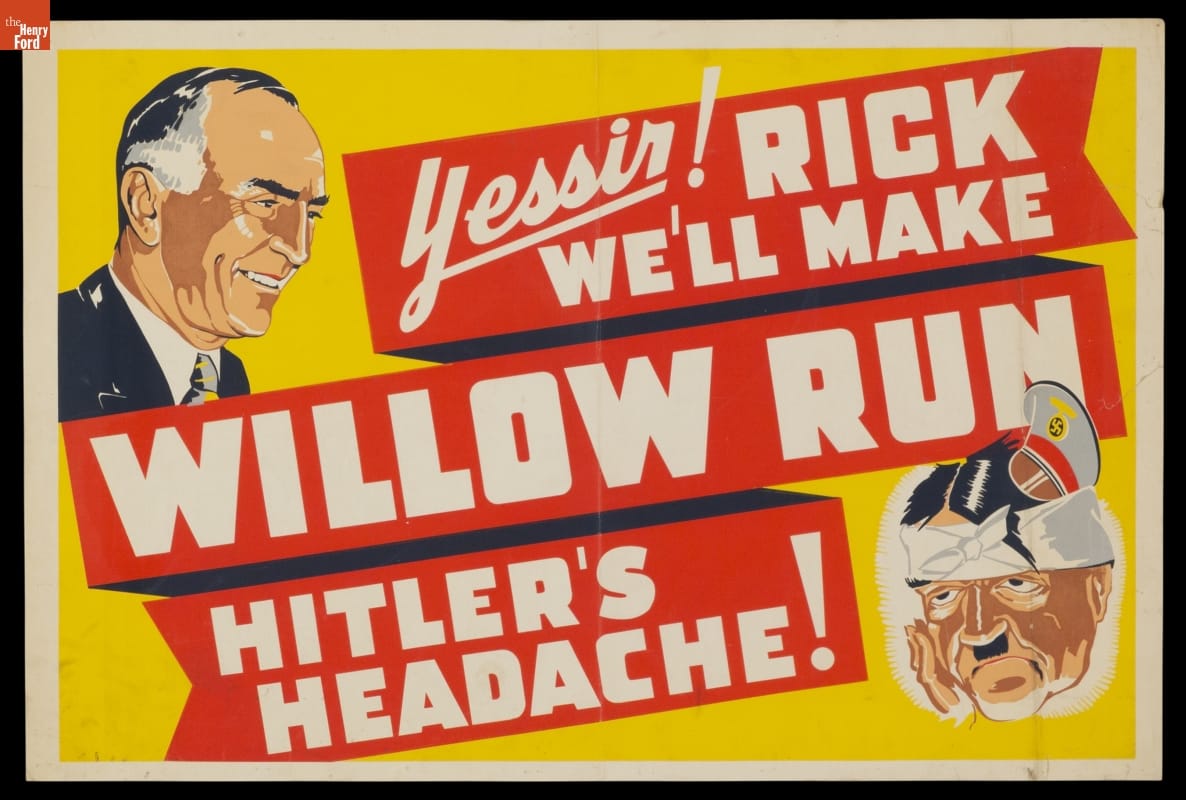
- World War II Poster, "Yessir! Rick We'll Make Willow Run Hitler's Headache!," circa 1943 - The people of Ford Motor Company's Willow Run plant felt -- justifiably -- that their efforts were crucial to Allied victory in World War II. The B-24 Liberator airplanes they built formed the backbone of the Allies' strategic bombing campaign against Germany. Posters like this reinforced the idea that the harder Willow Run's employees worked, the weaker the enemy became.
- circa 1943
- Collections - Artifact
World War II Poster, "Yessir! Rick We'll Make Willow Run Hitler's Headache!," circa 1943
The people of Ford Motor Company's Willow Run plant felt -- justifiably -- that their efforts were crucial to Allied victory in World War II. The B-24 Liberator airplanes they built formed the backbone of the Allies' strategic bombing campaign against Germany. Posters like this reinforced the idea that the harder Willow Run's employees worked, the weaker the enemy became.
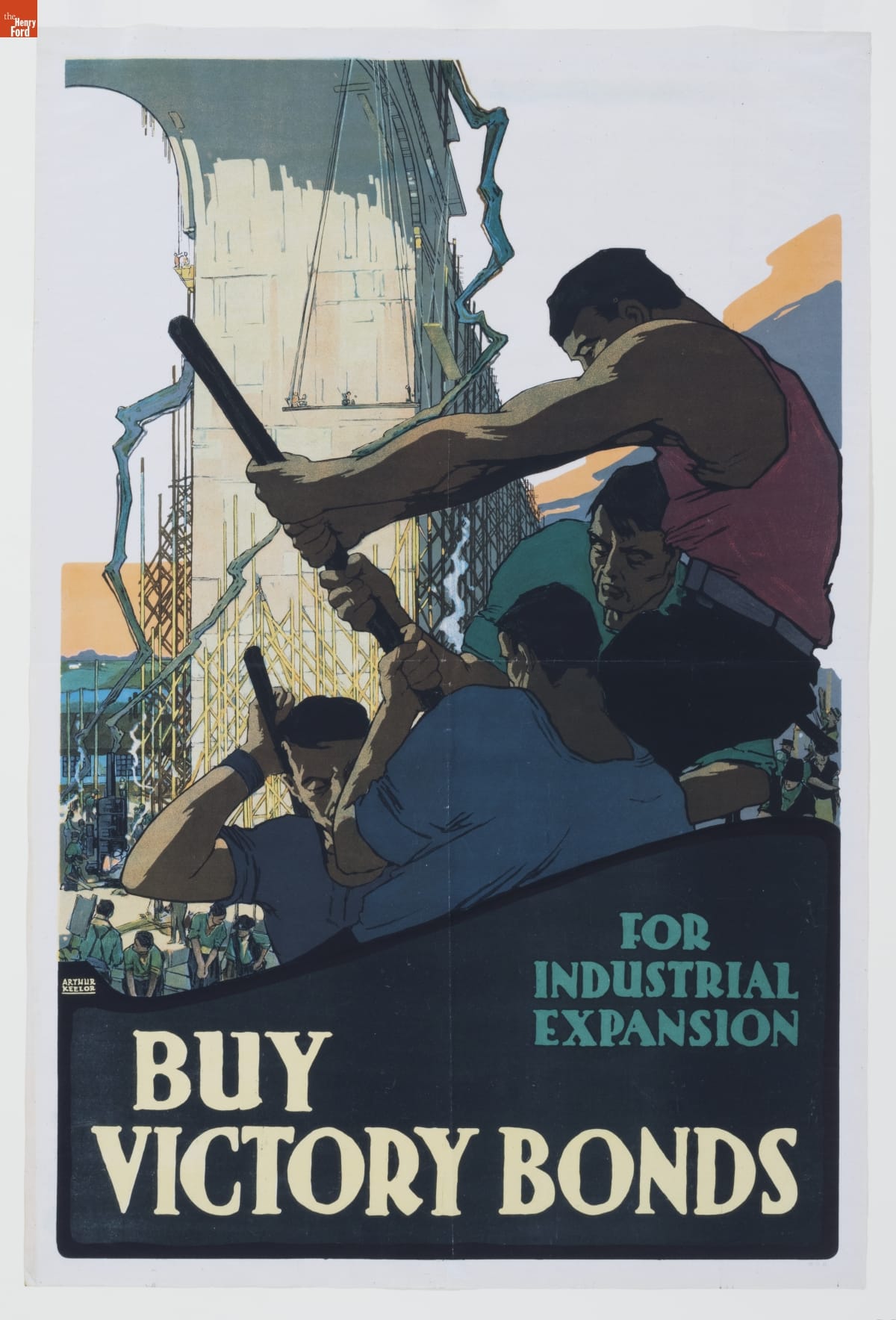
- Buy Victory Bonds for Industrial Expansion, circa 1917 -
- circa 1917
- Collections - Artifact
Buy Victory Bonds for Industrial Expansion, circa 1917
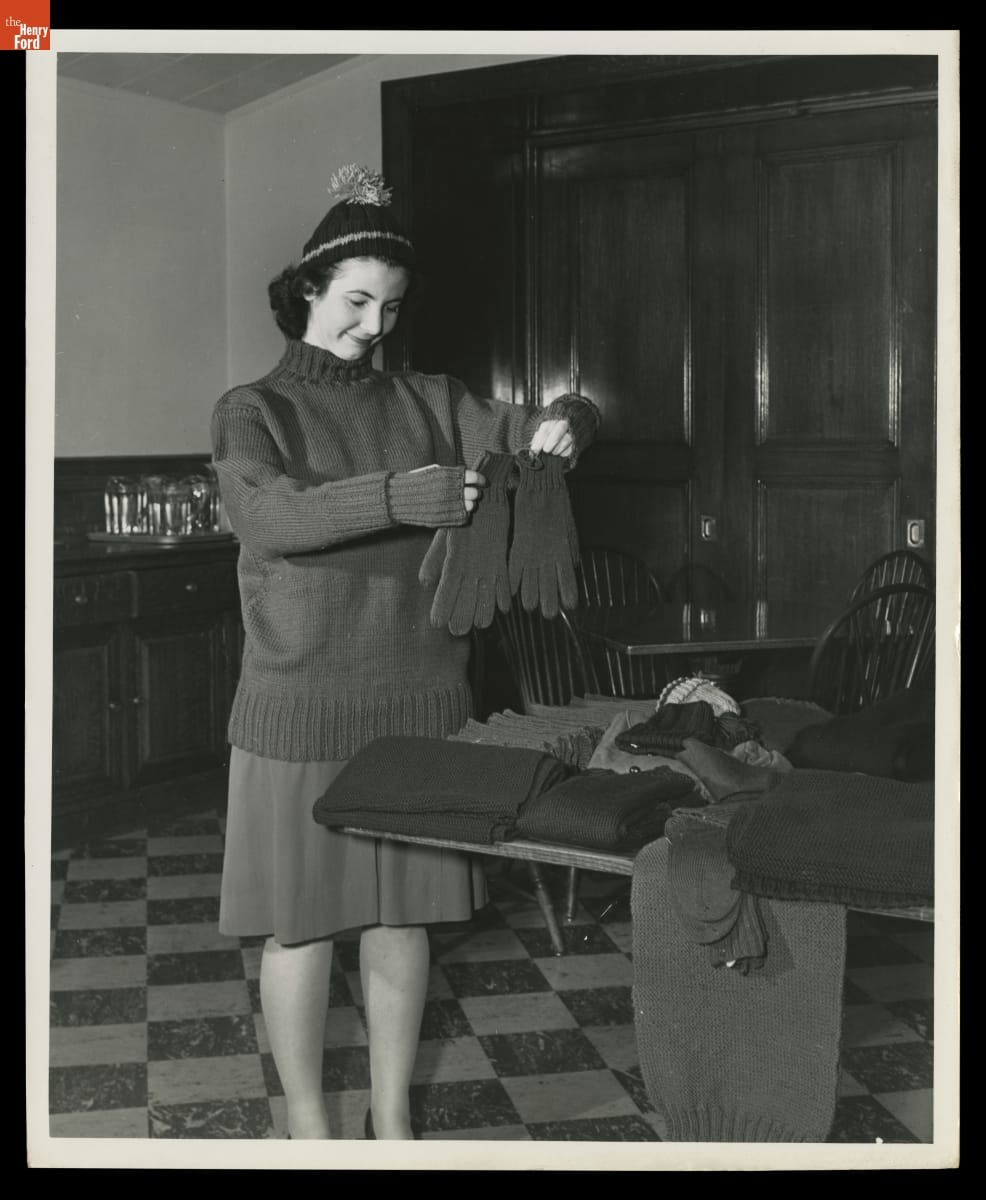
- Garments Knitted for the War Effort by Employees at the Ford Motor Company Rouge Plant, October 1942 -
- October 26, 1942
- Collections - Artifact
Garments Knitted for the War Effort by Employees at the Ford Motor Company Rouge Plant, October 1942
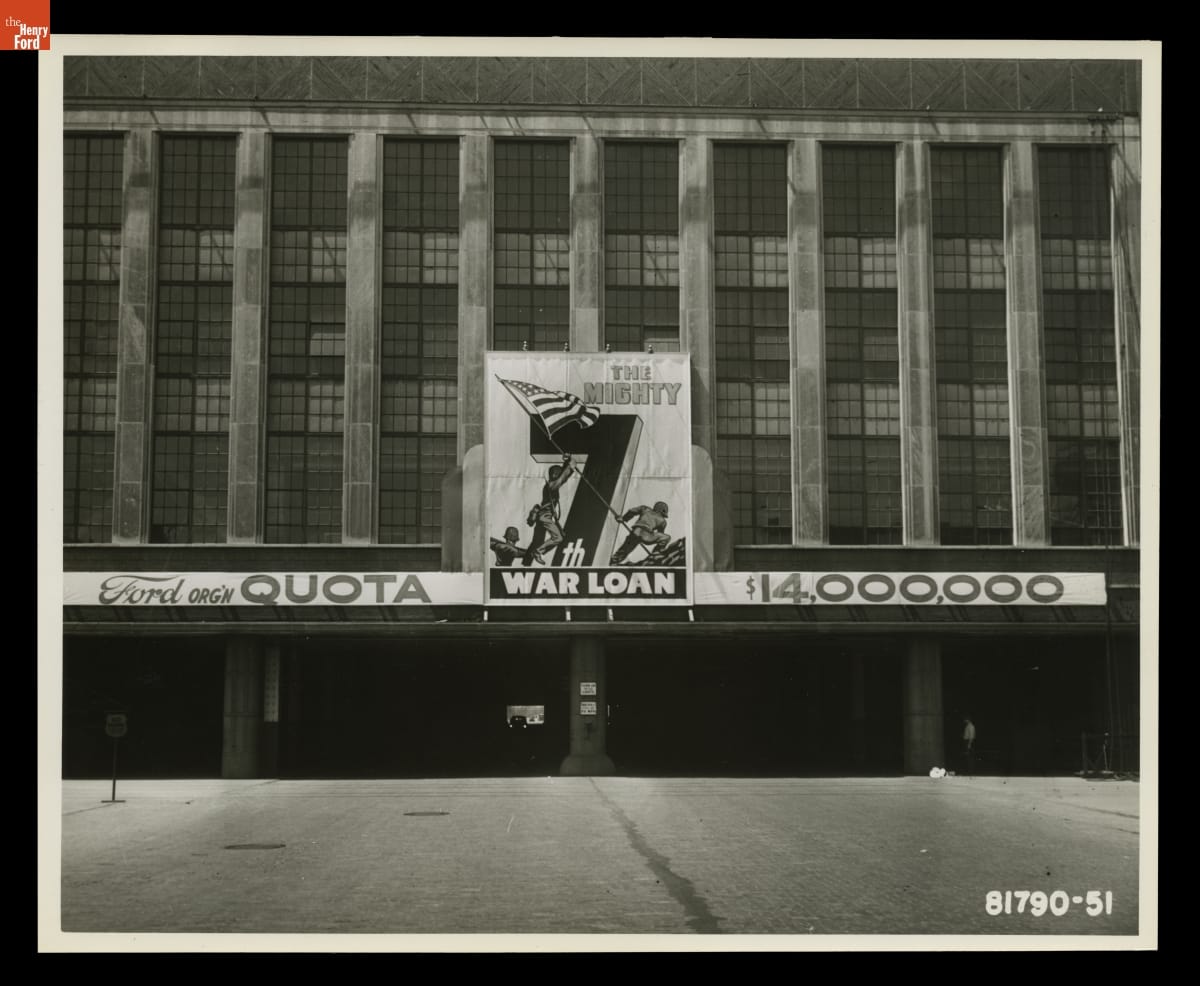
- War Bond Drive Poster Displayed at the Ford Motor Company Rouge Plant, May 1945 - Ford Motor Company and its employees contributed to Allied efforts in World War II in numerous ways. The company built trucks, tanks, aircraft engines, gliders, and B-24 bomber airplanes. Ford workers purchased war bonds with their earnings, either independently or through a payroll deduction program.
- May 15, 1945
- Collections - Artifact
War Bond Drive Poster Displayed at the Ford Motor Company Rouge Plant, May 1945
Ford Motor Company and its employees contributed to Allied efforts in World War II in numerous ways. The company built trucks, tanks, aircraft engines, gliders, and B-24 bomber airplanes. Ford workers purchased war bonds with their earnings, either independently or through a payroll deduction program.
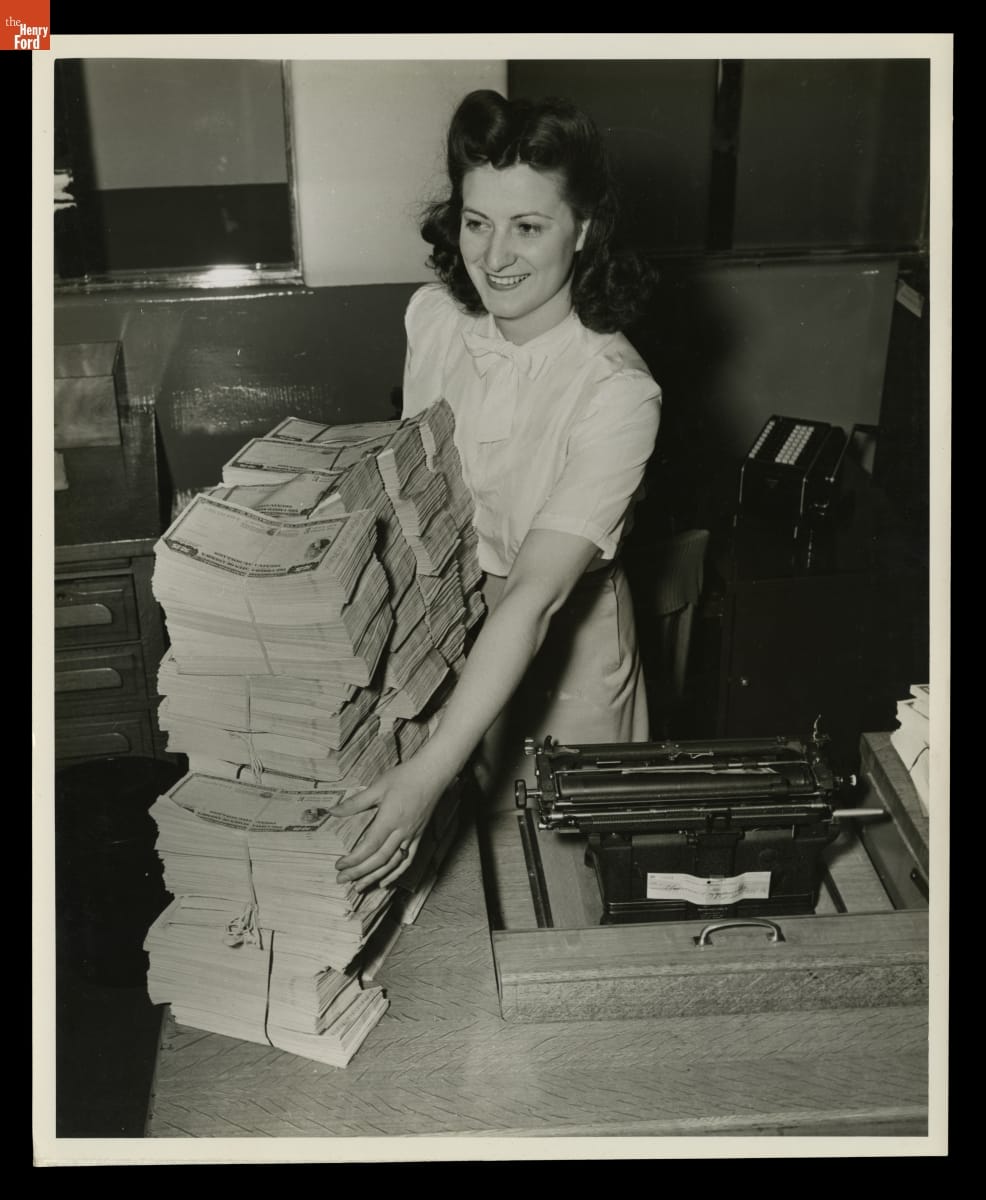
- Preparations for War Bond Drive at the Bond Office, Ford Motor Company Rouge Plant, May 1945 - Ford Motor Company and its employees contributed to Allied efforts in World War II in numerous ways. The company built trucks, tanks, aircraft engines, gliders, and B-24 bomber airplanes. Ford workers purchased war bonds with their earnings, either independently or through a payroll deduction program.
- May 25, 1945
- Collections - Artifact
Preparations for War Bond Drive at the Bond Office, Ford Motor Company Rouge Plant, May 1945
Ford Motor Company and its employees contributed to Allied efforts in World War II in numerous ways. The company built trucks, tanks, aircraft engines, gliders, and B-24 bomber airplanes. Ford workers purchased war bonds with their earnings, either independently or through a payroll deduction program.
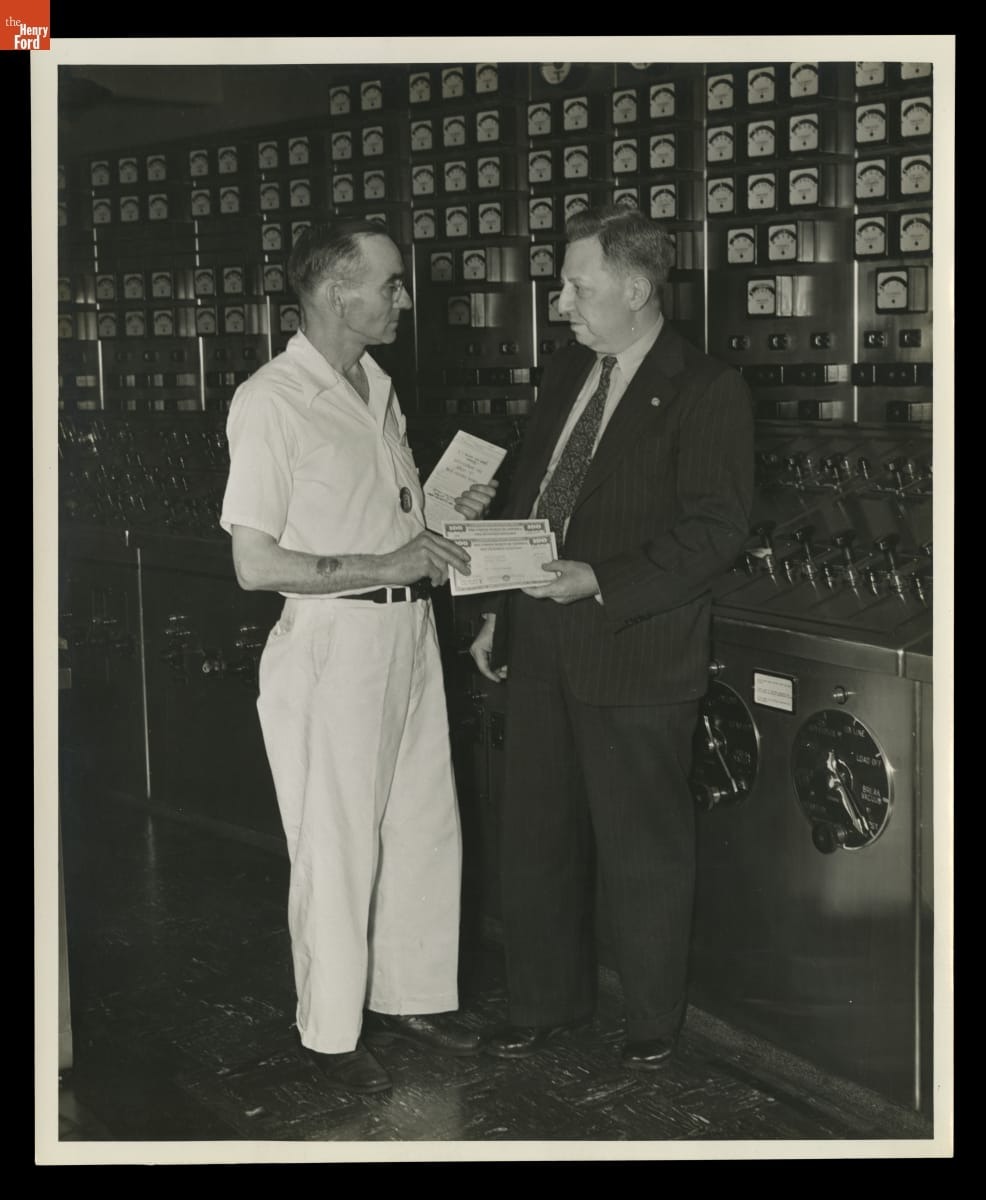
- War Bond Drive at Ford Motor Company Rouge Plant Powerhouse #1, June 1945 - Ford Motor Company and its employees contributed to Allied efforts in World War II in numerous ways. The company built trucks, tanks, aircraft engines, gliders, and B-24 bomber airplanes. Ford workers purchased war bonds with their earnings, either independently or through a payroll deduction program.
- June 18, 1945
- Collections - Artifact
War Bond Drive at Ford Motor Company Rouge Plant Powerhouse #1, June 1945
Ford Motor Company and its employees contributed to Allied efforts in World War II in numerous ways. The company built trucks, tanks, aircraft engines, gliders, and B-24 bomber airplanes. Ford workers purchased war bonds with their earnings, either independently or through a payroll deduction program.
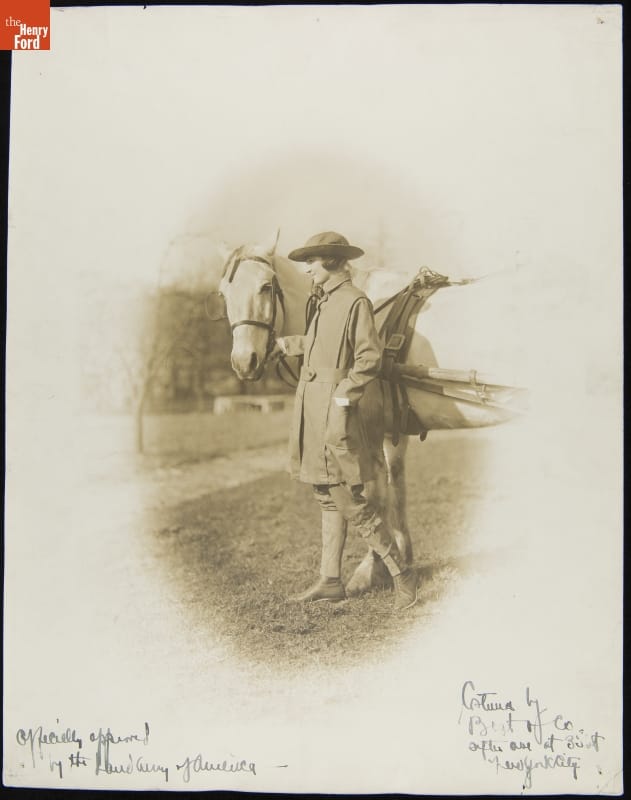
- Woman in Work Costume Officially Approved by the Land Army of America, 1918 - After the United States entered World War I in 1917, Americans worried about labor and food shortages as a result of men going off to fight. Organizations like the Woman's Land Army of America and the Woman's National Farm and Garden Association recruited and trained women to perform agricultural work across the country. This woman modeled the Land Army uniform.
- 1918
- Collections - Artifact
Woman in Work Costume Officially Approved by the Land Army of America, 1918
After the United States entered World War I in 1917, Americans worried about labor and food shortages as a result of men going off to fight. Organizations like the Woman's Land Army of America and the Woman's National Farm and Garden Association recruited and trained women to perform agricultural work across the country. This woman modeled the Land Army uniform.
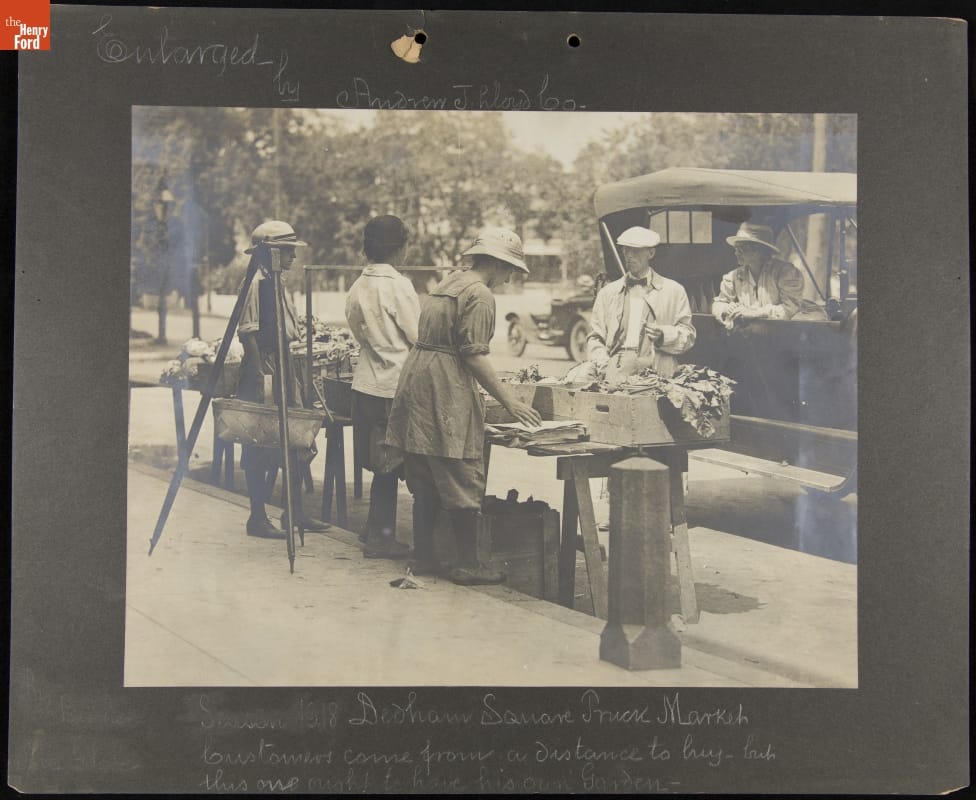
- Woman's National Farm and Garden Association at Dedham Square Truck Market, 1918 - After the United States entered World War I in 1917, Americans worried about labor and food shortages as a result of men going off to fight. Organizations like the Woman's Land Army of America and the Woman's National Farm and Garden Association recruited and trained women to perform agricultural work across the country. The work occasionally included roadside markets such as this one.
- 1918
- Collections - Artifact
Woman's National Farm and Garden Association at Dedham Square Truck Market, 1918
After the United States entered World War I in 1917, Americans worried about labor and food shortages as a result of men going off to fight. Organizations like the Woman's Land Army of America and the Woman's National Farm and Garden Association recruited and trained women to perform agricultural work across the country. The work occasionally included roadside markets such as this one.
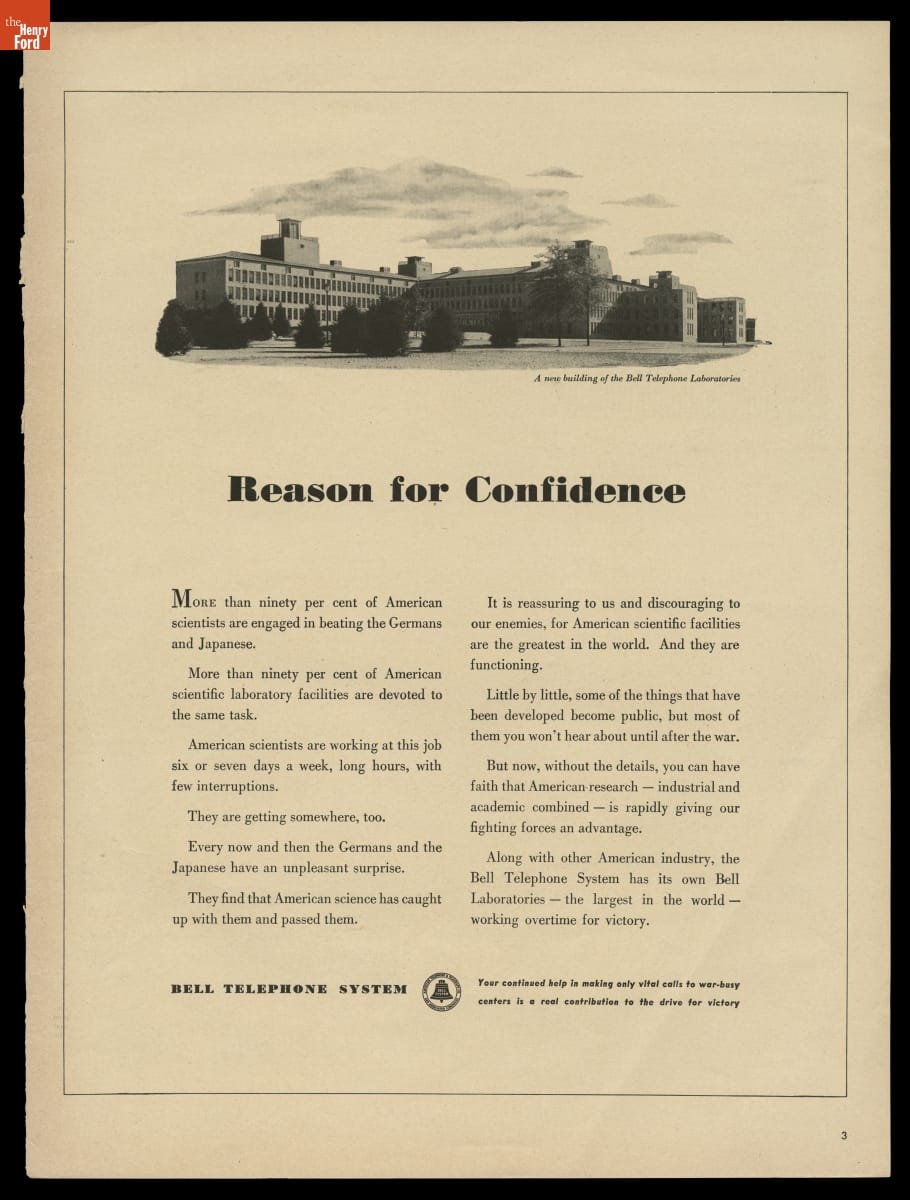
- "Reason for Confidence," Bell Telephone System Advertisement, 1943 -
- 1943
- Collections - Artifact
"Reason for Confidence," Bell Telephone System Advertisement, 1943
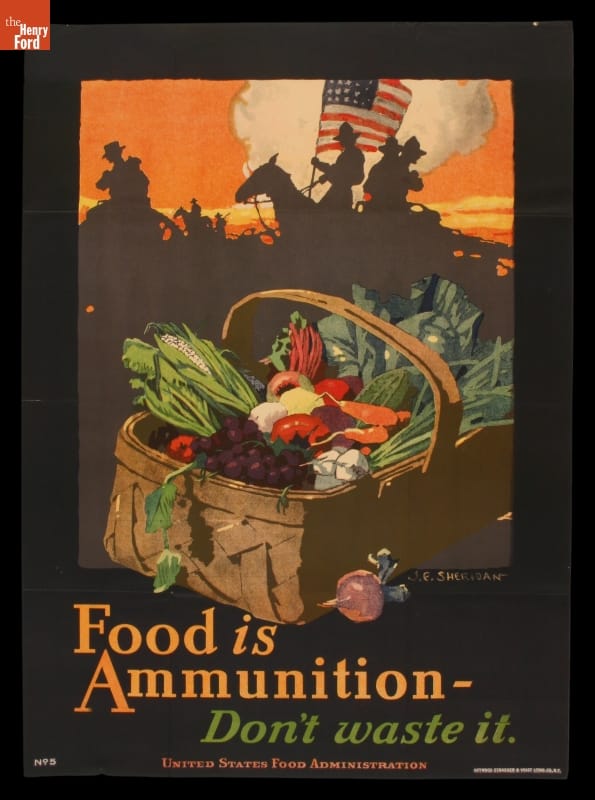
- World War I Poster, "Food is Ammunition-- Don't Waste It," circa 1918 - During the First World War, governments of all the warring nations used poster campaigns to encourage civilian and military support of the war effort. Artists widely used an innovative advertising technique for these posters that moved away from a factual depiction of a product's material or event's subject to an emphasis on appealing to the viewer's emotions.
- circa 1918
- Collections - Artifact
World War I Poster, "Food is Ammunition-- Don't Waste It," circa 1918
During the First World War, governments of all the warring nations used poster campaigns to encourage civilian and military support of the war effort. Artists widely used an innovative advertising technique for these posters that moved away from a factual depiction of a product's material or event's subject to an emphasis on appealing to the viewer's emotions.