
Search
- Watch Chain with Fobs, circa 1900 - By the late 1800s, a fob generally referred to an ornament that hung from a watch chain. Fobs included small seals, jewels, medallions, pendants, or other charms. These adornments may have had special personal meaning to the wearer, signifying a person's character or identity.
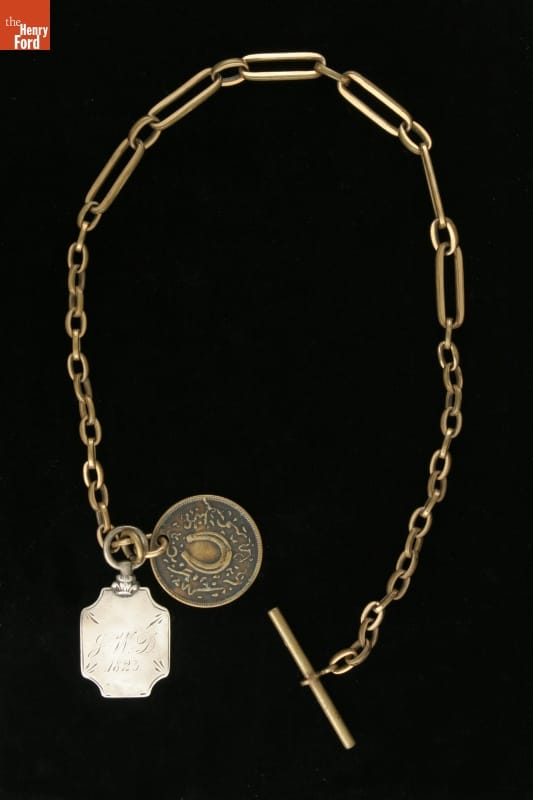
- circa 1900
- Collections - Artifact
Watch Chain with Fobs, circa 1900
By the late 1800s, a fob generally referred to an ornament that hung from a watch chain. Fobs included small seals, jewels, medallions, pendants, or other charms. These adornments may have had special personal meaning to the wearer, signifying a person's character or identity.
- Roosevelt and Fairbanks Watch Fob, 1904 - Having assumed the presidency when McKinley was assassinated in 1901, Theodore Roosevelt was already immensely popular when he ran for president in 1904. His colorful and exuberant personality, range of interests and achievements, and skillful use of media gained him a wide following. Picking conservative Senator Charles W. Fairbanks as his running mate, Roosevelt was reelected in a landslide.
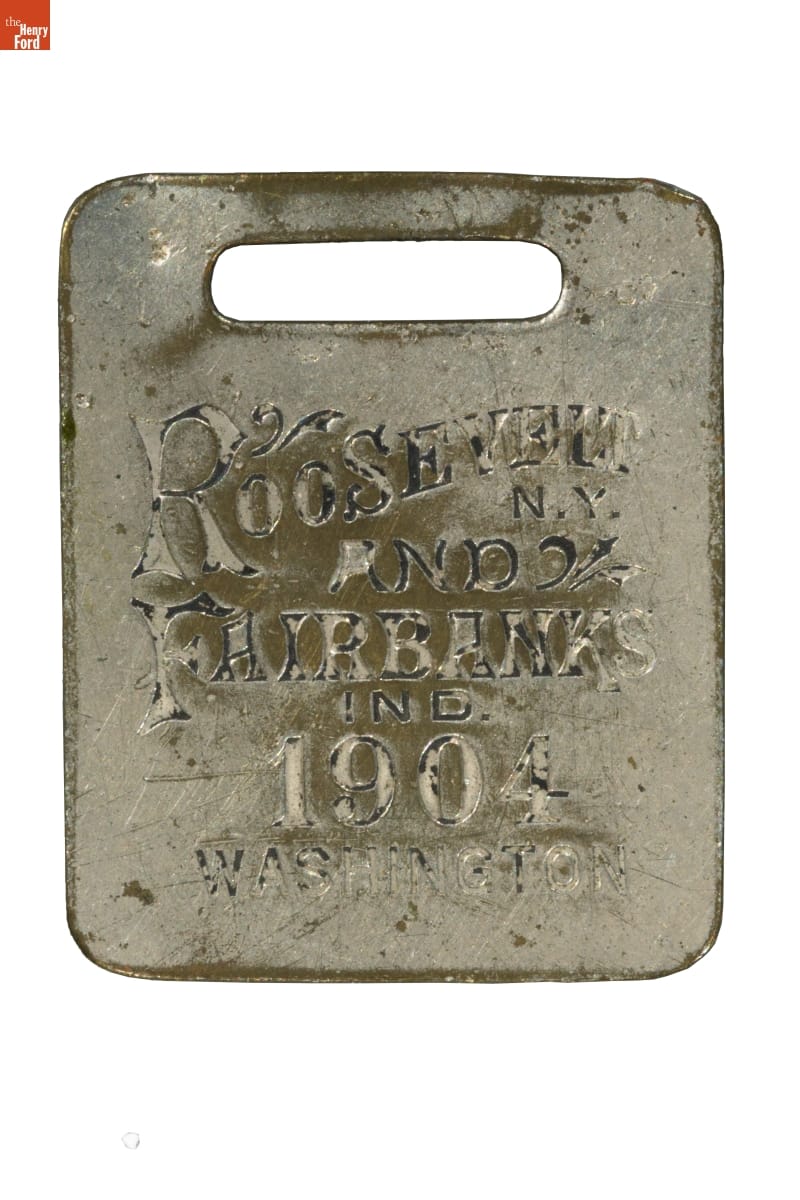
- 1904
- Collections - Artifact
Roosevelt and Fairbanks Watch Fob, 1904
Having assumed the presidency when McKinley was assassinated in 1901, Theodore Roosevelt was already immensely popular when he ran for president in 1904. His colorful and exuberant personality, range of interests and achievements, and skillful use of media gained him a wide following. Picking conservative Senator Charles W. Fairbanks as his running mate, Roosevelt was reelected in a landslide.
- Watch Fob with Crest, circa 1890 - By the late 1800s, a fob generally referred to an ornament that hung from a watch chain. Fobs included small seals, jewels, medallions, pendants, or other charms. These adornments may have had special personal meaning to the wearer, signifying a person's character or identity.
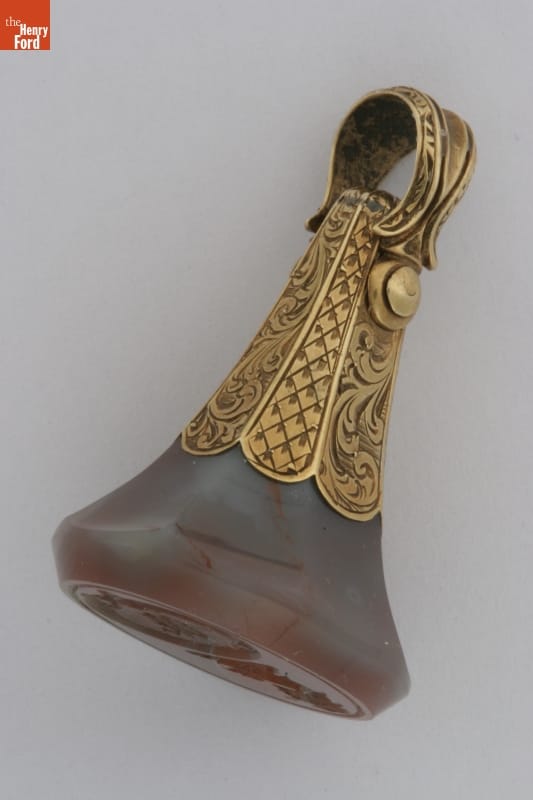
- circa 1890
- Collections - Artifact
Watch Fob with Crest, circa 1890
By the late 1800s, a fob generally referred to an ornament that hung from a watch chain. Fobs included small seals, jewels, medallions, pendants, or other charms. These adornments may have had special personal meaning to the wearer, signifying a person's character or identity.
- Watch Fob, 1850-1915 - By the late 1800s, a fob generally referred to an ornament that hung from a watch chain. Fobs included small seals, jewels, medallions, pendants, or other charms. These adornments may have had special personal meaning to the wearer, signifying a person's character or identity.
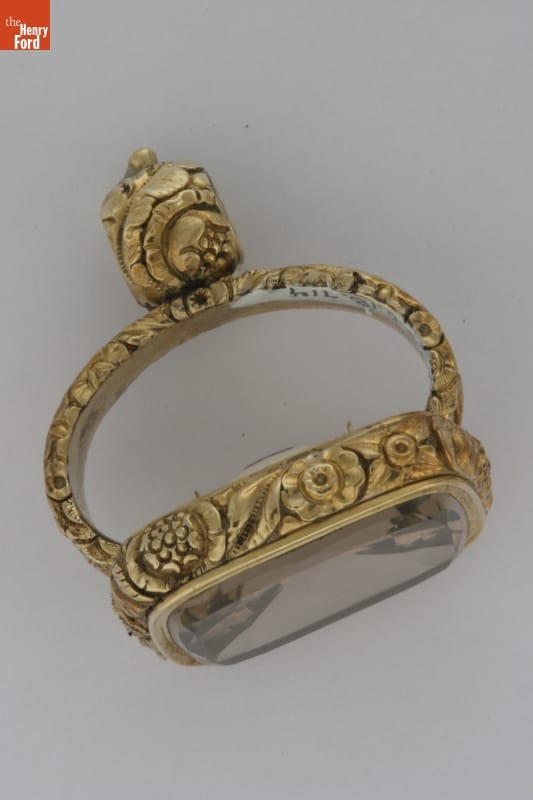
- 1850-1915
- Collections - Artifact
Watch Fob, 1850-1915
By the late 1800s, a fob generally referred to an ornament that hung from a watch chain. Fobs included small seals, jewels, medallions, pendants, or other charms. These adornments may have had special personal meaning to the wearer, signifying a person's character or identity.
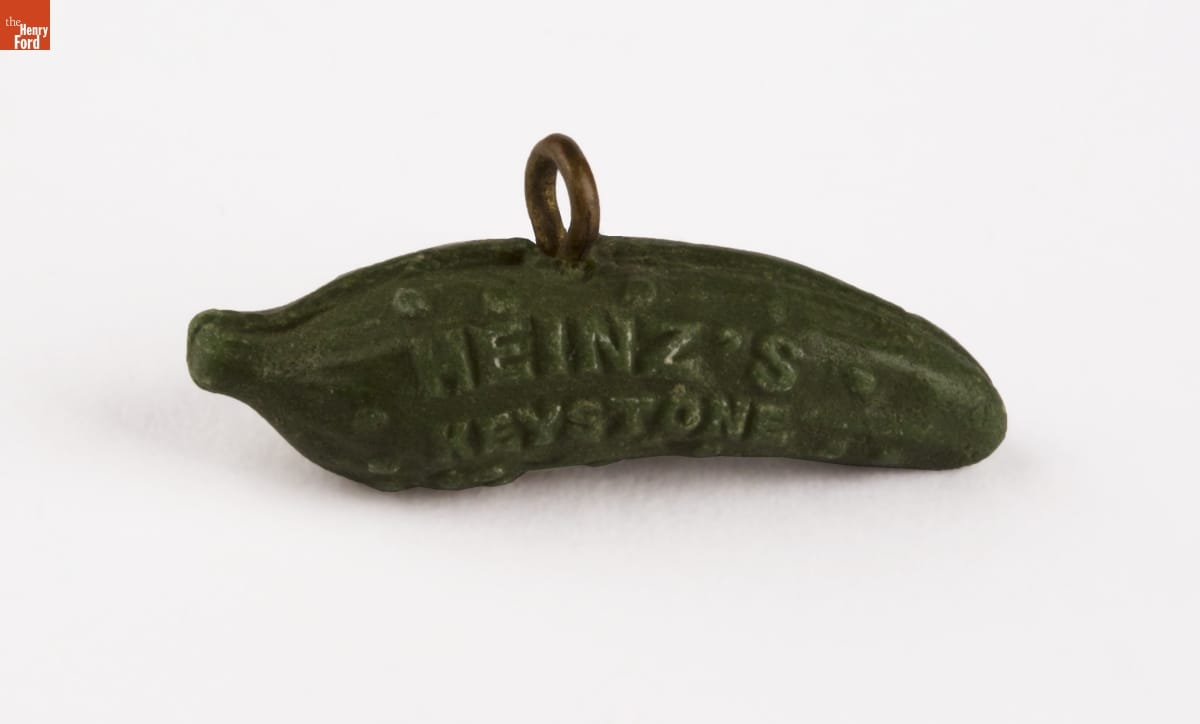
- Heinz Pickle Charm, 1893-1910 - H. J. Heinz found creative ways to promote his pickled foods and condiments. His most successful promotion was the pickle charm, which debuted at the 1893 World's Columbian Exposition in Chicago. The charm, which later evolved into a lapel pin, reflected Heinz's belief that consumers were the best promoters. It was common to see people wearing their Heinz souvenirs and giveaways in public.
- 1893-1910
- Collections - Artifact
Heinz Pickle Charm, 1893-1910
H. J. Heinz found creative ways to promote his pickled foods and condiments. His most successful promotion was the pickle charm, which debuted at the 1893 World's Columbian Exposition in Chicago. The charm, which later evolved into a lapel pin, reflected Heinz's belief that consumers were the best promoters. It was common to see people wearing their Heinz souvenirs and giveaways in public.
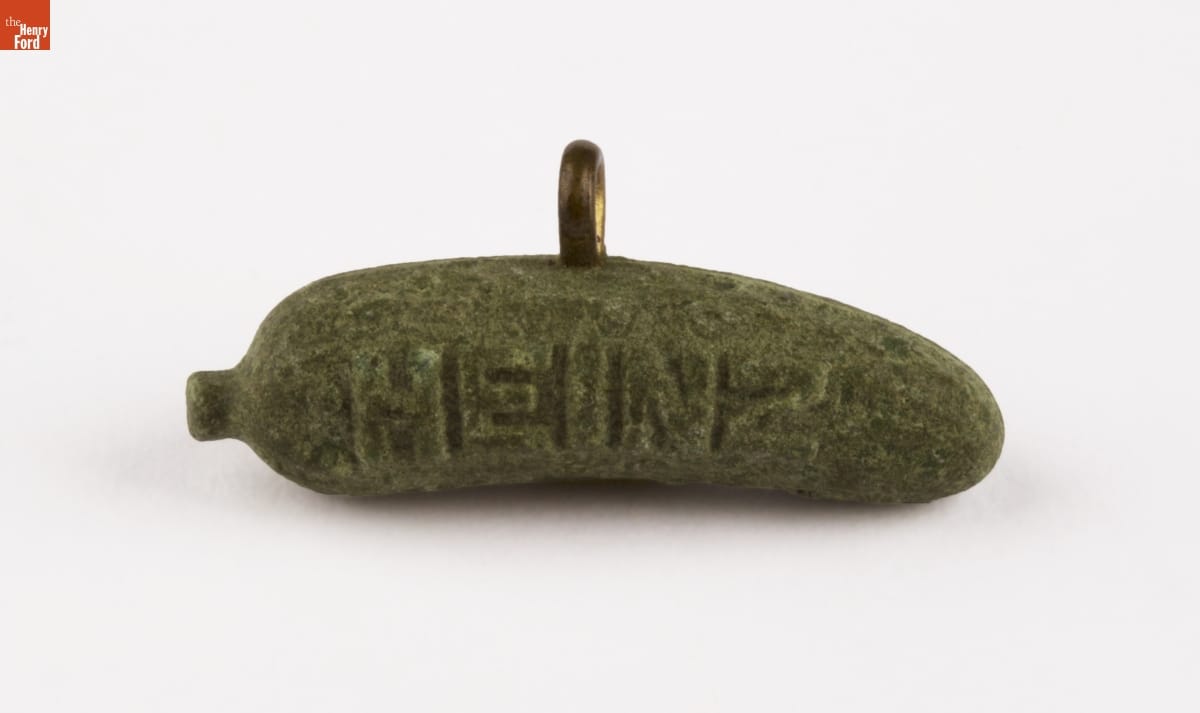
- Heinz Pickle Charm, 1893-1910 - H. J. Heinz found creative ways to promote his pickled foods and condiments. His most successful promotion was the pickle charm, which debuted at the 1893 World's Columbian Exposition in Chicago. The charm, which later evolved into a lapel pin, reflected Heinz's belief that consumers were the best promoters. It was common to see people wearing their Heinz souvenirs and giveaways in public.
- 1893-1910
- Collections - Artifact
Heinz Pickle Charm, 1893-1910
H. J. Heinz found creative ways to promote his pickled foods and condiments. His most successful promotion was the pickle charm, which debuted at the 1893 World's Columbian Exposition in Chicago. The charm, which later evolved into a lapel pin, reflected Heinz's belief that consumers were the best promoters. It was common to see people wearing their Heinz souvenirs and giveaways in public.