
Search
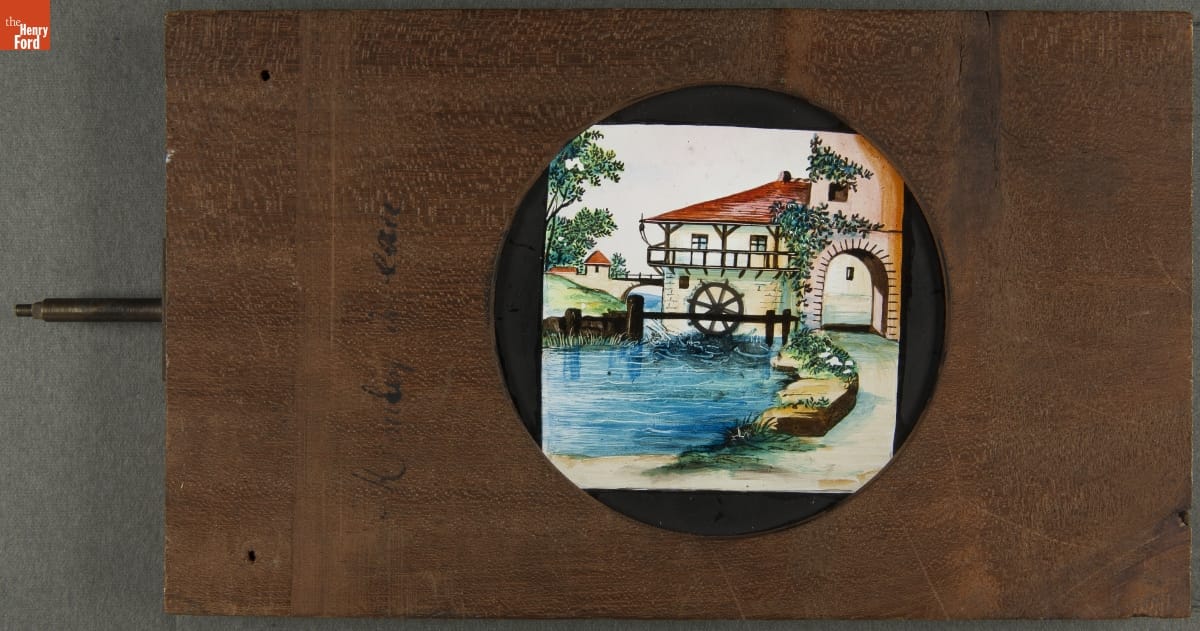
- Mechanical Lantern Slide, "The Water Wheel," 1860-1900 - Magic lanterns use a concave mirror and light source to project images on glass slides with painted or photographic scenes. Developed in the 17th century, magic lanterns predate slide projectors and motion pictures. In the hands of magicians, they became "lanterns of fright," projecting wondrous images and apparitions. Slide themes ranged widely: exotic travel, folklore, advertising, history, science, and art.
- 1860-1900
- Collections - Artifact
Mechanical Lantern Slide, "The Water Wheel," 1860-1900
Magic lanterns use a concave mirror and light source to project images on glass slides with painted or photographic scenes. Developed in the 17th century, magic lanterns predate slide projectors and motion pictures. In the hands of magicians, they became "lanterns of fright," projecting wondrous images and apparitions. Slide themes ranged widely: exotic travel, folklore, advertising, history, science, and art.
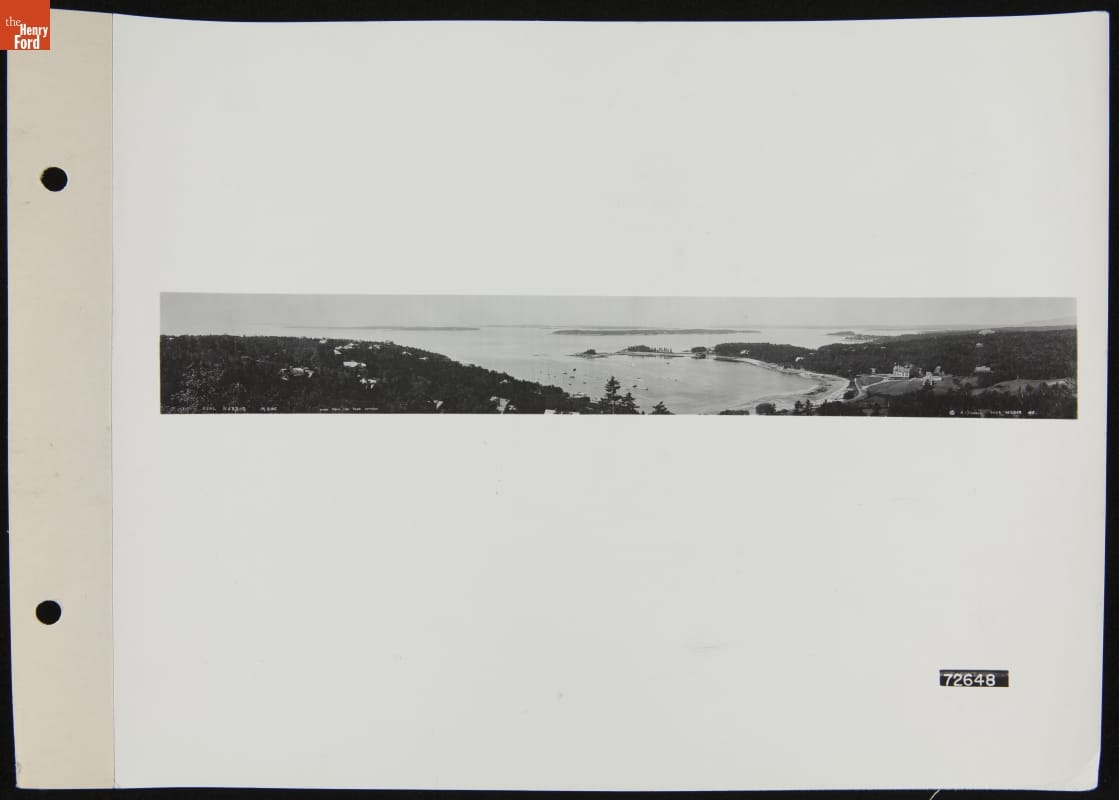
- Panoramic View of Seal Harbor, Maine, 1927 - In 1922, Edsel Ford purchased property in Seal Harbor, Maine, and began building his family's summer home. Philanthropist John D. Rockefeller, Jr., a fellow resident of the area, wrote congratulating Edsel on his selection -- the property offered the Fords splendid scenic views of the Maine coast. The letter initiated a friendship between the two that led to partnerships on various charitable causes.
- 1927
- Collections - Artifact
Panoramic View of Seal Harbor, Maine, 1927
In 1922, Edsel Ford purchased property in Seal Harbor, Maine, and began building his family's summer home. Philanthropist John D. Rockefeller, Jr., a fellow resident of the area, wrote congratulating Edsel on his selection -- the property offered the Fords splendid scenic views of the Maine coast. The letter initiated a friendship between the two that led to partnerships on various charitable causes.
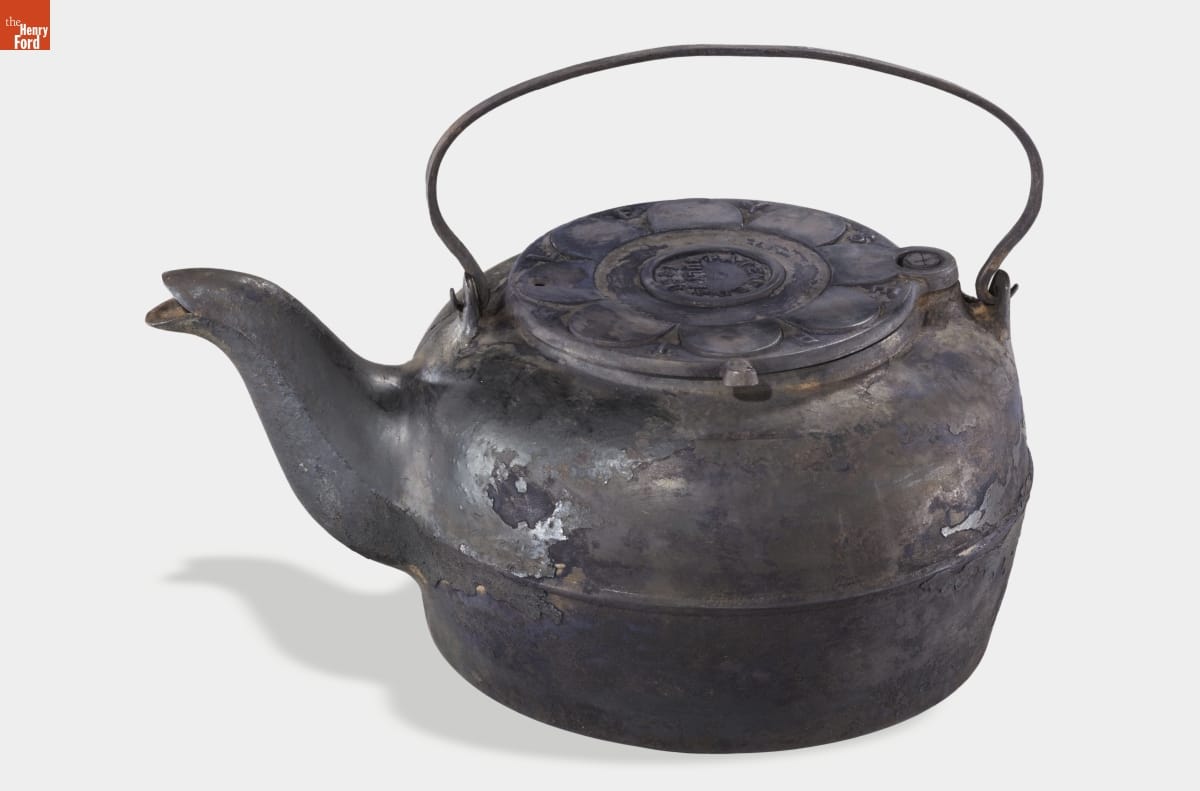
- Teakettle, 1868-1881 - Cast iron pots, pans, kettles, skillets, and other utensils have been essential in American kitchens for centuries. Cooks used these utilitarian objects to prepare meals and heat water in hearths or -- by the mid-1800s -- atop coal or wood-burning stoves. Lighter and easier-to-clean materials began replacing heavy cast iron cookware beginning in the late 19th century, but cast iron still has a place in many cooks' kitchens.
- 1868-1881
- Collections - Artifact
Teakettle, 1868-1881
Cast iron pots, pans, kettles, skillets, and other utensils have been essential in American kitchens for centuries. Cooks used these utilitarian objects to prepare meals and heat water in hearths or -- by the mid-1800s -- atop coal or wood-burning stoves. Lighter and easier-to-clean materials began replacing heavy cast iron cookware beginning in the late 19th century, but cast iron still has a place in many cooks' kitchens.
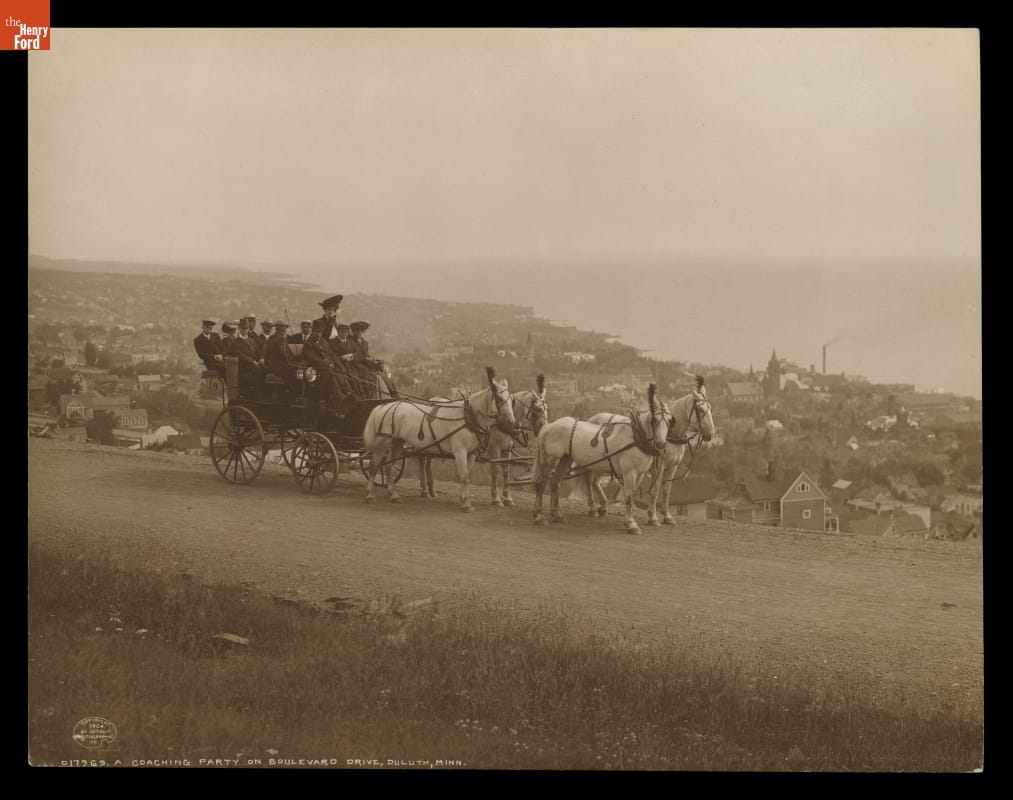
- "Coaching Party on Boulevard Drive, Duluth, Minnesota," 1904 - From 1895 to 1924, the Detroit Publishing Company was one of the major image publishers in the world. The company's wide-ranging stock of original photographs documented life and landscapes from across the nation and around the globe. From the tens of thousands of negatives, the company created prints, postcards, lantern slides, panoramas, and other merchandise for sale to educators, businessmen, advertisers, homeowners and travelers.
- circa 1904
- Collections - Artifact
"Coaching Party on Boulevard Drive, Duluth, Minnesota," 1904
From 1895 to 1924, the Detroit Publishing Company was one of the major image publishers in the world. The company's wide-ranging stock of original photographs documented life and landscapes from across the nation and around the globe. From the tens of thousands of negatives, the company created prints, postcards, lantern slides, panoramas, and other merchandise for sale to educators, businessmen, advertisers, homeowners and travelers.
- Thomas Edison Statue before Relocation during the Greenfield Village Restoration Project, September 2002 - By 2000, Greenfield Village began showing its age. Buildings and crumbling infrastructure desperately needed repair. Museum planners envisioned a revitalized village. They created themed "Historic Districts" by relocating and refurbishing the historic structures. Workers repaved streets and upgraded water, sewer, electric, and gas lines. In June 2003, nine months after restoration began, visitors passed through a new entrance into a reborn Greenfield Village.
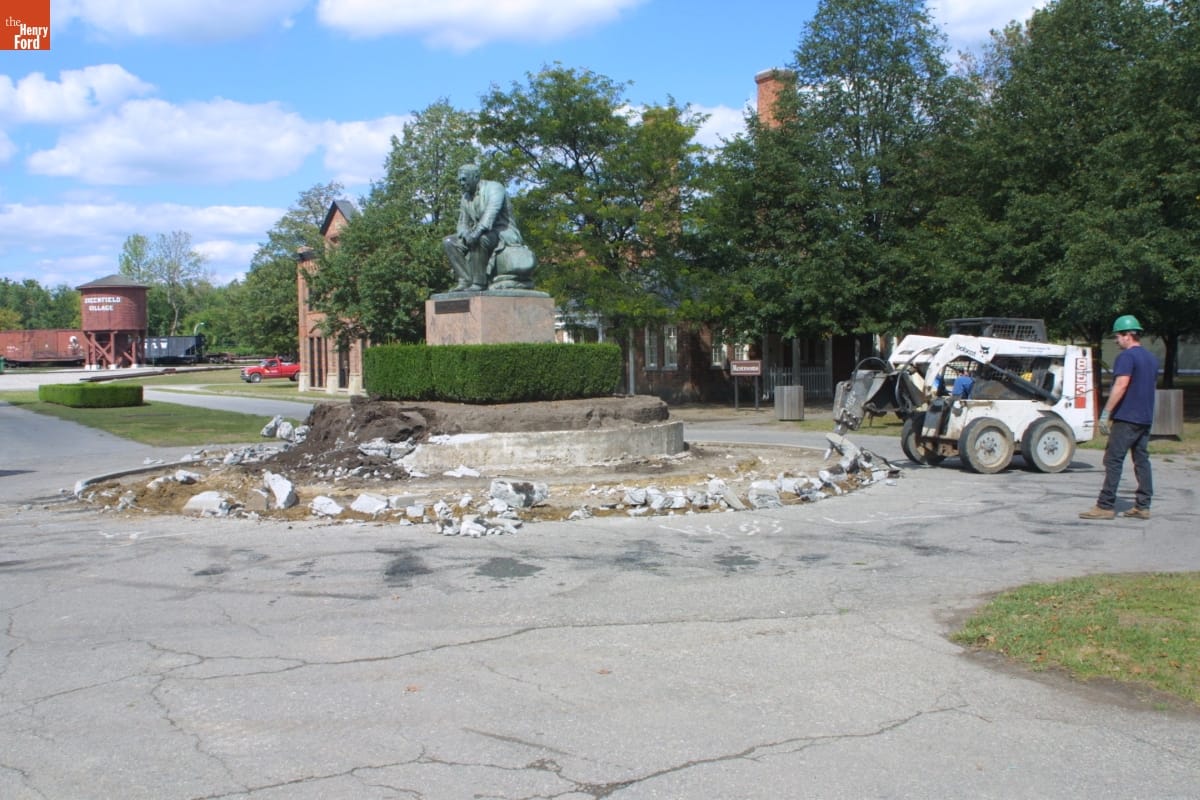
- September 01, 2002
- Collections - Artifact
Thomas Edison Statue before Relocation during the Greenfield Village Restoration Project, September 2002
By 2000, Greenfield Village began showing its age. Buildings and crumbling infrastructure desperately needed repair. Museum planners envisioned a revitalized village. They created themed "Historic Districts" by relocating and refurbishing the historic structures. Workers repaved streets and upgraded water, sewer, electric, and gas lines. In June 2003, nine months after restoration began, visitors passed through a new entrance into a reborn Greenfield Village.
- Thomas Edison Statue Former Site after Relocation during the Greenfield Village Restoration Project, September 2002 - By 2000, Greenfield Village began showing its age. Buildings and crumbling infrastructure desperately needed repair. Museum planners envisioned a revitalized village. They created themed "Historic Districts" by relocating and refurbishing the historic structures. Workers repaved streets and upgraded water, sewer, electric, and gas lines. In June 2003, nine months after restoration began, visitors passed through a new entrance into a reborn Greenfield Village.
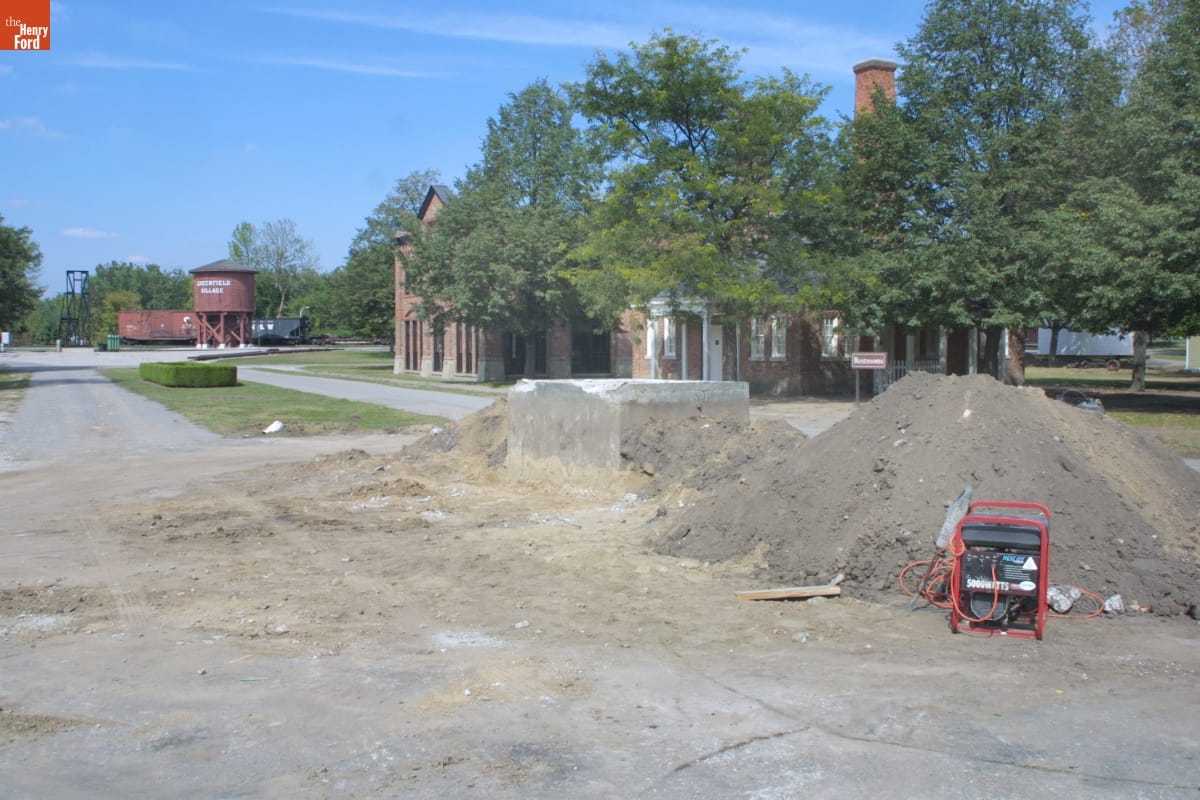
- September 01, 2002
- Collections - Artifact
Thomas Edison Statue Former Site after Relocation during the Greenfield Village Restoration Project, September 2002
By 2000, Greenfield Village began showing its age. Buildings and crumbling infrastructure desperately needed repair. Museum planners envisioned a revitalized village. They created themed "Historic Districts" by relocating and refurbishing the historic structures. Workers repaved streets and upgraded water, sewer, electric, and gas lines. In June 2003, nine months after restoration began, visitors passed through a new entrance into a reborn Greenfield Village.
- Alexander Hamilton's Arguments against Federal Subscription of Stock in the Proposed Chesapeake and Delaware Canal, circa 1803 -
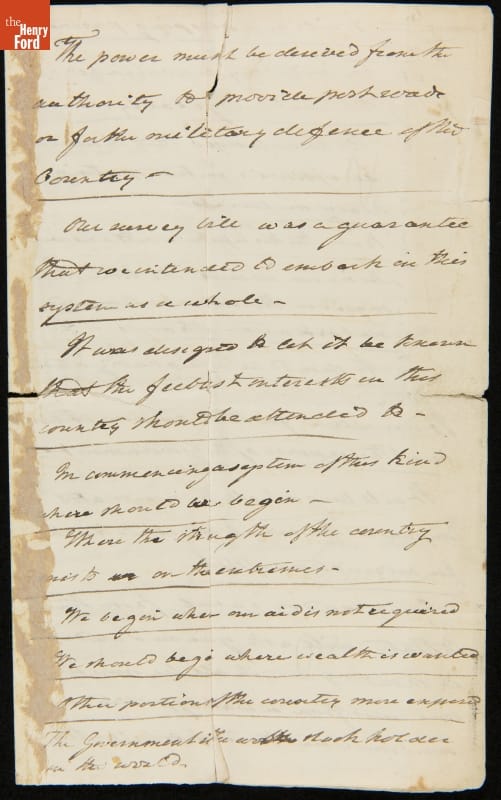
- circa 1803
- Collections - Artifact
Alexander Hamilton's Arguments against Federal Subscription of Stock in the Proposed Chesapeake and Delaware Canal, circa 1803
- Crossing a Stream in a Willys Military Jeep, circa 1943 - Few things are as iconic of World War II as the jeep. American Bantam created the design in response to a call from the U.S. Army, but Bantam couldn't produce it in the quantities required. Willys-Overland and Ford built the majority of the 650,000 jeeps manufactured for the war effort. Willys built Jeeps for the civilian market after the war.
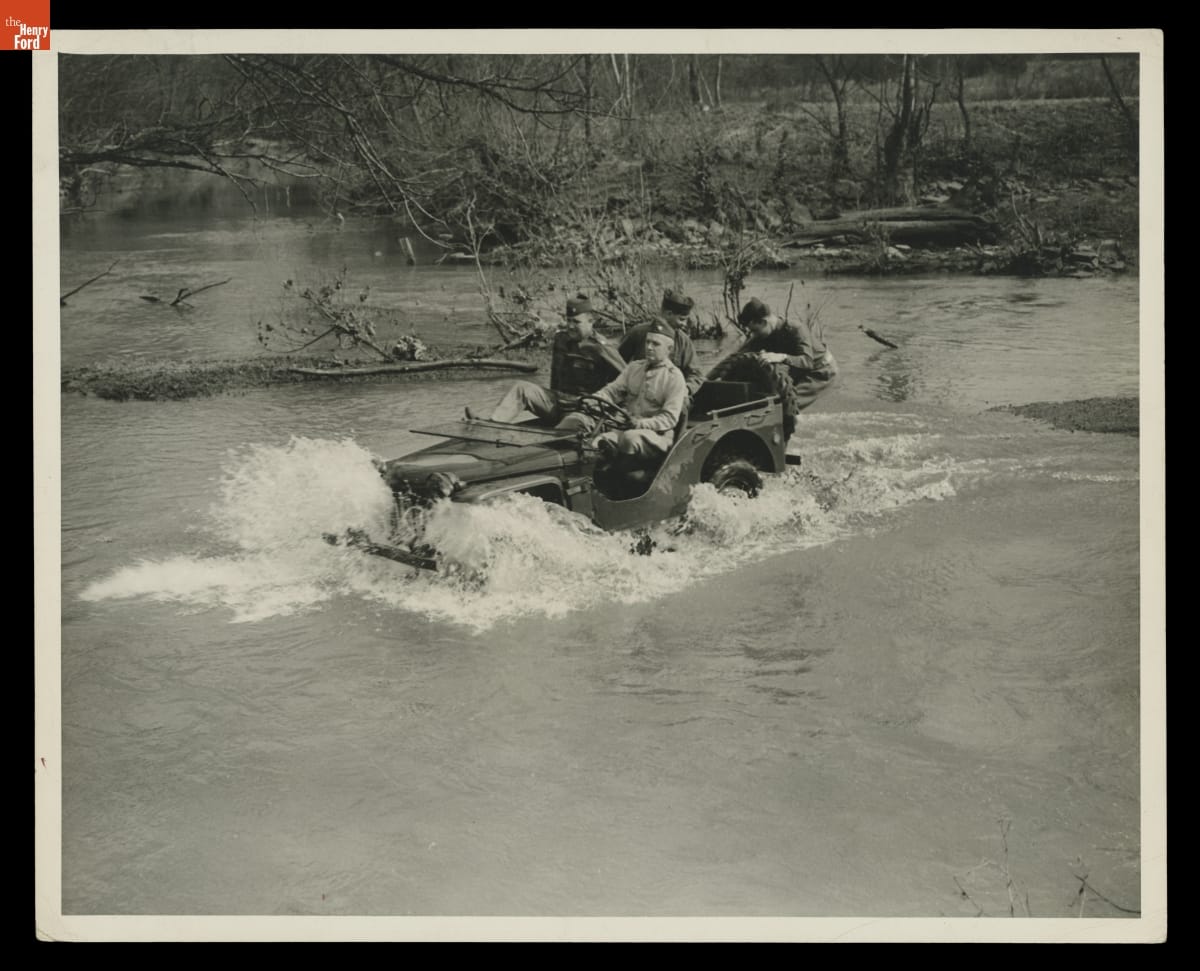
- circa 1943
- Collections - Artifact
Crossing a Stream in a Willys Military Jeep, circa 1943
Few things are as iconic of World War II as the jeep. American Bantam created the design in response to a call from the U.S. Army, but Bantam couldn't produce it in the quantities required. Willys-Overland and Ford built the majority of the 650,000 jeeps manufactured for the war effort. Willys built Jeeps for the civilian market after the war.
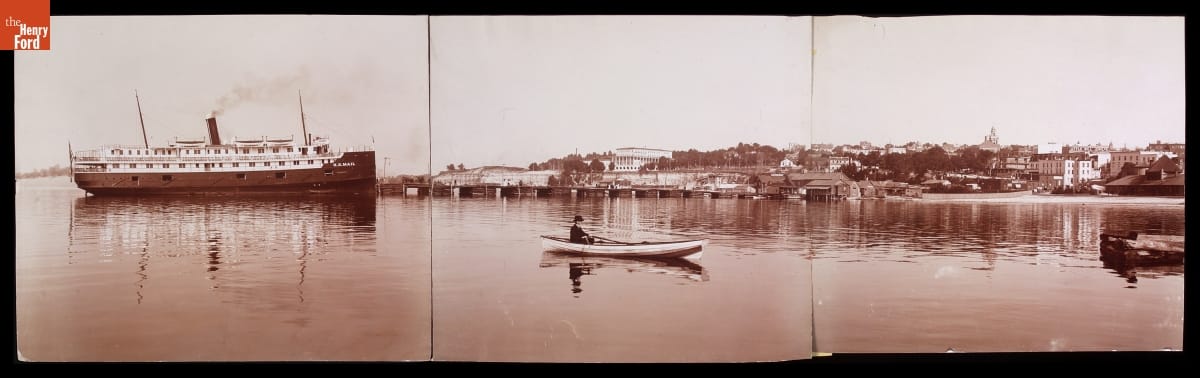
- View from the Harbor, Petoskey, Michigan, circa 1906 - From 1895 to 1924, the Detroit Publishing Company was one of the major image publishers in the world. The company's wide-ranging stock of original photographs documented life and landscapes from across the nation and around the globe. From the tens of thousands of negatives, the company created prints, postcards, lantern slides, panoramas, and other merchandise for sale to educators, businessmen, advertisers, homeowners and travelers.
- 1906
- Collections - Artifact
View from the Harbor, Petoskey, Michigan, circa 1906
From 1895 to 1924, the Detroit Publishing Company was one of the major image publishers in the world. The company's wide-ranging stock of original photographs documented life and landscapes from across the nation and around the globe. From the tens of thousands of negatives, the company created prints, postcards, lantern slides, panoramas, and other merchandise for sale to educators, businessmen, advertisers, homeowners and travelers.
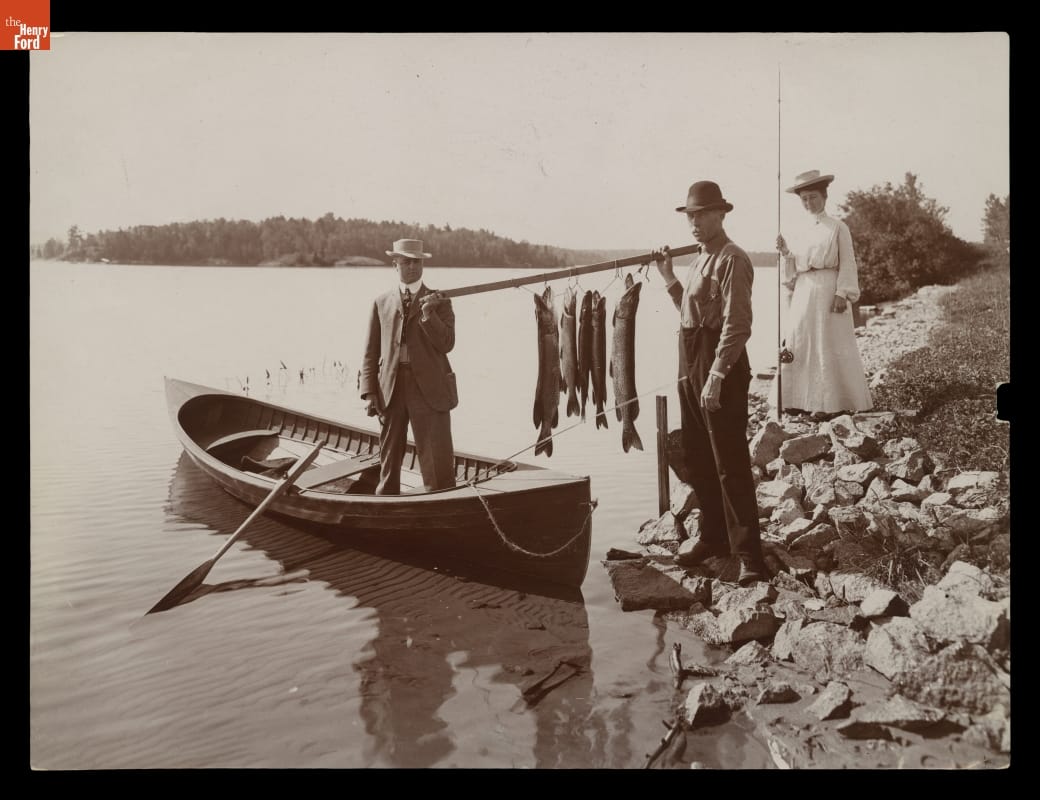
- "Morning's Catch," Fishing in the Adirondacks, New York, circa 1903 - From 1895 to 1924, the Detroit Publishing Company was one of the major image publishers in the world. The company's wide-ranging stock of original photographs documented life and landscapes from across the nation and around the globe. From the tens of thousands of negatives, the company created prints, postcards, lantern slides, panoramas, and other merchandise for sale to educators, businessmen, advertisers, homeowners and travelers.
- circa 1903
- Collections - Artifact
"Morning's Catch," Fishing in the Adirondacks, New York, circa 1903
From 1895 to 1924, the Detroit Publishing Company was one of the major image publishers in the world. The company's wide-ranging stock of original photographs documented life and landscapes from across the nation and around the globe. From the tens of thousands of negatives, the company created prints, postcards, lantern slides, panoramas, and other merchandise for sale to educators, businessmen, advertisers, homeowners and travelers.