
Search
- Interior of the Sarah Jordan Boarding House at Its Original Site, Menlo Park, New Jersey, 1928 -
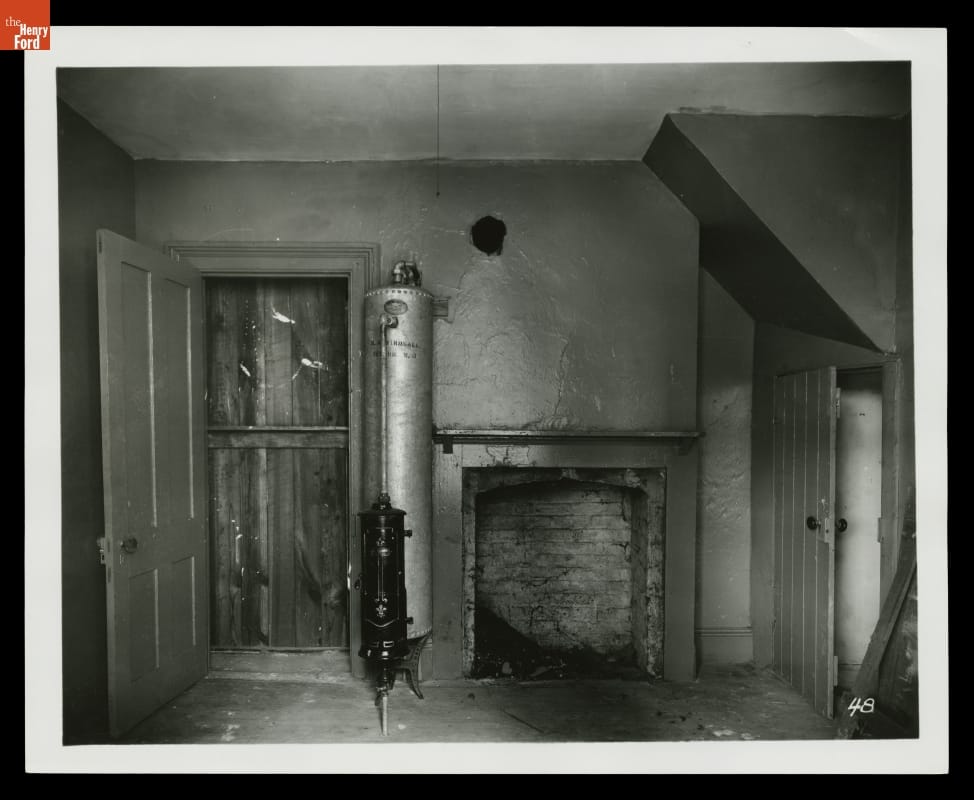
- 1928
- Collections - Artifact
Interior of the Sarah Jordan Boarding House at Its Original Site, Menlo Park, New Jersey, 1928
- Interior of the Sarah Jordan Boarding House at Its Original Site, Menlo Park, New Jersey, 1928 -
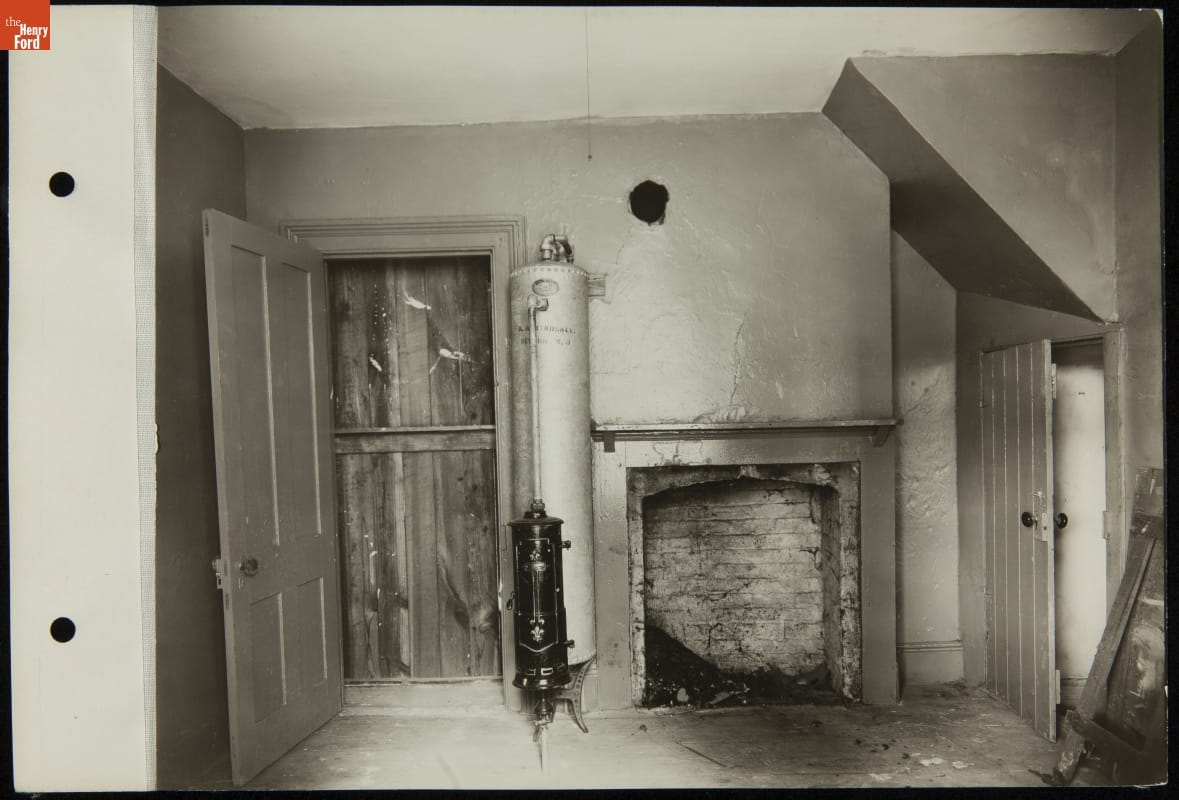
- 1928
- Collections - Artifact
Interior of the Sarah Jordan Boarding House at Its Original Site, Menlo Park, New Jersey, 1928
- The Hetzel Family Visiting the Kelley Family, Bear Swamp Road, Andover, Connecticut, 1953 -
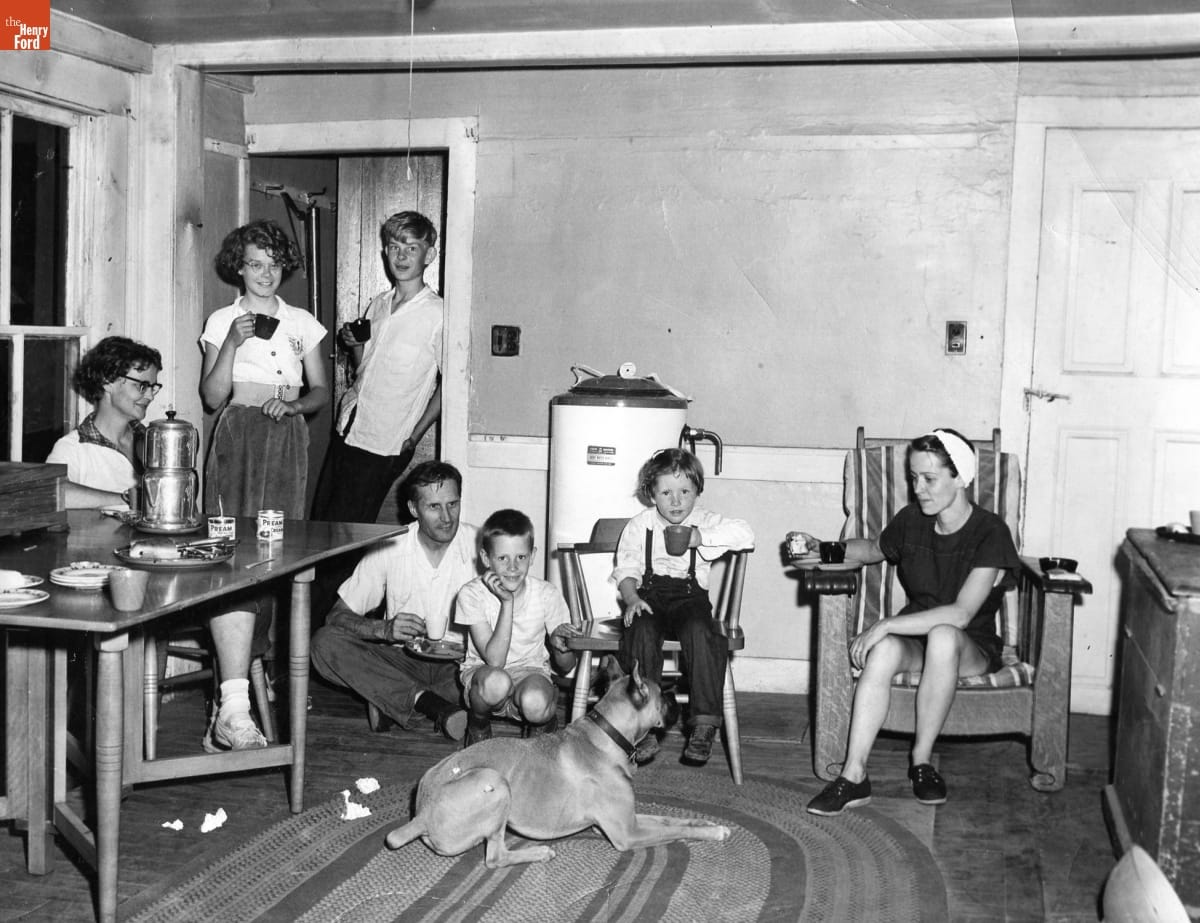
- 1953
- Collections - Artifact
The Hetzel Family Visiting the Kelley Family, Bear Swamp Road, Andover, Connecticut, 1953
- Water Heater of Power Facility, Ford Building, California Pacific International Exposition, San Diego, 1935 - Ford Motor Company poured resources into what became the most popular exhibition at the 1935 California Pacific International Exposition. This photograph shows the power facility that fueled Ford's $2 million display in Balboa Park, San Diego. Highlights of the exhibit included the fair's largest building, manufacturing demonstrations, a 3,000-seat amphitheatre, elaborate fountains, and special nighttime lighting effects.
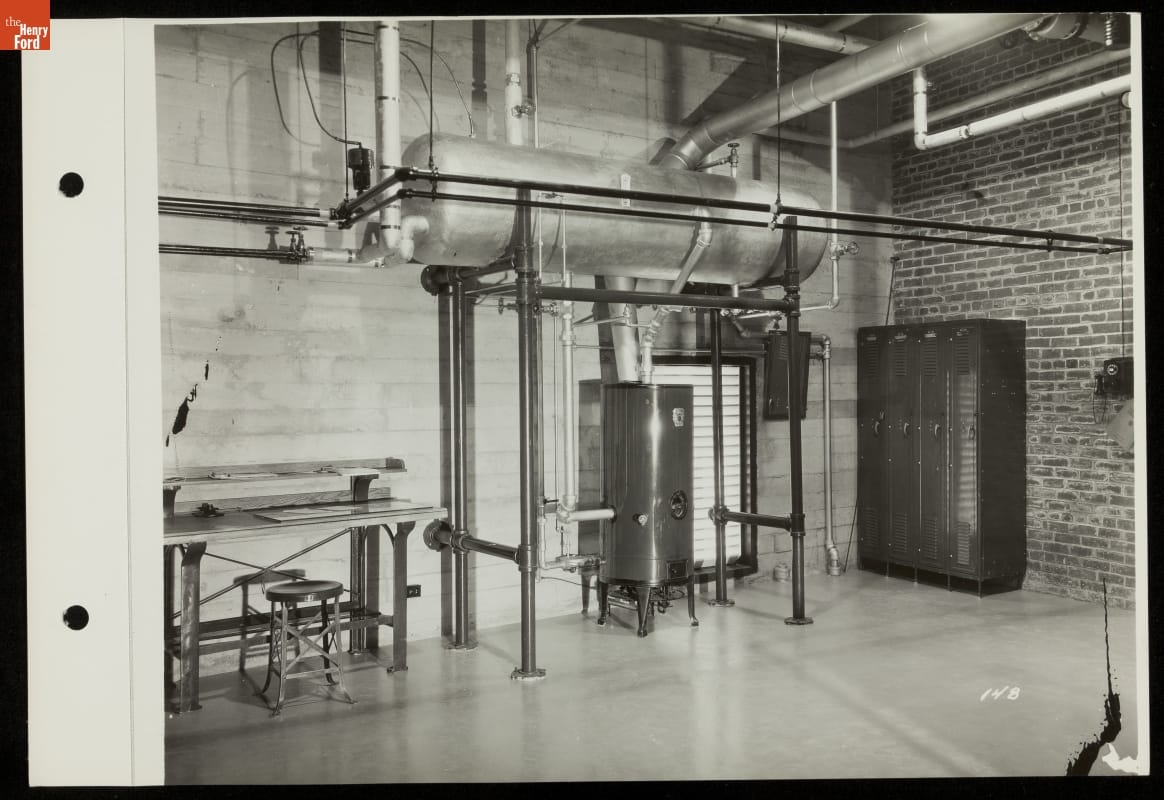
- 1935
- Collections - Artifact
Water Heater of Power Facility, Ford Building, California Pacific International Exposition, San Diego, 1935
Ford Motor Company poured resources into what became the most popular exhibition at the 1935 California Pacific International Exposition. This photograph shows the power facility that fueled Ford's $2 million display in Balboa Park, San Diego. Highlights of the exhibit included the fair's largest building, manufacturing demonstrations, a 3,000-seat amphitheatre, elaborate fountains, and special nighttime lighting effects.
- Trade Card for the Bolton Hot Water Heater and Combination Gas Machine, Detroit Heating and Lighting Co., 1870-1890 - In the last third of the nineteenth century, an unprecedented variety of consumer goods and services flooded the American market. Advertisers, armed with new methods of color printing, bombarded potential customers with trade cards. Americans enjoyed and often saved the vibrant little advertisements found in product packages or distributed by local merchants. Many survive as historical records of commercialism in the United States.
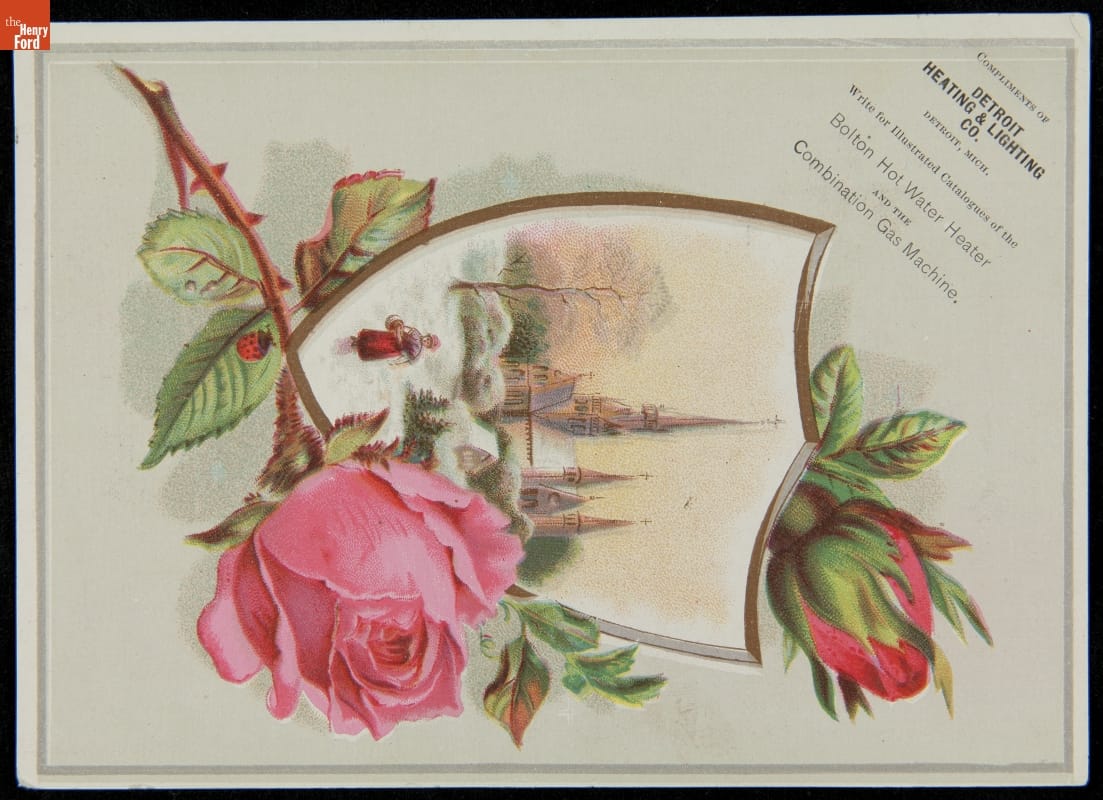
- 1890-1900
- Collections - Artifact
Trade Card for the Bolton Hot Water Heater and Combination Gas Machine, Detroit Heating and Lighting Co., 1870-1890
In the last third of the nineteenth century, an unprecedented variety of consumer goods and services flooded the American market. Advertisers, armed with new methods of color printing, bombarded potential customers with trade cards. Americans enjoyed and often saved the vibrant little advertisements found in product packages or distributed by local merchants. Many survive as historical records of commercialism in the United States.
- Trade Card for the Bolton Hot Water Heater and Combination Gas Machine, Detroit Heating and Lighting Co., 1870-1890 - In the last third of the nineteenth century, an unprecedented variety of consumer goods and services flooded the American market. Advertisers, armed with new methods of color printing, bombarded potential customers with trade cards. Americans enjoyed and often saved the vibrant little advertisements found in product packages or distributed by local merchants. Many survive as historical records of commercialism in the United States.
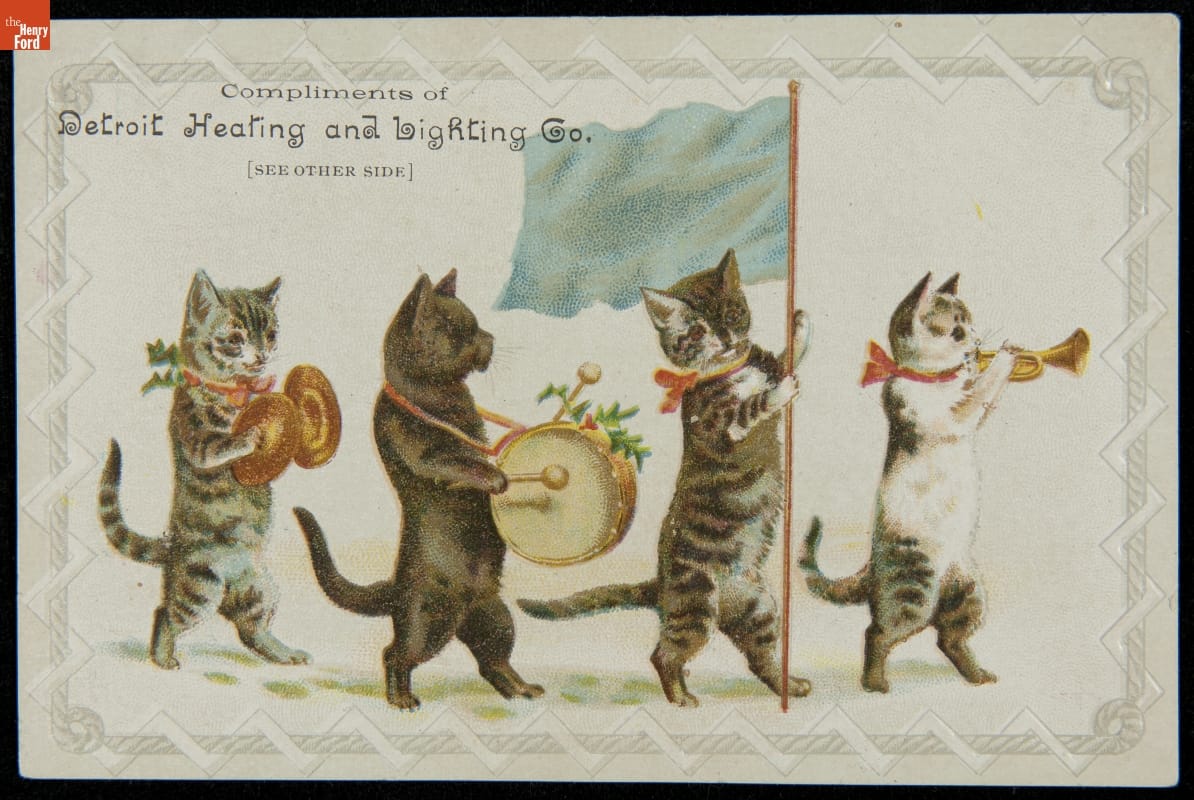
- 1890-1900
- Collections - Artifact
Trade Card for the Bolton Hot Water Heater and Combination Gas Machine, Detroit Heating and Lighting Co., 1870-1890
In the last third of the nineteenth century, an unprecedented variety of consumer goods and services flooded the American market. Advertisers, armed with new methods of color printing, bombarded potential customers with trade cards. Americans enjoyed and often saved the vibrant little advertisements found in product packages or distributed by local merchants. Many survive as historical records of commercialism in the United States.
- Bob Kelley near the Kitchen Heating Stove in the Kelley House in Rockville, Connecticut, 1948 -
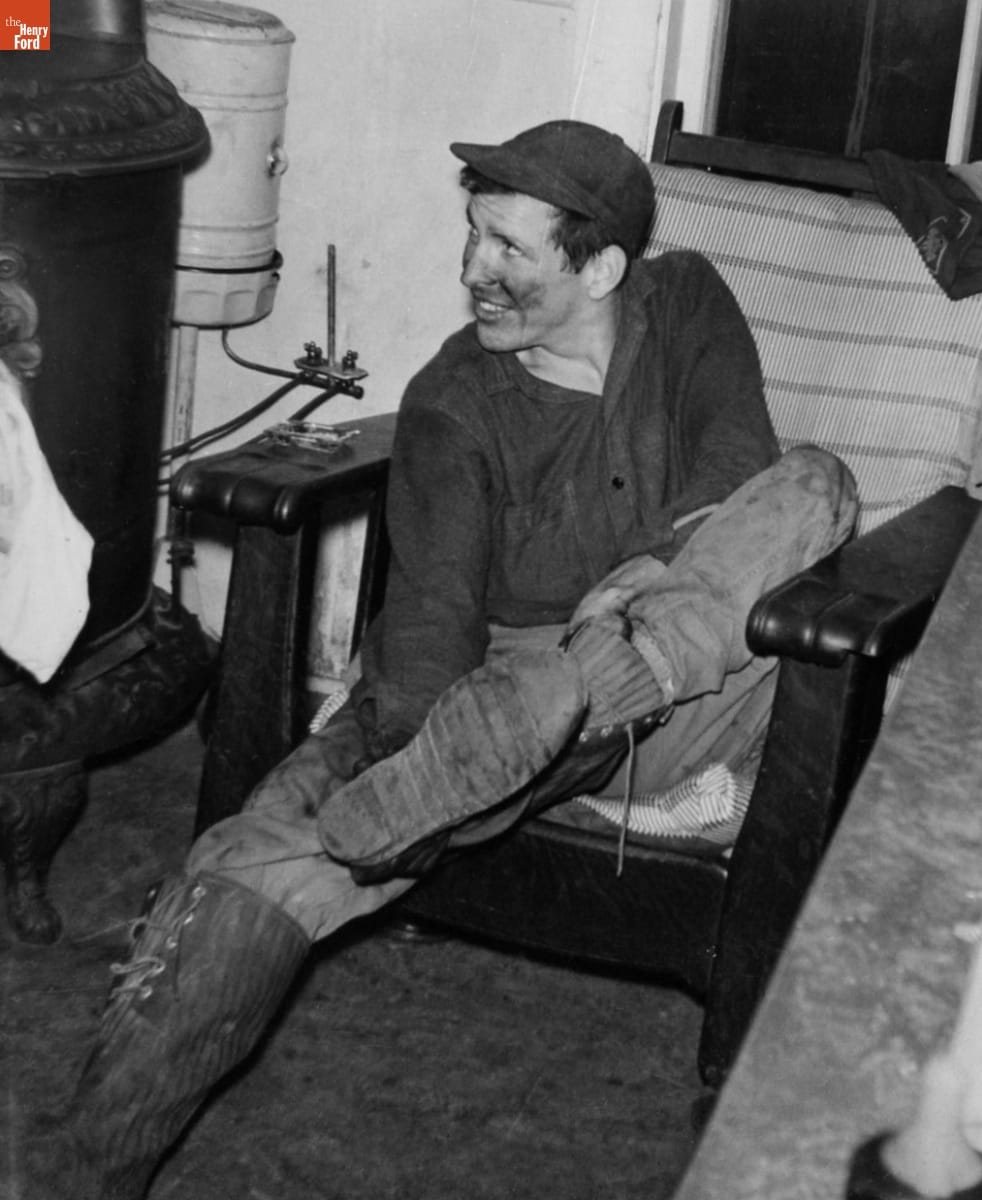
- 1948
- Collections - Artifact
Bob Kelley near the Kitchen Heating Stove in the Kelley House in Rockville, Connecticut, 1948