
Search
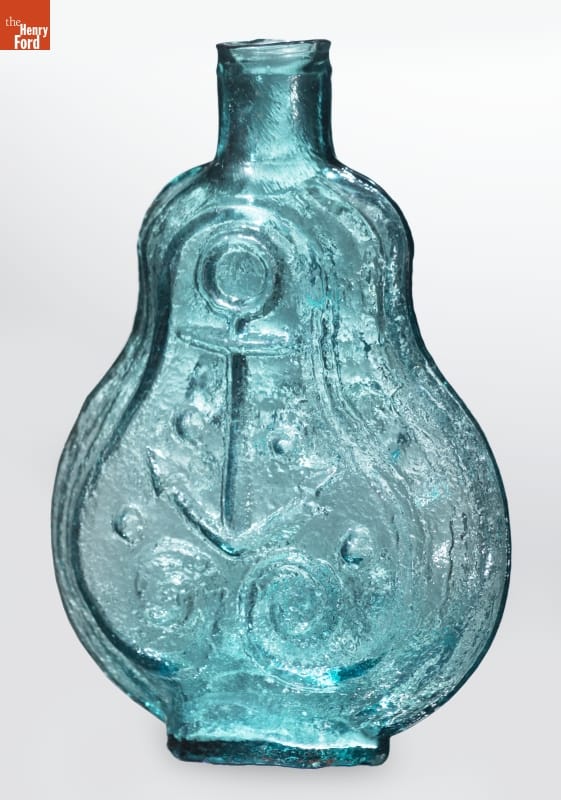
- Flask, 1830-1834 - Glass factories in America began producing inexpensive, mold-formed flasks in the early 1800s. These figured flasks appealed to America's common man. Many of these flasks contained symbols of national pride or political or cultural affiliation. Embellishments on other flasks, like this one, were purely decorative, though you will find an anchor -- a symbol of hope -- on the reverse.
- 1830-1834
- Collections - Artifact
Flask, 1830-1834
Glass factories in America began producing inexpensive, mold-formed flasks in the early 1800s. These figured flasks appealed to America's common man. Many of these flasks contained symbols of national pride or political or cultural affiliation. Embellishments on other flasks, like this one, were purely decorative, though you will find an anchor -- a symbol of hope -- on the reverse.
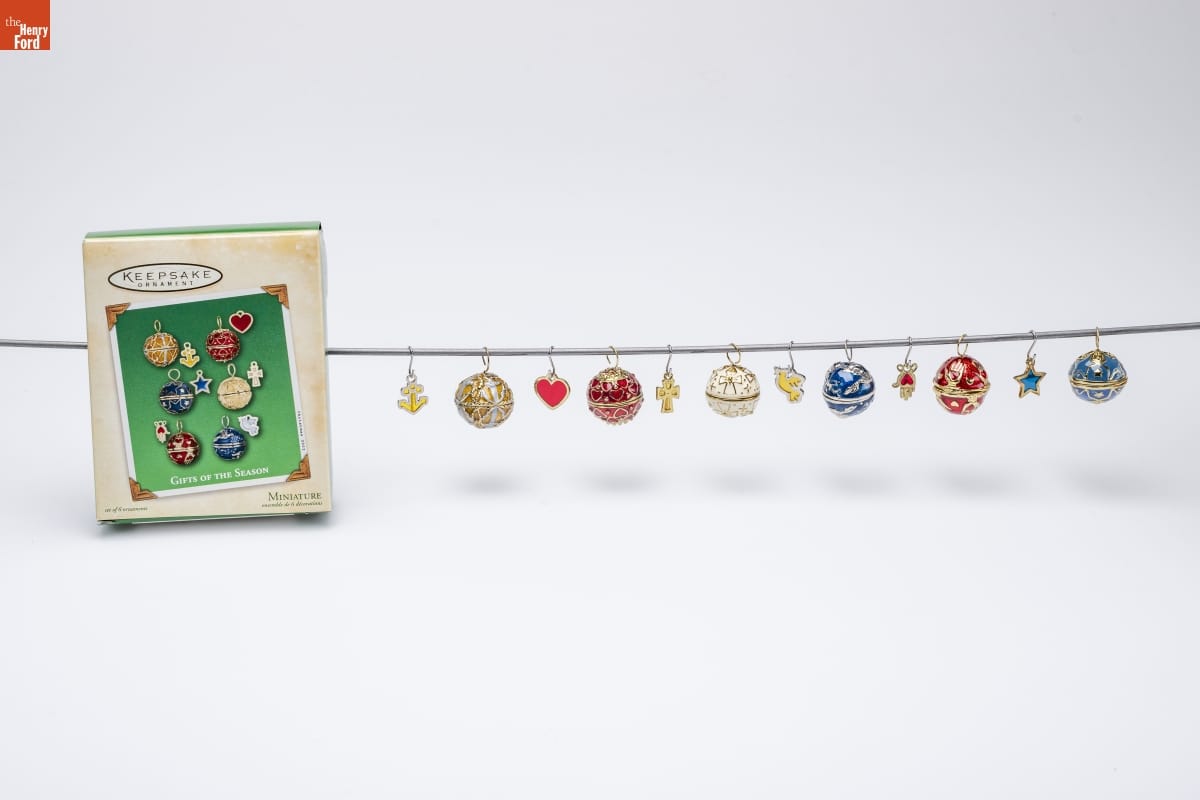
- Hallmark "Gifts of the Season" Miniature Christmas Ornaments, 2002 - Already known for greeting cards, Hallmark introduced a line of Christmas ornaments in 1973. The company's annual release of an increasing array of ornaments revolutionized Christmas decorating, appealing to customers' interest in marking memories and milestones as well as expressing one's personality and unique tastes.
- 2002
- Collections - Artifact
Hallmark "Gifts of the Season" Miniature Christmas Ornaments, 2002
Already known for greeting cards, Hallmark introduced a line of Christmas ornaments in 1973. The company's annual release of an increasing array of ornaments revolutionized Christmas decorating, appealing to customers' interest in marking memories and milestones as well as expressing one's personality and unique tastes.
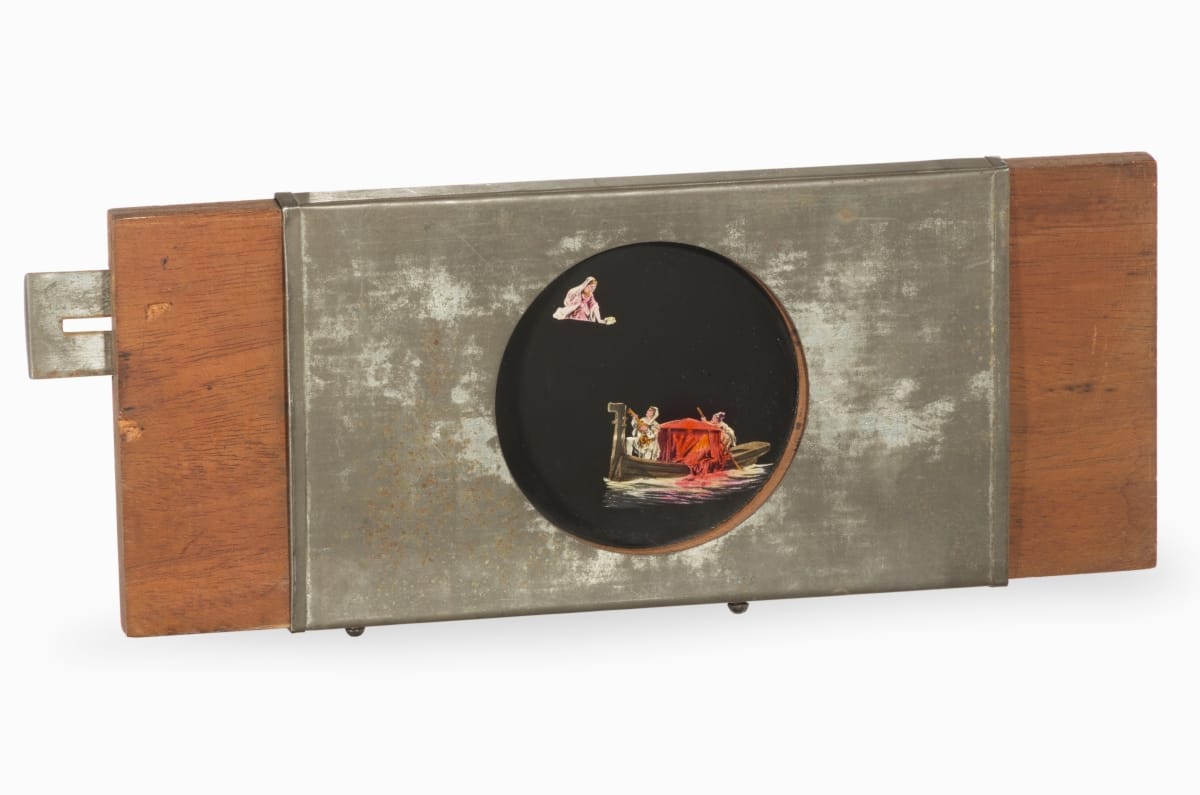
- Mechanical Lantern Slide, Gondola - Magic lanterns use a concave mirror and light source to project images on glass slides with painted or photographic scenes. Developed in the 17th century, magic lanterns predate slide projectors and motion pictures. In the hands of magicians, they became "lanterns of fright," projecting wondrous images and apparitions. Slide themes ranged widely: exotic travel, folklore, advertising, history, science, and art.
- Collections - Artifact
Mechanical Lantern Slide, Gondola
Magic lanterns use a concave mirror and light source to project images on glass slides with painted or photographic scenes. Developed in the 17th century, magic lanterns predate slide projectors and motion pictures. In the hands of magicians, they became "lanterns of fright," projecting wondrous images and apparitions. Slide themes ranged widely: exotic travel, folklore, advertising, history, science, and art.
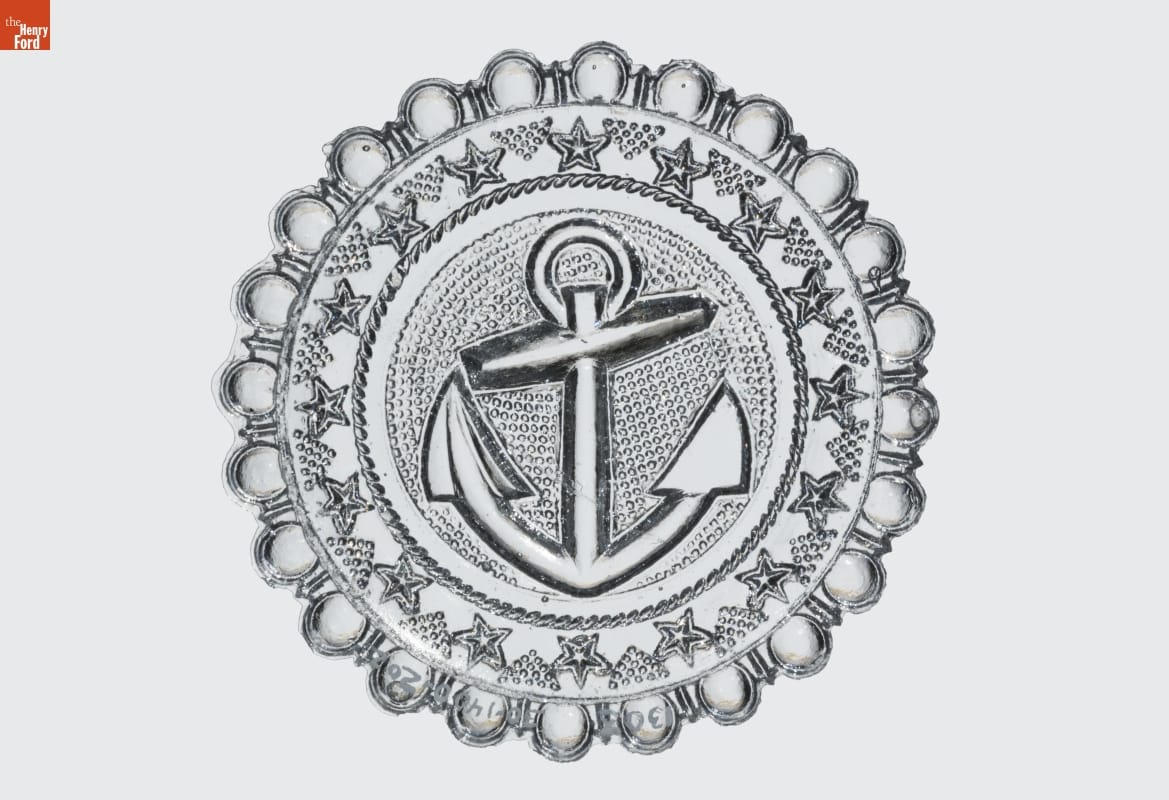
- Cup Plate, 1830-1860 - Americans in the early 19th century poured hot tea into their saucers to cool -- leaving the staining liquid around the teacup's base. Hostesses would provide guests with cup plates to prevent damage to tablecloths and wood. Pressed glass cup plates were popular from the 1820s to the 1860s. Pressed designs varied from purely decorative to images of famous men, places and events.
- 1830-1860
- Collections - Artifact
Cup Plate, 1830-1860
Americans in the early 19th century poured hot tea into their saucers to cool -- leaving the staining liquid around the teacup's base. Hostesses would provide guests with cup plates to prevent damage to tablecloths and wood. Pressed glass cup plates were popular from the 1820s to the 1860s. Pressed designs varied from purely decorative to images of famous men, places and events.
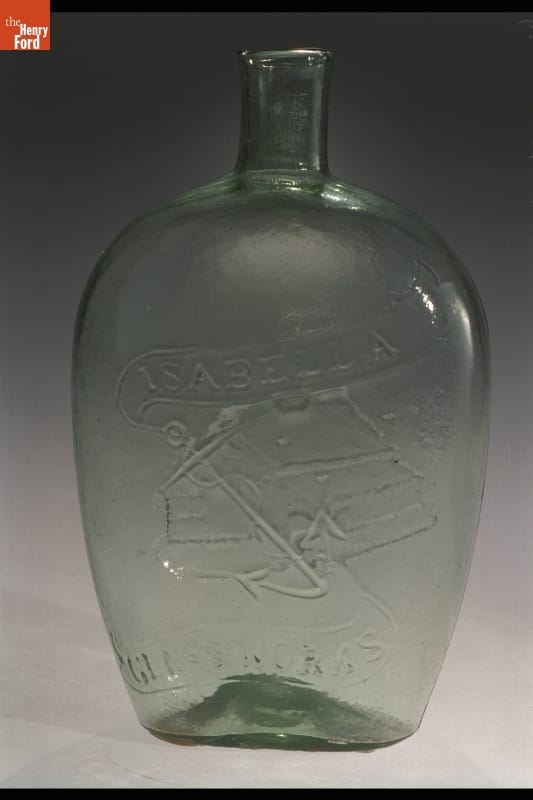
- Flask, 1850-1870 - Glass factories in America began producing inexpensive, mold-formed flasks in the early 1800s. These figured flasks often were decorated with symbols of national pride or political or cultural affiliation. Other flasks provided advertisement for the glass company. Owners of the Isabella Glass Works in New Brooklyn, New Jersey, molded their name and an image of their factory on this flask.
- 1850-1870
- Collections - Artifact
Flask, 1850-1870
Glass factories in America began producing inexpensive, mold-formed flasks in the early 1800s. These figured flasks often were decorated with symbols of national pride or political or cultural affiliation. Other flasks provided advertisement for the glass company. Owners of the Isabella Glass Works in New Brooklyn, New Jersey, molded their name and an image of their factory on this flask.
- Sailor Dress Worn by Virginia Palmer Bradfield Ward, circa 1910 -
- circa 1910
- Collections - Artifact
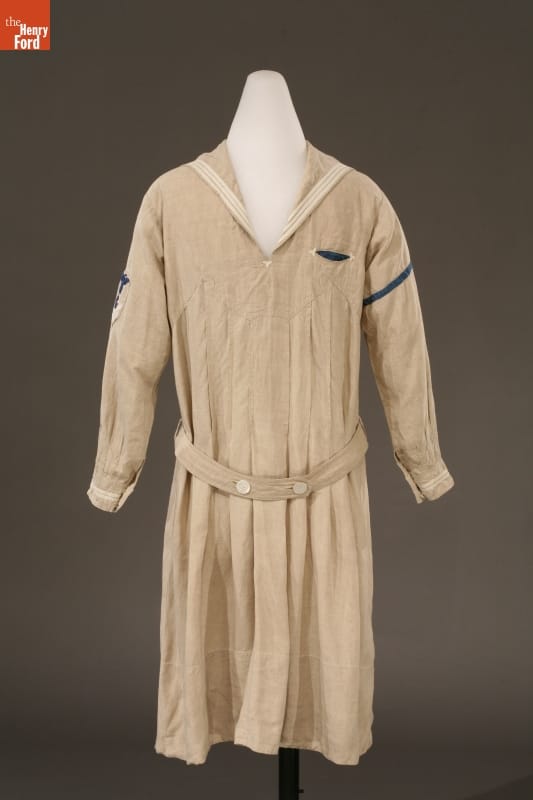
Sailor Dress Worn by Virginia Palmer Bradfield Ward, circa 1910
- Chromolithograph, "Venetian Gondola," circa 1845 -
- circa 1845
- Collections - Artifact
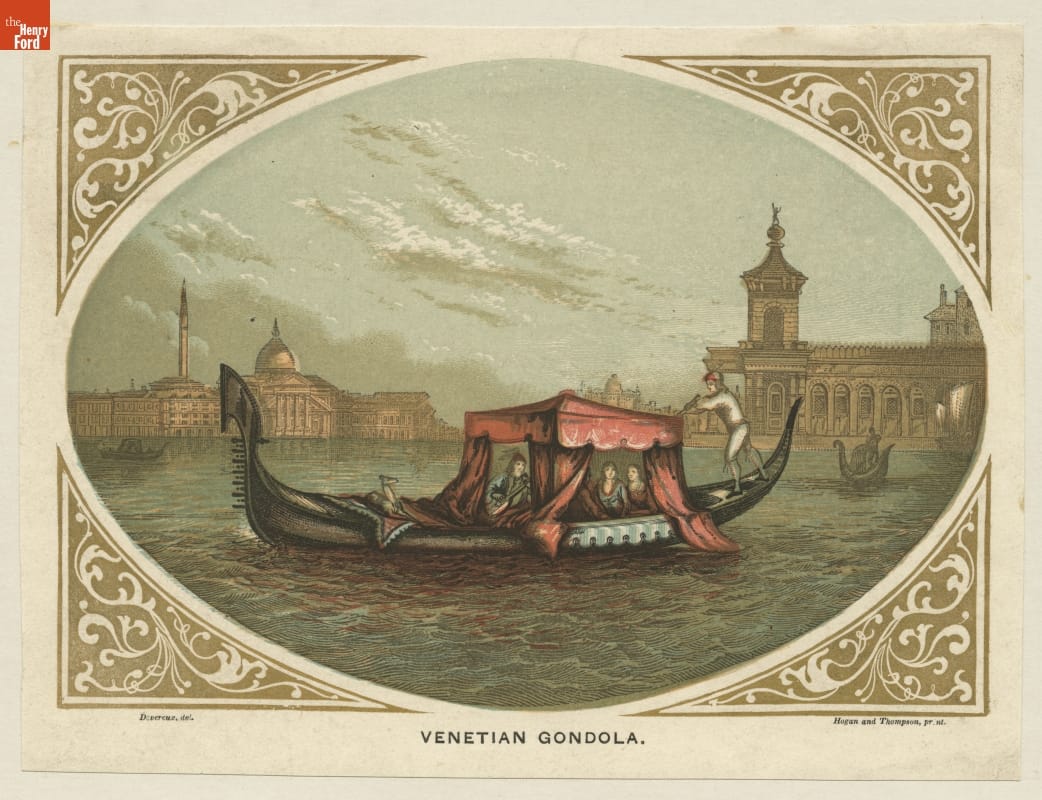
Chromolithograph, "Venetian Gondola," circa 1845
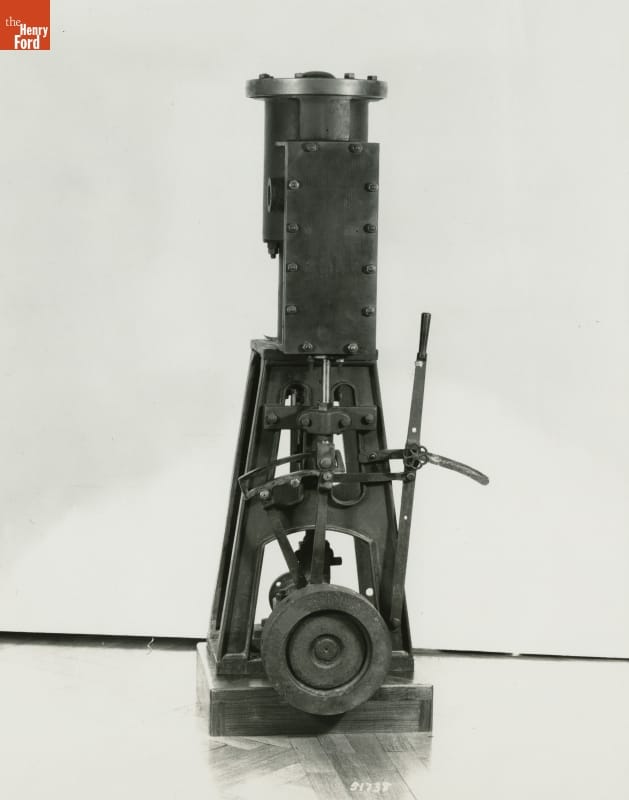
- Marine Compound Steam Engine, circa 1890 - Compound engines use steam twice in different cylinders. This particular marine engine is unusual in having its low-pressure cylinder mounted above its high-pressure cylinder. Generally, marine engines inverted that layout with the heavier low-pressure unit at bottom. More weight at top could create stability problems on a ship. This engine produced about 12 horsepower at speeds no greater than 100 r.p.m.
- circa 1890
- Collections - Artifact
Marine Compound Steam Engine, circa 1890
Compound engines use steam twice in different cylinders. This particular marine engine is unusual in having its low-pressure cylinder mounted above its high-pressure cylinder. Generally, marine engines inverted that layout with the heavier low-pressure unit at bottom. More weight at top could create stability problems on a ship. This engine produced about 12 horsepower at speeds no greater than 100 r.p.m.
- Ford Motor Company Barges "Lake Frumet" and "Lake Farge" Docked at the Ford Rouge Plant, May 1937 - Henry Ford purchased 199 surplus World War I merchant ships from the United States government in 1925. Most of these ships were scrapped and the materials were used at Ford's new automobile manufacturing complex on the Rouge River. But 13 were converted into barges, like the <em>Lake Frumet</em> and the <em>Lake Farge</em>. These barges transported products and material as part of Ford's operation.
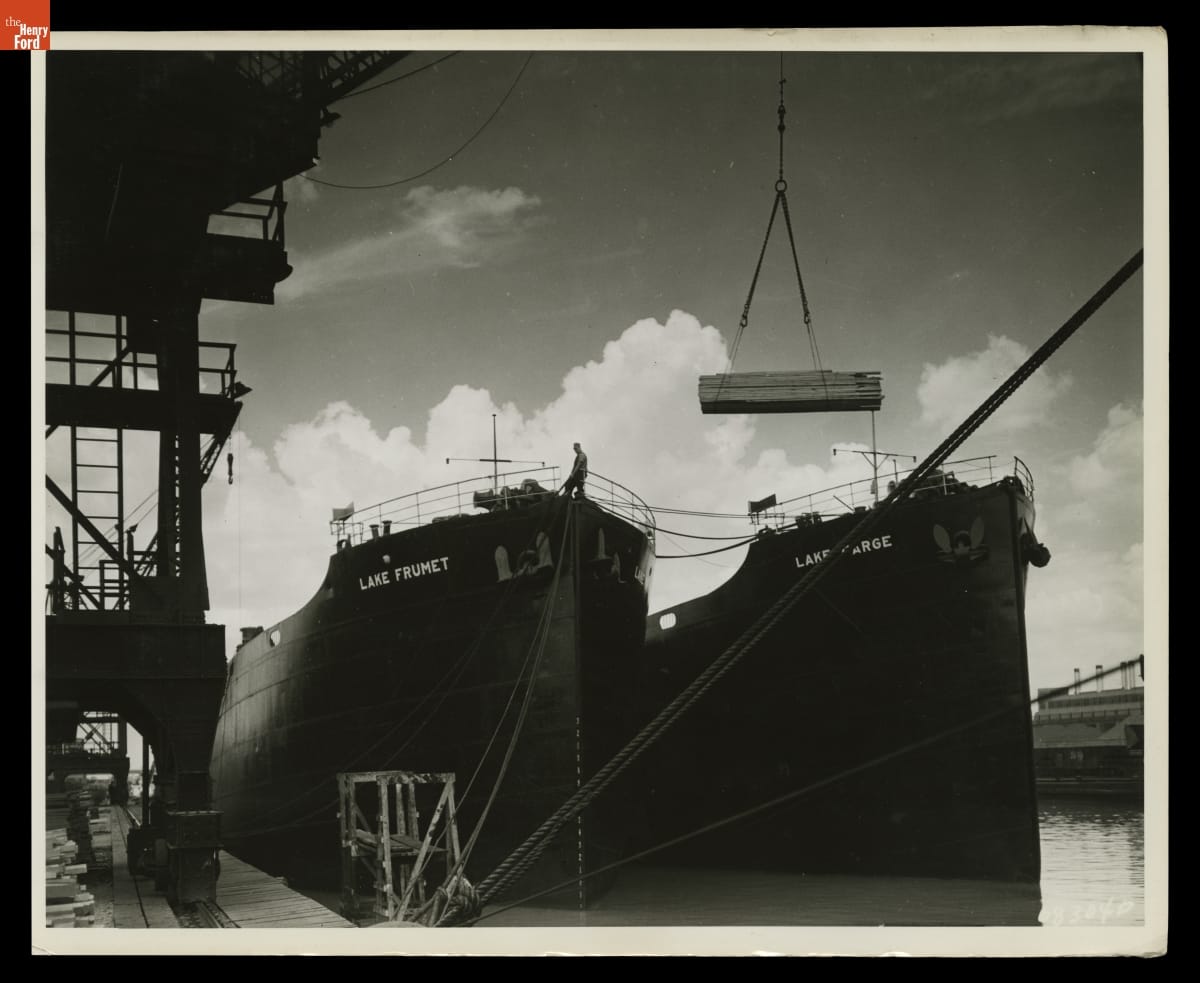
- May 16, 1937
- Collections - Artifact
Ford Motor Company Barges "Lake Frumet" and "Lake Farge" Docked at the Ford Rouge Plant, May 1937
Henry Ford purchased 199 surplus World War I merchant ships from the United States government in 1925. Most of these ships were scrapped and the materials were used at Ford's new automobile manufacturing complex on the Rouge River. But 13 were converted into barges, like the Lake Frumet and the Lake Farge. These barges transported products and material as part of Ford's operation.
- Everlast "Forged Sports" Tray, 1938-1941 - In 1932, Louis Schnitzer and Nathan Gelfman formed Everlast Metal Products Corporation, producing high-quality, hand-forged aluminum giftware. In an era of growing uniformity via factory production, the "made by hand" aspect of these products held an aesthetic appeal for consumers. In 1933, Everlast introduced its first product line, "Forged Giftware" featuring Colonial Revival inspired designs.
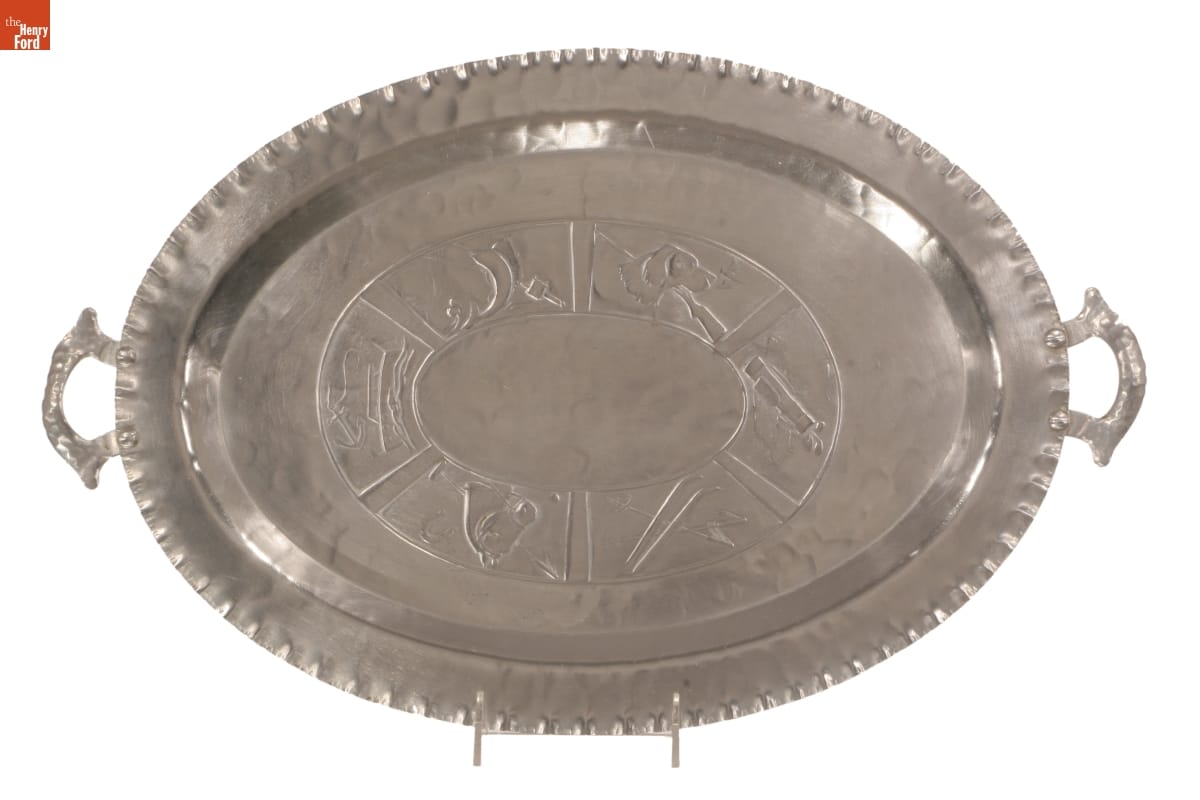
- 1938-1941
- Collections - Artifact
Everlast "Forged Sports" Tray, 1938-1941
In 1932, Louis Schnitzer and Nathan Gelfman formed Everlast Metal Products Corporation, producing high-quality, hand-forged aluminum giftware. In an era of growing uniformity via factory production, the "made by hand" aspect of these products held an aesthetic appeal for consumers. In 1933, Everlast introduced its first product line, "Forged Giftware" featuring Colonial Revival inspired designs.