
Search
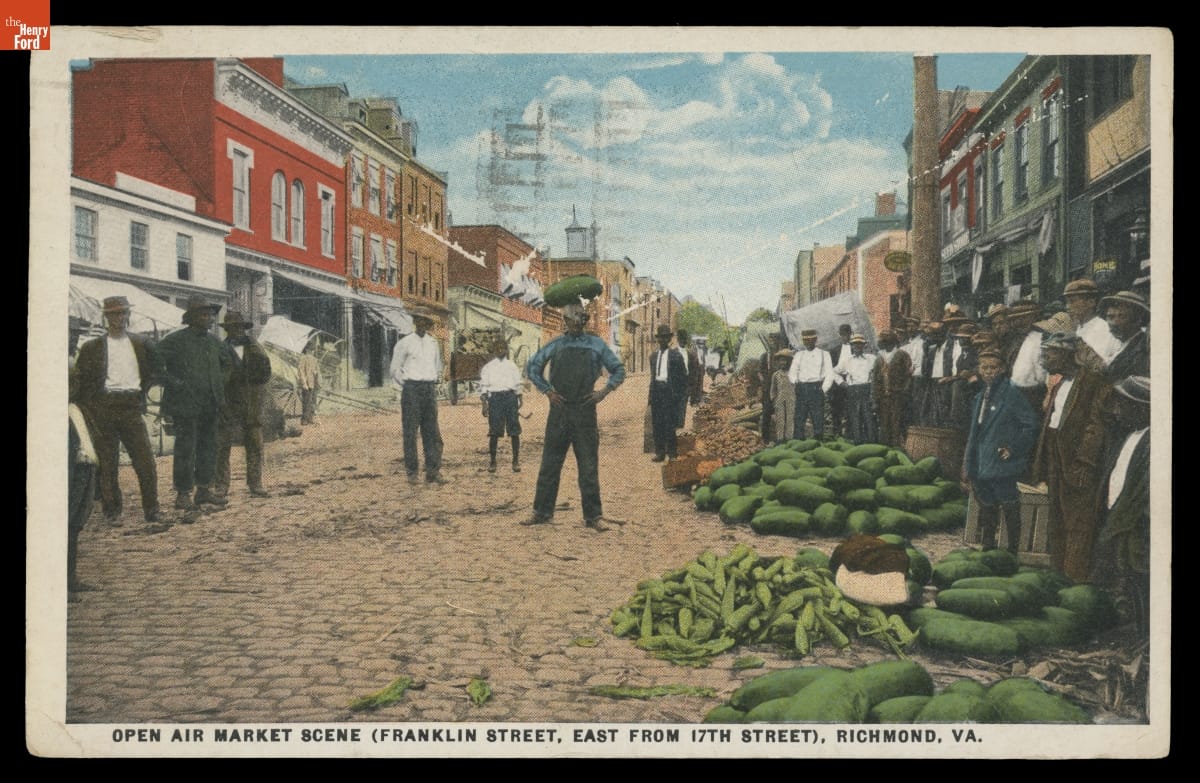
- Open Air Market Scene (Franklin Street, East from 17th Street), Richmond, Va. - These farmer entrepreneurs sold melons at the Richmond, Virginia, market on 17th and Franklin streets. They used horse-drawn carts to transport their goods from farm to city even as others adopted the automobile. Racist language on the back of this postcard, however, blinded viewers to the superhuman efforts required to sustain crops as well as family and human dignity during the era of Jim Crow.
- April 19, 1921
- Collections - Artifact
Open Air Market Scene (Franklin Street, East from 17th Street), Richmond, Va.
These farmer entrepreneurs sold melons at the Richmond, Virginia, market on 17th and Franklin streets. They used horse-drawn carts to transport their goods from farm to city even as others adopted the automobile. Racist language on the back of this postcard, however, blinded viewers to the superhuman efforts required to sustain crops as well as family and human dignity during the era of Jim Crow.
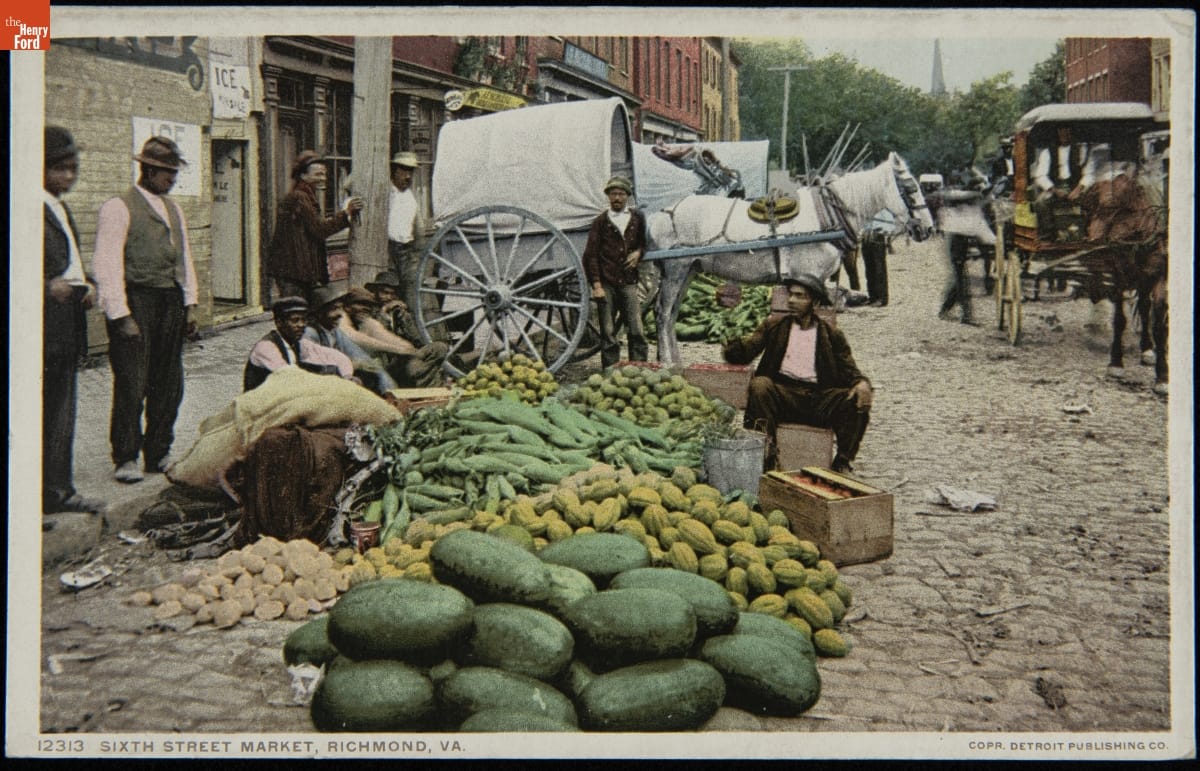
- Sixth Street Market, Richmond, Va., 1908-1909 - Farm families living on limited acreage near cities often hawked their vegetables and melons at local markets built to satisfy the public demand for food. These farmer entrepreneurs sold melons, squash, and sweetcorn near the Sixth Street Market in Richmond, Virginia. They used horse-drawn wagons or carts to transport their goods even as others adopted the automobile for transportation.
- 1908-1909
- Collections - Artifact
Sixth Street Market, Richmond, Va., 1908-1909
Farm families living on limited acreage near cities often hawked their vegetables and melons at local markets built to satisfy the public demand for food. These farmer entrepreneurs sold melons, squash, and sweetcorn near the Sixth Street Market in Richmond, Virginia. They used horse-drawn wagons or carts to transport their goods even as others adopted the automobile for transportation.
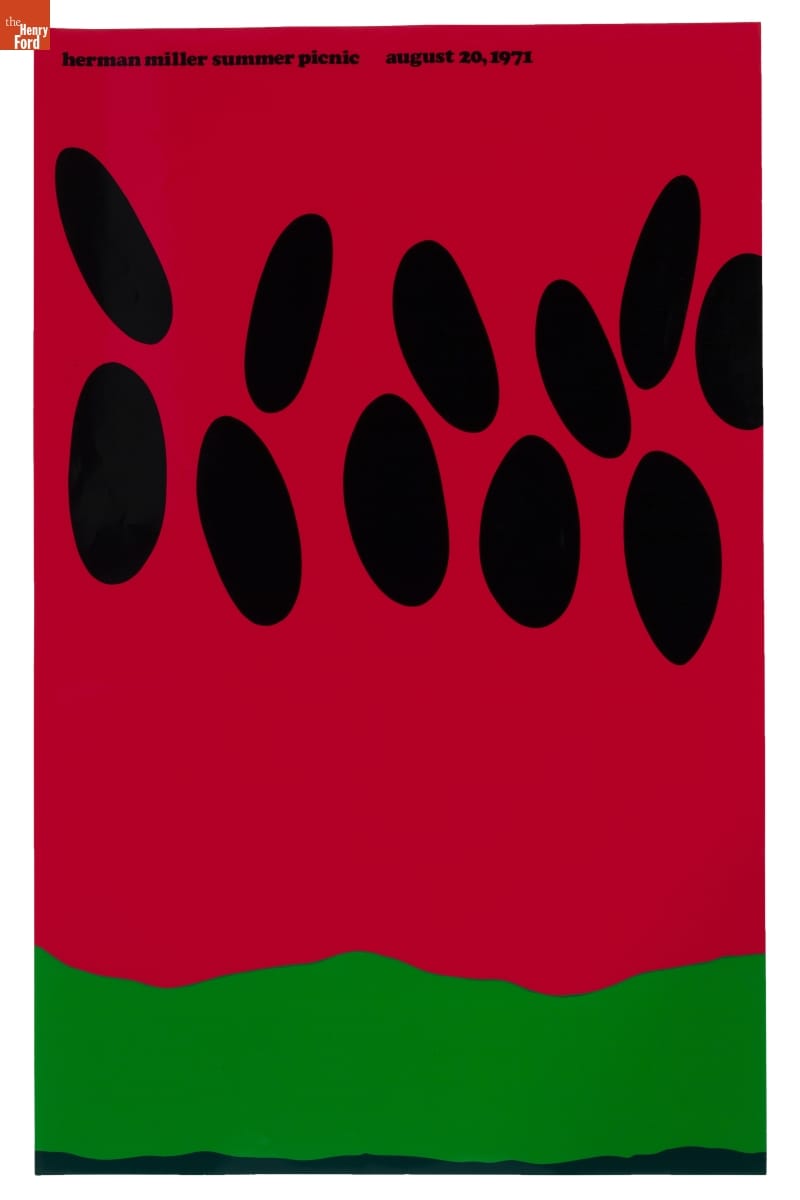
- Herman Miller Summer Picnic Poster, "Watermelon," August 20, 1971 - In 1970, Stephen Frykholm, newly hired as a graphic designer at Herman Miller, designed his first poster for the furniture company's annual summer picnic. He went on to design 19 more, each with picnic food as their subject. His compositions played with scale, abstraction, pattern, and vibrant color -- informed by the screen-printing skills he had developed while serving in the Peace Corps.
- August 20, 1971
- Collections - Artifact
Herman Miller Summer Picnic Poster, "Watermelon," August 20, 1971
In 1970, Stephen Frykholm, newly hired as a graphic designer at Herman Miller, designed his first poster for the furniture company's annual summer picnic. He went on to design 19 more, each with picnic food as their subject. His compositions played with scale, abstraction, pattern, and vibrant color -- informed by the screen-printing skills he had developed while serving in the Peace Corps.
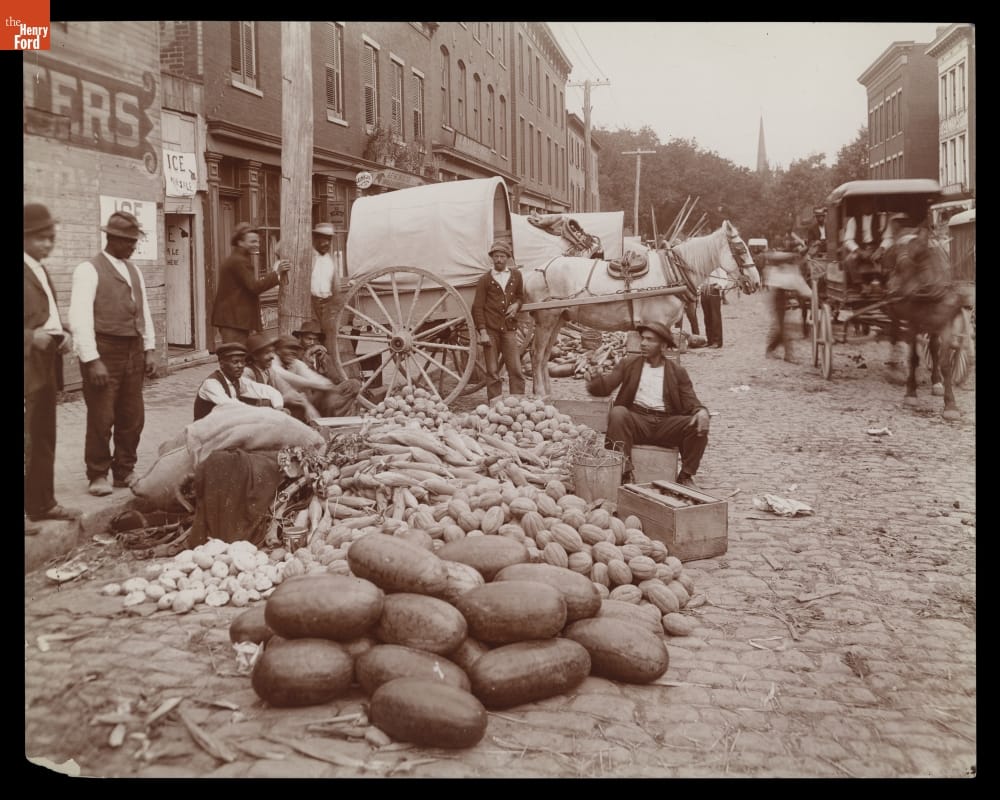
- Sixth Street Market (Typical Vegetable Men), Richmond, Virginia, 1908 - Farm families living on limited acreage near cities often hawked their vegetables and melons at local markets built to satisfy the public demand for food. These farmer entrepreneurs sold melons, squash, and sweetcorn near the Sixth Street Market in Richmond, Virginia. They used horse-drawn wagons or carts to transport their goods even as others adopted the automobile for transportation.
- 1908
- Collections - Artifact
Sixth Street Market (Typical Vegetable Men), Richmond, Virginia, 1908
Farm families living on limited acreage near cities often hawked their vegetables and melons at local markets built to satisfy the public demand for food. These farmer entrepreneurs sold melons, squash, and sweetcorn near the Sixth Street Market in Richmond, Virginia. They used horse-drawn wagons or carts to transport their goods even as others adopted the automobile for transportation.
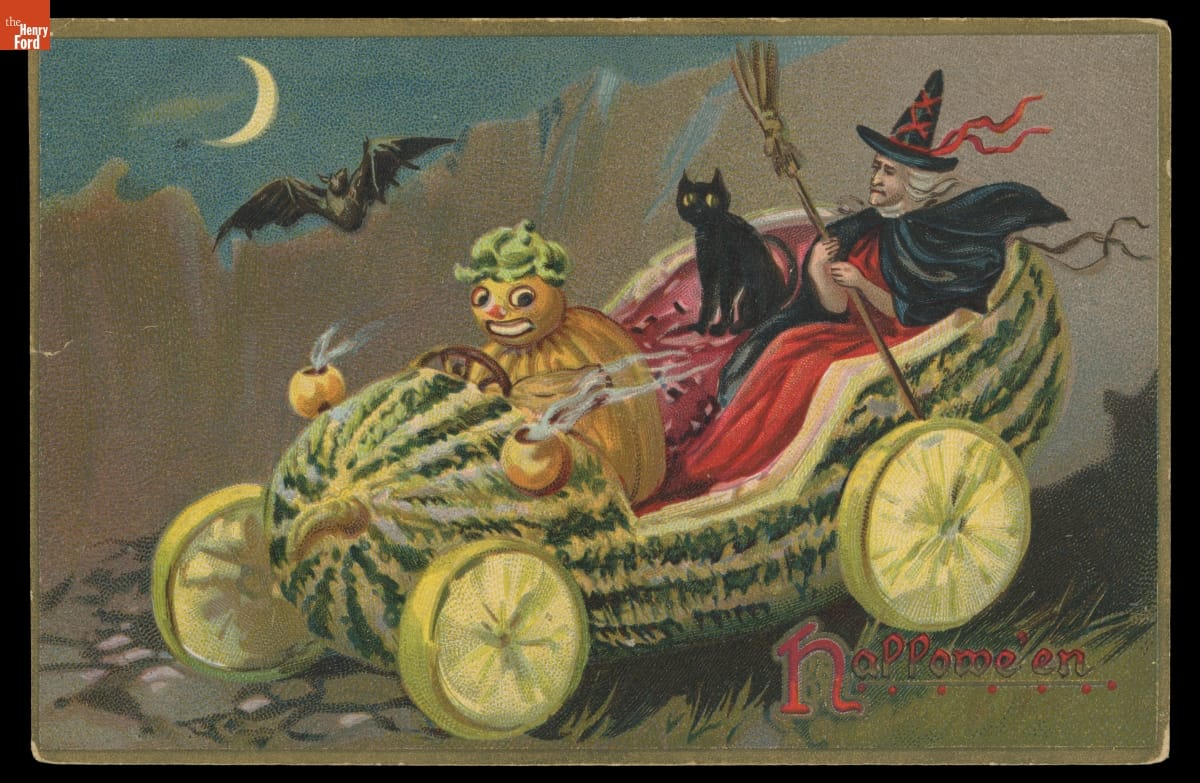
- "Hallowe'en" Postcard, 1907-1908 - Halloween's superstitious origins gave way to a national celebration of mystery and innocent fun in 20th-century America. Seasonal greeting cards commonly exchanged by friends and neighbors during Halloween reflected a distinctly American blend of olden customs and modern life. This colorful example cleverly combines traditional symbols with a contemporary watermelon "automobile" - complete with a hand crank stem!
- 1907-1908
- Collections - Artifact
"Hallowe'en" Postcard, 1907-1908
Halloween's superstitious origins gave way to a national celebration of mystery and innocent fun in 20th-century America. Seasonal greeting cards commonly exchanged by friends and neighbors during Halloween reflected a distinctly American blend of olden customs and modern life. This colorful example cleverly combines traditional symbols with a contemporary watermelon "automobile" - complete with a hand crank stem!
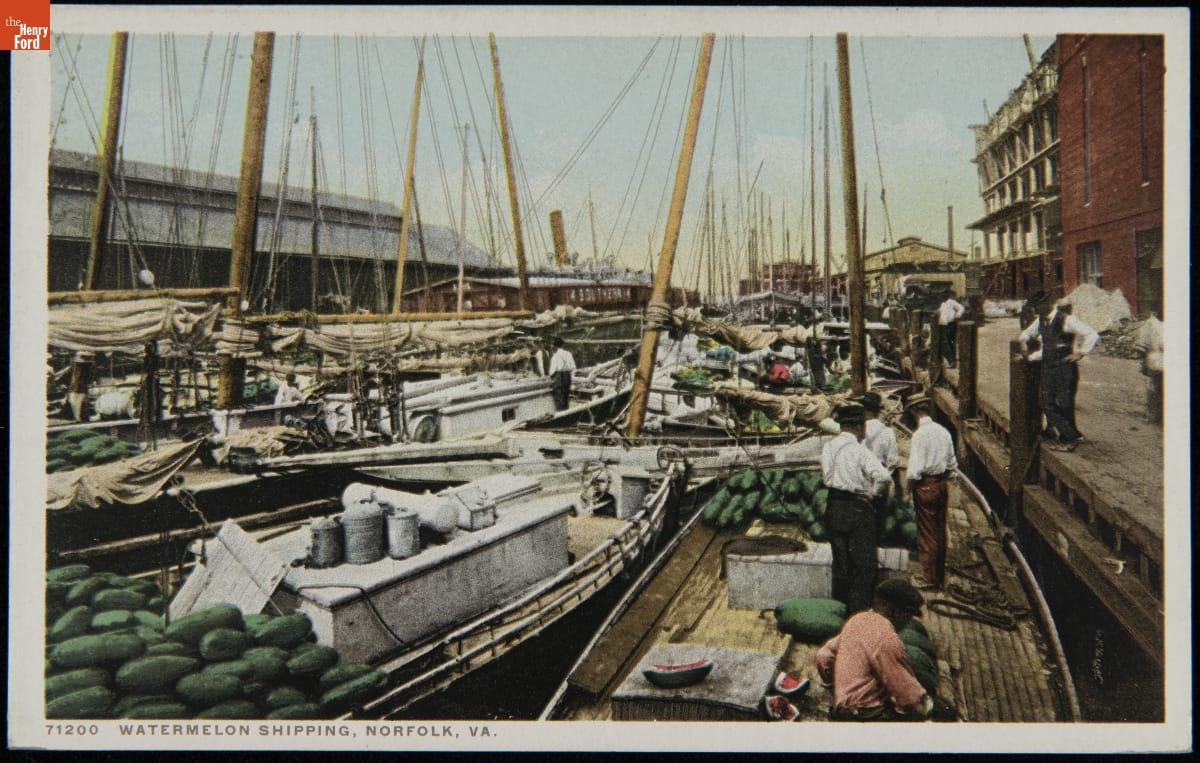
- Watermelon Shipping, Norfolk, Va., 1913-1918 - This colorful postcard reminds us that sailing ships remained critical to coastal trade into the 20th century, and that African Americans operated these vessels. This more accurately conveys the economic relationship between African Americans and watermelons than did racists depictions of African Americans, stereotyped with exaggerated features, eating watermelon.
- 1913-1918
- Collections - Artifact
Watermelon Shipping, Norfolk, Va., 1913-1918
This colorful postcard reminds us that sailing ships remained critical to coastal trade into the 20th century, and that African Americans operated these vessels. This more accurately conveys the economic relationship between African Americans and watermelons than did racists depictions of African Americans, stereotyped with exaggerated features, eating watermelon.
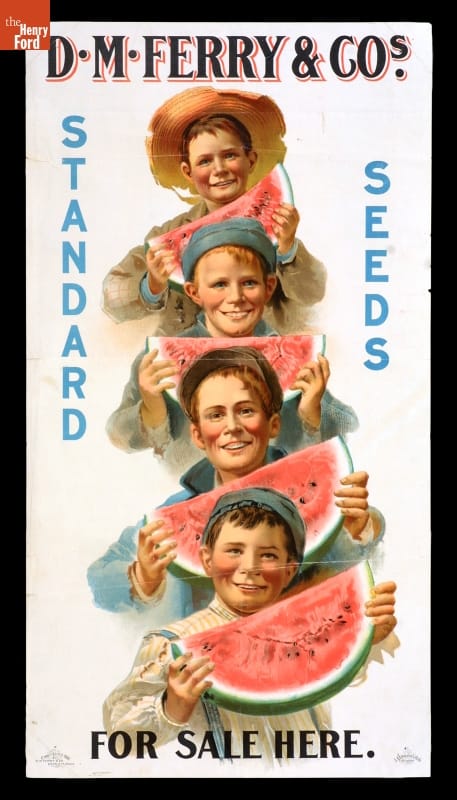
- Advertising Poster, "D.M. Ferry & Co.'s Standard Seeds For Sale Here," 1898 -
- 1898
- Collections - Artifact
Advertising Poster, "D.M. Ferry & Co.'s Standard Seeds For Sale Here," 1898
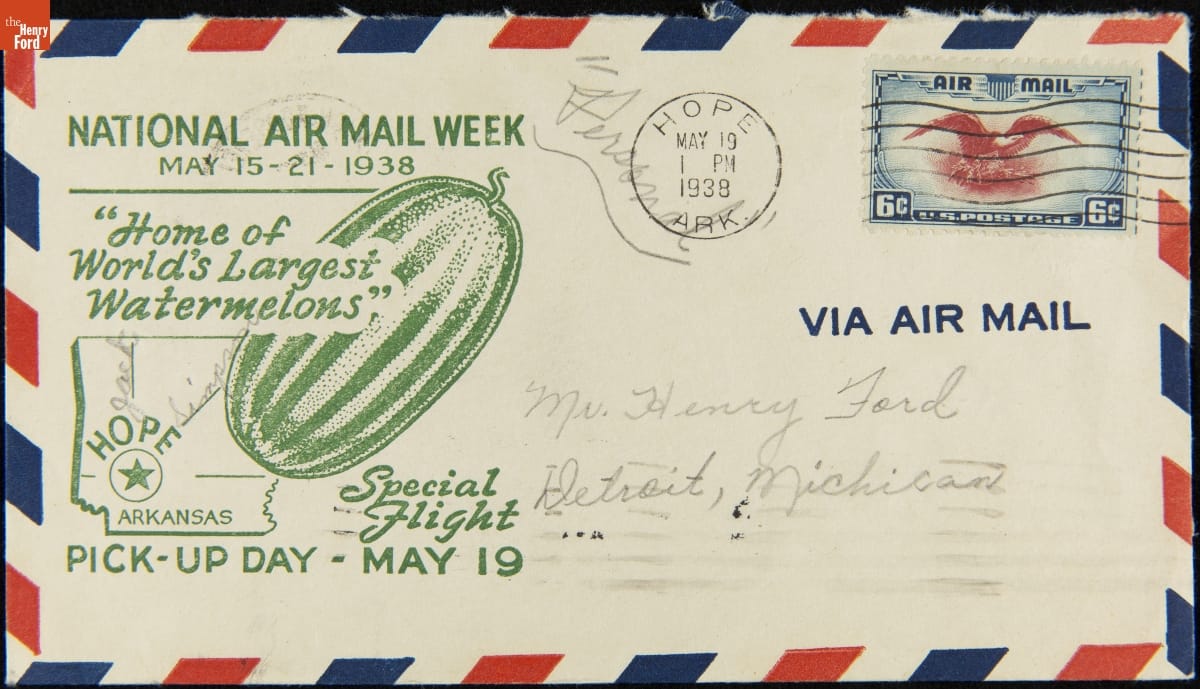
- Envelope Sent by Air Mail to Henry Ford from Hope, Arkansas for National Air Mail Week, May 1938 - Twenty years after the first regularly scheduled U.S. air mail service was established, President Franklin D. Roosevelt and Postmaster General James A. Farley sponsored National Air Mail Week in 1938. Part celebration and part advertising, the event promoted the pricier service during the Great Depression. Cities throughout the country created their own special mail cachets and cancellations to mark the occasion.
- May 19, 1938
- Collections - Artifact
Envelope Sent by Air Mail to Henry Ford from Hope, Arkansas for National Air Mail Week, May 1938
Twenty years after the first regularly scheduled U.S. air mail service was established, President Franklin D. Roosevelt and Postmaster General James A. Farley sponsored National Air Mail Week in 1938. Part celebration and part advertising, the event promoted the pricier service during the Great Depression. Cities throughout the country created their own special mail cachets and cancellations to mark the occasion.