
Search
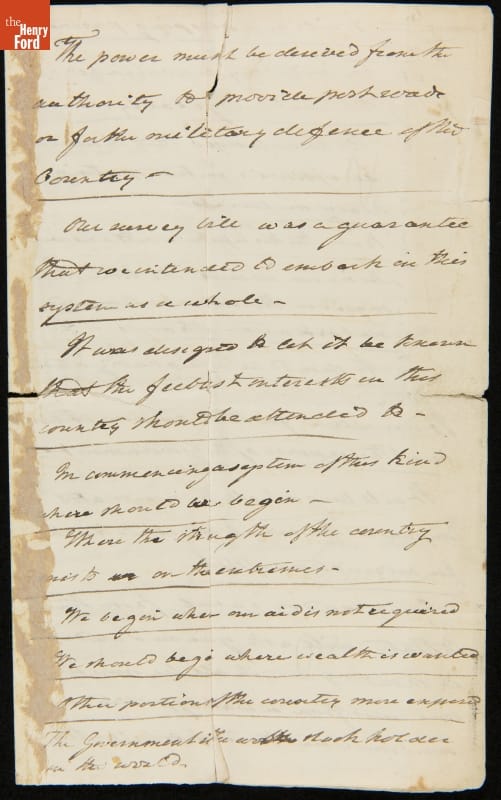
- Alexander Hamilton's Arguments against Federal Subscription of Stock in the Proposed Chesapeake and Delaware Canal, circa 1803 -
- circa 1803
- Collections - Artifact
Alexander Hamilton's Arguments against Federal Subscription of Stock in the Proposed Chesapeake and Delaware Canal, circa 1803
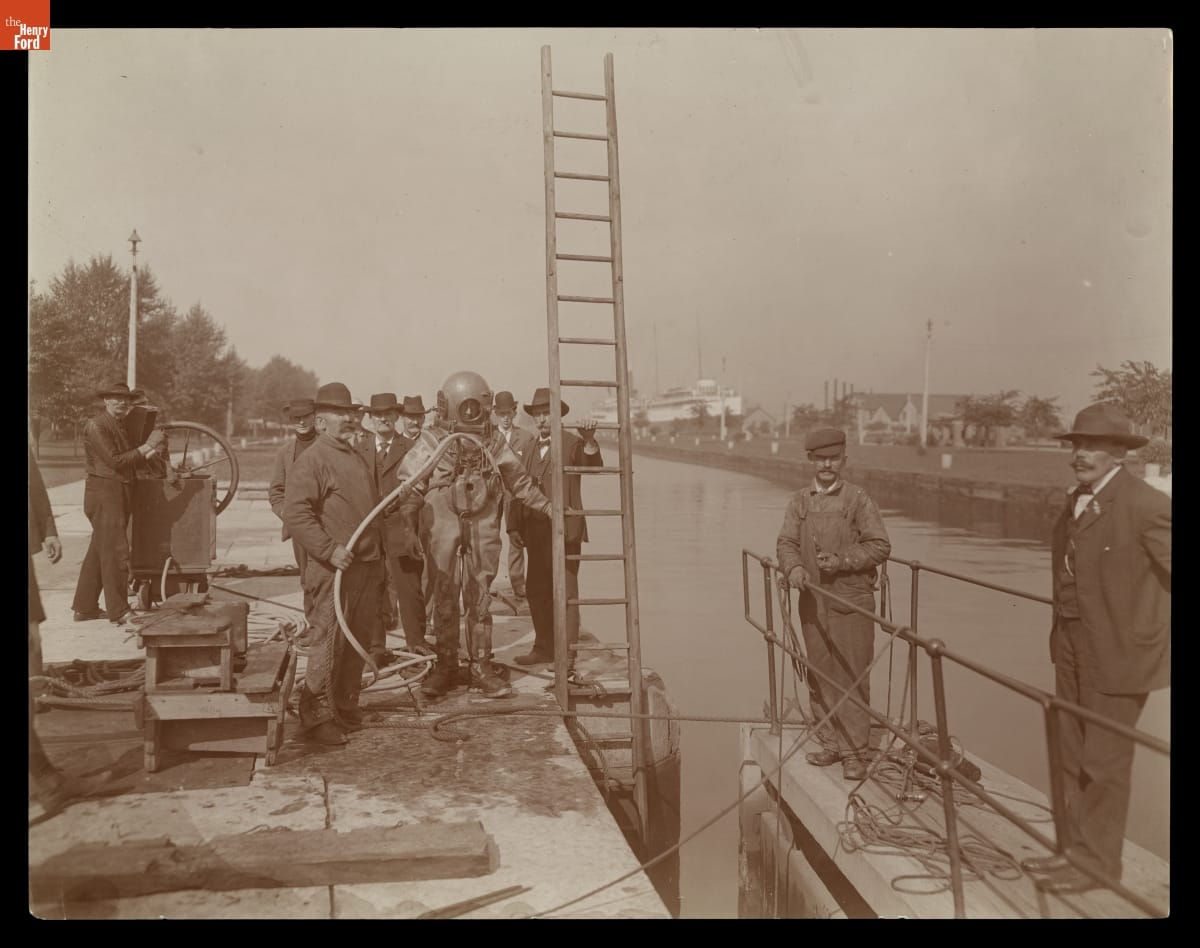
- Diver Repairing a Lock Gate at Sault Sainte Marie, Michigan, 1908 - The first lock at Sault Ste. Marie, Michigan, opened in 1855. It allowed boats to navigate the 21-foot climb from Lake Huron to Lake Superior along the St. Marys River. Over time, additional locks were built on the American and Canadian sides of the river. The Soo Locks became one of the world's busiest waterways -- despite being closed in winter.
- 1908
- Collections - Artifact
Diver Repairing a Lock Gate at Sault Sainte Marie, Michigan, 1908
The first lock at Sault Ste. Marie, Michigan, opened in 1855. It allowed boats to navigate the 21-foot climb from Lake Huron to Lake Superior along the St. Marys River. Over time, additional locks were built on the American and Canadian sides of the river. The Soo Locks became one of the world's busiest waterways -- despite being closed in winter.
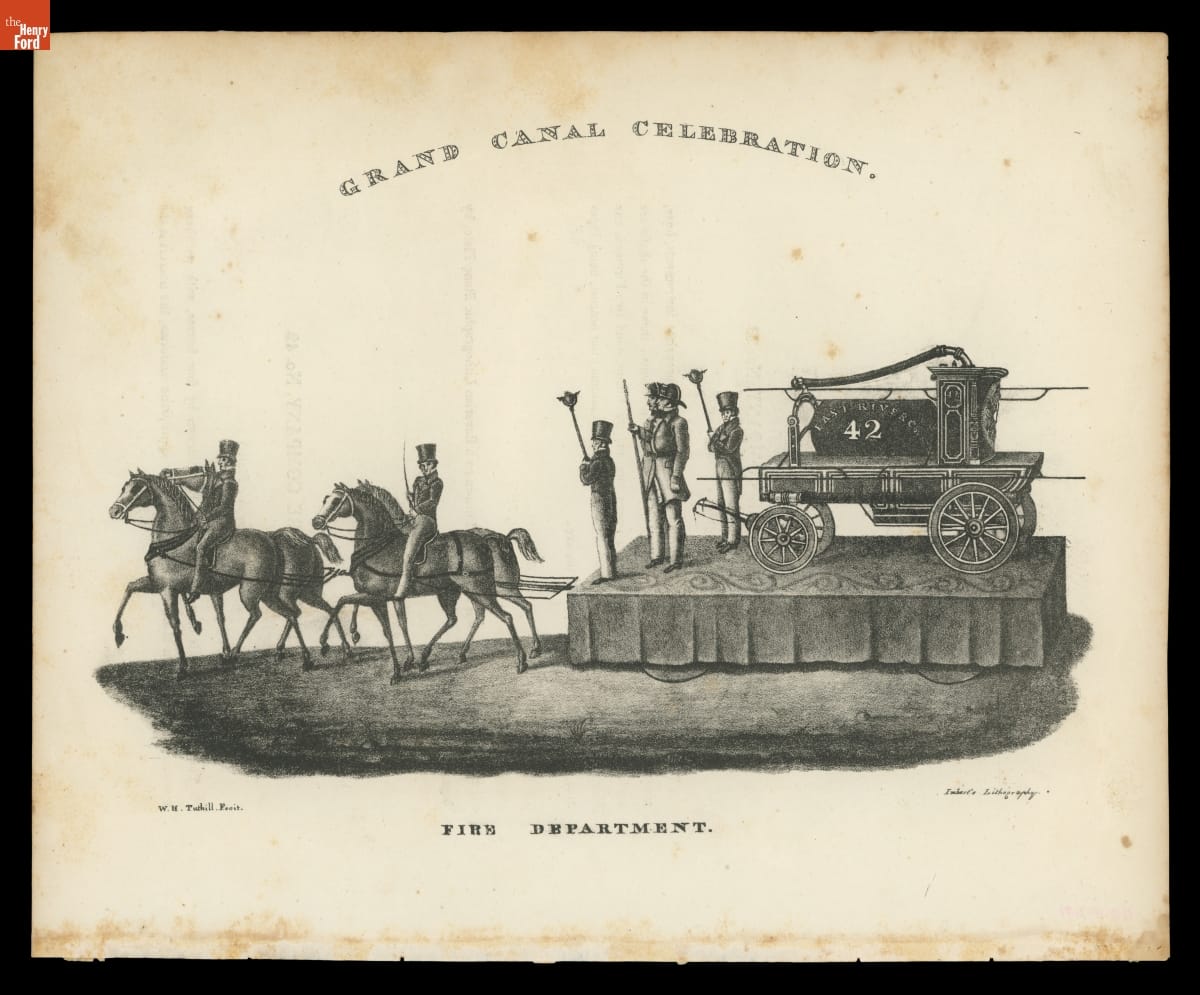
- Lithograph, "Grand Canal Celebration, Fire Department," November 4, 1825 - The Erie Canal connected the Hudson River and New York City with Lake Erie and the Upper Midwest. Its completion in 1825 was cause for grand celebrations up and down the canal's 363-mile length. This lithograph shows a fire department participating in a parade to commemorate the canal's opening.
- November 04, 1825
- Collections - Artifact
Lithograph, "Grand Canal Celebration, Fire Department," November 4, 1825
The Erie Canal connected the Hudson River and New York City with Lake Erie and the Upper Midwest. Its completion in 1825 was cause for grand celebrations up and down the canal's 363-mile length. This lithograph shows a fire department participating in a parade to commemorate the canal's opening.
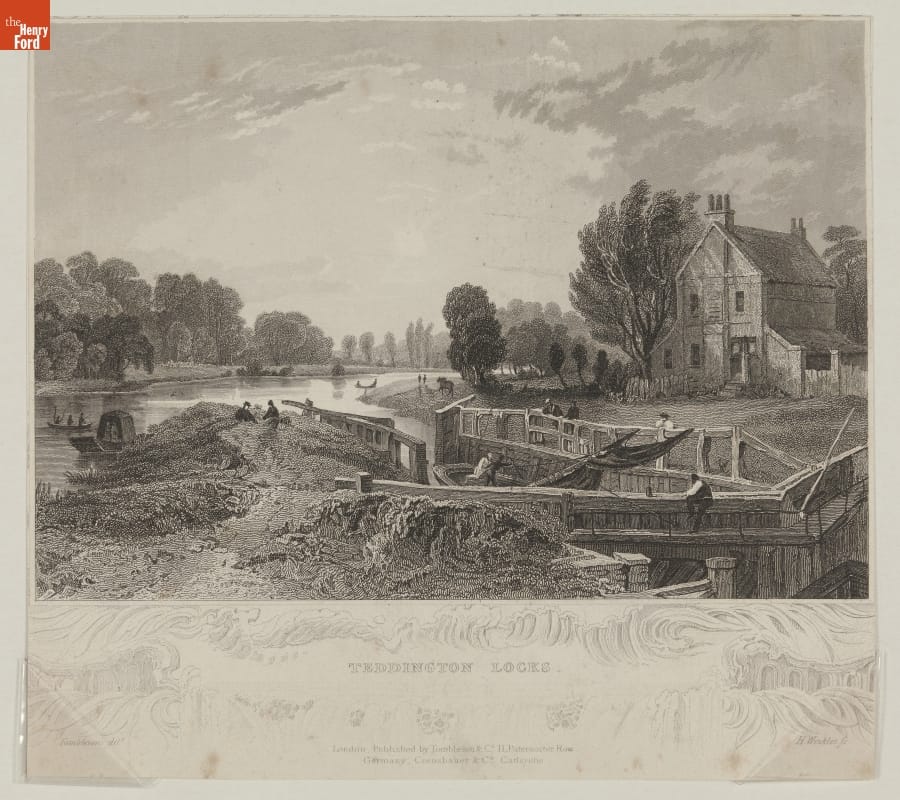
- Steel Engraving, "Teddington Locks," circa 1837 - Before railroads, rivers provided quick transportation routes for people and goods. But rapids and dams impeded a boat's movement. To avert these obstacles, a lock was built to lift or lower a boat from one navigable section of a waterway to another. This steel engraving, done about 1837, depicts the Teddington locks on the River Thames in England.
- 1835-1840
- Collections - Artifact
Steel Engraving, "Teddington Locks," circa 1837
Before railroads, rivers provided quick transportation routes for people and goods. But rapids and dams impeded a boat's movement. To avert these obstacles, a lock was built to lift or lower a boat from one navigable section of a waterway to another. This steel engraving, done about 1837, depicts the Teddington locks on the River Thames in England.
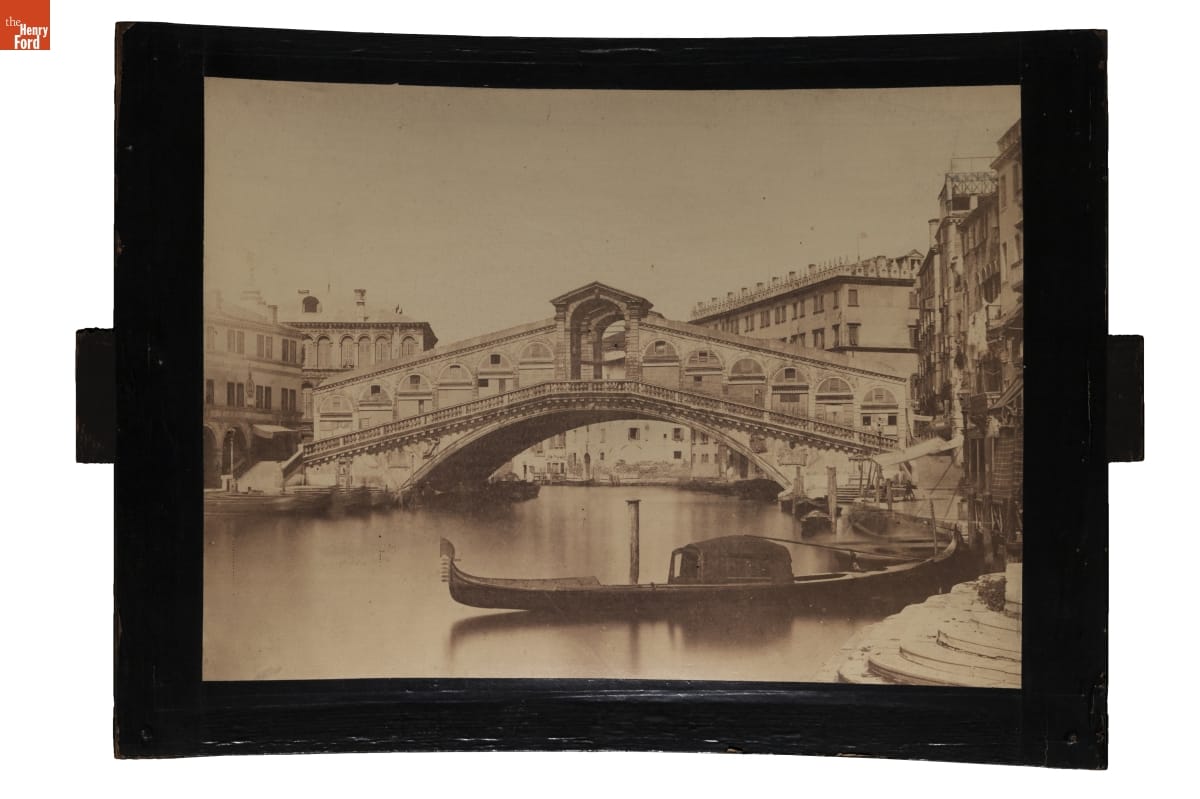
- Megalethoscope Slide, "Rialto" - Invented by Carlo Ponti in the early 1860s, a megalethoscope is a device used to view a translucent, multilayered photograph. By opening or closing various panels, a person saw the image change. When lit from behind, pinpricks and paint or colored tissue applied to the back or a secondary layer of the photograph transform the scene to reveal hidden images and create an illusion of nighttime.
- Collections - Artifact
Megalethoscope Slide, "Rialto"
Invented by Carlo Ponti in the early 1860s, a megalethoscope is a device used to view a translucent, multilayered photograph. By opening or closing various panels, a person saw the image change. When lit from behind, pinpricks and paint or colored tissue applied to the back or a secondary layer of the photograph transform the scene to reveal hidden images and create an illusion of nighttime.
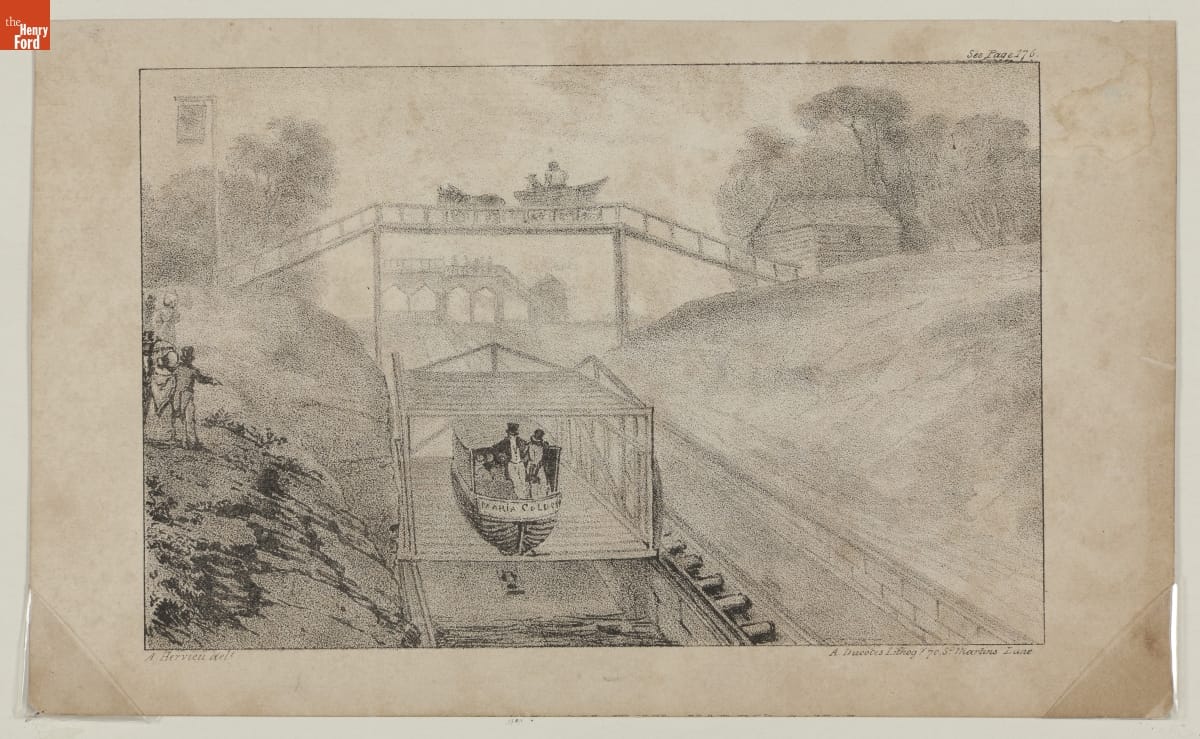
- Lithograph, Canal Boat on New Jersey Canal, circa 1830 - This image illustrates a method of shifting boats from one level to another that was used on parts of New Jersey canals. A boat was floated, and then fastened, on a submerged wheeled cradle. The cradle was then lowered or pulled up an inclined plane. At the new level the cradle moved on submerged tracks, and the boat was released.
- circa 1830
- Collections - Artifact
Lithograph, Canal Boat on New Jersey Canal, circa 1830
This image illustrates a method of shifting boats from one level to another that was used on parts of New Jersey canals. A boat was floated, and then fastened, on a submerged wheeled cradle. The cradle was then lowered or pulled up an inclined plane. At the new level the cradle moved on submerged tracks, and the boat was released.
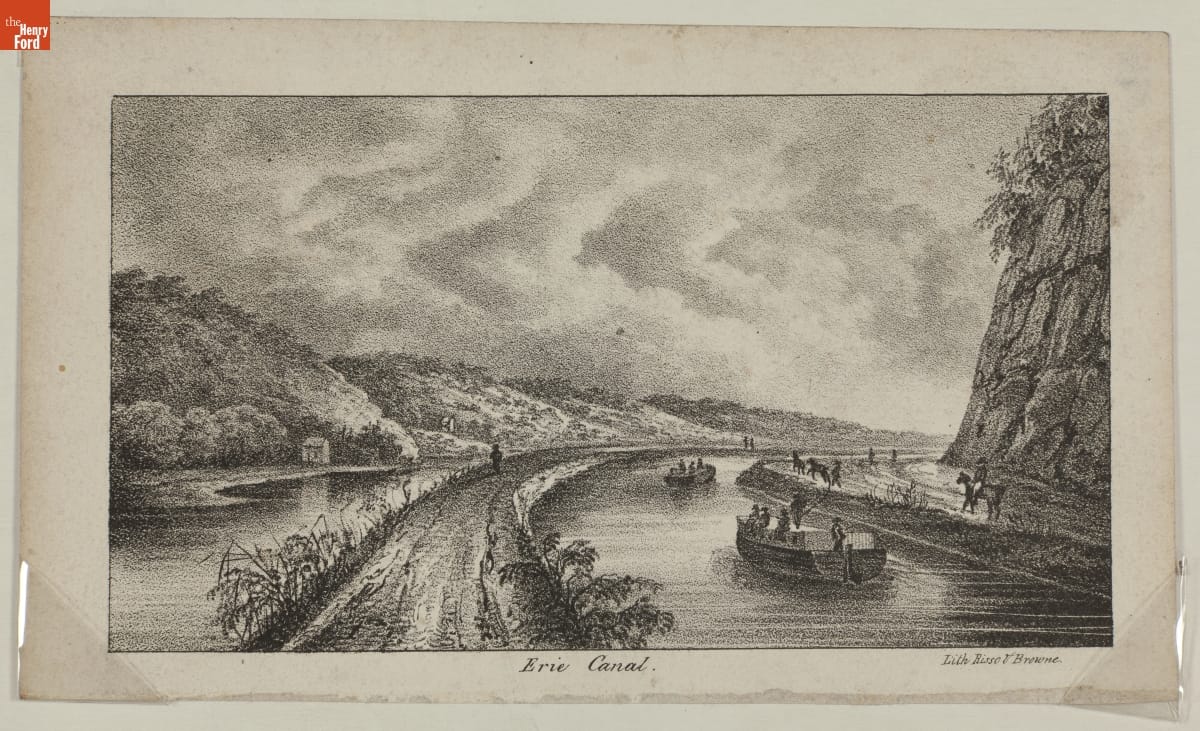
- Packet Boats Rounding a Curve on the Erie Canal, Print, circa 1832 - This engraving, made about 1832, shows an idyllic view of travel and transportation on the Erie Canal. Completed in 1825, the canal opened the western regions of New York and states of the Old Northwest to greater settlement and commerce. The Erie Canal extends from the Hudson River to Lake Erie.
- circa 1832
- Collections - Artifact
Packet Boats Rounding a Curve on the Erie Canal, Print, circa 1832
This engraving, made about 1832, shows an idyllic view of travel and transportation on the Erie Canal. Completed in 1825, the canal opened the western regions of New York and states of the Old Northwest to greater settlement and commerce. The Erie Canal extends from the Hudson River to Lake Erie.
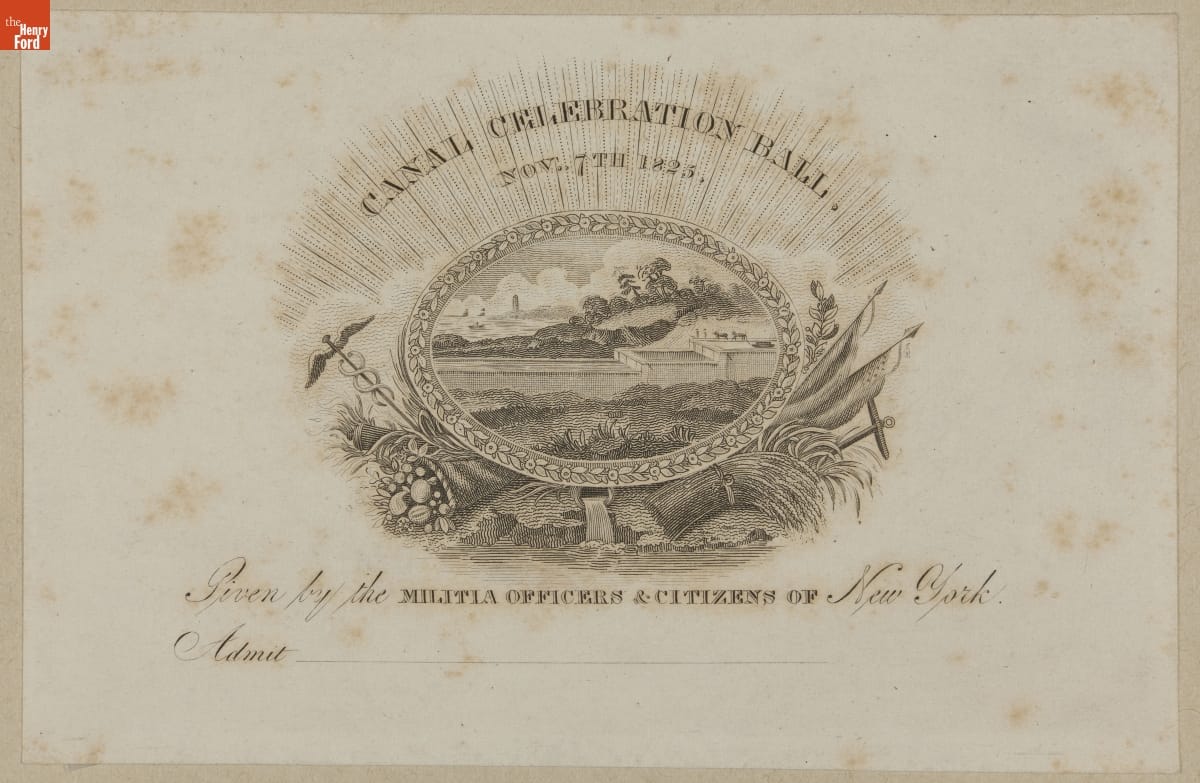
- "Canal Celebration Ball Given by the Militia Officers & Citizens of New York," November 7, 1825 - The construction of Erie Canal, which ran from Albany, New York to Buffalo, New York, began in 1817 and was completed in 1825, opened the Midwest of the United States to settlement and commerce. This copperplate engraving is an impression, or copy, of the invitation to the ball celebrating the completion of the Erie Canal.
- November 07, 1825
- Collections - Artifact
"Canal Celebration Ball Given by the Militia Officers & Citizens of New York," November 7, 1825
The construction of Erie Canal, which ran from Albany, New York to Buffalo, New York, began in 1817 and was completed in 1825, opened the Midwest of the United States to settlement and commerce. This copperplate engraving is an impression, or copy, of the invitation to the ball celebrating the completion of the Erie Canal.
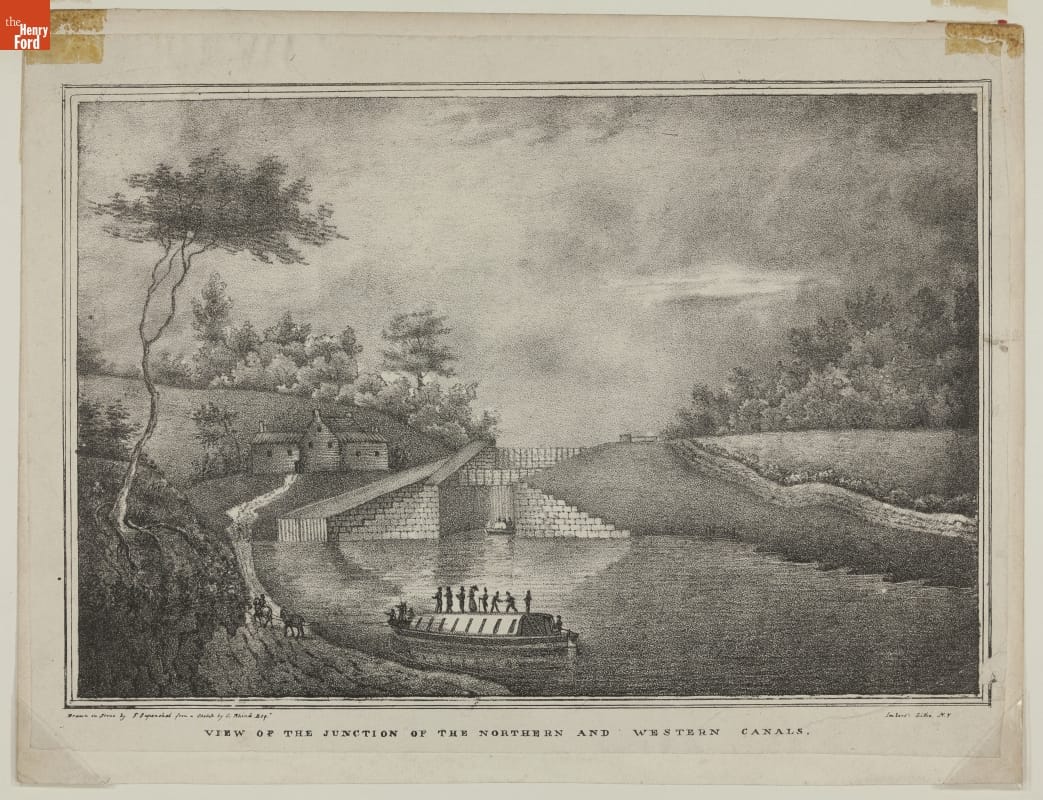
- Lithograph, "View of the Junction of the Northern and Western Canals," 1825 - The construction of Erie Canal, connecting the Hudson River to Lake Erie, began in 1817 and completed in 1825, opened the Midwest of the United States to settlement and commerce. Passengers assembled on the roof of a packet boat on the Erie Canal to watch the process of pulling the boat through a lock, while experienced travelers remained below.
- 1825
- Collections - Artifact
Lithograph, "View of the Junction of the Northern and Western Canals," 1825
The construction of Erie Canal, connecting the Hudson River to Lake Erie, began in 1817 and completed in 1825, opened the Midwest of the United States to settlement and commerce. Passengers assembled on the roof of a packet boat on the Erie Canal to watch the process of pulling the boat through a lock, while experienced travelers remained below.
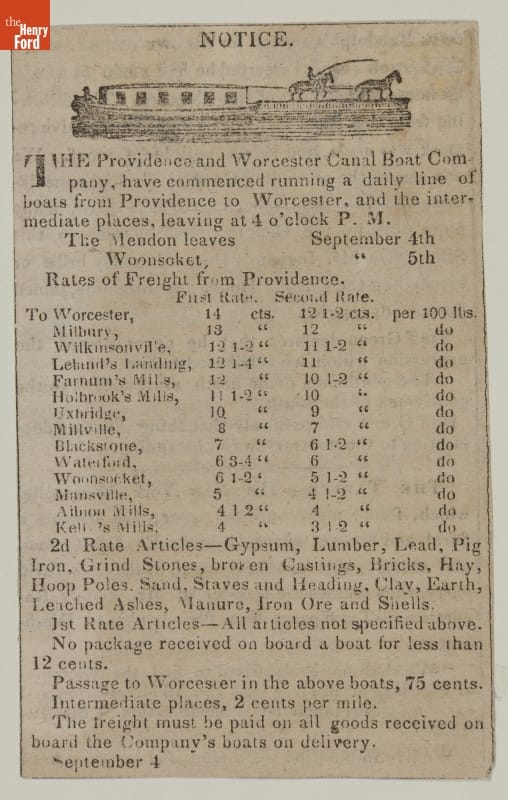
- Providence and Worcester Canal Boat Company Schedule from Newspaper, Rhode Island, 1829 - The first half of the 19th century was the heyday of canal construction and use in the United States, providing easier access to territories for settlement and commerce. This advertisement of the Providence and Worcester Canal Boat Company, from September 8, 1829, supplied dates and times of departure, along with freight and passenger rates between the two cities.
- September 08, 1829
- Collections - Artifact
Providence and Worcester Canal Boat Company Schedule from Newspaper, Rhode Island, 1829
The first half of the 19th century was the heyday of canal construction and use in the United States, providing easier access to territories for settlement and commerce. This advertisement of the Providence and Worcester Canal Boat Company, from September 8, 1829, supplied dates and times of departure, along with freight and passenger rates between the two cities.