
Search
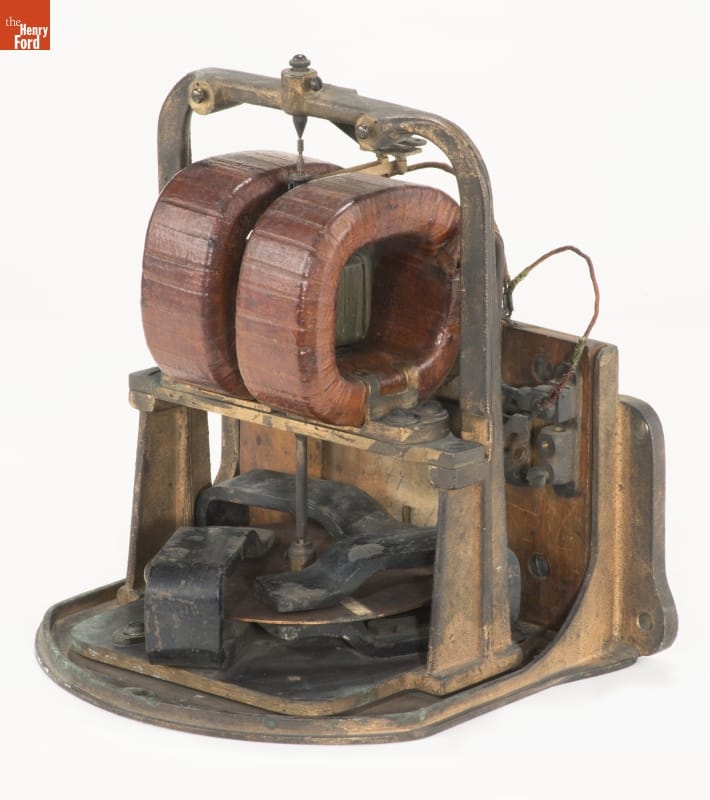
- Thomson-Houston Recording Wattmeter, 1889-1892 - Elihu Thomson, engineer, inventor and cofounder of the Thomson-Houston Electric Company, developed a commutator-type wattmeter in the late 1880s. His recording watt-hour meter helped transform the nascent electric power industry. The sturdy device provided companies that supplied electricity to consumers a way to accurately track and bill electrical power use.
- 1889-1892
- Collections - Artifact
Thomson-Houston Recording Wattmeter, 1889-1892
Elihu Thomson, engineer, inventor and cofounder of the Thomson-Houston Electric Company, developed a commutator-type wattmeter in the late 1880s. His recording watt-hour meter helped transform the nascent electric power industry. The sturdy device provided companies that supplied electricity to consumers a way to accurately track and bill electrical power use.
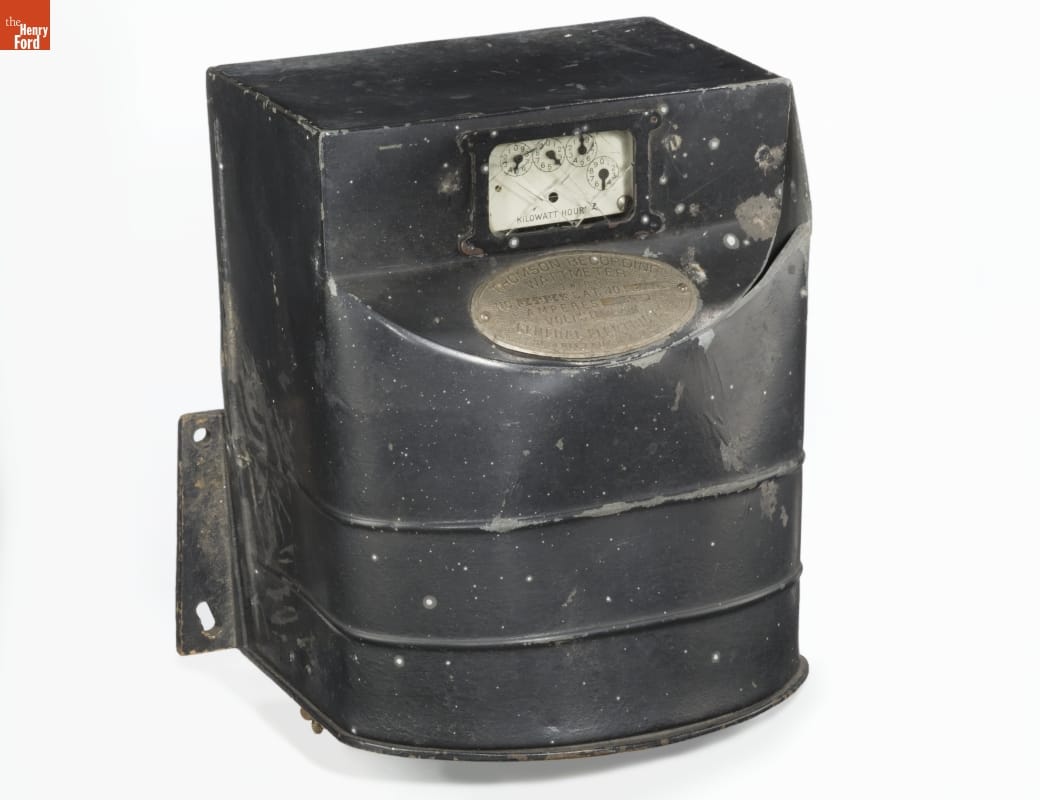
- General Electric Thomson Recording Wattmeter, circa 1903 - Elihu Thomson, engineer, inventor and cofounder of the Thomson-Houston Electric Company, developed a commutator-type wattmeter in the late 1880s. His recording watt-hour meter helped transform the nascent electric power industry. The sturdy device provided companies that supplied electricity to consumers a way to accurately track and bill electrical power use.
- circa 1903
- Collections - Artifact
General Electric Thomson Recording Wattmeter, circa 1903
Elihu Thomson, engineer, inventor and cofounder of the Thomson-Houston Electric Company, developed a commutator-type wattmeter in the late 1880s. His recording watt-hour meter helped transform the nascent electric power industry. The sturdy device provided companies that supplied electricity to consumers a way to accurately track and bill electrical power use.
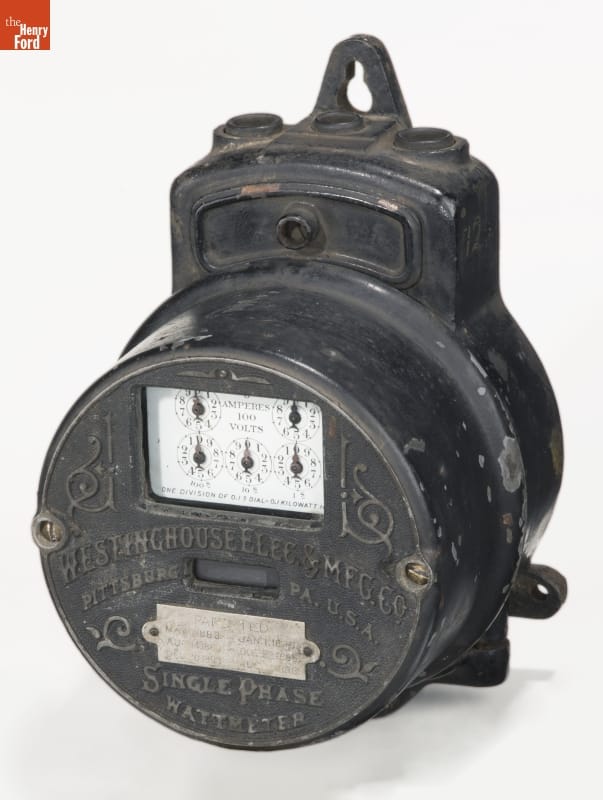
- Westinghouse Type A Wattmeter, circa 1903 - In the late 1800s, companies that supplied electricity to consumers needed a way to measure how much customers used -- and then charge them accordingly. Inventive electrical engineers developed various methods to measure electric power. Induction meters that employed magnetic fields to rotate a disc or cylinder to register energy usage would become the standard. Continued improvements made these wattmeters more compact and reliable.
- circa 1903
- Collections - Artifact
Westinghouse Type A Wattmeter, circa 1903
In the late 1800s, companies that supplied electricity to consumers needed a way to measure how much customers used -- and then charge them accordingly. Inventive electrical engineers developed various methods to measure electric power. Induction meters that employed magnetic fields to rotate a disc or cylinder to register energy usage would become the standard. Continued improvements made these wattmeters more compact and reliable.
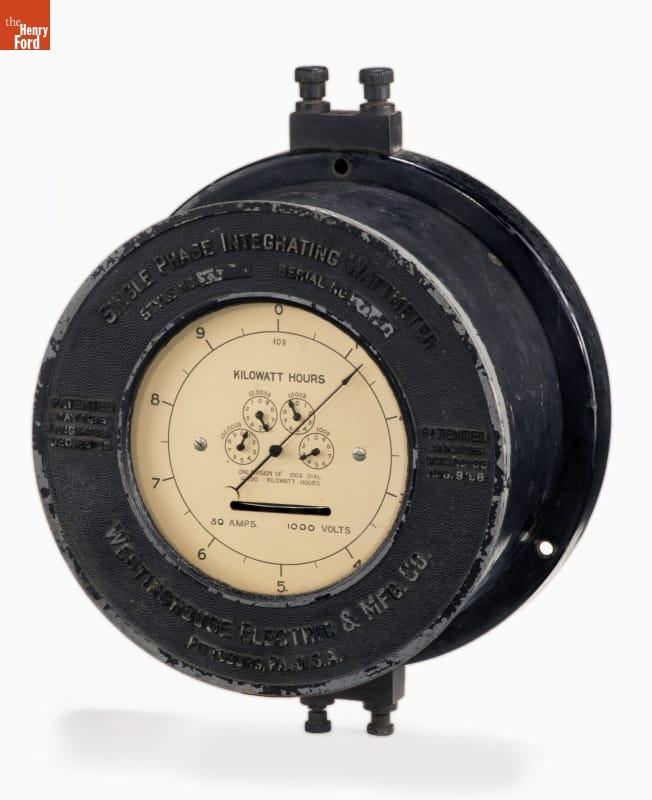
- Westinghouse Type C Switchboard Wattmeter, 1906-1911 - In the late 1800s, companies that supplied electricity to consumers needed a way to measure how much customers used -- and then charge them accordingly. Inventive electrical engineers developed various methods to measure electric power. Induction meters that employed magnetic fields to rotate a disc or cylinder to register energy usage would become the standard. Continued improvements made these wattmeters more compact and reliable.
- 1906-1911
- Collections - Artifact
Westinghouse Type C Switchboard Wattmeter, 1906-1911
In the late 1800s, companies that supplied electricity to consumers needed a way to measure how much customers used -- and then charge them accordingly. Inventive electrical engineers developed various methods to measure electric power. Induction meters that employed magnetic fields to rotate a disc or cylinder to register energy usage would become the standard. Continued improvements made these wattmeters more compact and reliable.
- Sangamo Electric Company Gutmann Type B Wattmeter, 1901-1903 - In the late 1800s, companies that supplied electricity to consumers needed a way to measure how much customers used -- and then charge them accordingly. Ludwig Gutmann, one of several inventive electrical engineers who designed meters to calculate power usage, developed this induction-type wattmeter for Sangamo Electric Company. U.S. production of this meter stopped after courts ruled that it infringed on existing patents held by Westinghouse.
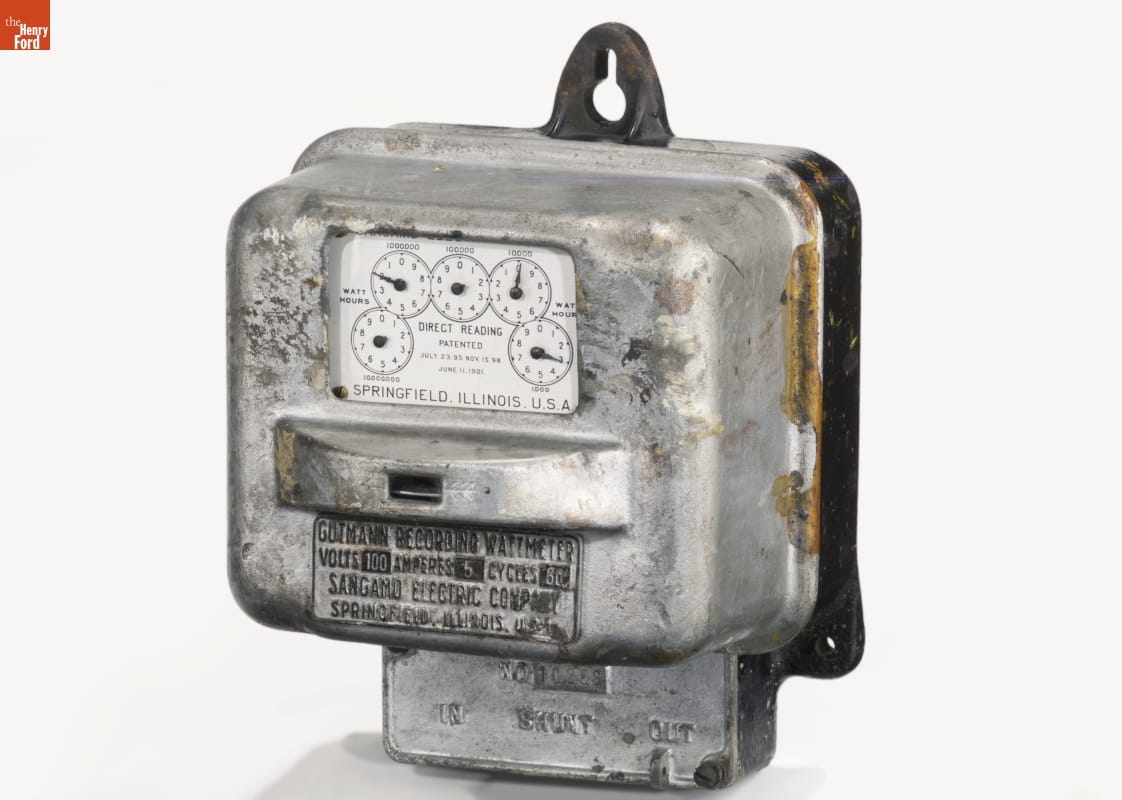
- 1901-1903
- Collections - Artifact
Sangamo Electric Company Gutmann Type B Wattmeter, 1901-1903
In the late 1800s, companies that supplied electricity to consumers needed a way to measure how much customers used -- and then charge them accordingly. Ludwig Gutmann, one of several inventive electrical engineers who designed meters to calculate power usage, developed this induction-type wattmeter for Sangamo Electric Company. U.S. production of this meter stopped after courts ruled that it infringed on existing patents held by Westinghouse.
- General Electric Type IP-5 Prepayment Wattmeter, 1916-1926 -
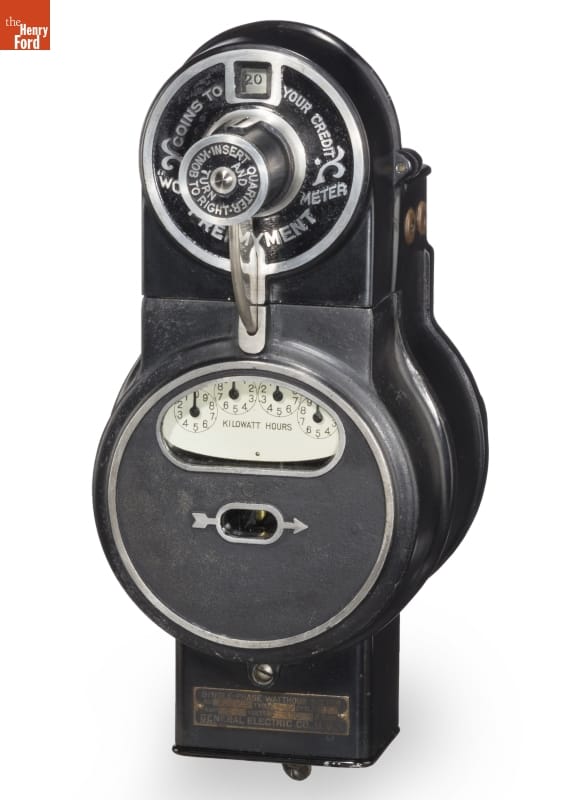
- 1916-1926
- Collections - Artifact
General Electric Type IP-5 Prepayment Wattmeter, 1916-1926
- Fort Wayne Type K Wattmeter, circa 1903 - In the late 1800s, companies that supplied electricity to consumers needed a way to measure how much customers used -- and then charge them accordingly. Inventive electrical engineers developed various methods to measure electric power. Induction meters that employed magnetic fields to rotate a disc or cylinder to register energy usage would become the standard. Continued improvements made these wattmeters more compact and reliable.
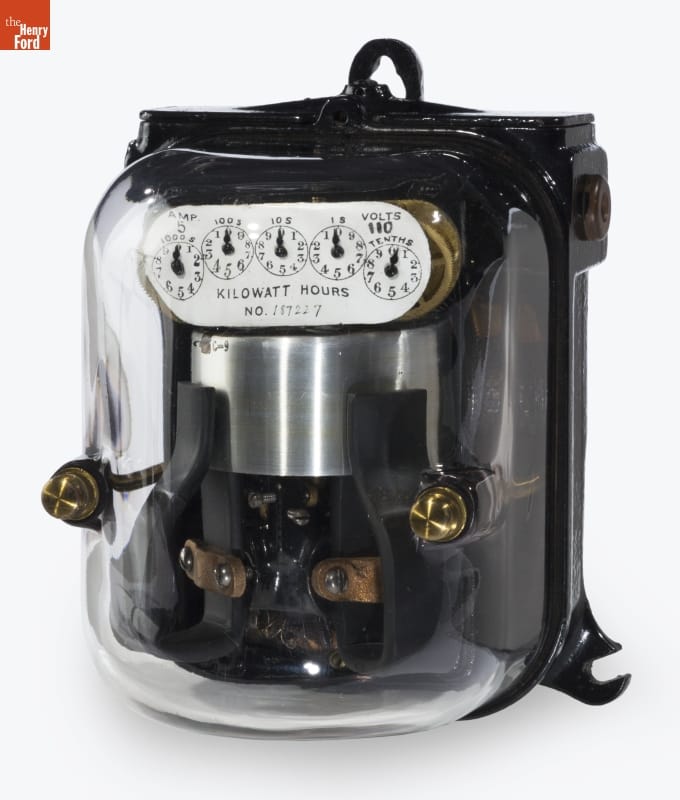
- circa 1903
- Collections - Artifact
Fort Wayne Type K Wattmeter, circa 1903
In the late 1800s, companies that supplied electricity to consumers needed a way to measure how much customers used -- and then charge them accordingly. Inventive electrical engineers developed various methods to measure electric power. Induction meters that employed magnetic fields to rotate a disc or cylinder to register energy usage would become the standard. Continued improvements made these wattmeters more compact and reliable.
- Siemens & Halske Duncan Type A Wattmeter, 1899-1900 - In the late 1800s, companies that supplied electricity to consumers developed wattmeters to measure how much power customers used so they could charge appropriate usage rates. Thomas Duncan created wattmeters bearing his name for several companies in the late 1890s. Duncan worked for the American branch of the German company Siemens & Halske beginning in 1899 before starting his own meter manufacturing business in 1901.
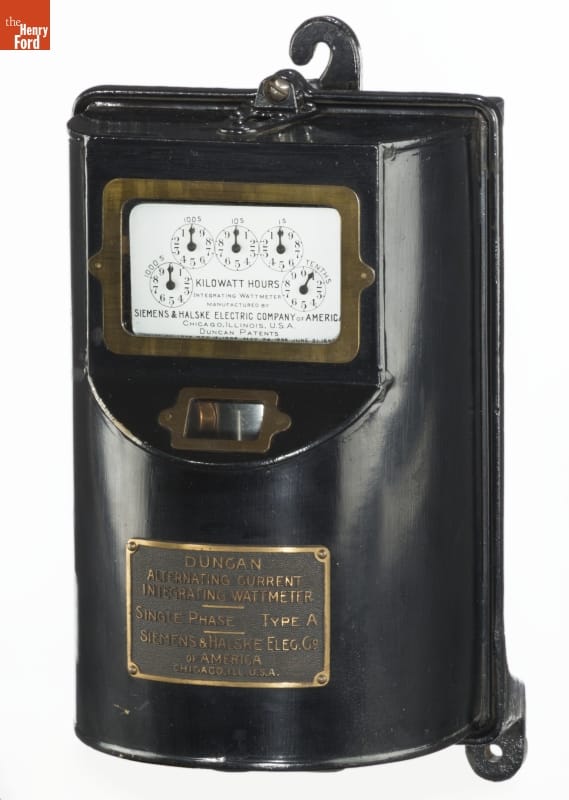
- 1899-1900
- Collections - Artifact
Siemens & Halske Duncan Type A Wattmeter, 1899-1900
In the late 1800s, companies that supplied electricity to consumers developed wattmeters to measure how much power customers used so they could charge appropriate usage rates. Thomas Duncan created wattmeters bearing his name for several companies in the late 1890s. Duncan worked for the American branch of the German company Siemens & Halske beginning in 1899 before starting his own meter manufacturing business in 1901.
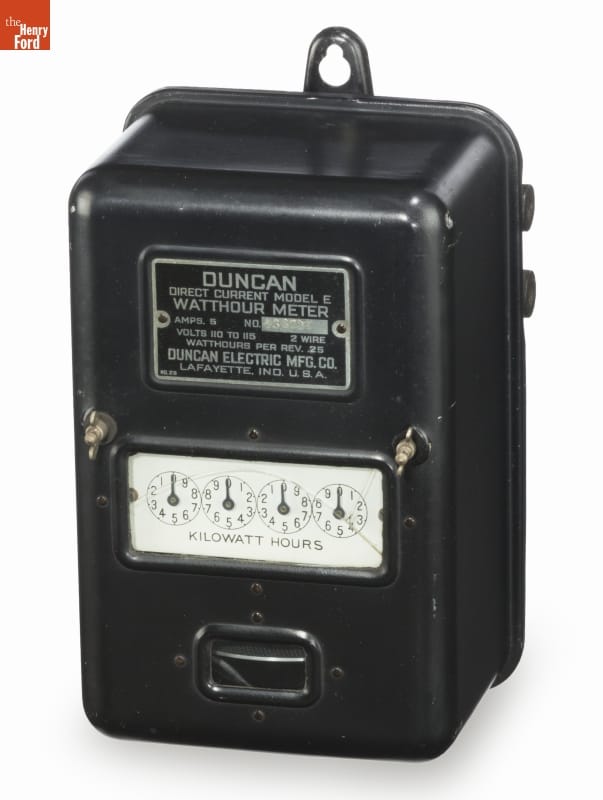
- Duncan Model E Wattmeter, 1925-1930 - In the late 1800s, companies that supplied electricity to consumers needed a way to measure how much customers used--and then charge them accordingly. Thomas Duncan developed wattmeters for several companies before starting his own meter manufacturing business in 1901. Duncan came out with the Model E in 1908 and produce it over the next several decades.
- 1925-1930
- Collections - Artifact
Duncan Model E Wattmeter, 1925-1930
In the late 1800s, companies that supplied electricity to consumers needed a way to measure how much customers used--and then charge them accordingly. Thomas Duncan developed wattmeters for several companies before starting his own meter manufacturing business in 1901. Duncan came out with the Model E in 1908 and produce it over the next several decades.
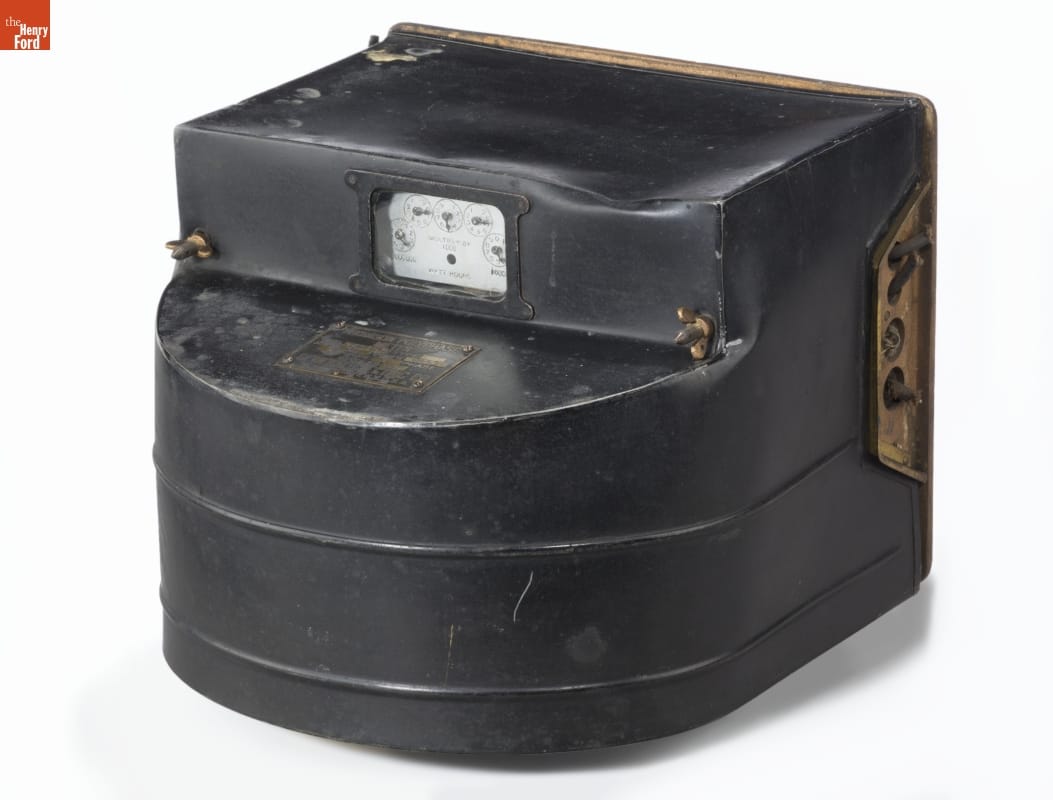
- General Electric Thomson Polyphase Meter, 1899-1905 -
- 1899-1905
- Collections - Artifact
General Electric Thomson Polyphase Meter, 1899-1905