
Search
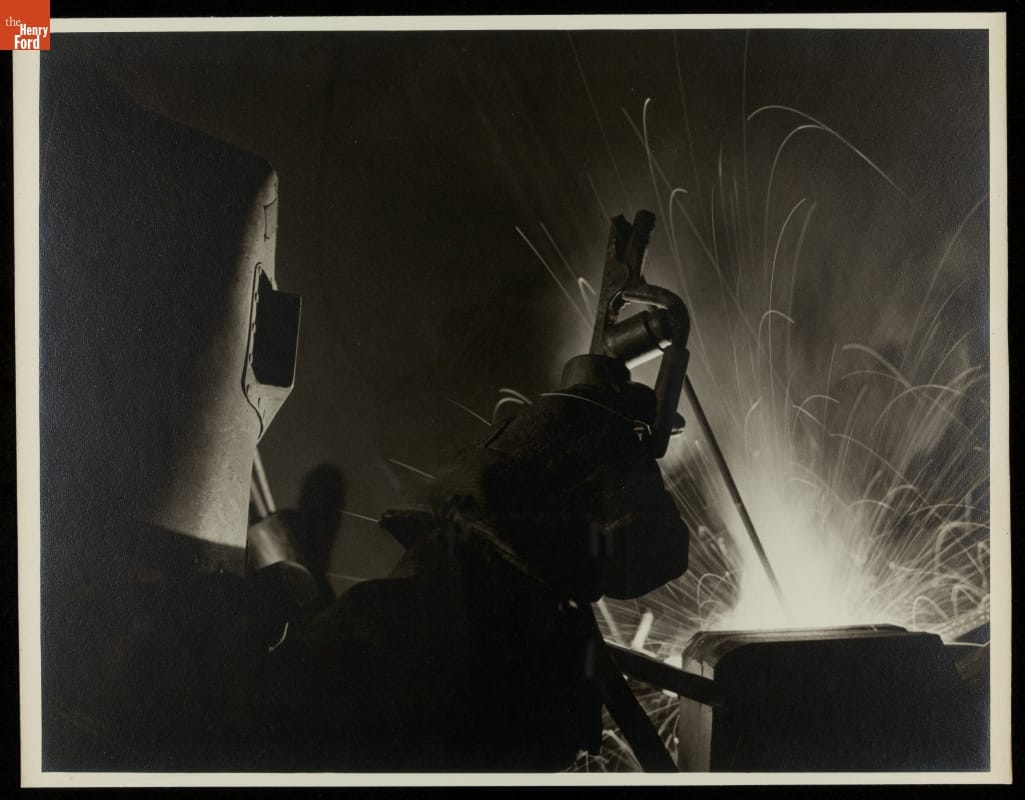
- Welder at Work, circa 1945 -
- circa 1945
- Collections - Artifact
Welder at Work, circa 1945
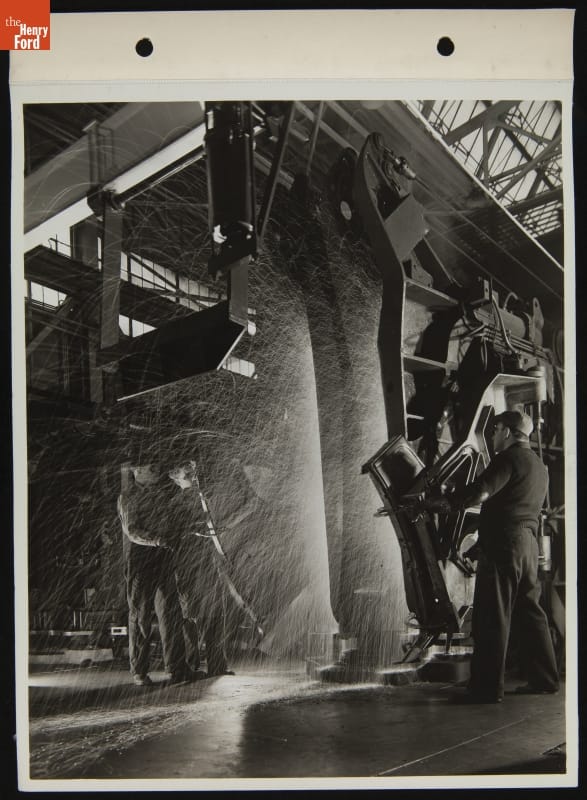
- Welding Body Panels at Ford Rouge Plant, 1936 - At its peak in the 1930s, Ford Motor Company's massive Rouge factory employed more than 100,000 workers. The complex included more than 15 million square feet of floor space and 120 miles of conveyors that turned out a new car every 49 seconds. In 1936, when this photo was taken, the people of Ford built more than 790,000 automobiles.
- 1936
- Collections - Artifact
Welding Body Panels at Ford Rouge Plant, 1936
At its peak in the 1930s, Ford Motor Company's massive Rouge factory employed more than 100,000 workers. The complex included more than 15 million square feet of floor space and 120 miles of conveyors that turned out a new car every 49 seconds. In 1936, when this photo was taken, the people of Ford built more than 790,000 automobiles.
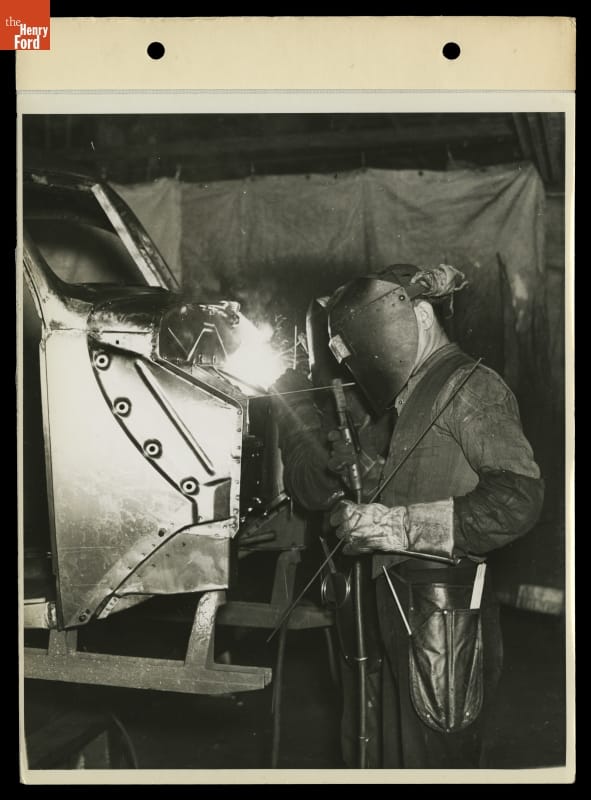
- Welding a Car Body in the 'B' Building, Ford Rouge Plant, 1936 - At its peak in the 1930s, Ford Motor Company's massive Rouge factory employed more than 100,000 workers. The complex included more than 15 million square feet of floor space and 120 miles of conveyors that turned out a new car every 49 seconds. In 1936, when this photo was taken, the people of Ford built more than 790,000 automobiles.
- December 21, 1936
- Collections - Artifact
Welding a Car Body in the 'B' Building, Ford Rouge Plant, 1936
At its peak in the 1930s, Ford Motor Company's massive Rouge factory employed more than 100,000 workers. The complex included more than 15 million square feet of floor space and 120 miles of conveyors that turned out a new car every 49 seconds. In 1936, when this photo was taken, the people of Ford built more than 790,000 automobiles.
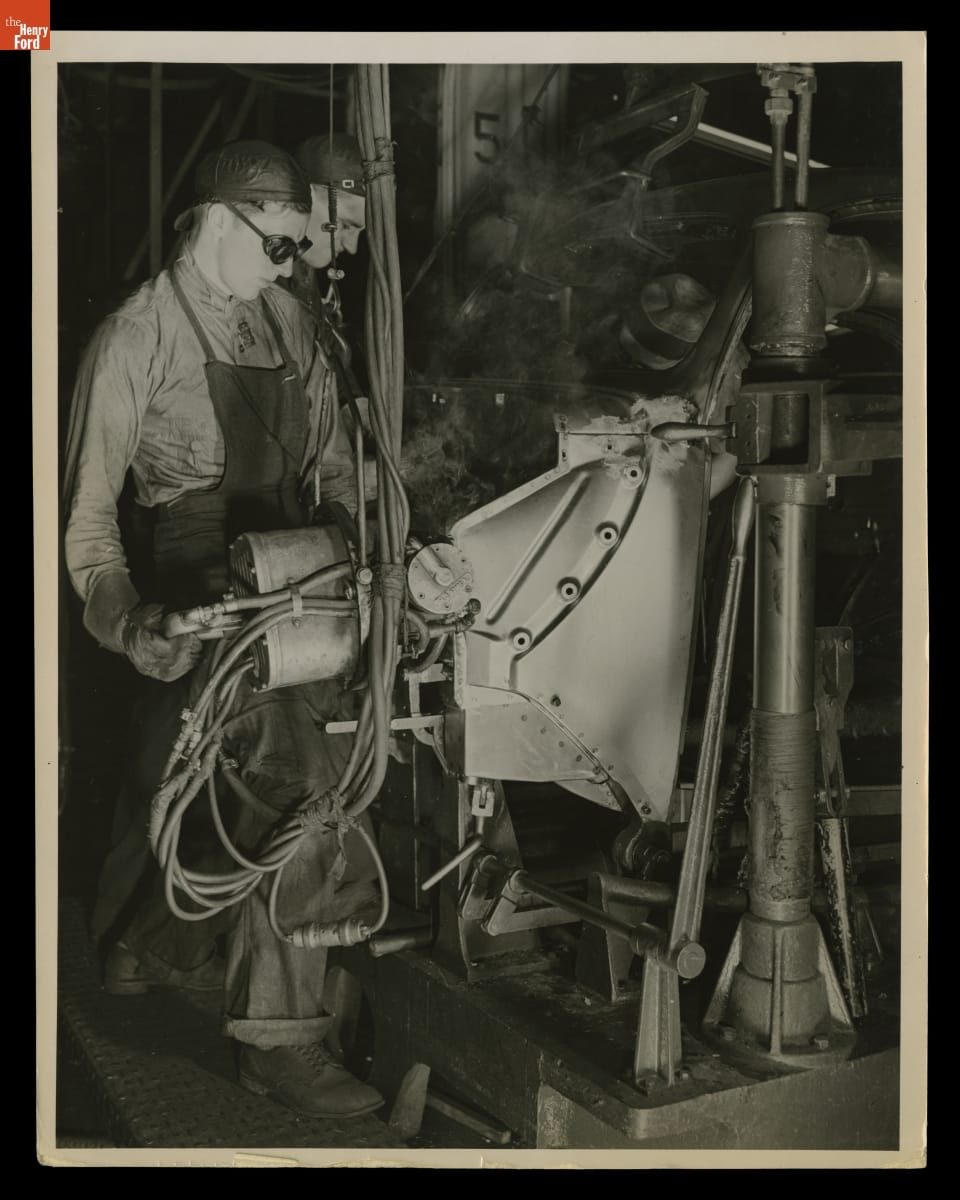
- Worker Welding an Automobile Cowl at the Ford Motor Company Rouge Plant, January 1937 -
- January 07, 1937
- Collections - Artifact
Worker Welding an Automobile Cowl at the Ford Motor Company Rouge Plant, January 1937
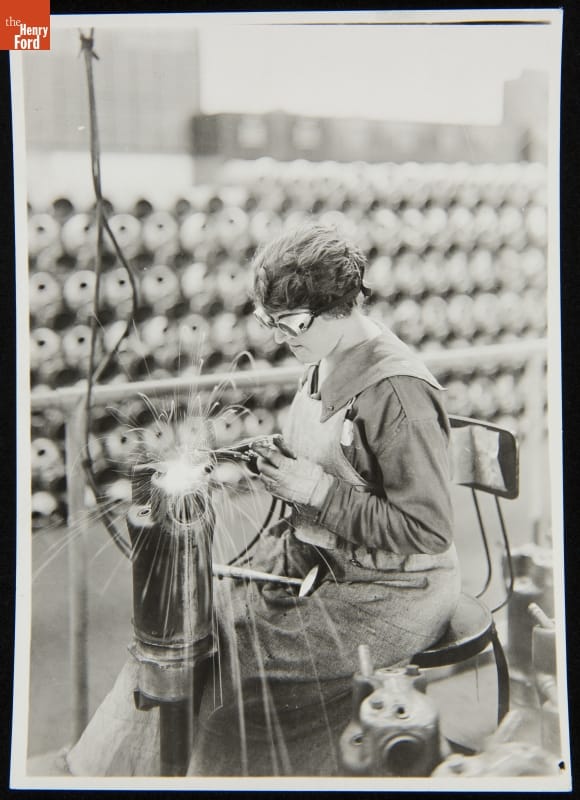
- Women Welder Working on Liberty Engines at the Lincoln Motor Company Plant, circa 1917 - During World War I, American women stepped into jobs traditionally held by men. Women were an important part of the wartime workforce at Lincoln Motor Company. Henry Leland formed Lincoln in 1917 to manufacture Liberty aircraft engines for the Allied Powers. Lincoln employees built 6,500 engines during the war. Packard, Ford, Marmon, Buick, and Cadillac produced Liberty engines too.
- circa 1917
- Collections - Artifact
Women Welder Working on Liberty Engines at the Lincoln Motor Company Plant, circa 1917
During World War I, American women stepped into jobs traditionally held by men. Women were an important part of the wartime workforce at Lincoln Motor Company. Henry Leland formed Lincoln in 1917 to manufacture Liberty aircraft engines for the Allied Powers. Lincoln employees built 6,500 engines during the war. Packard, Ford, Marmon, Buick, and Cadillac produced Liberty engines too.
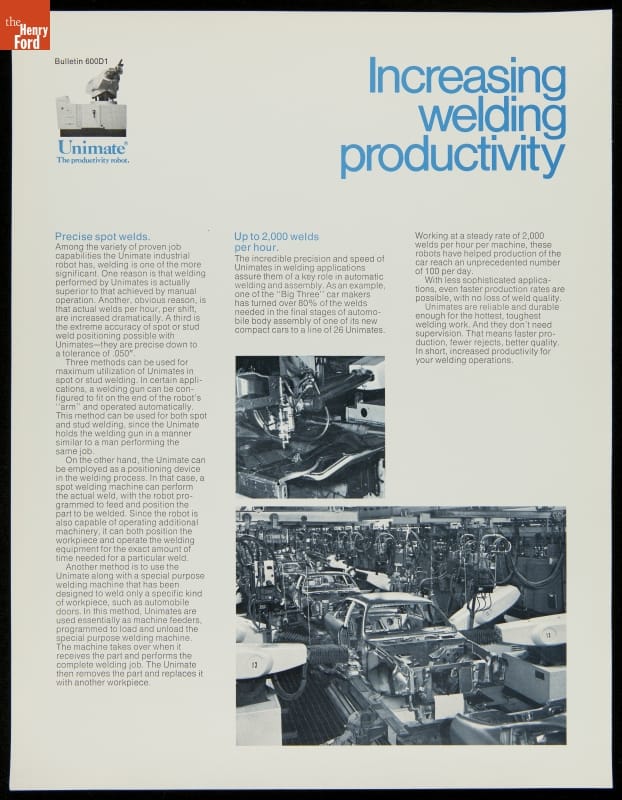
- Increasing Welding Productivity, Unimation Inc., 1971 - George Devol revolutionized manufacturing with his invention of the Unimate -- the world's first industrial robot. These rugged programmable units were designed to perform repetitive, arduous and hazardous tasks. The first Unimate was installed in a General Motors plant in 1961. This brochure, part of a larger archival collection documenting Devol's work, illustrates the functions and uses of his innovative idea.
- 1971
- Collections - Artifact
Increasing Welding Productivity, Unimation Inc., 1971
George Devol revolutionized manufacturing with his invention of the Unimate -- the world's first industrial robot. These rugged programmable units were designed to perform repetitive, arduous and hazardous tasks. The first Unimate was installed in a General Motors plant in 1961. This brochure, part of a larger archival collection documenting Devol's work, illustrates the functions and uses of his innovative idea.
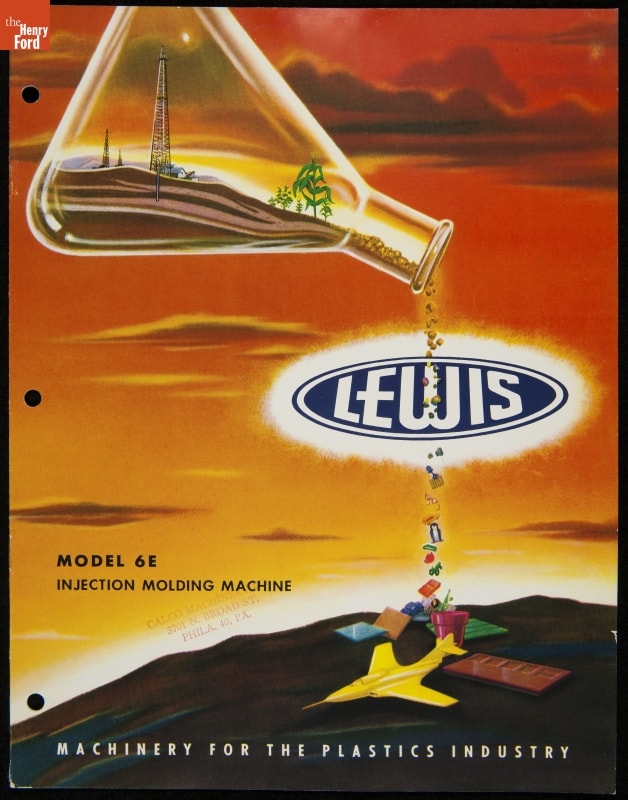
- Model 6E Injection Molding Machine: Machinery for the Plastic Industry, circa 1958 -
- circa 1958
- Collections - Artifact
Model 6E Injection Molding Machine: Machinery for the Plastic Industry, circa 1958
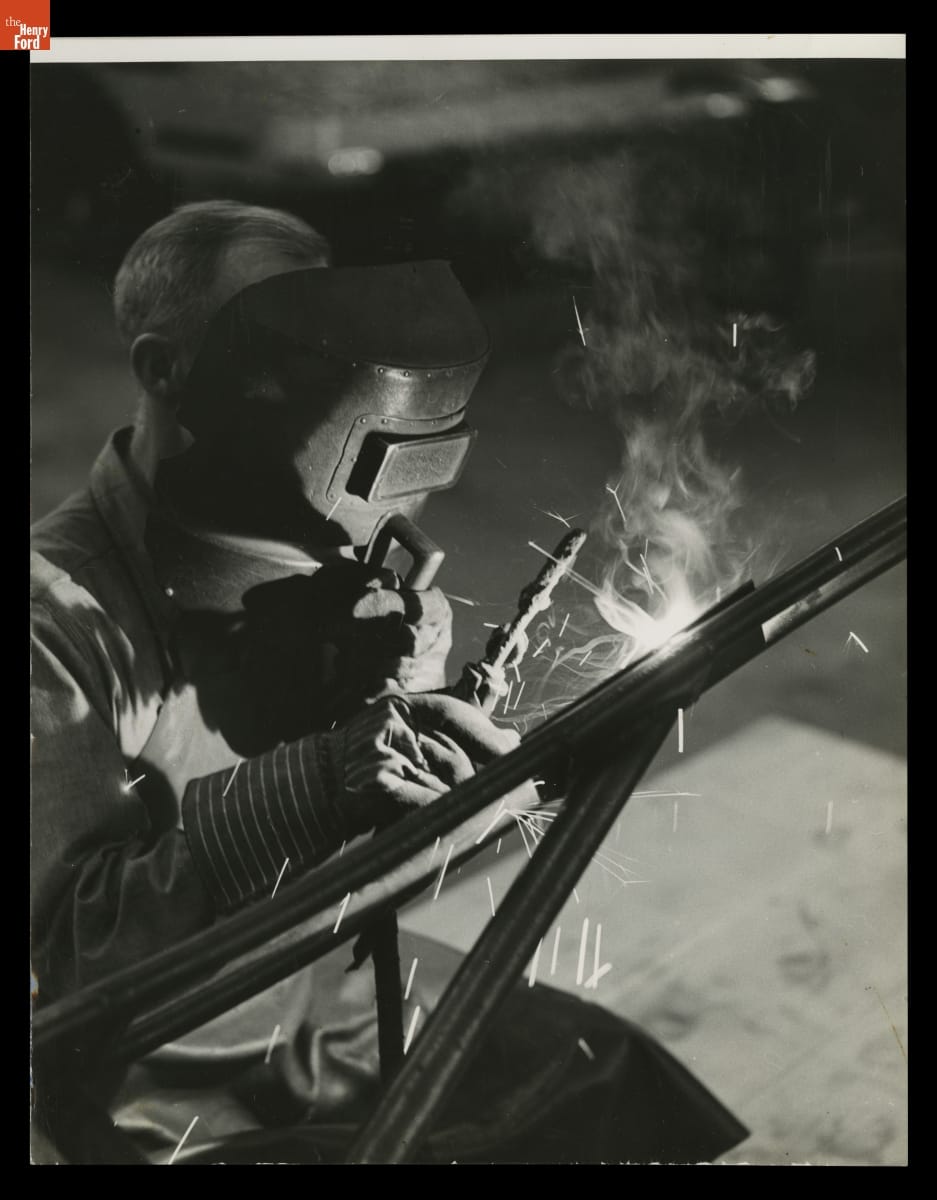
- Welding the Frame for the Soybean Plastic Car, August 1941 - At Henry Ford's direction, Ford Motor Company explored industrial uses for soybeans in the 1930s, and soy-based plastics were used in things like gear shift knobs and horn buttons. In 1941, the company built a car with a soy-plastic body. Beneath its exterior, the "soybean car" featured a tubular steel framework with a double-frame-rail chassis that strengthened the experimental automobile.
- August 25, 1941
- Collections - Artifact
Welding the Frame for the Soybean Plastic Car, August 1941
At Henry Ford's direction, Ford Motor Company explored industrial uses for soybeans in the 1930s, and soy-based plastics were used in things like gear shift knobs and horn buttons. In 1941, the company built a car with a soy-plastic body. Beneath its exterior, the "soybean car" featured a tubular steel framework with a double-frame-rail chassis that strengthened the experimental automobile.
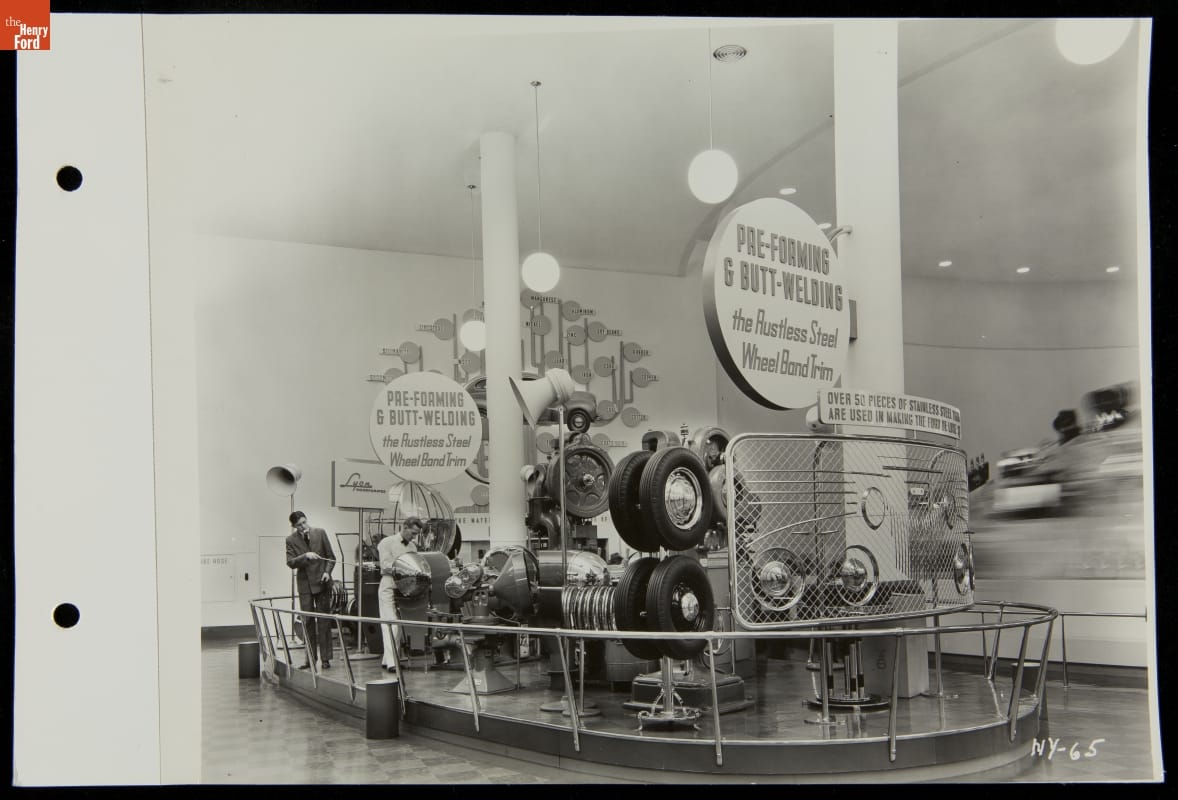
- "Pre-Forming & Butt Welding" Display, Ford Exposition, New York World's Fair, 1939 - Ford Motor Company poured resources into the 1939-40 New York World's Fair, spending more than $5 million to construct and maintain its elaborate and well-attended exhibition space. Ford's massive exhibition building attracted fairgoers with industrial demonstrations and informative displays, such as this exhibit in the industrial hall.
- May 03, 1939
- Collections - Artifact
"Pre-Forming & Butt Welding" Display, Ford Exposition, New York World's Fair, 1939
Ford Motor Company poured resources into the 1939-40 New York World's Fair, spending more than $5 million to construct and maintain its elaborate and well-attended exhibition space. Ford's massive exhibition building attracted fairgoers with industrial demonstrations and informative displays, such as this exhibit in the industrial hall.
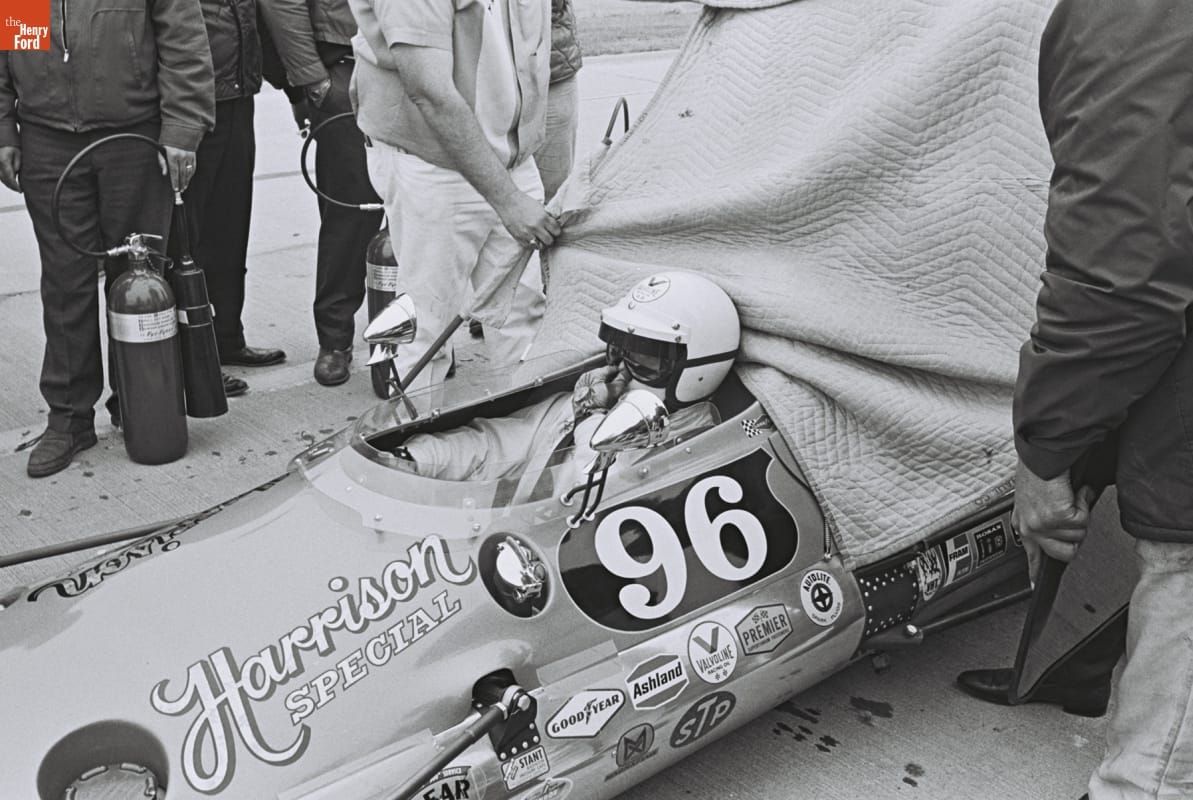
- 1967 Indianapolis 500 -- Item 675 - Greg Weld competed in 36 Champ Car races from 1965 to 1973 and earned four poles by qualifying with the fastest time. He won the USAC Sprint Car championship in 1967. Weld made seven attempts to qualify for the Indianapolis 500 but only succeeded in 1970. He founded Weld Wheels, a popular manufacturer of aftermarket racing wheels, in 1967.
- May 01, 1967
- Collections - Artifact
1967 Indianapolis 500 -- Item 675
Greg Weld competed in 36 Champ Car races from 1965 to 1973 and earned four poles by qualifying with the fastest time. He won the USAC Sprint Car championship in 1967. Weld made seven attempts to qualify for the Indianapolis 500 but only succeeded in 1970. He founded Weld Wheels, a popular manufacturer of aftermarket racing wheels, in 1967.