
Search
- Westcott Race Car Driven by Harry Knight at the 1911 Indianapolis 500 Race, Photograph Taken by Henry Ford - Indianapolis Motor Speedway opened in 1909 with multiple races each season. In 1911, track promoters decided instead to host just one spectacular event each Memorial Day. The inaugural Indianapolis 500-Mile Race, with $27,500 in prizes, drew 40 qualifying cars and 80,000 spectators. Ray Harroun won with the yellow #32 Marmon Wasp, and the Indianapolis 500 became an American institution.

- 1911
- Collections - Artifact
Westcott Race Car Driven by Harry Knight at the 1911 Indianapolis 500 Race, Photograph Taken by Henry Ford
Indianapolis Motor Speedway opened in 1909 with multiple races each season. In 1911, track promoters decided instead to host just one spectacular event each Memorial Day. The inaugural Indianapolis 500-Mile Race, with $27,500 in prizes, drew 40 qualifying cars and 80,000 spectators. Ray Harroun won with the yellow #32 Marmon Wasp, and the Indianapolis 500 became an American institution.
- Westcott Hubcap, 1916-1925 - Early automobile wheels had a central hub with a greased wheel bearing. Hub caps kept grease in and dust out. As wheels evolved and hubcaps became functionally unnecessary, they remained important to both manufacturers -- who branded wheel covers with maker names or logos -- and consumers -- who identified with hubcaps as statements about their cars and themselves.
- 1916-1925
- Collections - Artifact
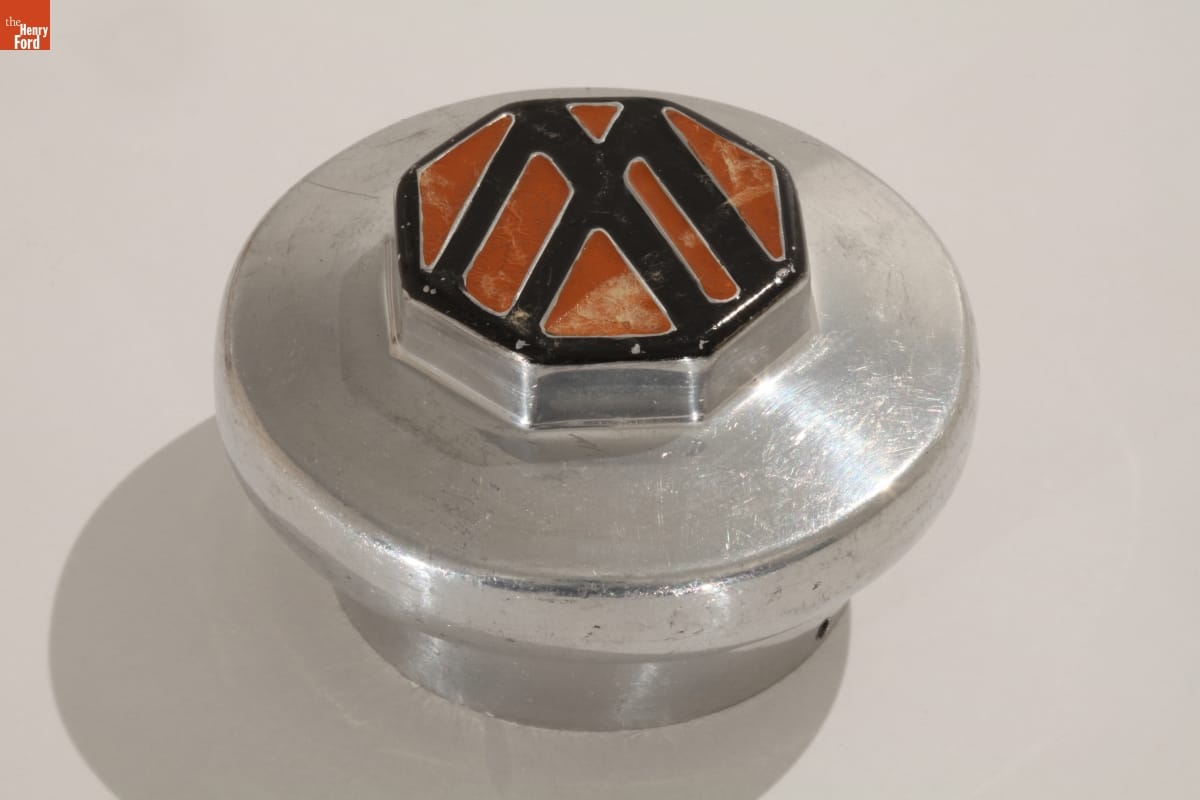
Westcott Hubcap, 1916-1925
Early automobile wheels had a central hub with a greased wheel bearing. Hub caps kept grease in and dust out. As wheels evolved and hubcaps became functionally unnecessary, they remained important to both manufacturers -- who branded wheel covers with maker names or logos -- and consumers -- who identified with hubcaps as statements about their cars and themselves.
- Westcott Hubcap, 1916-1925 - Early automobile wheels had a central hub with a greased wheel bearing. Hub caps kept grease in and dust out. As wheels evolved and hubcaps became functionally unnecessary, they remained important to both manufacturers -- who branded wheel covers with maker names or logos -- and consumers -- who identified with hubcaps as statements about their cars and themselves.
- 1916-1925
- Collections - Artifact
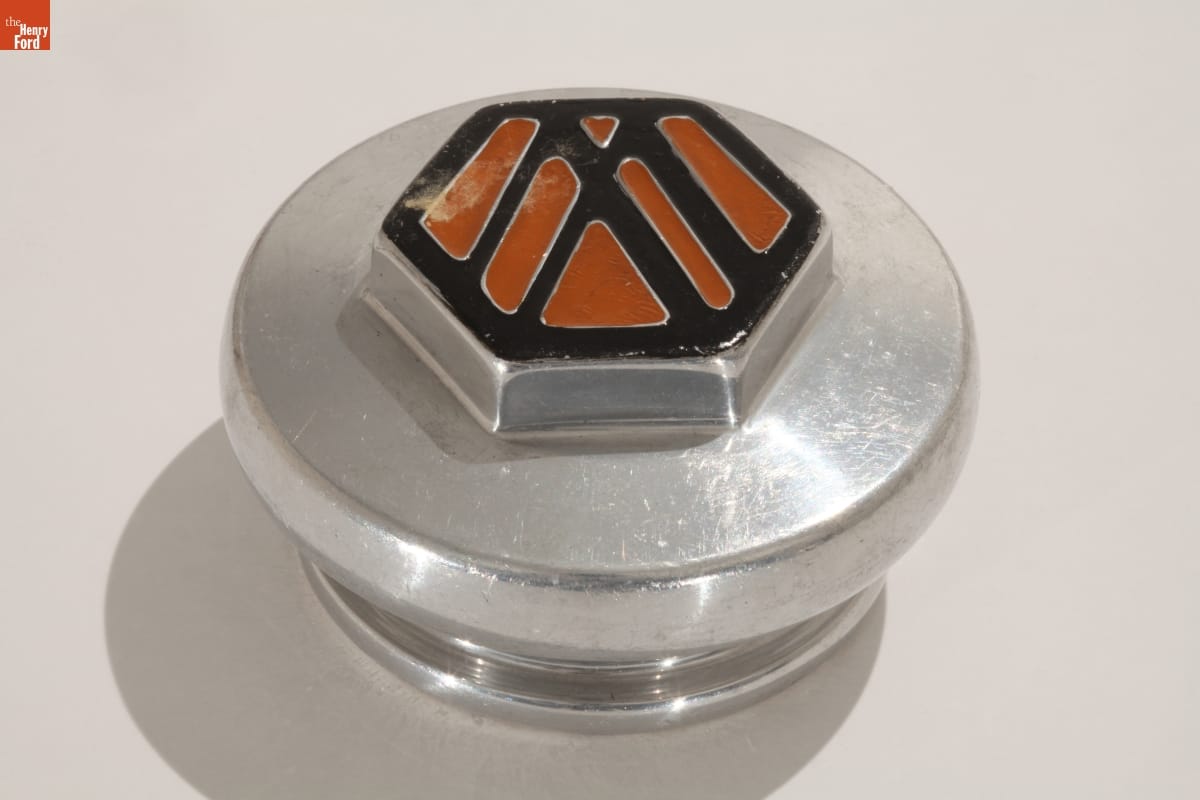
Westcott Hubcap, 1916-1925
Early automobile wheels had a central hub with a greased wheel bearing. Hub caps kept grease in and dust out. As wheels evolved and hubcaps became functionally unnecessary, they remained important to both manufacturers -- who branded wheel covers with maker names or logos -- and consumers -- who identified with hubcaps as statements about their cars and themselves.
- Westcott Hubcap, 1916-1925 - An automobile manufacturer's badge is fundamental to the company's brand identity -- just as the maker's name is often important to <EM>our</EM> identity as consumers and drivers. Early automobile badges tended to be small and often discreetly located; today they have evolved into enlarged, prominently placed, and frequently symmetrical logos -- easy to recognize, even at a glance in a rear-view mirror.
- 1916-1925
- Collections - Artifact
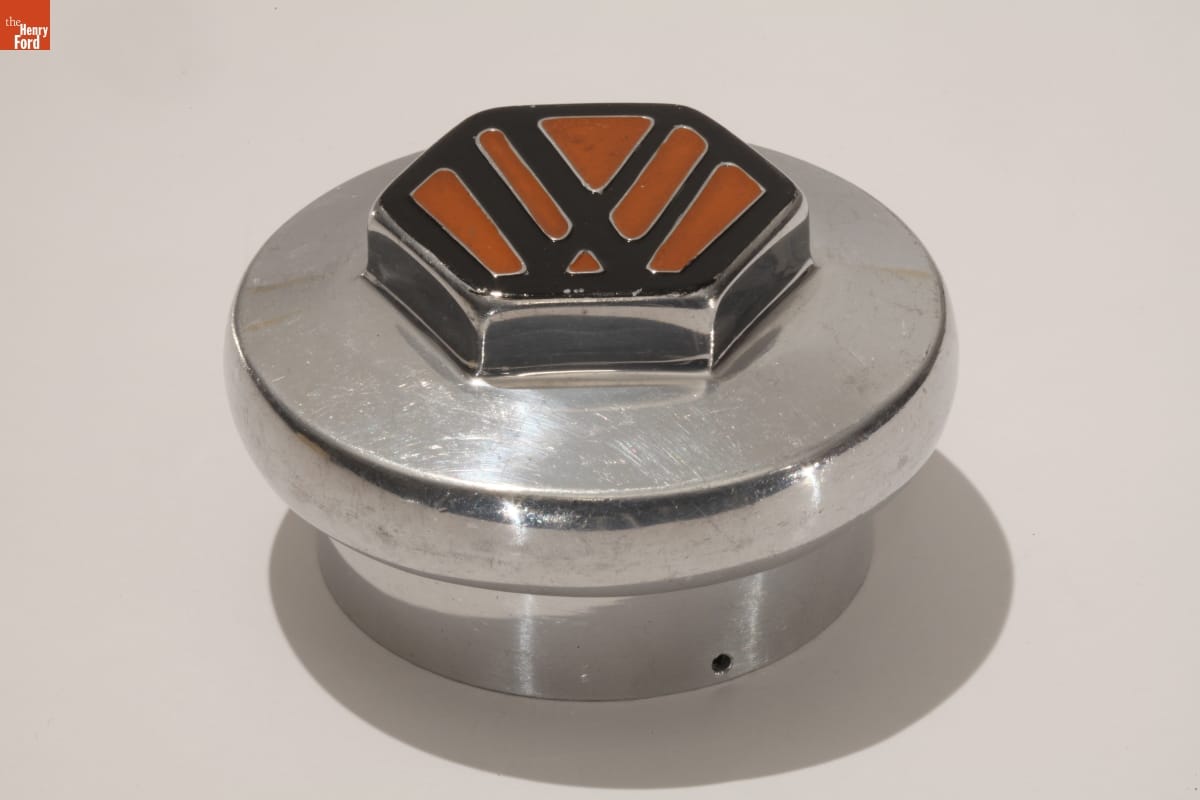
Westcott Hubcap, 1916-1925
An automobile manufacturer's badge is fundamental to the company's brand identity -- just as the maker's name is often important to our identity as consumers and drivers. Early automobile badges tended to be small and often discreetly located; today they have evolved into enlarged, prominently placed, and frequently symmetrical logos -- easy to recognize, even at a glance in a rear-view mirror.