
Search
- American Legion Employees with Wheelchairs Purchased for Percy Jones Veterans Hospital with Muster Out Pay, March 1944 - In August 1942, the United States Army purchased the former main building of John Harvey Kellogg's Battle Creek, Michigan, sanitarium. It was remodeled and rededicated as Percy Jones Army Hospital. By the end of World War II, the hospital and its associated facilities were the Army's largest medical installation. Reactivated during the Korean War, Percy Jones closed permanently in 1954.
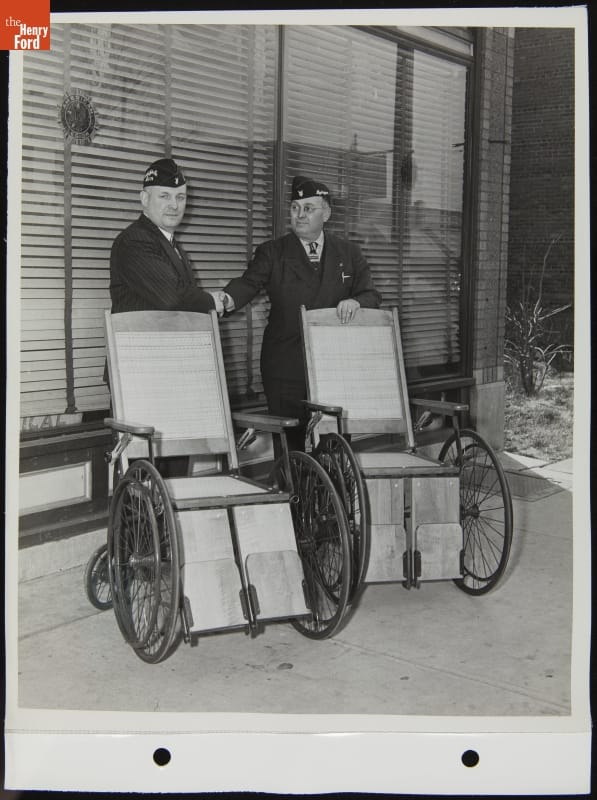
- March 22, 1944
- Collections - Artifact
American Legion Employees with Wheelchairs Purchased for Percy Jones Veterans Hospital with Muster Out Pay, March 1944
In August 1942, the United States Army purchased the former main building of John Harvey Kellogg's Battle Creek, Michigan, sanitarium. It was remodeled and rededicated as Percy Jones Army Hospital. By the end of World War II, the hospital and its associated facilities were the Army's largest medical installation. Reactivated during the Korean War, Percy Jones closed permanently in 1954.
- Children's Christmas Party with Santa Claus, Henry Ford Hospital, December 25, 1945 - Henry Ford Hospital opened in Detroit, Michigan, in 1915. While its namesake, auto magnate Henry Ford, was the hospital's primary benefactor, others made their own contributions. In 1930, oil refiner Harry B. Earhart established a fund to purchase presents for all children, and many adults, who were in the hospital during the Christmas holiday. Earhart's fund continued for 20 years.
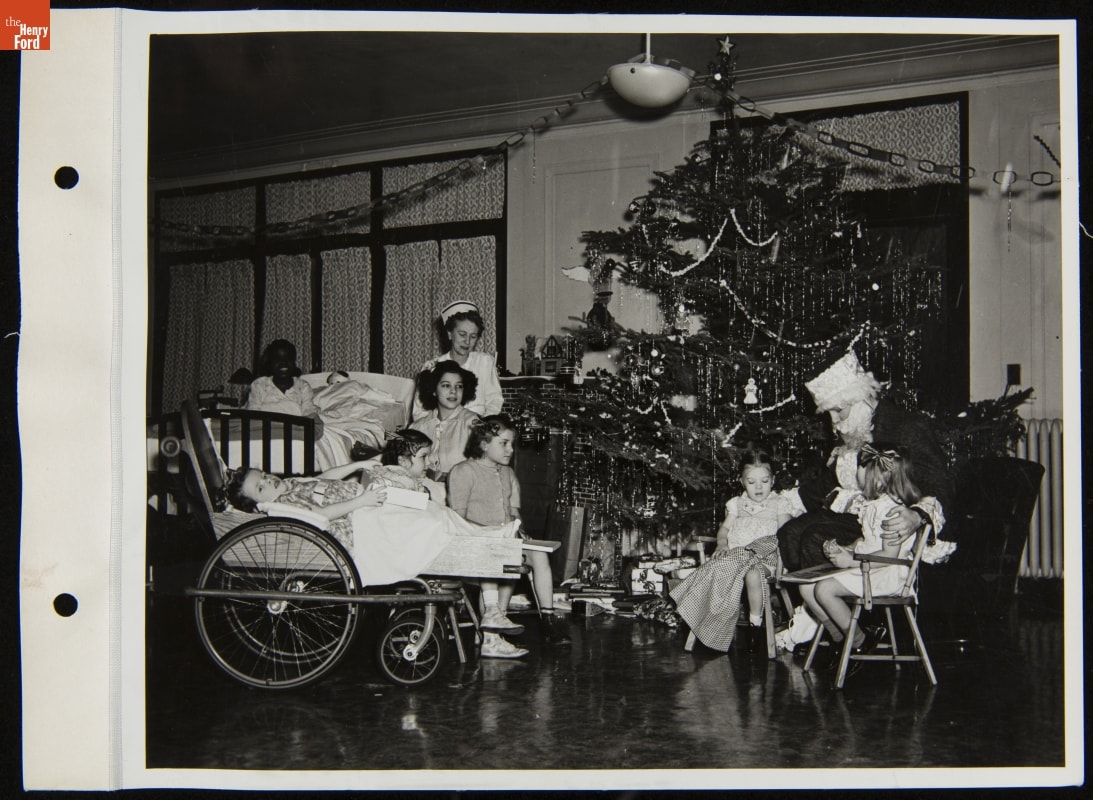
- December 25, 1946
- Collections - Artifact
Children's Christmas Party with Santa Claus, Henry Ford Hospital, December 25, 1945
Henry Ford Hospital opened in Detroit, Michigan, in 1915. While its namesake, auto magnate Henry Ford, was the hospital's primary benefactor, others made their own contributions. In 1930, oil refiner Harry B. Earhart established a fund to purchase presents for all children, and many adults, who were in the hospital during the Christmas holiday. Earhart's fund continued for 20 years.
- American Legion Employee with Wheelchairs Purchased for Percy Jones Veterans Hospital with Muster Out Pay, March 1944 - In August 1942, the United States Army purchased the former main building of John Harvey Kellogg's Battle Creek, Michigan, sanitarium. It was remodeled and rededicated as Percy Jones Army Hospital. By the end of World War II, the hospital and its associated facilities were the Army's largest medical installation. Reactivated during the Korean War, Percy Jones closed permanently in 1954.
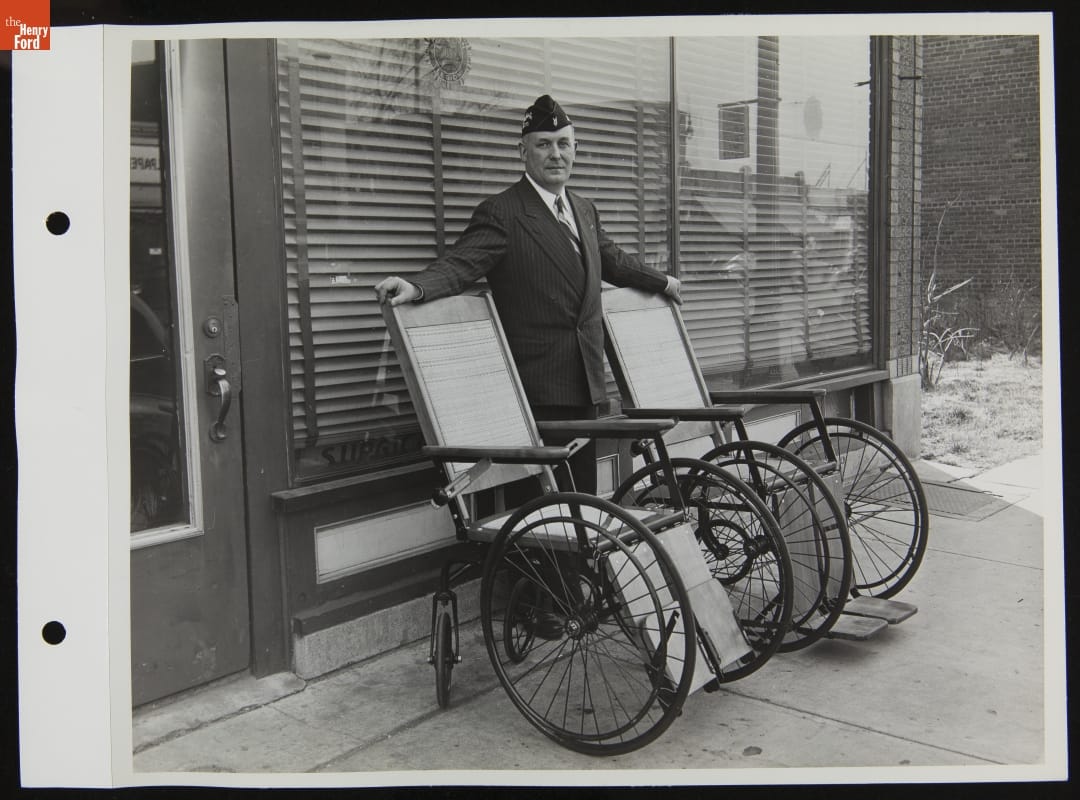
- March 22, 1944
- Collections - Artifact
American Legion Employee with Wheelchairs Purchased for Percy Jones Veterans Hospital with Muster Out Pay, March 1944
In August 1942, the United States Army purchased the former main building of John Harvey Kellogg's Battle Creek, Michigan, sanitarium. It was remodeled and rededicated as Percy Jones Army Hospital. By the end of World War II, the hospital and its associated facilities were the Army's largest medical installation. Reactivated during the Korean War, Percy Jones closed permanently in 1954.
- Notal Program, 1979 - By the mid-1970s, with a growing elderly population, American disability rights activists advocated for equitable care and accessible environments for all people. Designers, too, began to explore creating objects that worked well for everyone. Michigan-based furniture company Herman Miller embarked upon the Notal project, its first foray into designing specifically for older adults, researching how their day-to-day lives were affected by ill-suited environments.
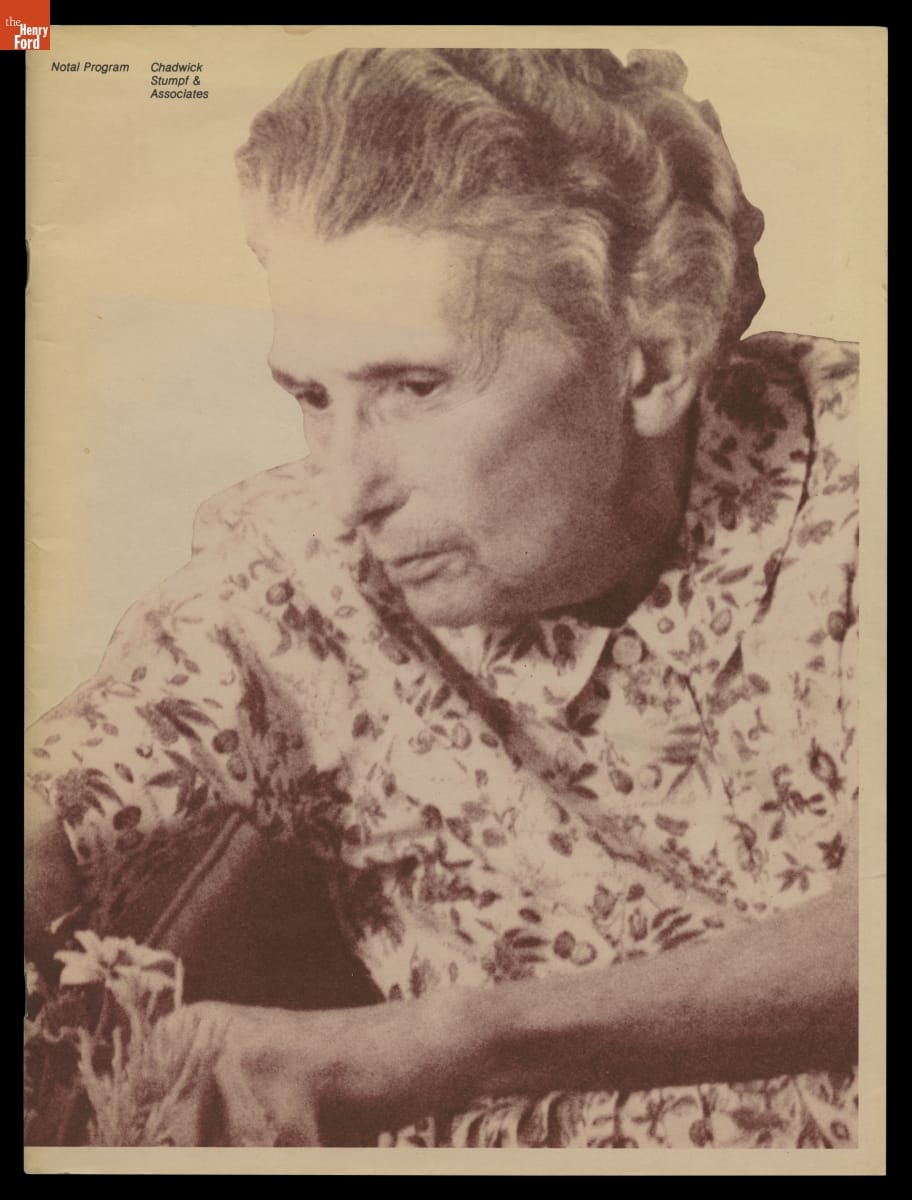
- 1979
- Collections - Artifact
Notal Program, 1979
By the mid-1970s, with a growing elderly population, American disability rights activists advocated for equitable care and accessible environments for all people. Designers, too, began to explore creating objects that worked well for everyone. Michigan-based furniture company Herman Miller embarked upon the Notal project, its first foray into designing specifically for older adults, researching how their day-to-day lives were affected by ill-suited environments.
- Sarah Chair Prototype for Exercise Therapy, 1987-1991 -
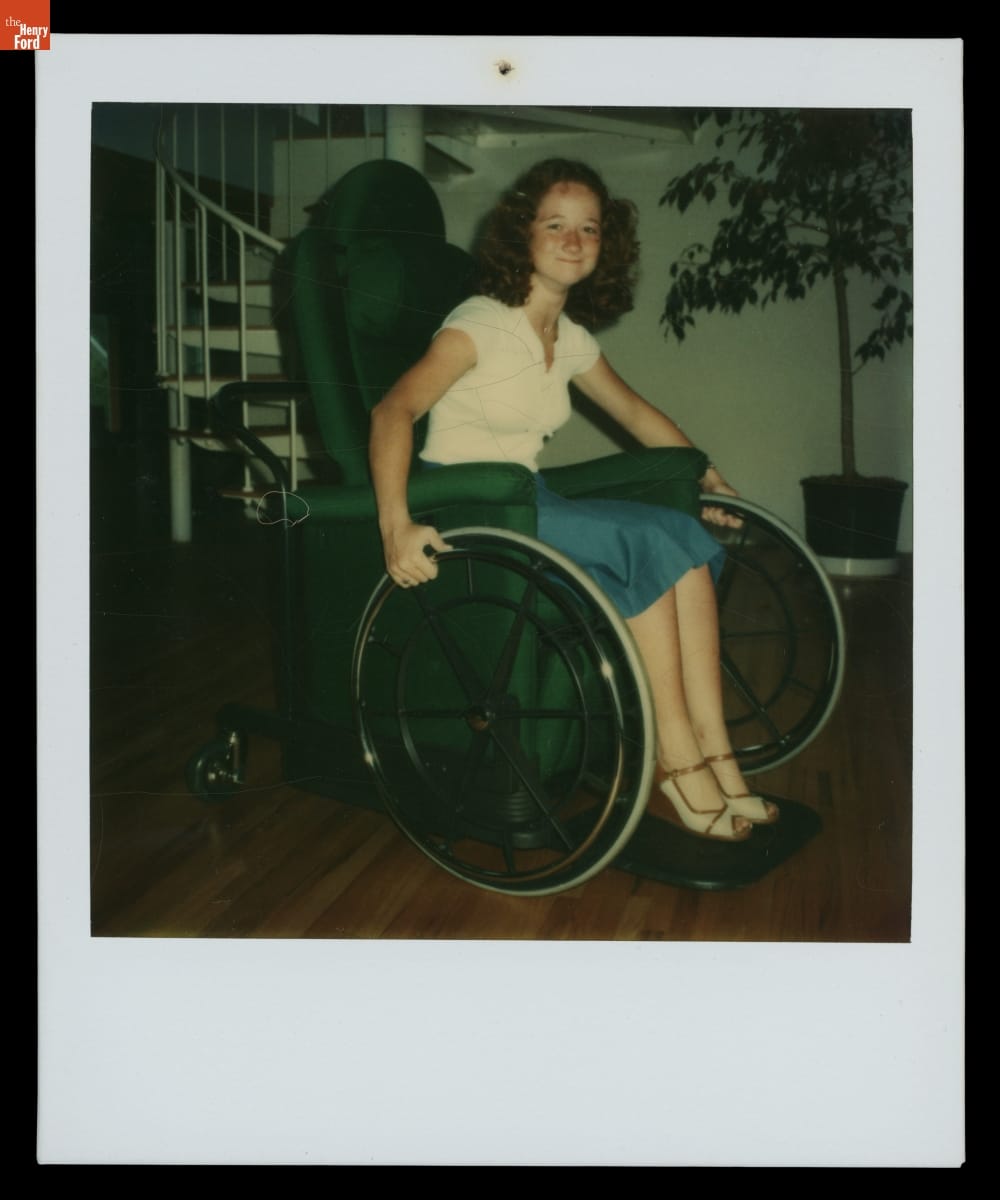
- 1987-1991
- Collections - Artifact
Sarah Chair Prototype for Exercise Therapy, 1987-1991
- Old Woman in Wheelchair, 1890-1915 - In 1890, Jenny Young Chandler, 25 years old and recently widowed, began working for the <EM>New York Herald</EM>. As a photojournalist and feature writer, Chandler captured life in Brooklyn, New York, and vicinity. By 1922, the time of her death, she had produced over 800 glass plate negatives. Her sensitive, insightful photographs depict people from all walks of life and the world in which they lived.
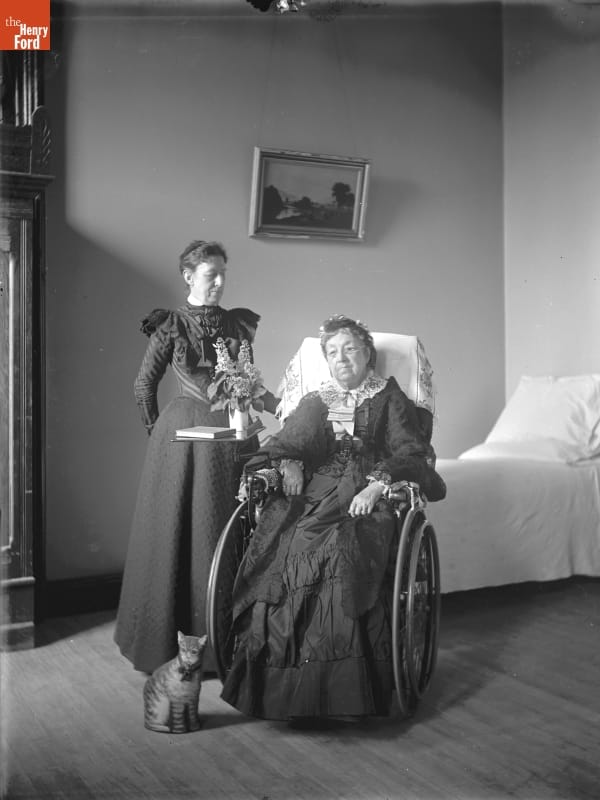
- 1890-1915
- Collections - Artifact
Old Woman in Wheelchair, 1890-1915
In 1890, Jenny Young Chandler, 25 years old and recently widowed, began working for the New York Herald. As a photojournalist and feature writer, Chandler captured life in Brooklyn, New York, and vicinity. By 1922, the time of her death, she had produced over 800 glass plate negatives. Her sensitive, insightful photographs depict people from all walks of life and the world in which they lived.
- Trade Card for A. H. Kimball, Manufacturer of Invalid Wheel Chairs, circa 1900 - In the last third of the nineteenth century, an unprecedented variety of consumer goods and services flooded the American market. Advertisers bombarded potential customers with trade cards. Americans enjoyed and saved the often illustrated little advertisements found in product packages or distributed by local merchants. Many survive as historical records of commercialism in the United States.
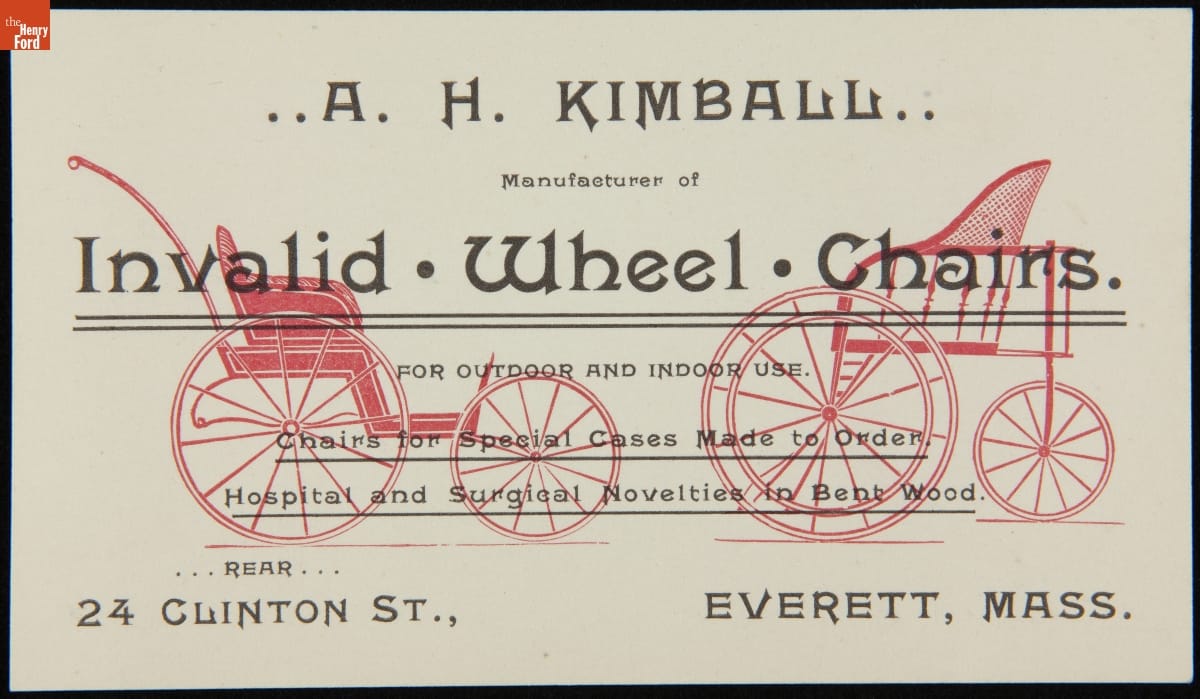
- circa 1900
- Collections - Artifact
Trade Card for A. H. Kimball, Manufacturer of Invalid Wheel Chairs, circa 1900
In the last third of the nineteenth century, an unprecedented variety of consumer goods and services flooded the American market. Advertisers bombarded potential customers with trade cards. Americans enjoyed and saved the often illustrated little advertisements found in product packages or distributed by local merchants. Many survive as historical records of commercialism in the United States.
- American Legion Employee with Wheelchairs Purchased for Percy Jones Veterans Hospital with Muster Out Pay, March 1944 - In August 1942, the United States Army purchased the former main building of John Harvey Kellogg's Battle Creek, Michigan, sanitarium. It was remodeled and rededicated as Percy Jones Army Hospital. By the end of World War II, the hospital and its associated facilities were the Army's largest medical installation. Reactivated during the Korean War, Percy Jones closed permanently in 1954.
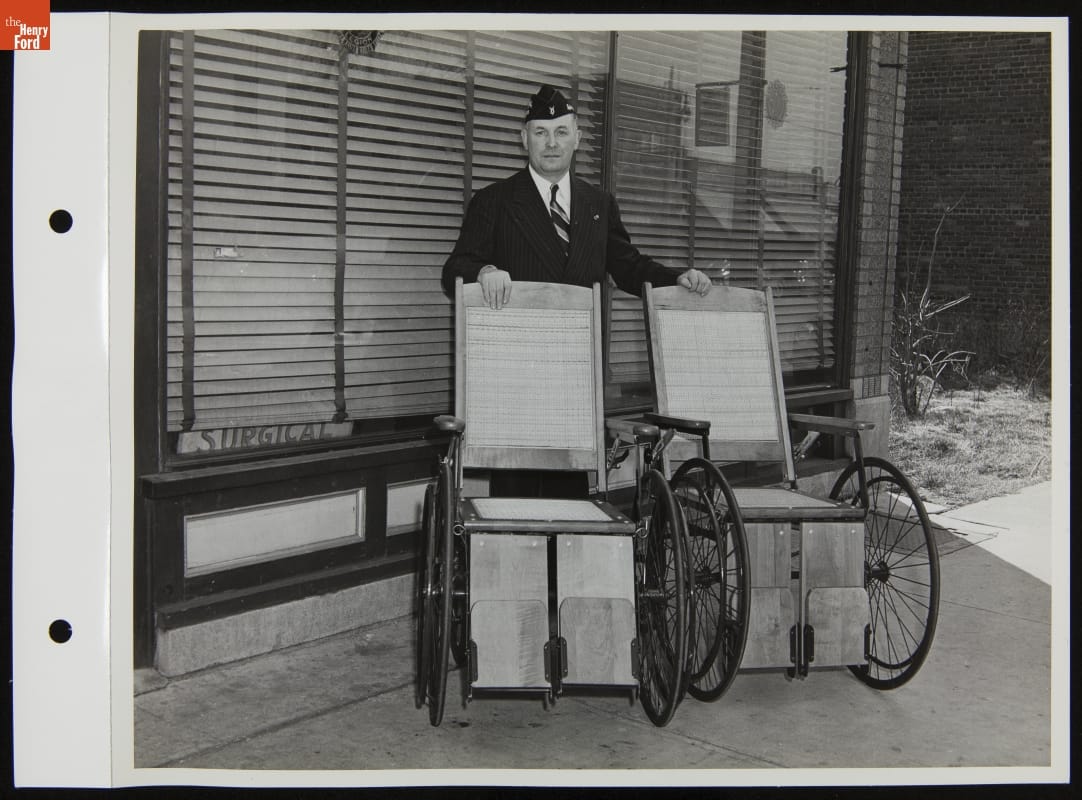
- March 22, 1944
- Collections - Artifact
American Legion Employee with Wheelchairs Purchased for Percy Jones Veterans Hospital with Muster Out Pay, March 1944
In August 1942, the United States Army purchased the former main building of John Harvey Kellogg's Battle Creek, Michigan, sanitarium. It was remodeled and rededicated as Percy Jones Army Hospital. By the end of World War II, the hospital and its associated facilities were the Army's largest medical installation. Reactivated during the Korean War, Percy Jones closed permanently in 1954.
- Wheelchair, 1915-1930 -
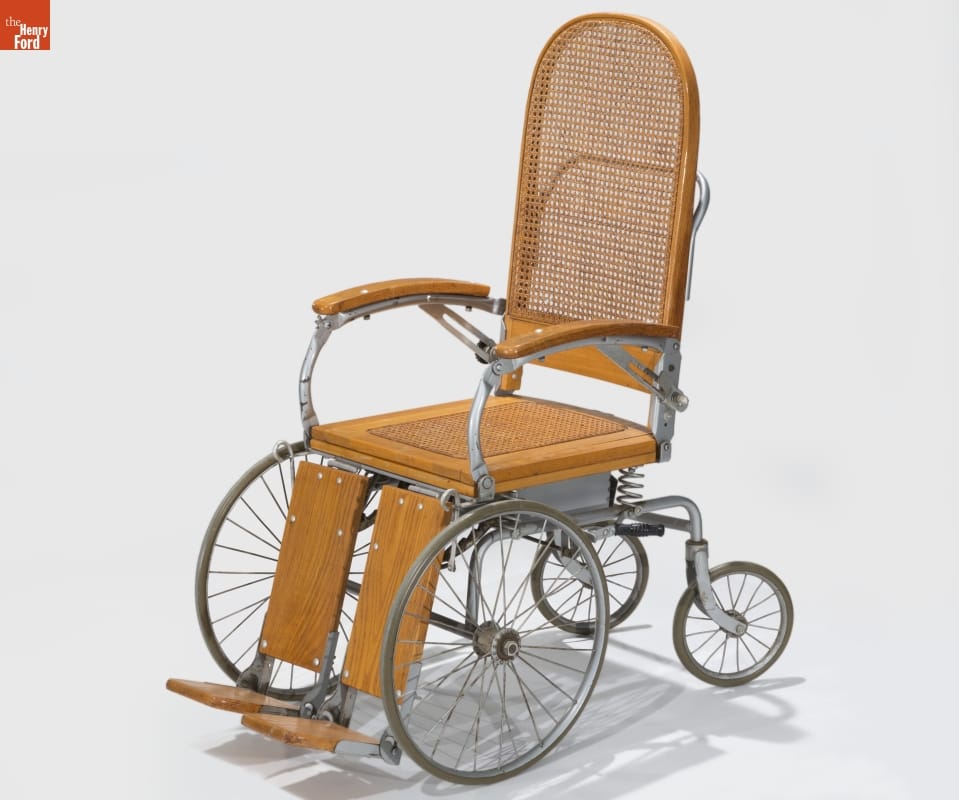
- 1915-1930
- Collections - Artifact
Wheelchair, 1915-1930
- Notal Design Chair, "Mobile Kit B," 1979-1980 - By the mid-1970s, with a growing elderly population, American disability rights activists advocated for equitable care and accessible environments for all people. Designers, too, began to explore creating objects that worked well for everyone. Michigan-based furniture company Herman Miller embarked upon the Notal project, its first foray into designing specifically for older adults, researching how their day-to-day lives were affected by ill-suited environments.
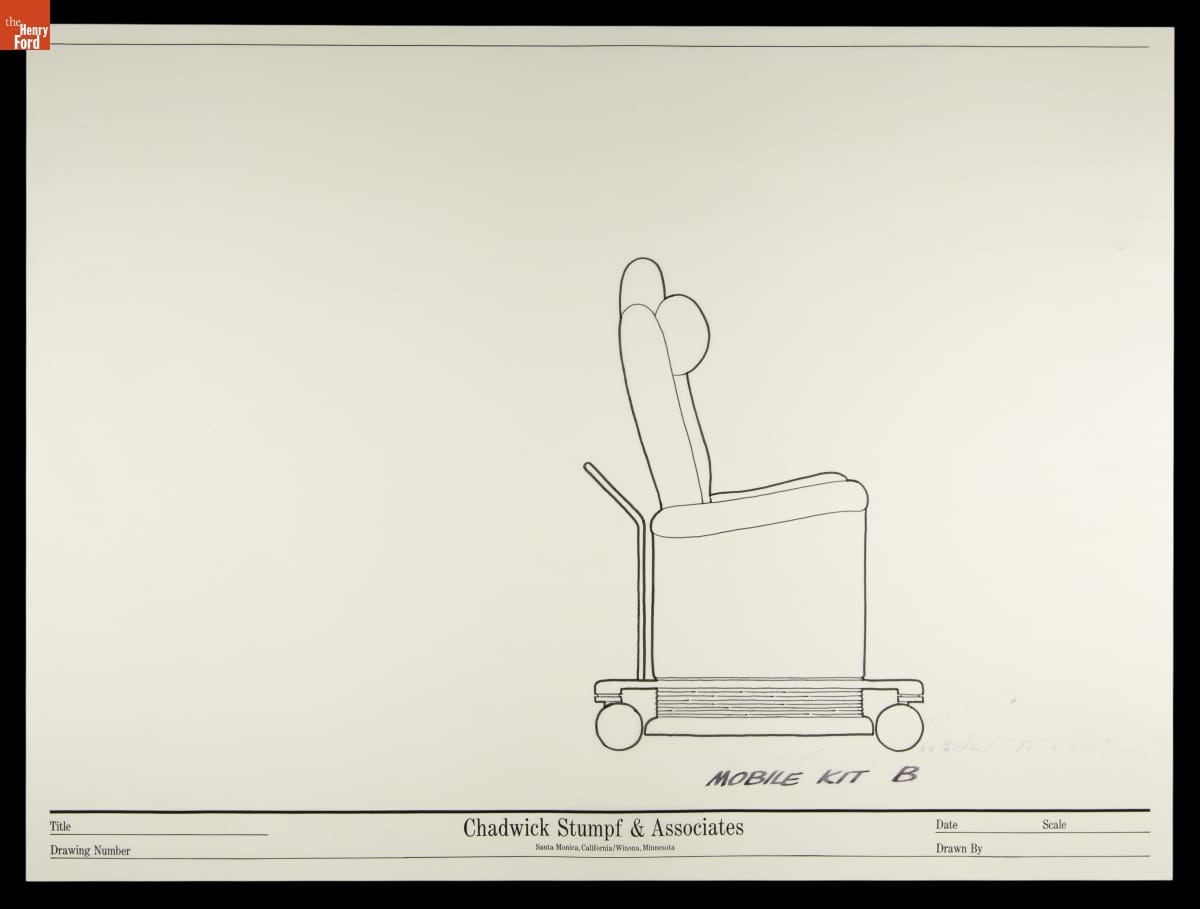
- 1979-1980
- Collections - Artifact
Notal Design Chair, "Mobile Kit B," 1979-1980
By the mid-1970s, with a growing elderly population, American disability rights activists advocated for equitable care and accessible environments for all people. Designers, too, began to explore creating objects that worked well for everyone. Michigan-based furniture company Herman Miller embarked upon the Notal project, its first foray into designing specifically for older adults, researching how their day-to-day lives were affected by ill-suited environments.