
Search
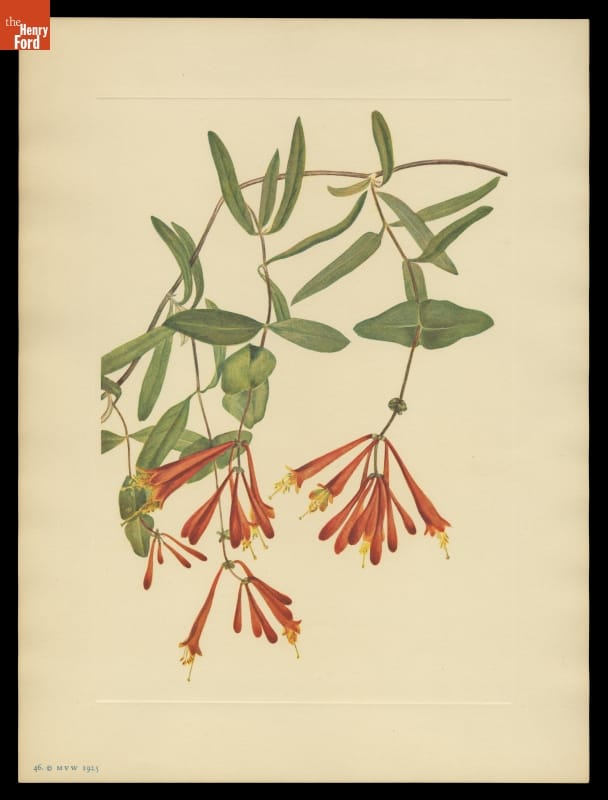
- Print of Mary Vaux Walcott Wildflower Sketch, "Trumpet Honeysuckle," 1925 - Mary Walcott (1860-1940) captured the beauty of American wildflowers. Born into a well-to-do Quaker family, Walcott collected and illustrated botanical subjects while exploring the Canadian Rockies with her father and brothers. In 1925, the Smithsonian Institution published a five-volume set of her paintings. This photoengraving of Walcott's work was presented to Clara Ford when she became president of the Garden Club of America.
- 1925
- Collections - Artifact
Print of Mary Vaux Walcott Wildflower Sketch, "Trumpet Honeysuckle," 1925
Mary Walcott (1860-1940) captured the beauty of American wildflowers. Born into a well-to-do Quaker family, Walcott collected and illustrated botanical subjects while exploring the Canadian Rockies with her father and brothers. In 1925, the Smithsonian Institution published a five-volume set of her paintings. This photoengraving of Walcott's work was presented to Clara Ford when she became president of the Garden Club of America.
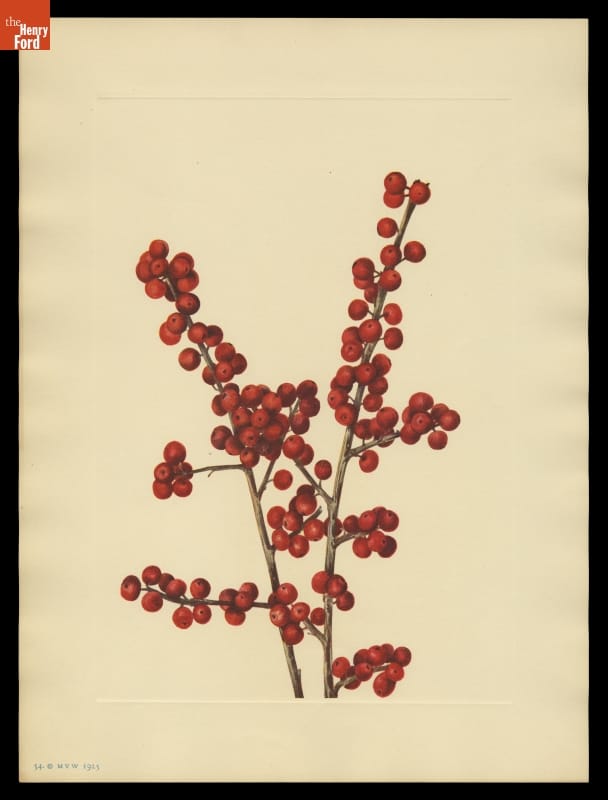
- Print of Mary Vaux Walcott Wildflower Sketch, "Winterberry," 1925 - Mary Walcott (1860-1940) captured the beauty of American wildflowers. Born into a well-to-do Quaker family, Walcott collected and illustrated botanical subjects while exploring the Canadian Rockies with her father and brothers. In 1925, the Smithsonian Institution published a five-volume set of her paintings. This photoengraving of Walcott's work was presented to Clara Ford when she became president of the Garden Club of America.
- 1925
- Collections - Artifact
Print of Mary Vaux Walcott Wildflower Sketch, "Winterberry," 1925
Mary Walcott (1860-1940) captured the beauty of American wildflowers. Born into a well-to-do Quaker family, Walcott collected and illustrated botanical subjects while exploring the Canadian Rockies with her father and brothers. In 1925, the Smithsonian Institution published a five-volume set of her paintings. This photoengraving of Walcott's work was presented to Clara Ford when she became president of the Garden Club of America.
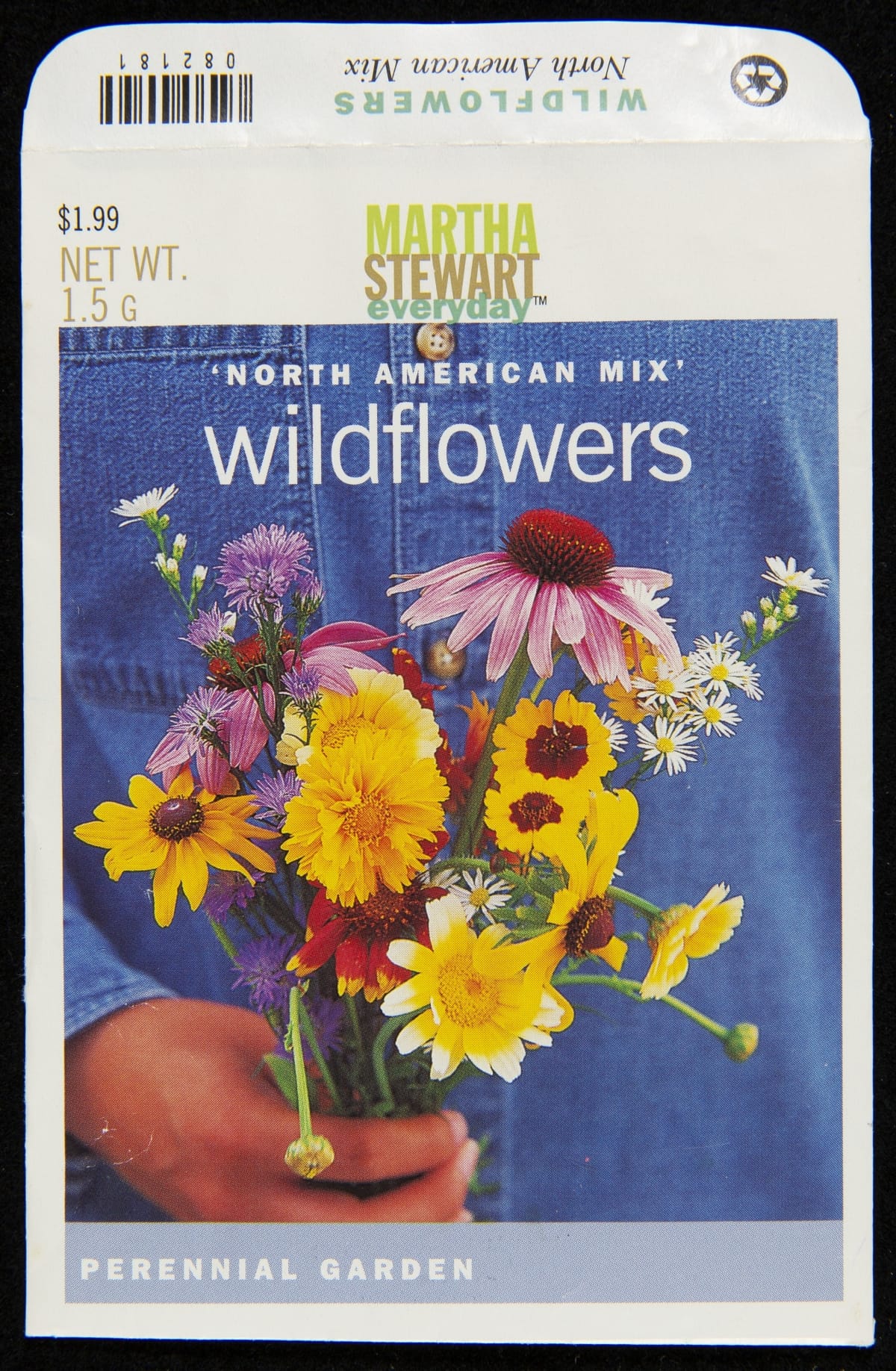
- Martha Stewart "'North American Mix' Wildflowers" Seed Packet, circa 2003 -
- circa 2003
- Collections - Artifact
Martha Stewart "'North American Mix' Wildflowers" Seed Packet, circa 2003
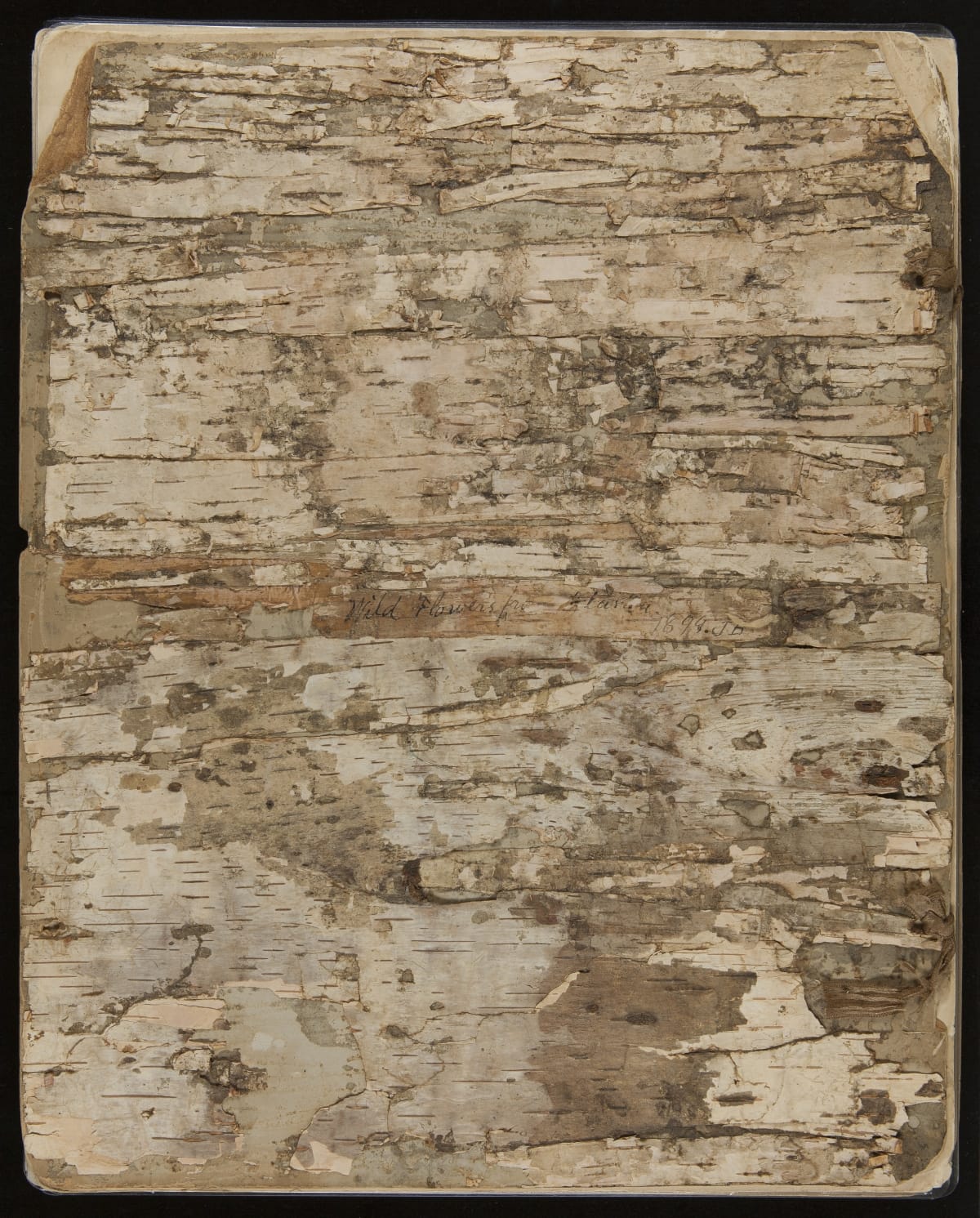
- John Burroughs' Album of Pressed Wildflowers Gathered during the Harriman Alaska Expedition, 1899 - In 1899, John Burroughs joined a group of more than 20 scientists, naturalists, and artists for a scientific exploration of the Alaskan coast. Financed and accompanied by railroad tycoon Edward H. Harriman, the expedition traveled aboard the lavishly refitted <EM>George W. Elder</EM>, collecting specimens along the way. Those specimens included native wildflowers, hand-picked by Burroughs and pressed into this book.
- 1899
- Collections - Artifact
John Burroughs' Album of Pressed Wildflowers Gathered during the Harriman Alaska Expedition, 1899
In 1899, John Burroughs joined a group of more than 20 scientists, naturalists, and artists for a scientific exploration of the Alaskan coast. Financed and accompanied by railroad tycoon Edward H. Harriman, the expedition traveled aboard the lavishly refitted George W. Elder, collecting specimens along the way. Those specimens included native wildflowers, hand-picked by Burroughs and pressed into this book.
- "Michigan Wild Flowers," Menu from The Dining Rooms at the J. L. Hudson Company, Detroit, Michigan, 1952 -
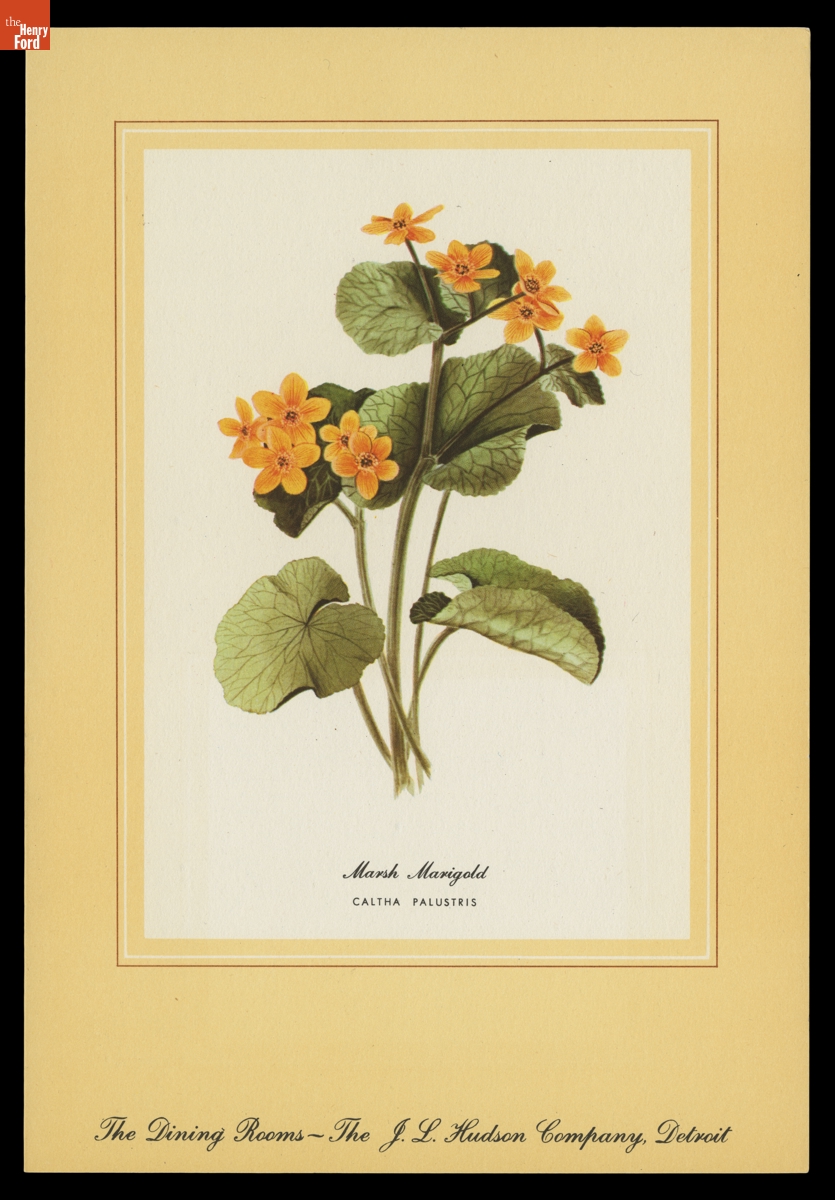
- June 06, 1952
- Collections - Artifact
"Michigan Wild Flowers," Menu from The Dining Rooms at the J. L. Hudson Company, Detroit, Michigan, 1952
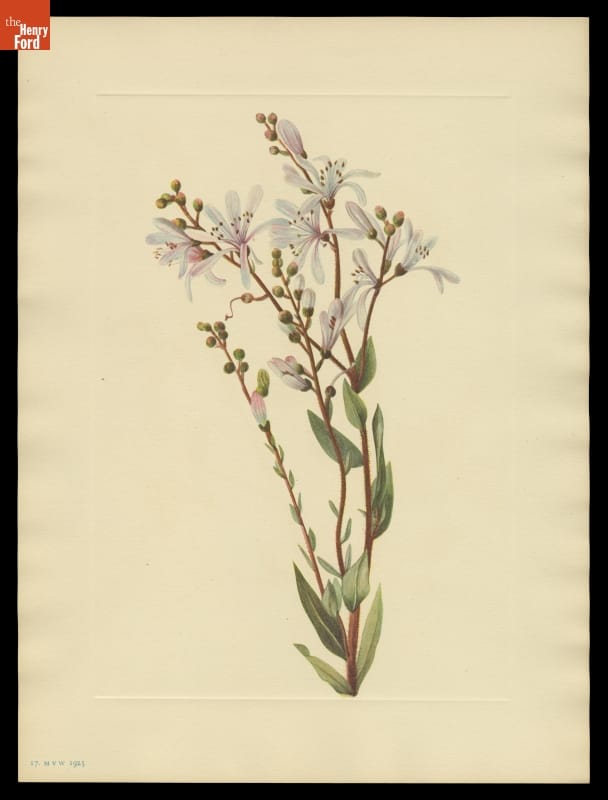
- Print of Mary Vaux Walcott Wildflower Sketch, "Tar Flower," 1925 - Mary Walcott (1860-1940) captured the beauty of American wildflowers. Born into a well-to-do Quaker family, Walcott collected and illustrated botanical subjects while exploring the Canadian Rockies with her father and brothers. In 1925, the Smithsonian Institution published a five-volume set of her paintings. This photoengraving of Walcott's work was presented to Clara Ford when she became president of the Garden Club of America.
- 1925
- Collections - Artifact
Print of Mary Vaux Walcott Wildflower Sketch, "Tar Flower," 1925
Mary Walcott (1860-1940) captured the beauty of American wildflowers. Born into a well-to-do Quaker family, Walcott collected and illustrated botanical subjects while exploring the Canadian Rockies with her father and brothers. In 1925, the Smithsonian Institution published a five-volume set of her paintings. This photoengraving of Walcott's work was presented to Clara Ford when she became president of the Garden Club of America.
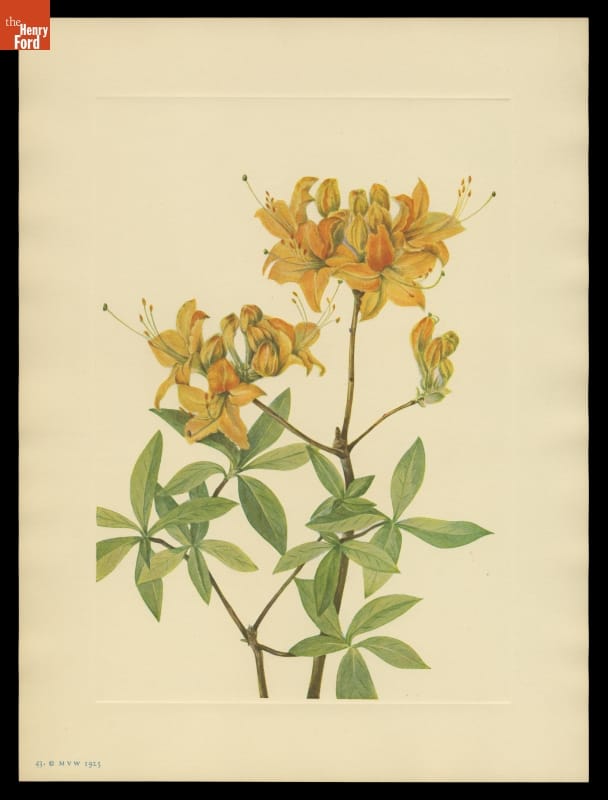
- Print of Mary Vaux Walcott Wildflower Sketch, "Flame Azalea," 1925 - Mary Walcott (1860-1940) captured the beauty of American wildflowers. Born into a well-to-do Quaker family, Walcott collected and illustrated botanical subjects while exploring the Canadian Rockies with her father and brothers. In 1925, the Smithsonian Institution published a five-volume set of her paintings. This photoengraving of Walcott's work was presented to Clara Ford when she became president of the Garden Club of America.
- 1925
- Collections - Artifact
Print of Mary Vaux Walcott Wildflower Sketch, "Flame Azalea," 1925
Mary Walcott (1860-1940) captured the beauty of American wildflowers. Born into a well-to-do Quaker family, Walcott collected and illustrated botanical subjects while exploring the Canadian Rockies with her father and brothers. In 1925, the Smithsonian Institution published a five-volume set of her paintings. This photoengraving of Walcott's work was presented to Clara Ford when she became president of the Garden Club of America.
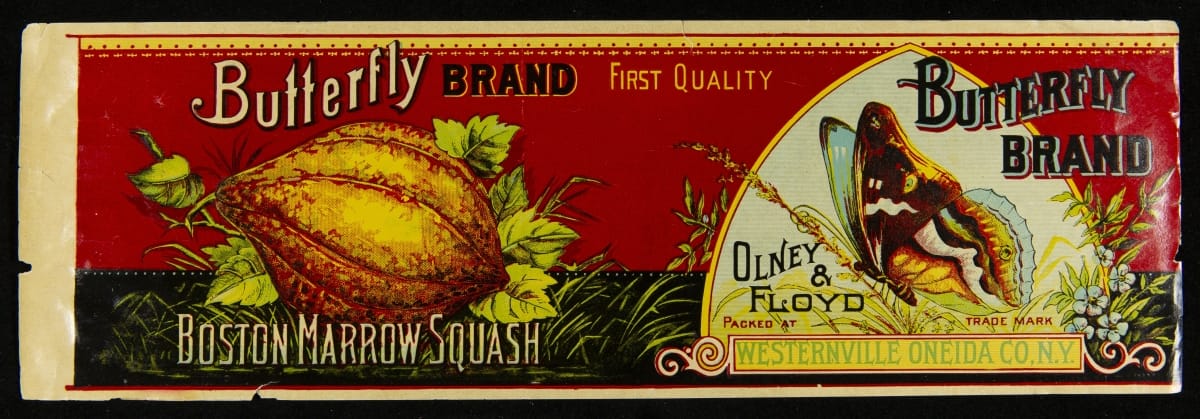
- Can Label, "Butterfly Brand Boston Marrow Squash," 1890-1920 - Throughout the late-19th to early-20th centuries, lithographers created labels to help sell products. Manufacturers of foodstuffs utilized the same design for several different products -- a strategy which helped customers distinguish one brand over another. Olney and Floyd's Butterfly Brand products were easy to identify with their colorful, eye-catching labels and signature butterfly.
- 1890-1920
- Collections - Artifact
Can Label, "Butterfly Brand Boston Marrow Squash," 1890-1920
Throughout the late-19th to early-20th centuries, lithographers created labels to help sell products. Manufacturers of foodstuffs utilized the same design for several different products -- a strategy which helped customers distinguish one brand over another. Olney and Floyd's Butterfly Brand products were easy to identify with their colorful, eye-catching labels and signature butterfly.
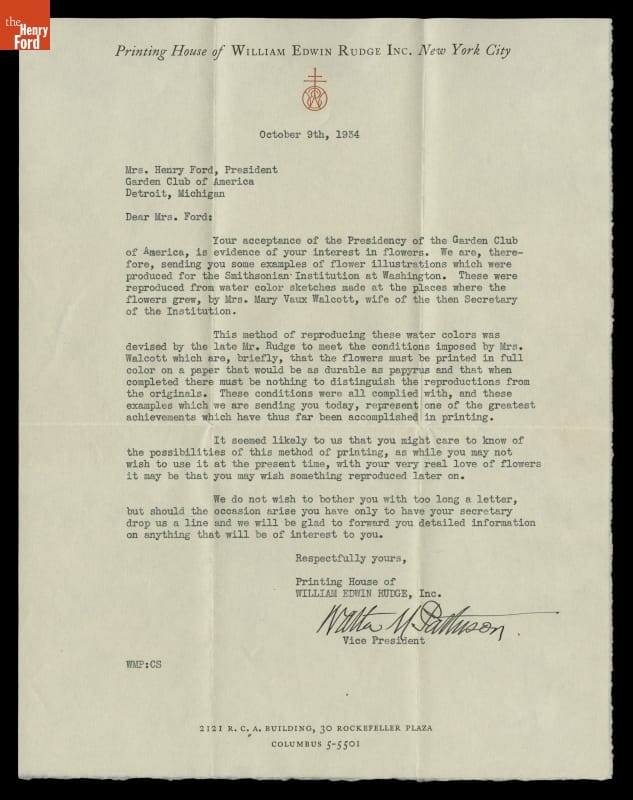
- Letter from Printing House of William Edwin Rudge to Clara Ford with a Selection of Wildflower Prints, October 9, 1934 -
- October 09, 1934
- Collections - Artifact
Letter from Printing House of William Edwin Rudge to Clara Ford with a Selection of Wildflower Prints, October 9, 1934
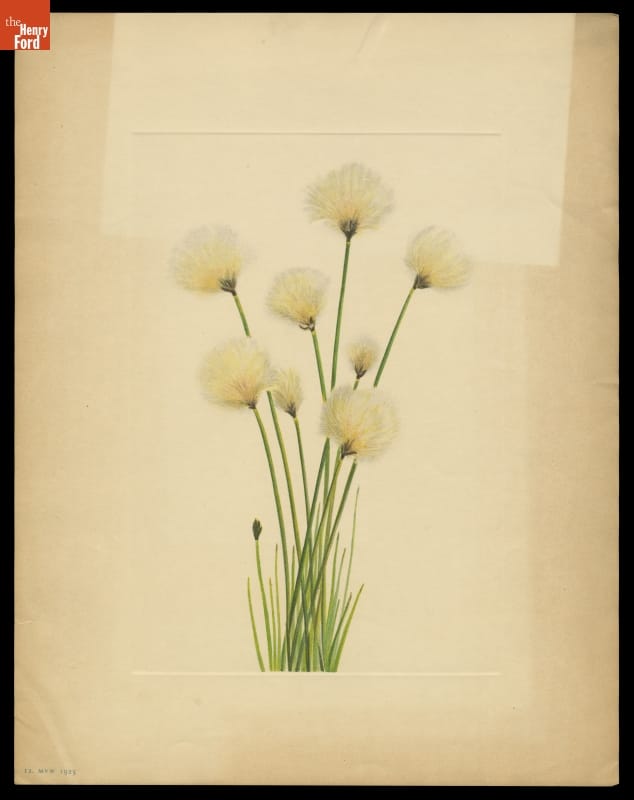
- Print of Mary Vaux Walcott Wildflower Sketch, "Cottongrass," 1925 - Mary Walcott (1860-1940) captured the beauty of American wildflowers. Born into a well-to-do Quaker family, Walcott collected and illustrated botanical subjects while exploring the Canadian Rockies with her father and brothers. In 1925, the Smithsonian Institution published a five-volume set of her paintings. This photoengraving of Walcott's work was presented to Clara Ford when she became president of the Garden Club of America.
- 1925
- Collections - Artifact
Print of Mary Vaux Walcott Wildflower Sketch, "Cottongrass," 1925
Mary Walcott (1860-1940) captured the beauty of American wildflowers. Born into a well-to-do Quaker family, Walcott collected and illustrated botanical subjects while exploring the Canadian Rockies with her father and brothers. In 1925, the Smithsonian Institution published a five-volume set of her paintings. This photoengraving of Walcott's work was presented to Clara Ford when she became president of the Garden Club of America.