
Search
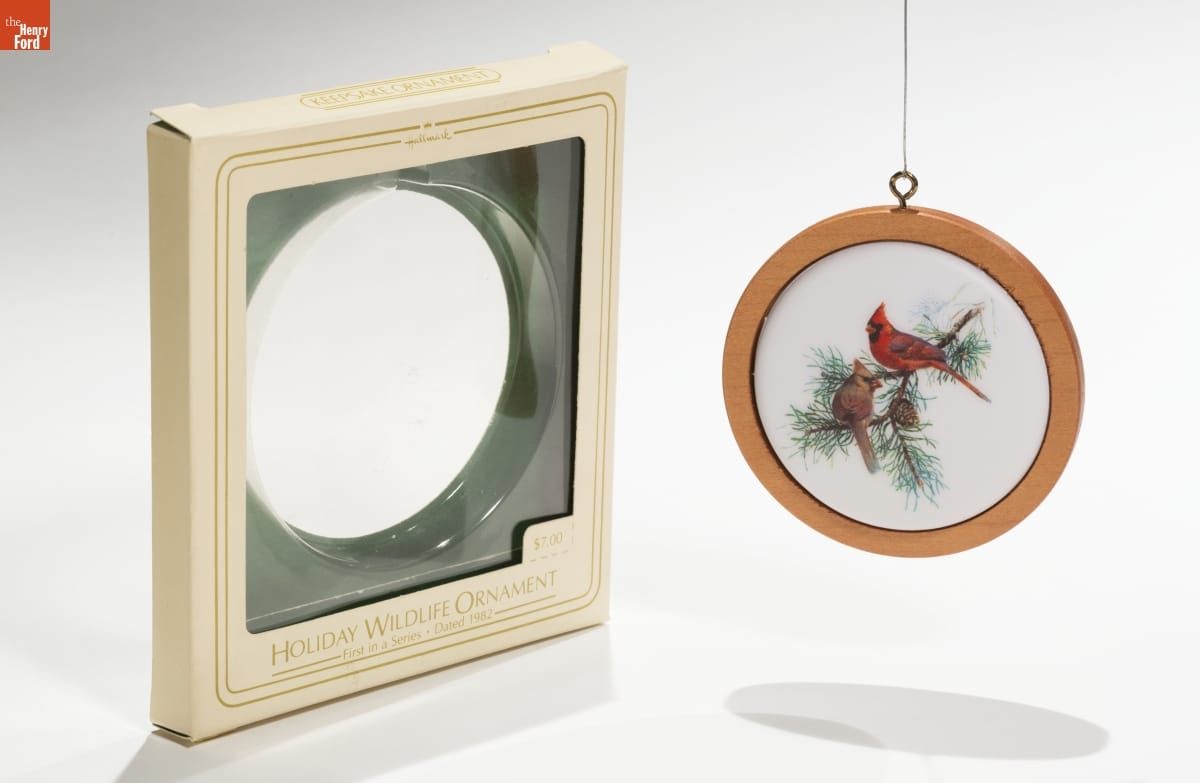
- Hallmark "Holiday Wildlife Series: Cardinals" Christmas Ornament, 1982 - Already known for greeting cards, Hallmark introduced a line of Christmas ornaments in 1973. The company's annual release of an increasing array of ornaments revolutionized Christmas decorating, appealing to customers' interest in marking memories and milestones as well as expressing one's personality and unique tastes.
- 1982
- Collections - Artifact
Hallmark "Holiday Wildlife Series: Cardinals" Christmas Ornament, 1982
Already known for greeting cards, Hallmark introduced a line of Christmas ornaments in 1973. The company's annual release of an increasing array of ornaments revolutionized Christmas decorating, appealing to customers' interest in marking memories and milestones as well as expressing one's personality and unique tastes.
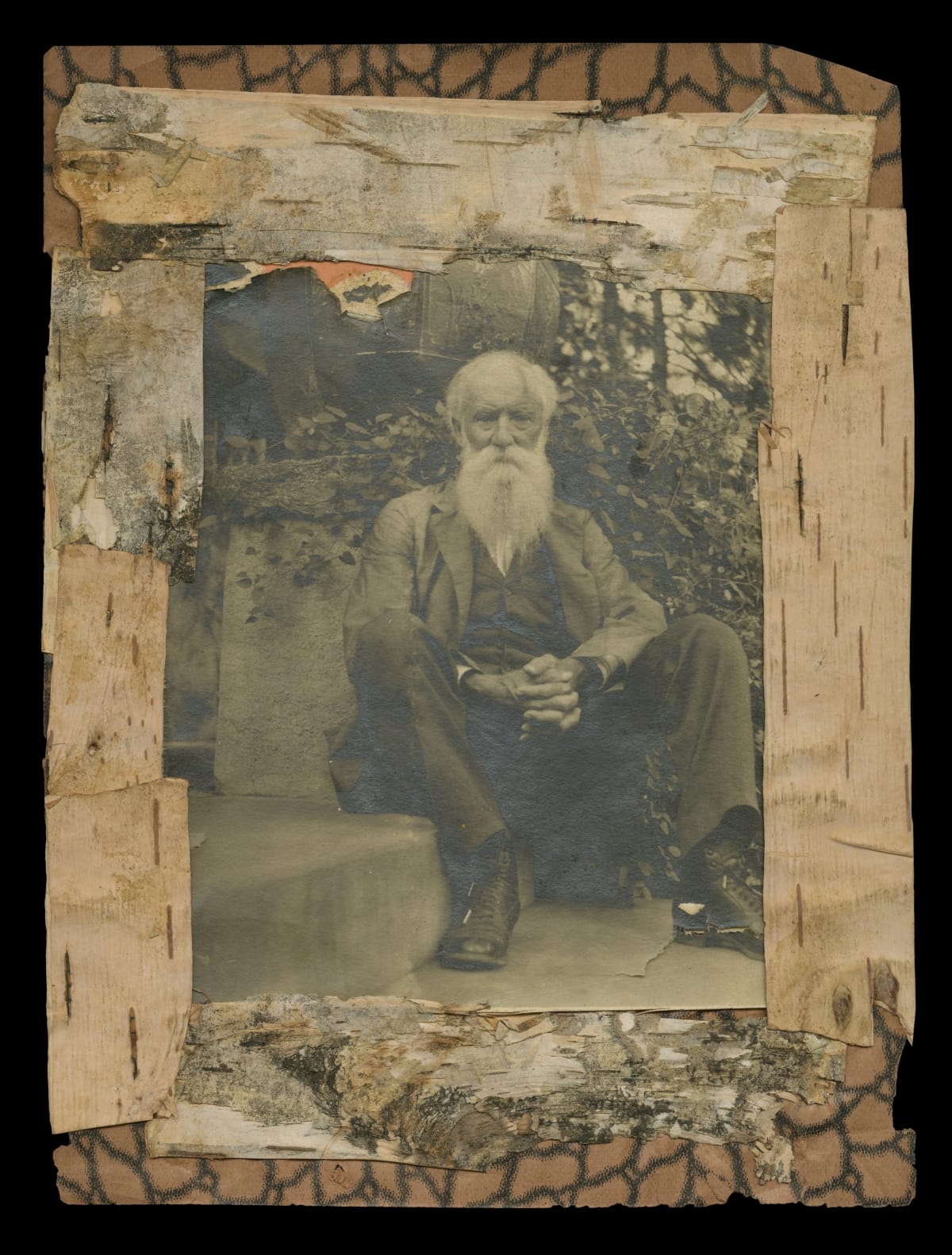
- John Burroughs on the Steps at Wyndygoul, Cos Cob, Connecticut, August 1905 - John Burroughs (1837-1921) was an internationally known naturalist and writer who became incensed by the glowing reviews of writings like Ernest Thompson Seton's <EM>Wild Animals I Have Known</EM>, which he believed blurred the line between fact and fiction. Seton, feeling his reputation was at stake, invited Burroughs to his country estate, Wyndygoul, for an in-person conversation. Seton took this photograph.
- August 01, 1905
- Collections - Artifact
John Burroughs on the Steps at Wyndygoul, Cos Cob, Connecticut, August 1905
John Burroughs (1837-1921) was an internationally known naturalist and writer who became incensed by the glowing reviews of writings like Ernest Thompson Seton's Wild Animals I Have Known, which he believed blurred the line between fact and fiction. Seton, feeling his reputation was at stake, invited Burroughs to his country estate, Wyndygoul, for an in-person conversation. Seton took this photograph.
- "Life" Bound Volume of Issues, April-June 1947 - First published in 1883 as a general-interest and humor publication, Life magazine became America's first all-photographic weekly news magazine after being purchased and re-envisioned by publisher Henry Luce in 1936. Under Luce, its popularity boomed, and by the 1950s more than 22 million Americans read the publication. This bound volume contains issues from April to June 1947.

- April 1947-June 1947
- Collections - Artifact
"Life" Bound Volume of Issues, April-June 1947
First published in 1883 as a general-interest and humor publication, Life magazine became America's first all-photographic weekly news magazine after being purchased and re-envisioned by publisher Henry Luce in 1936. Under Luce, its popularity boomed, and by the 1950s more than 22 million Americans read the publication. This bound volume contains issues from April to June 1947.
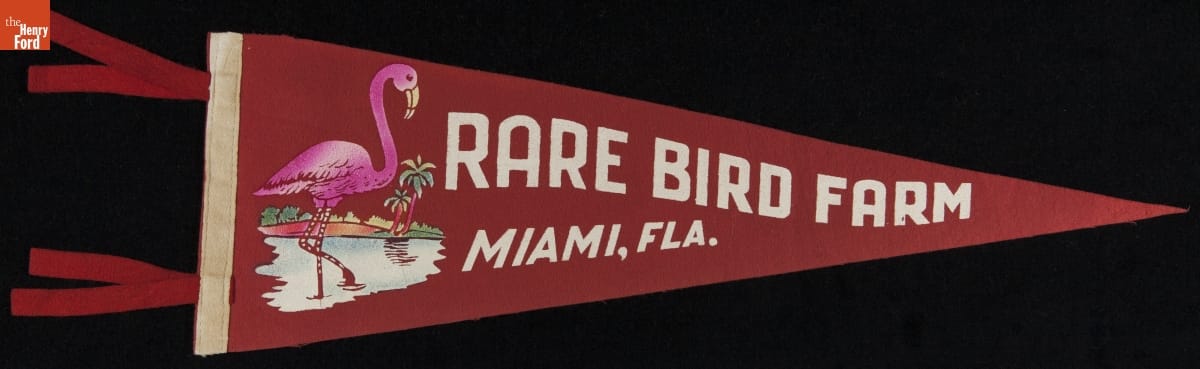
- Pennant, "Rare Bird Farm, Miami, Fla.," 1940-1960 -
- 1940-1960
- Collections - Artifact
Pennant, "Rare Bird Farm, Miami, Fla.," 1940-1960
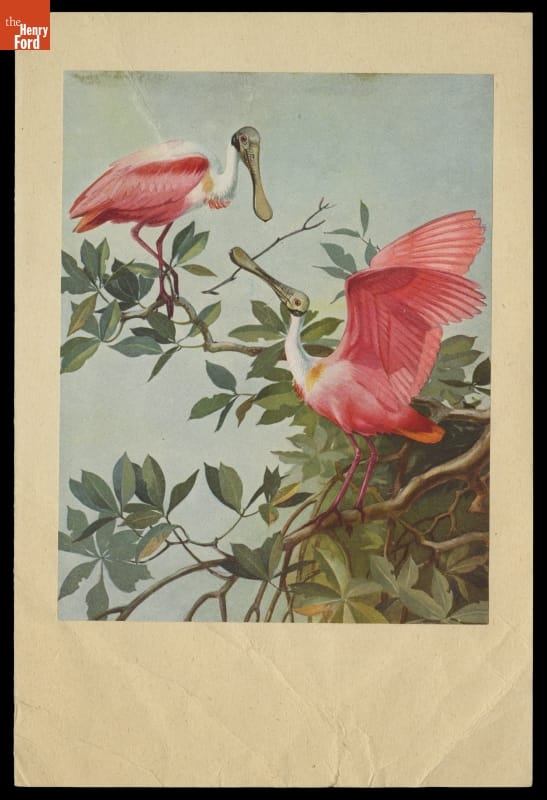
- Christmas Card, "Roseate Spoonbills," 1944 -
- 1944
- Collections - Artifact
Christmas Card, "Roseate Spoonbills," 1944
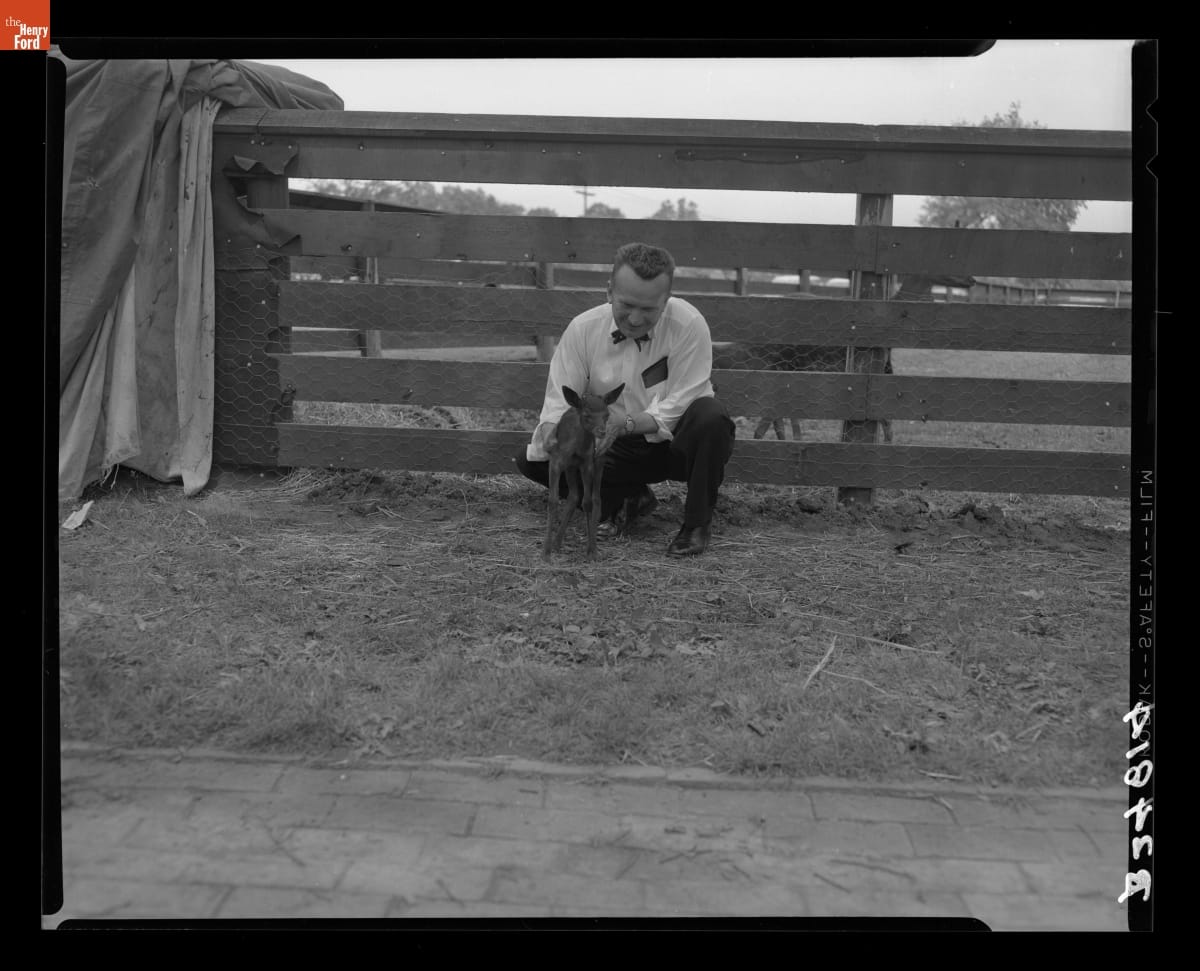
- Gus Munchow with a New Fawn in Greenfield Village, June 17, 1960 - Gustav Munchow became the gardener at Henry and Clara Ford's Fair Lane estate in Dearborn, Michigan, around 1930, after emigrating from Germany. Soon after, Henry asked him to landscape the gardens of the Cotswold Cottage, an English cottage Ford had recently moved to Greenfield Village. Munchow's work impressed the Fords. Munchow later led the grounds and maintenance departments for the Museum and Greenfield Village.
- June 17, 1960
- Collections - Artifact
Gus Munchow with a New Fawn in Greenfield Village, June 17, 1960
Gustav Munchow became the gardener at Henry and Clara Ford's Fair Lane estate in Dearborn, Michigan, around 1930, after emigrating from Germany. Soon after, Henry asked him to landscape the gardens of the Cotswold Cottage, an English cottage Ford had recently moved to Greenfield Village. Munchow's work impressed the Fords. Munchow later led the grounds and maintenance departments for the Museum and Greenfield Village.
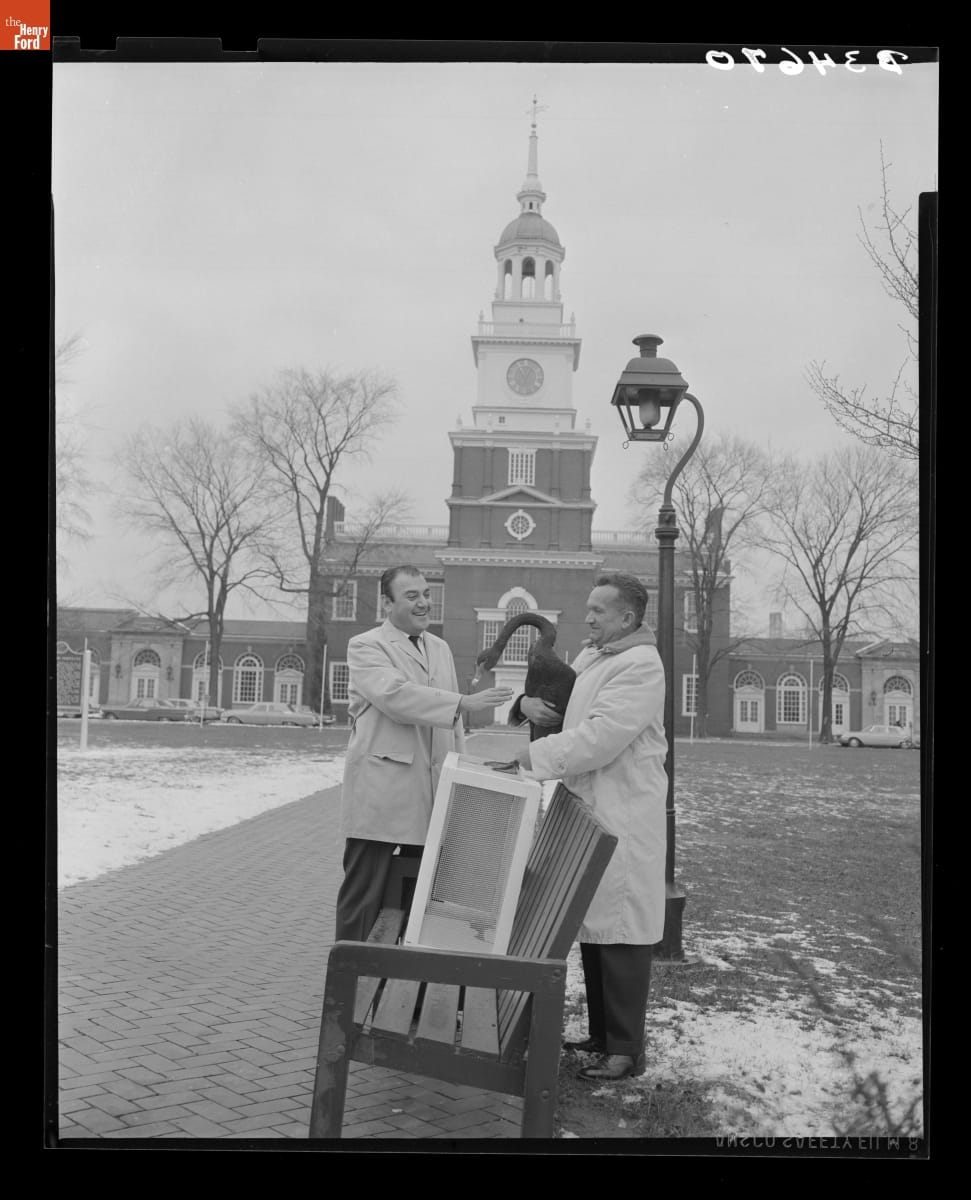
- Gus Munchow is Presented with a Rare Australian Black Swan Found at Camp Dearborn, December 1963 - Gustav Munchow became the gardener at Henry and Clara Ford's Fair Lane estate in Dearborn, Michigan, around 1930, after emigrating from Germany. Soon after, Henry asked him to landscape the gardens of the Cotswold Cottage, an English cottage Ford had recently moved to Greenfield Village. Munchow's work impressed the Fords. Munchow later led the grounds and maintenance departments for the Museum and Greenfield Village.
- December 01, 1963
- Collections - Artifact
Gus Munchow is Presented with a Rare Australian Black Swan Found at Camp Dearborn, December 1963
Gustav Munchow became the gardener at Henry and Clara Ford's Fair Lane estate in Dearborn, Michigan, around 1930, after emigrating from Germany. Soon after, Henry asked him to landscape the gardens of the Cotswold Cottage, an English cottage Ford had recently moved to Greenfield Village. Munchow's work impressed the Fords. Munchow later led the grounds and maintenance departments for the Museum and Greenfield Village.
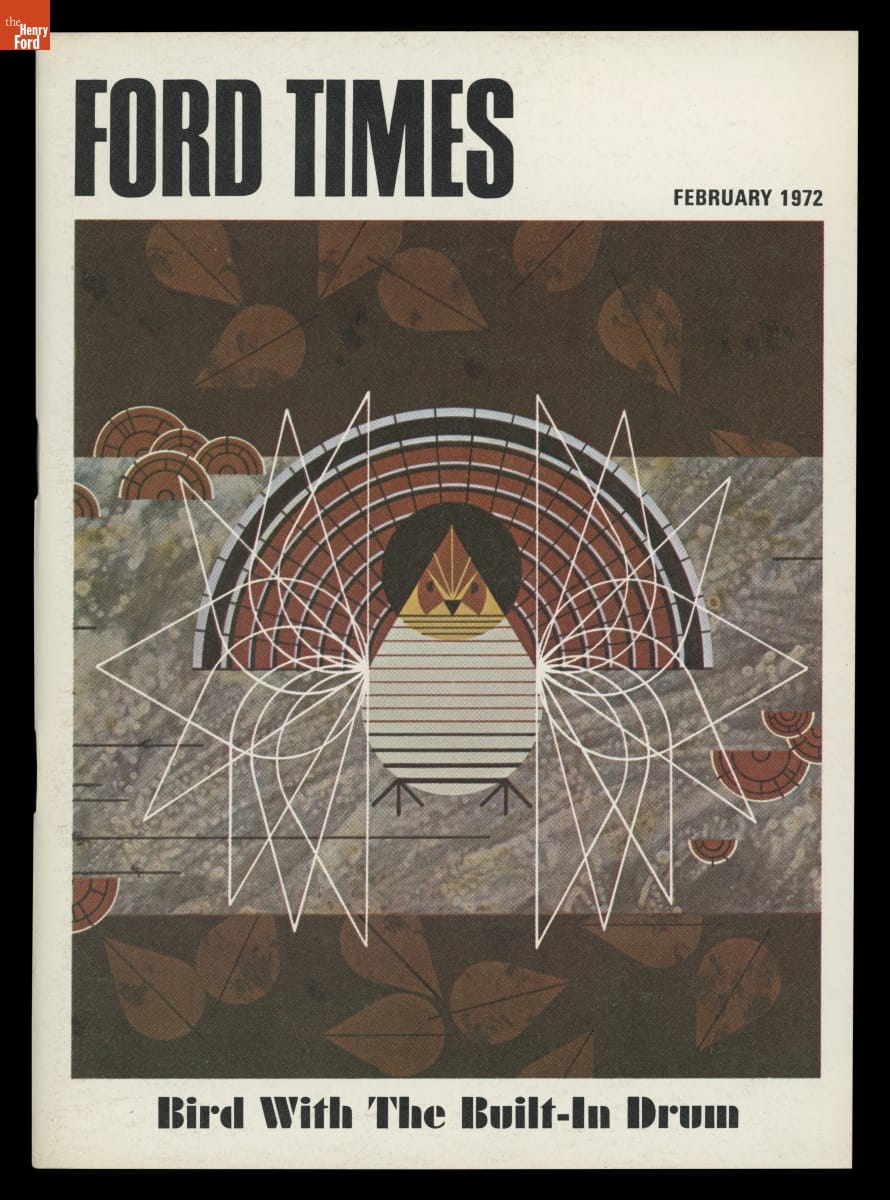
- "Ford Times," February 1972 - <em>Ford Times</em> magazine was a key element of Ford Motor Company's public relations efforts for much of the 20th century. Issues covered a wide range of topics, including automobiles but also recreation, food, history, nature, and culture. Between 1948 and 1982, Cincinnati artist Charley Harper contributed cover and article illustrations to more than 160 issues. This issue features one of Harper's thirty-six <em> Ford Times</em> covers.
- February 01, 1972
- Collections - Artifact
"Ford Times," February 1972
Ford Times magazine was a key element of Ford Motor Company's public relations efforts for much of the 20th century. Issues covered a wide range of topics, including automobiles but also recreation, food, history, nature, and culture. Between 1948 and 1982, Cincinnati artist Charley Harper contributed cover and article illustrations to more than 160 issues. This issue features one of Harper's thirty-six Ford Times covers.
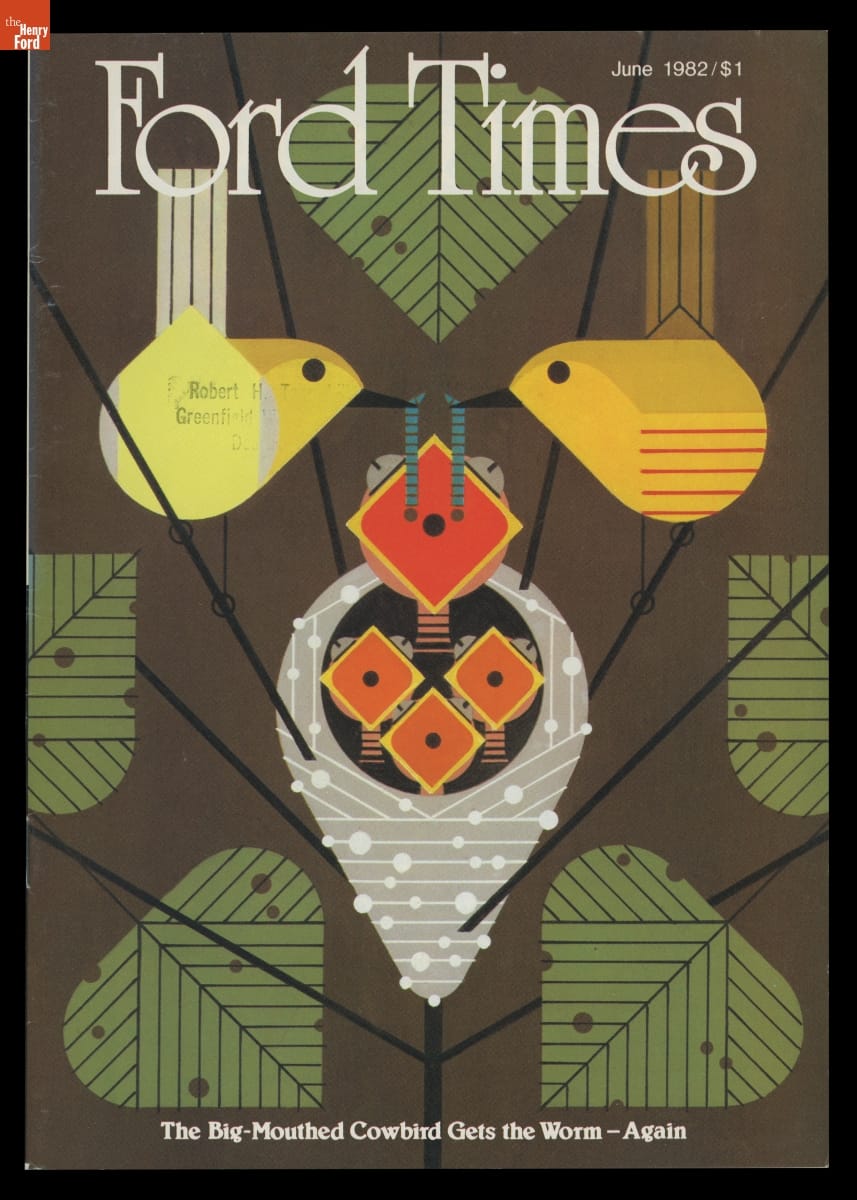
- "Ford Times," June 1982 - <em>Ford Times</em> magazine was a key element of Ford Motor Company's public relations efforts for much of the 20th century. Issues covered a wide range of topics, including automobiles but also recreation, food, history, nature, and culture. Between 1948 and 1982, Cincinnati artist Charley Harper contributed cover and article illustrations to more than 160 issues. This issue features one of Harper's thirty-six <em> Ford Times</em> covers.
- June 01, 1982
- Collections - Artifact
"Ford Times," June 1982
Ford Times magazine was a key element of Ford Motor Company's public relations efforts for much of the 20th century. Issues covered a wide range of topics, including automobiles but also recreation, food, history, nature, and culture. Between 1948 and 1982, Cincinnati artist Charley Harper contributed cover and article illustrations to more than 160 issues. This issue features one of Harper's thirty-six Ford Times covers.
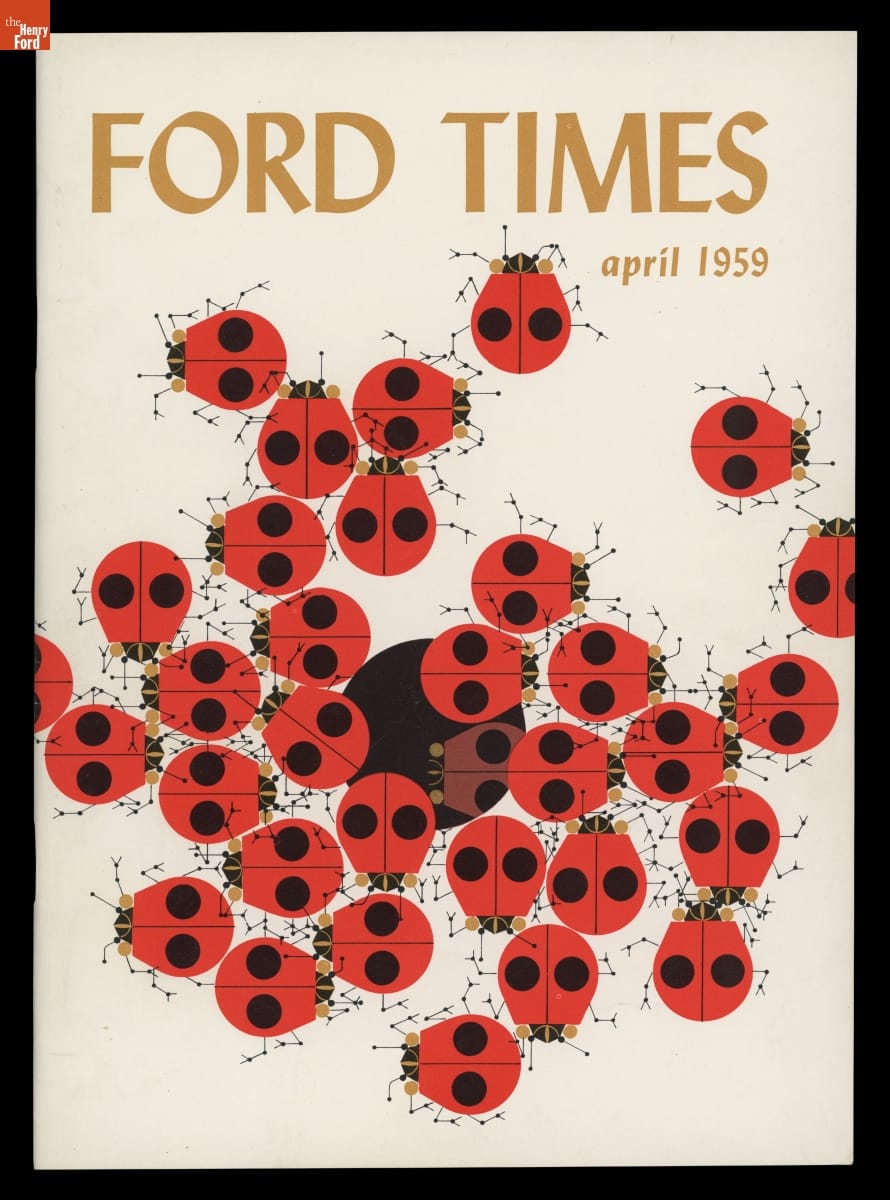
- "Ford Times," April 1959 - <em>Ford Times</em> magazine was a key element of Ford Motor Company's public relations efforts for much of the 20th century. Issues covered a wide range of topics, including automobiles but also recreation, food, history, nature, and culture. Between 1948 and 1982, Cincinnati artist Charley Harper contributed cover and article illustrations to more than 160 issues. This issue features one of Harper's thirty-six <em> Ford Times</em> covers.
- April 01, 1959
- Collections - Artifact
"Ford Times," April 1959
Ford Times magazine was a key element of Ford Motor Company's public relations efforts for much of the 20th century. Issues covered a wide range of topics, including automobiles but also recreation, food, history, nature, and culture. Between 1948 and 1982, Cincinnati artist Charley Harper contributed cover and article illustrations to more than 160 issues. This issue features one of Harper's thirty-six Ford Times covers.