
Search
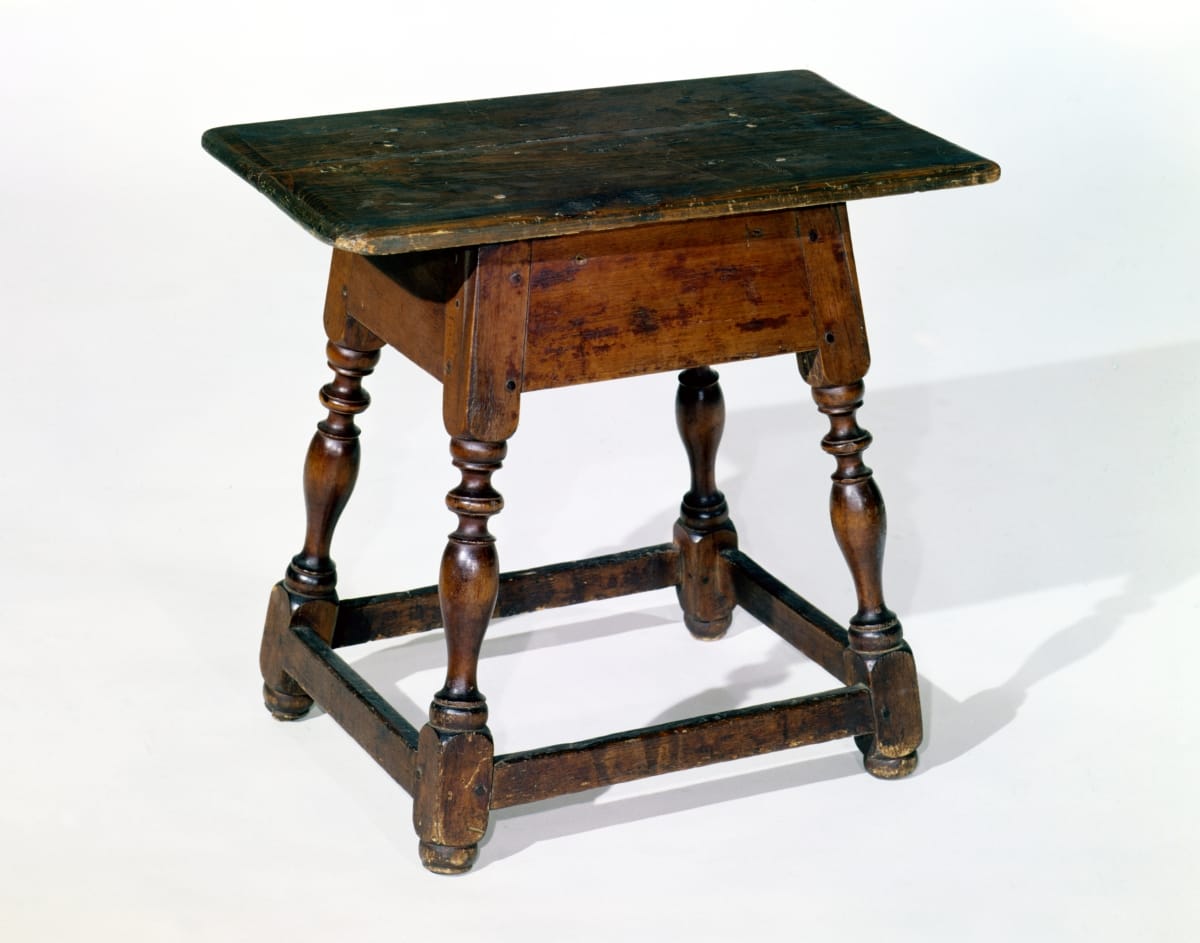
- Joint Stool, 1710-1730 - After simply made benches, joint stools were the most common form of seating furniture. This is a very well made joint stool. Most would have been plainer, without the nicely turned and rounded legs
- 1710-1730
- Collections - Artifact
Joint Stool, 1710-1730
After simply made benches, joint stools were the most common form of seating furniture. This is a very well made joint stool. Most would have been plainer, without the nicely turned and rounded legs
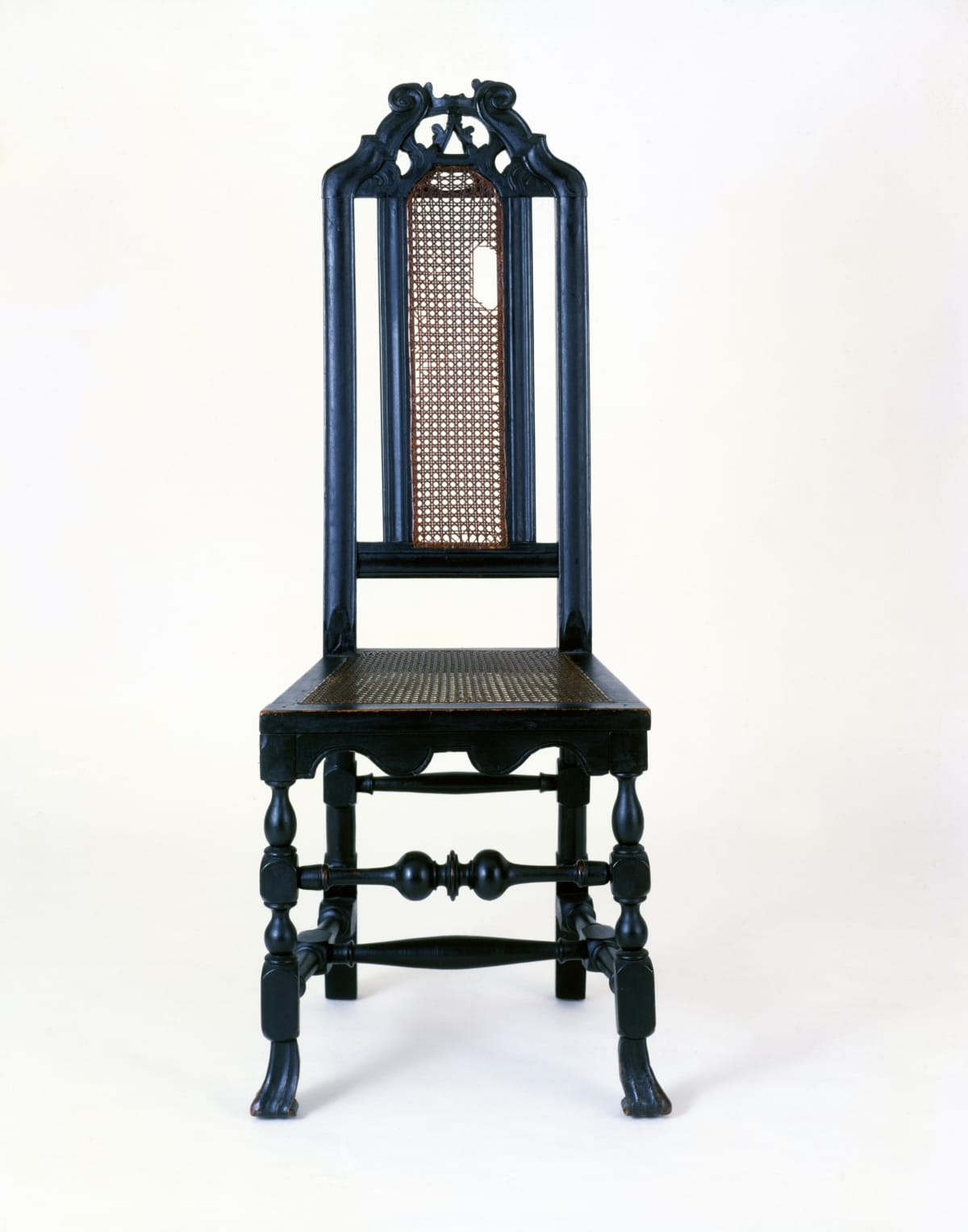
- Side Chair, 1715-1725 - Side chairs with elaborately turned legs and carving showed off the sophistication of their owner. Caning on seats and backs was an innovation from Asia, making seating lighter and more resilient.
- 1715-1725
- Collections - Artifact
Side Chair, 1715-1725
Side chairs with elaborately turned legs and carving showed off the sophistication of their owner. Caning on seats and backs was an innovation from Asia, making seating lighter and more resilient.
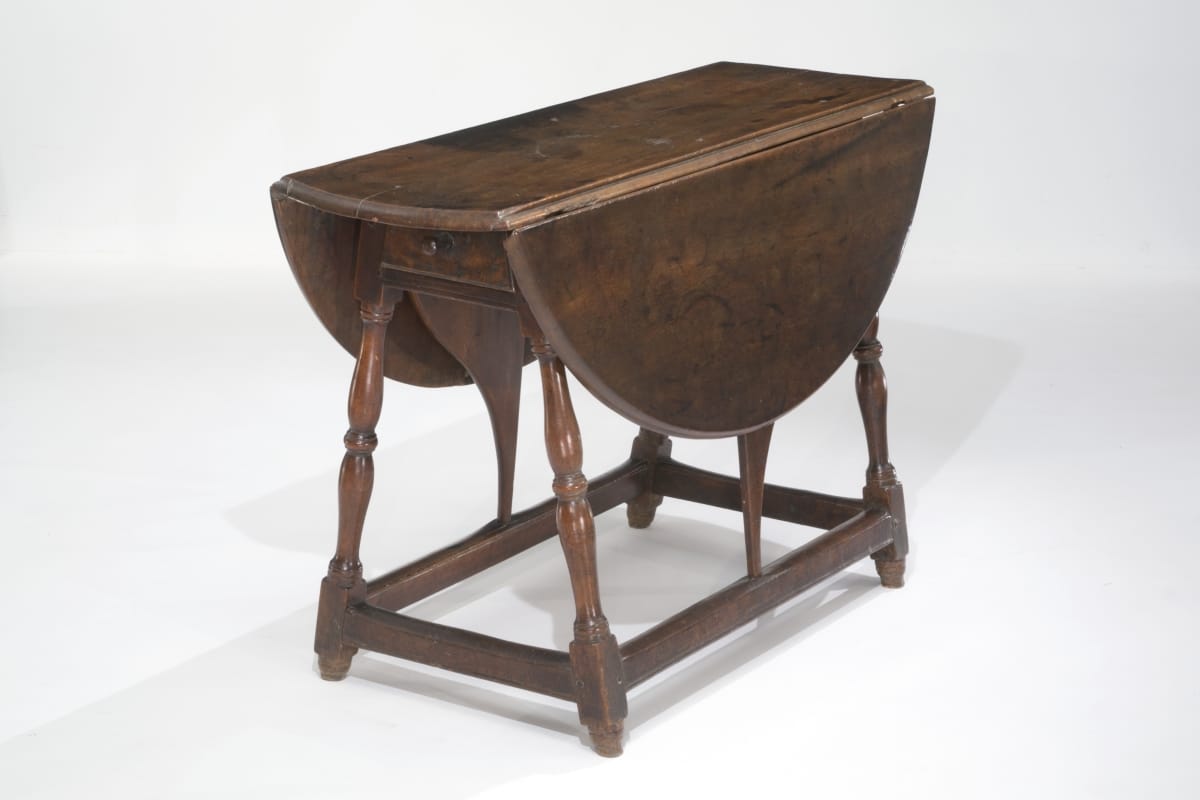
- Dropleaf Table, 1730-1770 - Tables provide useful, multi-purpose space -- but sometimes their size gets in the way. For 18th-century Americans, a drop-leaf table offered an ideal solution. With the leaves extended the table could be used for dining, working or game playing. When not needed, the table's top folded down and the table could be moved easily to another room or pushed against a wall.
- 1730-1770
- Collections - Artifact
Dropleaf Table, 1730-1770
Tables provide useful, multi-purpose space -- but sometimes their size gets in the way. For 18th-century Americans, a drop-leaf table offered an ideal solution. With the leaves extended the table could be used for dining, working or game playing. When not needed, the table's top folded down and the table could be moved easily to another room or pushed against a wall.
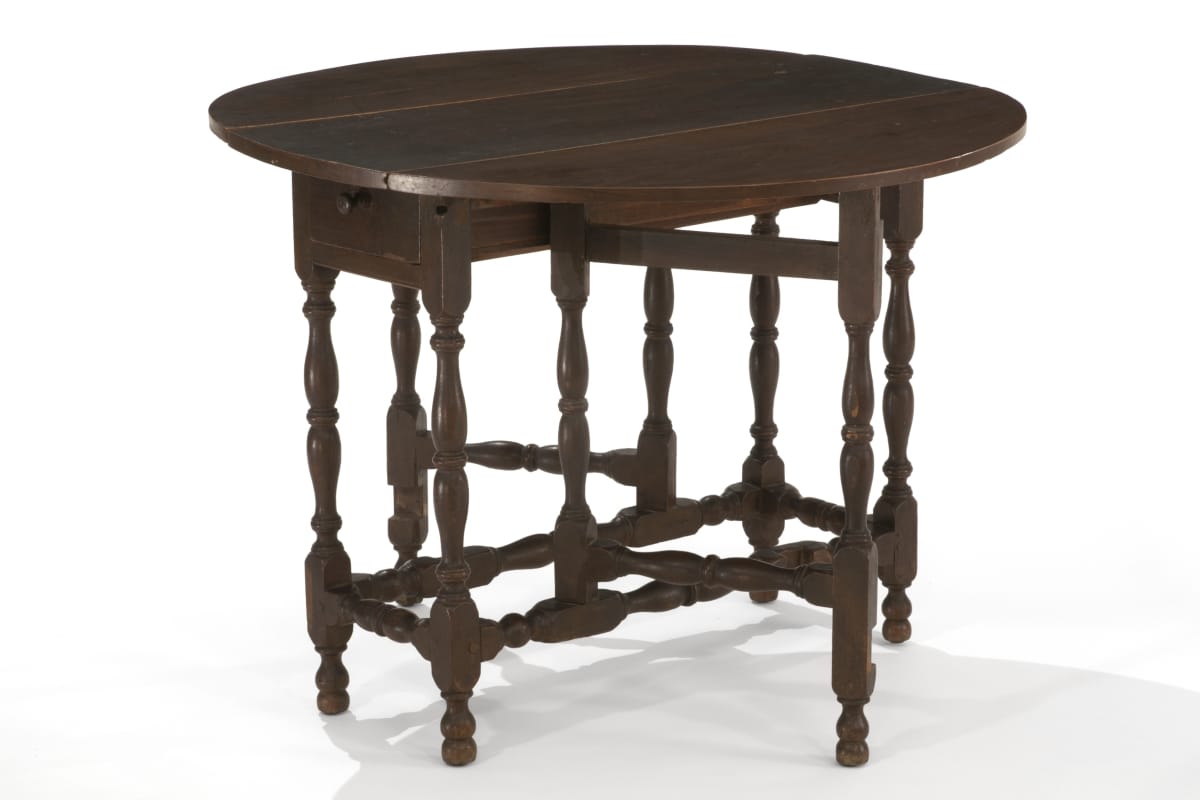
- Gate-leg Table, 1730-1765 - Colonial Americans used gate-leg tables chiefly for dining, but also for working, writing and game playing. These tables -- with their gate-framed legs that swing out to support the table leaves -- came in many sizes. And when not needed, these tables could be easily folded, moved from room to room, or placed against a wall to save space.
- 1730-1765
- Collections - Artifact
Gate-leg Table, 1730-1765
Colonial Americans used gate-leg tables chiefly for dining, but also for working, writing and game playing. These tables -- with their gate-framed legs that swing out to support the table leaves -- came in many sizes. And when not needed, these tables could be easily folded, moved from room to room, or placed against a wall to save space.
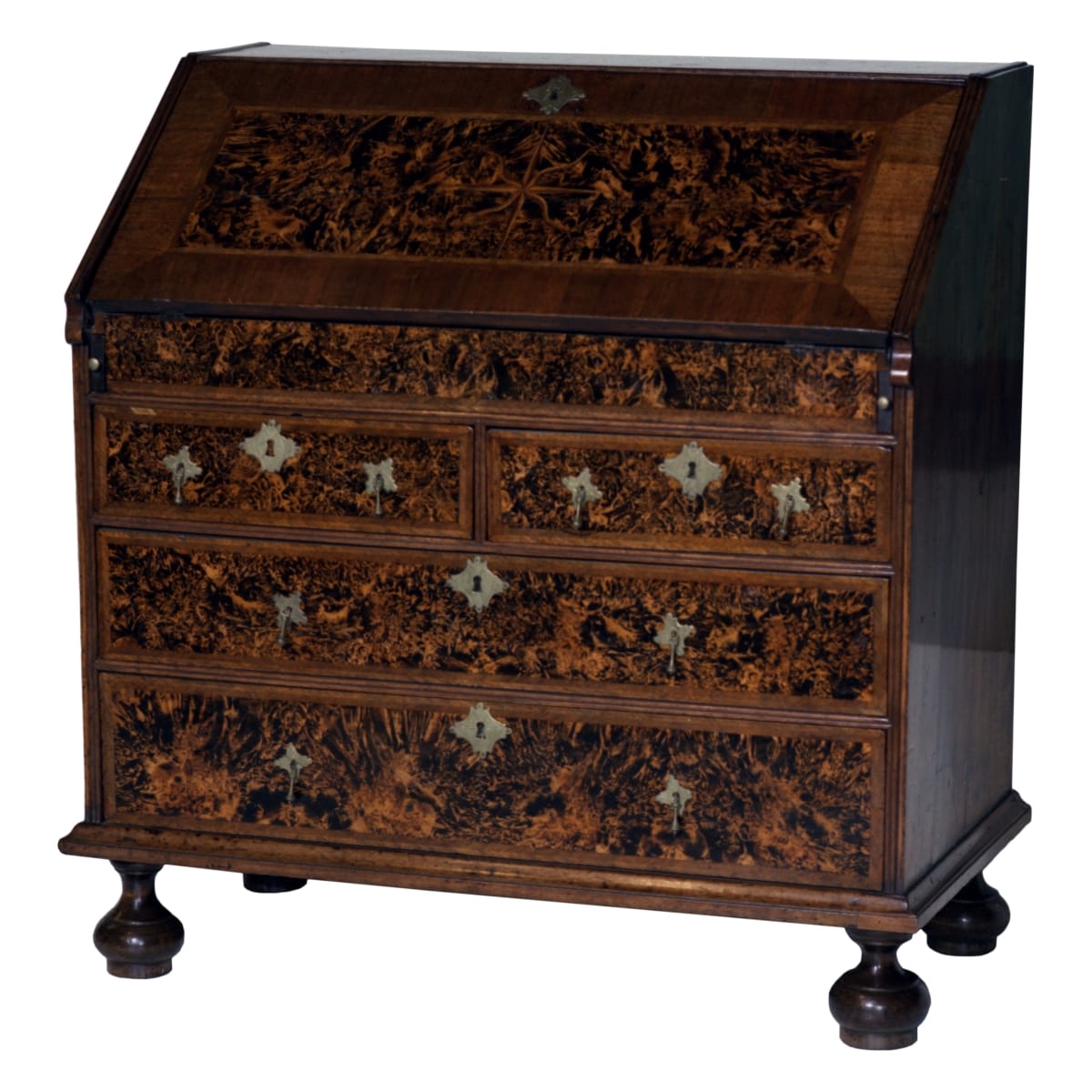
- Fall Front Desk, 1700-1730 - In the early 1700s, prosperous, yet frugal New England merchants showed off their wealth and good taste through functional objects, like furniture. This desk served as place to store important documents and valuables. It has numerous lockable drawers and several secret compartments. The fashionable and expensive walnut burl veneers make this object suitable for display in a parlor, where guests would be impressed.
- 1700-1730
- Collections - Artifact
Fall Front Desk, 1700-1730
In the early 1700s, prosperous, yet frugal New England merchants showed off their wealth and good taste through functional objects, like furniture. This desk served as place to store important documents and valuables. It has numerous lockable drawers and several secret compartments. The fashionable and expensive walnut burl veneers make this object suitable for display in a parlor, where guests would be impressed.
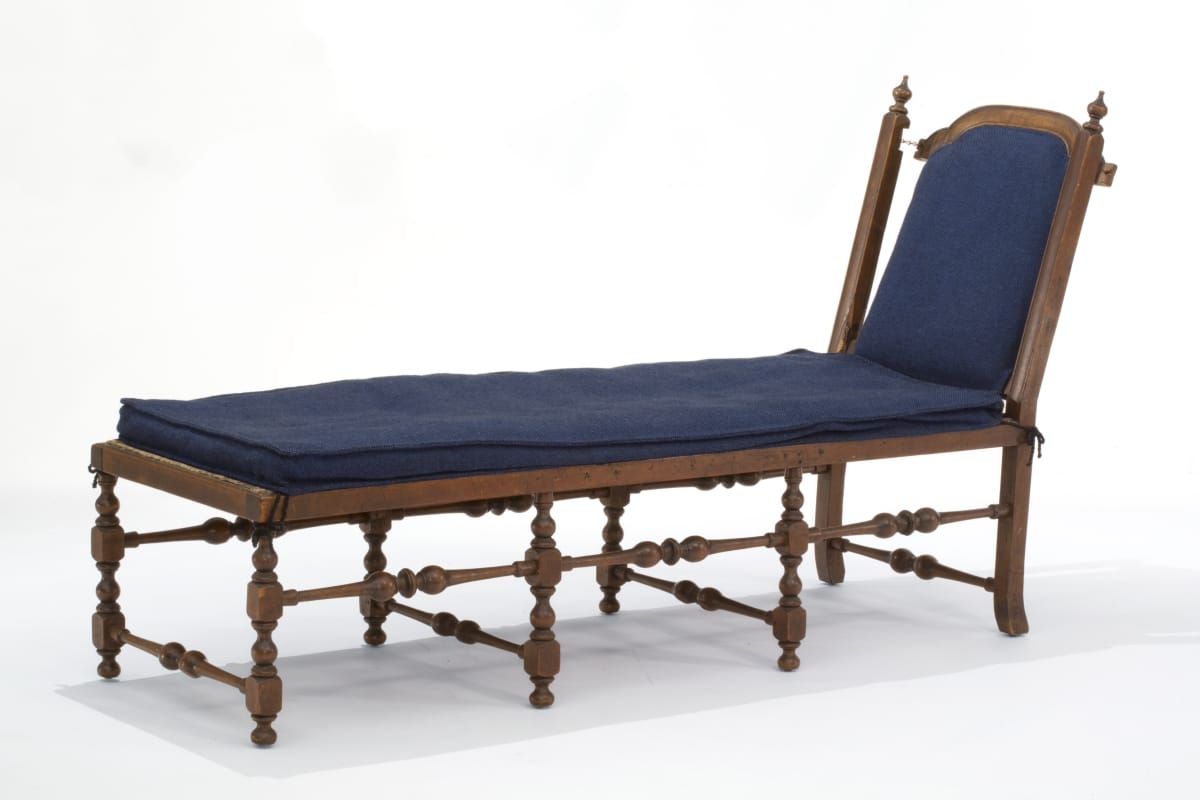
- Daybed, 1735-1760 - Wealthy colonial ladies used daybeds in parlors or bedchambers to rest, read or nap. Some daybeds had adjustable backrests to make them even more comfortable.
- 1735-1760
- Collections - Artifact
Daybed, 1735-1760
Wealthy colonial ladies used daybeds in parlors or bedchambers to rest, read or nap. Some daybeds had adjustable backrests to make them even more comfortable.
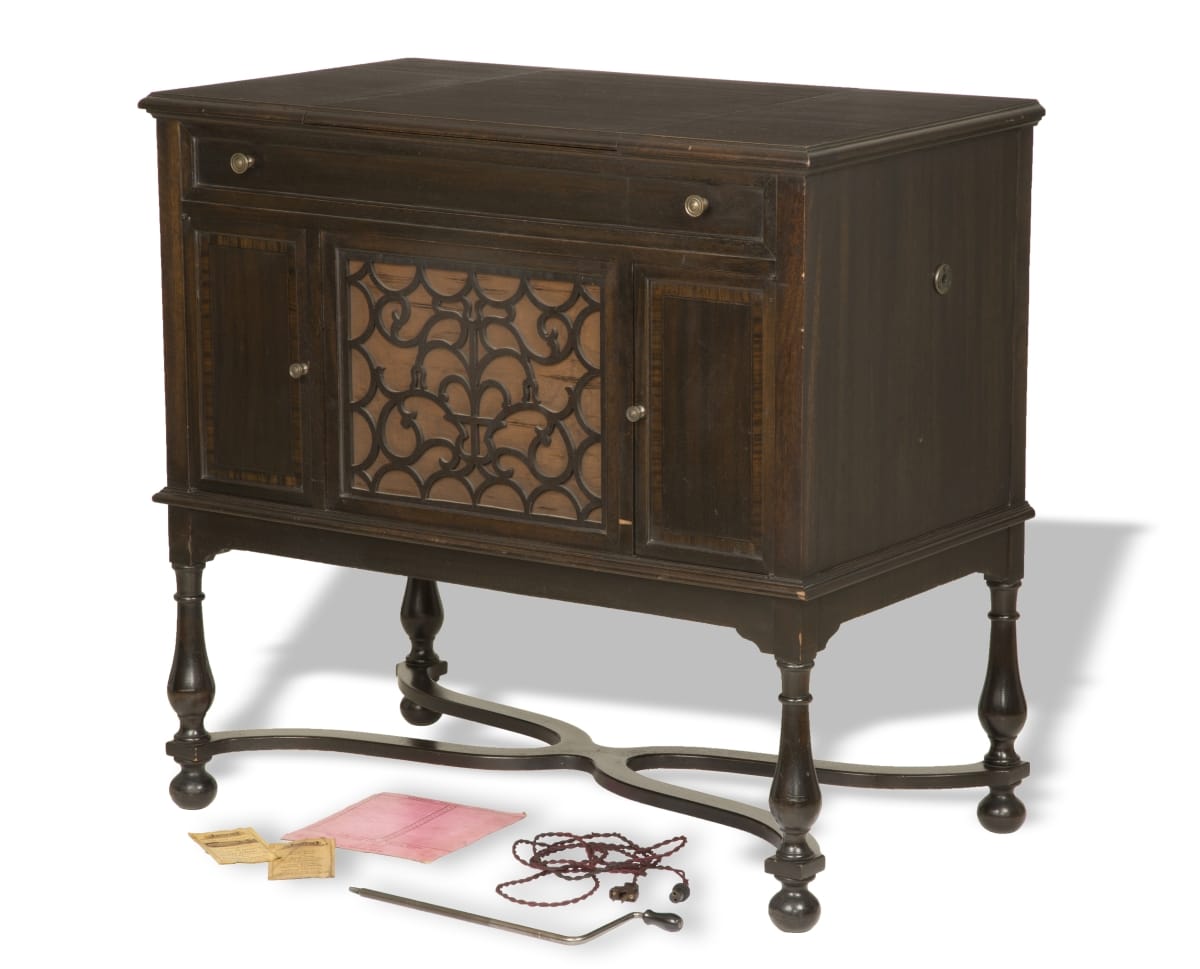
- Edison Diamond Disc Phonograph, Model MWC-33, 1922-1927 -
- 1922-1927
- Collections - Artifact
Edison Diamond Disc Phonograph, Model MWC-33, 1922-1927
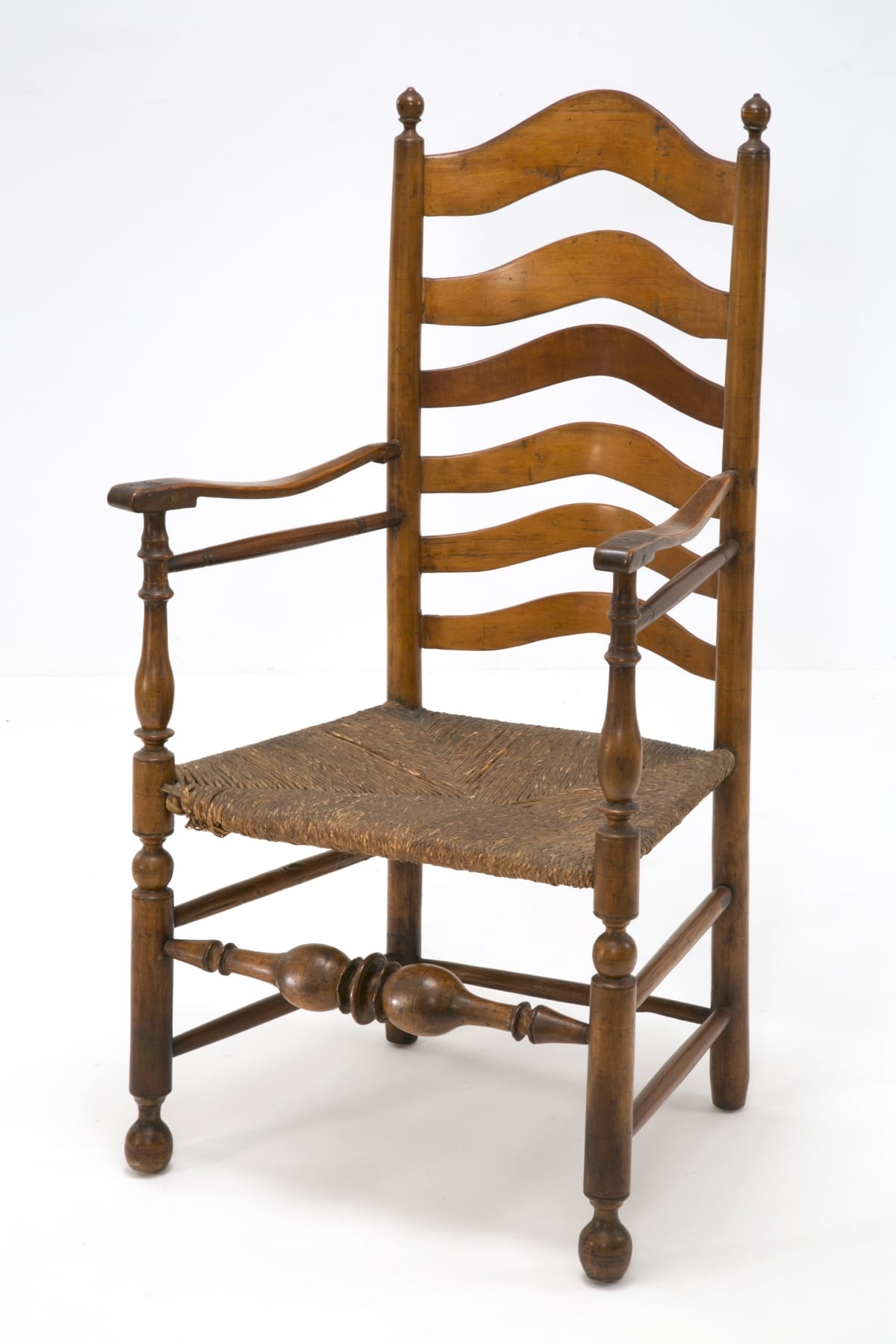
- Slat-back Armchair, 1765-1795 -
- 1765-1795
- Collections - Artifact
Slat-back Armchair, 1765-1795
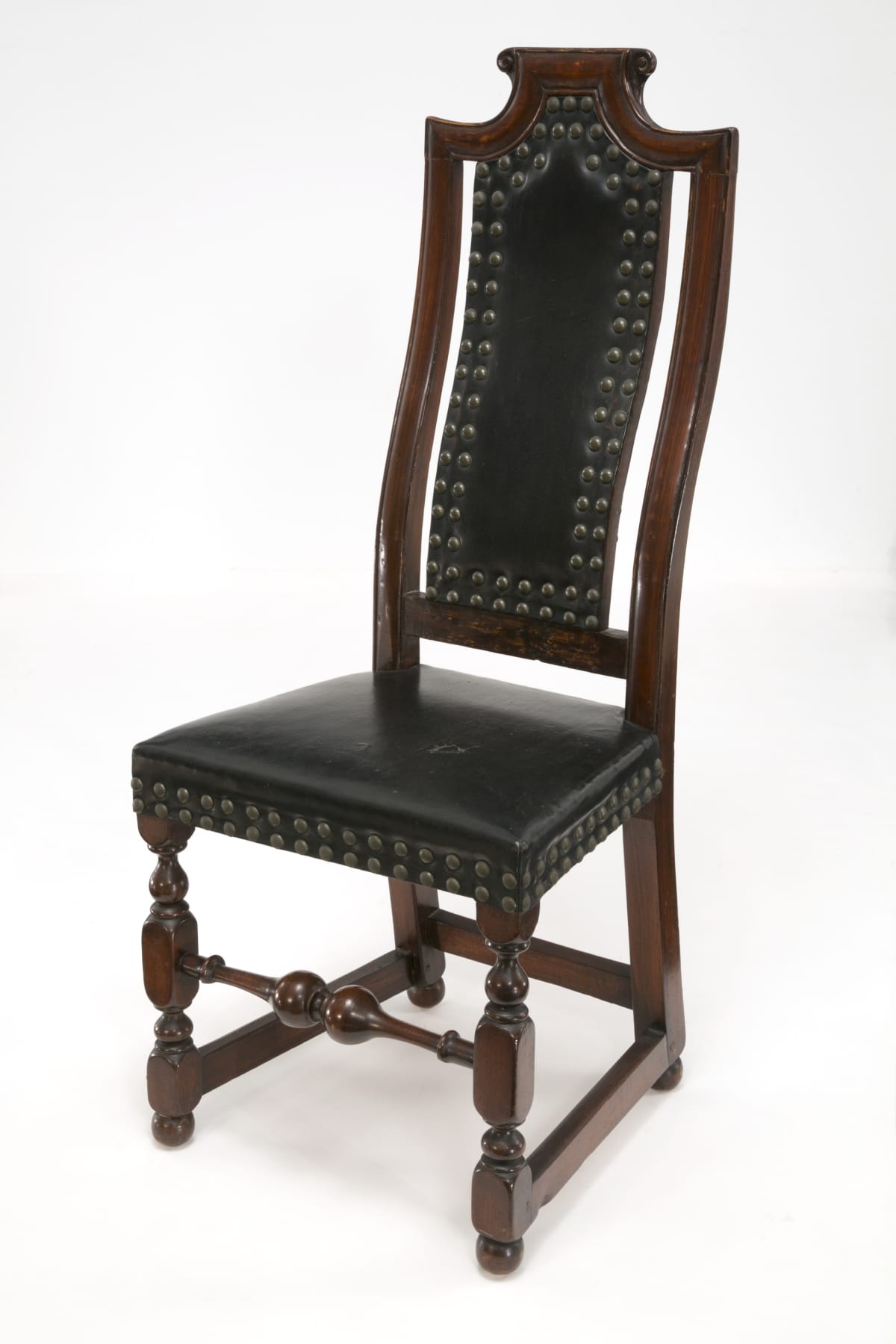
- "Boston" Side Chair, 1730-1740 - Colonial Boston craftsmen produced a distinctive "crook'd back" chair -- a chair with S-curve stiles. This and other types of Boston-made chairs were made as "venture cargo." Enterprising Boston merchants loaded their ships with this furniture, seeking to sell it to other colonists in cities and towns all along the east coast.
- 1730-1740
- Collections - Artifact
"Boston" Side Chair, 1730-1740
Colonial Boston craftsmen produced a distinctive "crook'd back" chair -- a chair with S-curve stiles. This and other types of Boston-made chairs were made as "venture cargo." Enterprising Boston merchants loaded their ships with this furniture, seeking to sell it to other colonists in cities and towns all along the east coast.
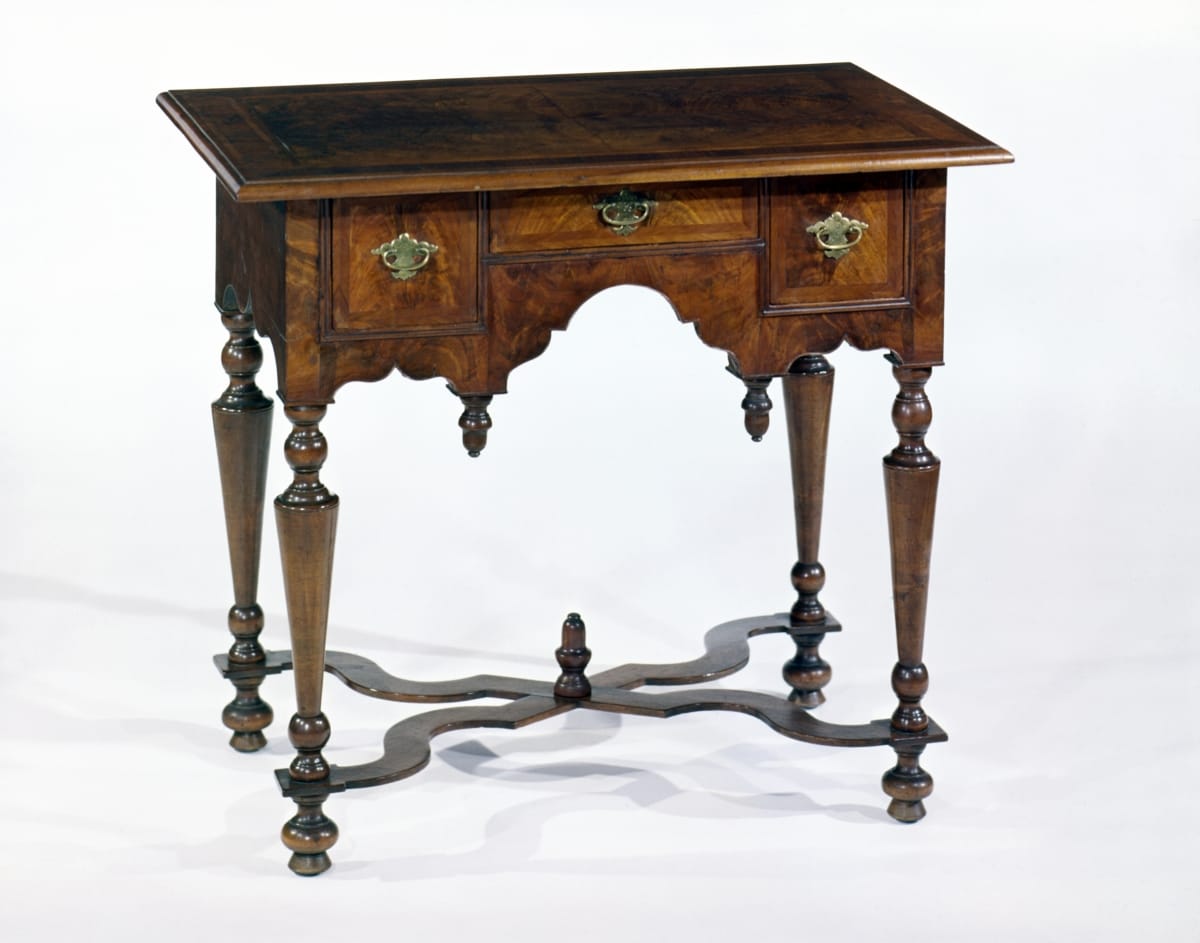
- Dressing Table, 1700-1730 - Ladies put on elaborate makeup and fixed their hair in front of a dressing table like this. A mirror would have sat on the top.
- 1700-1730
- Collections - Artifact
Dressing Table, 1700-1730
Ladies put on elaborate makeup and fixed their hair in front of a dressing table like this. A mirror would have sat on the top.