
Search
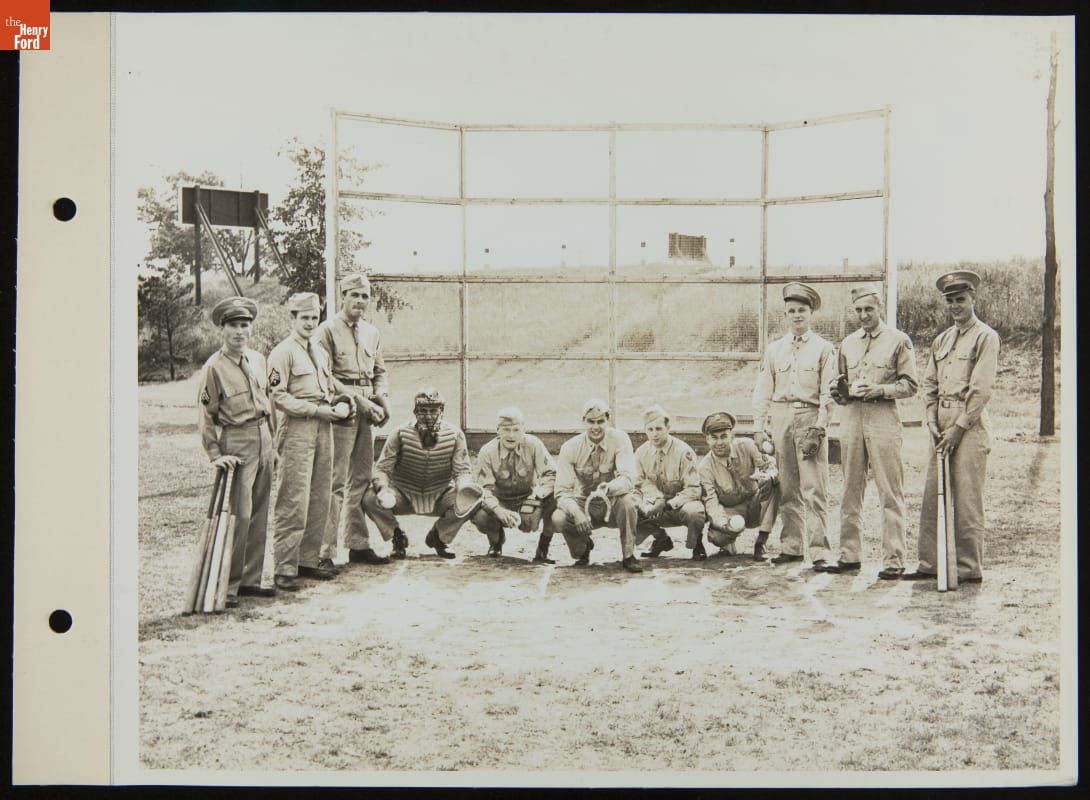
- Baseball Players Pose with Equipment Given by Mrs. Gitlen, Willow Run Station Hospital, September 1943 - Opportunities for recreation were important in maintaining morale among Willow Run's employees during World War II. They worked long shifts under constant pressure to meet wartime production goals. To ease the strain, the plant offered organized leagues for baseball, softball, bowling, golf, and other sports.
- September 03, 1943
- Collections - Artifact
Baseball Players Pose with Equipment Given by Mrs. Gitlen, Willow Run Station Hospital, September 1943
Opportunities for recreation were important in maintaining morale among Willow Run's employees during World War II. They worked long shifts under constant pressure to meet wartime production goals. To ease the strain, the plant offered organized leagues for baseball, softball, bowling, golf, and other sports.
- B-24 Bomber in Flight, Willow Run Bomber Plant, 1944 - During World War II, Ford Motor Company built 8,685 B-24 Liberator bomber airplanes at its Willow Run plant. Most of them were complete airplanes flown away for delivery directly from the plant's on-site airport. The remaining bombers were shipped out by truck as "knock-down kits" for final assembly at Douglas Aircraft's plant in Tulsa, Oklahoma, or Consolidated Aircraft's plant in Fort Worth, Texas.
- October 12, 1944
- Collections - Artifact
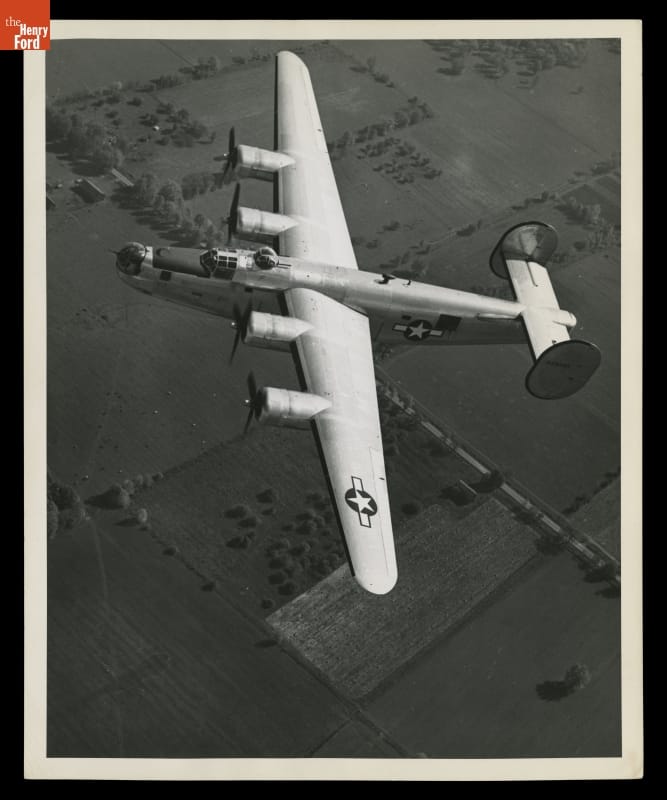
B-24 Bomber in Flight, Willow Run Bomber Plant, 1944
During World War II, Ford Motor Company built 8,685 B-24 Liberator bomber airplanes at its Willow Run plant. Most of them were complete airplanes flown away for delivery directly from the plant's on-site airport. The remaining bombers were shipped out by truck as "knock-down kits" for final assembly at Douglas Aircraft's plant in Tulsa, Oklahoma, or Consolidated Aircraft's plant in Fort Worth, Texas.
- Interior of Willow Run Bomber Plant Air Traffic Control Tower, January 29, 1943 - Ford Motor Company built 8,685 B-24 bomber airplanes at its Willow Run, Michigan, plant during World War II. At its peak in 1944, the factory produced one plane every 63 minutes. Most of the bombers left Willow Run under their own power from the on-site airport. The airport and its crew could accommodate up to 20 takeoffs per hour.
- January 29, 1943
- Collections - Artifact
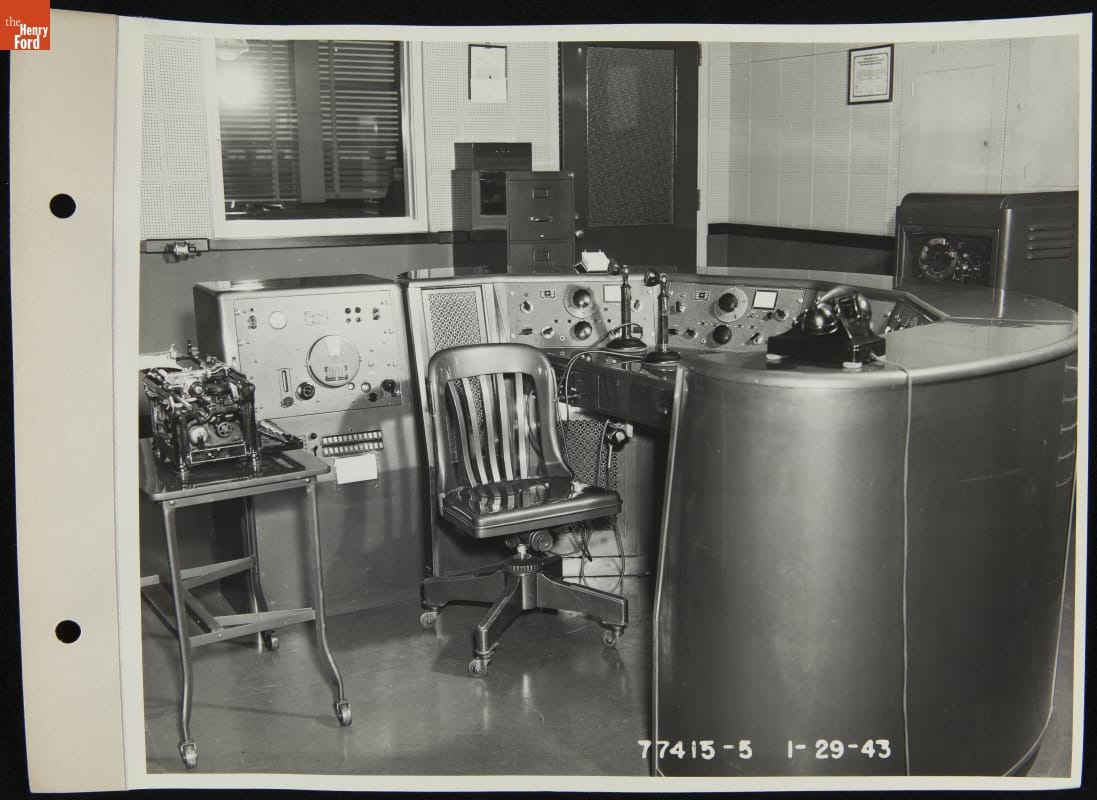
Interior of Willow Run Bomber Plant Air Traffic Control Tower, January 29, 1943
Ford Motor Company built 8,685 B-24 bomber airplanes at its Willow Run, Michigan, plant during World War II. At its peak in 1944, the factory produced one plane every 63 minutes. Most of the bombers left Willow Run under their own power from the on-site airport. The airport and its crew could accommodate up to 20 takeoffs per hour.
- Mrs. Gitlen Presenting Baseball Equipment to Major Cohen at Willow Run Station Hospital, September 1943 - Opportunities for recreation were important in maintaining morale among Willow Run's employees during World War II. They worked long shifts under constant pressure to meet wartime production goals. To ease the strain, the plant offered organized leagues for baseball, softball, bowling, golf, and other sports.
- September 01, 1944
- Collections - Artifact
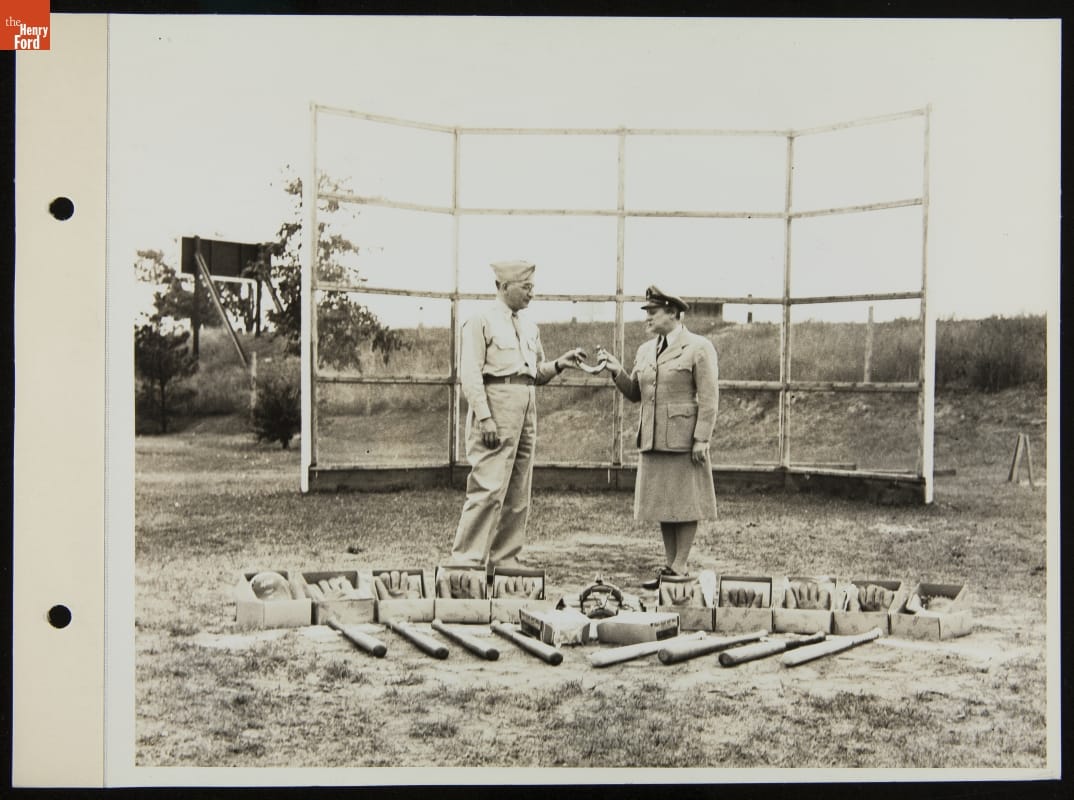
Mrs. Gitlen Presenting Baseball Equipment to Major Cohen at Willow Run Station Hospital, September 1943
Opportunities for recreation were important in maintaining morale among Willow Run's employees during World War II. They worked long shifts under constant pressure to meet wartime production goals. To ease the strain, the plant offered organized leagues for baseball, softball, bowling, golf, and other sports.
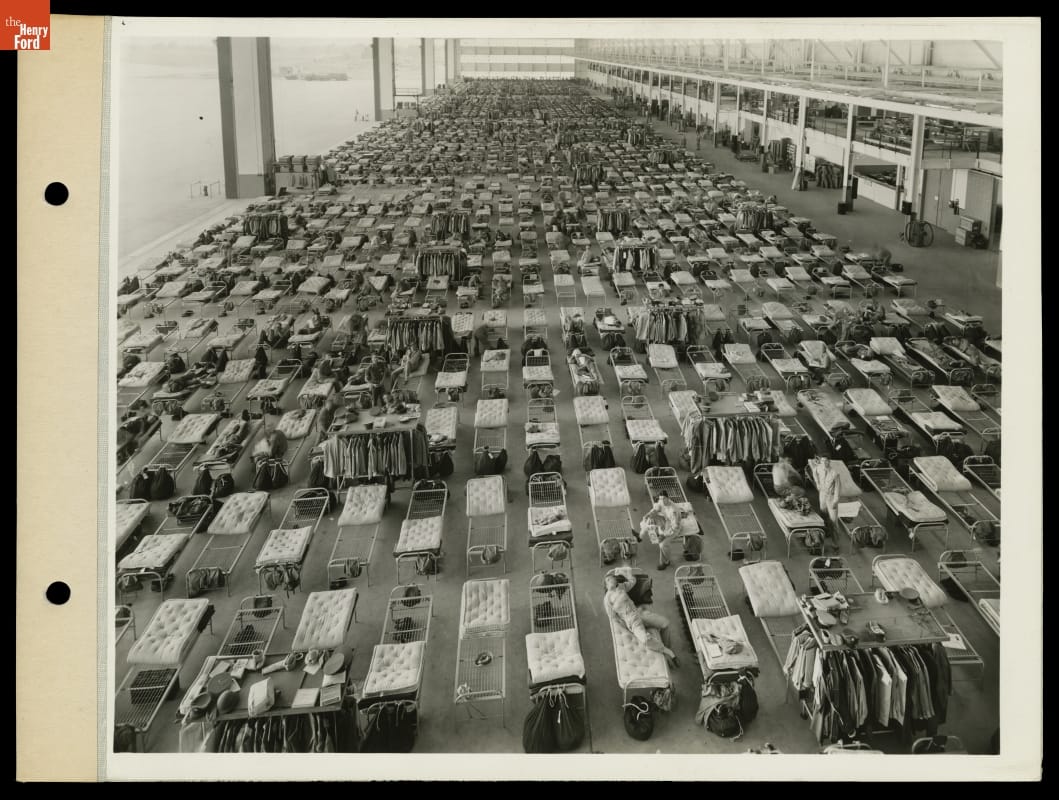
- Military Sleeping Quarters in Willow Run Bomber Plant Hangar, 1942 - Ford Motor Company's Willow Run complex included a 1,484-acre airport with six runways and three aircraft hangars. The largest of these hangars could house 20 B-24 bombers at once, and included a control tower, a café, and a hotel. Occasionally the hangars were put to other uses -- like housing military personnel at the plant.
- August 24, 1942
- Collections - Artifact
Military Sleeping Quarters in Willow Run Bomber Plant Hangar, 1942
Ford Motor Company's Willow Run complex included a 1,484-acre airport with six runways and three aircraft hangars. The largest of these hangars could house 20 B-24 bombers at once, and included a control tower, a café, and a hotel. Occasionally the hangars were put to other uses -- like housing military personnel at the plant.
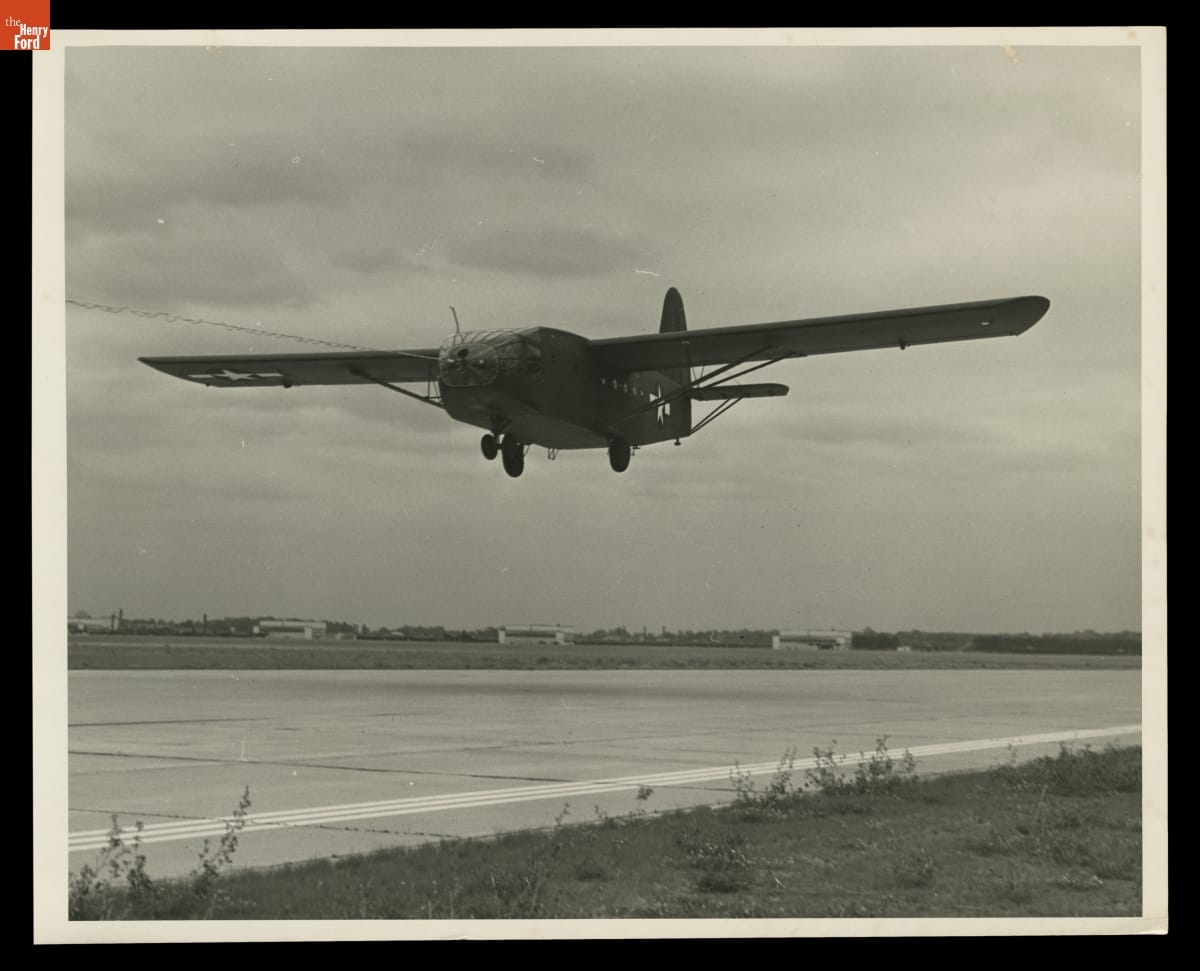
- Glider Taking off from Ford Motor Company Willow Run Bomber Plant Airport, June 1944 - In June 1943, Ford Motor Company received a contract to build Waco CG-13A gliders for the U.S. Army. These gliders were designed to carry more troops and cargo than the smaller Waco CG-4A models Ford produced at its Iron Mountain, Michigan, factory. This photo shows one of the CG-13A gliders in flight at Ford's Willow Run bomber plant.
- June 06, 1944
- Collections - Artifact
Glider Taking off from Ford Motor Company Willow Run Bomber Plant Airport, June 1944
In June 1943, Ford Motor Company received a contract to build Waco CG-13A gliders for the U.S. Army. These gliders were designed to carry more troops and cargo than the smaller Waco CG-4A models Ford produced at its Iron Mountain, Michigan, factory. This photo shows one of the CG-13A gliders in flight at Ford's Willow Run bomber plant.
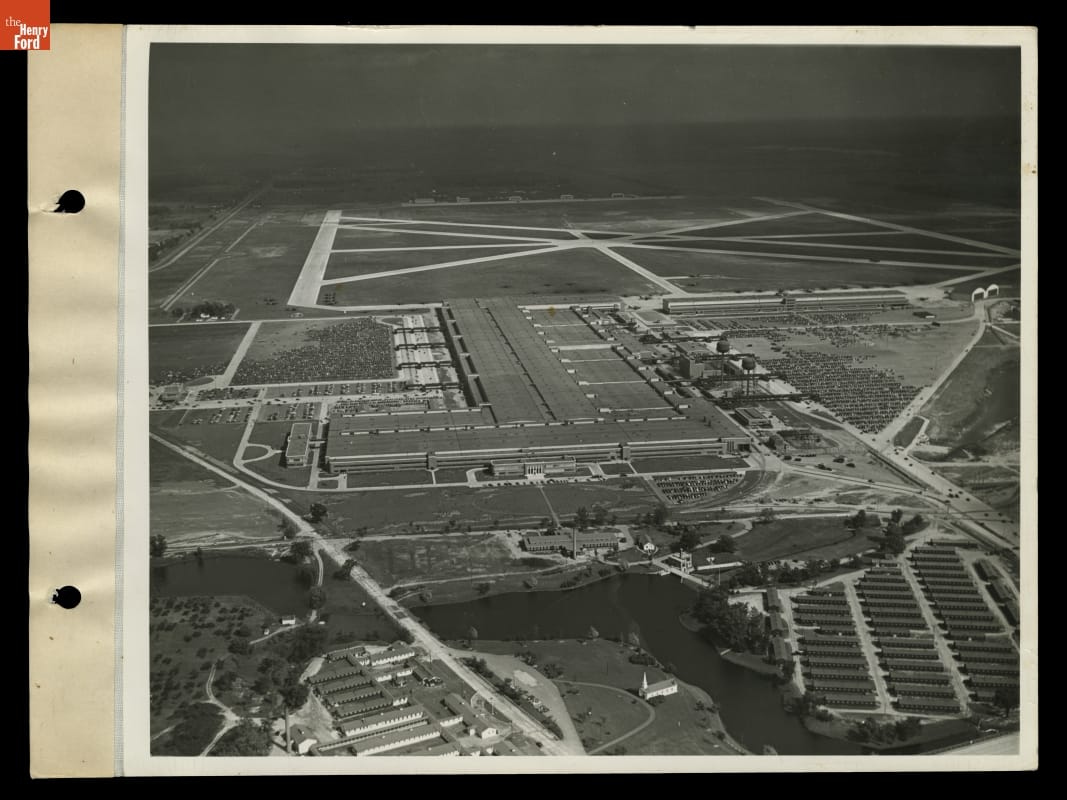
- Aerial View of the Ford Motor Company Willow Run Bomber Plant, September 1945 - Ford Motor Company's Willow Run plant manufactured B-24 Liberator bomber airplanes during World War II. The complex consisted of several factory buildings (including a main assembly building more than a mile long), classrooms, a hospital, and worker housing. An adjacent airport, with six runways and three hangars, allowed finished airplanes to leave the plant under their own power.
- September 01, 1945
- Collections - Artifact
Aerial View of the Ford Motor Company Willow Run Bomber Plant, September 1945
Ford Motor Company's Willow Run plant manufactured B-24 Liberator bomber airplanes during World War II. The complex consisted of several factory buildings (including a main assembly building more than a mile long), classrooms, a hospital, and worker housing. An adjacent airport, with six runways and three hangars, allowed finished airplanes to leave the plant under their own power.
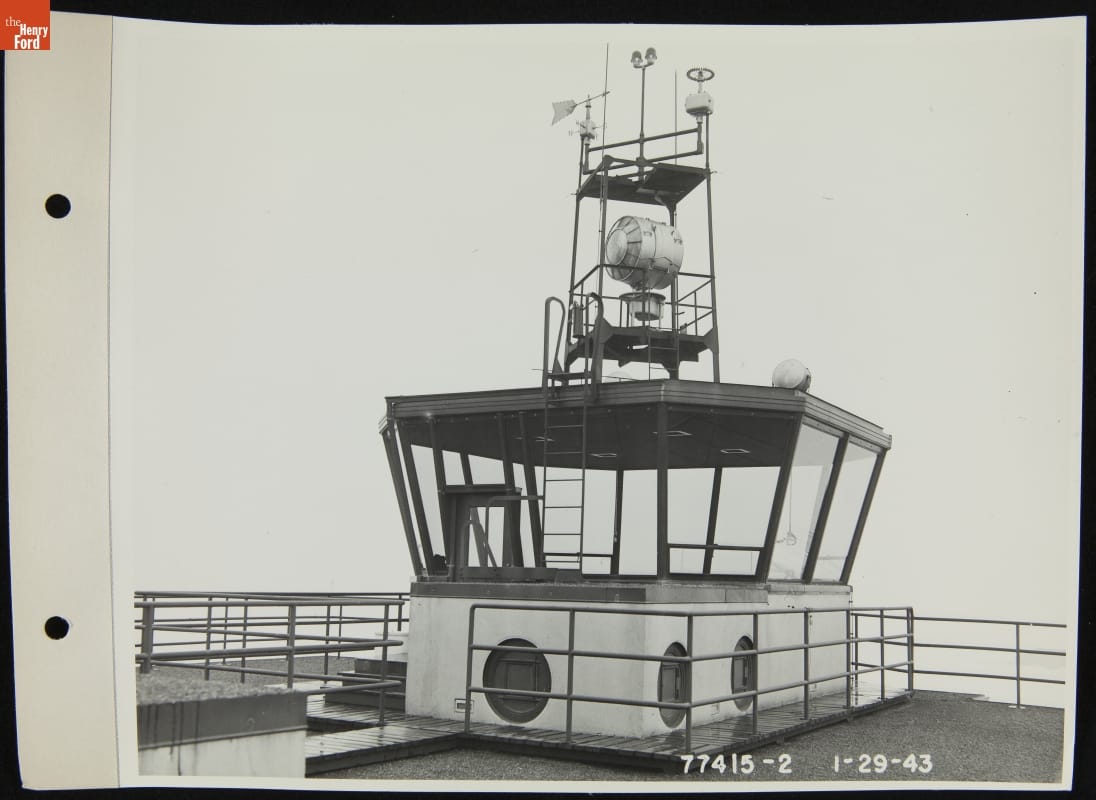
- Willow Run Bomber Plant Air Traffic Control Tower, 1943 - Ford Motor Company built 8,685 B-24 bomber airplanes at its Willow Run, Michigan, plant during World War II. At its peak in 1944, the factory produced one plane every 63 minutes. Most of the bombers left Willow Run under their own power from the on-site airport. The airport and its crew could accommodate up to 20 takeoffs per hour.
- January 29, 1943
- Collections - Artifact
Willow Run Bomber Plant Air Traffic Control Tower, 1943
Ford Motor Company built 8,685 B-24 bomber airplanes at its Willow Run, Michigan, plant during World War II. At its peak in 1944, the factory produced one plane every 63 minutes. Most of the bombers left Willow Run under their own power from the on-site airport. The airport and its crew could accommodate up to 20 takeoffs per hour.
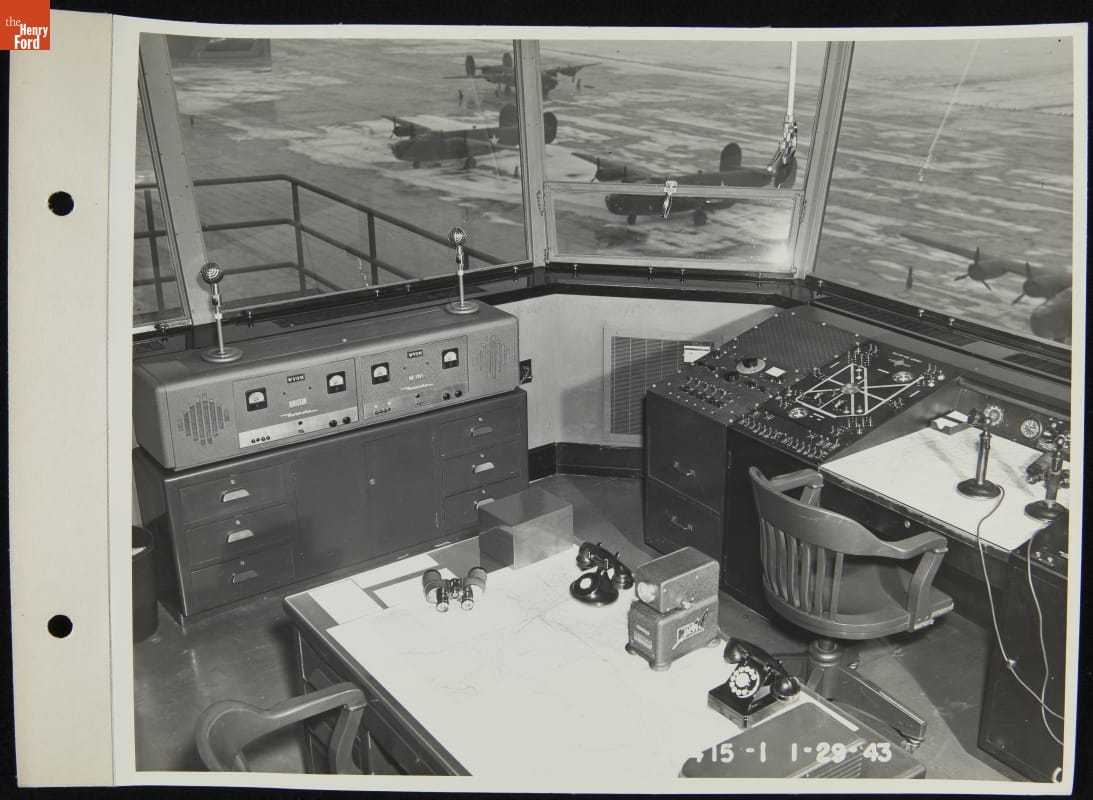
- Interior of Willow Run Bomber Plant Air Traffic Control Tower, January 29, 1943 - Ford Motor Company built 8,685 B-24 bomber airplanes at its Willow Run, Michigan, plant during World War II. At its peak in 1944, the factory produced one plane every 63 minutes. Most of the bombers left Willow Run under their own power from the on-site airport. The airport and its crew could accommodate up to 20 takeoffs per hour.
- January 29, 1943
- Collections - Artifact
Interior of Willow Run Bomber Plant Air Traffic Control Tower, January 29, 1943
Ford Motor Company built 8,685 B-24 bomber airplanes at its Willow Run, Michigan, plant during World War II. At its peak in 1944, the factory produced one plane every 63 minutes. Most of the bombers left Willow Run under their own power from the on-site airport. The airport and its crew could accommodate up to 20 takeoffs per hour.
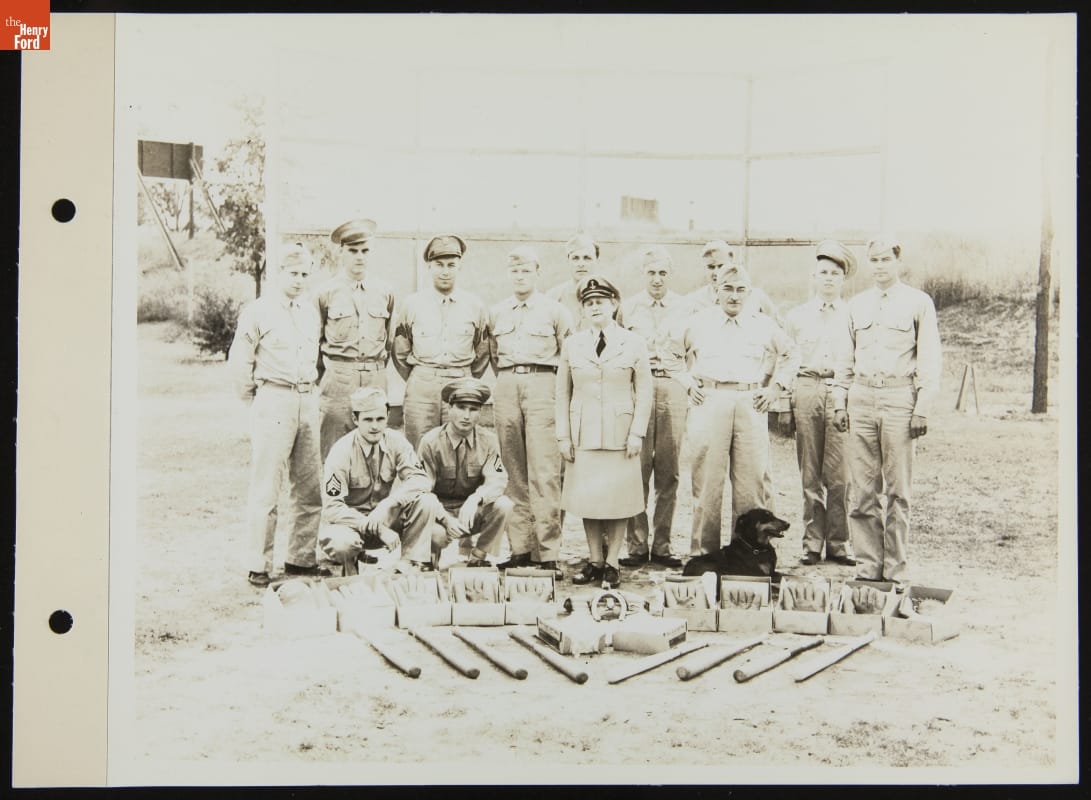
- Baseball Players and Mrs. Gitle Pose with New Equipment, Willow Run Station Hospital, September 1943 - Opportunities for recreation were important in maintaining morale among Willow Run's employees during World War II. They worked long shifts under constant pressure to meet wartime production goals. To ease the strain, the plant offered organized leagues for baseball, softball, bowling, golf, and other sports.
- September 03, 1943
- Collections - Artifact
Baseball Players and Mrs. Gitle Pose with New Equipment, Willow Run Station Hospital, September 1943
Opportunities for recreation were important in maintaining morale among Willow Run's employees during World War II. They worked long shifts under constant pressure to meet wartime production goals. To ease the strain, the plant offered organized leagues for baseball, softball, bowling, golf, and other sports.