
Search
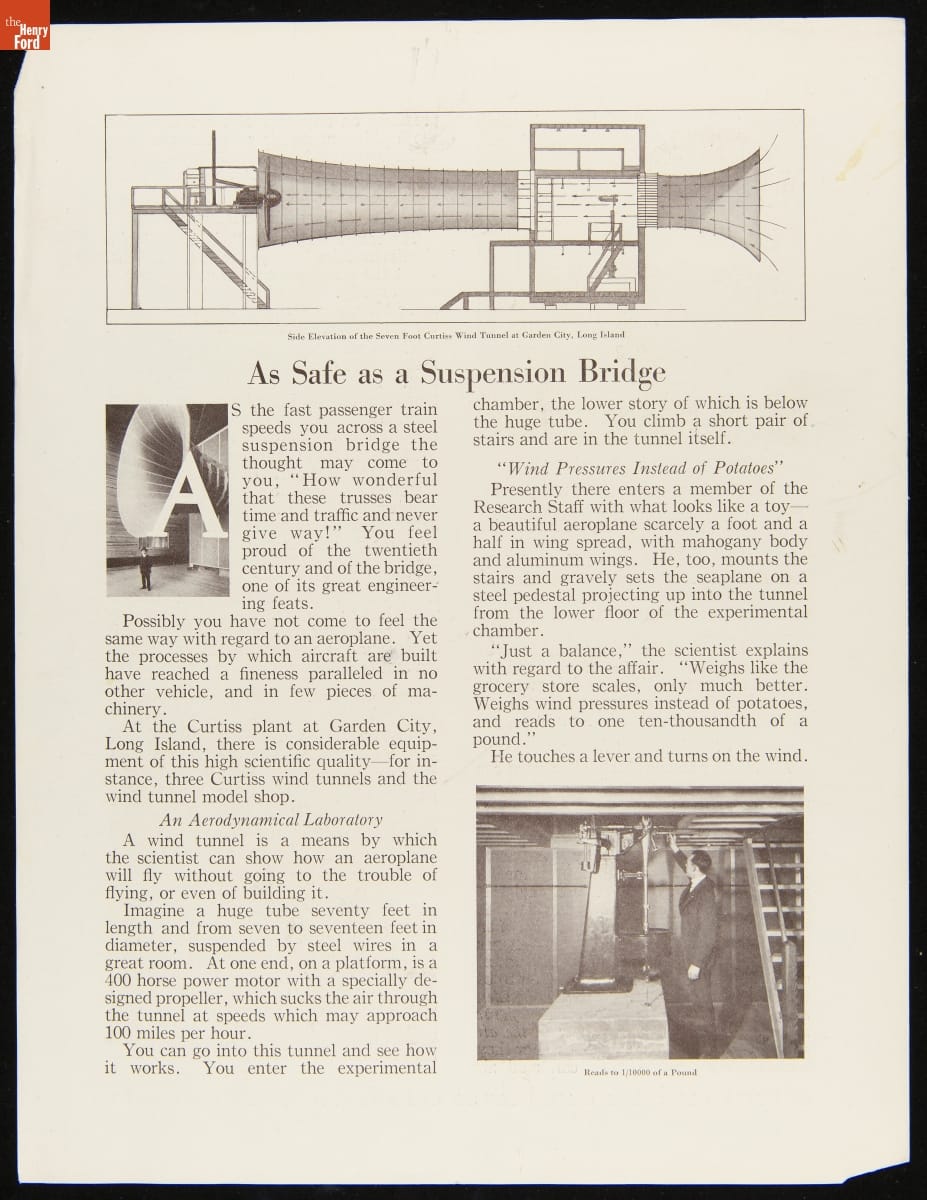
- As Safe as a Suspension Bridge, 1919-1920 - Glenn Curtiss, whose airplane business flourished during World War I, established a state-of-the-art research and experimentation facility on Long Island, New York, in 1917. At the Curtiss Engineering Corporation, a handpicked team built, tested, and refined propellers, engines, and airplanes. This brochure claimed a scientific approach made Curtiss airplanes as safe as the more established modes of transportation Americans already trusted.
- 1919-1920
- Collections - Artifact
As Safe as a Suspension Bridge, 1919-1920
Glenn Curtiss, whose airplane business flourished during World War I, established a state-of-the-art research and experimentation facility on Long Island, New York, in 1917. At the Curtiss Engineering Corporation, a handpicked team built, tested, and refined propellers, engines, and airplanes. This brochure claimed a scientific approach made Curtiss airplanes as safe as the more established modes of transportation Americans already trusted.
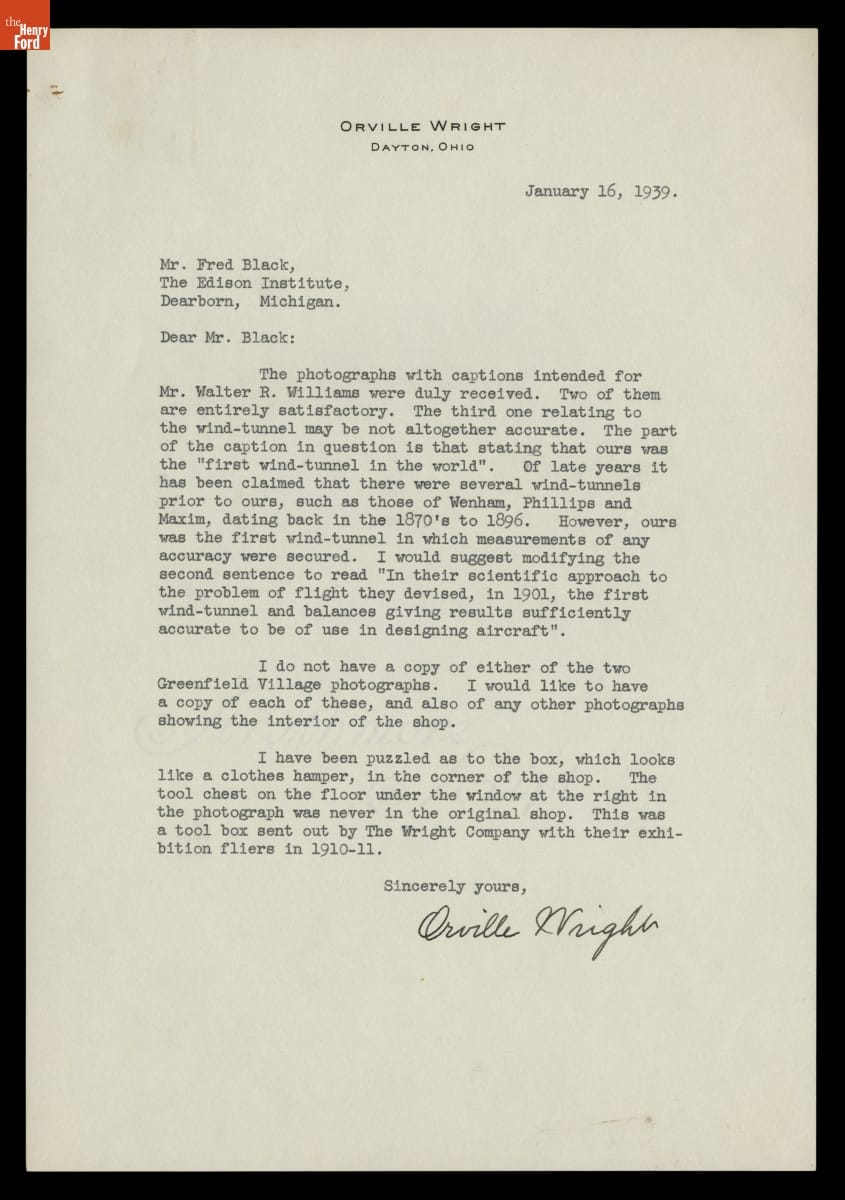
- Letter from Orville Wright to Fred Black about Photos of the Wind Tunnel in Wright Cycle Shop, January 16, 1939 - Henry Ford acquired the Wright brothers' home and cycle shop in 1936, and he relocated them from Dayton, Ohio, to his Greenfield Village museum in Dearborn, Michigan. Orville Wright consulted on the project to ensure accuracy. In this letter, Wright suggested corrections to text about the brothers' 1901 wind tunnel, and he questioned the placement of a toolbox in the shop.
- January 16, 1939
- Collections - Artifact
Letter from Orville Wright to Fred Black about Photos of the Wind Tunnel in Wright Cycle Shop, January 16, 1939
Henry Ford acquired the Wright brothers' home and cycle shop in 1936, and he relocated them from Dayton, Ohio, to his Greenfield Village museum in Dearborn, Michigan. Orville Wright consulted on the project to ensure accuracy. In this letter, Wright suggested corrections to text about the brothers' 1901 wind tunnel, and he questioned the placement of a toolbox in the shop.
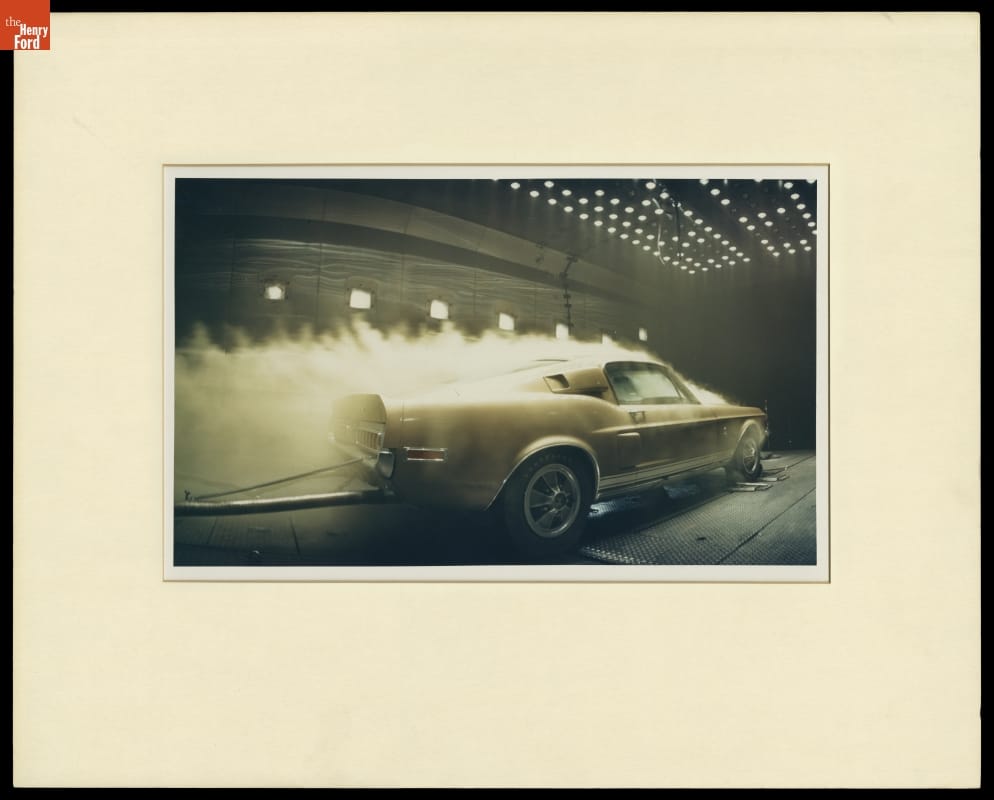
- Shelby Mustang GT 500 Being Tested in a Wind Tunnel, 1967 - Wind tunnels are chambers that use flowing air to test the aerodynamic properties of an object. Automotive stylists and engineers use the results of wind tunnel testing to design motor vehicle chassis. This photograph shows a wind tunnel test of a 1967 Shelby Mustang. Shelby American built these high performance versions of Ford's Mustang in the late 1960s.
- 1967
- Collections - Artifact
Shelby Mustang GT 500 Being Tested in a Wind Tunnel, 1967
Wind tunnels are chambers that use flowing air to test the aerodynamic properties of an object. Automotive stylists and engineers use the results of wind tunnel testing to design motor vehicle chassis. This photograph shows a wind tunnel test of a 1967 Shelby Mustang. Shelby American built these high performance versions of Ford's Mustang in the late 1960s.
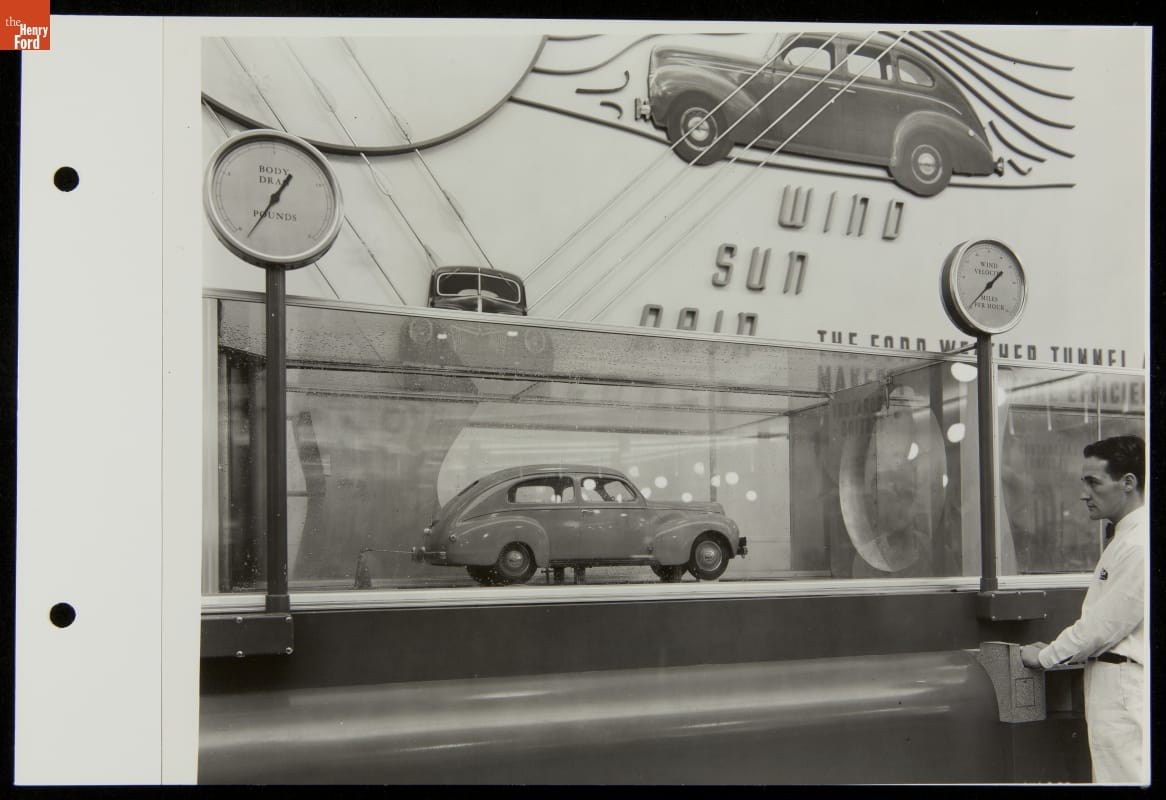
- Wind Tunnel Exhibit, Ford Exposition, New York World's Fair, 1939 - Henry Ford viewed national expositions as business opportunities <EM>and</EM> platforms for public education. During the 1939-40 New York World's Fair, Ford Motor Company spent more than $5 million to build and maintain an elaborate exposition space. Informative displays and manufacturing demonstrations inside Ford's massive fair building offered visitors an in-depth, entertaining, and educational look at industrial processes.
- 1939
- Collections - Artifact
Wind Tunnel Exhibit, Ford Exposition, New York World's Fair, 1939
Henry Ford viewed national expositions as business opportunities and platforms for public education. During the 1939-40 New York World's Fair, Ford Motor Company spent more than $5 million to build and maintain an elaborate exposition space. Informative displays and manufacturing demonstrations inside Ford's massive fair building offered visitors an in-depth, entertaining, and educational look at industrial processes.
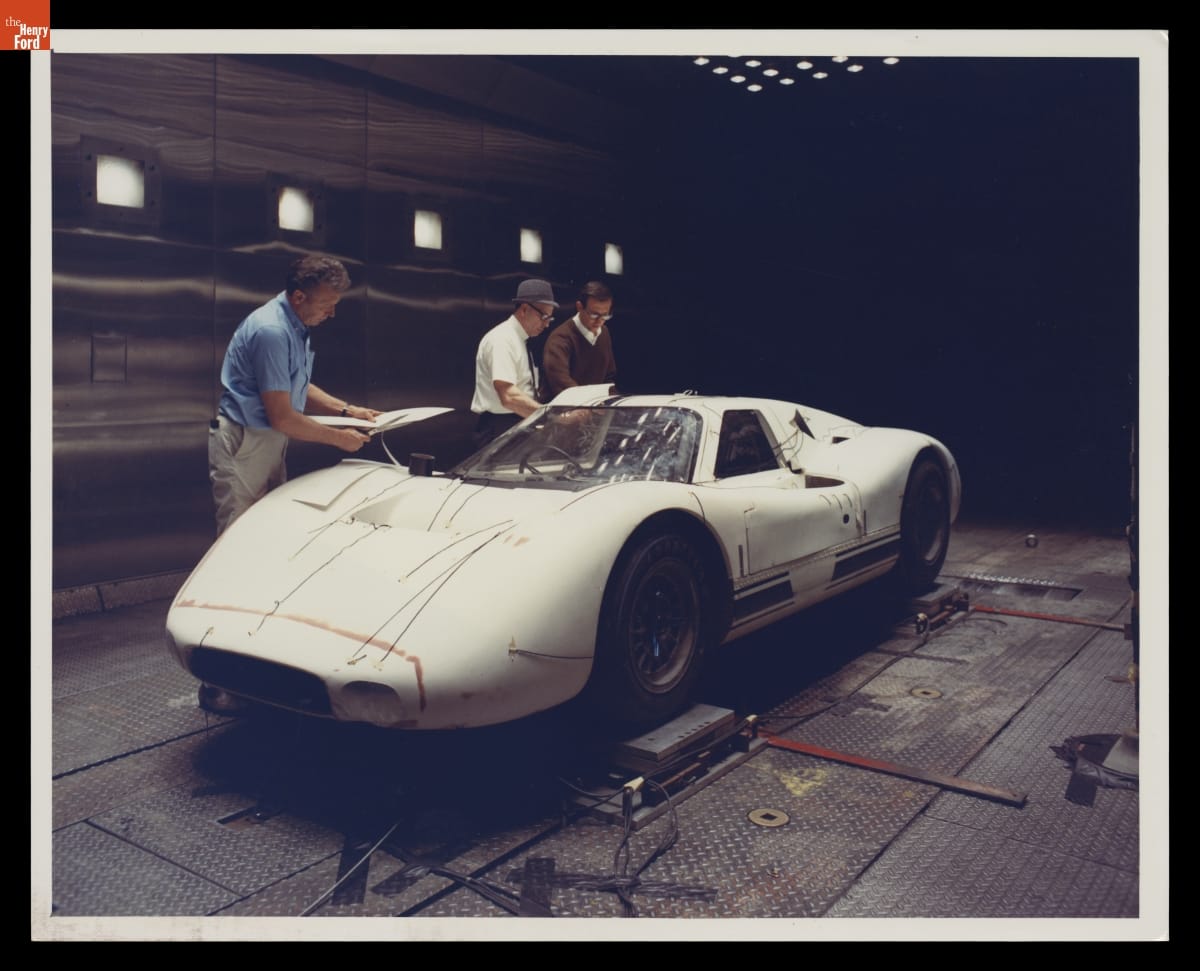
- Ford GT40 J-Car Wind Tunnel Testing, Dearborn, Michigan, 1967 - Ford Motor Company intended to compete at Le Mans in 1967 with the all-new J-Car. After driver Ken Miles was killed during trials in August 1966, the J-Car was reworked into the safer Mark IV. This photo shows Shelby American's Phil Remington (left) with Ford engineers as they test the car's shape in a wind tunnel.
- February 01, 1967
- Collections - Artifact
Ford GT40 J-Car Wind Tunnel Testing, Dearborn, Michigan, 1967
Ford Motor Company intended to compete at Le Mans in 1967 with the all-new J-Car. After driver Ken Miles was killed during trials in August 1966, the J-Car was reworked into the safer Mark IV. This photo shows Shelby American's Phil Remington (left) with Ford engineers as they test the car's shape in a wind tunnel.
- Wind Tunnel Exhibit, Ford Exposition, New York World's Fair, 1939 - Henry Ford viewed national expositions as business opportunities <EM>and</EM> platforms for public education. During the 1939-40 New York World's Fair, Ford Motor Company spent more than $5 million to build and maintain an elaborate exposition space. Informative displays and manufacturing demonstrations inside Ford's massive fair building offered visitors an in-depth, entertaining, and educational look at industrial processes.
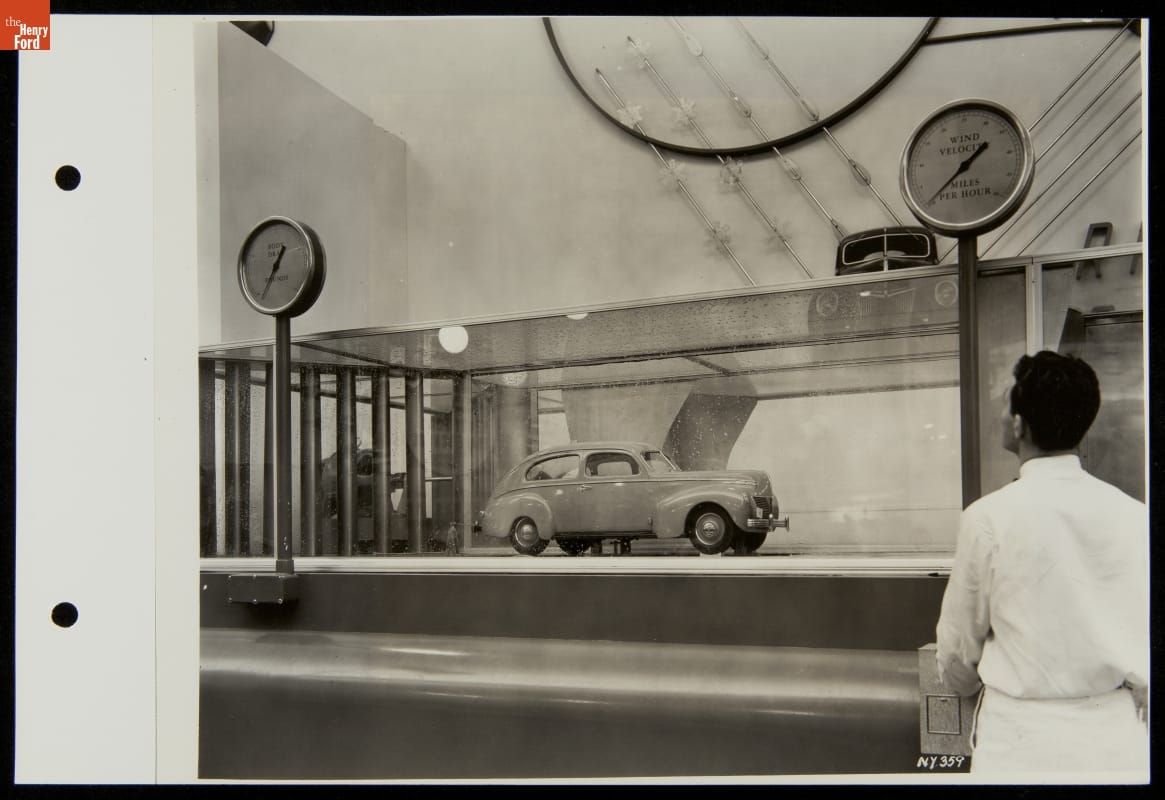
- June 06, 1939
- Collections - Artifact
Wind Tunnel Exhibit, Ford Exposition, New York World's Fair, 1939
Henry Ford viewed national expositions as business opportunities and platforms for public education. During the 1939-40 New York World's Fair, Ford Motor Company spent more than $5 million to build and maintain an elaborate exposition space. Informative displays and manufacturing demonstrations inside Ford's massive fair building offered visitors an in-depth, entertaining, and educational look at industrial processes.
- Wind Tunnel Exhibit, Ford Exposition, New York World's Fair, 1939 - Henry Ford viewed national expositions as business opportunities <EM>and</EM> platforms for public education. During the 1939-40 New York World's Fair, Ford Motor Company spent more than $5 million to build and maintain an elaborate exposition space. Informative displays and manufacturing demonstrations inside Ford's massive fair building offered visitors an in-depth, entertaining, and educational look at industrial processes.
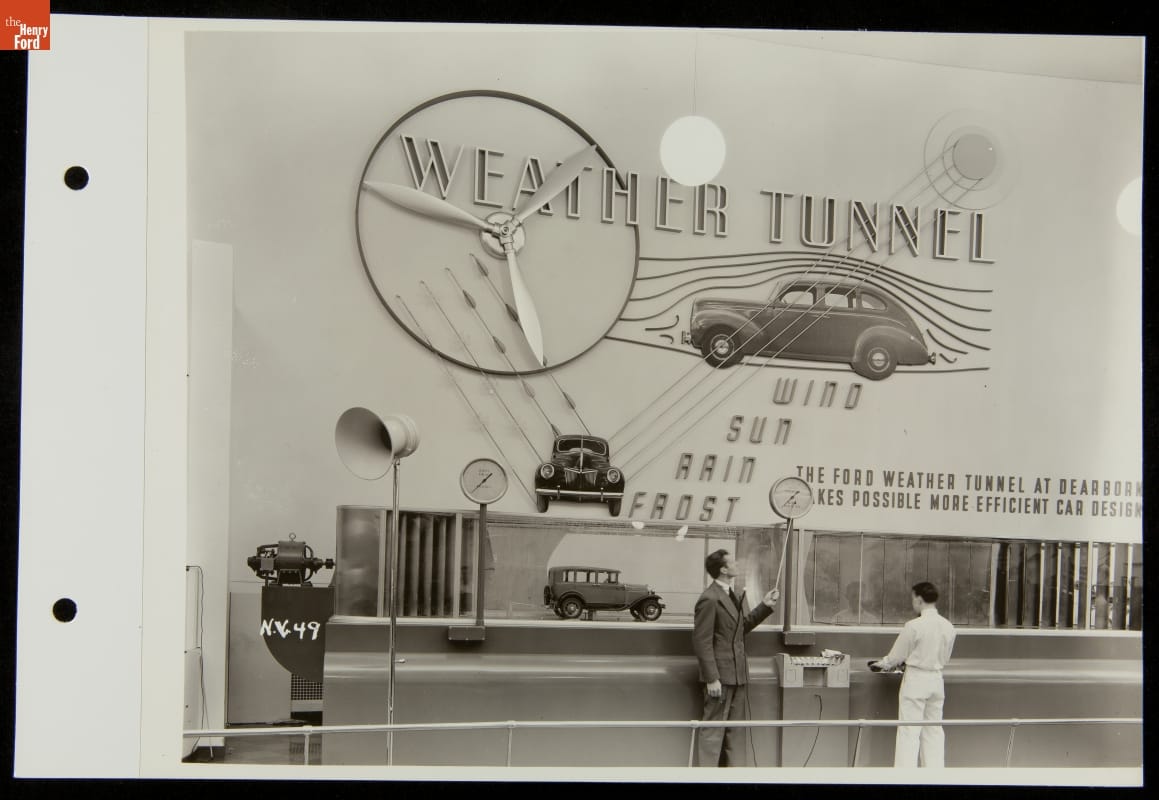
- 1939
- Collections - Artifact
Wind Tunnel Exhibit, Ford Exposition, New York World's Fair, 1939
Henry Ford viewed national expositions as business opportunities and platforms for public education. During the 1939-40 New York World's Fair, Ford Motor Company spent more than $5 million to build and maintain an elaborate exposition space. Informative displays and manufacturing demonstrations inside Ford's massive fair building offered visitors an in-depth, entertaining, and educational look at industrial processes.
- Replica of the Wright Brothers 1901 Wind Tunnel, Constructed in 1938 - When their glider did not perform as expected in 1901, Wilbur and Orville Wright determined that the standard lift tables -- used to predict the lift generated by aircraft wings -- were incorrect. The Wrights built a wind tunnel in their Dayton bicycle shop and calculated their own tables. This new data led directly to their success with the 1903 Wright Flyer.
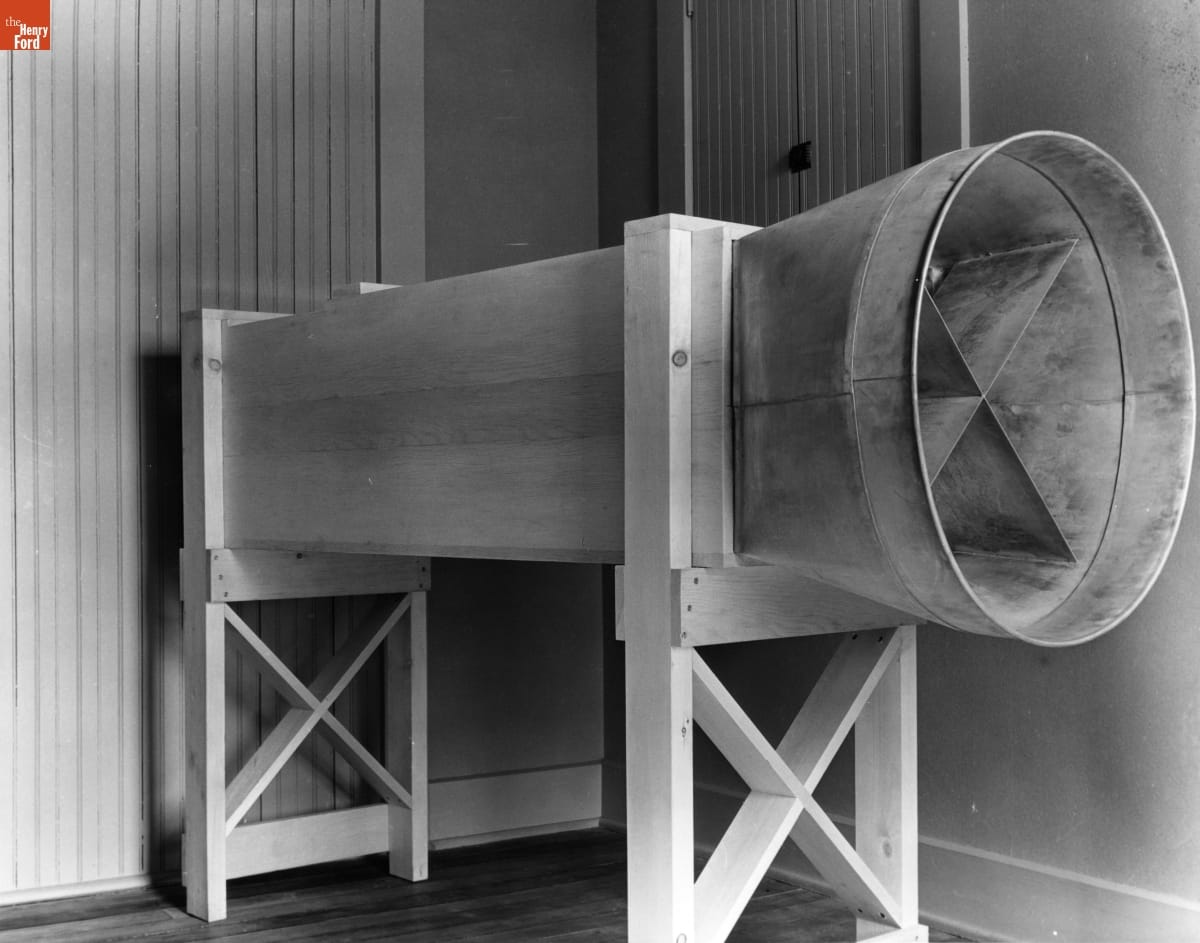
- 1901
- Collections - Artifact
Replica of the Wright Brothers 1901 Wind Tunnel, Constructed in 1938
When their glider did not perform as expected in 1901, Wilbur and Orville Wright determined that the standard lift tables -- used to predict the lift generated by aircraft wings -- were incorrect. The Wrights built a wind tunnel in their Dayton bicycle shop and calculated their own tables. This new data led directly to their success with the 1903 Wright Flyer.
- Model of a Wind Tunnel Control Panel, Displayed at the New York World's Fair, 1938-1939 -
- 1938-1939
- Collections - Artifact
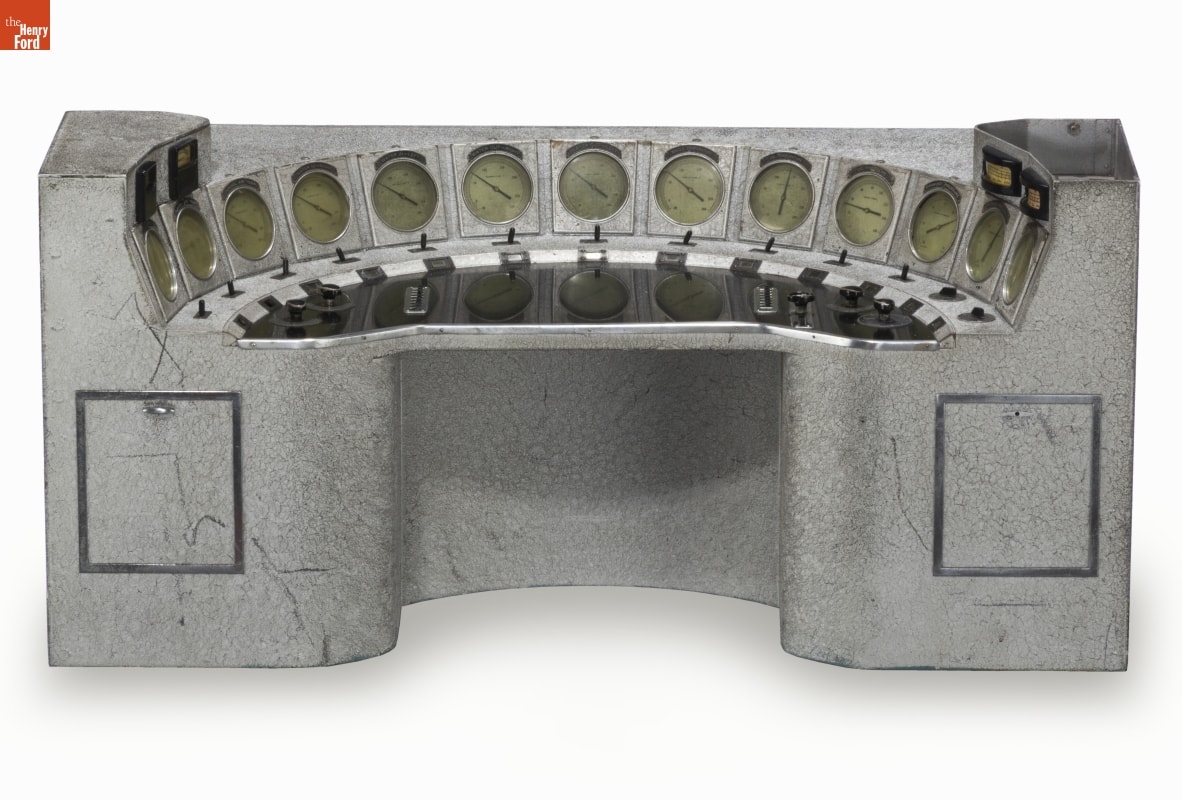
Model of a Wind Tunnel Control Panel, Displayed at the New York World's Fair, 1938-1939
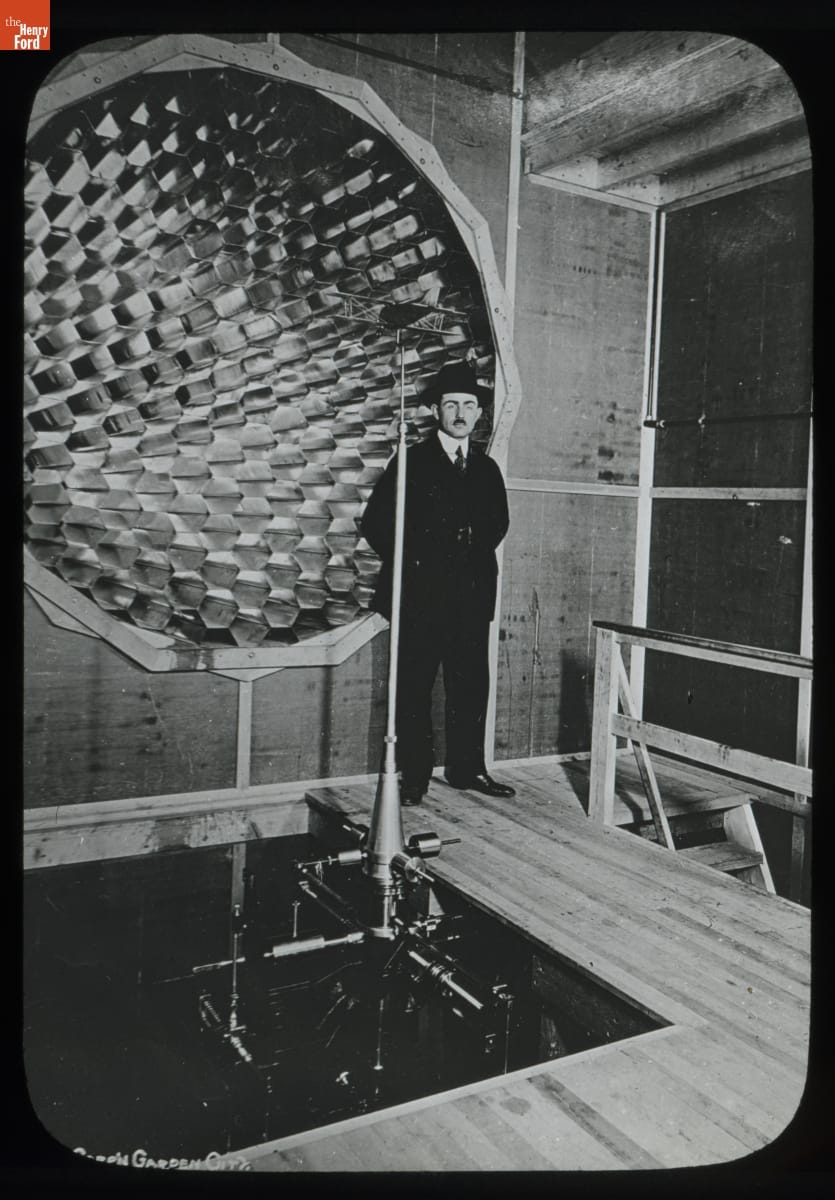
- Man with Wind Tunnel at Curtiss Engineering Corporation, Garden City, New York, 1917-1931 - Aircraft manufacturer Glenn Curtiss established the Curtiss Engineering Corporation at Garden City, New York, in 1917. He built a cutting-edge facility that became the center of Curtiss's research and development activities. Amenities included three wind tunnels, the largest of which was 70 feet long and could produce wind speeds near 100 miles per hour.
- 1917-1931
- Collections - Artifact
Man with Wind Tunnel at Curtiss Engineering Corporation, Garden City, New York, 1917-1931
Aircraft manufacturer Glenn Curtiss established the Curtiss Engineering Corporation at Garden City, New York, in 1917. He built a cutting-edge facility that became the center of Curtiss's research and development activities. Amenities included three wind tunnels, the largest of which was 70 feet long and could produce wind speeds near 100 miles per hour.