
Search
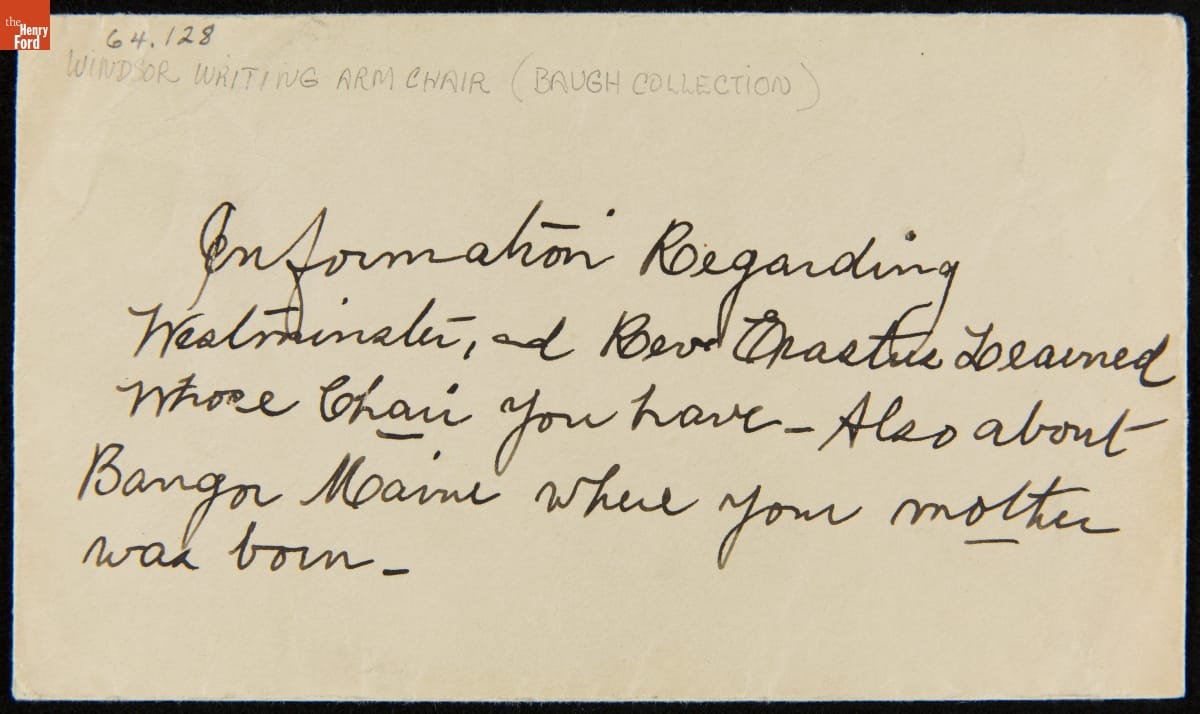
- Family History of the Ebenezer Tracy Writing-Arm Windsor Chair in the Collection of The Henry Ford -
- circa 1950
- Collections - Artifact
Family History of the Ebenezer Tracy Writing-Arm Windsor Chair in the Collection of The Henry Ford
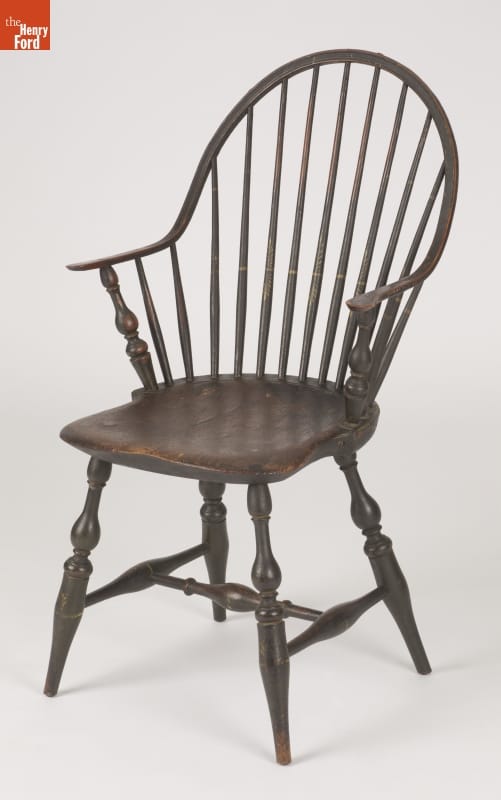
- Windsor Armchair, 1790-1810 - Windsor chairs began to appear in American homes in the mid-18th century, and they are still being made today. When first introduced, they were used in every room of the house -- but especially in public spaces because they were so sturdy and inexpensive. This "bow back" chair -- named for the steam-bent back rail -- was one of the earliest Windsor forms seen in America.
- 1790-1810
- Collections - Artifact
Windsor Armchair, 1790-1810
Windsor chairs began to appear in American homes in the mid-18th century, and they are still being made today. When first introduced, they were used in every room of the house -- but especially in public spaces because they were so sturdy and inexpensive. This "bow back" chair -- named for the steam-bent back rail -- was one of the earliest Windsor forms seen in America.
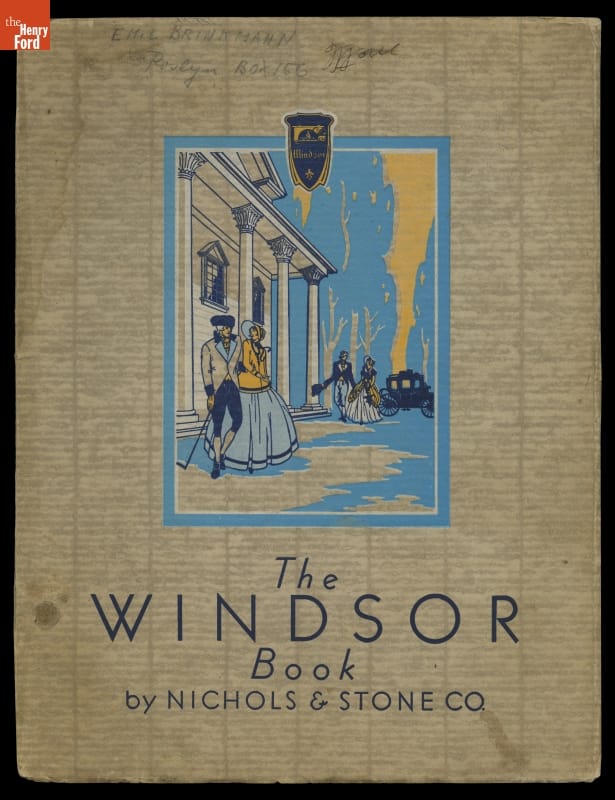
- Catalog of Nichols & Stone Company Windsor Chairs, "The Windsor Book," circa 1928 -
- circa 1928
- Collections - Artifact
Catalog of Nichols & Stone Company Windsor Chairs, "The Windsor Book," circa 1928
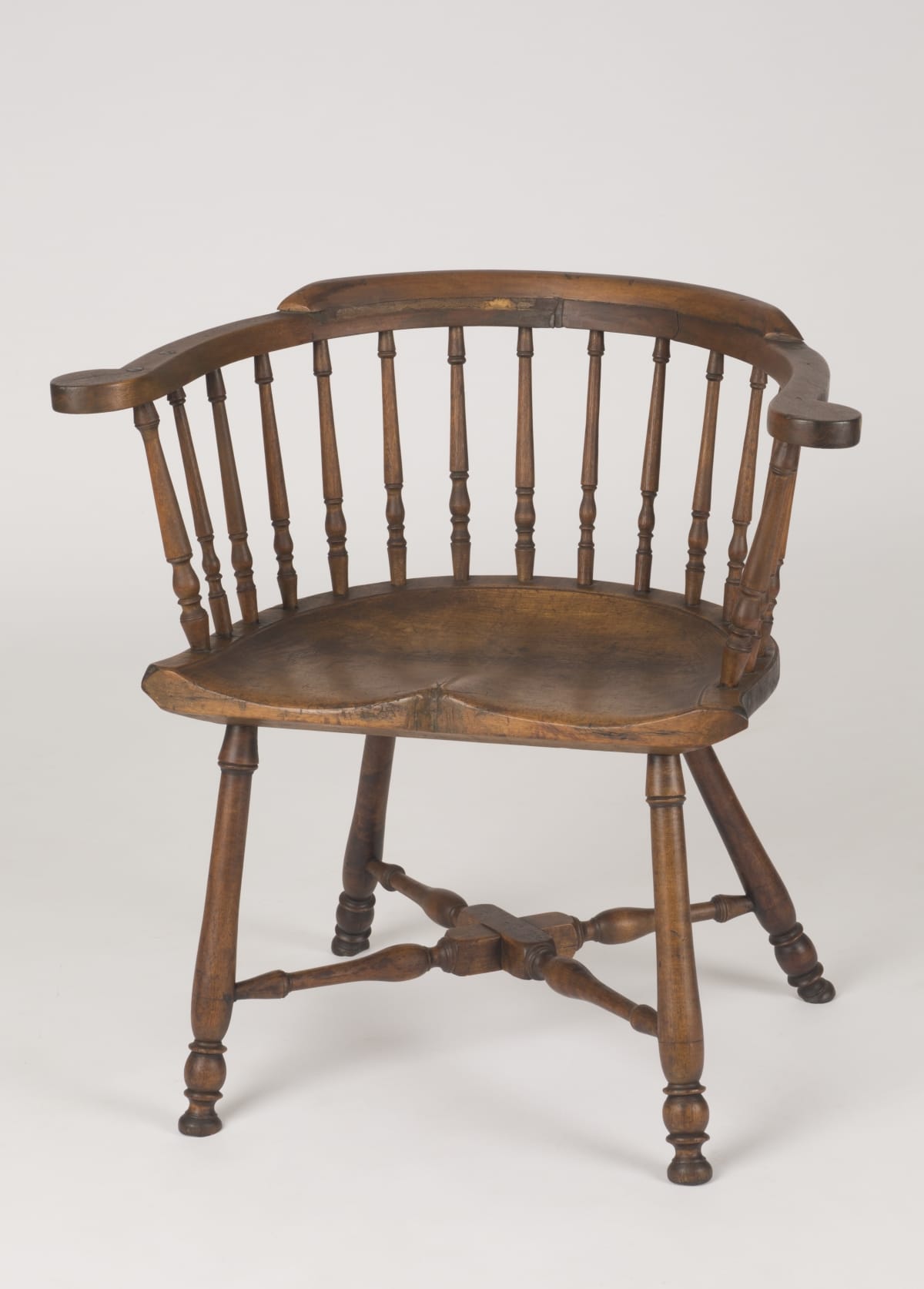
- Low-Back Windsor Arm Chair, 1770-1800 - Windsor chairs began to appear in American homes in the mid-18th century, and they are still being made today. When first introduced, they were used in every room of the house -- but especially in public spaces because they were so sturdy and inexpensive. Windsor chairs also came in various styles and types. Some with steam-bent back rails; others, like this "low-back," with a carved, two-piece armrest.
- 1770-1800
- Collections - Artifact
Low-Back Windsor Arm Chair, 1770-1800
Windsor chairs began to appear in American homes in the mid-18th century, and they are still being made today. When first introduced, they were used in every room of the house -- but especially in public spaces because they were so sturdy and inexpensive. Windsor chairs also came in various styles and types. Some with steam-bent back rails; others, like this "low-back," with a carved, two-piece armrest.
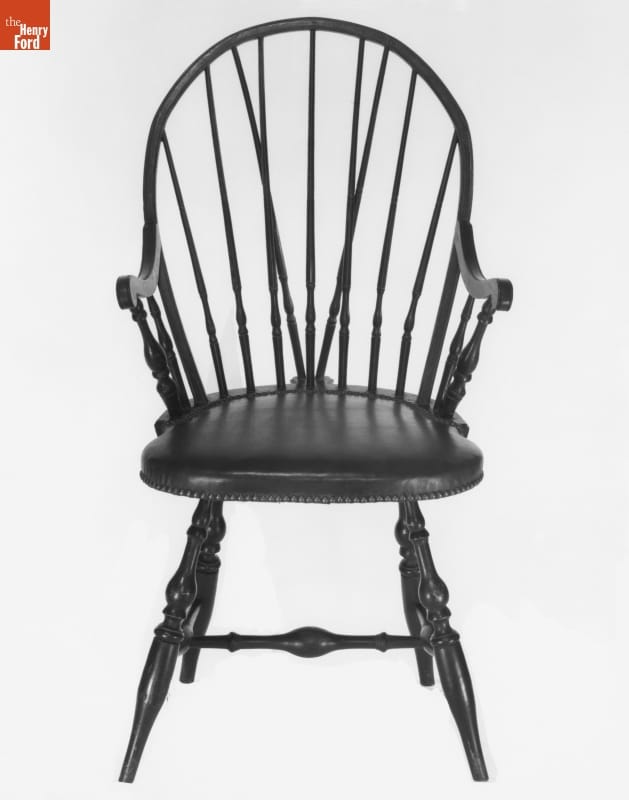
- Windsor Armchair, 1785-1800 - Windsor chairs began to appear in American homes in the mid-18th century, and they are still being made today. When first introduced, they were used in every room of the house -- but especially in public spaces because they were so sturdy and inexpensive. This "bow back" chair -- named for the steam-bent back rail -- was one of the earliest Windsor forms seen in America.
- 1785-1800
- Collections - Artifact
Windsor Armchair, 1785-1800
Windsor chairs began to appear in American homes in the mid-18th century, and they are still being made today. When first introduced, they were used in every room of the house -- but especially in public spaces because they were so sturdy and inexpensive. This "bow back" chair -- named for the steam-bent back rail -- was one of the earliest Windsor forms seen in America.
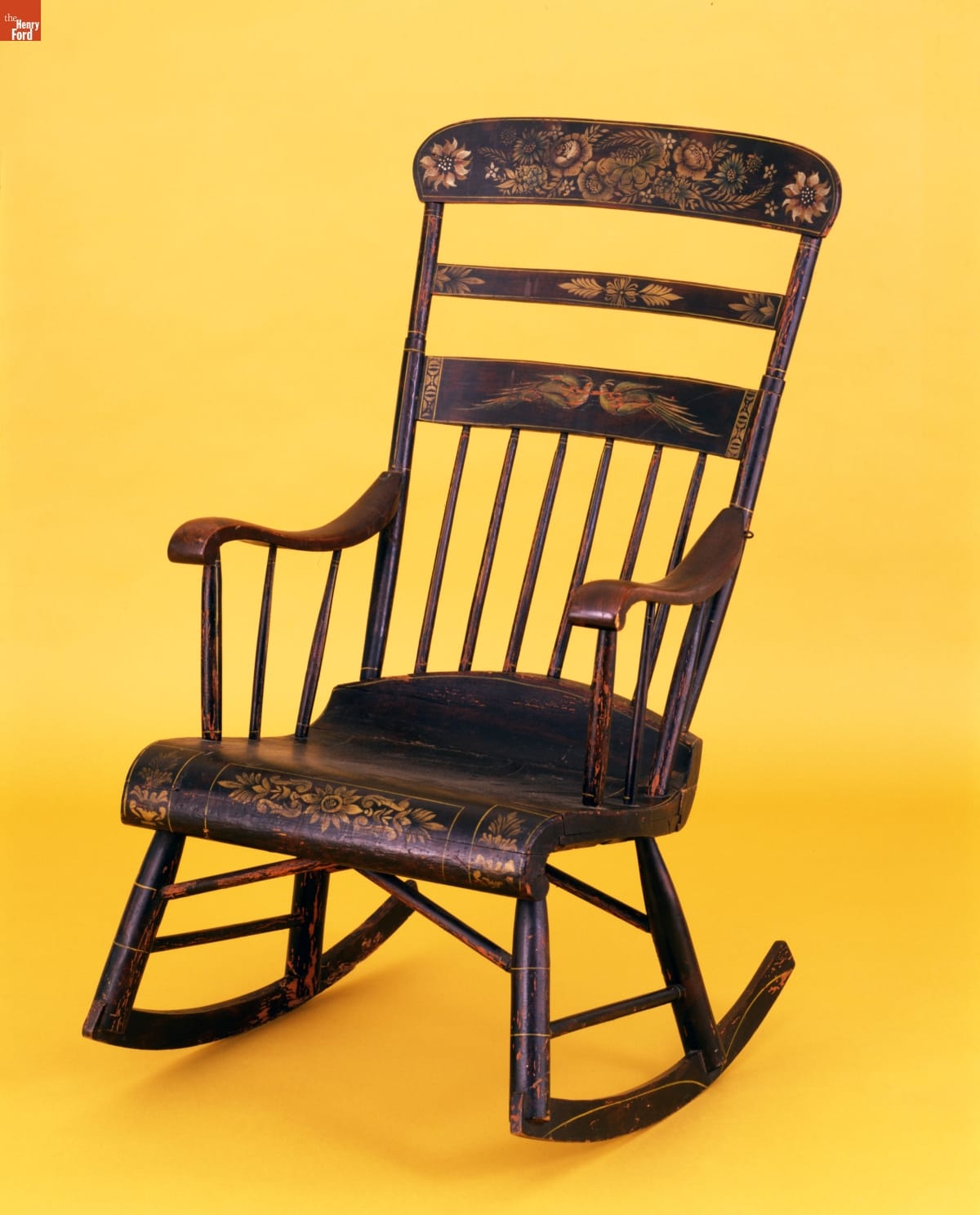
- Nursery Chair, 1850-1875 -
- 1850-1875
- Collections - Artifact
Nursery Chair, 1850-1875
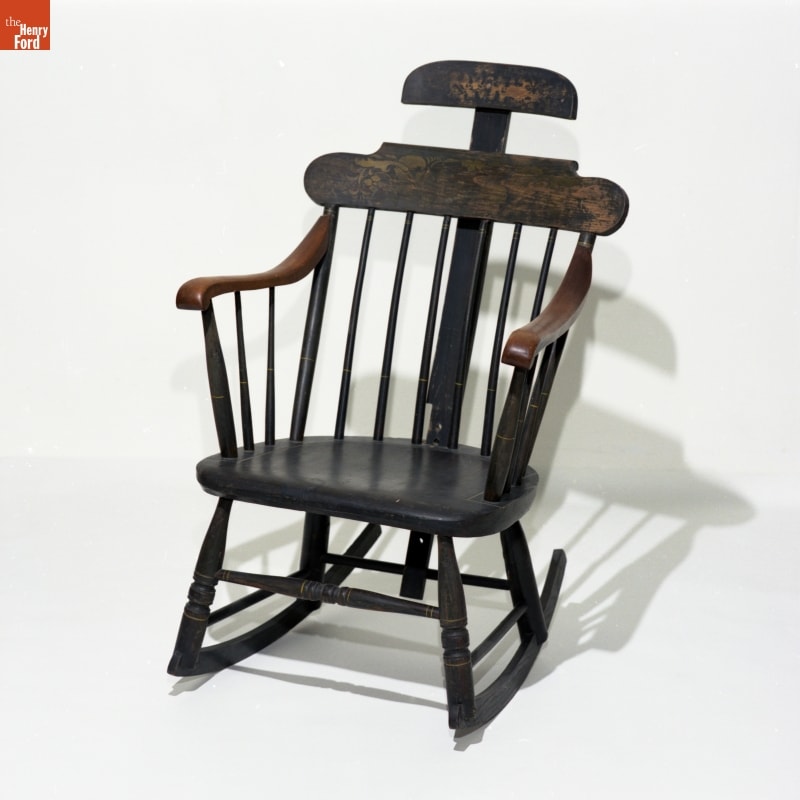
- Windsor Rocking Chair, 1830-1850 - Windsor chairs were one of the sturdiest and functional chairs available to Americans in the 18th and 19th centuries. Everyone could own at least one of these chairs, suitable for any room in the home. They could even be fitted out with rockers to make one's leisure time more comfortable.
- 1830-1850
- Collections - Artifact
Windsor Rocking Chair, 1830-1850
Windsor chairs were one of the sturdiest and functional chairs available to Americans in the 18th and 19th centuries. Everyone could own at least one of these chairs, suitable for any room in the home. They could even be fitted out with rockers to make one's leisure time more comfortable.
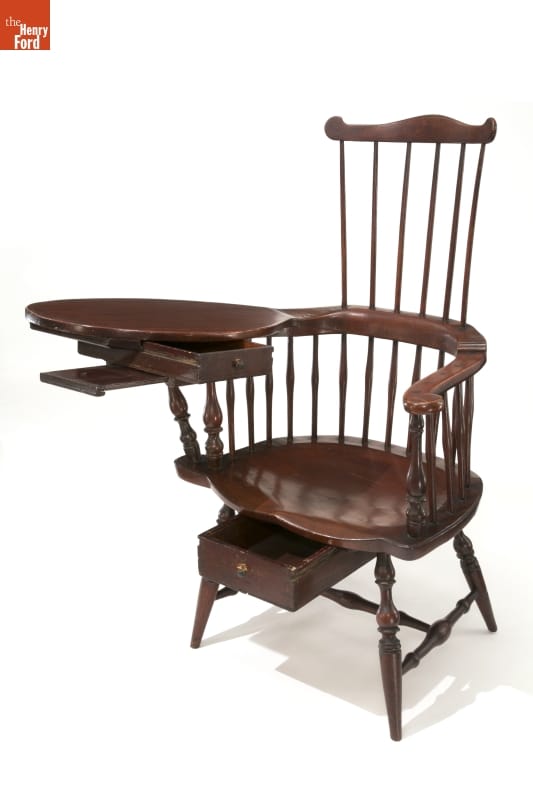
- Writing Arm Windsor Chair, 1770-1790 - Instead of a set of office furniture, Reverend Erastus Learnerd of Westminster, Connecticut, used this Windsor writing armchair to draft his sermons and correspondence. The drawer beneath the tablet, or writing pad, and another under the seat could hold writing supplies. A sliding shelf, also under the tablet, supported a candlestick for writing after dark.
- 1770-1790
- Collections - Artifact
Writing Arm Windsor Chair, 1770-1790
Instead of a set of office furniture, Reverend Erastus Learnerd of Westminster, Connecticut, used this Windsor writing armchair to draft his sermons and correspondence. The drawer beneath the tablet, or writing pad, and another under the seat could hold writing supplies. A sliding shelf, also under the tablet, supported a candlestick for writing after dark.
- Bow-Back Windsor Chair, 1780-1800 - Windsor chairs began to appear in American homes in the mid-18th century, and they are still being made today. When first introduced, they were used in every room of the house -- but especially in public spaces because they were so sturdy and inexpensive. This "bow back" chair -- named for the steam-bent back rail -- was one of the earliest Windsor forms seen in America.
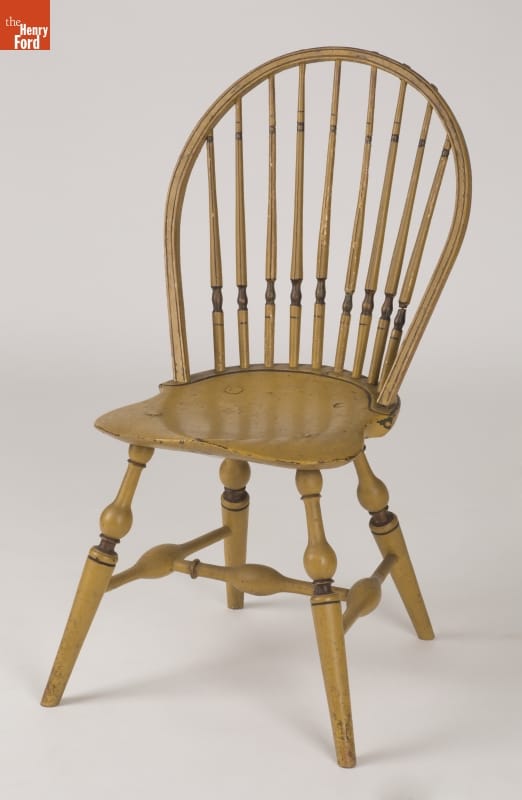
- 1780-1800
- Collections - Artifact
Bow-Back Windsor Chair, 1780-1800
Windsor chairs began to appear in American homes in the mid-18th century, and they are still being made today. When first introduced, they were used in every room of the house -- but especially in public spaces because they were so sturdy and inexpensive. This "bow back" chair -- named for the steam-bent back rail -- was one of the earliest Windsor forms seen in America.
- Windsor Armchair, 1785-1800 - Windsor chairs began to appear in American homes in the mid-18th century, and they are still being made today. When first introduced, they were used in every room of the house -- but especially in public spaces because they were so sturdy and inexpensive. This "bow back" chair -- named for the steam-bent back rail -- was one of the earliest Windsor forms seen in America.
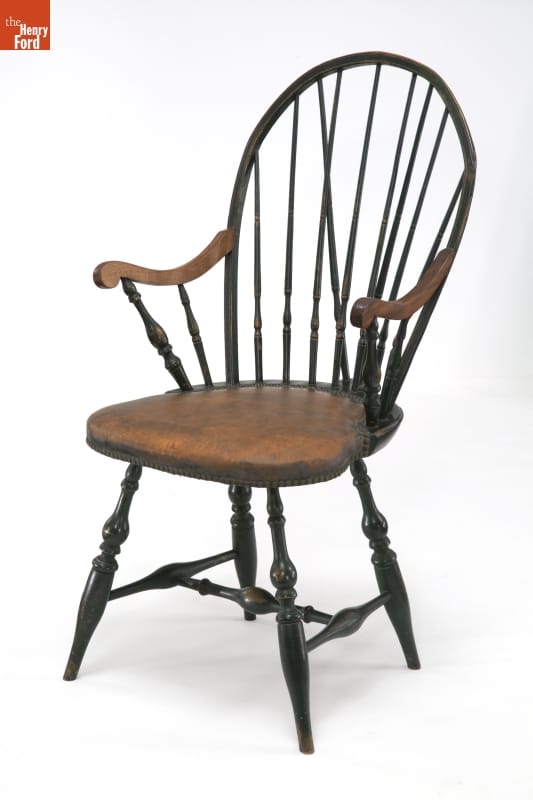
- 1785-1800
- Collections - Artifact
Windsor Armchair, 1785-1800
Windsor chairs began to appear in American homes in the mid-18th century, and they are still being made today. When first introduced, they were used in every room of the house -- but especially in public spaces because they were so sturdy and inexpensive. This "bow back" chair -- named for the steam-bent back rail -- was one of the earliest Windsor forms seen in America.