
Search
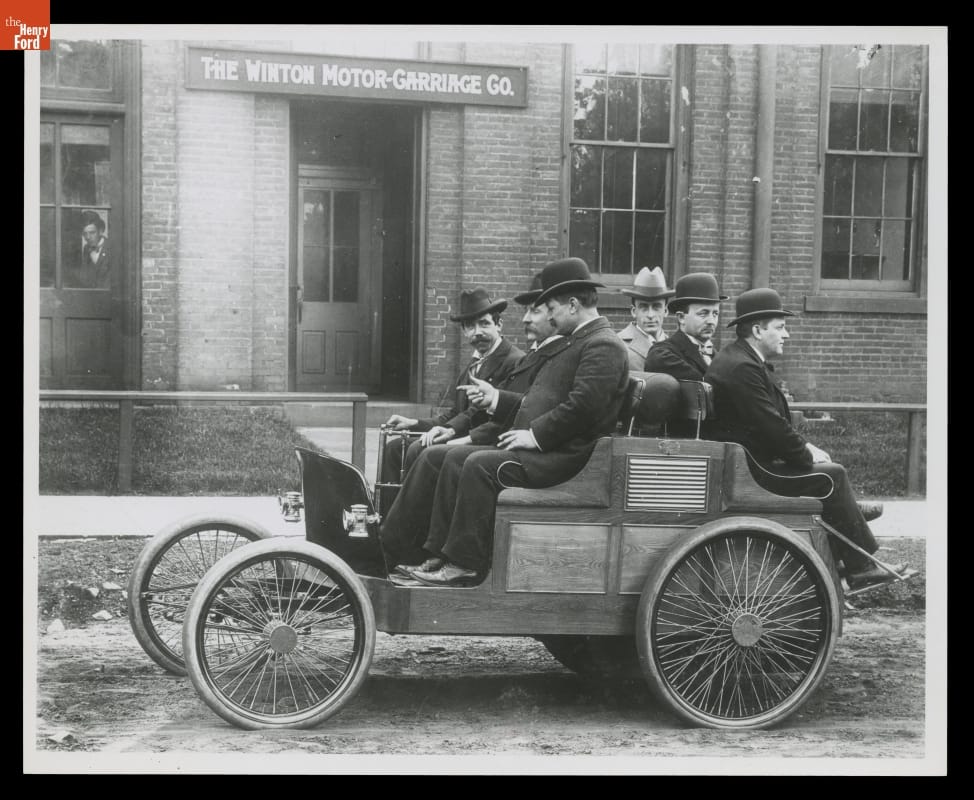
- Alexander Winton with Others outside The Winton Motor-Carriage Co., 1896-1899 - Alexander Winton (at the controls) established his Winton Motor Carriage Company in Cleveland in 1897. Winton promoted his technologically advanced vehicles through long-distance reliability tours and oval track races. Winton lost one of his best-known races when he fell to Henry Ford in October 1901. Winton built his last car in 1924 but continued making marine engines until 1930.
- 1896-1899
- Collections - Artifact
Alexander Winton with Others outside The Winton Motor-Carriage Co., 1896-1899
Alexander Winton (at the controls) established his Winton Motor Carriage Company in Cleveland in 1897. Winton promoted his technologically advanced vehicles through long-distance reliability tours and oval track races. Winton lost one of his best-known races when he fell to Henry Ford in October 1901. Winton built his last car in 1924 but continued making marine engines until 1930.
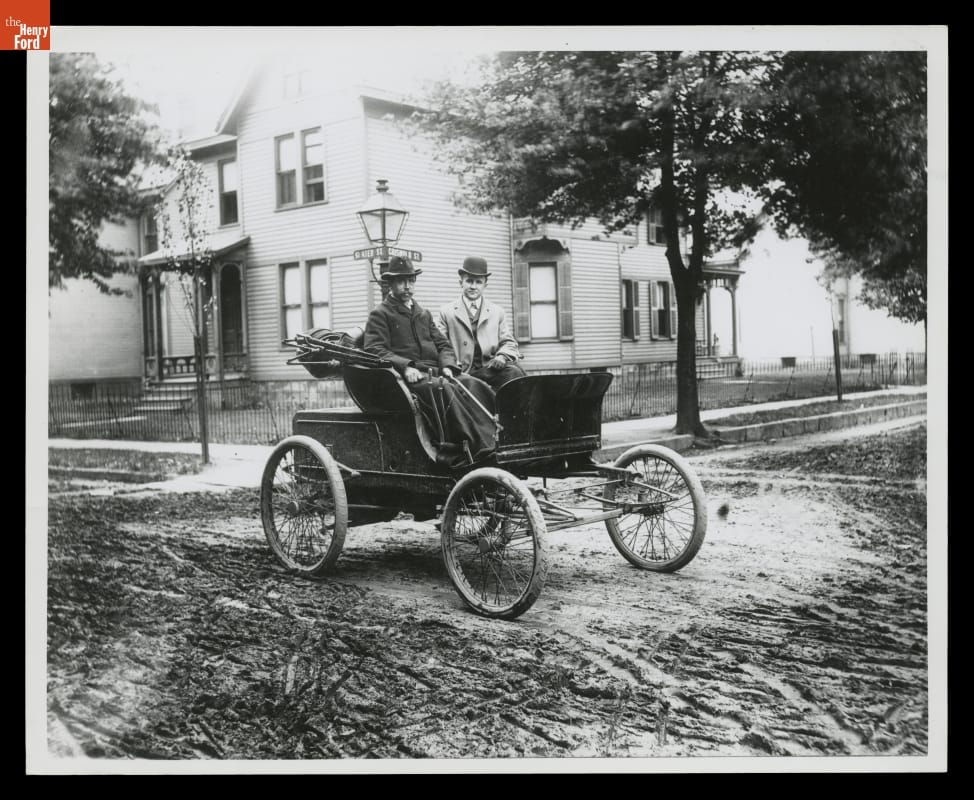
- Alexander Winton and Mr. Shanks in an 1898 Winton Roadster - Scottish-born Alexander Winton (left) formed a bicycle company in Cleveland in 1891 before moving into automobiles a few years later. Winton Motor Carriage Company vehicles were noted for power and technical sophistication. Winton remained in the automobile business until 1924, when he switched his focus to marine engines. Winton subsequently sold his engine company to General Motors in 1930.
- 1898
- Collections - Artifact
Alexander Winton and Mr. Shanks in an 1898 Winton Roadster
Scottish-born Alexander Winton (left) formed a bicycle company in Cleveland in 1891 before moving into automobiles a few years later. Winton Motor Carriage Company vehicles were noted for power and technical sophistication. Winton remained in the automobile business until 1924, when he switched his focus to marine engines. Winton subsequently sold his engine company to General Motors in 1930.
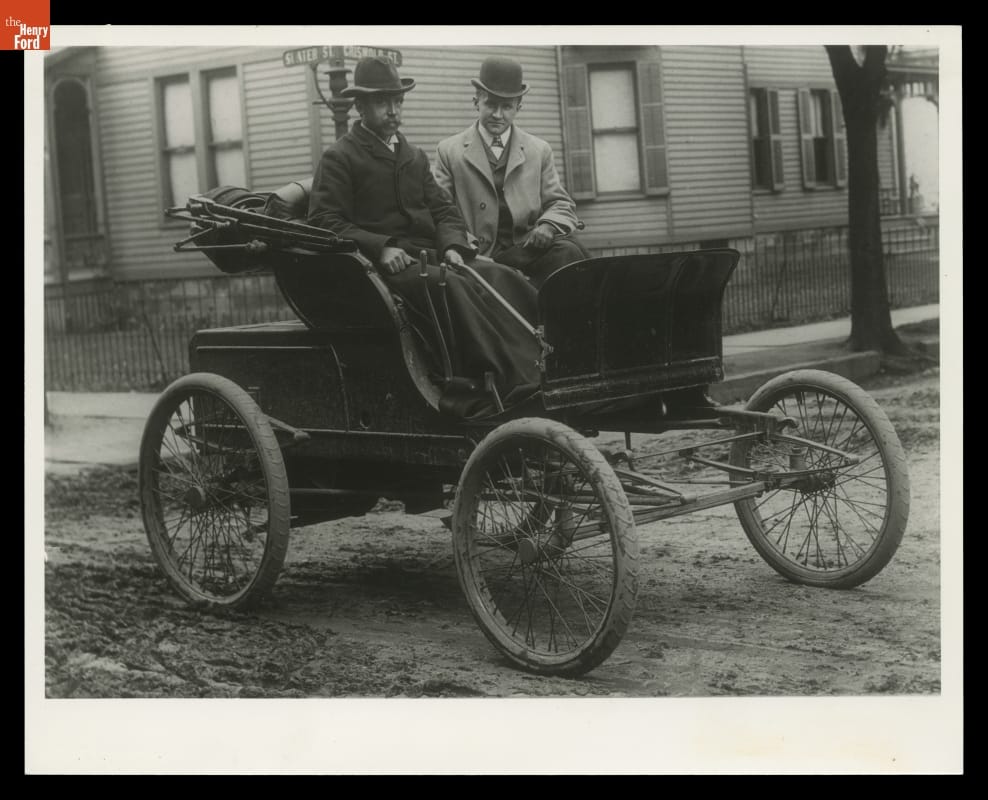
- Alexander Winton and Mr. Shanks in an 1898 Winton Roadster - Scottish-born Alexander Winton (left) formed a bicycle company in Cleveland in 1891 before moving into automobiles a few years later. Winton Motor Carriage Company vehicles were noted for power and technical sophistication. Winton remained in the automobile business until 1924, when he switched his focus to marine engines. Winton subsequently sold his engine company to General Motors in 1930.
- 1898
- Collections - Artifact
Alexander Winton and Mr. Shanks in an 1898 Winton Roadster
Scottish-born Alexander Winton (left) formed a bicycle company in Cleveland in 1891 before moving into automobiles a few years later. Winton Motor Carriage Company vehicles were noted for power and technical sophistication. Winton remained in the automobile business until 1924, when he switched his focus to marine engines. Winton subsequently sold his engine company to General Motors in 1930.
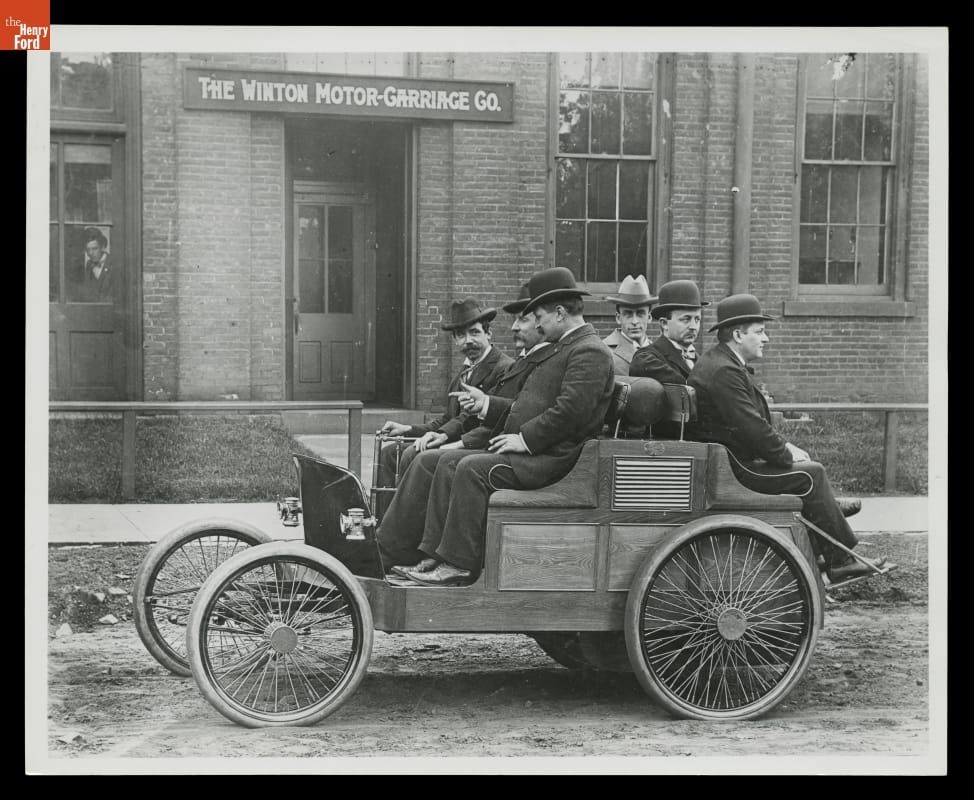
- Alexander Winton with Others outside The Winton Motor-Carriage Co., 1896-1899 - Alexander Winton (at the controls) established his Winton Motor Carriage Company in Cleveland in 1897. Winton promoted his technologically advanced vehicles through long-distance reliability tours and oval track races. Winton lost one of his best-known races when he fell to Henry Ford in October 1901. Winton built his last car in 1924 but continued making marine engines until 1930.
- 1896-1899
- Collections - Artifact
Alexander Winton with Others outside The Winton Motor-Carriage Co., 1896-1899
Alexander Winton (at the controls) established his Winton Motor Carriage Company in Cleveland in 1897. Winton promoted his technologically advanced vehicles through long-distance reliability tours and oval track races. Winton lost one of his best-known races when he fell to Henry Ford in October 1901. Winton built his last car in 1924 but continued making marine engines until 1930.
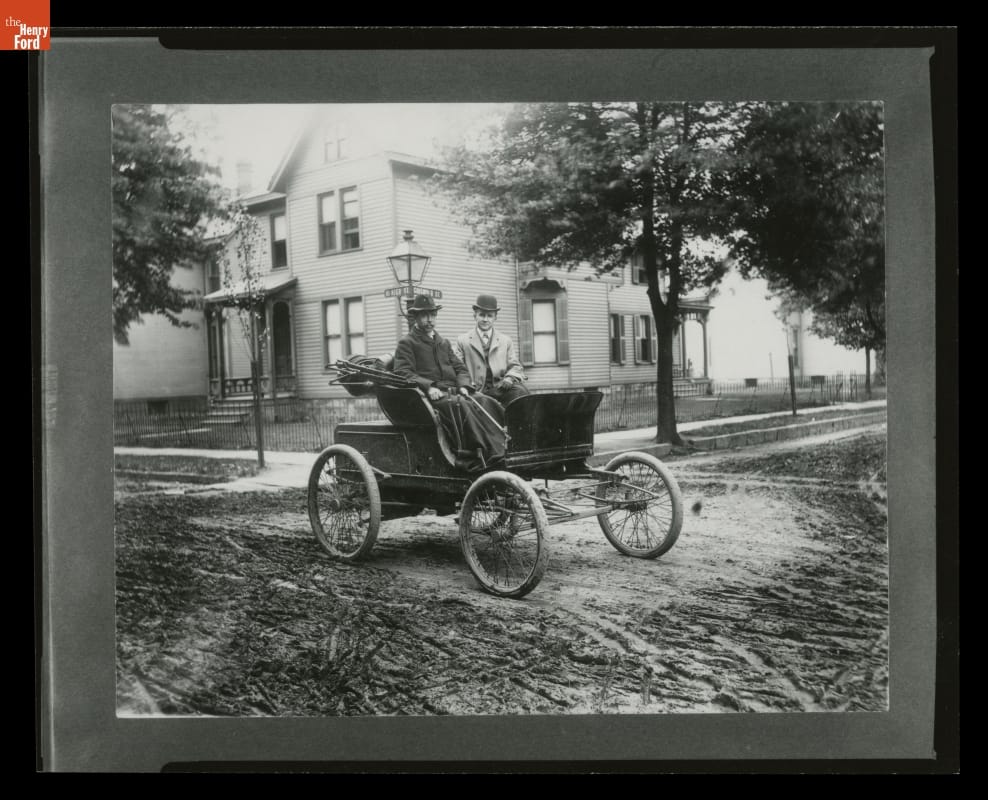
- Alexander Winton and Mr. Shanks in an 1898 Winton Roadster - Scottish-born Alexander Winton (left) formed a bicycle company in Cleveland in 1891 before moving into automobiles a few years later. Winton Motor Carriage Company vehicles were noted for power and technical sophistication. Winton remained in the automobile business until 1924, when he switched his focus to marine engines. Winton subsequently sold his engine company to General Motors in 1930.
- 1898
- Collections - Artifact
Alexander Winton and Mr. Shanks in an 1898 Winton Roadster
Scottish-born Alexander Winton (left) formed a bicycle company in Cleveland in 1891 before moving into automobiles a few years later. Winton Motor Carriage Company vehicles were noted for power and technical sophistication. Winton remained in the automobile business until 1924, when he switched his focus to marine engines. Winton subsequently sold his engine company to General Motors in 1930.
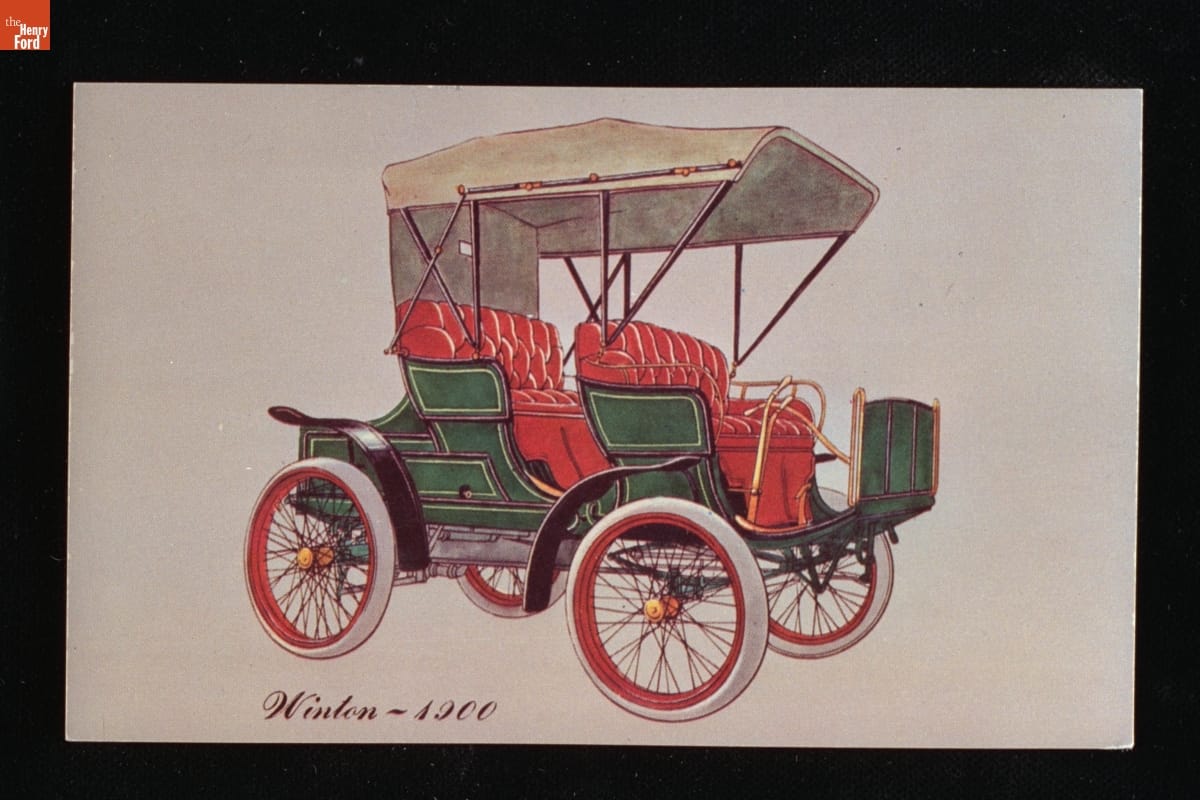
- Winton - 1900 - This postcard, featuring an illustration of a 1900 Winton touring car, was published by the Autoprints company of New York. Postcards like this were sold to visitors at Henry Ford Museum & Greenfield Village in the 1950s. Winton Motor Carriage Company, founded in Cleveland by Alexander Winton in 1897, ended automobile production in 1924.
- 1900
- Collections - Artifact
Winton - 1900
This postcard, featuring an illustration of a 1900 Winton touring car, was published by the Autoprints company of New York. Postcards like this were sold to visitors at Henry Ford Museum & Greenfield Village in the 1950s. Winton Motor Carriage Company, founded in Cleveland by Alexander Winton in 1897, ended automobile production in 1924.
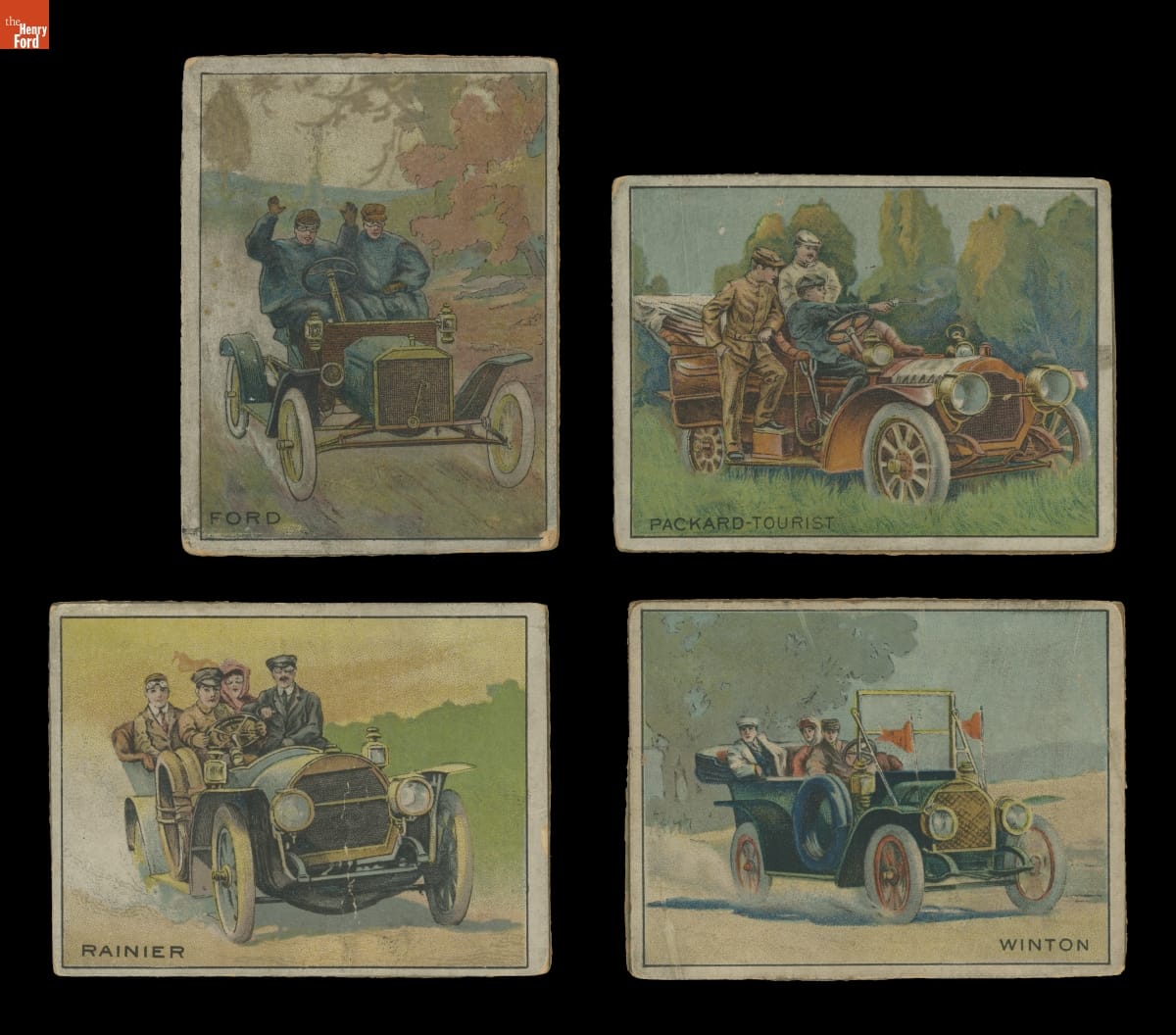
- Automobile Cigarette Cards, 1910-1915 - These automobile images first appeared on cigarette trade cards around 1910. Similar cards were created in the early 1950s and were made for non-tobacco products. Other images in the series featured different makes and models of America's early automobiles.
- 1910-1915
- Collections - Artifact
Automobile Cigarette Cards, 1910-1915
These automobile images first appeared on cigarette trade cards around 1910. Similar cards were created in the early 1950s and were made for non-tobacco products. Other images in the series featured different makes and models of America's early automobiles.
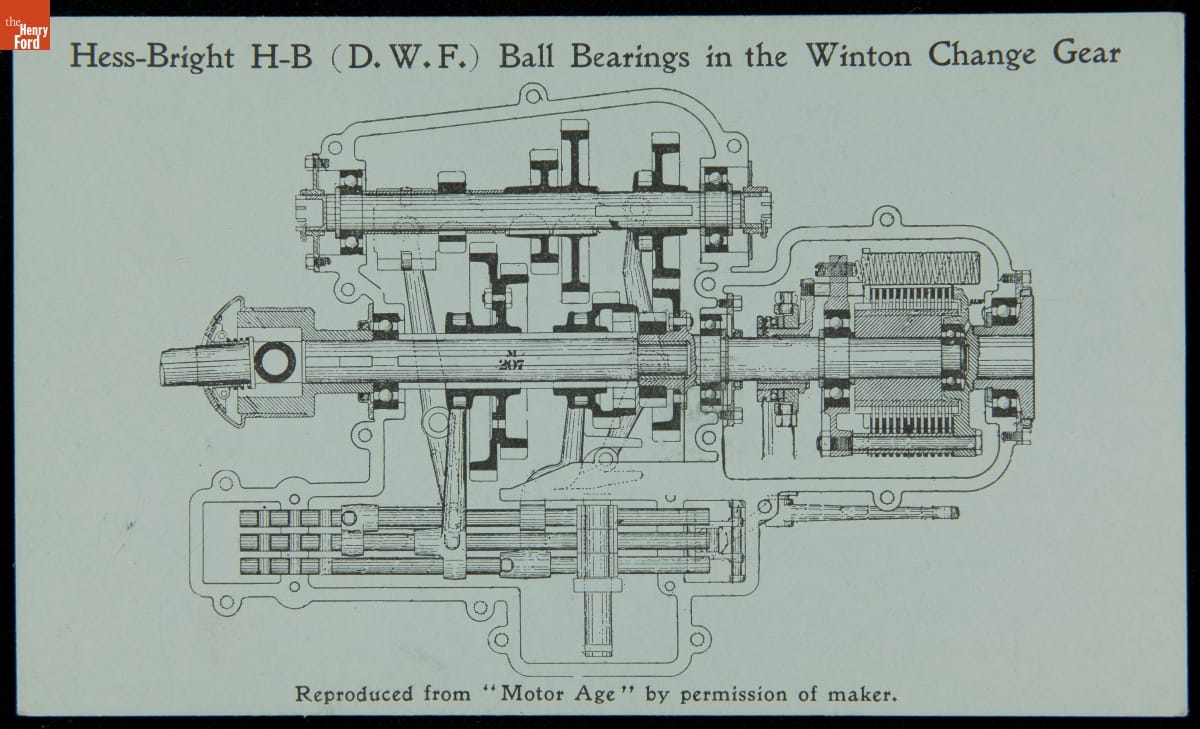
- Trade Card, Ball Bearings in the Winton Change Gear, Hess-Bright Manufacturing Co., circa 1905 - In the last third of the nineteenth century, an unprecedented variety of consumer goods and services flooded the American market. Advertisers, armed with new methods of color printing, bombarded potential customers with trade cards. Americans enjoyed and often saved the vibrant little advertisements found in product packages or distributed by local merchants. Many survive as historical records of commercialism in the United States.
- circa 1905
- Collections - Artifact
Trade Card, Ball Bearings in the Winton Change Gear, Hess-Bright Manufacturing Co., circa 1905
In the last third of the nineteenth century, an unprecedented variety of consumer goods and services flooded the American market. Advertisers, armed with new methods of color printing, bombarded potential customers with trade cards. Americans enjoyed and often saved the vibrant little advertisements found in product packages or distributed by local merchants. Many survive as historical records of commercialism in the United States.