
Search
- Staged Portrait of Two Teenage Boys Fighting, June 28, 1876 - Tintypes, the popular "instant photographs" of the 19th century, could be produced in a matter of minutes at a price most people could afford. Tintypes democratized photography. Beginning in the mid-1850s, they gave more people than ever before the chance to have a real likeness of themselves--capturing unique glimpses of how everyday Americans looked and lived.
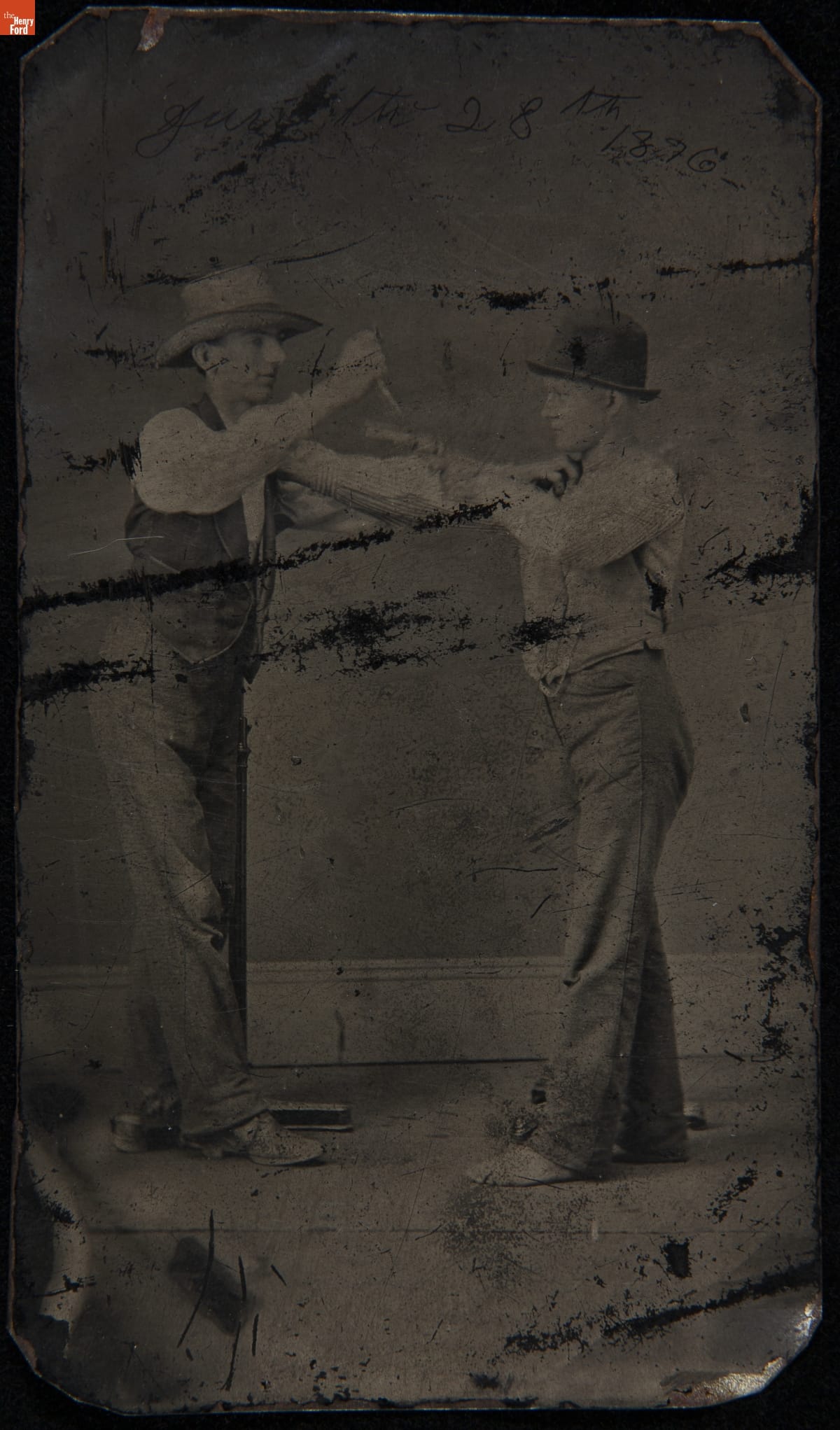
- June 28, 1876
- Collections - Artifact
Staged Portrait of Two Teenage Boys Fighting, June 28, 1876
Tintypes, the popular "instant photographs" of the 19th century, could be produced in a matter of minutes at a price most people could afford. Tintypes democratized photography. Beginning in the mid-1850s, they gave more people than ever before the chance to have a real likeness of themselves--capturing unique glimpses of how everyday Americans looked and lived.
- Etching Proof from a Thomas Nast Drawing, "A Dream, before and after Thanksgiving Dinner," 1878 - Thomas Nast (1840-1902) was an influential illustrator and political cartoonist. Though he is best known for the creation of our modern image of Santa Claus, Nast created many endearing illustrations depicting other holiday activities. This image, originally published in <EM>Harper's Weekly</EM> in 1878, depicts the possible effects of overindulgence on Thanksgiving.
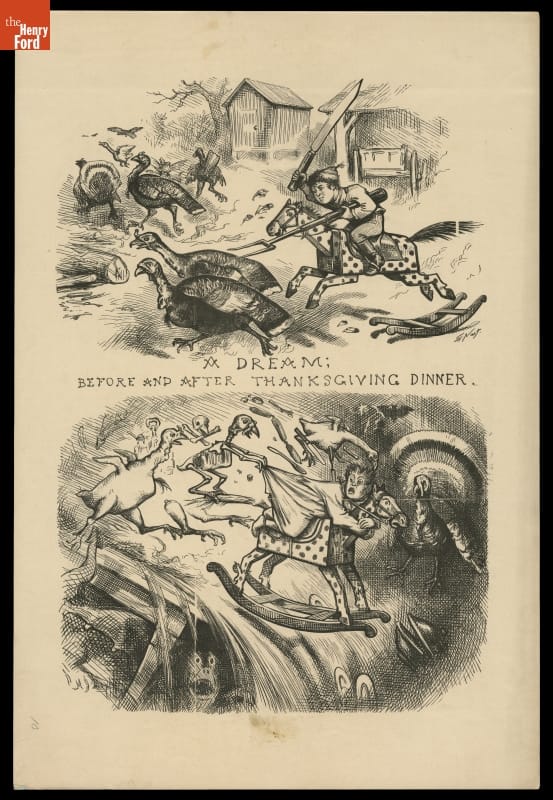
- December 07, 1878
- Collections - Artifact
Etching Proof from a Thomas Nast Drawing, "A Dream, before and after Thanksgiving Dinner," 1878
Thomas Nast (1840-1902) was an influential illustrator and political cartoonist. Though he is best known for the creation of our modern image of Santa Claus, Nast created many endearing illustrations depicting other holiday activities. This image, originally published in Harper's Weekly in 1878, depicts the possible effects of overindulgence on Thanksgiving.
- Automobile Travel Game, "Motor Chatter," circa 1920 - Rust Craft Publishers, a greeting card company, manufactured this set of novelty cards for motorists. The cards contain humorous stories related to the automobile. The cards could help pass the time on long drives or give the motorist a little cheer when "something is the matter" with the vehicle.
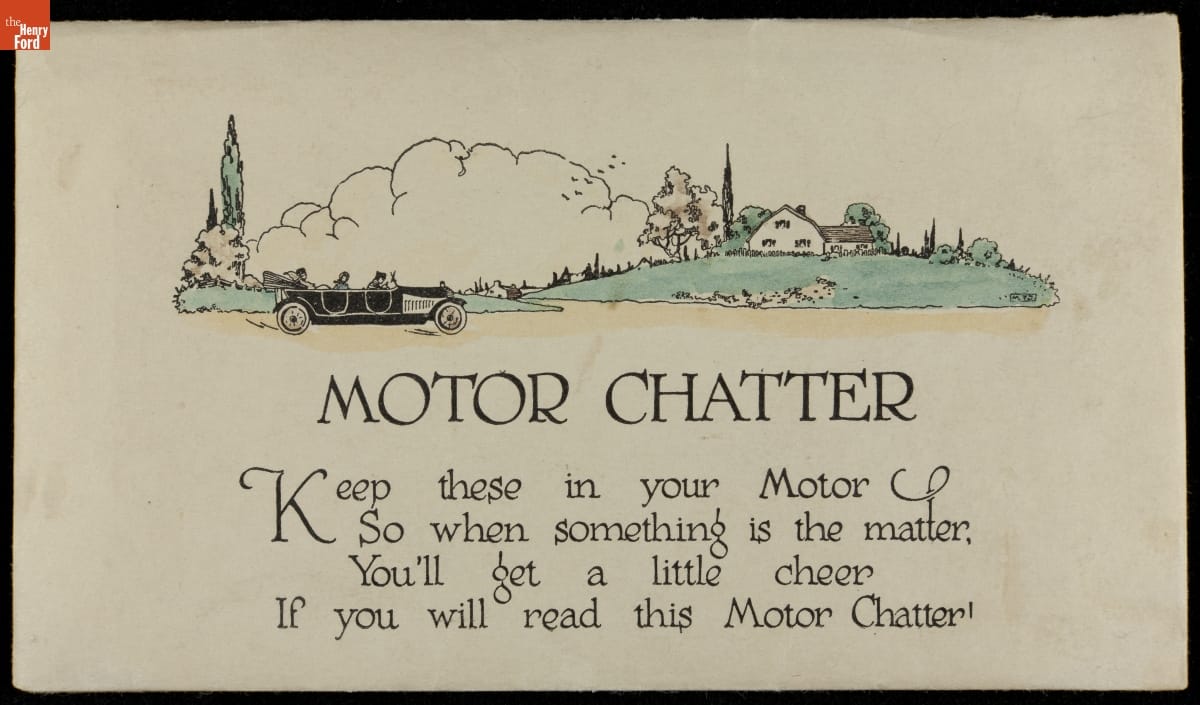
- circa 1920
- Collections - Artifact
Automobile Travel Game, "Motor Chatter," circa 1920
Rust Craft Publishers, a greeting card company, manufactured this set of novelty cards for motorists. The cards contain humorous stories related to the automobile. The cards could help pass the time on long drives or give the motorist a little cheer when "something is the matter" with the vehicle.
- Group of Soldiers in Humorous Poses, 1870-1895 - Tintypes, the popular "instant photographs" of the 19th century, could be produced in a matter of minutes at a price most people could afford. Tintypes democratized photography. Beginning in the mid-1850s, they gave more people than ever before the chance to have a real likeness of themselves--capturing unique glimpses of how everyday Americans looked and lived.
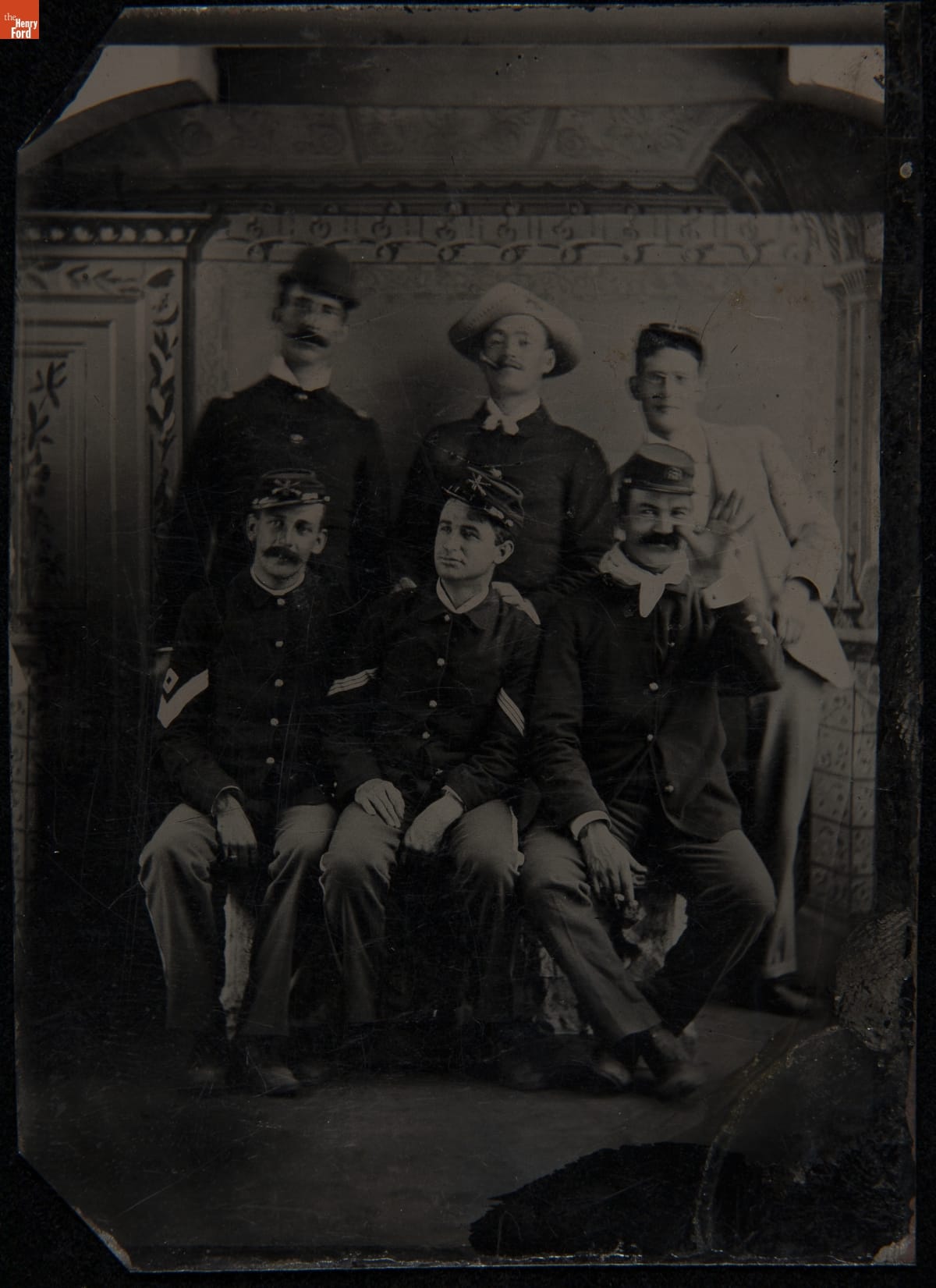
- 1870-1895
- Collections - Artifact
Group of Soldiers in Humorous Poses, 1870-1895
Tintypes, the popular "instant photographs" of the 19th century, could be produced in a matter of minutes at a price most people could afford. Tintypes democratized photography. Beginning in the mid-1850s, they gave more people than ever before the chance to have a real likeness of themselves--capturing unique glimpses of how everyday Americans looked and lived.
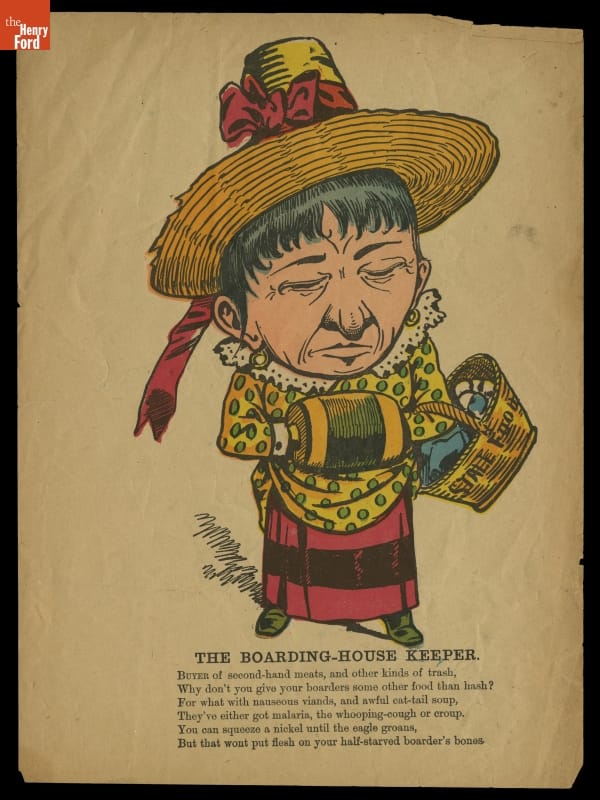
- Comic Valentine, "The Boarding-House Keeper," circa 1885 - From the 1840s into the early 1900s, some people sent inexpensive Valentine's Day greetings that chided, warned, or insulted the recipient. An exaggerated, often garish cartoon and short verse described and dismissed someone's looks, intelligence, personality, or behavior. Within the atmosphere of a festive holiday, under the cover of humor, these "vinegar valentines" were acceptable critiques of behaviors that deviated from social norms.
- circa 1885
- Collections - Artifact
Comic Valentine, "The Boarding-House Keeper," circa 1885
From the 1840s into the early 1900s, some people sent inexpensive Valentine's Day greetings that chided, warned, or insulted the recipient. An exaggerated, often garish cartoon and short verse described and dismissed someone's looks, intelligence, personality, or behavior. Within the atmosphere of a festive holiday, under the cover of humor, these "vinegar valentines" were acceptable critiques of behaviors that deviated from social norms.
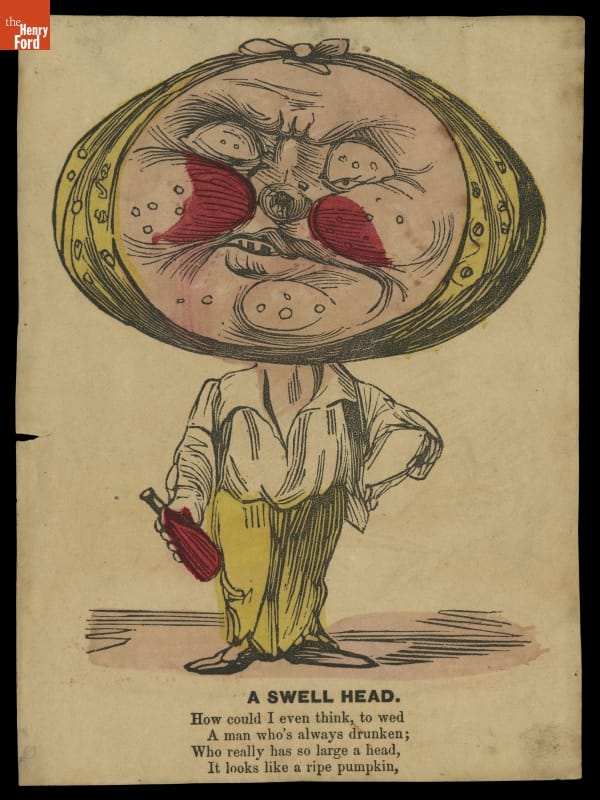
- Comic Valentine, "A Swell Head," circa 1855 - From the 1840s into the early 1900s, some people sent inexpensive Valentine's Day greetings that chided, warned, or insulted the recipient. An exaggerated, often garish cartoon and short verse described and dismissed someone's looks, intelligence, personality, or behavior. Within the atmosphere of a festive holiday, under the cover of humor, these "vinegar valentines" were acceptable critiques of behaviors that deviated from social norms.
- circa 1855
- Collections - Artifact
Comic Valentine, "A Swell Head," circa 1855
From the 1840s into the early 1900s, some people sent inexpensive Valentine's Day greetings that chided, warned, or insulted the recipient. An exaggerated, often garish cartoon and short verse described and dismissed someone's looks, intelligence, personality, or behavior. Within the atmosphere of a festive holiday, under the cover of humor, these "vinegar valentines" were acceptable critiques of behaviors that deviated from social norms.
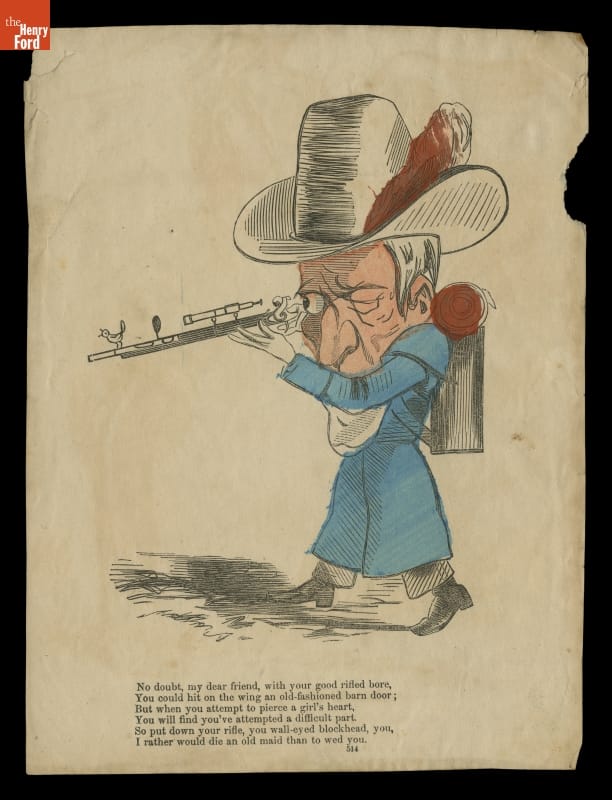
- Comic Valentine for a Marksman, circa 1855 - From the 1840s into the early 1900s, some people sent inexpensive Valentine's Day greetings that chided, warned, or insulted the recipient. An exaggerated, often garish cartoon and short verse described and dismissed someone's looks, intelligence, personality, or behavior. Within the atmosphere of a festive holiday, under the cover of humor, these "vinegar valentines" were acceptable critiques of behaviors that deviated from social norms.
- circa 1855
- Collections - Artifact
Comic Valentine for a Marksman, circa 1855
From the 1840s into the early 1900s, some people sent inexpensive Valentine's Day greetings that chided, warned, or insulted the recipient. An exaggerated, often garish cartoon and short verse described and dismissed someone's looks, intelligence, personality, or behavior. Within the atmosphere of a festive holiday, under the cover of humor, these "vinegar valentines" were acceptable critiques of behaviors that deviated from social norms.
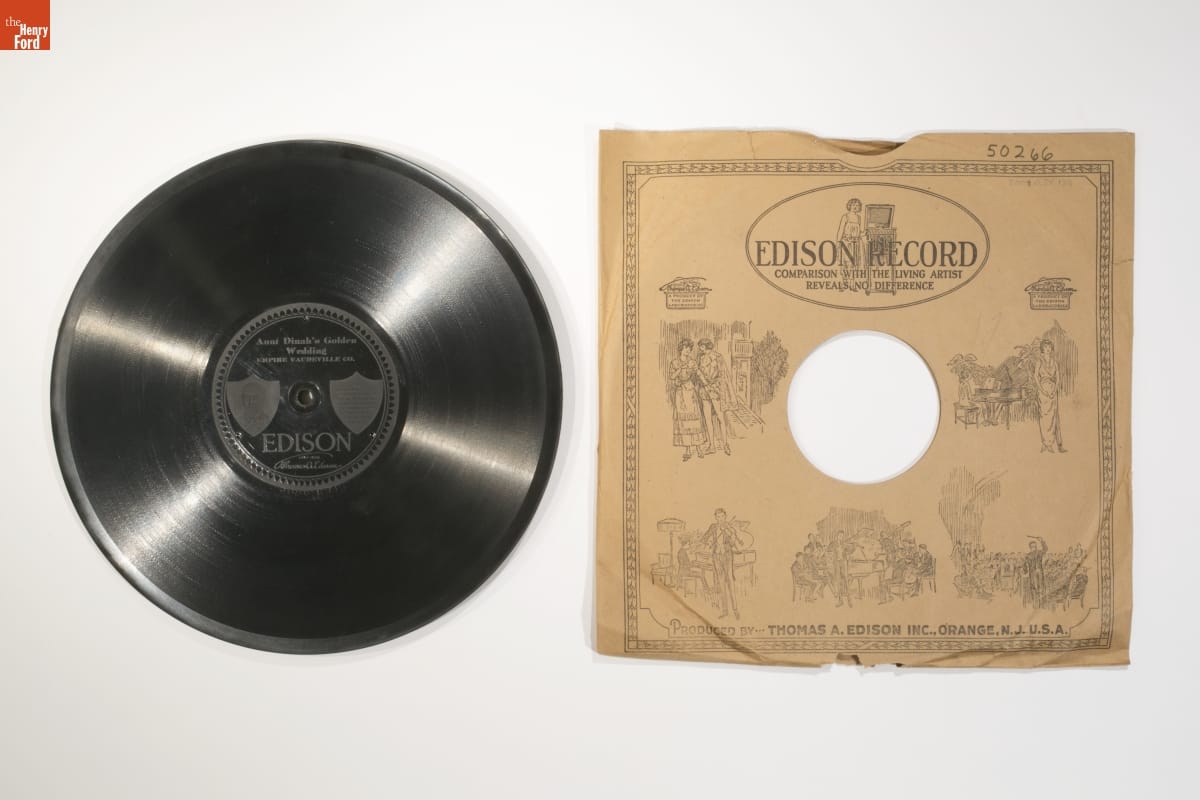
- Edison Diamond Disc Record, "Gasoline Gus and His Jitney Bus" / "Aunt Dinah's Golden Wedding," 1915 - Jitneys were illegal taxis or buses that were not licensed to carry paying passengers. This humorous account of a Jitney driver was performed by Billy Murray, a popular recording artist in the early 20th century. About 1920, the Victor Company stated that, through his recordings, Murray's was likely the most familiar voice in the world!
- June 21, 1915
- Collections - Artifact
Edison Diamond Disc Record, "Gasoline Gus and His Jitney Bus" / "Aunt Dinah's Golden Wedding," 1915
Jitneys were illegal taxis or buses that were not licensed to carry paying passengers. This humorous account of a Jitney driver was performed by Billy Murray, a popular recording artist in the early 20th century. About 1920, the Victor Company stated that, through his recordings, Murray's was likely the most familiar voice in the world!
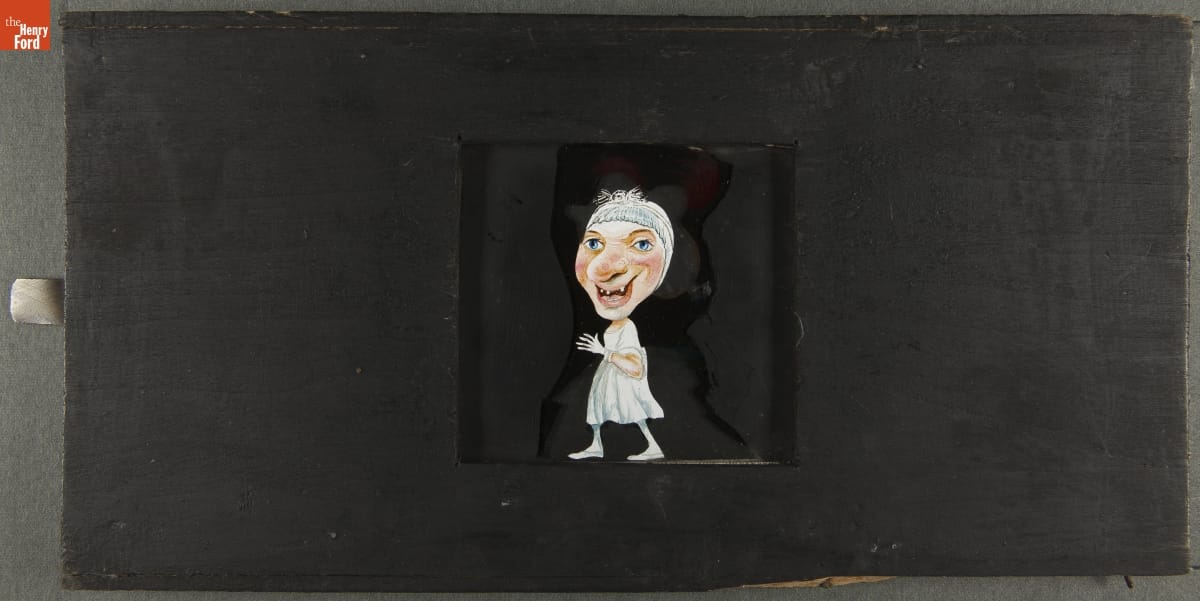
- Mechanical Lantern Slide, "Mirabelle - Horsewoman of the Paris Hippodrome," 1870-1915 - Magic lanterns use a concave mirror and light source to project images on glass slides with painted or photographic scenes. Developed in the 17th century, magic lanterns predate slide projectors and motion pictures. In the hands of magicians, they became "lanterns of fright," projecting wondrous images and apparitions. Slide themes ranged widely: exotic travel, folklore, advertising, history, science, and art.
- 1870-1915
- Collections - Artifact
Mechanical Lantern Slide, "Mirabelle - Horsewoman of the Paris Hippodrome," 1870-1915
Magic lanterns use a concave mirror and light source to project images on glass slides with painted or photographic scenes. Developed in the 17th century, magic lanterns predate slide projectors and motion pictures. In the hands of magicians, they became "lanterns of fright," projecting wondrous images and apparitions. Slide themes ranged widely: exotic travel, folklore, advertising, history, science, and art.
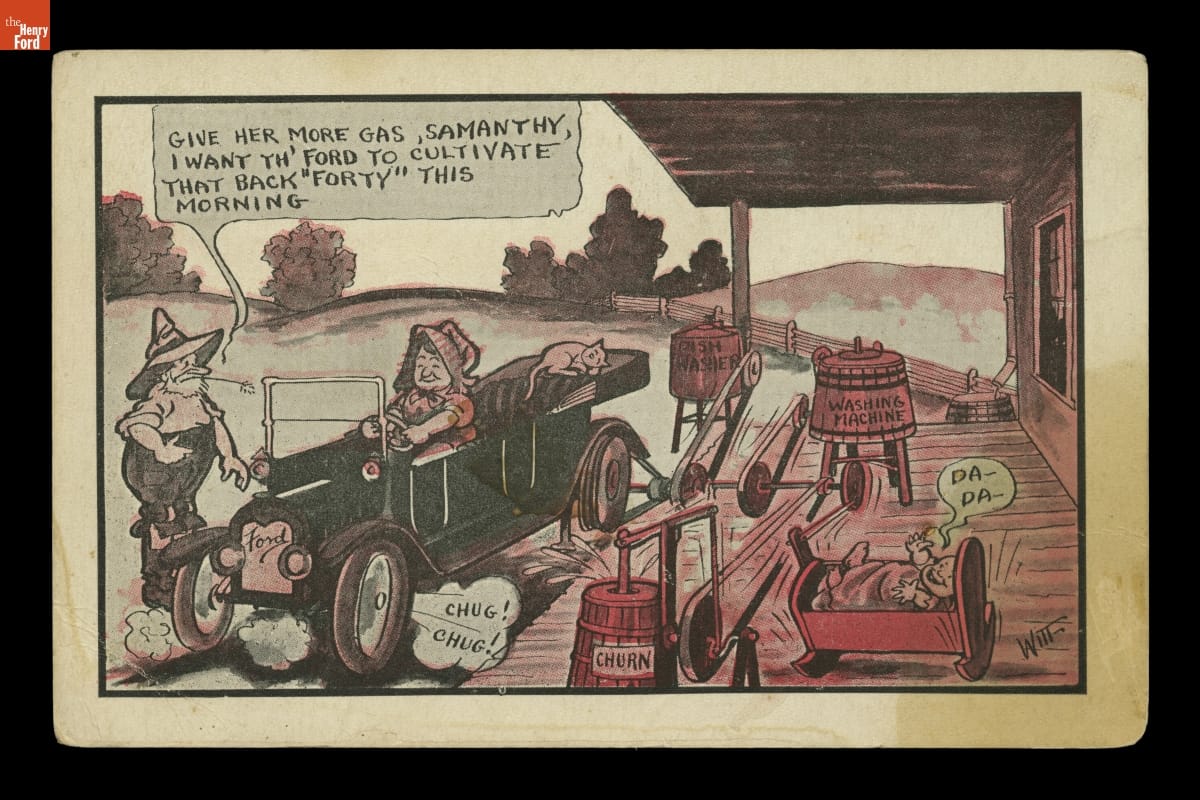
- Postcard, "Let Lizzie Do It!" circa 1915 - People loved the Ford Model T. It took you where you wanted to go, was easy to operate, parts were cheap, and you could fix it yourself. Thousands of jokes celebrated the Model T's sturdiness and reliability -- and poked fun at its homeliness and rattles. These jokes always amused Henry Ford. He often said that every Ford joke sold a car.
- circa 1915
- Collections - Artifact
Postcard, "Let Lizzie Do It!" circa 1915
People loved the Ford Model T. It took you where you wanted to go, was easy to operate, parts were cheap, and you could fix it yourself. Thousands of jokes celebrated the Model T's sturdiness and reliability -- and poked fun at its homeliness and rattles. These jokes always amused Henry Ford. He often said that every Ford joke sold a car.