
Search
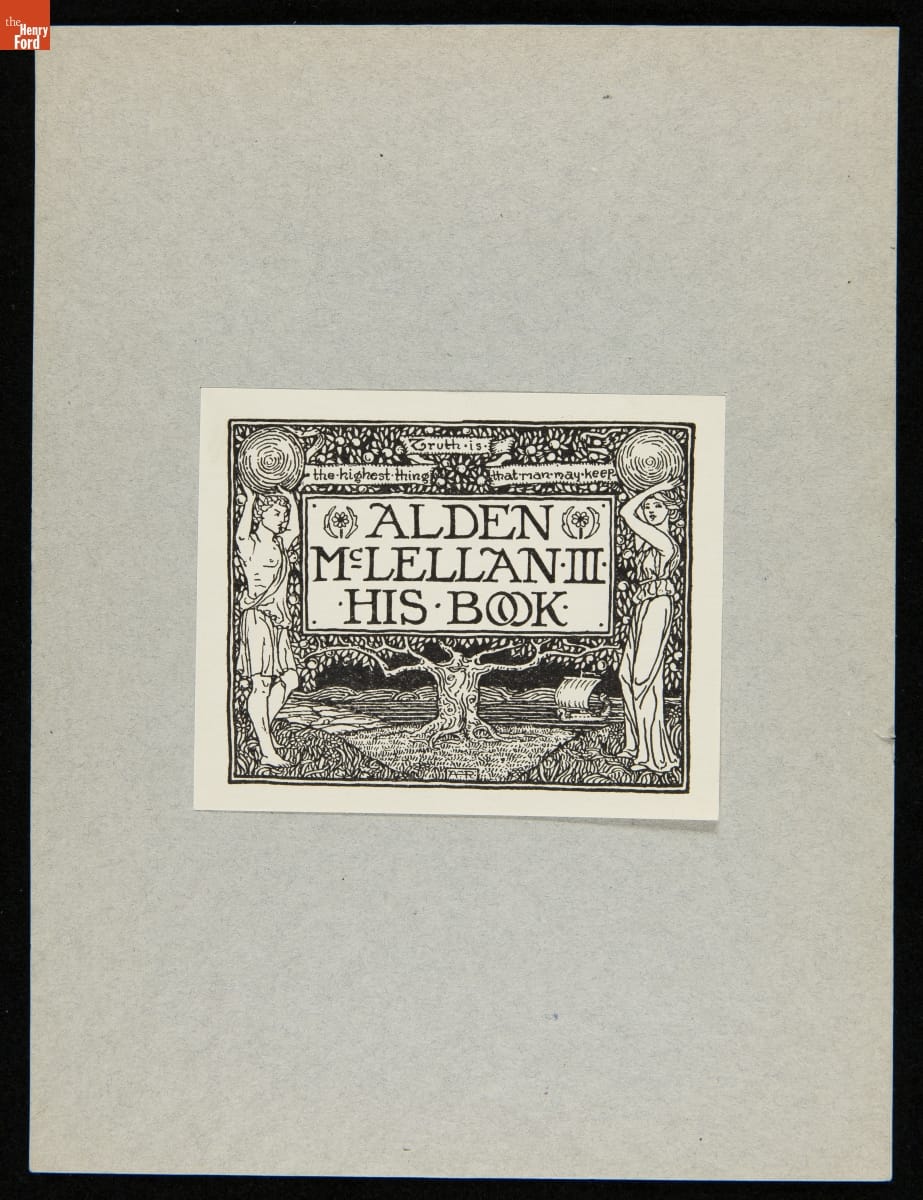
- Bookplate of Alden McLellan III, circa 1917 - Bookplates show ownership, but they can also tell us more. Often pasted on the inside of a book's front cover or endpaper, these printed labels contain the owner's name and sometimes the words "ex-libris" (Latin for "from the library of"). Coats of arms, crests, other decorative images, poems, mottoes, and even font type provide insight into the beliefs, passions, and interests of the book's owner.
- circa 1917
- Collections - Artifact
Bookplate of Alden McLellan III, circa 1917
Bookplates show ownership, but they can also tell us more. Often pasted on the inside of a book's front cover or endpaper, these printed labels contain the owner's name and sometimes the words "ex-libris" (Latin for "from the library of"). Coats of arms, crests, other decorative images, poems, mottoes, and even font type provide insight into the beliefs, passions, and interests of the book's owner.
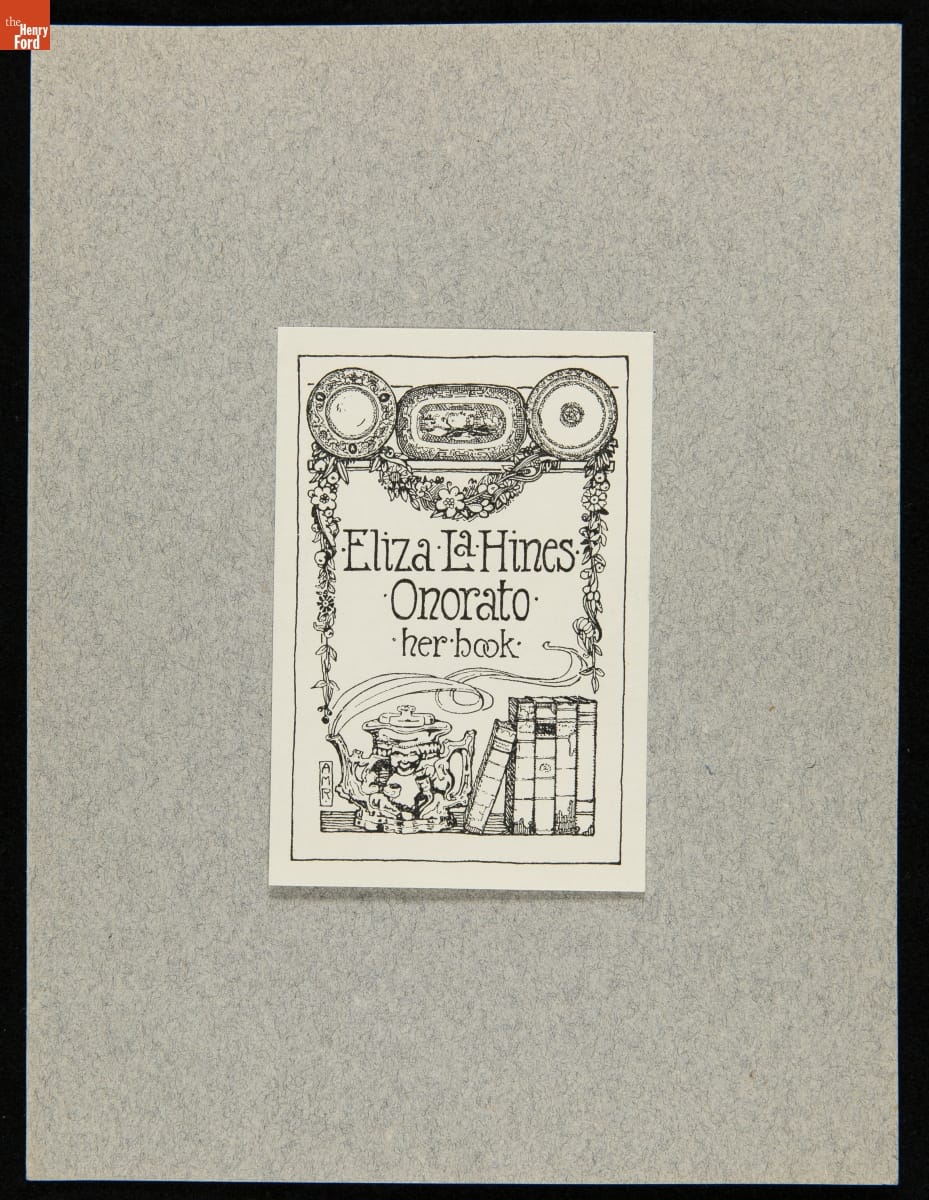
- Bookplate of Eliza LaHines Onorato, 1905-1917 - Bookplates show ownership, but they can also tell us more. Often pasted on the inside of a book's front cover or endpaper, these printed labels contain the owner's name and sometimes the words "ex-libris" (Latin for "from the library of"). Coats of arms, crests, other decorative images, poems, mottoes, and even font type provide insight into the beliefs, passions, and interests of the book's owner.
- 1905-1917
- Collections - Artifact
Bookplate of Eliza LaHines Onorato, 1905-1917
Bookplates show ownership, but they can also tell us more. Often pasted on the inside of a book's front cover or endpaper, these printed labels contain the owner's name and sometimes the words "ex-libris" (Latin for "from the library of"). Coats of arms, crests, other decorative images, poems, mottoes, and even font type provide insight into the beliefs, passions, and interests of the book's owner.
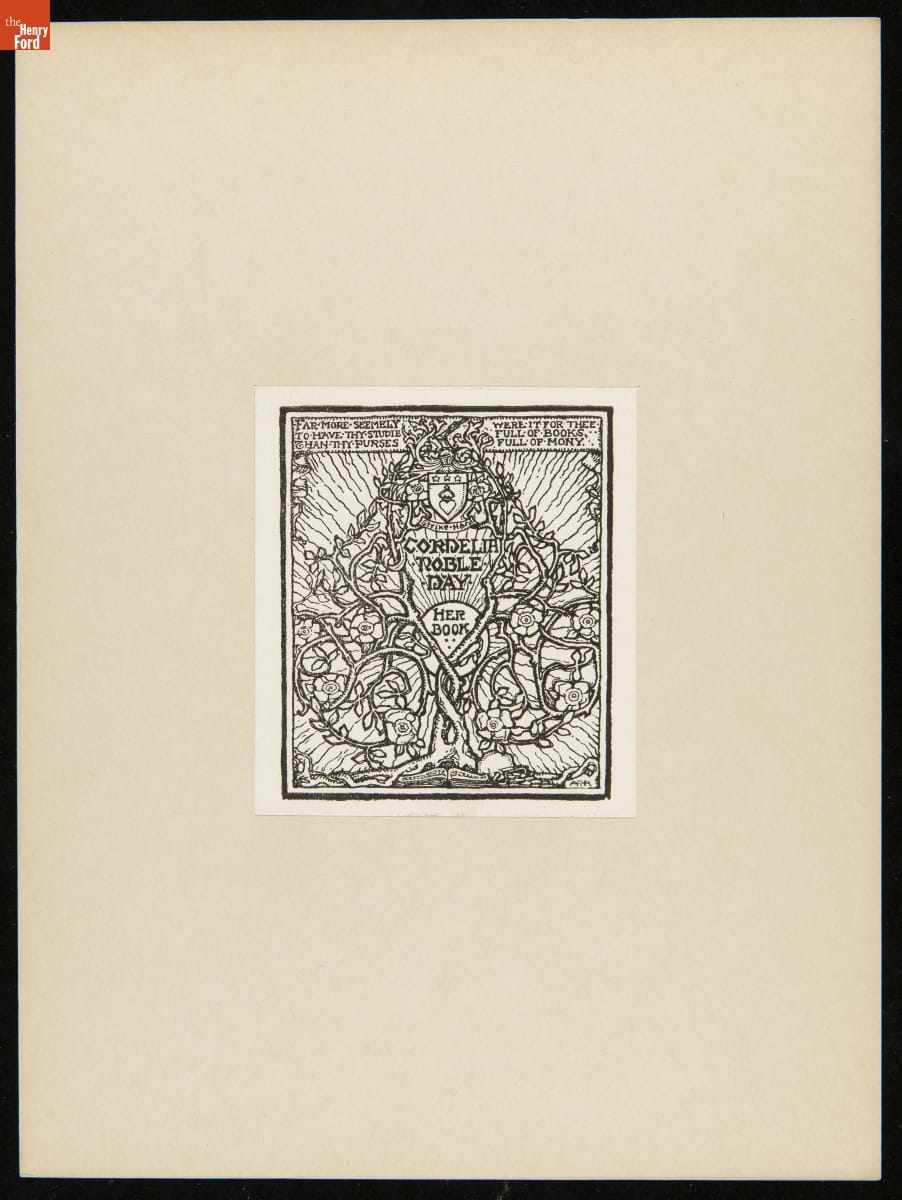
- Bookplate of Cordelia Noble Day of New Orleans, Louisiana, circa 1914 - Bookplates show ownership, but they can also tell us more. Often pasted on the inside of a book's front cover or endpaper, these printed labels contain the owner's name and sometimes the words "ex-libris" (Latin for "from the library of"). Coats of arms, crests, other decorative images, poems, mottoes, and even font type provide insight into the beliefs, passions, and interests of the book's owner.
- circa 1914
- Collections - Artifact
Bookplate of Cordelia Noble Day of New Orleans, Louisiana, circa 1914
Bookplates show ownership, but they can also tell us more. Often pasted on the inside of a book's front cover or endpaper, these printed labels contain the owner's name and sometimes the words "ex-libris" (Latin for "from the library of"). Coats of arms, crests, other decorative images, poems, mottoes, and even font type provide insight into the beliefs, passions, and interests of the book's owner.
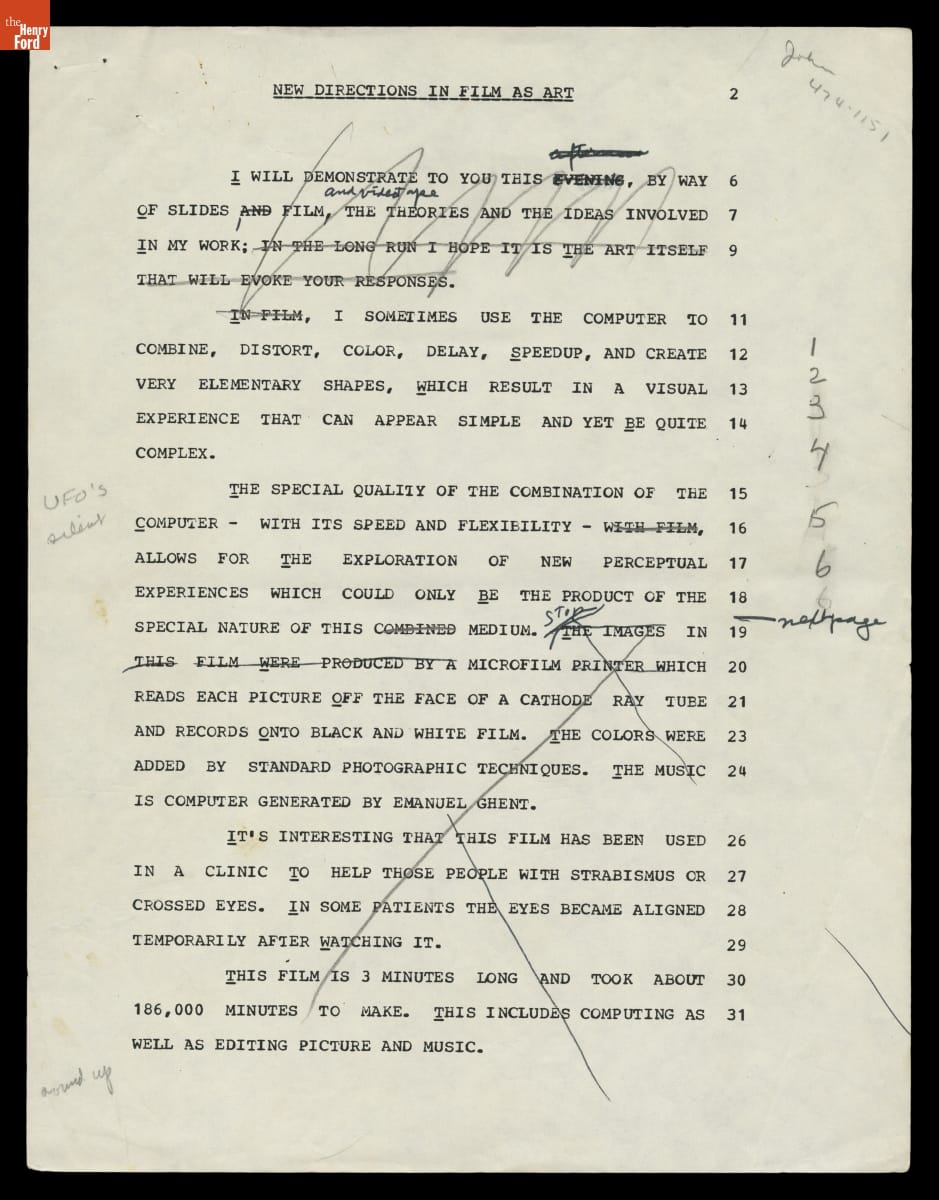
- "New Directions in Film as Art," Lecture Delivered at Computer Culture 81 Conference - Lillian Schwartz is a pioneer of computer-generated art. From 1969-2002, she was a "resident visitor" at Bell Laboratories, producing groundbreaking films, videos, and multimedia works. The Schwartz Collection spans Lillian's childhood into her late career, documenting an expansive mindset, mastery over traditional and experimental mediums alike--and above all--an ability to create inspirational connections between science, art, and technology.
- 1976
- Collections - Artifact
"New Directions in Film as Art," Lecture Delivered at Computer Culture 81 Conference
Lillian Schwartz is a pioneer of computer-generated art. From 1969-2002, she was a "resident visitor" at Bell Laboratories, producing groundbreaking films, videos, and multimedia works. The Schwartz Collection spans Lillian's childhood into her late career, documenting an expansive mindset, mastery over traditional and experimental mediums alike--and above all--an ability to create inspirational connections between science, art, and technology.
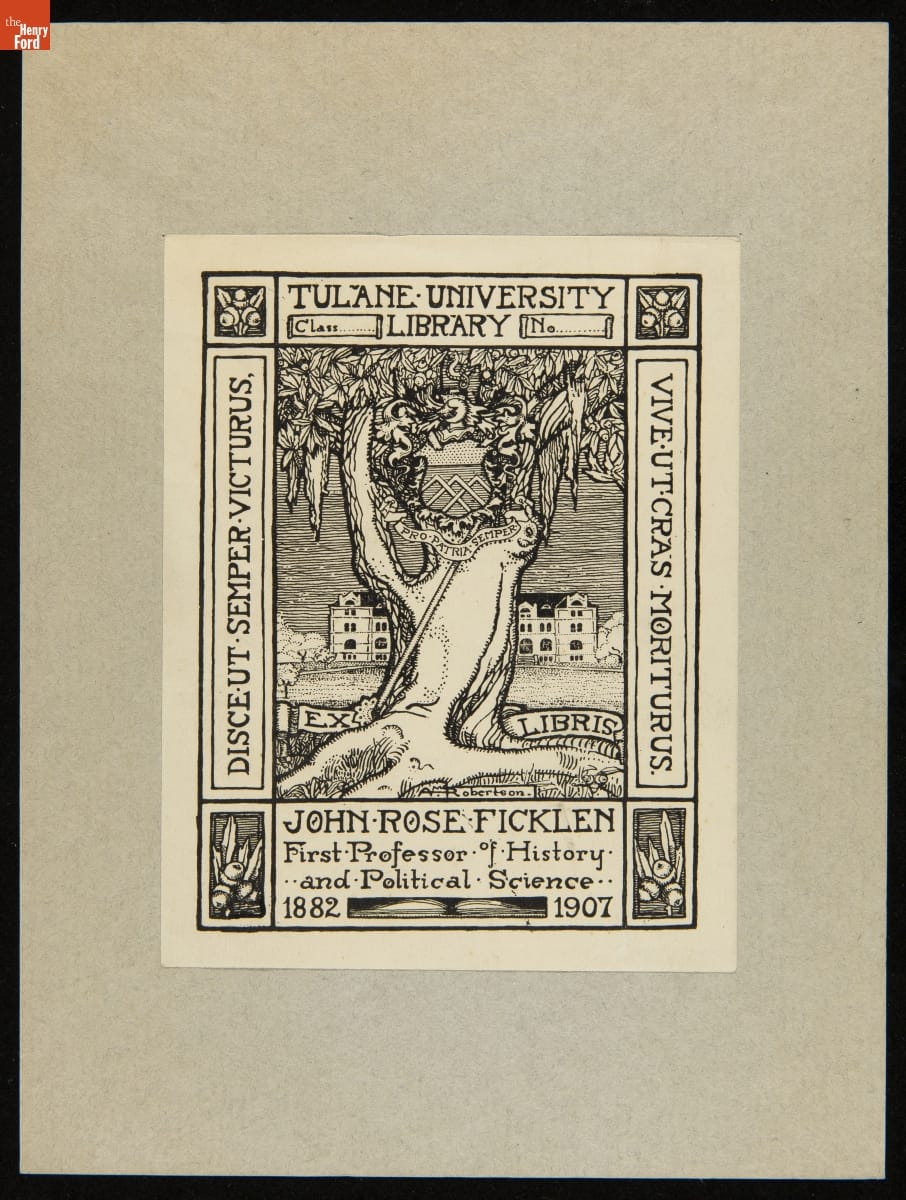
- Bookplate of Tulane University Library and Professor John Rose Ficklen, Designed by Anne MacKinne Robertson, 1907 - Bookplates show ownership, but they can also tell us more. Often pasted on the inside of a book's front cover or endpaper, these printed labels contain the owner's name and sometimes the words "ex-libris" (Latin for "from the library of"). Coats of arms, crests, other decorative images, poems, mottoes, and even font type provide insight into the beliefs, passions, and interests of the book's owner.
- 1907
- Collections - Artifact
Bookplate of Tulane University Library and Professor John Rose Ficklen, Designed by Anne MacKinne Robertson, 1907
Bookplates show ownership, but they can also tell us more. Often pasted on the inside of a book's front cover or endpaper, these printed labels contain the owner's name and sometimes the words "ex-libris" (Latin for "from the library of"). Coats of arms, crests, other decorative images, poems, mottoes, and even font type provide insight into the beliefs, passions, and interests of the book's owner.
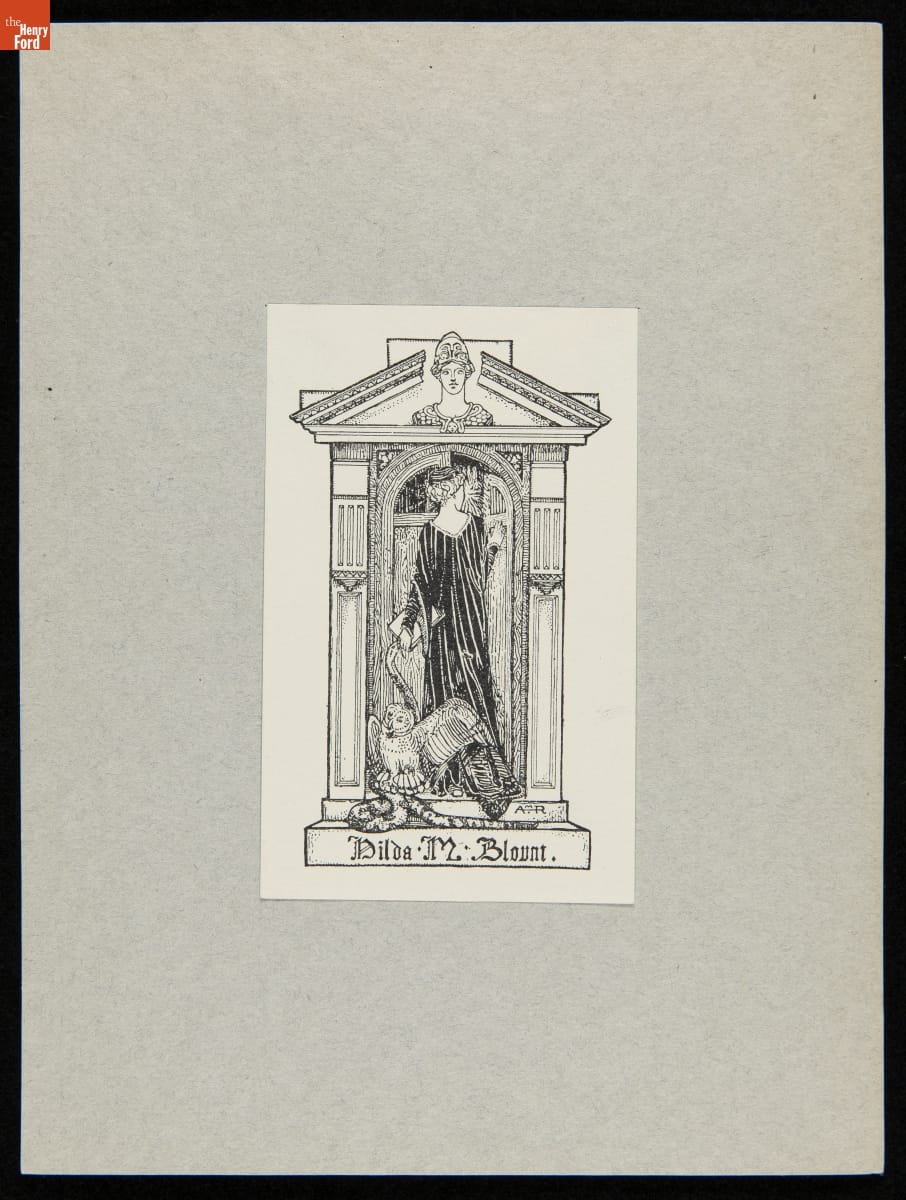
- Bookplate of Hilda M. Blount, 1904-1905 - Bookplates show ownership, but they can also tell us more. Often pasted on the inside of a book's front cover or endpaper, these printed labels contain the owner's name and sometimes the words "ex-libris" (Latin for "from the library of"). Coats of arms, crests, other decorative images, poems, mottoes, and even font type provide insight into the beliefs, passions, and interests of the book's owner.
- 1904-1905
- Collections - Artifact
Bookplate of Hilda M. Blount, 1904-1905
Bookplates show ownership, but they can also tell us more. Often pasted on the inside of a book's front cover or endpaper, these printed labels contain the owner's name and sometimes the words "ex-libris" (Latin for "from the library of"). Coats of arms, crests, other decorative images, poems, mottoes, and even font type provide insight into the beliefs, passions, and interests of the book's owner.
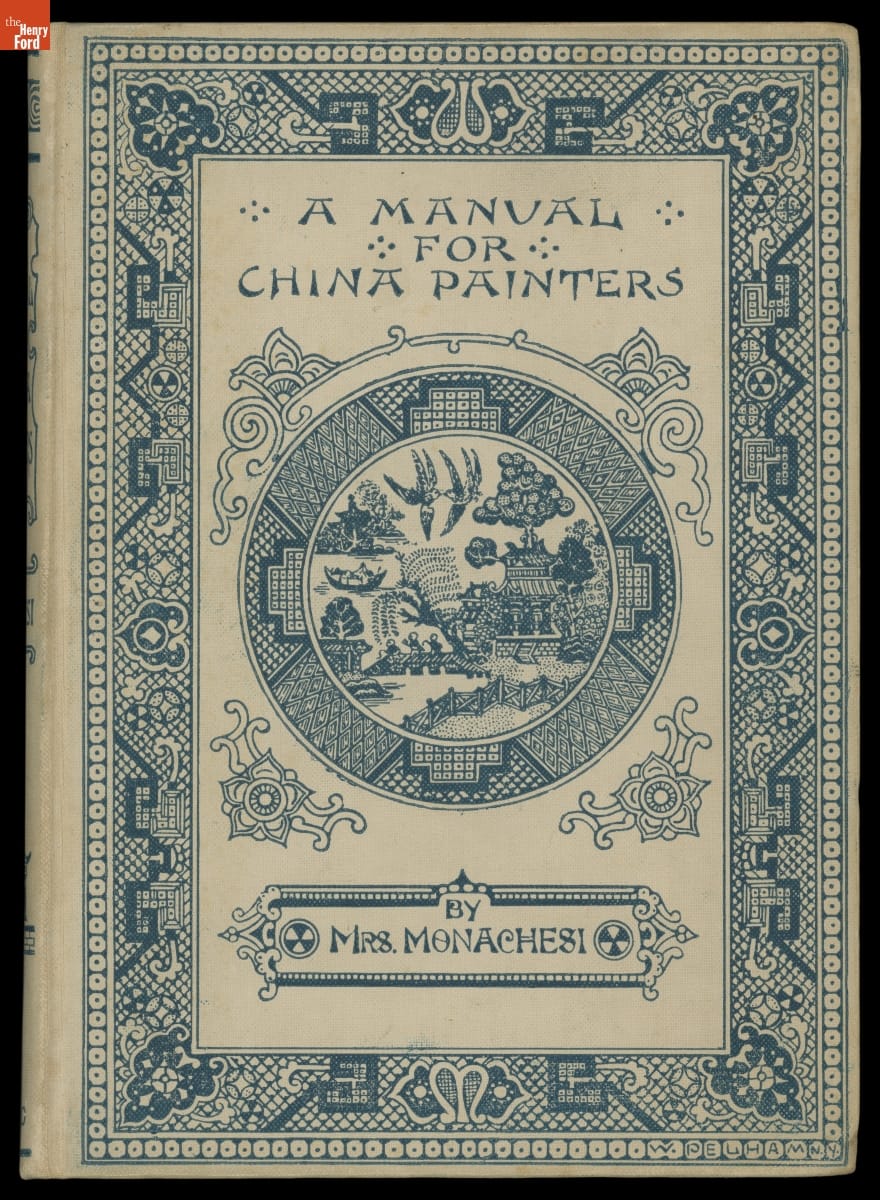
- "A Manual for China Painters," circa 1896 - China painting was an important late 19th- and early 20th-century pastime for many American women. They painted over the glaze of fired, undecorated pieces of white porcelain called "blanks." Amateur artists interested in china painting could purchase supplies -- including blanks, paints, and instructional manuals such as this one -- at specialty stores.
- circa 1896
- Collections - Artifact
"A Manual for China Painters," circa 1896
China painting was an important late 19th- and early 20th-century pastime for many American women. They painted over the glaze of fired, undecorated pieces of white porcelain called "blanks." Amateur artists interested in china painting could purchase supplies -- including blanks, paints, and instructional manuals such as this one -- at specialty stores.
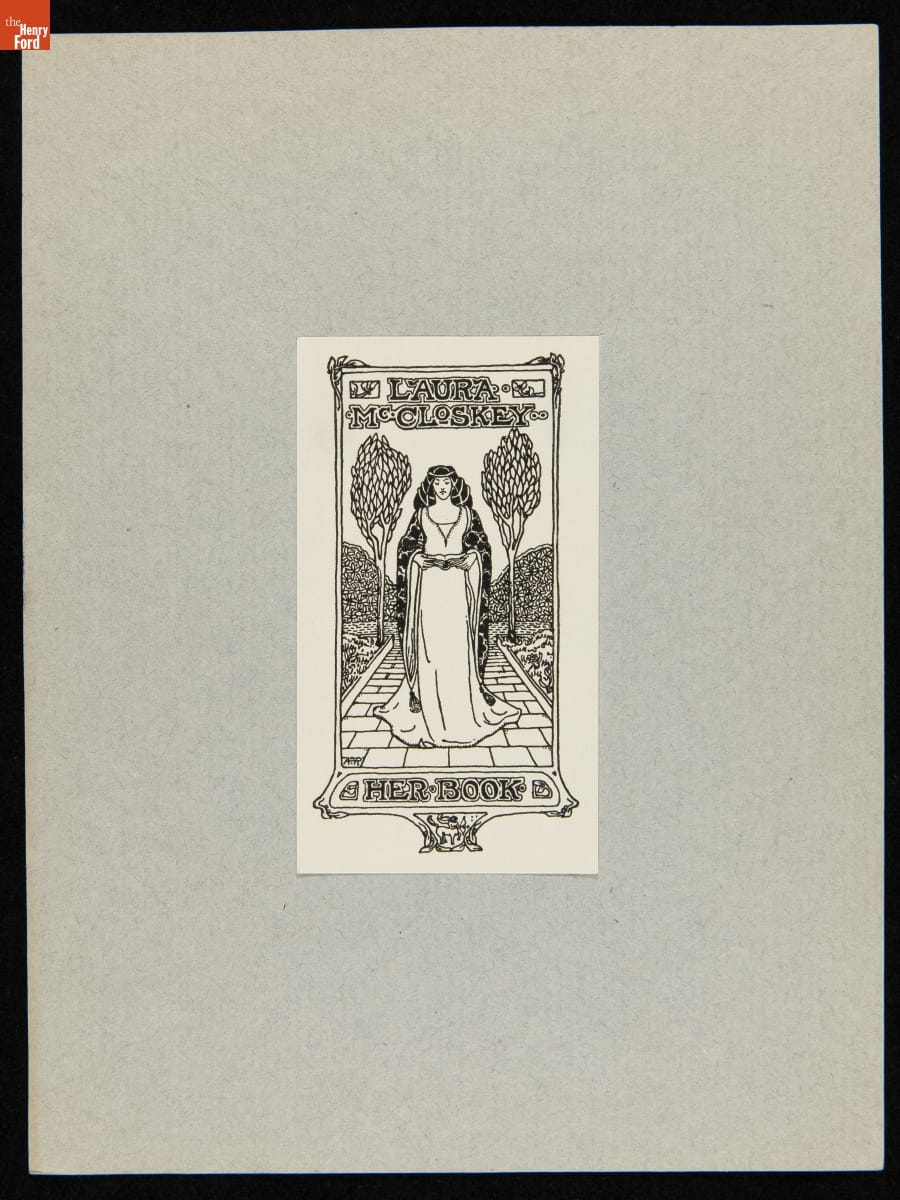
- Bookplate of Laura McCloskey, 1903-1914 - Bookplates show ownership, but they can also tell us more. Often pasted on the inside of a book's front cover or endpaper, these printed labels contain the owner's name and sometimes the words "ex-libris" (Latin for "from the library of"). Coats of arms, crests, other decorative images, poems, mottoes, and even font type provide insight into the beliefs, passions, and interests of the book's owner.
- 1903-1914
- Collections - Artifact
Bookplate of Laura McCloskey, 1903-1914
Bookplates show ownership, but they can also tell us more. Often pasted on the inside of a book's front cover or endpaper, these printed labels contain the owner's name and sometimes the words "ex-libris" (Latin for "from the library of"). Coats of arms, crests, other decorative images, poems, mottoes, and even font type provide insight into the beliefs, passions, and interests of the book's owner.
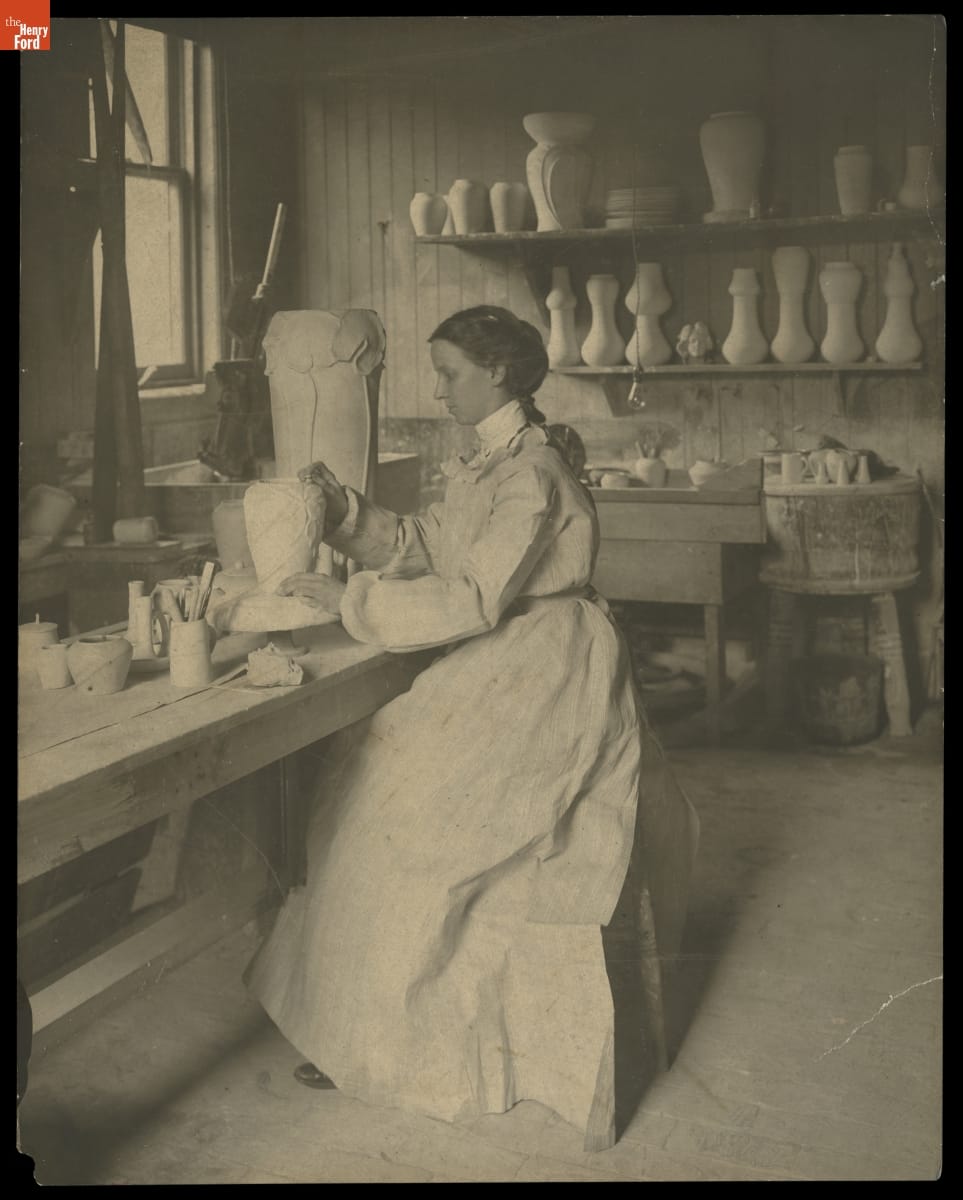
- Mary Chase Perry Stratton at Pewabic Pottery, Detroit, Michigan, 1903 - Detroit's renowned Pewabic Pottery was founded by artist Mary Chase Perry (later Stratton, 1867-1961) in 1903 as part of the American Arts and Crafts movement. Perry is shown here in her "stable studio," the converted carriage house where Pewabic began. She moved the operation into a purpose-built structure in 1907. Pewabic Pottery became famous for Perry's unique glazes and architectural tile installations.
- 1903
- Collections - Artifact
Mary Chase Perry Stratton at Pewabic Pottery, Detroit, Michigan, 1903
Detroit's renowned Pewabic Pottery was founded by artist Mary Chase Perry (later Stratton, 1867-1961) in 1903 as part of the American Arts and Crafts movement. Perry is shown here in her "stable studio," the converted carriage house where Pewabic began. She moved the operation into a purpose-built structure in 1907. Pewabic Pottery became famous for Perry's unique glazes and architectural tile installations.
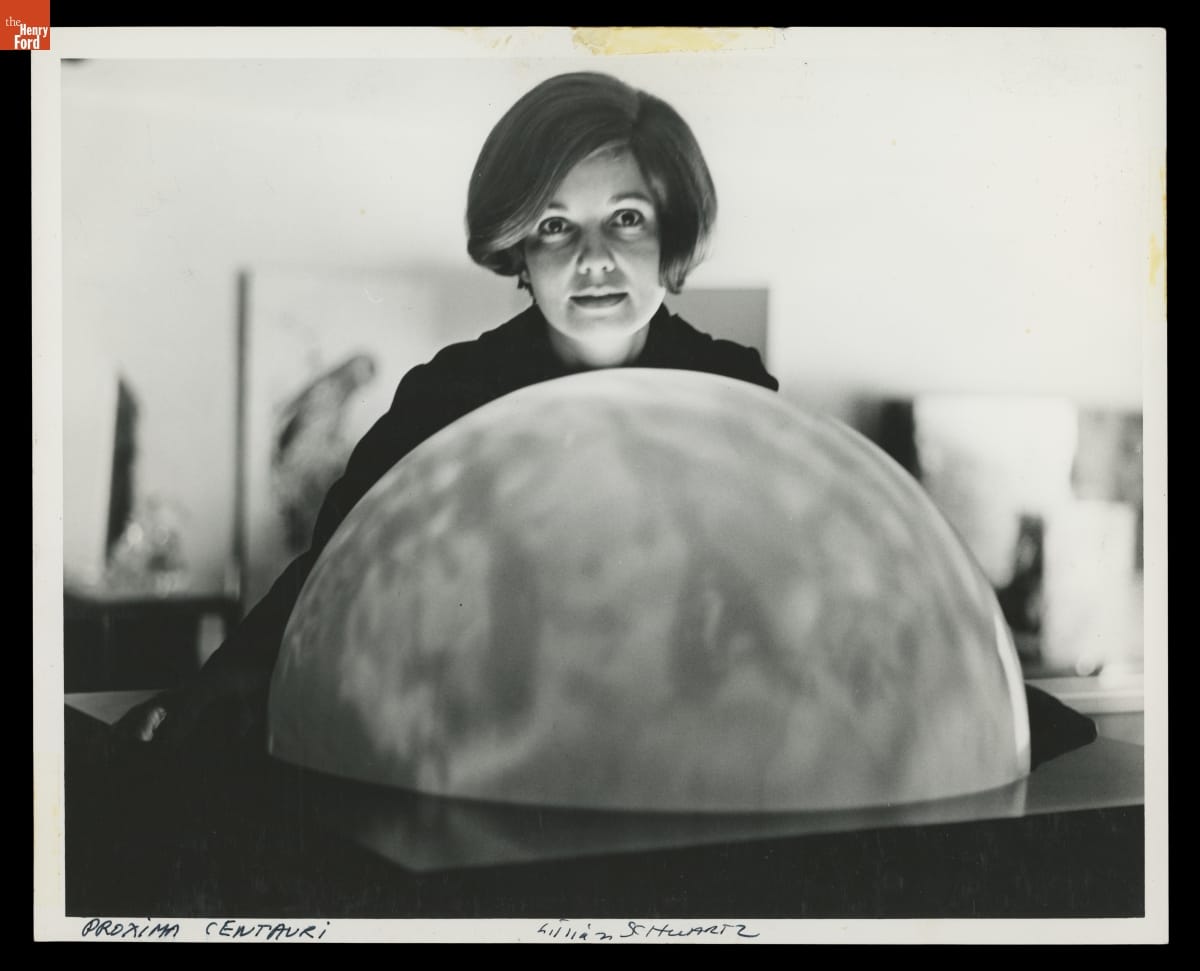
- Lillian Schwartz with Proxima Centauri Globe, 1968-1969 - Lillian Schwartz is a pioneer of computer-generated art. From 1969-2002, she was a "resident visitor" at Bell Laboratories, producing groundbreaking films, videos, and multimedia works. The Schwartz Collection spans Lillian's childhood into her late career, documenting an expansive mindset, mastery over traditional and experimental mediums alike--and above all--an ability to create inspirational connections between science, art, and technology.
- 1968-1969
- Collections - Artifact
Lillian Schwartz with Proxima Centauri Globe, 1968-1969
Lillian Schwartz is a pioneer of computer-generated art. From 1969-2002, she was a "resident visitor" at Bell Laboratories, producing groundbreaking films, videos, and multimedia works. The Schwartz Collection spans Lillian's childhood into her late career, documenting an expansive mindset, mastery over traditional and experimental mediums alike--and above all--an ability to create inspirational connections between science, art, and technology.