
Search
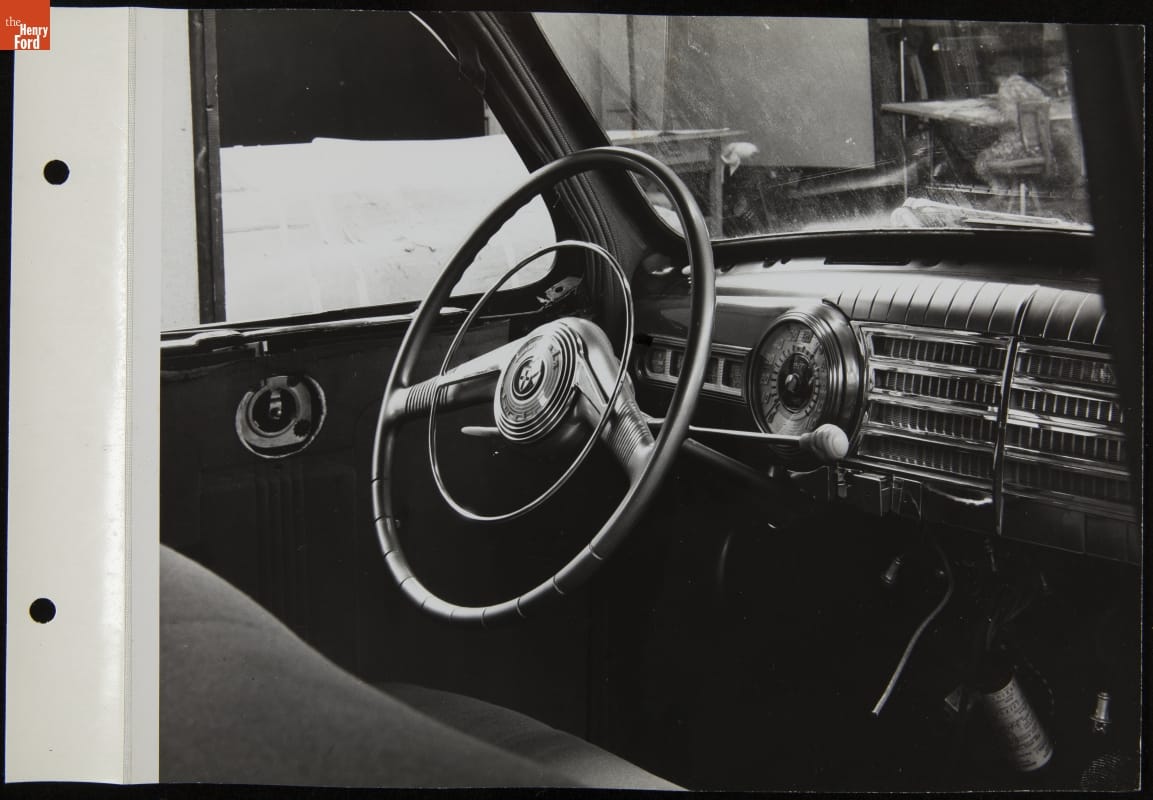
- Interior of Lincoln Zephyr Car in Design Department, Woman Designer in Background, October 1944 - With World War II moving toward a close, Lincoln designers began work on new civilian models. It was anticipated that the Lincoln Zephyr would return, so designers set about refreshing the 1942 model. However, the Zephyr name was dropped before the 1946 models -- the company's first postwar cars -- debuted.
- October 14, 1944
- Collections - Artifact
Interior of Lincoln Zephyr Car in Design Department, Woman Designer in Background, October 1944
With World War II moving toward a close, Lincoln designers began work on new civilian models. It was anticipated that the Lincoln Zephyr would return, so designers set about refreshing the 1942 model. However, the Zephyr name was dropped before the 1946 models -- the company's first postwar cars -- debuted.
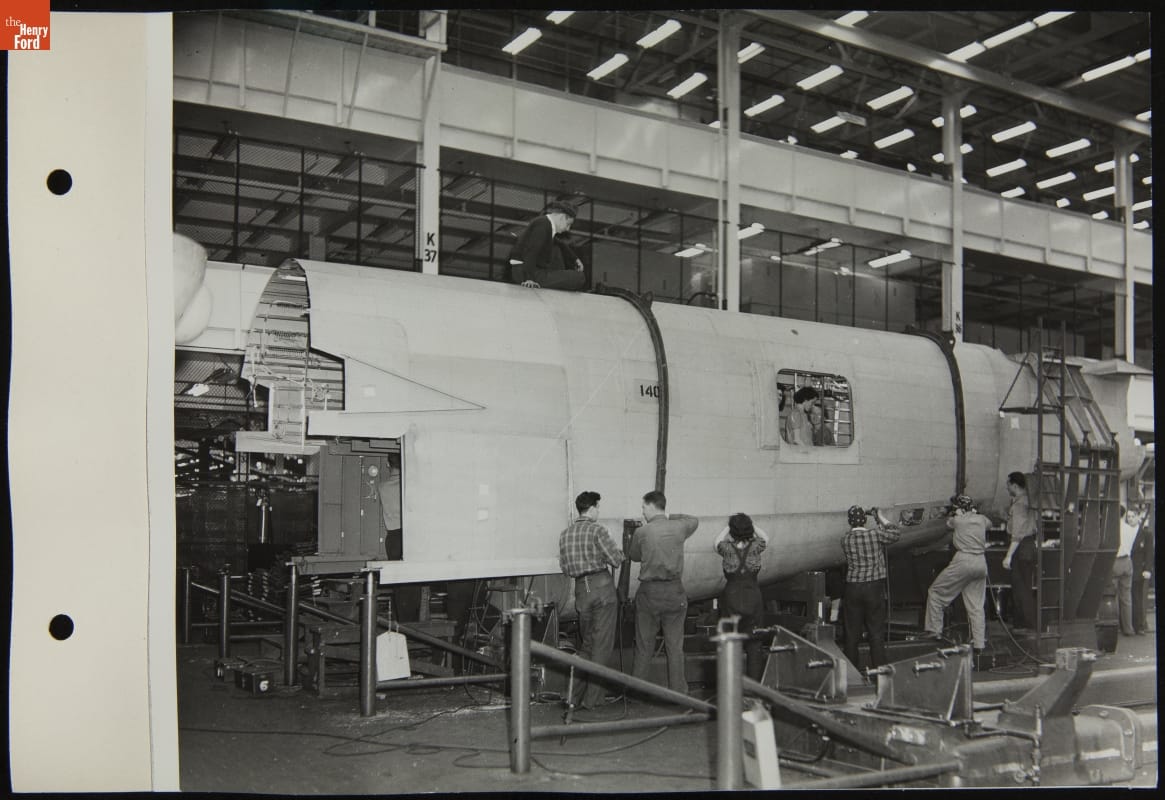
- Employees at Willow Run Assembling Bomber Frame, February 1943 - At Willow Run, Ford Motor Company built B-24 bomber planes for World War II using automobile mass production techniques. Airplanes were much more complex than cars. They required constant design changes poorly suited to a standardized assembly line. Ford overcame these difficulties and, at the plant's peak, Willow Run crews produced an average of one bomber every 63 minutes.
- February 04, 1943
- Collections - Artifact
Employees at Willow Run Assembling Bomber Frame, February 1943
At Willow Run, Ford Motor Company built B-24 bomber planes for World War II using automobile mass production techniques. Airplanes were much more complex than cars. They required constant design changes poorly suited to a standardized assembly line. Ford overcame these difficulties and, at the plant's peak, Willow Run crews produced an average of one bomber every 63 minutes.
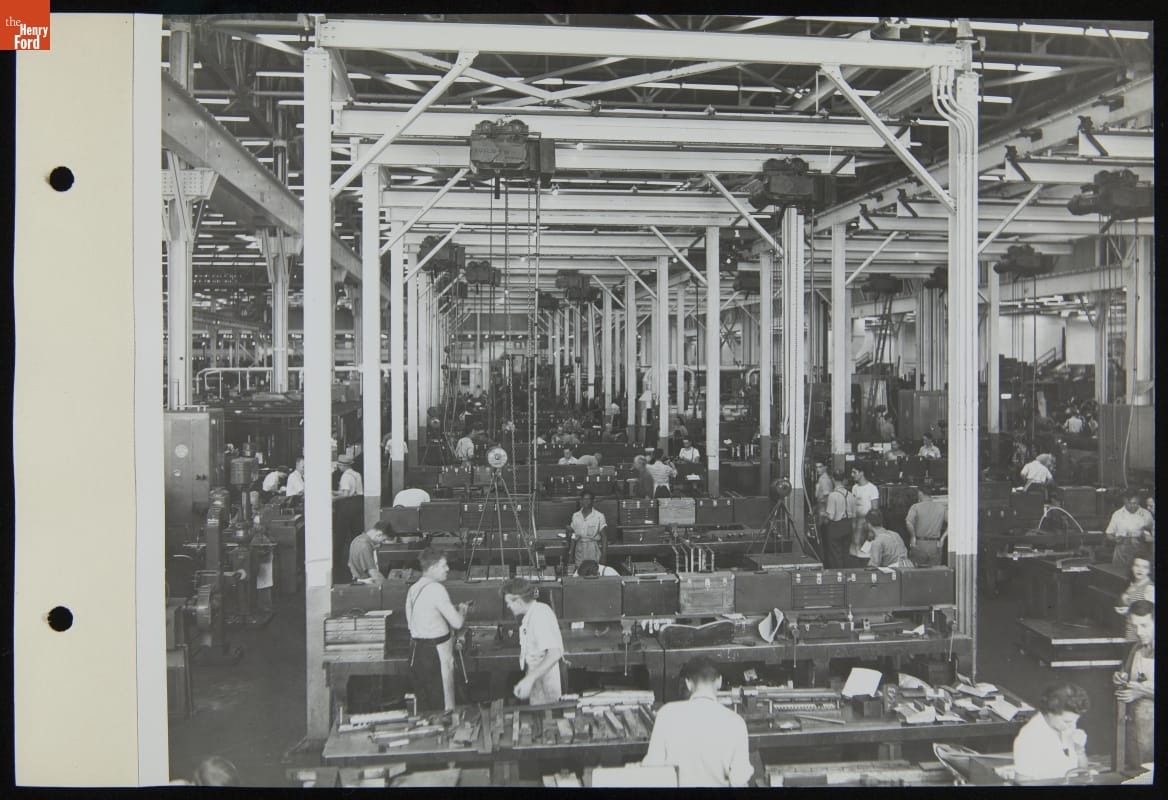
- Overhead View of Tool and Die Department, Willow Run Bomber Plant, August 1943 - At Willow Run, Ford Motor Company built B-24 bomber planes for World War II using automobile mass production techniques. Airplanes were much more complex than cars. They required constant design changes poorly suited to a standardized assembly line. Ford overcame these difficulties and, at the plant's peak, Willow Run crews produced an average of one bomber every 63 minutes.
- August 27, 1943
- Collections - Artifact
Overhead View of Tool and Die Department, Willow Run Bomber Plant, August 1943
At Willow Run, Ford Motor Company built B-24 bomber planes for World War II using automobile mass production techniques. Airplanes were much more complex than cars. They required constant design changes poorly suited to a standardized assembly line. Ford overcame these difficulties and, at the plant's peak, Willow Run crews produced an average of one bomber every 63 minutes.
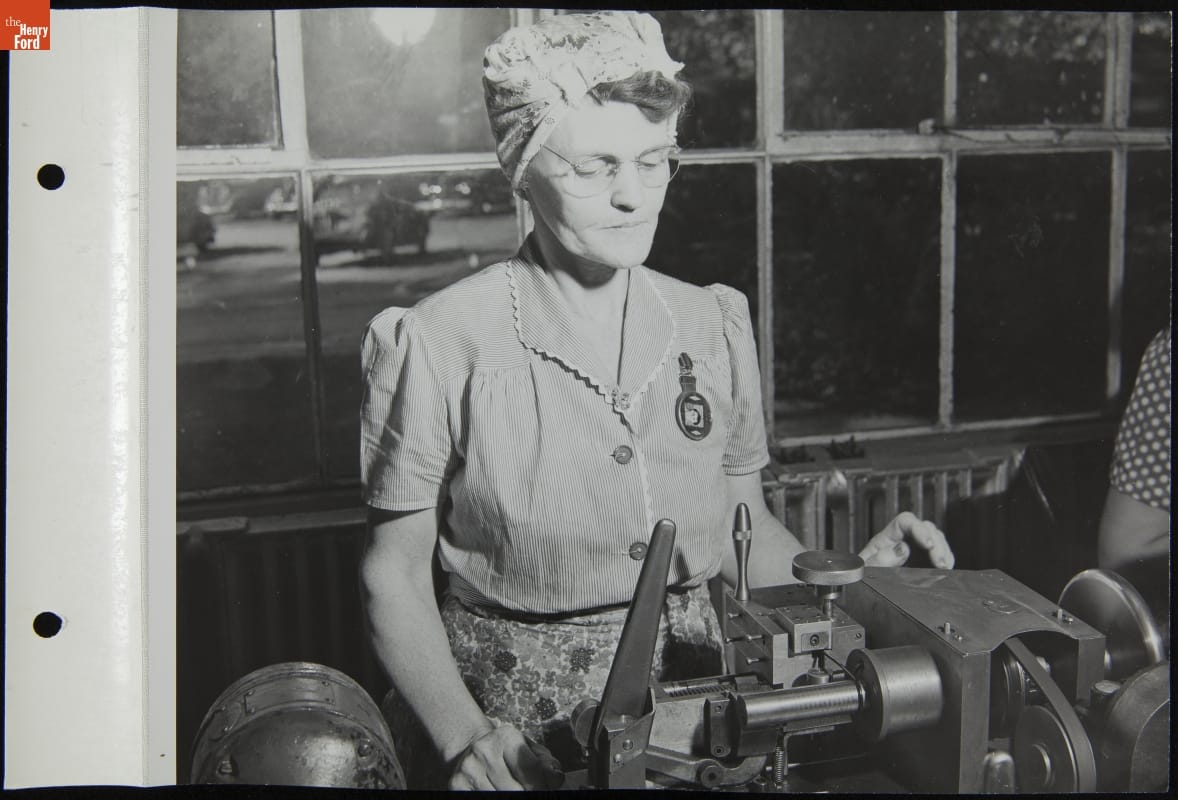
- Women Making Electric Harnesses for B-24 Bombers at Phoenix Mills, September 1944 - In the early 1920s, Henry Ford began locating small hydroelectrically powered plants in rural southeast Michigan. These "Village Industries" employed local people who could maintain farms while working at the factory. Women represented most of the workforce at Phoenix Mill. During World War II, they manufactured electrical harnesses for B-24 bomber airplanes assembled at Ford's nearby Willow Run plant.
- September 25, 1944
- Collections - Artifact
Women Making Electric Harnesses for B-24 Bombers at Phoenix Mills, September 1944
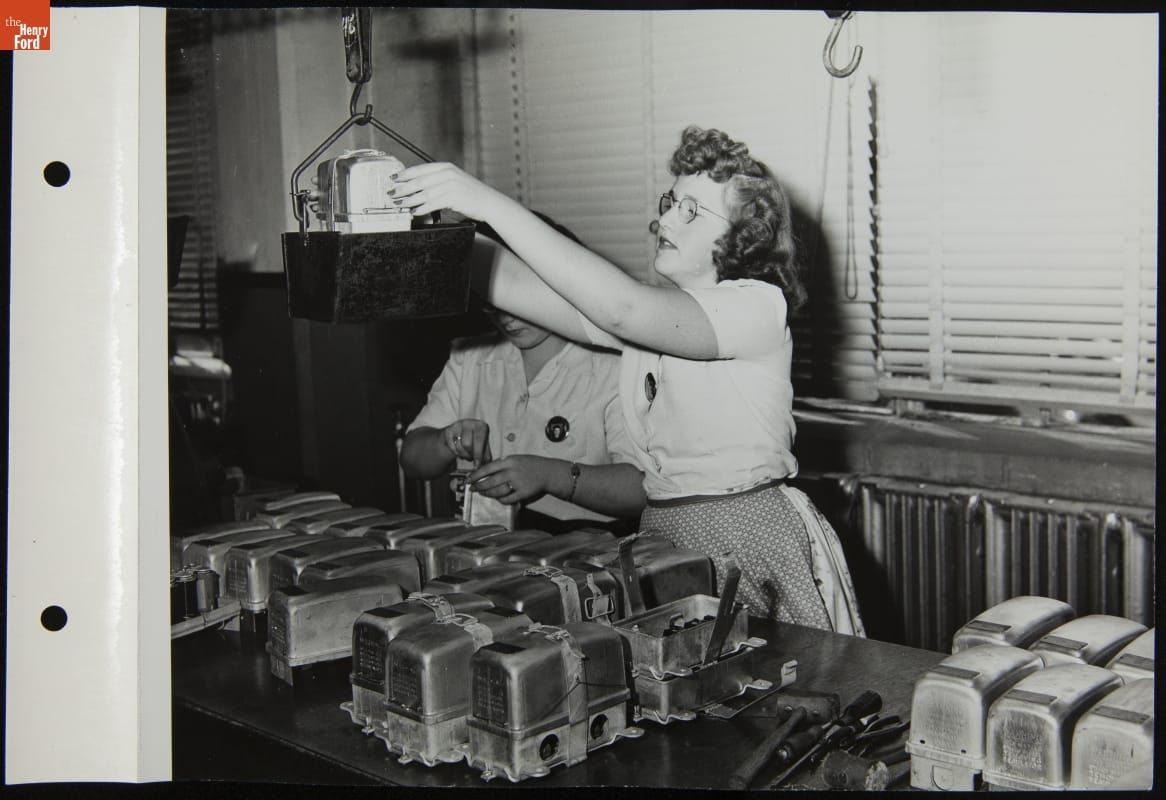
In the early 1920s, Henry Ford began locating small hydroelectrically powered plants in rural southeast Michigan. These "Village Industries" employed local people who could maintain farms while working at the factory. Women represented most of the workforce at Phoenix Mill. During World War II, they manufactured electrical harnesses for B-24 bomber airplanes assembled at Ford's nearby Willow Run plant.
- Women Making Electric Harnesses for B-24 Bombers at Phoenix Mills, September 1944 - In the early 1920s, Henry Ford began locating small hydroelectrically powered plants in rural southeast Michigan. These "Village Industries" employed local people who could maintain farms while working at the factory. Women represented most of the workforce at Phoenix Mill. During World War II, they manufactured electrical harnesses for B-24 bomber airplanes assembled at Ford's nearby Willow Run plant.
- September 25, 1944
- Collections - Artifact
Women Making Electric Harnesses for B-24 Bombers at Phoenix Mills, September 1944
In the early 1920s, Henry Ford began locating small hydroelectrically powered plants in rural southeast Michigan. These "Village Industries" employed local people who could maintain farms while working at the factory. Women represented most of the workforce at Phoenix Mill. During World War II, they manufactured electrical harnesses for B-24 bomber airplanes assembled at Ford's nearby Willow Run plant.
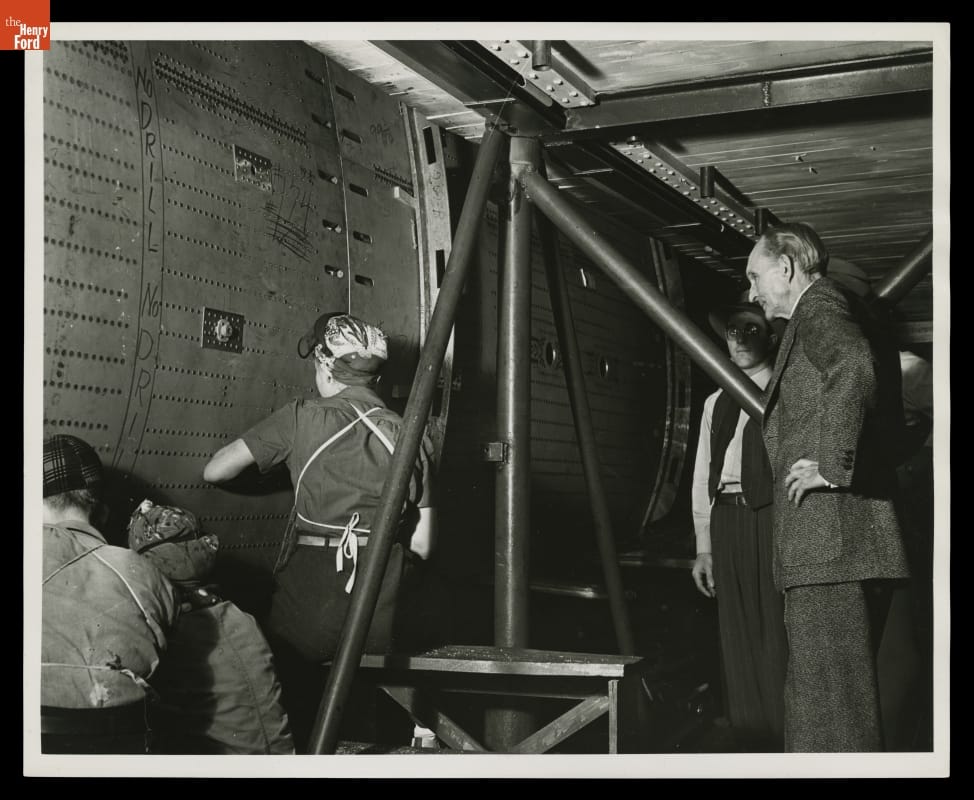
- Henry Ford Watching Workers Riveting Center Wing Section at the Willow Run Bomber Plant, 1942 - At Willow Run, Ford Motor Company built B-24 bomber planes for World War II using automobile mass production techniques. Airplanes were much more complex than cars. They required constant design changes poorly suited to a standardized assembly line. Ford overcame these difficulties and, at the plant's peak, Willow Run crews produced an average of one bomber every 63 minutes.
- December 21, 1942
- Collections - Artifact
Henry Ford Watching Workers Riveting Center Wing Section at the Willow Run Bomber Plant, 1942
At Willow Run, Ford Motor Company built B-24 bomber planes for World War II using automobile mass production techniques. Airplanes were much more complex than cars. They required constant design changes poorly suited to a standardized assembly line. Ford overcame these difficulties and, at the plant's peak, Willow Run crews produced an average of one bomber every 63 minutes.
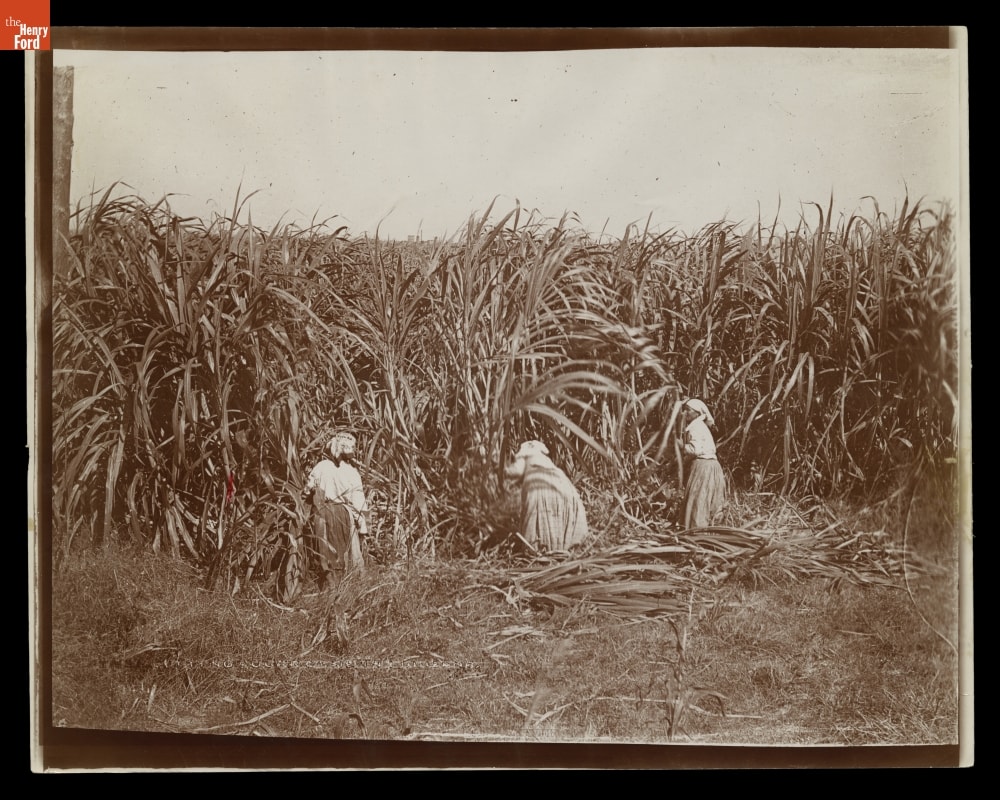
- Women Cutting Sugar Cane, Baton Rouge, Louisiana, 1912 - From 1895 to 1924, the Detroit Publishing Company was one of the major image publishers in the world. The company's wide-ranging stock of original photographs documented life and landscapes from across the nation and around the globe. From the tens of thousands of negatives, the company created prints, postcards, lantern slides, panoramas, and other merchandise for sale to educators, businessmen, advertisers, homeowners and travelers.
- circa 1890
- Collections - Artifact
Women Cutting Sugar Cane, Baton Rouge, Louisiana, 1912
From 1895 to 1924, the Detroit Publishing Company was one of the major image publishers in the world. The company's wide-ranging stock of original photographs documented life and landscapes from across the nation and around the globe. From the tens of thousands of negatives, the company created prints, postcards, lantern slides, panoramas, and other merchandise for sale to educators, businessmen, advertisers, homeowners and travelers.
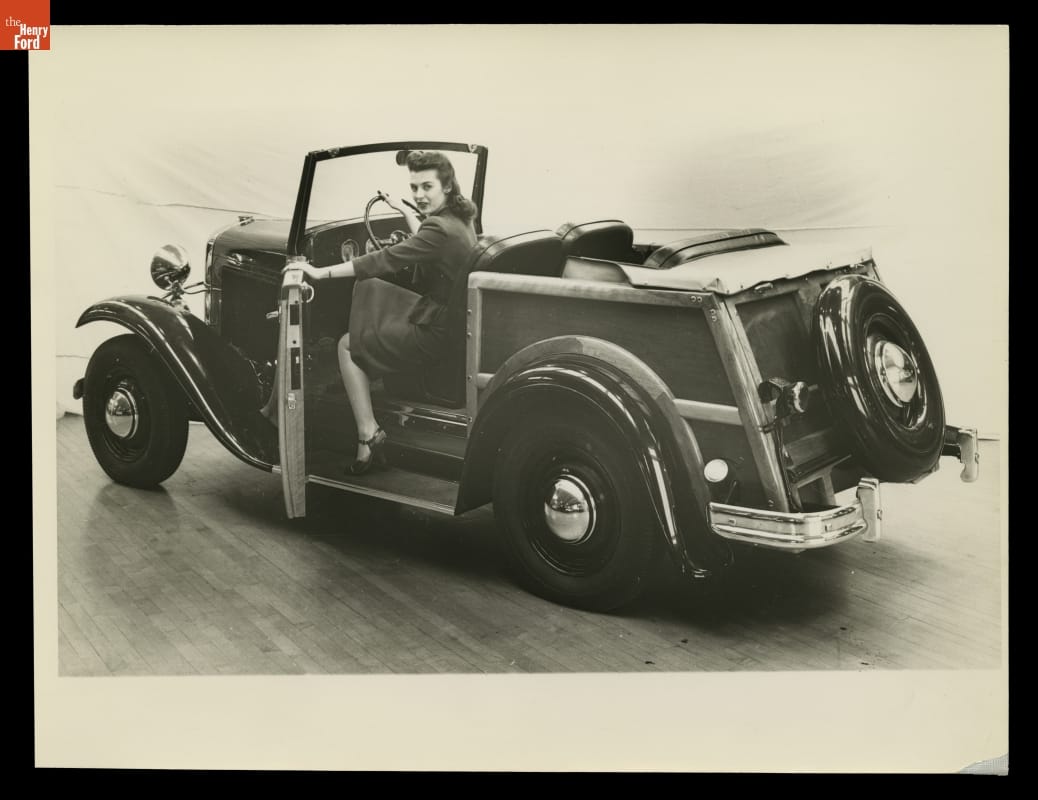
- Designer Doris Dickason Modeling the Ford "Estate Wagon" Custom-Built for Henry Ford II, February 1945 - Doris Dickason was one of a handful pioneering women hired into the Ford Motor Company's Design Department during World War II. In 1944, she worked on the Estate Wagon -- a special Model A-based vehicle created for Henry Ford II by Bob Gregorie. Later, she was assigned to the staff of John Najjar, designing steering wheels and instrument panels.
- February 03, 1945
- Collections - Artifact
Designer Doris Dickason Modeling the Ford "Estate Wagon" Custom-Built for Henry Ford II, February 1945
Doris Dickason was one of a handful pioneering women hired into the Ford Motor Company's Design Department during World War II. In 1944, she worked on the Estate Wagon -- a special Model A-based vehicle created for Henry Ford II by Bob Gregorie. Later, she was assigned to the staff of John Najjar, designing steering wheels and instrument panels.
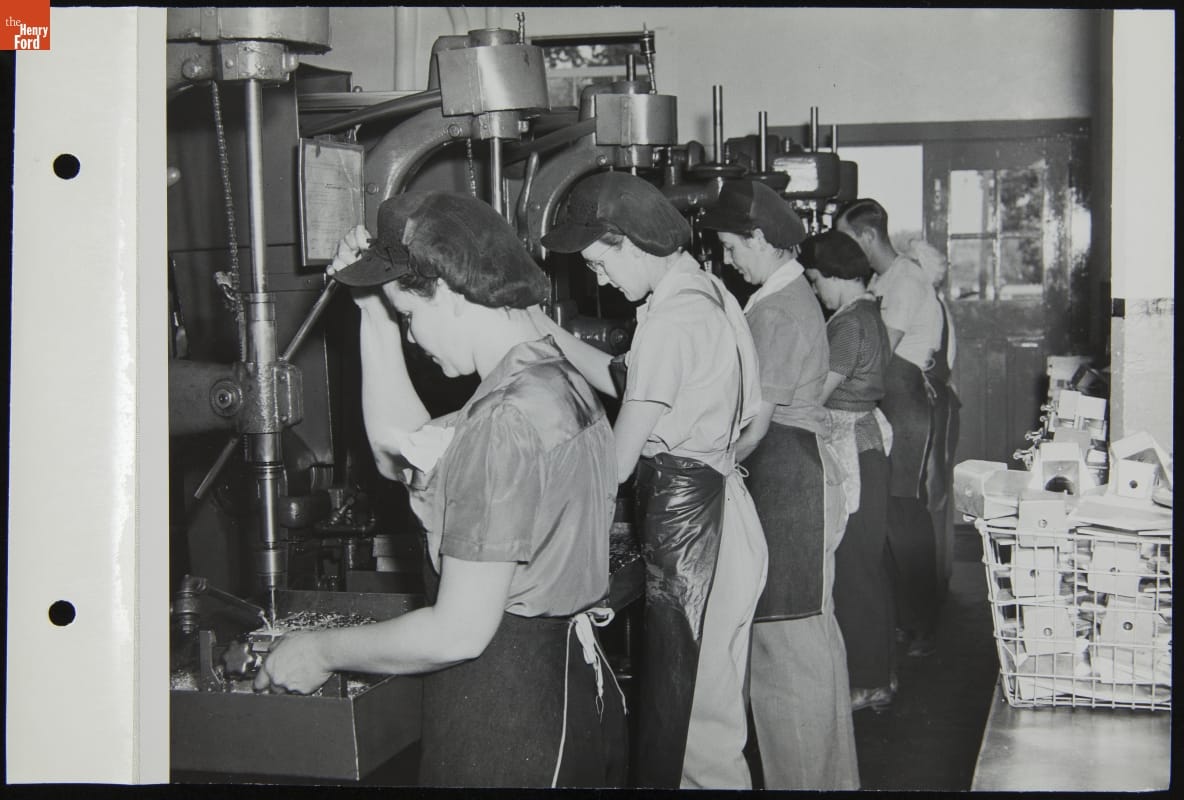
- Women Making Castings at Hayden Mills, Tecumseh, Michigan, September 1944 - In the 1920s and '30s, Henry Ford set up small-scale factories throughout southeast Michigan. These "Village Industries" supplied Ford with tools and vehicle parts, and they employed local people who could maintain farms while working at the factory. At Hayden Mills in Tecumseh, employees cleaned and packed Ford-grown soybeans. During World War II, they built parts for B-24 bomber airplanes.
- September 12, 1944
- Collections - Artifact
Women Making Castings at Hayden Mills, Tecumseh, Michigan, September 1944
In the 1920s and '30s, Henry Ford set up small-scale factories throughout southeast Michigan. These "Village Industries" supplied Ford with tools and vehicle parts, and they employed local people who could maintain farms while working at the factory. At Hayden Mills in Tecumseh, employees cleaned and packed Ford-grown soybeans. During World War II, they built parts for B-24 bomber airplanes.
- Sexual Shakedown: The Sexual Harassment of Women on the Job, 1978 - As more women entered the workplace in the 1960s and 1970s, many faced sexual harassment, a term coined by Dr. Lin Farley in 1975. Dr. Farley later wrote <em>Sexual Shakedown</em> to track the long history of sexual harassment and call more attention to the issue. Her book would go on to inspire the first workplace training video on the subject.

- 1978
- Collections - Artifact
Sexual Shakedown: The Sexual Harassment of Women on the Job, 1978
As more women entered the workplace in the 1960s and 1970s, many faced sexual harassment, a term coined by Dr. Lin Farley in 1975. Dr. Farley later wrote Sexual Shakedown to track the long history of sexual harassment and call more attention to the issue. Her book would go on to inspire the first workplace training video on the subject.