
Search
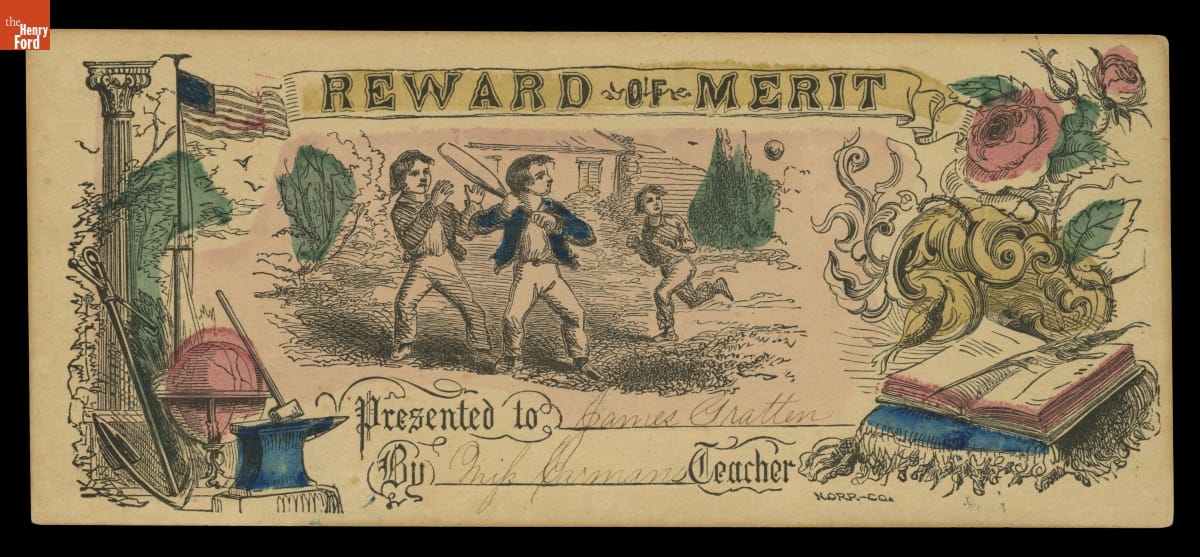
- School Reward of Merit Given to James Grattan by His Teacher, Miss Carman, 1850-1859 - During the nineteenth century, teachers recognized students with "rewards of merit." These were generally printed and colorfully decorated papers with space available for names of the student and teacher. While the accomplishment of James Gratten is unknown, the image on the reward shows a bat and ball game in 1850s America. But is it baseball, rounders, townball, or just spontaneous schoolyard fun?
- 1850-1859
- Collections - Artifact
School Reward of Merit Given to James Grattan by His Teacher, Miss Carman, 1850-1859
During the nineteenth century, teachers recognized students with "rewards of merit." These were generally printed and colorfully decorated papers with space available for names of the student and teacher. While the accomplishment of James Gratten is unknown, the image on the reward shows a bat and ball game in 1850s America. But is it baseball, rounders, townball, or just spontaneous schoolyard fun?
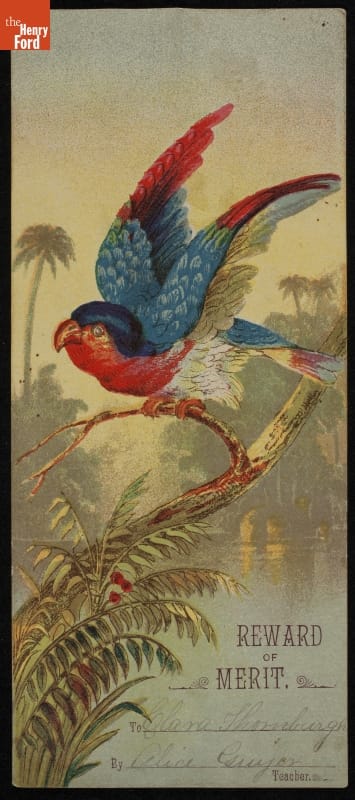
- School Reward of Merit Given to Clara Thornburgh, 1870-1900 - During the nineteenth-century, teachers recognized students with paper "rewards of merit." These small tokens commended a student's excellent work, perfect attendance, good behavior or other noteworthy accomplishment. Some contained simple handwritten sentiments from the teacher to the pupil. Many were printed and colorful, with space available to write in the student's name as well as their own.
- 1870-1900
- Collections - Artifact
School Reward of Merit Given to Clara Thornburgh, 1870-1900
During the nineteenth-century, teachers recognized students with paper "rewards of merit." These small tokens commended a student's excellent work, perfect attendance, good behavior or other noteworthy accomplishment. Some contained simple handwritten sentiments from the teacher to the pupil. Many were printed and colorful, with space available to write in the student's name as well as their own.
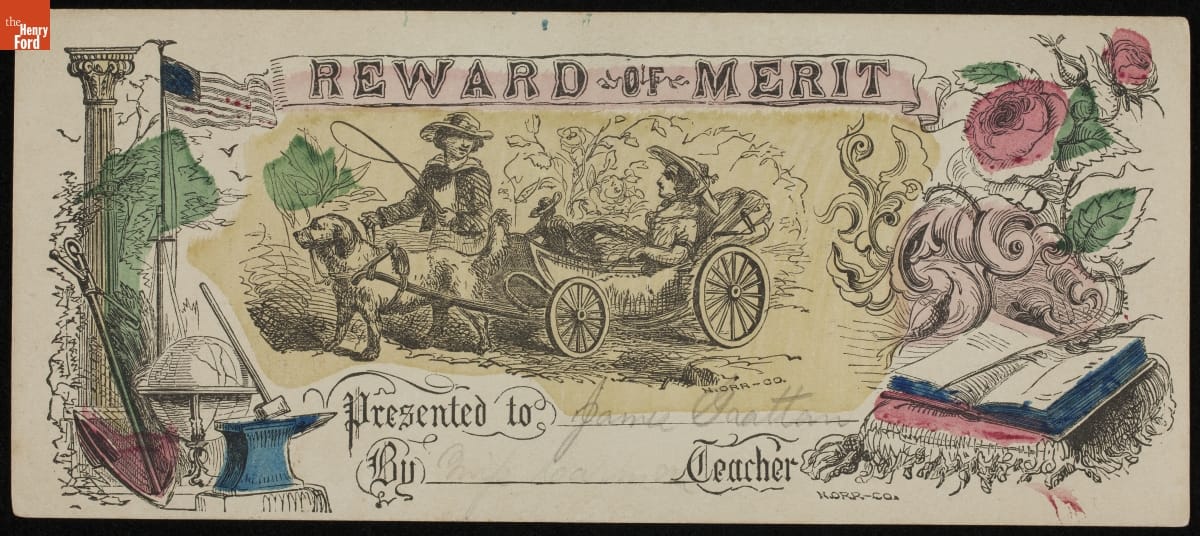
- School Reward of Merit Given to James Grattan by His Teacher, Miss Carman, circa 1870 - During the nineteenth-century, teachers recognized students with paper "rewards of merit." These small tokens commended a student's excellent work, perfect attendance, good behavior or other noteworthy accomplishment. Some contained simple handwritten sentiments from the teacher to the pupil. Many were printed and colorful, with space available to write in the student's name as well as their own.
- circa 1870
- Collections - Artifact
School Reward of Merit Given to James Grattan by His Teacher, Miss Carman, circa 1870
During the nineteenth-century, teachers recognized students with paper "rewards of merit." These small tokens commended a student's excellent work, perfect attendance, good behavior or other noteworthy accomplishment. Some contained simple handwritten sentiments from the teacher to the pupil. Many were printed and colorful, with space available to write in the student's name as well as their own.
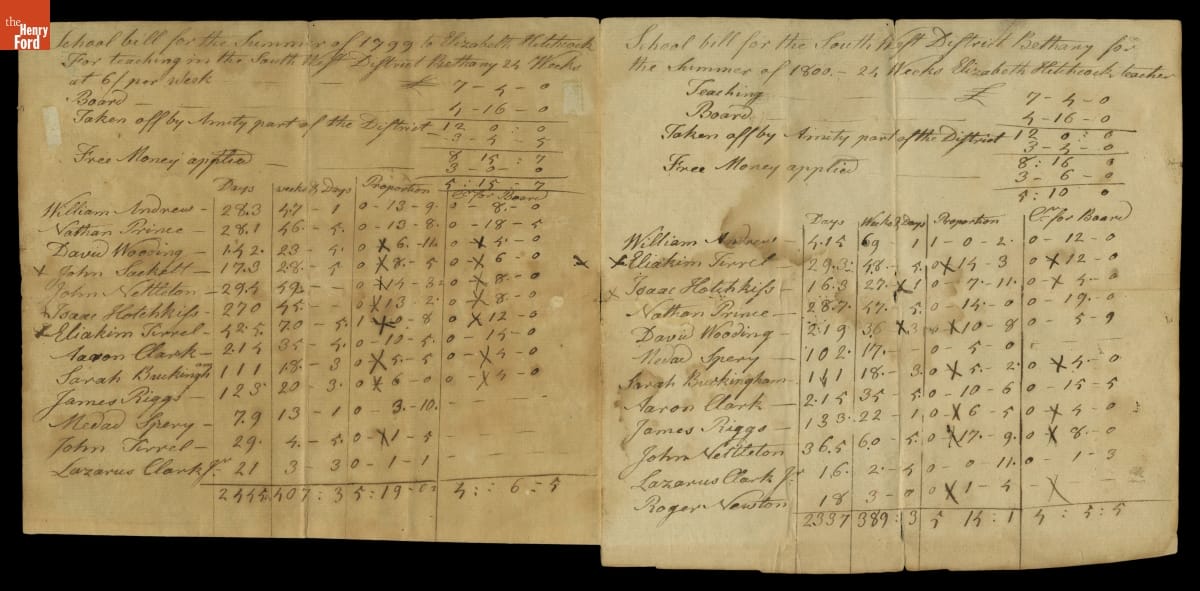
- Bill from Elizabeth Hitchcock for Teaching School in the Southwest District of Bethany, Summers of 1799 and 1800 - In the early United States, schools were organized if the local community desired them, and generally parents had to pay for their children to attend. This is a hand-written bill from a teacher in Bethany, Connecticut. Parents were billed for their children's education as well as the teacher's board (food and shelter).
- 1799-1800
- Collections - Artifact
Bill from Elizabeth Hitchcock for Teaching School in the Southwest District of Bethany, Summers of 1799 and 1800
In the early United States, schools were organized if the local community desired them, and generally parents had to pay for their children to attend. This is a hand-written bill from a teacher in Bethany, Connecticut. Parents were billed for their children's education as well as the teacher's board (food and shelter).
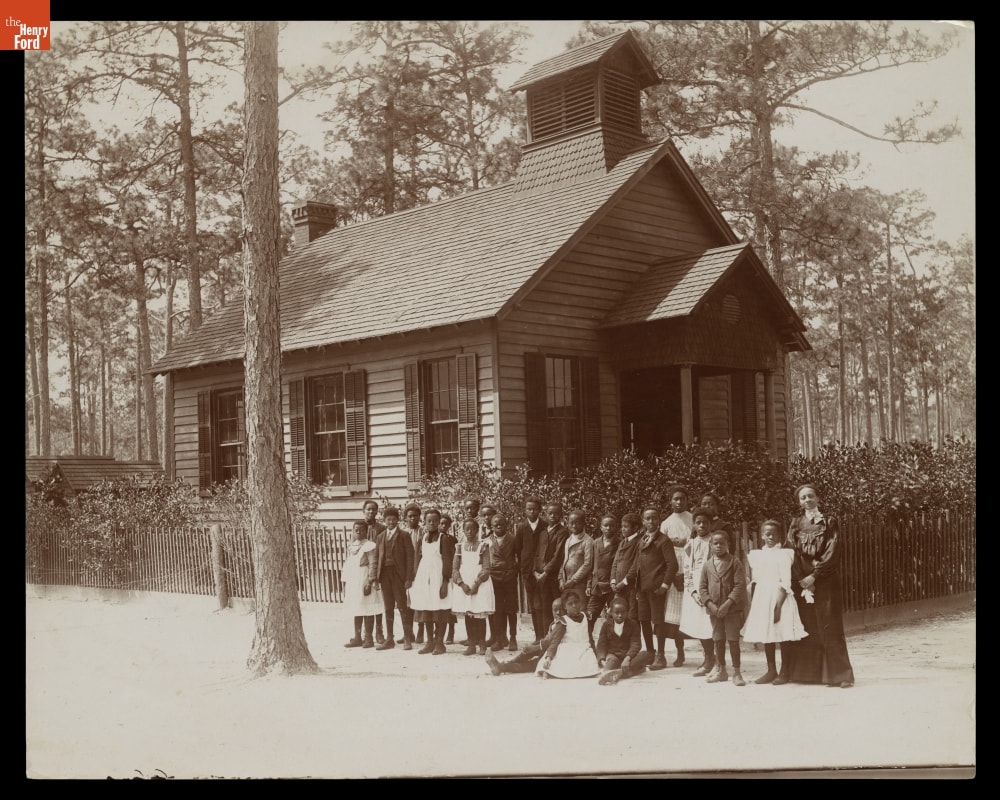
- School Teacher and Her Students, Pinehurst Tea Plantation, Summerville, South Carolina, circa 1903 - From 1895 to 1924, the Detroit Publishing Company was one of the major image publishers in the world. The company's wide-ranging stock of original photographs documented life and landscapes from across the nation and around the globe. From the tens of thousands of negatives, the company created prints, postcards, lantern slides, panoramas, and other merchandise for sale to educators, businessmen, advertisers, homeowners and travelers.
- circa 1903
- Collections - Artifact
School Teacher and Her Students, Pinehurst Tea Plantation, Summerville, South Carolina, circa 1903
From 1895 to 1924, the Detroit Publishing Company was one of the major image publishers in the world. The company's wide-ranging stock of original photographs documented life and landscapes from across the nation and around the globe. From the tens of thousands of negatives, the company created prints, postcards, lantern slides, panoramas, and other merchandise for sale to educators, businessmen, advertisers, homeowners and travelers.
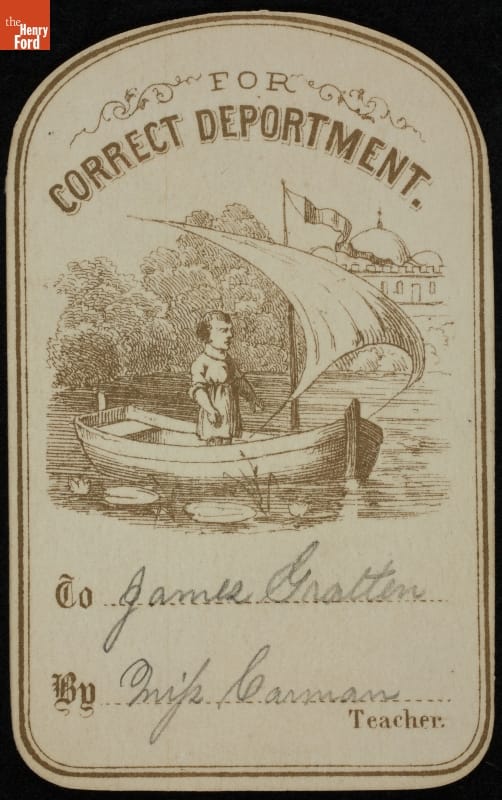
- School Reward of Merit Given to James Grattan by His Teacher, Miss Carman, circa 1840 - During the nineteenth-century, teachers recognized students with paper "rewards of merit." These small tokens commended a student's excellent work, perfect attendance, good behavior or other noteworthy accomplishment. Some contained simple handwritten sentiments from the teacher to the pupil. Many were printed and colorful, with space available to write in the student's name as well as their own.
- circa 1840
- Collections - Artifact
School Reward of Merit Given to James Grattan by His Teacher, Miss Carman, circa 1840
During the nineteenth-century, teachers recognized students with paper "rewards of merit." These small tokens commended a student's excellent work, perfect attendance, good behavior or other noteworthy accomplishment. Some contained simple handwritten sentiments from the teacher to the pupil. Many were printed and colorful, with space available to write in the student's name as well as their own.
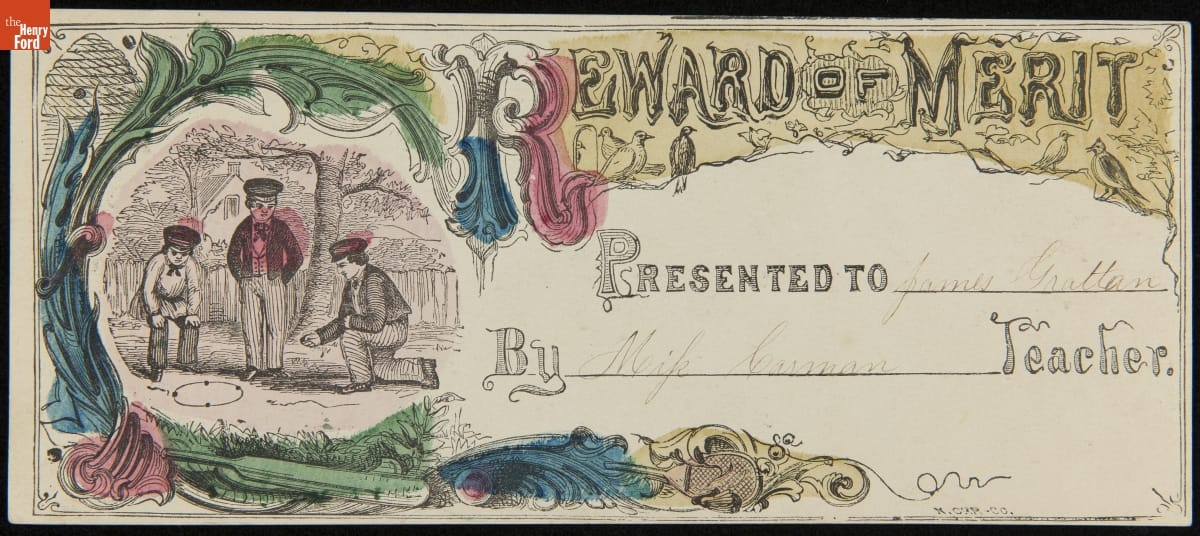
- School Reward of Merit Given to James Grattan by His Teacher, Miss Carman, 1850-1859 - During the nineteenth-century, teachers recognized students with paper "rewards of merit." These small tokens commended a student's excellent work, perfect attendance, good behavior or other noteworthy accomplishment. Some contained simple handwritten sentiments from the teacher to the pupil. Many were printed and colorful, with space available to write in the student's name as well as their own.
- circa 1870
- Collections - Artifact
School Reward of Merit Given to James Grattan by His Teacher, Miss Carman, 1850-1859
During the nineteenth-century, teachers recognized students with paper "rewards of merit." These small tokens commended a student's excellent work, perfect attendance, good behavior or other noteworthy accomplishment. Some contained simple handwritten sentiments from the teacher to the pupil. Many were printed and colorful, with space available to write in the student's name as well as their own.
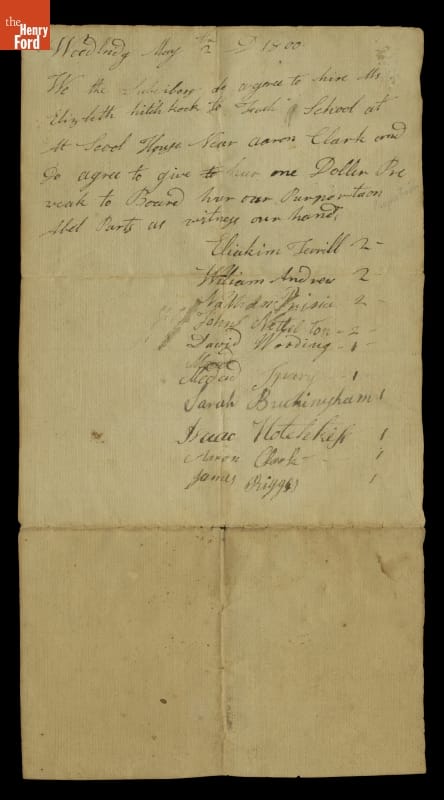
- Agreement to Hire Elizabeth Hitchcock to Teach School, May 2, 1800 - In the early United States, there was no taxpayer-funded public school system; children learned skills and even reading from their parents, neighbors, and clergy. Some local communities organized schools, and parents generally had to pay for their children to attend. This is a contract for a teacher in Bethany, Connecticut; the signatures likely belong to her students' parents.
- May 02, 1800
- Collections - Artifact
Agreement to Hire Elizabeth Hitchcock to Teach School, May 2, 1800
In the early United States, there was no taxpayer-funded public school system; children learned skills and even reading from their parents, neighbors, and clergy. Some local communities organized schools, and parents generally had to pay for their children to attend. This is a contract for a teacher in Bethany, Connecticut; the signatures likely belong to her students' parents.
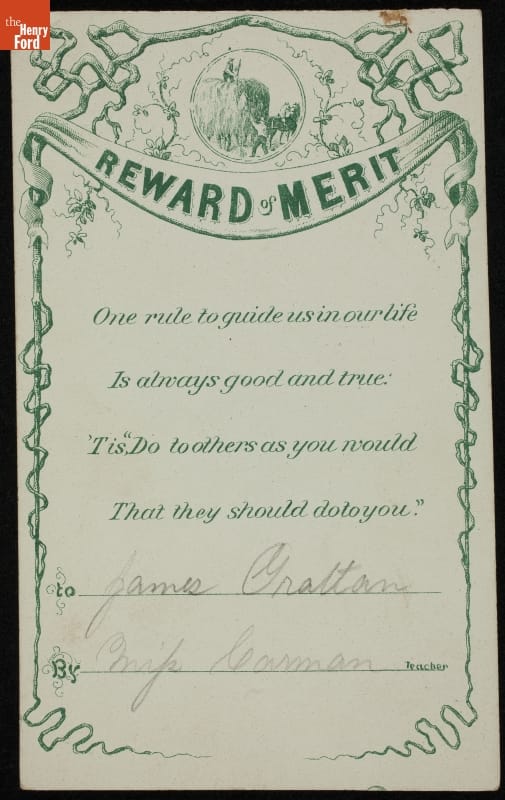
- School Reward of Merit Given to James Grattan by His Teacher, Miss Carman, circa 1870 - During the nineteenth-century, teachers recognized students with paper "rewards of merit." These small tokens commended a student's excellent work, perfect attendance, good behavior or other noteworthy accomplishment. Some contained simple handwritten sentiments from the teacher to the pupil. Many were printed and colorful, with space available to write in the student's name as well as their own.
- circa 1870
- Collections - Artifact
School Reward of Merit Given to James Grattan by His Teacher, Miss Carman, circa 1870
During the nineteenth-century, teachers recognized students with paper "rewards of merit." These small tokens commended a student's excellent work, perfect attendance, good behavior or other noteworthy accomplishment. Some contained simple handwritten sentiments from the teacher to the pupil. Many were printed and colorful, with space available to write in the student's name as well as their own.
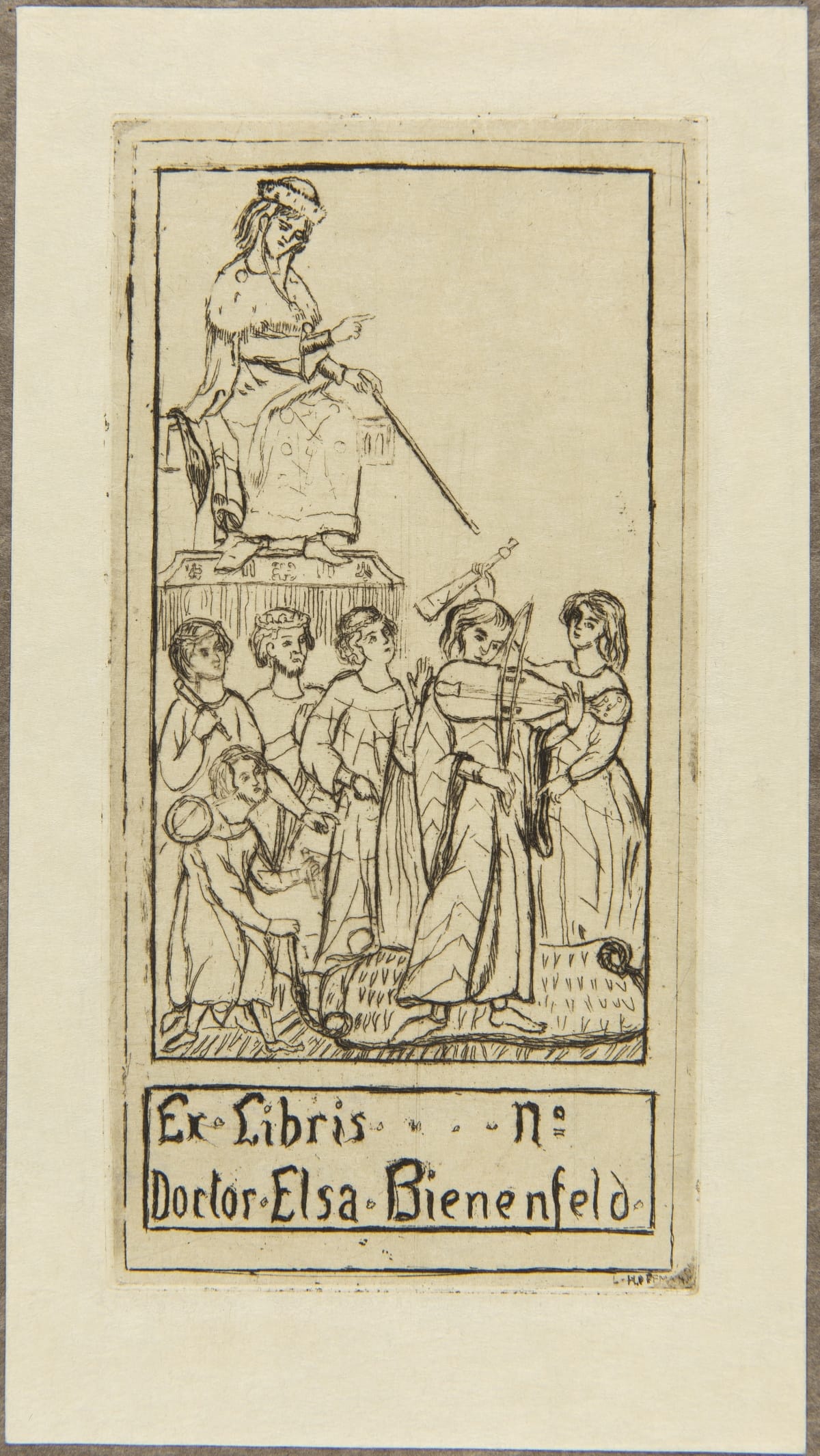
- Bookplate of Doctor Elsa Bienenfeld, by Lilly Steiner, 1904-1927 - Bookplates show ownership, but they can also tell us more. Often pasted on the inside of a book's front cover or endpaper, these printed labels contain the owner's name and sometimes the words "ex-libris" (Latin for "from the library of"). Coats of arms, crests, other decorative images, poems, mottoes, and even font type provide insight into the beliefs, passions, and interests of the book's owner.
- 1904-1927
- Collections - Artifact
Bookplate of Doctor Elsa Bienenfeld, by Lilly Steiner, 1904-1927
Bookplates show ownership, but they can also tell us more. Often pasted on the inside of a book's front cover or endpaper, these printed labels contain the owner's name and sometimes the words "ex-libris" (Latin for "from the library of"). Coats of arms, crests, other decorative images, poems, mottoes, and even font type provide insight into the beliefs, passions, and interests of the book's owner.