
Search
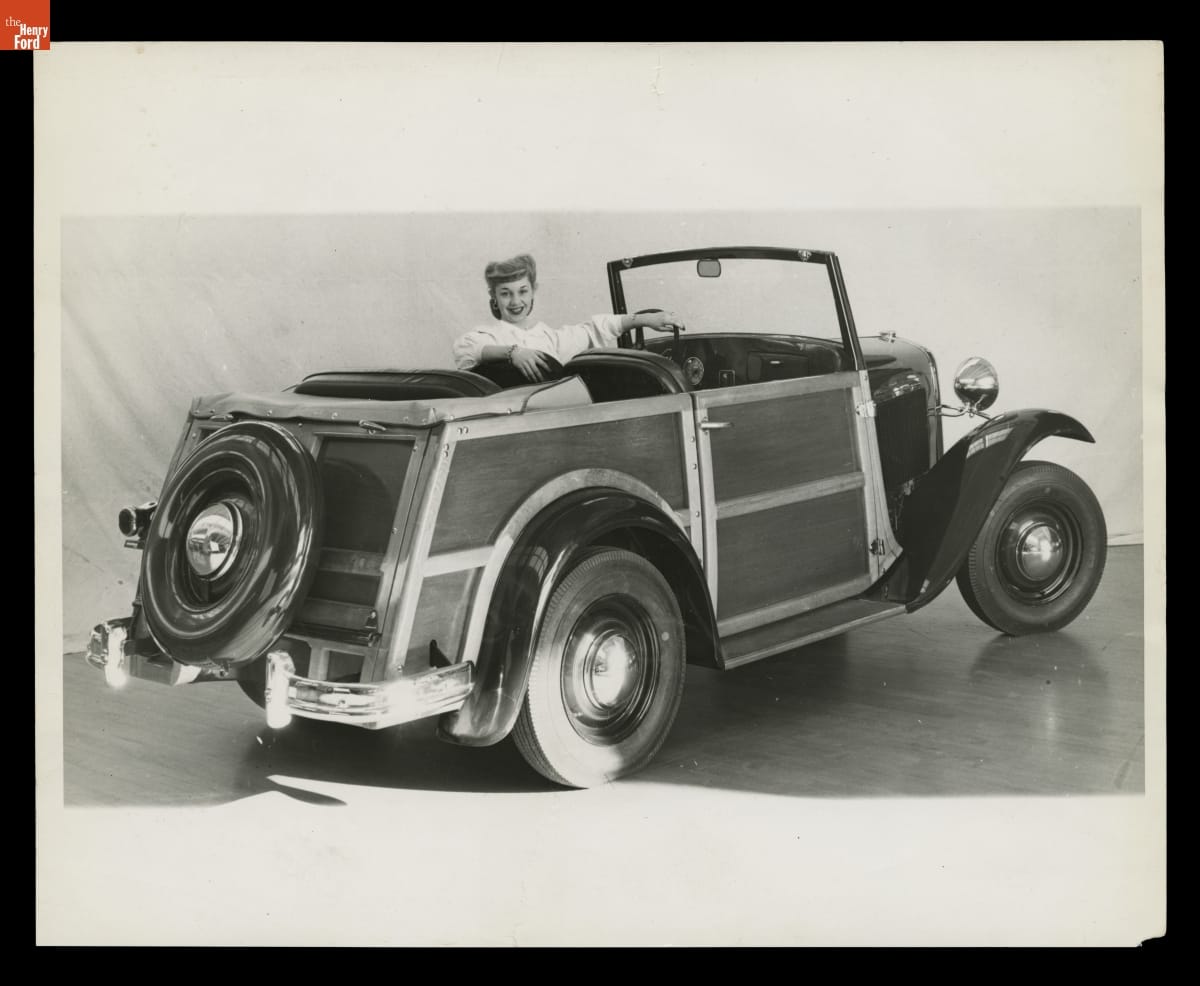
- Designer Leota Carroll Modeling the Ford "Estate Wagon" Custom-Built for Henry Ford II, January 1945 - Leota Carroll was the first woman hired into Ford Motor Company's Design Department. Carroll, a talented illustrator, joined the company during World War II -- a time when most men were off fighting. Her success prompted Ford to hire other women onto its design staff. In addition to her regular duties, Carroll also occasionally posed in Ford promotional photographs.
- January 31, 1945
- Collections - Artifact
Designer Leota Carroll Modeling the Ford "Estate Wagon" Custom-Built for Henry Ford II, January 1945
Leota Carroll was the first woman hired into Ford Motor Company's Design Department. Carroll, a talented illustrator, joined the company during World War II -- a time when most men were off fighting. Her success prompted Ford to hire other women onto its design staff. In addition to her regular duties, Carroll also occasionally posed in Ford promotional photographs.
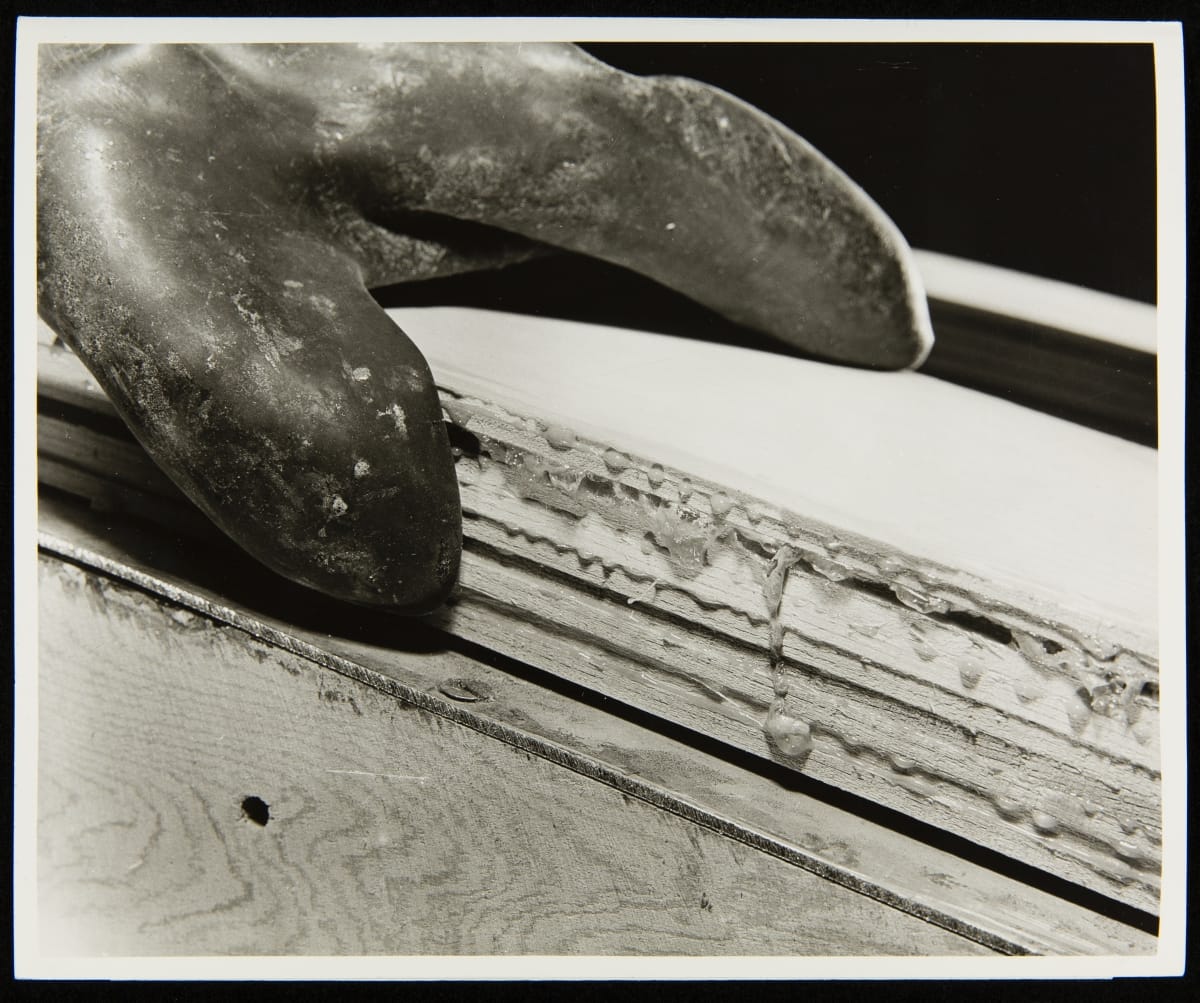
- Close-up of Adhesive on Wood Veneer Door Frame Pillar for Ford Station Wagons, Iron Mountain Plant, March 1949 - Ford Motor Company built wood station wagon bodies at its Iron Mountain plant in Michigan's Upper Peninsula. For 1949, Ford eliminated wood framing from its wagons in favor of steel. Wood was still used on the wagons, but in the form of specially laminated paneling bolted onto the steel frames. Iron Mountain closed when Ford switched to all-steel wagons in 1952.
- circa 1949
- Collections - Artifact
Close-up of Adhesive on Wood Veneer Door Frame Pillar for Ford Station Wagons, Iron Mountain Plant, March 1949
Ford Motor Company built wood station wagon bodies at its Iron Mountain plant in Michigan's Upper Peninsula. For 1949, Ford eliminated wood framing from its wagons in favor of steel. Wood was still used on the wagons, but in the form of specially laminated paneling bolted onto the steel frames. Iron Mountain closed when Ford switched to all-steel wagons in 1952.
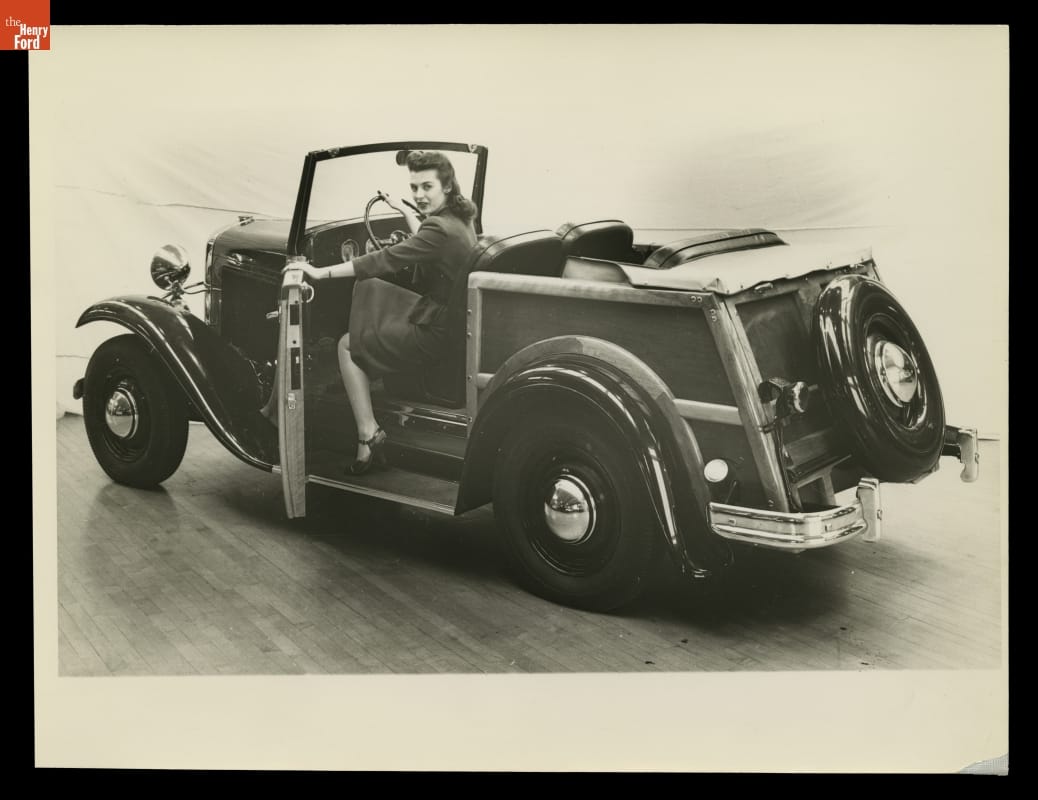
- Designer Doris Dickason Modeling the Ford "Estate Wagon" Custom-Built for Henry Ford II, February 1945 - Doris Dickason was one of a handful pioneering women hired into the Ford Motor Company's Design Department during World War II. In 1944, she worked on the Estate Wagon -- a special Model A-based vehicle created for Henry Ford II by Bob Gregorie. Later, she was assigned to the staff of John Najjar, designing steering wheels and instrument panels.
- February 03, 1945
- Collections - Artifact
Designer Doris Dickason Modeling the Ford "Estate Wagon" Custom-Built for Henry Ford II, February 1945
Doris Dickason was one of a handful pioneering women hired into the Ford Motor Company's Design Department during World War II. In 1944, she worked on the Estate Wagon -- a special Model A-based vehicle created for Henry Ford II by Bob Gregorie. Later, she was assigned to the staff of John Najjar, designing steering wheels and instrument panels.
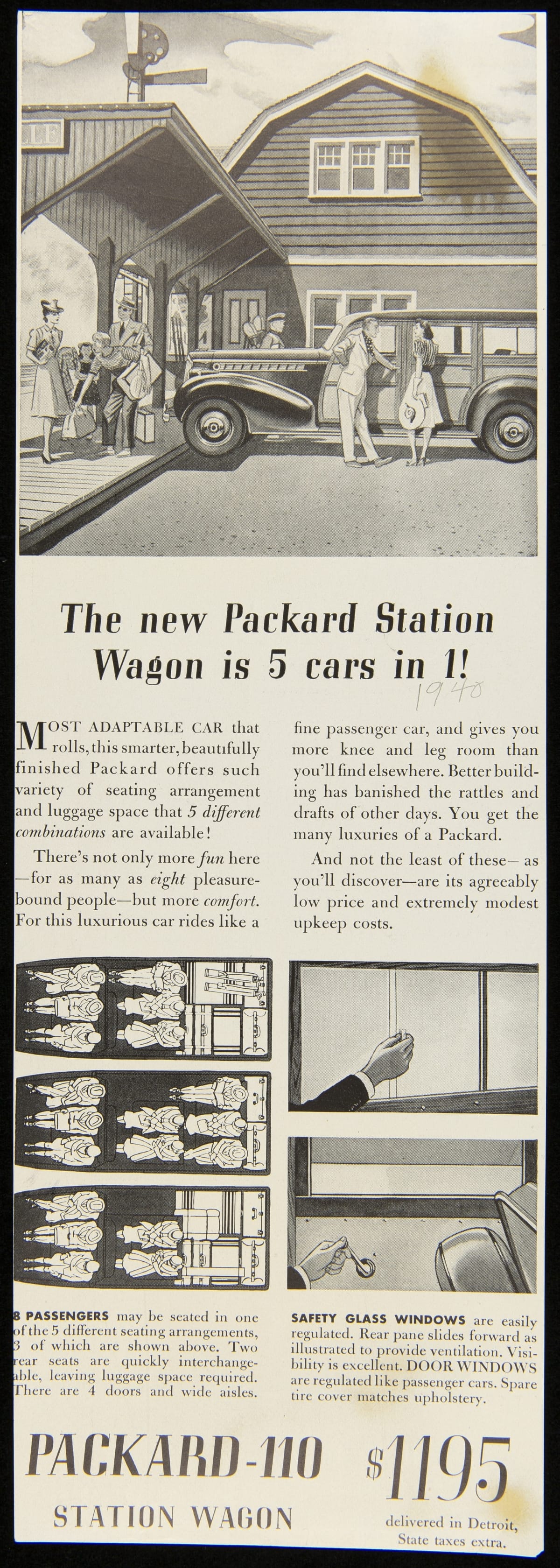
- "New Packard Station Wagon is 5 Cars In 1!," 1940 - Flexibility is generally a strong selling point when it comes to marketing automobiles. This 1940 advertisement from Packard claimed that the company's station wagons could be arranged in five different seating and cargo-carrying configurations. The 110 series cars were a more affordable option in the upmarket automaker's lineup -- but still with "the many luxuries of a Packard."
- 1940
- Collections - Artifact
"New Packard Station Wagon is 5 Cars In 1!," 1940
Flexibility is generally a strong selling point when it comes to marketing automobiles. This 1940 advertisement from Packard claimed that the company's station wagons could be arranged in five different seating and cargo-carrying configurations. The 110 series cars were a more affordable option in the upmarket automaker's lineup -- but still with "the many luxuries of a Packard."
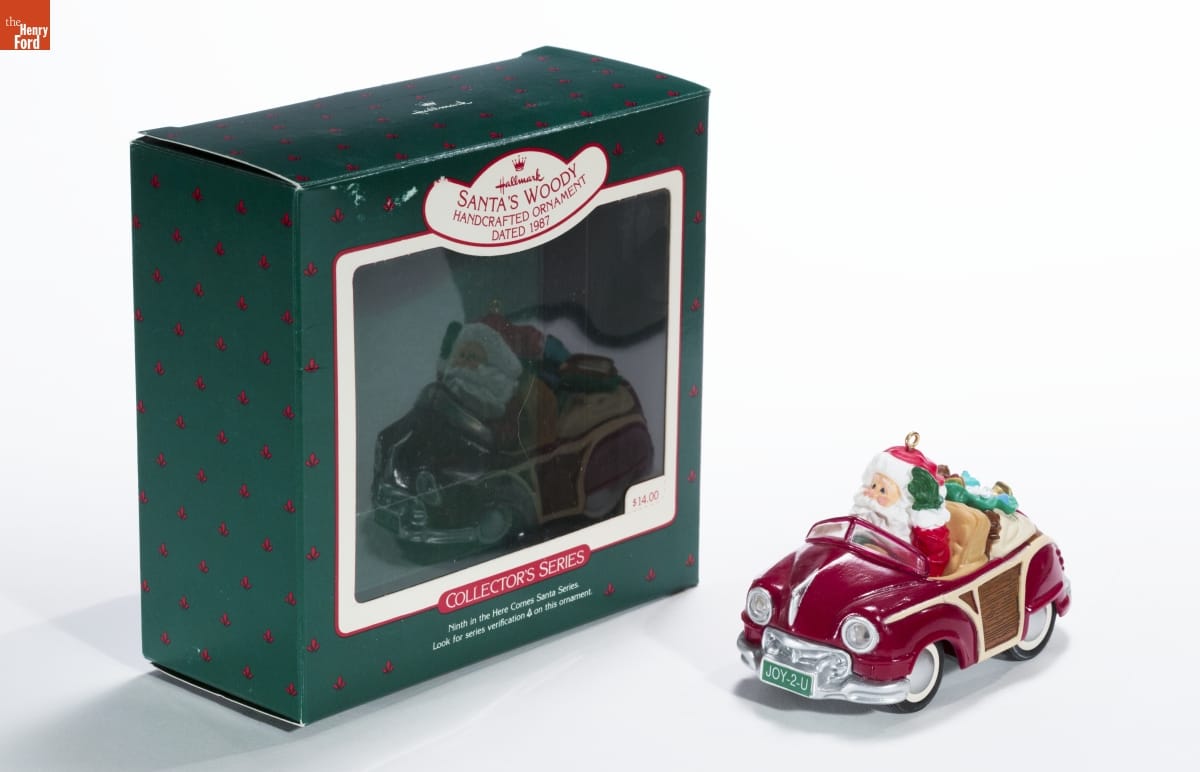
- Hallmark "Here Comes Santa Series: Santa's Woody" Christmas Ornament, 1987 - Hallmark's long-running "Here Comes Santa" series featured jolly St. Nick using different forms of transportation. The series began in 1979 depicting Santa driving an antique car. By the time the series ended in 2003, Santa had hopped a ride on a range of vehicles, including a fire truck, golf cart, rocket, snowplow, tractor, trolley, semitruck, and a Soap Box Derby car.
- 1987
- Collections - Artifact
Hallmark "Here Comes Santa Series: Santa's Woody" Christmas Ornament, 1987
Hallmark's long-running "Here Comes Santa" series featured jolly St. Nick using different forms of transportation. The series began in 1979 depicting Santa driving an antique car. By the time the series ended in 2003, Santa had hopped a ride on a range of vehicles, including a fire truck, golf cart, rocket, snowplow, tractor, trolley, semitruck, and a Soap Box Derby car.
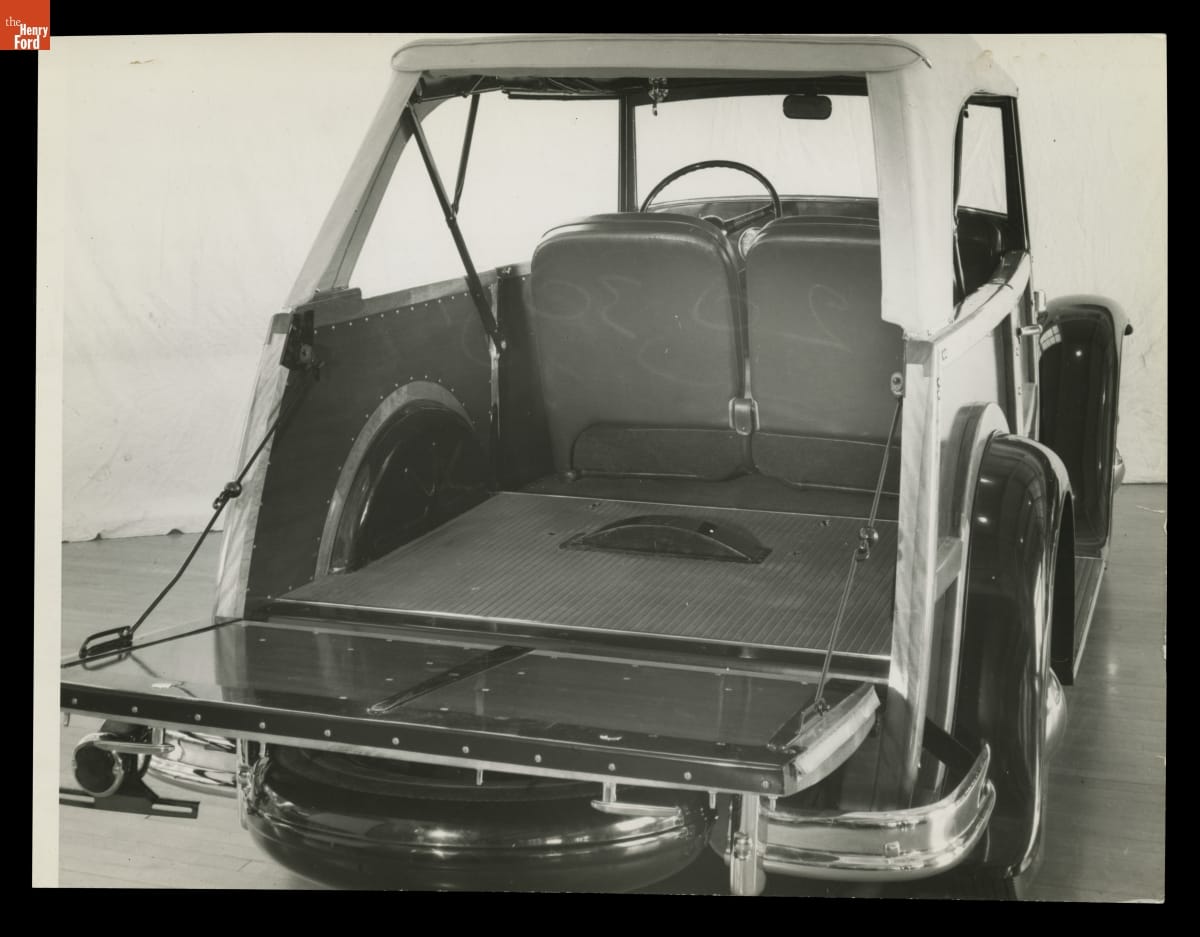
- Ford "Estate Wagon" Custom-Built for Henry Ford II, January 1945 - In 1944, Ford Motor Company president Henry Ford II requested the head of the Design Department, Bob Gregorie, to refurbish an unused 1931 Model A into a vehicle that Ford could use around his summer home. Gregorie, seeing the postwar potential of this type of vehicle, took the challenge. He knit together unused Ford parts with unrestricted wartime material to create this wood-bodied Estate Wagon.
- January 31, 1945
- Collections - Artifact
Ford "Estate Wagon" Custom-Built for Henry Ford II, January 1945
In 1944, Ford Motor Company president Henry Ford II requested the head of the Design Department, Bob Gregorie, to refurbish an unused 1931 Model A into a vehicle that Ford could use around his summer home. Gregorie, seeing the postwar potential of this type of vehicle, took the challenge. He knit together unused Ford parts with unrestricted wartime material to create this wood-bodied Estate Wagon.
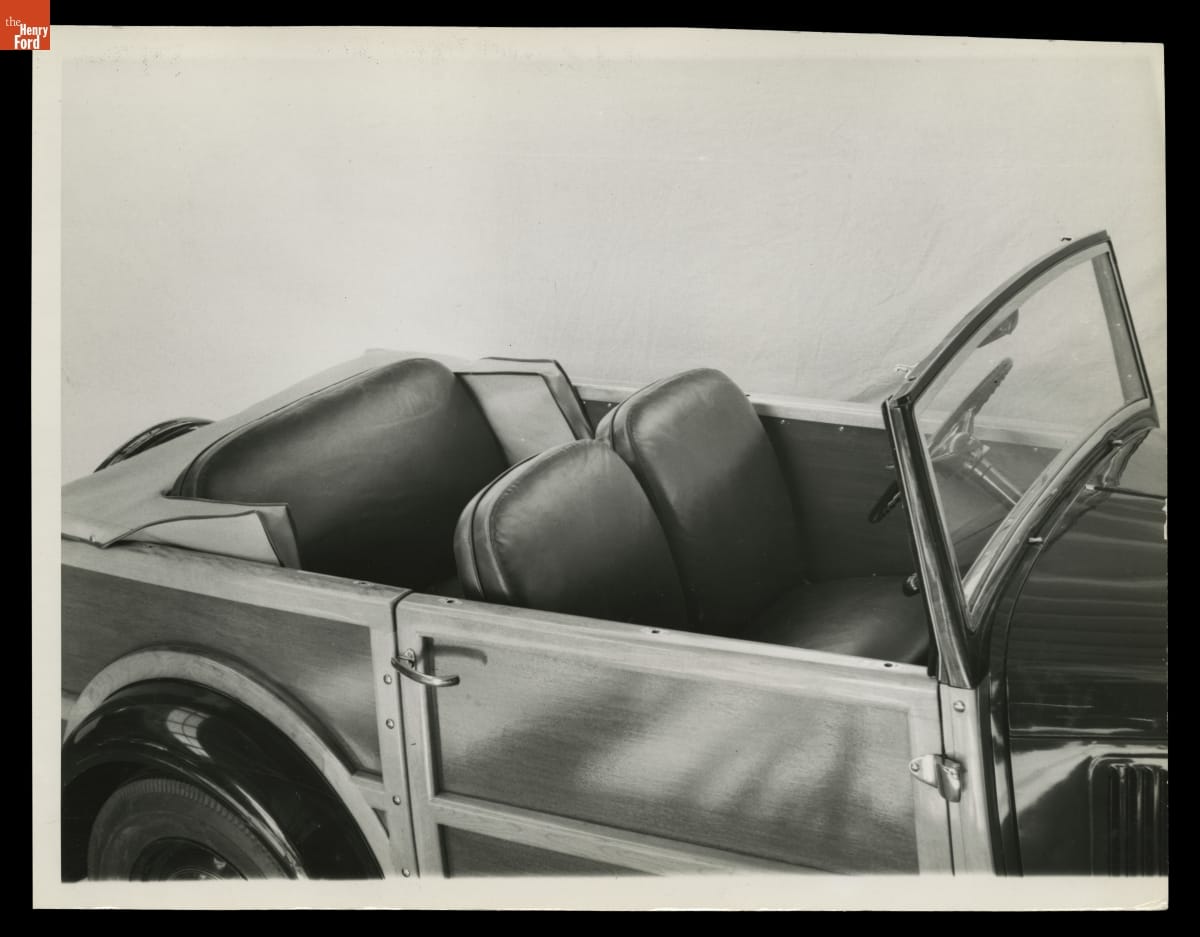
- Ford "Estate Wagon" Custom-Built for Henry Ford II, January 1945 - In 1944, Ford Motor Company president Henry Ford II requested the head of the Design Department, Bob Gregorie, to refurbish an unused 1931 Model A into a vehicle that Ford could use around his summer home. Gregorie, seeing the postwar potential of this type of vehicle, took the challenge. He knit together unused Ford parts with unrestricted wartime material to create this wood-bodied Estate Wagon.
- January 31, 1945
- Collections - Artifact
Ford "Estate Wagon" Custom-Built for Henry Ford II, January 1945
In 1944, Ford Motor Company president Henry Ford II requested the head of the Design Department, Bob Gregorie, to refurbish an unused 1931 Model A into a vehicle that Ford could use around his summer home. Gregorie, seeing the postwar potential of this type of vehicle, took the challenge. He knit together unused Ford parts with unrestricted wartime material to create this wood-bodied Estate Wagon.
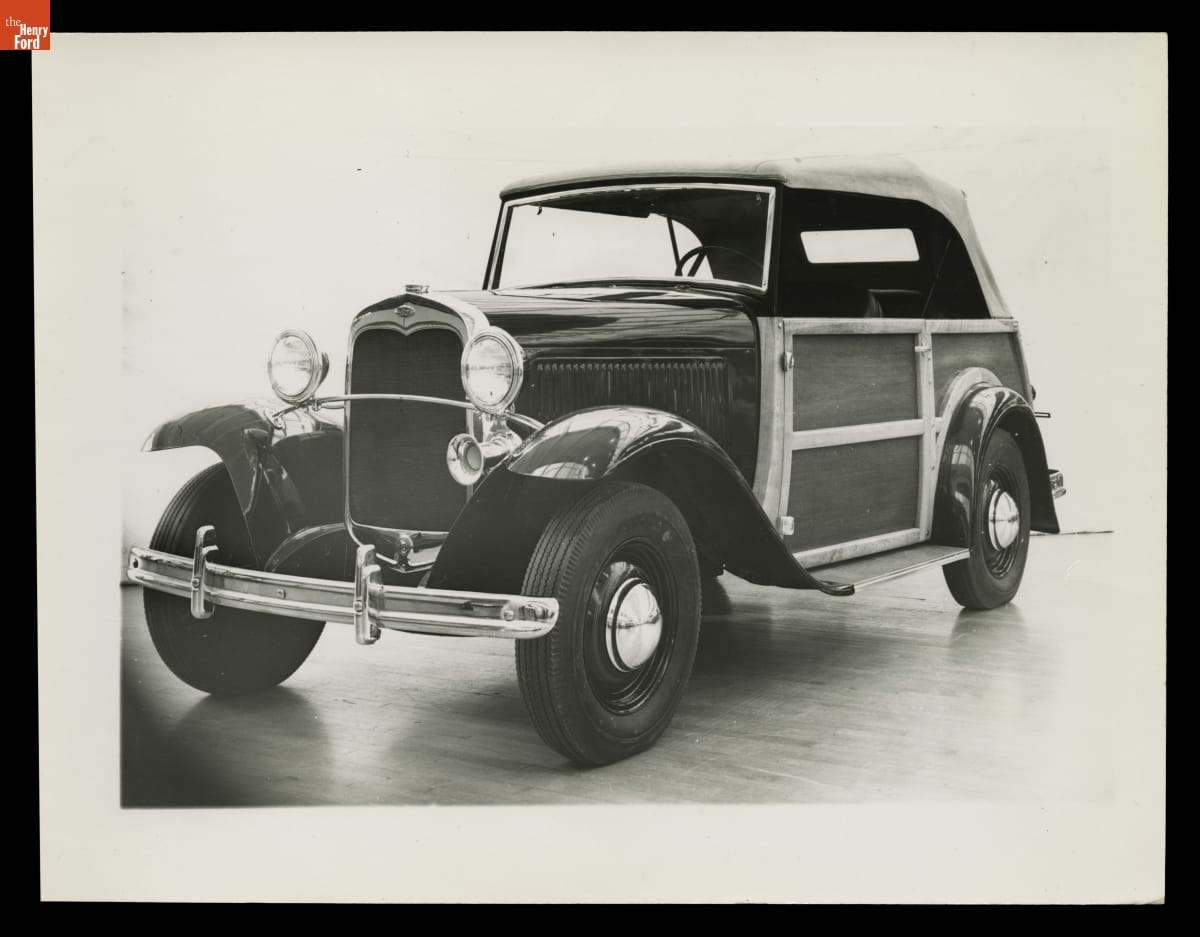
- Ford "Estate Wagon" Custom-Built for Henry Ford II, February 1945 - In 1944, Ford Motor Company president Henry Ford II requested the head of the Design Department, Bob Gregorie, to refurbish an unused 1931 Model A into a vehicle that Ford could use around his summer home. Gregorie, seeing the postwar potential of this type of vehicle, took the challenge. He knit together unused Ford parts with unrestricted wartime material to create this wood-bodied Estate Wagon.
- February 03, 1945
- Collections - Artifact
Ford "Estate Wagon" Custom-Built for Henry Ford II, February 1945
In 1944, Ford Motor Company president Henry Ford II requested the head of the Design Department, Bob Gregorie, to refurbish an unused 1931 Model A into a vehicle that Ford could use around his summer home. Gregorie, seeing the postwar potential of this type of vehicle, took the challenge. He knit together unused Ford parts with unrestricted wartime material to create this wood-bodied Estate Wagon.
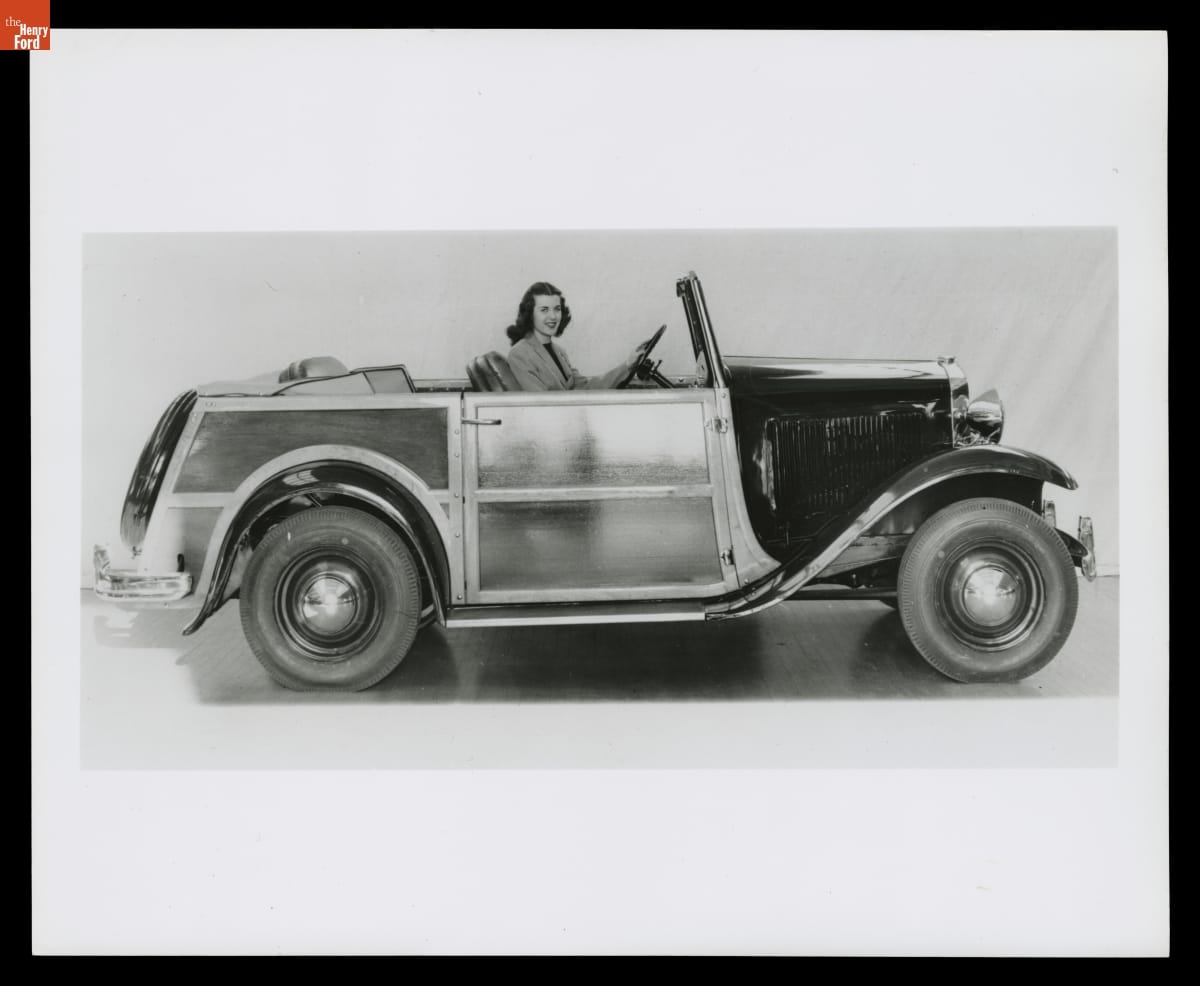
- Woman Modeling the Ford "Estate Wagon" Custom-Built for Henry Ford II, January 1945 - In 1944, Ford Motor Company president Henry Ford II requested the head of the Design Department, Bob Gregorie, to refurbish an unused 1931 Model A into a vehicle that Ford could use around his summer home. Gregorie, seeing the postwar potential of this type of vehicle, took the challenge. He knit together unused Ford parts with unrestricted wartime material to create this wood-bodied Estate Wagon.
- January 31, 1945
- Collections - Artifact
Woman Modeling the Ford "Estate Wagon" Custom-Built for Henry Ford II, January 1945
In 1944, Ford Motor Company president Henry Ford II requested the head of the Design Department, Bob Gregorie, to refurbish an unused 1931 Model A into a vehicle that Ford could use around his summer home. Gregorie, seeing the postwar potential of this type of vehicle, took the challenge. He knit together unused Ford parts with unrestricted wartime material to create this wood-bodied Estate Wagon.
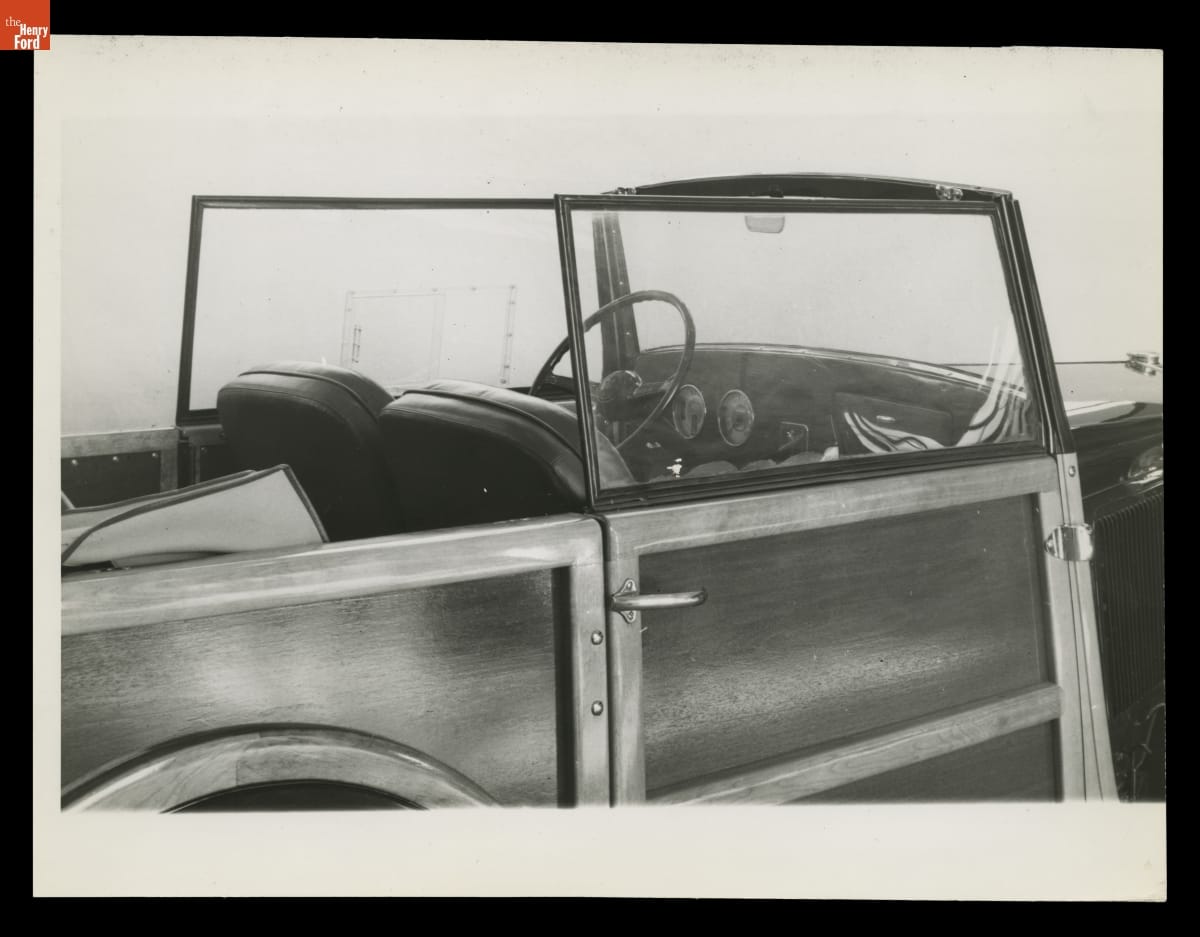
- Ford "Estate Wagon" Custom-Built for Henry Ford II, January 1945 - In 1944, Ford Motor Company president Henry Ford II requested the head of the Design Department, Bob Gregorie, to refurbish an unused 1931 Model A into a vehicle that Ford could use around his summer home. Gregorie, seeing the postwar potential of this type of vehicle, took the challenge. He knit together unused Ford parts with unrestricted wartime material to create this wood-bodied Estate Wagon.
- January 31, 1945
- Collections - Artifact
Ford "Estate Wagon" Custom-Built for Henry Ford II, January 1945
In 1944, Ford Motor Company president Henry Ford II requested the head of the Design Department, Bob Gregorie, to refurbish an unused 1931 Model A into a vehicle that Ford could use around his summer home. Gregorie, seeing the postwar potential of this type of vehicle, took the challenge. He knit together unused Ford parts with unrestricted wartime material to create this wood-bodied Estate Wagon.