
Search
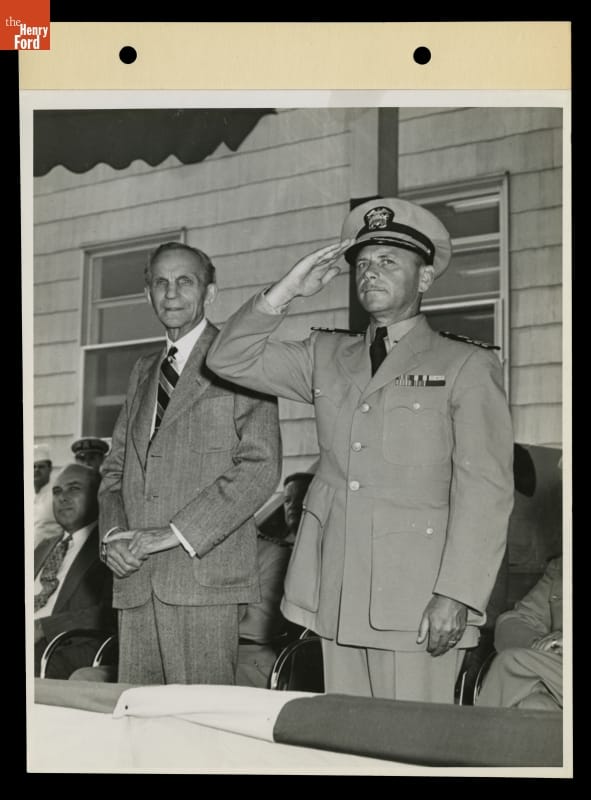
- Henry Ford on His 80th Birthday, U. S. Naval Training School at the Ford Rouge Plant, July 1943 - Personnel at the United States Naval Training School in Dearborn, Michigan, invited Henry Ford to celebrate his 80th birthday at the base. Ford was feted with gifts, a military drill, and a large cake modeled after the school buildings. The school -- built on land at Ford's Rouge Plant and leased to the Navy -- trained thousands of recruits in various skilled trades during World War II.
- July 28, 1943
- Collections - Artifact
Henry Ford on His 80th Birthday, U. S. Naval Training School at the Ford Rouge Plant, July 1943
Personnel at the United States Naval Training School in Dearborn, Michigan, invited Henry Ford to celebrate his 80th birthday at the base. Ford was feted with gifts, a military drill, and a large cake modeled after the school buildings. The school -- built on land at Ford's Rouge Plant and leased to the Navy -- trained thousands of recruits in various skilled trades during World War II.
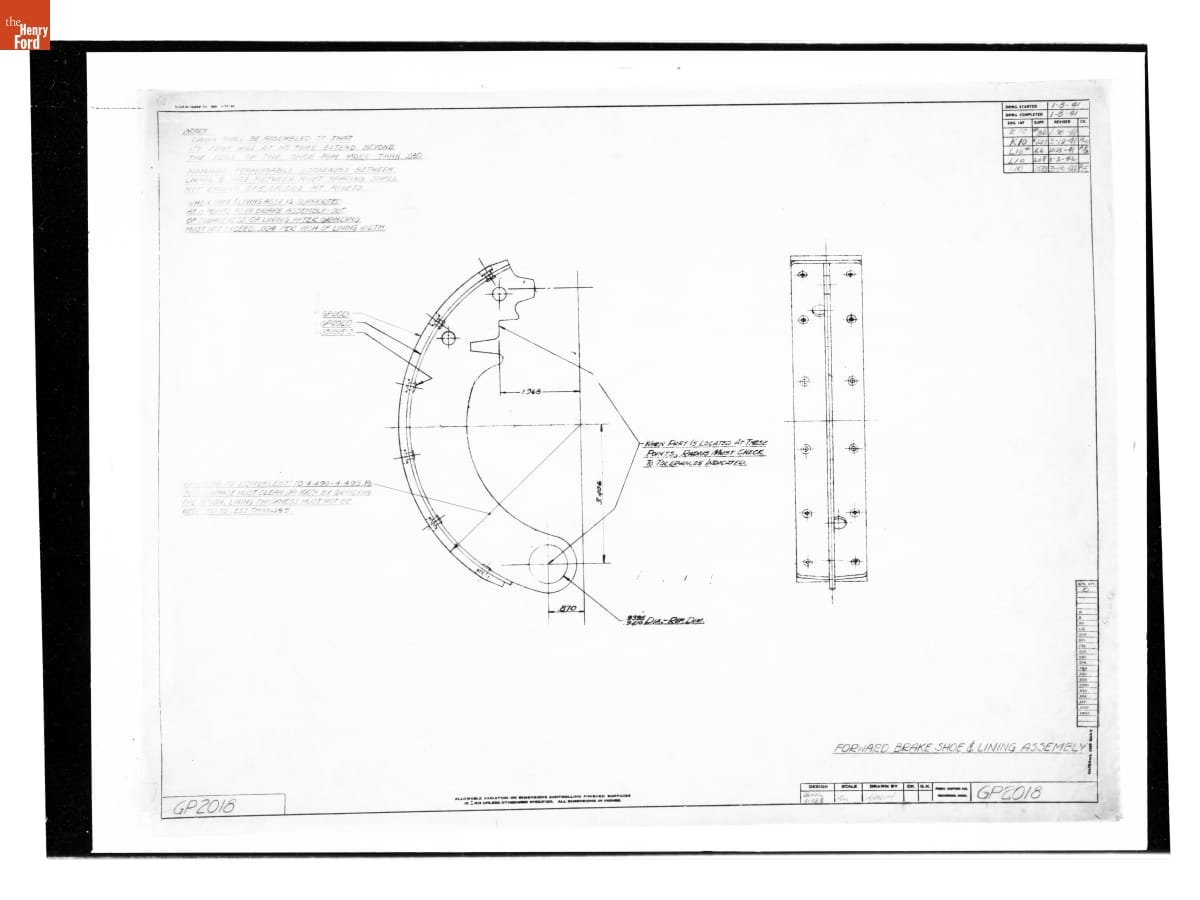
- Drawing, "Forward Brake Shoe & Lining Assembly," Ford GP, March 16, 1944 - The Ford Motor Company created over a million parts drawings from 1903 to 1957. Many of these drawings specify engineering requirements for the components of Ford-made vehicles--including automobiles, trucks, tractors, military vehicles and Tri-motor airplanes. Others document assembly components, stages of casting and forging, or experimental designs. Beginning in the 1940s, Ford transferred the drawings to microfilm.
- March 16, 1944
- Collections - Artifact
Drawing, "Forward Brake Shoe & Lining Assembly," Ford GP, March 16, 1944
The Ford Motor Company created over a million parts drawings from 1903 to 1957. Many of these drawings specify engineering requirements for the components of Ford-made vehicles--including automobiles, trucks, tractors, military vehicles and Tri-motor airplanes. Others document assembly components, stages of casting and forging, or experimental designs. Beginning in the 1940s, Ford transferred the drawings to microfilm.
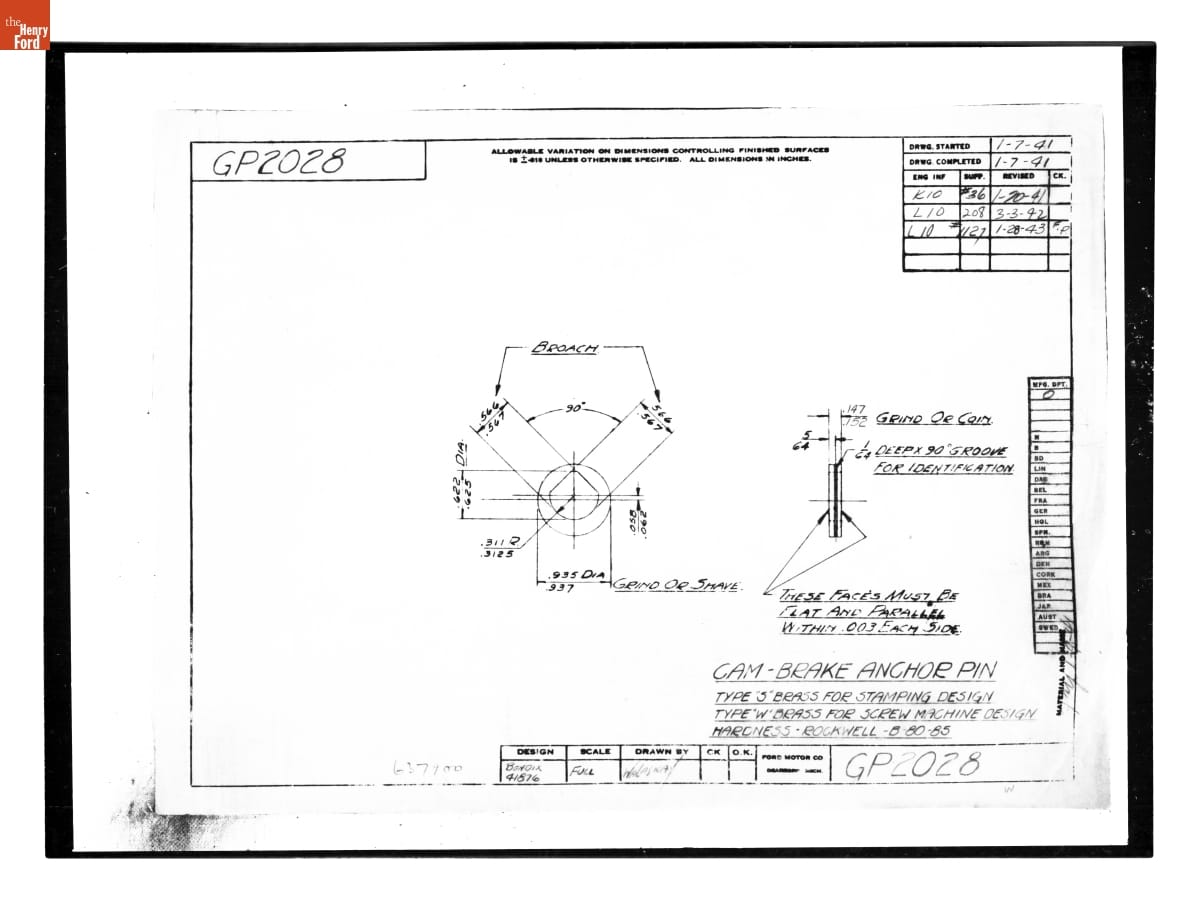
- Drawing, "Cam - Brake Anchor Pin," Ford GP, January 28, 1943 - The Ford Motor Company created over a million parts drawings from 1903 to 1957. Many of these drawings specify engineering requirements for the components of Ford-made vehicles--including automobiles, trucks, tractors, military vehicles and Tri-motor airplanes. Others document assembly components, stages of casting and forging, or experimental designs. Beginning in the 1940s, Ford transferred the drawings to microfilm.
- January 28, 1943
- Collections - Artifact
Drawing, "Cam - Brake Anchor Pin," Ford GP, January 28, 1943
The Ford Motor Company created over a million parts drawings from 1903 to 1957. Many of these drawings specify engineering requirements for the components of Ford-made vehicles--including automobiles, trucks, tractors, military vehicles and Tri-motor airplanes. Others document assembly components, stages of casting and forging, or experimental designs. Beginning in the 1940s, Ford transferred the drawings to microfilm.
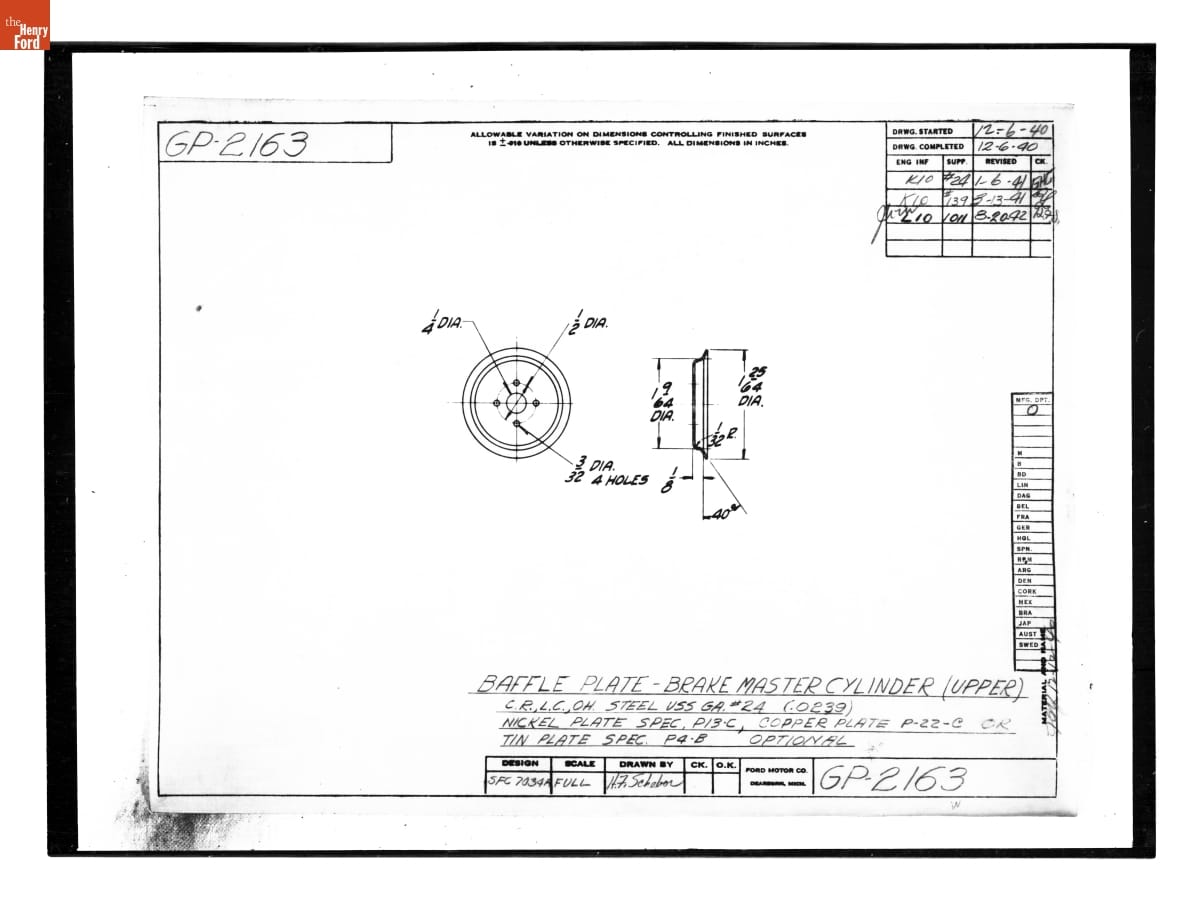
- Drawing, "Baffle Plate - Brake Master Cylinder (Upper)," Ford GP, August 20, 1942 - The Ford Motor Company created over a million parts drawings from 1903 to 1957. Many of these drawings specify engineering requirements for the components of Ford-made vehicles--including automobiles, trucks, tractors, military vehicles and Tri-motor airplanes. Others document assembly components, stages of casting and forging, or experimental designs. Beginning in the 1940s, Ford transferred the drawings to microfilm.
- August 20, 1942
- Collections - Artifact
Drawing, "Baffle Plate - Brake Master Cylinder (Upper)," Ford GP, August 20, 1942
The Ford Motor Company created over a million parts drawings from 1903 to 1957. Many of these drawings specify engineering requirements for the components of Ford-made vehicles--including automobiles, trucks, tractors, military vehicles and Tri-motor airplanes. Others document assembly components, stages of casting and forging, or experimental designs. Beginning in the 1940s, Ford transferred the drawings to microfilm.
- Marine Corps' Mascot, Ford Exposition, New York World's Fair, 1940 -
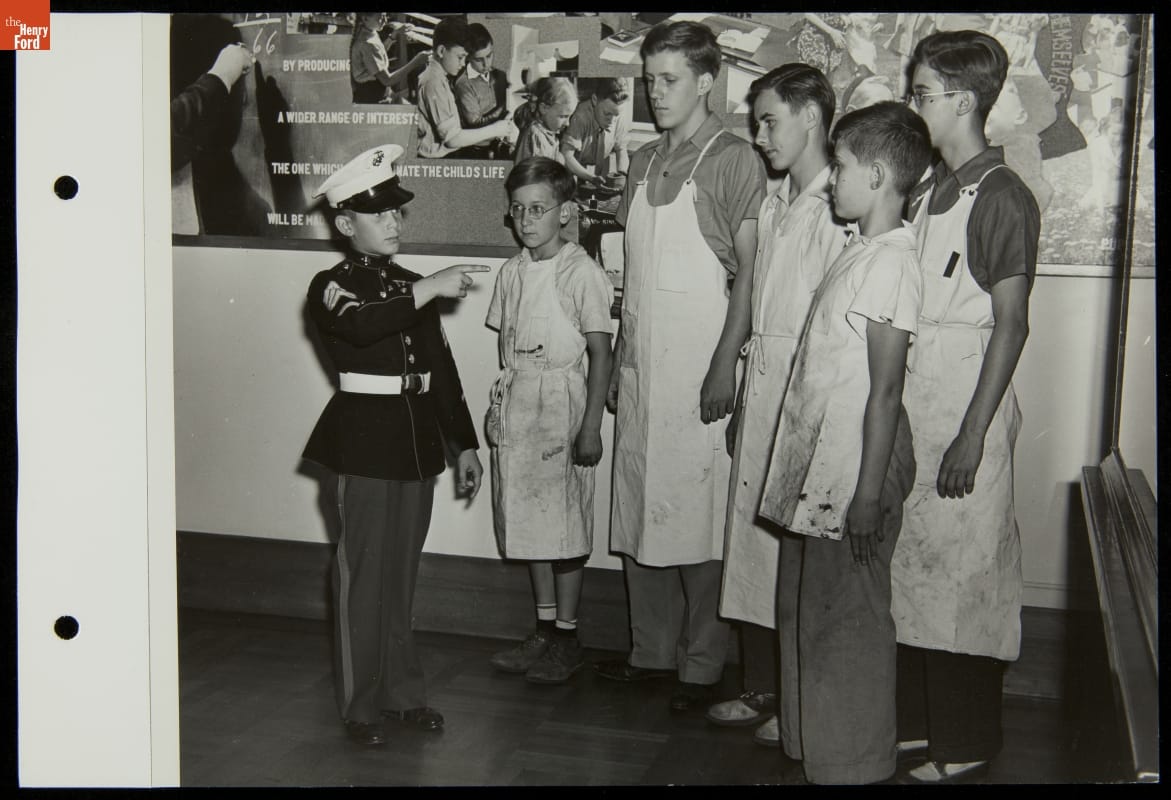
- September 05, 1940
- Collections - Artifact
Marine Corps' Mascot, Ford Exposition, New York World's Fair, 1940
- Florida Girls at Ford Exposition, New York World's Fair, 1939 -
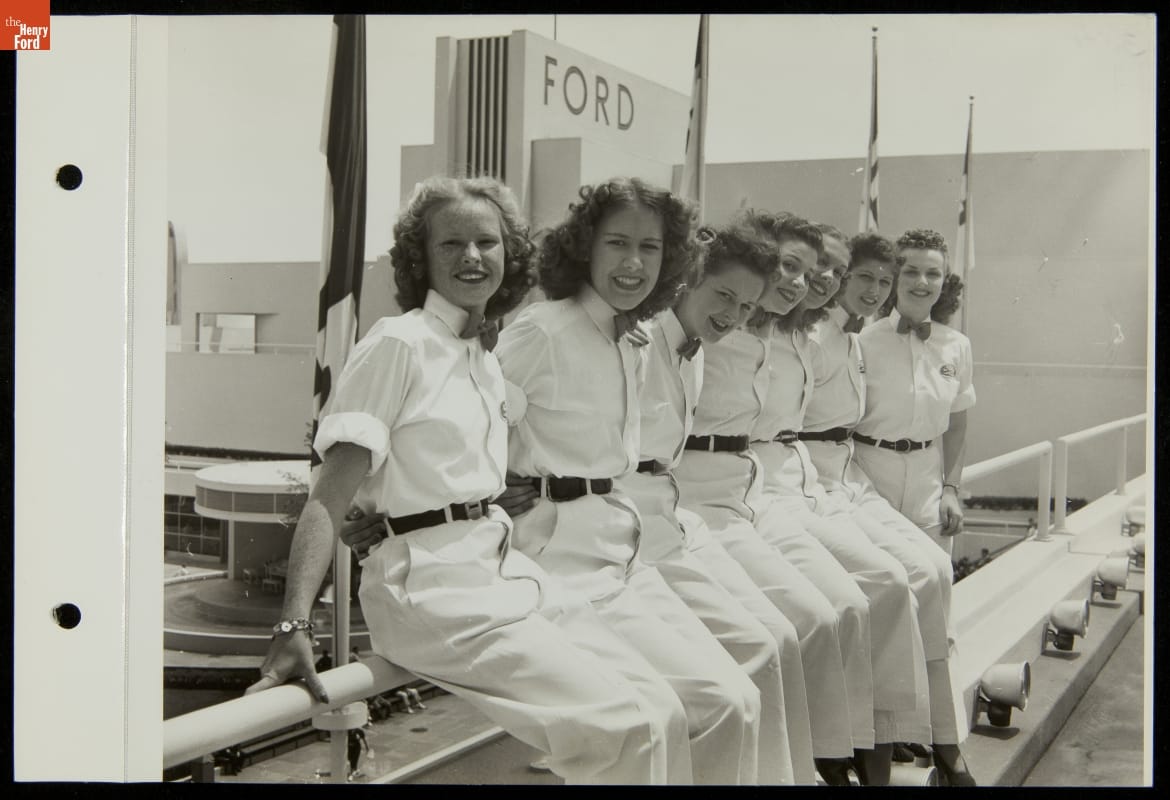
- 1939
- Collections - Artifact
Florida Girls at Ford Exposition, New York World's Fair, 1939
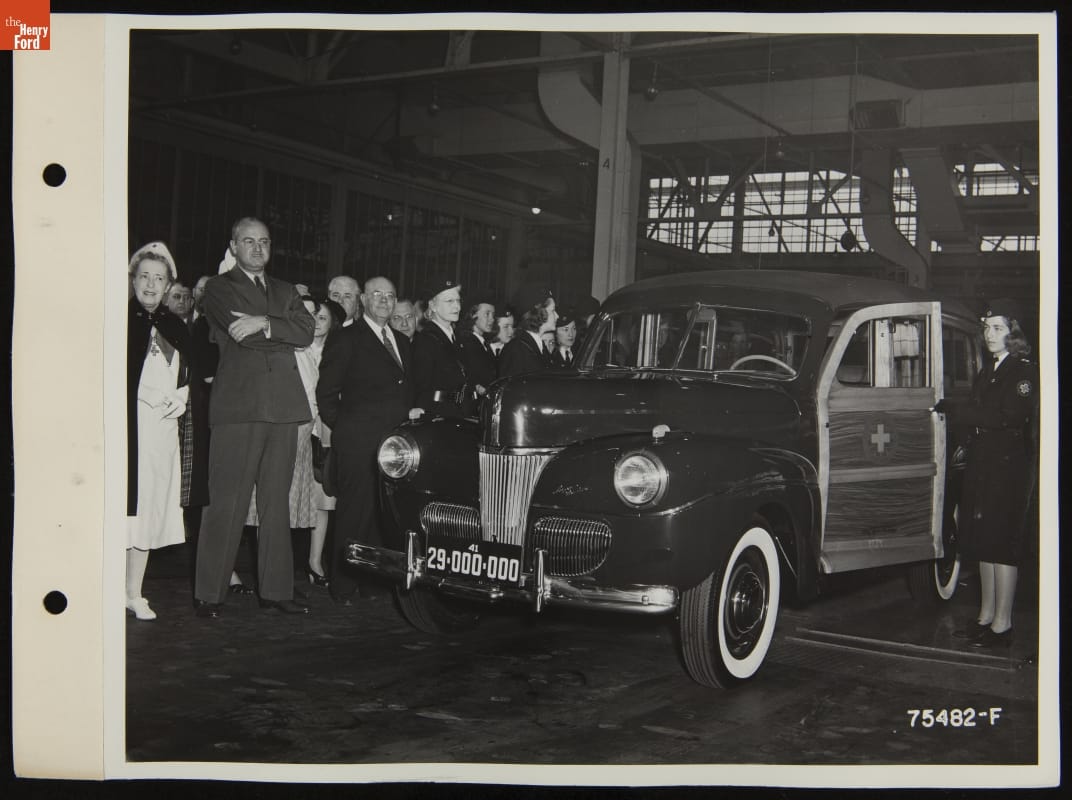
- Presenting the 29-Millionth Ford to the Red Cross Women's Motor Corps, April 29, 1941 - The 29 millionth Ford automobile rolled off the Rouge Plant assembly line in April 1941. Edsel Ford presented the Super DeLuxe station wagon to the Detroit chapter of the Red Cross. This production milestone vehicle became one of the vehicles used by the Red Cross Volunteer Motor Corps. Ford Motor Company had worked with this group previously, providing automobile maintenance training for its members.
- April 29, 1941
- Collections - Artifact
Presenting the 29-Millionth Ford to the Red Cross Women's Motor Corps, April 29, 1941
The 29 millionth Ford automobile rolled off the Rouge Plant assembly line in April 1941. Edsel Ford presented the Super DeLuxe station wagon to the Detroit chapter of the Red Cross. This production milestone vehicle became one of the vehicles used by the Red Cross Volunteer Motor Corps. Ford Motor Company had worked with this group previously, providing automobile maintenance training for its members.
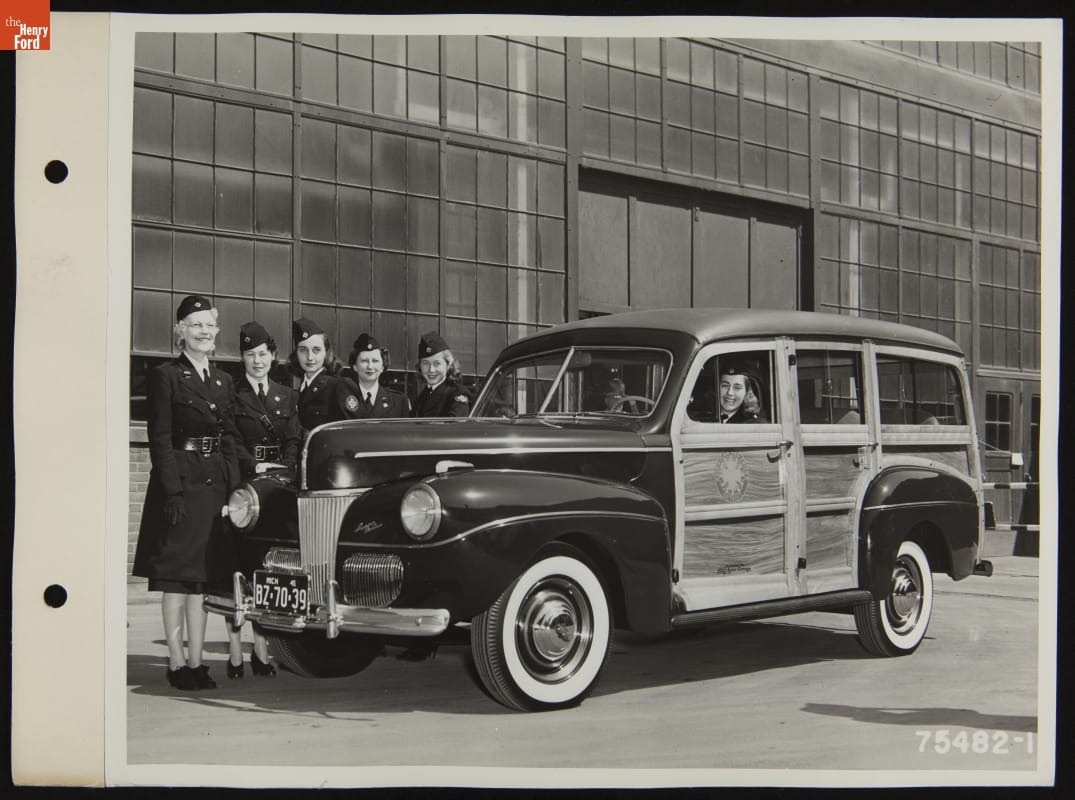
- The 29-Millionth Ford is Presented to the Red Cross Women's Motor Corps, April 29, 1941 - The 29 millionth Ford automobile rolled off the Rouge Plant assembly line in April 1941. Edsel Ford presented the Super DeLuxe station wagon to the Detroit chapter of the Red Cross. This production milestone vehicle became one of the vehicles used by the Red Cross Volunteer Motor Corps. Ford Motor Company had worked with this group previously, providing automobile maintenance training for its members.
- April 29, 1941
- Collections - Artifact
The 29-Millionth Ford is Presented to the Red Cross Women's Motor Corps, April 29, 1941
The 29 millionth Ford automobile rolled off the Rouge Plant assembly line in April 1941. Edsel Ford presented the Super DeLuxe station wagon to the Detroit chapter of the Red Cross. This production milestone vehicle became one of the vehicles used by the Red Cross Volunteer Motor Corps. Ford Motor Company had worked with this group previously, providing automobile maintenance training for its members.
- The 29-Millionth Ford, Presented to the Red Cross Women's Motor Corps, April 29, 1941 - The 29 millionth Ford automobile rolled off the Rouge Plant assembly line in April 1941. Edsel Ford presented the Super DeLuxe station wagon to the Detroit chapter of the Red Cross. This production milestone vehicle became one of the vehicles used by the Red Cross Volunteer Motor Corps. Ford Motor Company had worked with this group previously, providing automobile maintenance training for its members.

- April 29, 1941
- Collections - Artifact
The 29-Millionth Ford, Presented to the Red Cross Women's Motor Corps, April 29, 1941
The 29 millionth Ford automobile rolled off the Rouge Plant assembly line in April 1941. Edsel Ford presented the Super DeLuxe station wagon to the Detroit chapter of the Red Cross. This production milestone vehicle became one of the vehicles used by the Red Cross Volunteer Motor Corps. Ford Motor Company had worked with this group previously, providing automobile maintenance training for its members.
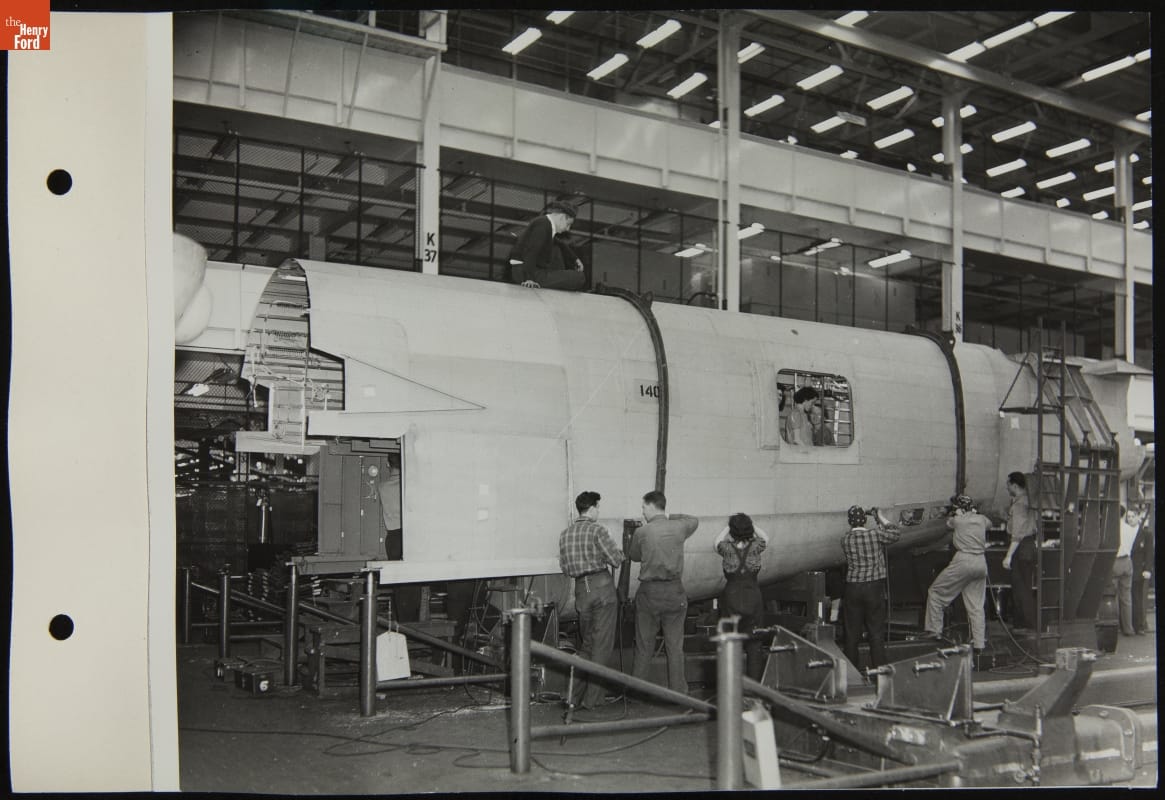
- Employees at Willow Run Assembling Bomber Frame, February 1943 - At Willow Run, Ford Motor Company built B-24 bomber planes for World War II using automobile mass production techniques. Airplanes were much more complex than cars. They required constant design changes poorly suited to a standardized assembly line. Ford overcame these difficulties and, at the plant's peak, Willow Run crews produced an average of one bomber every 63 minutes.
- February 04, 1943
- Collections - Artifact
Employees at Willow Run Assembling Bomber Frame, February 1943
At Willow Run, Ford Motor Company built B-24 bomber planes for World War II using automobile mass production techniques. Airplanes were much more complex than cars. They required constant design changes poorly suited to a standardized assembly line. Ford overcame these difficulties and, at the plant's peak, Willow Run crews produced an average of one bomber every 63 minutes.