
Search
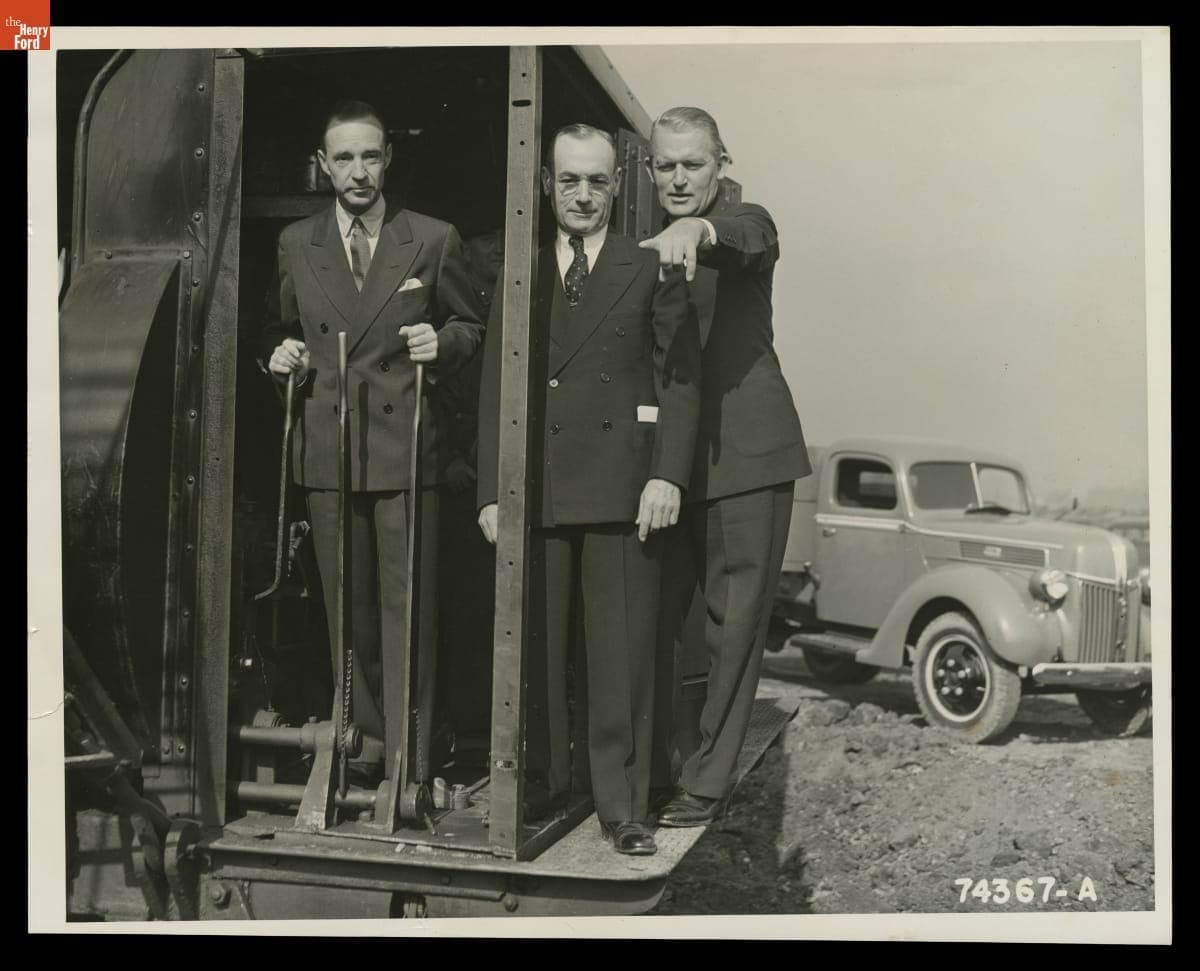
- Edsel Ford, P.E. Martin, and Charles Sorensen Breaking Ground at Ford Motor Company Willow Run Bomber Plant, September 17, 1940 - Ford Motor Company president Edsel Ford joined production managers P.E. Martin and Charles Sorensen in a September 1940 groundbreaking ceremony for the company's Willow Run bomber plant, 35 miles west of Detroit. When finished, the complex employed more than 42,000 people and included more than seven million square feet of floor space. Workers there built one B-24 bomber every 63 minutes.
- September 17, 1940
- Collections - Artifact
Edsel Ford, P.E. Martin, and Charles Sorensen Breaking Ground at Ford Motor Company Willow Run Bomber Plant, September 17, 1940
Ford Motor Company president Edsel Ford joined production managers P.E. Martin and Charles Sorensen in a September 1940 groundbreaking ceremony for the company's Willow Run bomber plant, 35 miles west of Detroit. When finished, the complex employed more than 42,000 people and included more than seven million square feet of floor space. Workers there built one B-24 bomber every 63 minutes.
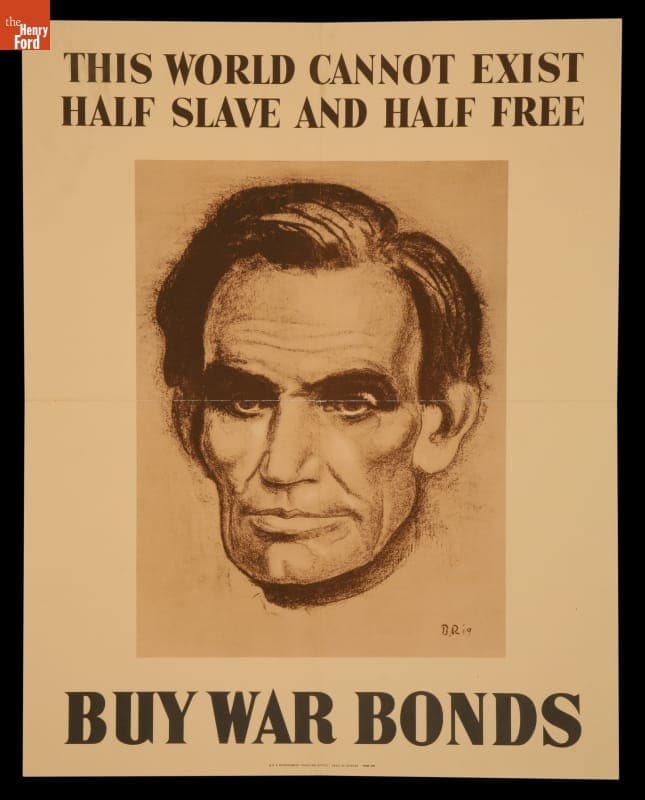
- World War II Poster, "This World Cannot Exist Half Slave and Half Free: Buy War Bonds," 1943 - During the Second World War, all of the national governments of the warring nations used poster campaigns to encourage civilian and military support of the war effort. The advertising technique of these posters followed the innovative style developed during the First World War. By appealing to the viewer's emotions this poster helped the U.S. to rally the home front workers and consumers.
- 1943
- Collections - Artifact
World War II Poster, "This World Cannot Exist Half Slave and Half Free: Buy War Bonds," 1943
During the Second World War, all of the national governments of the warring nations used poster campaigns to encourage civilian and military support of the war effort. The advertising technique of these posters followed the innovative style developed during the First World War. By appealing to the viewer's emotions this poster helped the U.S. to rally the home front workers and consumers.
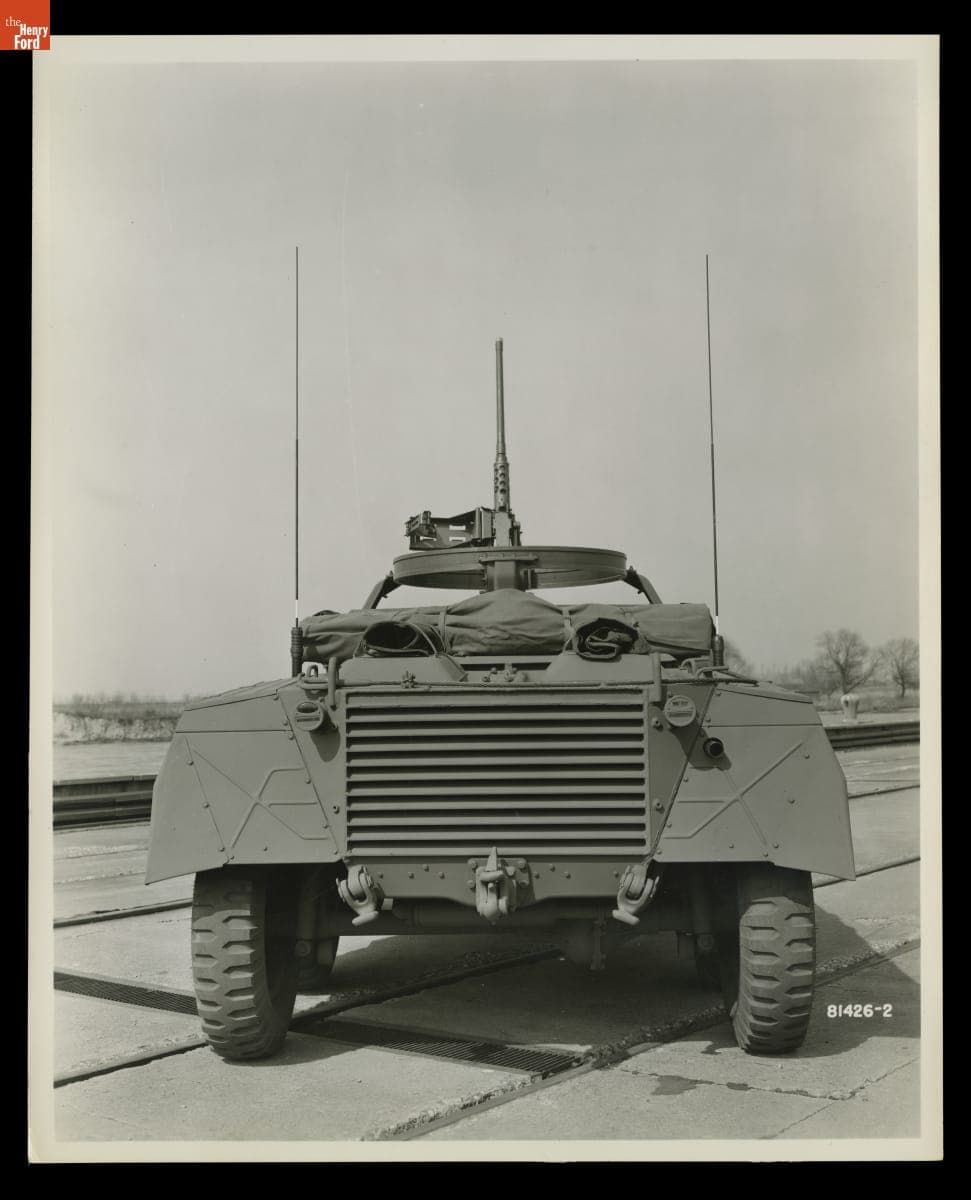
- M20 Armored Car Built at the Ford Motor Company Chicago Assembly Plant, March 1945 - Ford's T-26 Command Car, designated M20 by the U.S. Army, combined speed with protection. The vehicle featured six-wheel drive, a cruising range of 400 miles, and a top speed of 56 miles per hour. Armor plating, up to 3/4-inch thick, and a top-mounted .50 caliber machine gun provided further defense. Ford built 3,791 M20 vehicles, all at its Chicago plant.
- March 12, 1945
- Collections - Artifact
M20 Armored Car Built at the Ford Motor Company Chicago Assembly Plant, March 1945
Ford's T-26 Command Car, designated M20 by the U.S. Army, combined speed with protection. The vehicle featured six-wheel drive, a cruising range of 400 miles, and a top speed of 56 miles per hour. Armor plating, up to 3/4-inch thick, and a top-mounted .50 caliber machine gun provided further defense. Ford built 3,791 M20 vehicles, all at its Chicago plant.
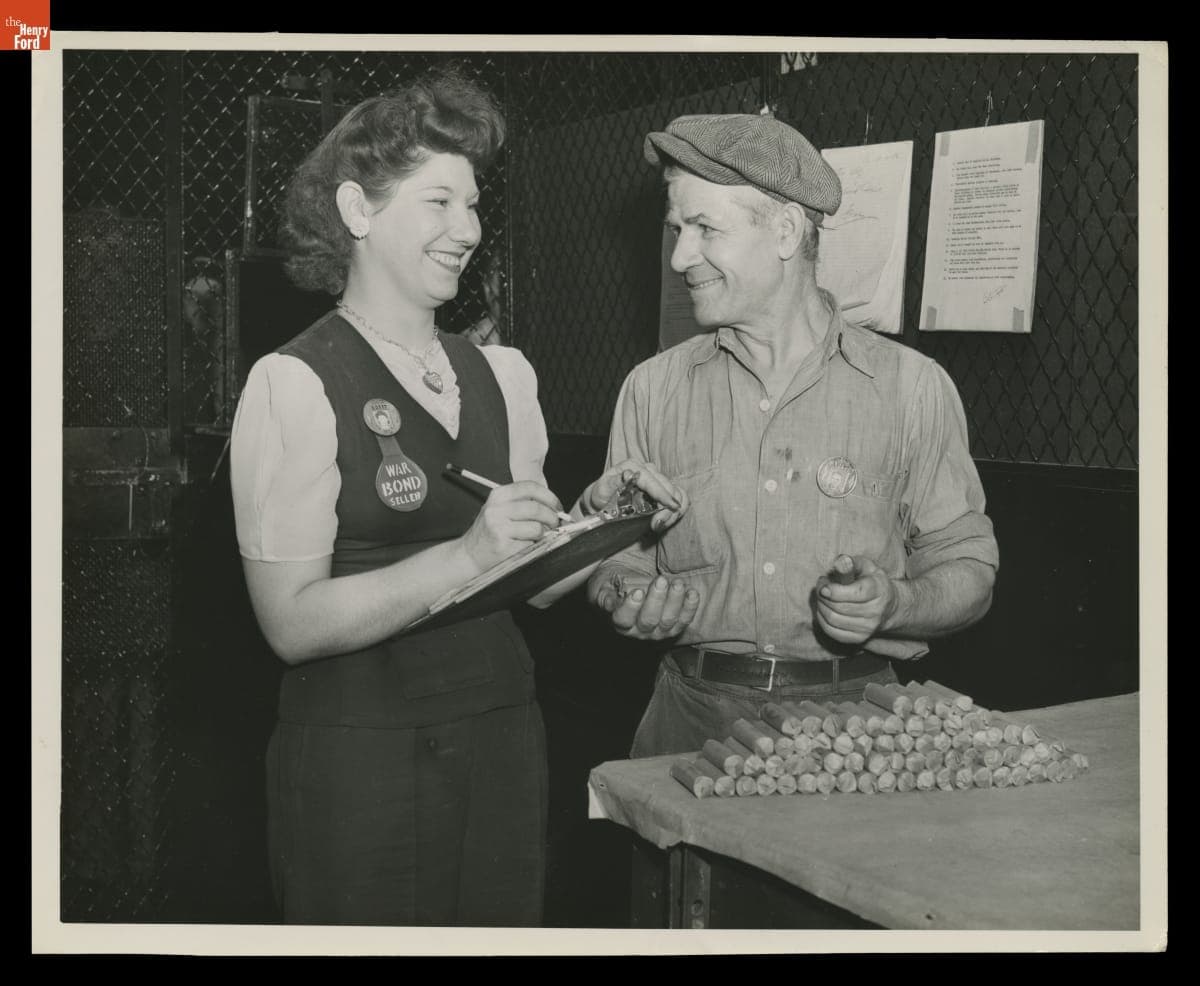
- Ford Worker Buying War Bond for 1,000 Pennies, Ford Motor Company Rouge Plant, January 1944 - Ford Motor Company and its employees contributed to Allied efforts in World War II in numerous ways. The company built trucks, tanks, aircraft engines, gliders, and B-24 bomber airplanes. Ford workers purchased war bonds with their earnings, either independently or through a payroll deduction program.
- January 25, 1944
- Collections - Artifact
Ford Worker Buying War Bond for 1,000 Pennies, Ford Motor Company Rouge Plant, January 1944
Ford Motor Company and its employees contributed to Allied efforts in World War II in numerous ways. The company built trucks, tanks, aircraft engines, gliders, and B-24 bomber airplanes. Ford workers purchased war bonds with their earnings, either independently or through a payroll deduction program.
- War Bond Drive Poster Displayed at the Ford Motor Company Rouge Plant, May 1945 - Ford Motor Company and its employees contributed to Allied efforts in World War II in numerous ways. The company built trucks, tanks, aircraft engines, gliders, and B-24 bomber airplanes. Ford workers purchased war bonds with their earnings, either independently or through a payroll deduction program.
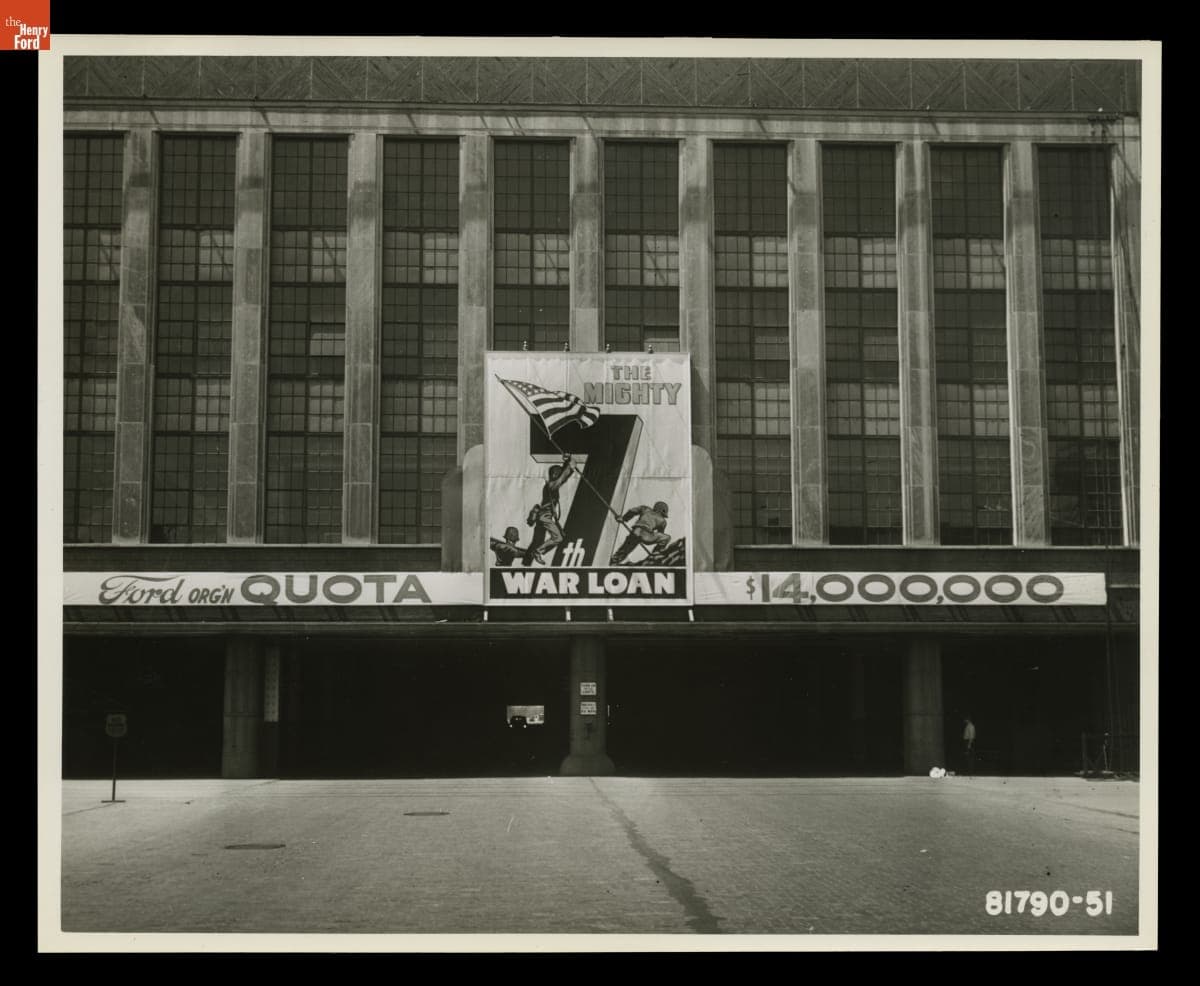
- May 15, 1945
- Collections - Artifact
War Bond Drive Poster Displayed at the Ford Motor Company Rouge Plant, May 1945
Ford Motor Company and its employees contributed to Allied efforts in World War II in numerous ways. The company built trucks, tanks, aircraft engines, gliders, and B-24 bomber airplanes. Ford workers purchased war bonds with their earnings, either independently or through a payroll deduction program.
- Preparations for War Bond Drive at the Bond Office, Ford Motor Company Rouge Plant, May 1945 - Ford Motor Company and its employees contributed to Allied efforts in World War II in numerous ways. The company built trucks, tanks, aircraft engines, gliders, and B-24 bomber airplanes. Ford workers purchased war bonds with their earnings, either independently or through a payroll deduction program.
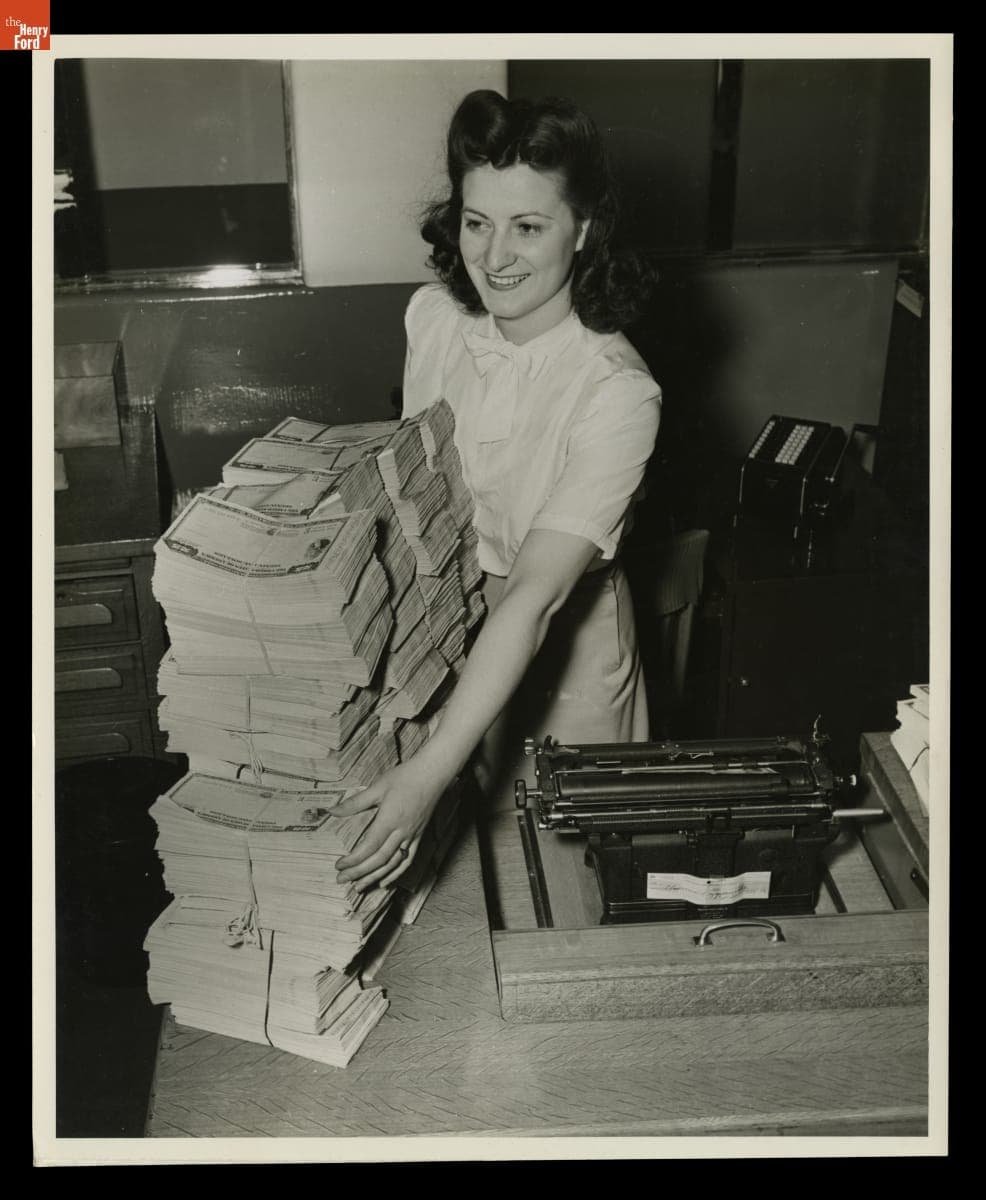
- May 25, 1945
- Collections - Artifact
Preparations for War Bond Drive at the Bond Office, Ford Motor Company Rouge Plant, May 1945
Ford Motor Company and its employees contributed to Allied efforts in World War II in numerous ways. The company built trucks, tanks, aircraft engines, gliders, and B-24 bomber airplanes. Ford workers purchased war bonds with their earnings, either independently or through a payroll deduction program.
- War Bond Drive at Ford Motor Company Rouge Plant Powerhouse #1, June 1945 - Ford Motor Company and its employees contributed to Allied efforts in World War II in numerous ways. The company built trucks, tanks, aircraft engines, gliders, and B-24 bomber airplanes. Ford workers purchased war bonds with their earnings, either independently or through a payroll deduction program.
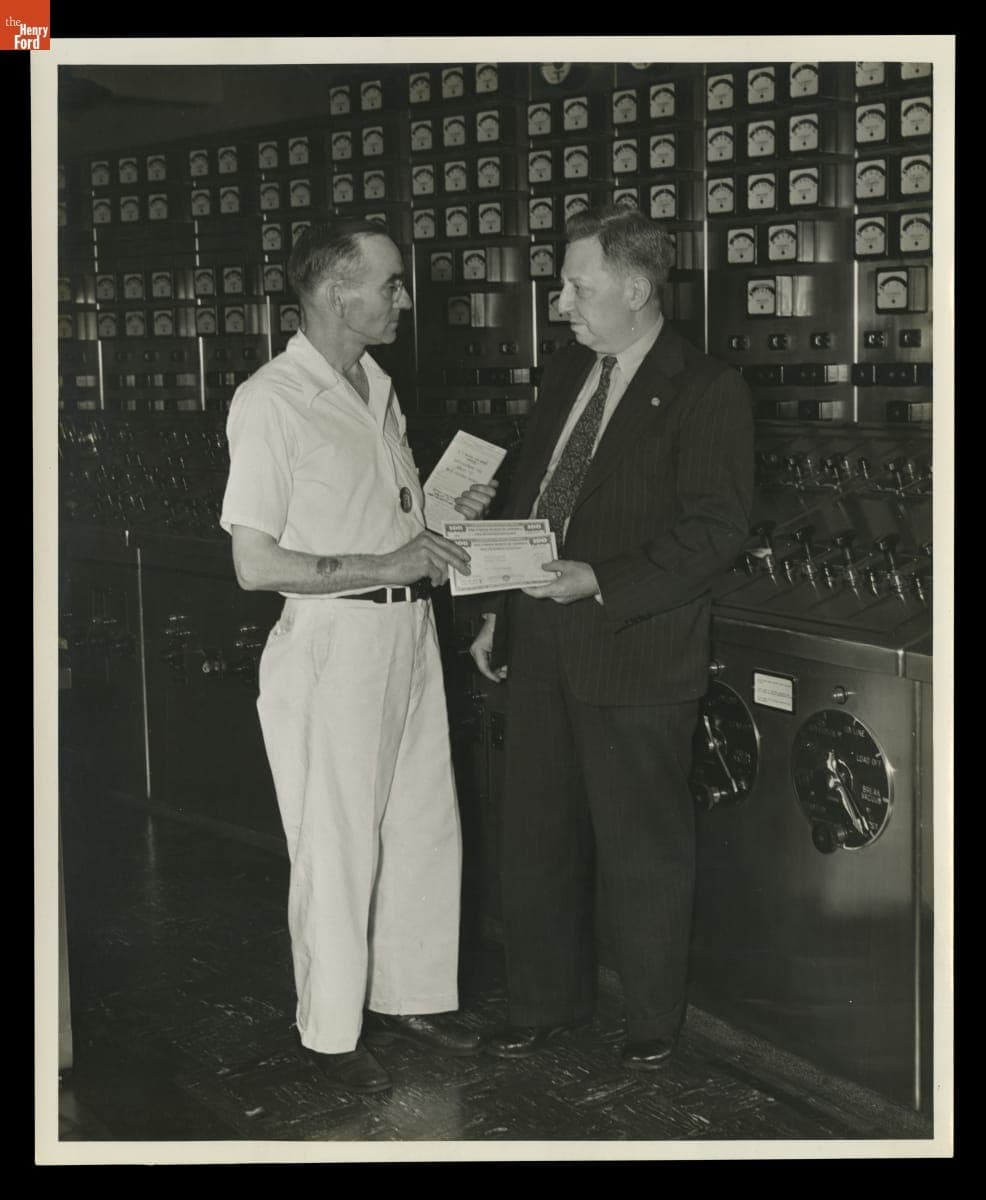
- June 18, 1945
- Collections - Artifact
War Bond Drive at Ford Motor Company Rouge Plant Powerhouse #1, June 1945
Ford Motor Company and its employees contributed to Allied efforts in World War II in numerous ways. The company built trucks, tanks, aircraft engines, gliders, and B-24 bomber airplanes. Ford workers purchased war bonds with their earnings, either independently or through a payroll deduction program.
- Henry Ford on His 80th Birthday, U. S. Naval Training School at the Ford Rouge Plant, July 1943 - Personnel at the United States Naval Training School in Dearborn, Michigan, invited Henry Ford to celebrate his 80th birthday at the base. Ford was feted with gifts, a military drill, and a large cake modeled after the school buildings. The school -- built on land at Ford's Rouge Plant and leased to the Navy -- trained thousands of recruits in various skilled trades during World War II.
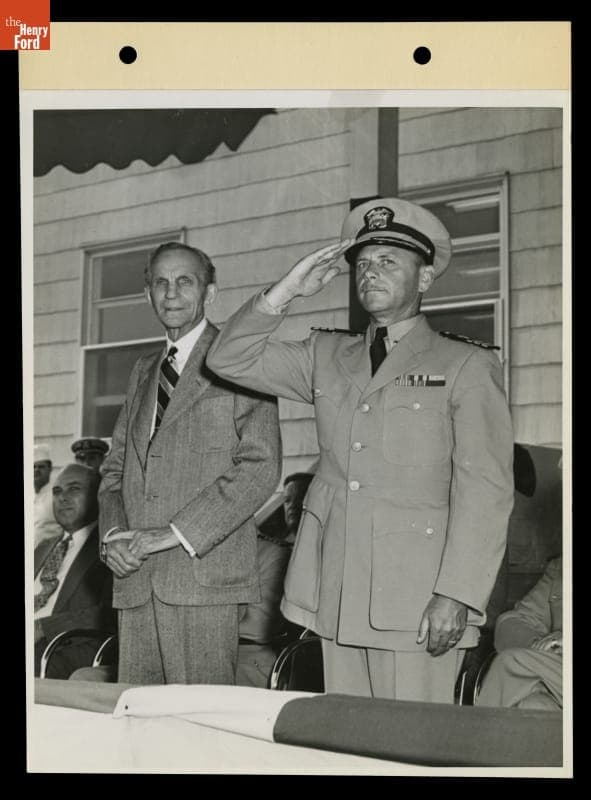
- July 28, 1943
- Collections - Artifact
Henry Ford on His 80th Birthday, U. S. Naval Training School at the Ford Rouge Plant, July 1943
Personnel at the United States Naval Training School in Dearborn, Michigan, invited Henry Ford to celebrate his 80th birthday at the base. Ford was feted with gifts, a military drill, and a large cake modeled after the school buildings. The school -- built on land at Ford's Rouge Plant and leased to the Navy -- trained thousands of recruits in various skilled trades during World War II.
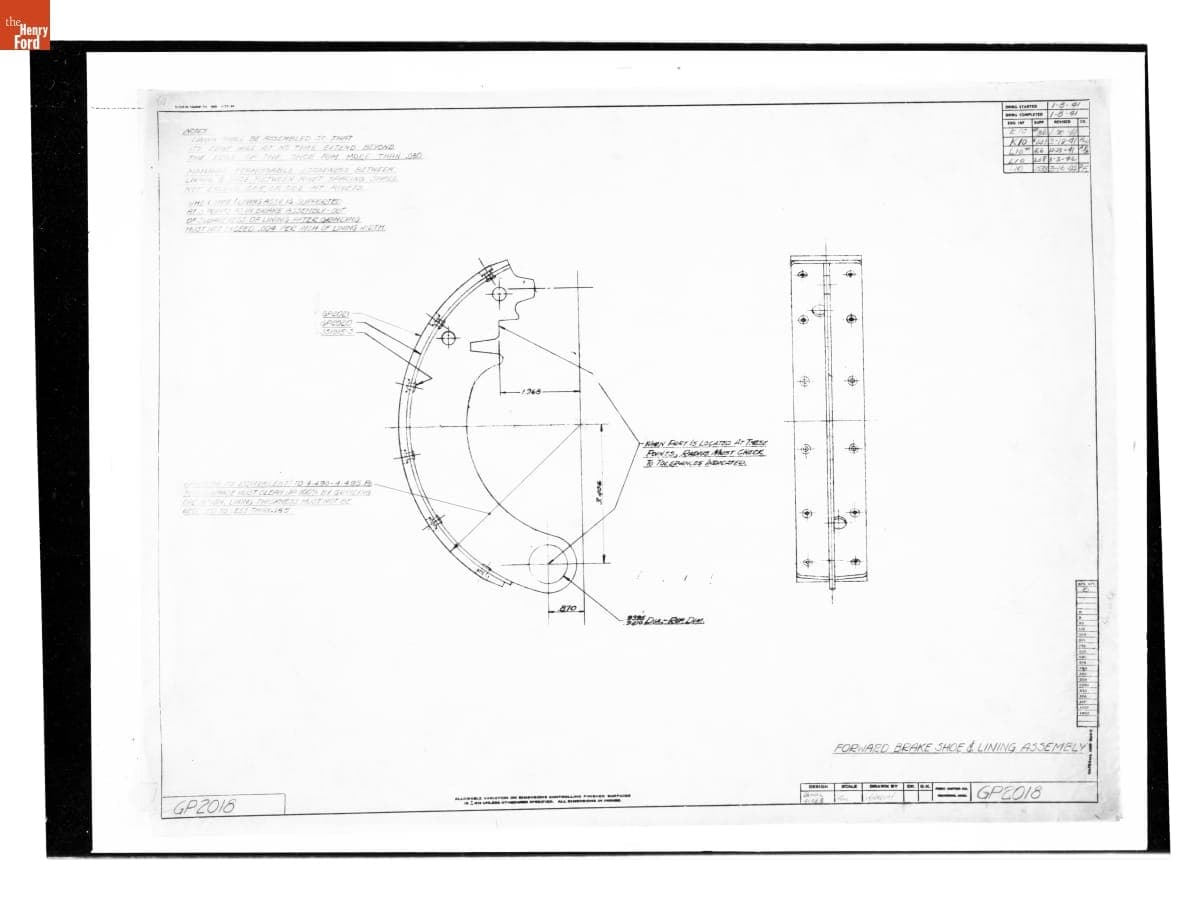
- Drawing, "Forward Brake Shoe & Lining Assembly," Ford GP, March 16, 1944 - The Ford Motor Company created over a million parts drawings from 1903 to 1957. Many of these drawings specify engineering requirements for the components of Ford-made vehicles--including automobiles, trucks, tractors, military vehicles and Tri-motor airplanes. Others document assembly components, stages of casting and forging, or experimental designs. Beginning in the 1940s, Ford transferred the drawings to microfilm.
- March 16, 1944
- Collections - Artifact
Drawing, "Forward Brake Shoe & Lining Assembly," Ford GP, March 16, 1944
The Ford Motor Company created over a million parts drawings from 1903 to 1957. Many of these drawings specify engineering requirements for the components of Ford-made vehicles--including automobiles, trucks, tractors, military vehicles and Tri-motor airplanes. Others document assembly components, stages of casting and forging, or experimental designs. Beginning in the 1940s, Ford transferred the drawings to microfilm.
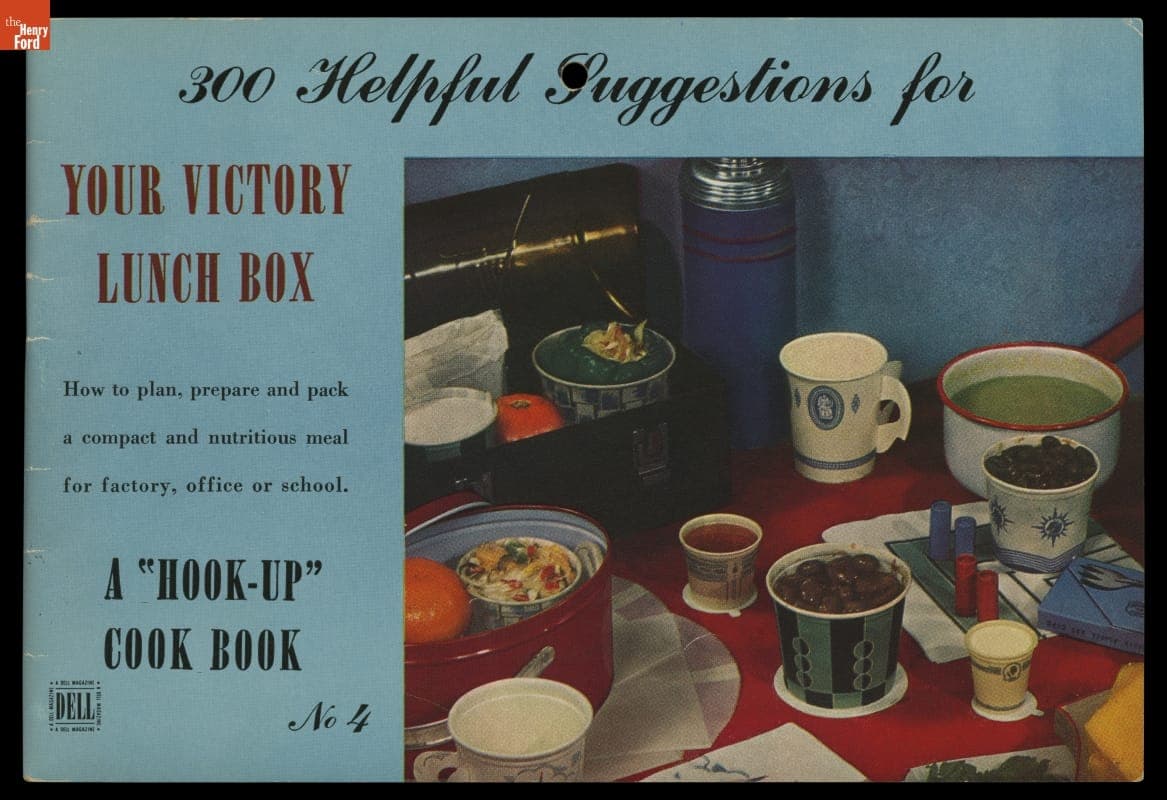
- Recipe Booklet, "300 Helpful Suggestions for Your Victory Lunch Box," 1943 - This patriotic recipe book was published to help American homemakers "contribute directly to winning the war" through food management during World War II, when supply shortages and rationing were part of daily life on the home front. It provided recipes and lunch suggestions that promoted "nutrition, thrift and adaptability" within wartime restrictions.
- 1943
- Collections - Artifact
Recipe Booklet, "300 Helpful Suggestions for Your Victory Lunch Box," 1943
This patriotic recipe book was published to help American homemakers "contribute directly to winning the war" through food management during World War II, when supply shortages and rationing were part of daily life on the home front. It provided recipes and lunch suggestions that promoted "nutrition, thrift and adaptability" within wartime restrictions.