
Search
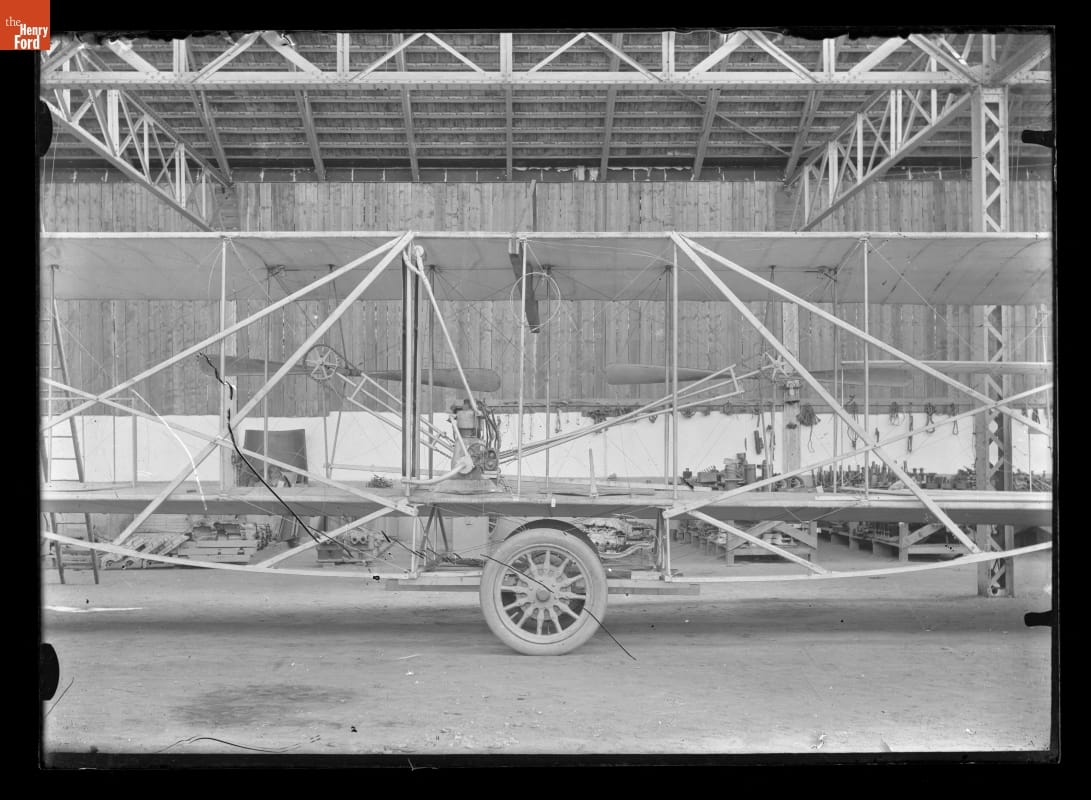
- Wright Flyer on Carrier inside Bollee Automobile Factory, Le Mans, France, 1908 - Leon Bollee, a French automobile manufacturer, became one of the Wright brothers' most important friends in 1908 when he offered workspace and a crew of mechanics to Wilbur Wright during Wright's successful demonstration flights at Le Mans, France. The language barrier meant that Wright did most of the mechanical work on the airplane himself, but Bollee's assistance was much appreciated.
- August 01, 1908
- Collections - Artifact
Wright Flyer on Carrier inside Bollee Automobile Factory, Le Mans, France, 1908
Leon Bollee, a French automobile manufacturer, became one of the Wright brothers' most important friends in 1908 when he offered workspace and a crew of mechanics to Wilbur Wright during Wright's successful demonstration flights at Le Mans, France. The language barrier meant that Wright did most of the mechanical work on the airplane himself, but Bollee's assistance was much appreciated.
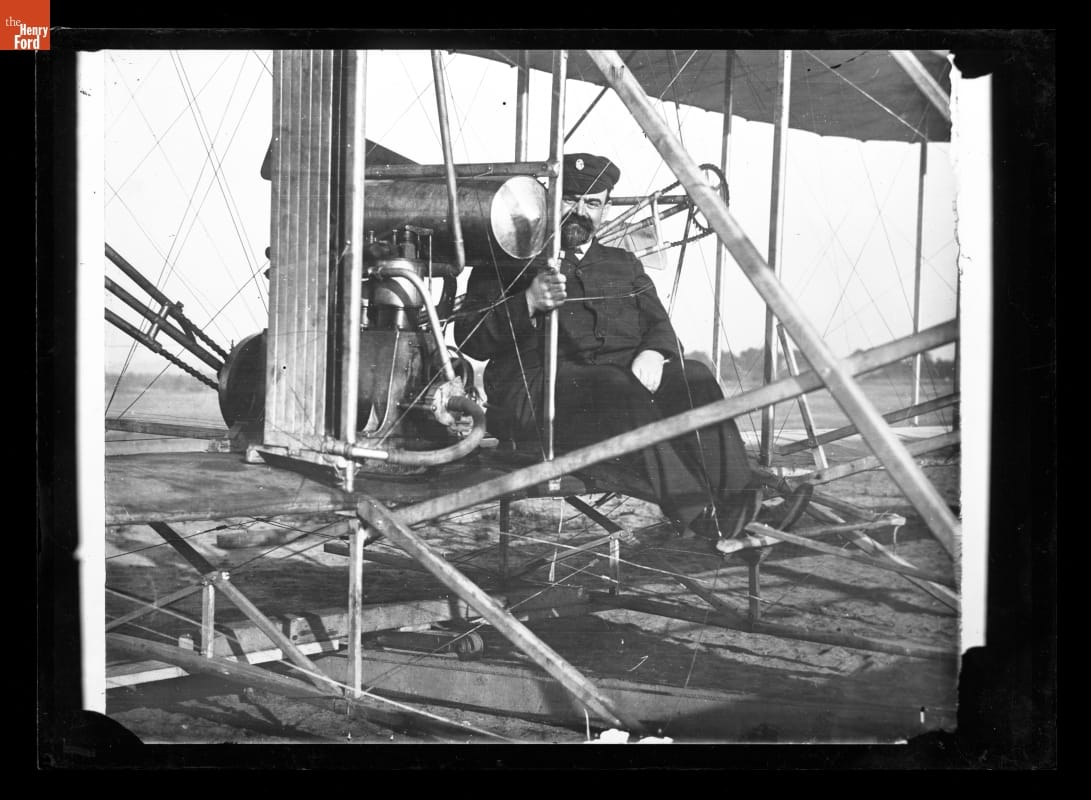
- Leon Bollee Sitting at the Controls of the Wright Flyer at Camp d'Auvours, near Le Mans, France, 1908-1909 - Leon Bollee was a close and important friend to Wilbur Wright during Wright's airplane demonstrations in France in 1908. Bollee offered Wright workspace and a crew of mechanics in his Le Mans automobile factory, and he asked for nothing in return. Nevertheless, Wright repaid the favor by taking Bollee up for a flight.
- 1908-1909
- Collections - Artifact
Leon Bollee Sitting at the Controls of the Wright Flyer at Camp d'Auvours, near Le Mans, France, 1908-1909
Leon Bollee was a close and important friend to Wilbur Wright during Wright's airplane demonstrations in France in 1908. Bollee offered Wright workspace and a crew of mechanics in his Le Mans automobile factory, and he asked for nothing in return. Nevertheless, Wright repaid the favor by taking Bollee up for a flight.
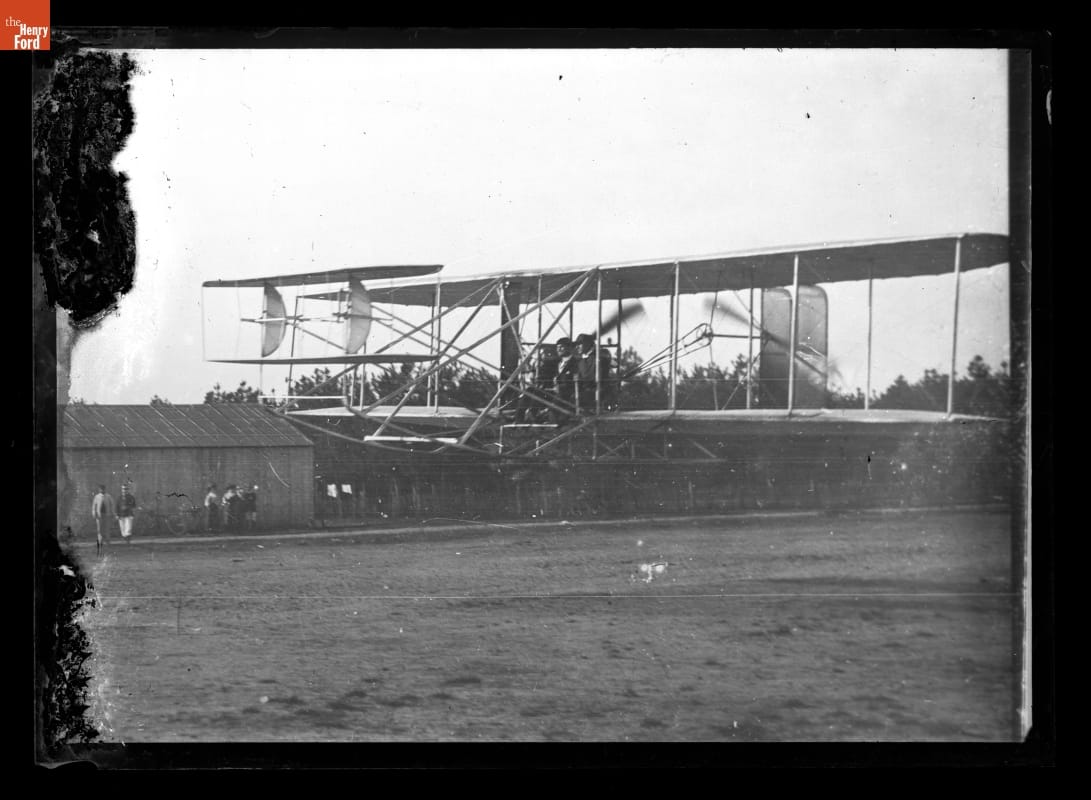
- Wilbur Wright and Passenger during a Flight over Camp D'Avours, near Le Mans, France, 1908-1909 - The Wright brothers are famous for their first flight in a powered, heavier-than-air craft on December 17, 1903. It was not until August 8, 1908 that they made their first official public demonstration of their unique controllable flyer. This shows Wilbur Wright flying near the ground while taking off at Les Hunandières horse racing track near Le Mans, France.
- 1908-1909
- Collections - Artifact
Wilbur Wright and Passenger during a Flight over Camp D'Avours, near Le Mans, France, 1908-1909
The Wright brothers are famous for their first flight in a powered, heavier-than-air craft on December 17, 1903. It was not until August 8, 1908 that they made their first official public demonstration of their unique controllable flyer. This shows Wilbur Wright flying near the ground while taking off at Les Hunandières horse racing track near Le Mans, France.
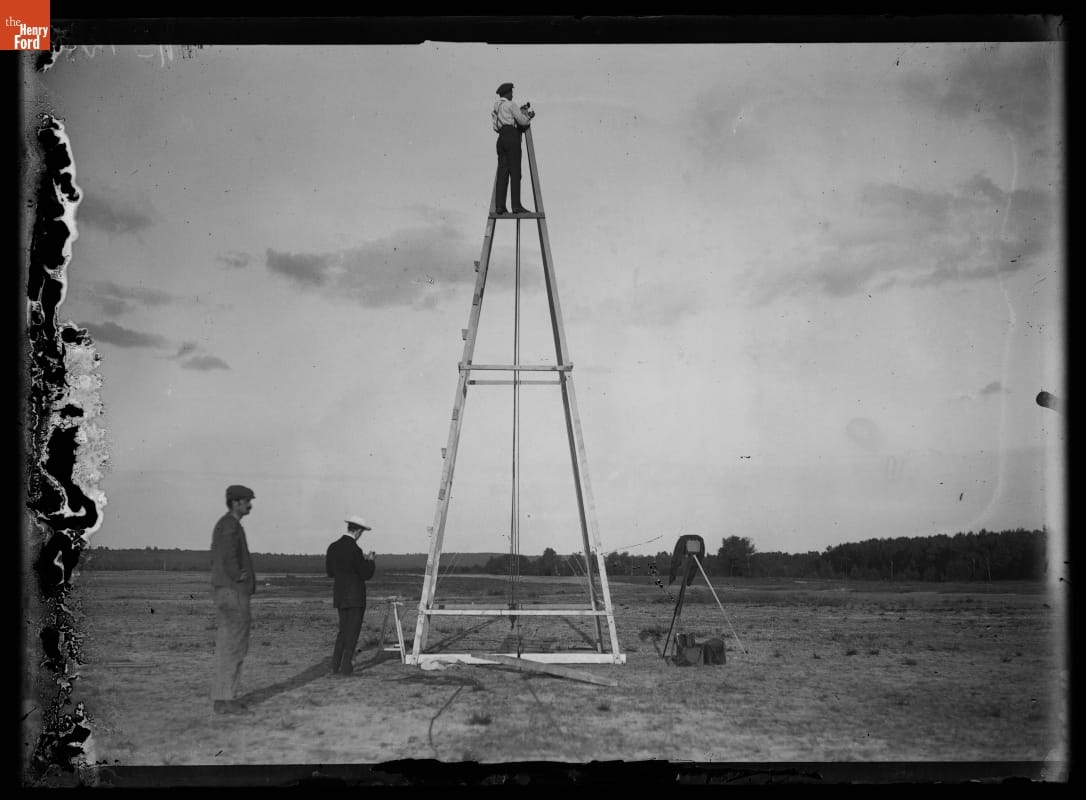
- Preparing the Wright Flyer's Launching Derrick, France, 1908-1909 - The Wright brothers' early airplanes had no wheels, just simple landing skids. To achieve takeoff, they devised a clever catapult system. The airplane was attached, with cables and pulleys, to a weight suspended in a tower. When the weight fell, it pulled the plane along a wooden rail fast enough to generate the necessary lift.
- 1908-1909
- Collections - Artifact
Preparing the Wright Flyer's Launching Derrick, France, 1908-1909
The Wright brothers' early airplanes had no wheels, just simple landing skids. To achieve takeoff, they devised a clever catapult system. The airplane was attached, with cables and pulleys, to a weight suspended in a tower. When the weight fell, it pulled the plane along a wooden rail fast enough to generate the necessary lift.
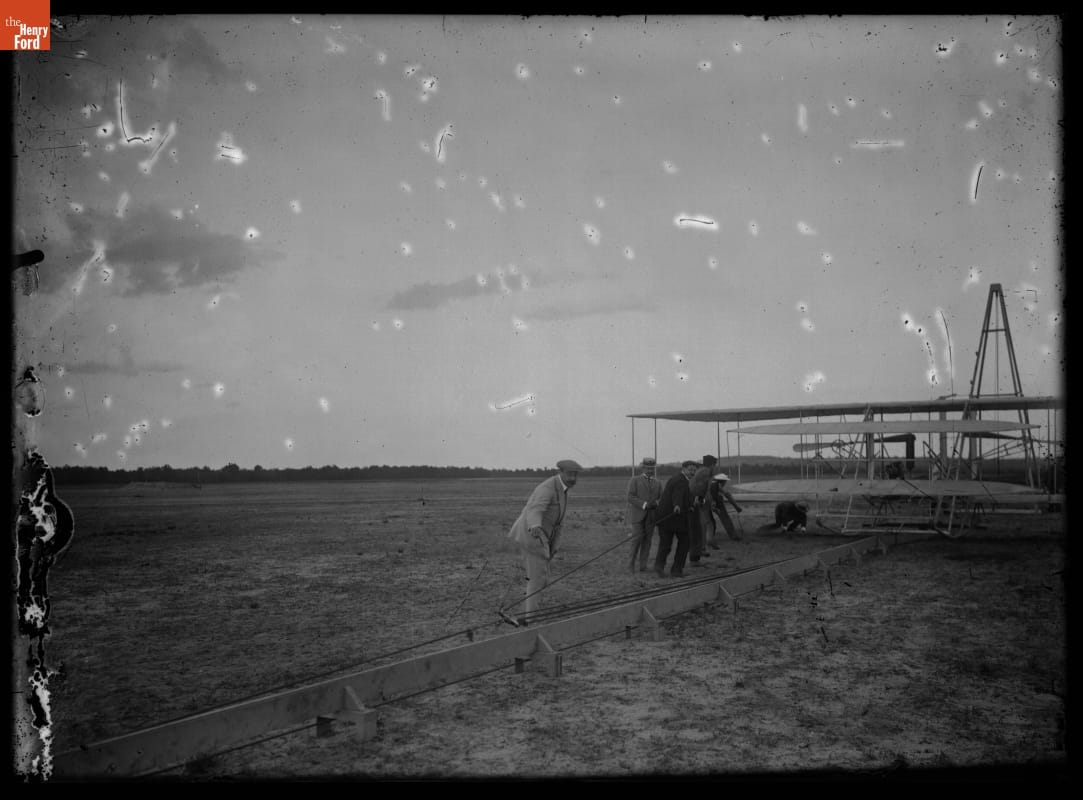
- Positioning the Wright Flyer on the Launch Rail, France, 1908-1909 - The Wright brothers' early airplanes had no wheels, just simple landing skids. To achieve takeoff, they devised a clever catapult system. The airplane was attached, with cables and pulleys, to a weight suspended in a tower. When the weight fell, it pulled the plane along a wooden rail fast enough to generate the necessary lift.
- 1908-1909
- Collections - Artifact
Positioning the Wright Flyer on the Launch Rail, France, 1908-1909
The Wright brothers' early airplanes had no wheels, just simple landing skids. To achieve takeoff, they devised a clever catapult system. The airplane was attached, with cables and pulleys, to a weight suspended in a tower. When the weight fell, it pulled the plane along a wooden rail fast enough to generate the necessary lift.
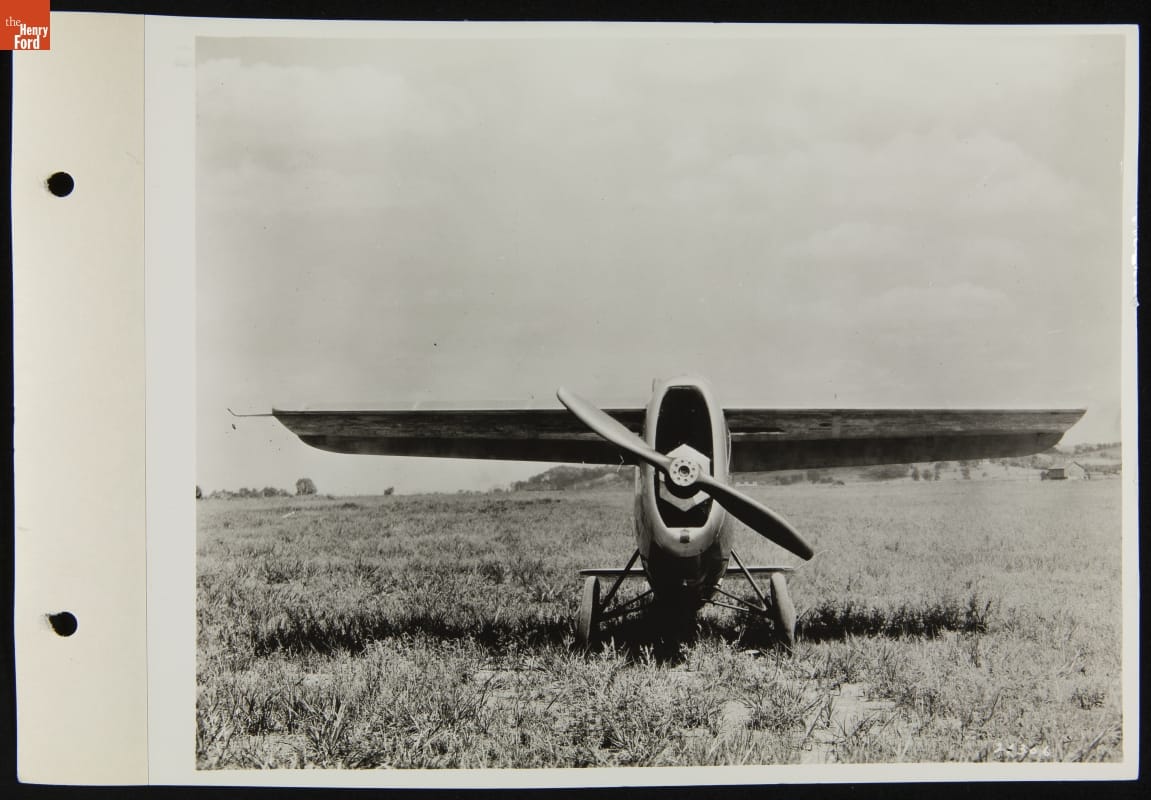
- Front View of the Dayton Wright RB-1 Racer, August 1920 - The Dayton-Wright RB-1 was built for speed. Designers Howard Rinehart and Milton Baumann gave the innovative airplane an enclosed cockpit, a single cantilevered wing with adjustable flaps, and retractable landing gear. Rinehart hoped to win the 1920 Gordon Bennett Air Race piloting the RB-1, but a failed control cable forced him out of the competition.
- August 01, 1920
- Collections - Artifact
Front View of the Dayton Wright RB-1 Racer, August 1920
The Dayton-Wright RB-1 was built for speed. Designers Howard Rinehart and Milton Baumann gave the innovative airplane an enclosed cockpit, a single cantilevered wing with adjustable flaps, and retractable landing gear. Rinehart hoped to win the 1920 Gordon Bennett Air Race piloting the RB-1, but a failed control cable forced him out of the competition.
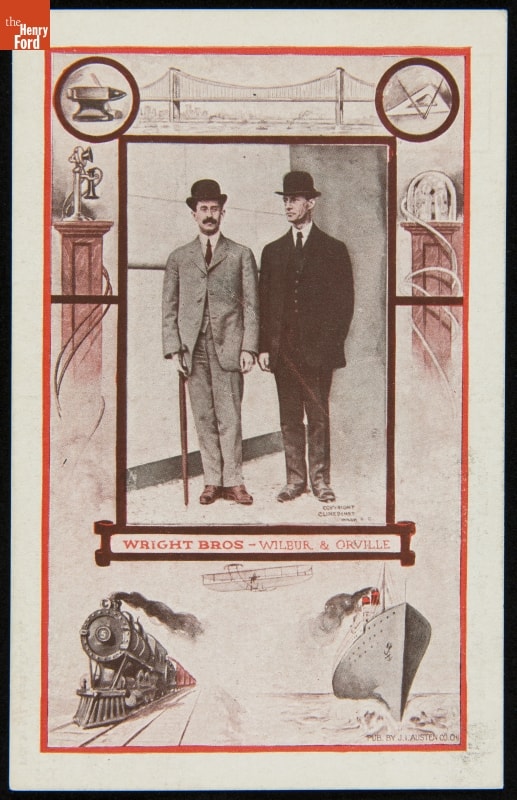
- Wright Brothers - Wilbur and Orville, 1909-1912 - This postcard put the 1903 Wright Flyer -- and its builders, Wilbur and Orville Wright -- into context with other triumphs of engineering and invention. It surrounded the Wright brothers and their airplane with an anvil, a suspension bridge, drafting tools, a telephone, a stock ticker, a steam locomotive, and an ocean liner.
- 1909-1912
- Collections - Artifact
Wright Brothers - Wilbur and Orville, 1909-1912
This postcard put the 1903 Wright Flyer -- and its builders, Wilbur and Orville Wright -- into context with other triumphs of engineering and invention. It surrounded the Wright brothers and their airplane with an anvil, a suspension bridge, drafting tools, a telephone, a stock ticker, a steam locomotive, and an ocean liner.
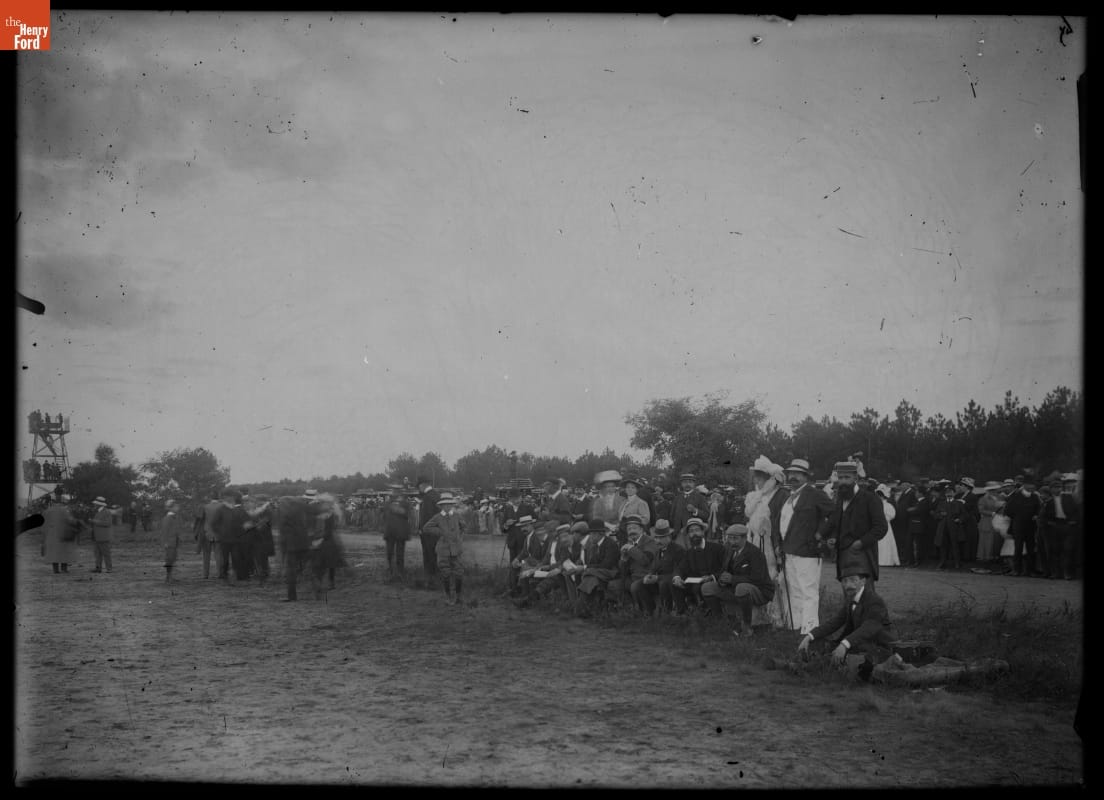
- Crowd Gathered to Watch Demonstration Flights by Wilbur Wright, France, 1908-1909 - Wilbur Wright's many demonstration flights in France in 1908 and 1909 were spectacular events. Some in Europe had begun to doubt the Wrights' achievement at Kill Devil Hills. When Wilbur took to the skies over Le Mans, demonstrating more control and achieving more distance than his rivals, crowds flocked to watch his apparent mastery of the airplane. The skeptics were silenced.
- 1908-1909
- Collections - Artifact
Crowd Gathered to Watch Demonstration Flights by Wilbur Wright, France, 1908-1909
Wilbur Wright's many demonstration flights in France in 1908 and 1909 were spectacular events. Some in Europe had begun to doubt the Wrights' achievement at Kill Devil Hills. When Wilbur took to the skies over Le Mans, demonstrating more control and achieving more distance than his rivals, crowds flocked to watch his apparent mastery of the airplane. The skeptics were silenced.
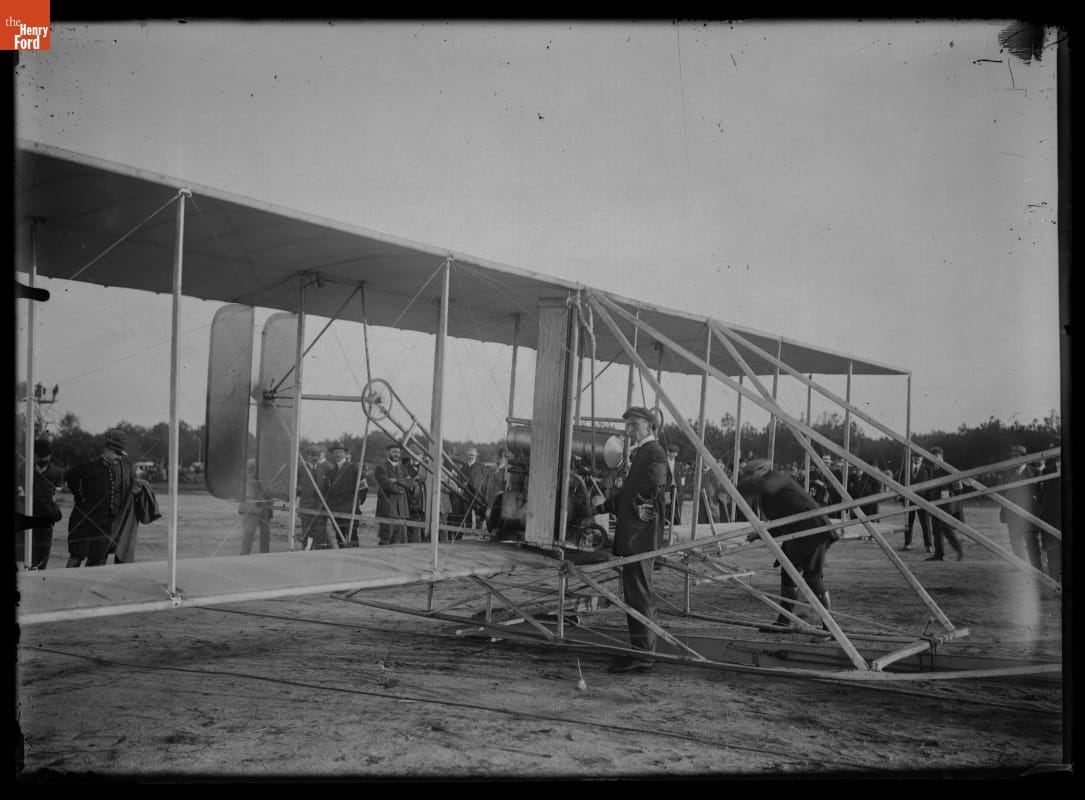
- Crowd Watching Wilbur Wright Preparing the Flyer, France, 1908-1909 - Wilbur Wright's many demonstration flights in France in 1908 and 1909 were spectacular events. Some in Europe had begun to doubt the Wrights' achievement at Kill Devil Hills. When Wilbur took to the skies over Le Mans, demonstrating more control and achieving more distance than his rivals, crowds flocked to watch his apparent mastery of the airplane. The skeptics were silenced.
- 1908-1909
- Collections - Artifact
Crowd Watching Wilbur Wright Preparing the Flyer, France, 1908-1909
Wilbur Wright's many demonstration flights in France in 1908 and 1909 were spectacular events. Some in Europe had begun to doubt the Wrights' achievement at Kill Devil Hills. When Wilbur took to the skies over Le Mans, demonstrating more control and achieving more distance than his rivals, crowds flocked to watch his apparent mastery of the airplane. The skeptics were silenced.
- Orville Wright Piloting the Wright Model A Flyer at Fort Myer, Virginia, September 1908 - While his brother was demonstrating their airplane in France, Orville Wright made demonstration flights of his own for the United States Army Signal Corps at Fort Myer, Virginia. All went well until September 17, 1908, when a cracked propeller caused the plane to crash. Orville survived with serious injuries, but passenger Lt. Thomas Selfridge was killed -- the first airplane fatality.

- September 01, 1908
- Collections - Artifact
Orville Wright Piloting the Wright Model A Flyer at Fort Myer, Virginia, September 1908
While his brother was demonstrating their airplane in France, Orville Wright made demonstration flights of his own for the United States Army Signal Corps at Fort Myer, Virginia. All went well until September 17, 1908, when a cracked propeller caused the plane to crash. Orville survived with serious injuries, but passenger Lt. Thomas Selfridge was killed -- the first airplane fatality.