
Search
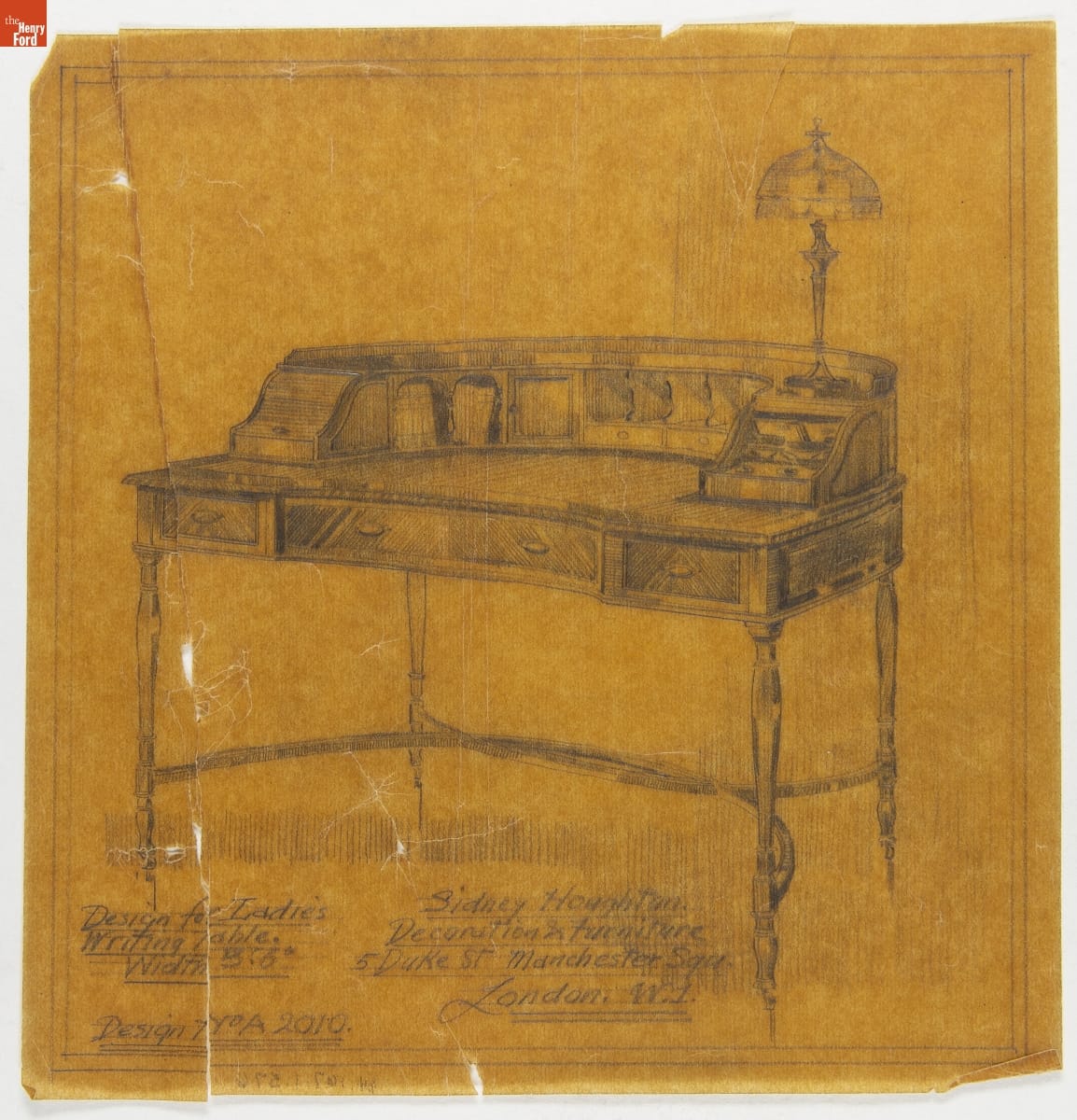
- Presentation Drawing of a Ladies' Writing Table for Fair Lane Estate, 1921-1923 - Sidney Houghton was a London-based interior designer, who met Henry Ford during World War I. Houghton worked on Ford's "Eagle Boats," supplied to the U.S. and British Navies. Following the War, Ford commissioned Houghton to create a variety of interiors. Houghton submitted this rendering to Clara Ford for the interiors of Fair Lane, the Ford Estate in Dearborn, Michigan.
- 1921-1923
- Collections - Artifact
Presentation Drawing of a Ladies' Writing Table for Fair Lane Estate, 1921-1923
Sidney Houghton was a London-based interior designer, who met Henry Ford during World War I. Houghton worked on Ford's "Eagle Boats," supplied to the U.S. and British Navies. Following the War, Ford commissioned Houghton to create a variety of interiors. Houghton submitted this rendering to Clara Ford for the interiors of Fair Lane, the Ford Estate in Dearborn, Michigan.
- Work Table, 1805-1820 -
- 1805-1820
- Collections - Artifact
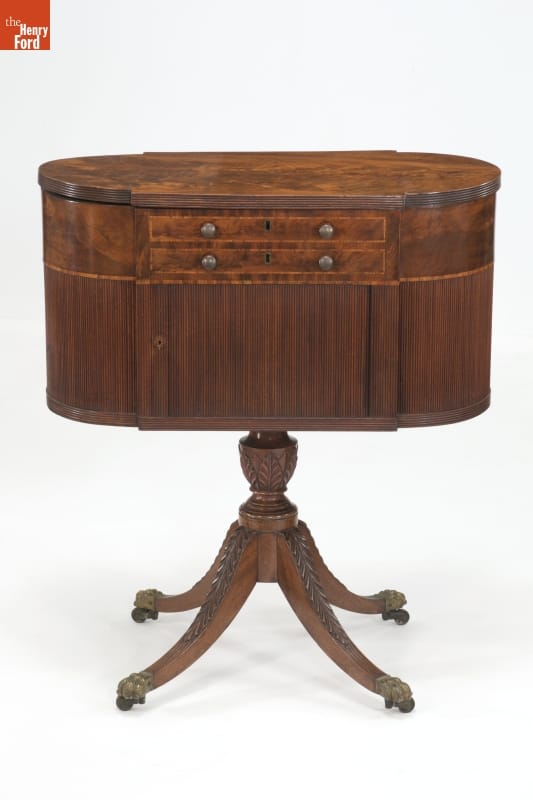
Work Table, 1805-1820
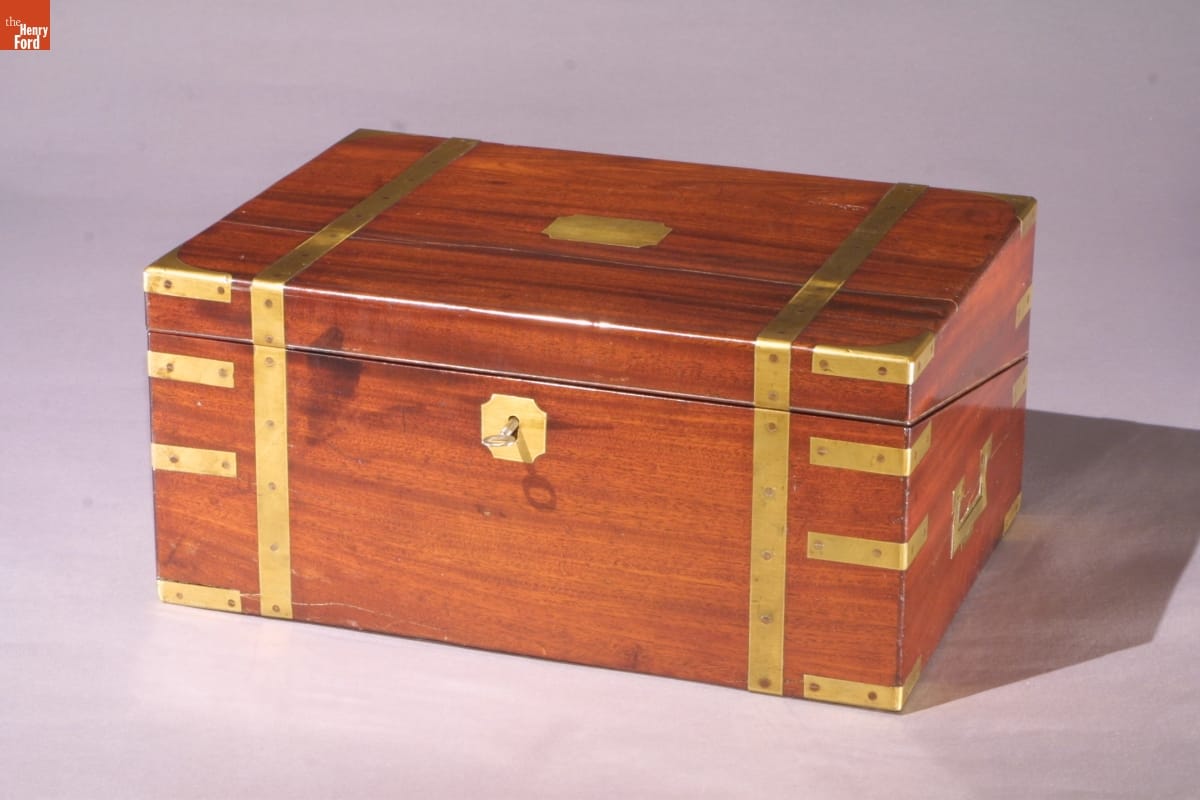
- Portable Writing Desk, circa 1850 - Made of mahogany, ivory, and brass, this portable writing desk has a mechanism for copying text and secret drawers for hiding documents. Thomas Jefferson designed a similar combination portable writing desk and copying press. This may be an example of his design made in England or France, or it may be the product of another clever inventor.
- circa 1850
- Collections - Artifact
Portable Writing Desk, circa 1850
Made of mahogany, ivory, and brass, this portable writing desk has a mechanism for copying text and secret drawers for hiding documents. Thomas Jefferson designed a similar combination portable writing desk and copying press. This may be an example of his design made in England or France, or it may be the product of another clever inventor.
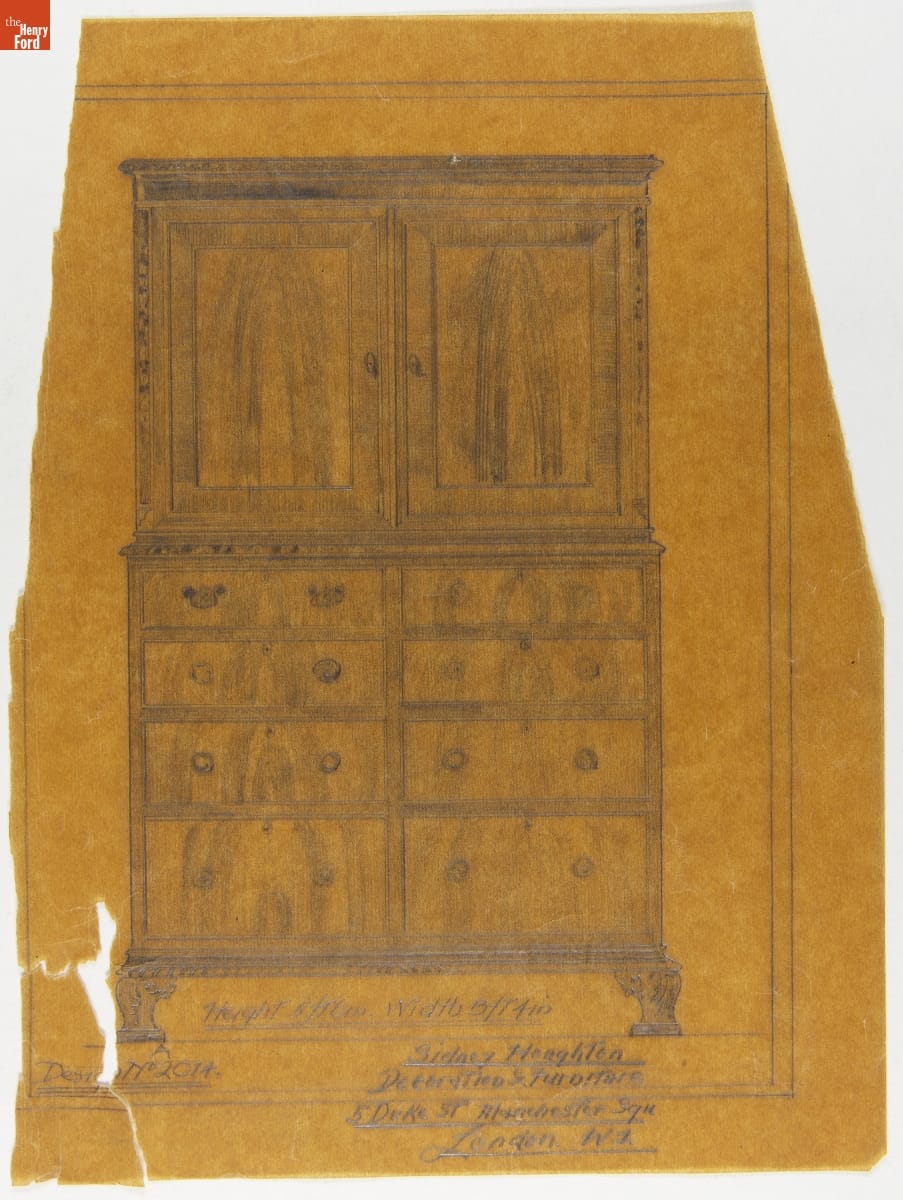
- Presentation Drawing of Furniture for Fair Lane Estate, 1921-1923 - Sidney Houghton was a London-based interior designer, who met Henry Ford during World War I. Houghton worked on Ford's "Eagle Boats," supplied to the U.S. and British Navies. Following the War, Ford commissioned Houghton to create a variety of interiors. Houghton submitted this rendering to Clara Ford for the interiors of Fair Lane, the Ford Estate in Dearborn, Michigan.
- 1921-1923
- Collections - Artifact
Presentation Drawing of Furniture for Fair Lane Estate, 1921-1923
Sidney Houghton was a London-based interior designer, who met Henry Ford during World War I. Houghton worked on Ford's "Eagle Boats," supplied to the U.S. and British Navies. Following the War, Ford commissioned Houghton to create a variety of interiors. Houghton submitted this rendering to Clara Ford for the interiors of Fair Lane, the Ford Estate in Dearborn, Michigan.
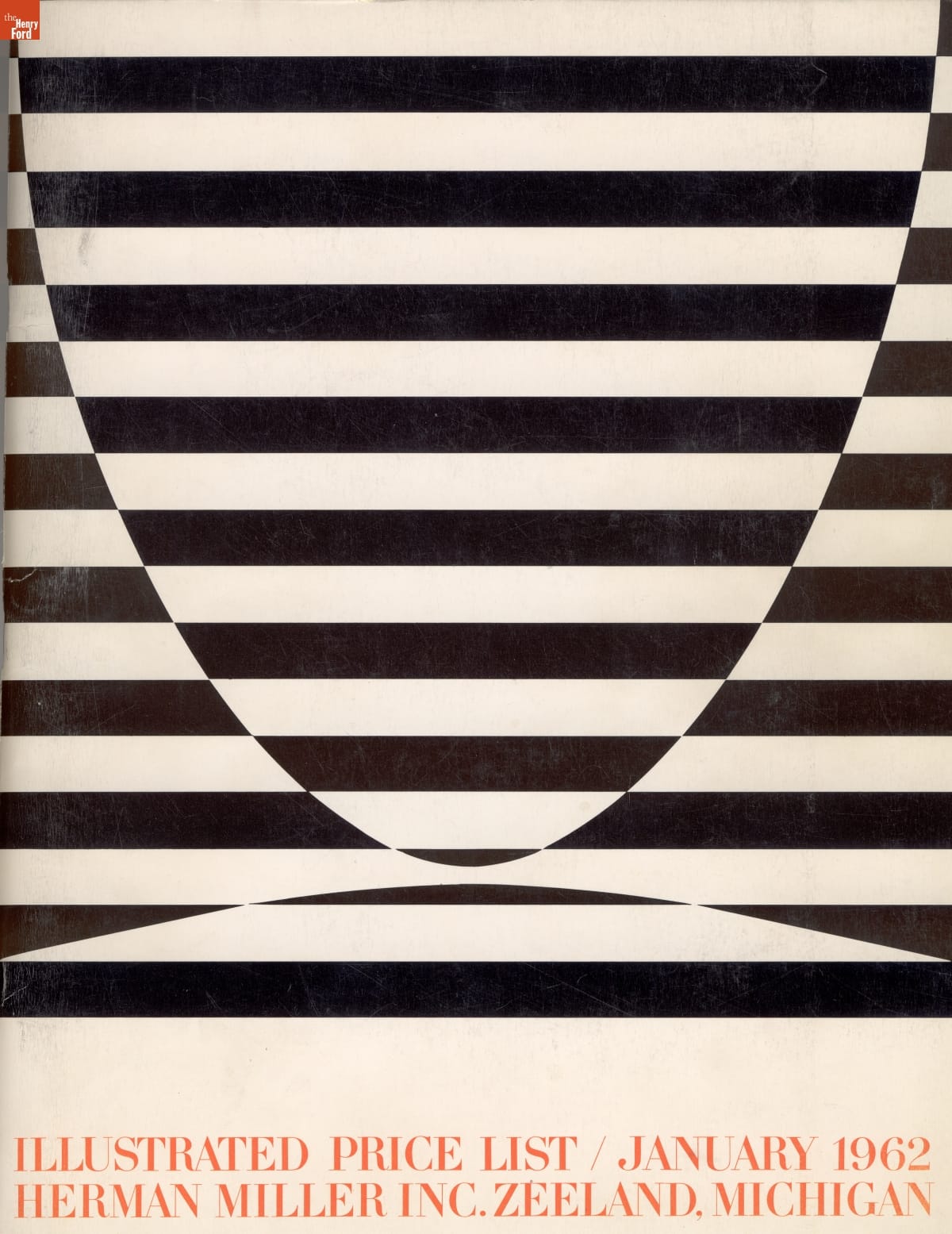
- Herman Miller, Inc. Catalog, "Illustrated Price List," January 1962 -
- January 01, 1962
- Collections - Artifact
Herman Miller, Inc. Catalog, "Illustrated Price List," January 1962
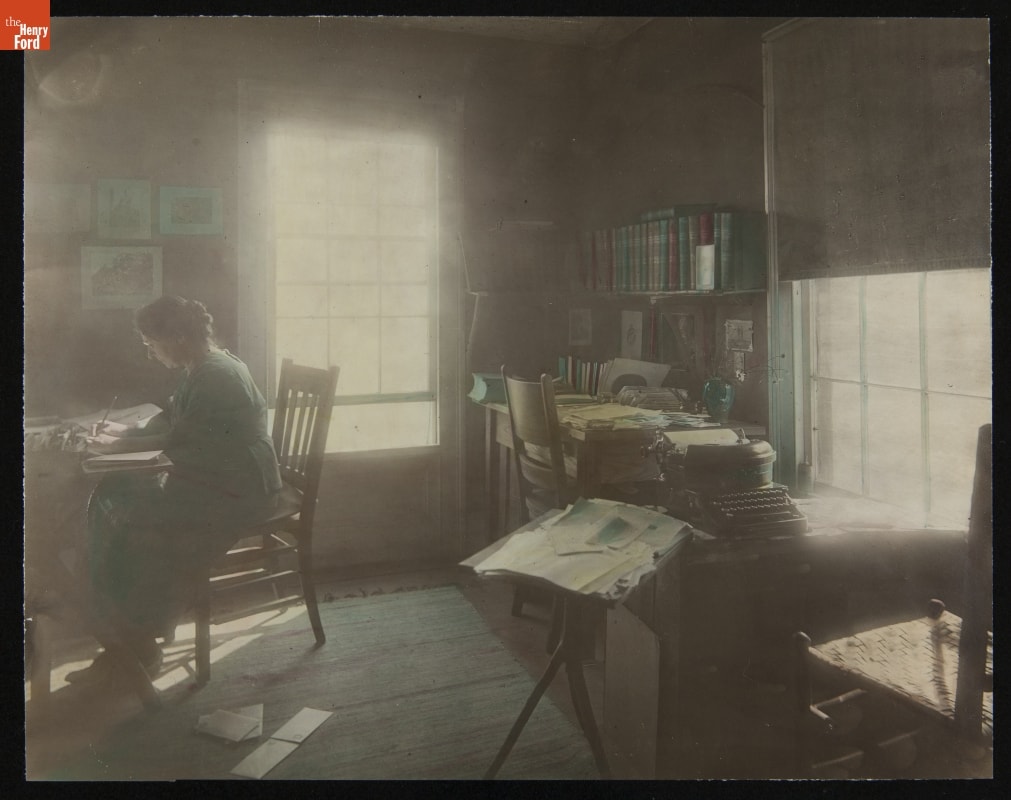
- Clara Barrus at John Burroughs' Woodchuck Lodge, 1920 - In 1901, Dr. Clara Barrus - one of few women to graduate from medical school in the late 19th century - wrote a fan letter to nature writer John Burroughs. The pair became close, and Burroughs relied increasingly on Barrus as his secretary and nearly constant companion until his death in 1921. Burroughs ultimately named Barrus his literary executor and official biographer.
- October 01, 1920
- Collections - Artifact
Clara Barrus at John Burroughs' Woodchuck Lodge, 1920
In 1901, Dr. Clara Barrus - one of few women to graduate from medical school in the late 19th century - wrote a fan letter to nature writer John Burroughs. The pair became close, and Burroughs relied increasingly on Barrus as his secretary and nearly constant companion until his death in 1921. Burroughs ultimately named Barrus his literary executor and official biographer.
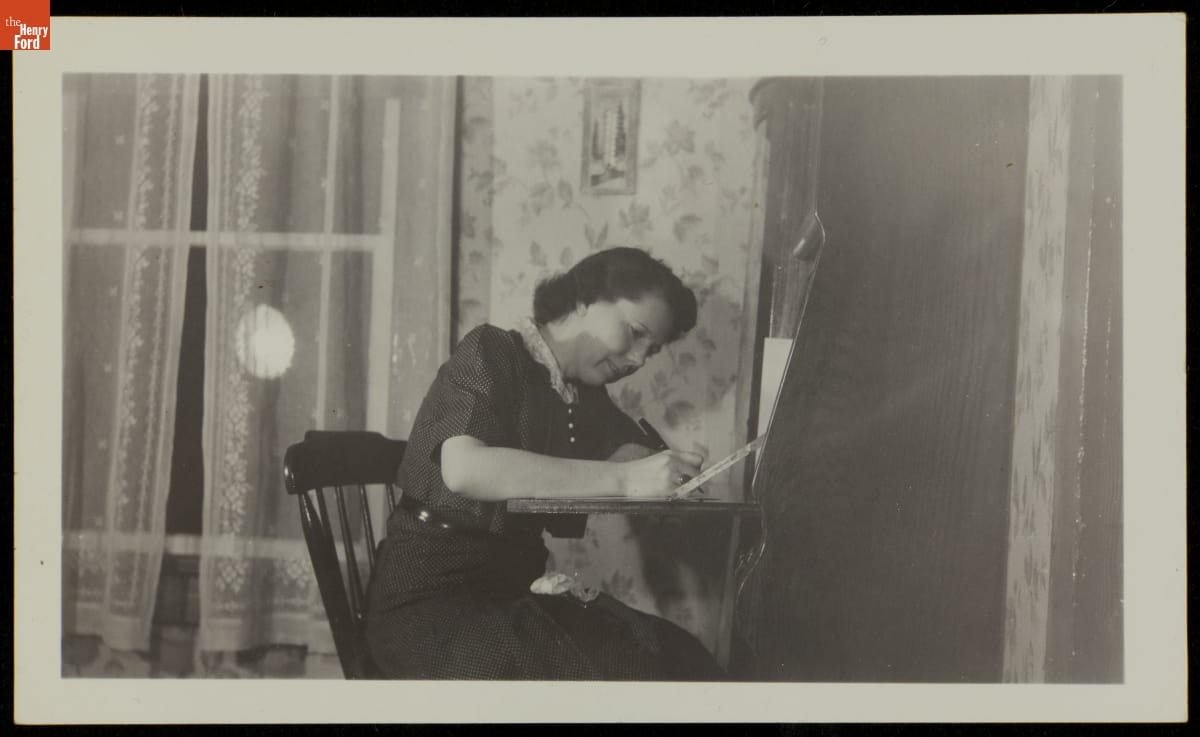
- Anita Searl Writing at Desk, circa 1933 - Though new communications technologies -- including telephones, typewriters, and telegraphs -- had emerged by the 1930s, many Americans still sent handwritten letters to distant family and friends.
- circa 1933
- Collections - Artifact
Anita Searl Writing at Desk, circa 1933
Though new communications technologies -- including telephones, typewriters, and telegraphs -- had emerged by the 1930s, many Americans still sent handwritten letters to distant family and friends.
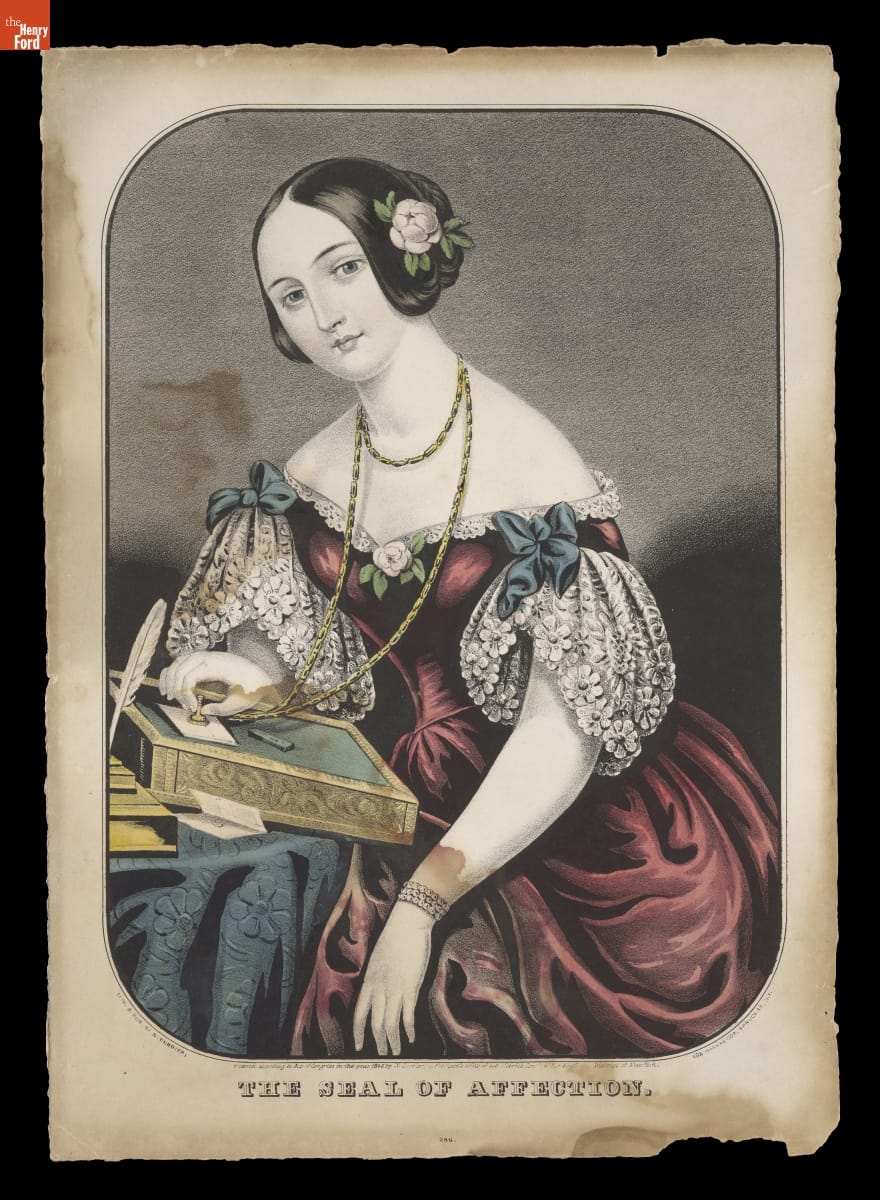
- Lithograph, "A Seal of Affection," 1846 - A fashionably dressed young lady is shown in the process of sealing a letter to a loved one, perhaps a relative, or a gentleman friend. She is embossing melted wax with a seal. The young lady sits in front of her portable writing desk. Within it, she can store stationery, pens, and other needs. The top is covered in green felt to provide a comfortable writing surface.
- 1846
- Collections - Artifact
Lithograph, "A Seal of Affection," 1846
A fashionably dressed young lady is shown in the process of sealing a letter to a loved one, perhaps a relative, or a gentleman friend. She is embossing melted wax with a seal. The young lady sits in front of her portable writing desk. Within it, she can store stationery, pens, and other needs. The top is covered in green felt to provide a comfortable writing surface.
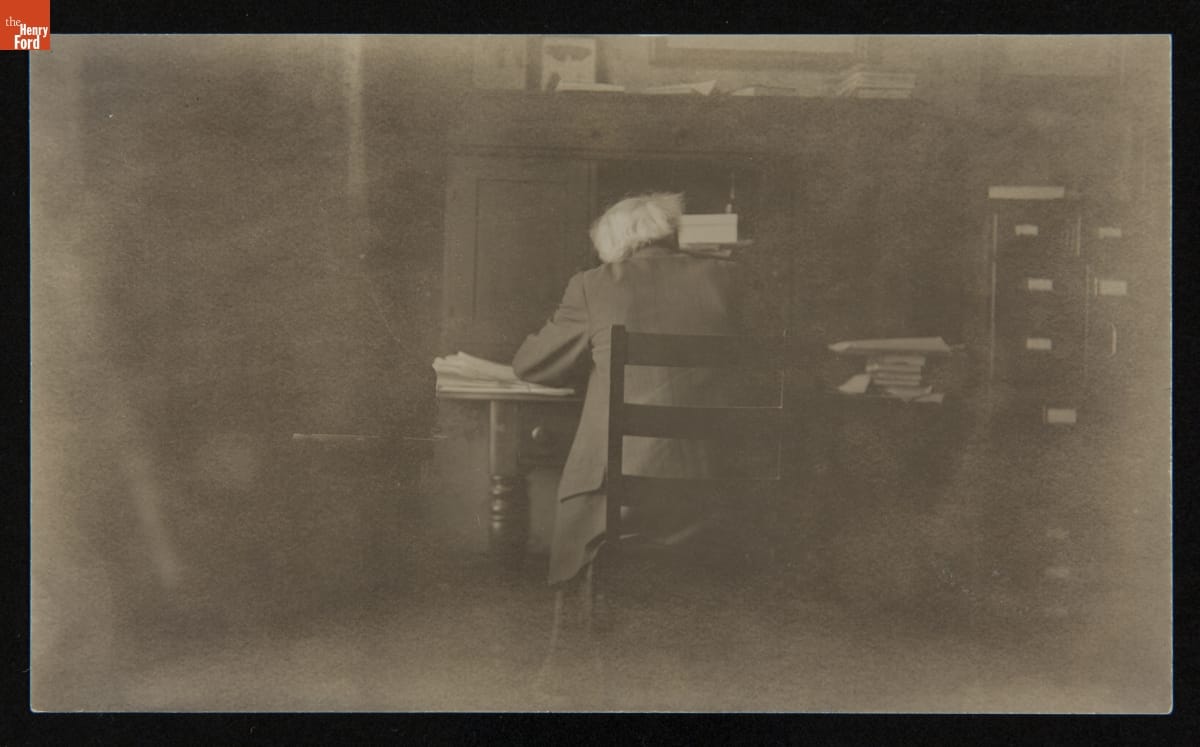
- John Burroughs "On the Job," circa 1917 - John Burroughs (1837-1921) was an internationally known naturalist and writer whose nature essays were well-received in both literary and scientific circles. From his home in the Catskills of upstate New York, Burroughs wrote mostly about what could be found in accessible and familiar landscapes. He wanted his readers to appreciate the natural world that surrounded them.
- circa 1917
- Collections - Artifact
John Burroughs "On the Job," circa 1917
John Burroughs (1837-1921) was an internationally known naturalist and writer whose nature essays were well-received in both literary and scientific circles. From his home in the Catskills of upstate New York, Burroughs wrote mostly about what could be found in accessible and familiar landscapes. He wanted his readers to appreciate the natural world that surrounded them.
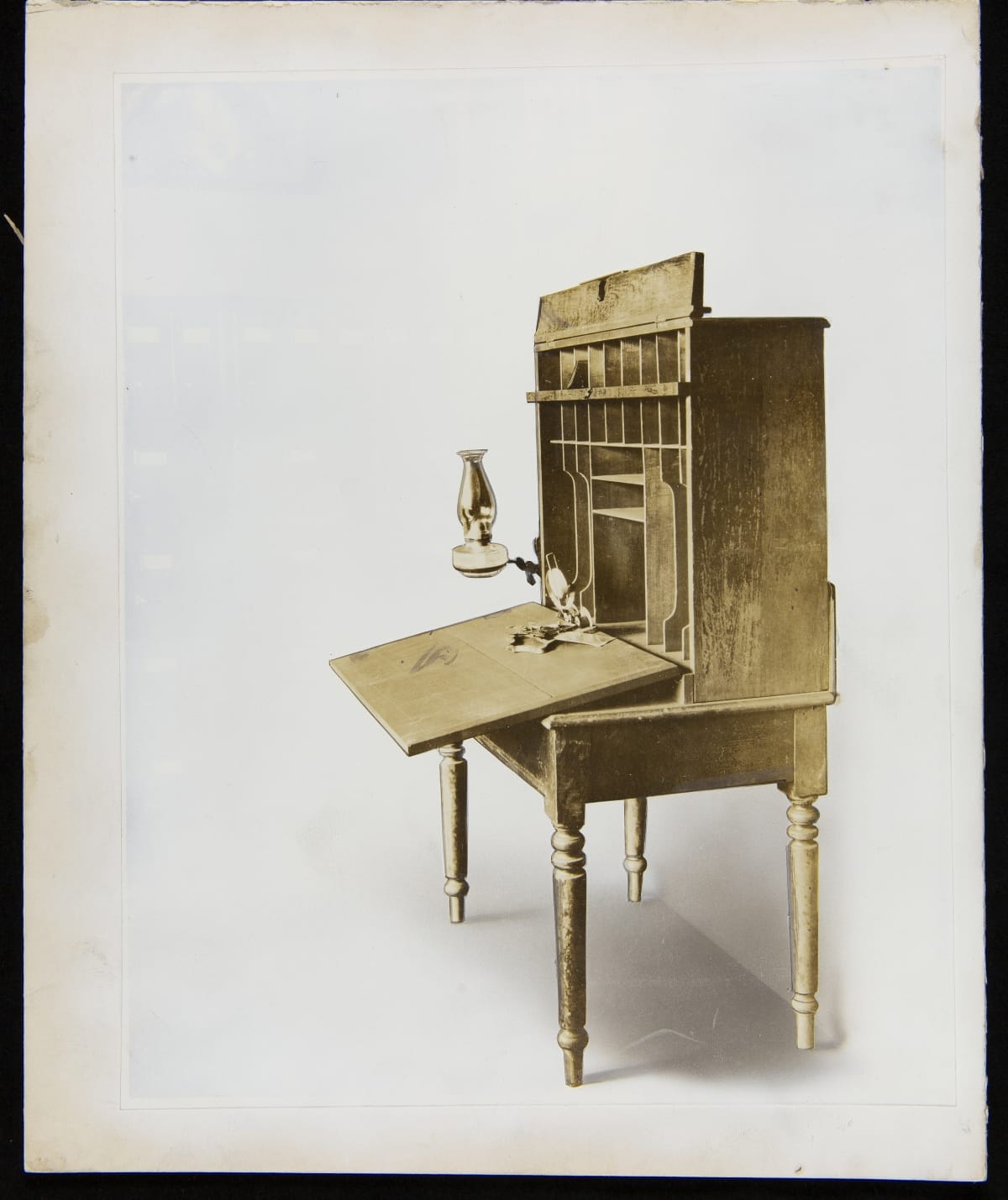
- H. J. Heinz's First Desk, circa 1923 - The H.J. Heinz Company employed ambitious and comprehensive advertising strategies to meet consumers at home, in stores, and everywhere in between. Photographs of buildings, employees, and the manufacturing process were often taken and then modified for use in advertisements or publications. This modified photograph shows H.J. Heinz's first desk, with stenography equipment attached.
- circa 1923
- Collections - Artifact
H. J. Heinz's First Desk, circa 1923
The H.J. Heinz Company employed ambitious and comprehensive advertising strategies to meet consumers at home, in stores, and everywhere in between. Photographs of buildings, employees, and the manufacturing process were often taken and then modified for use in advertisements or publications. This modified photograph shows H.J. Heinz's first desk, with stenography equipment attached.