
Search
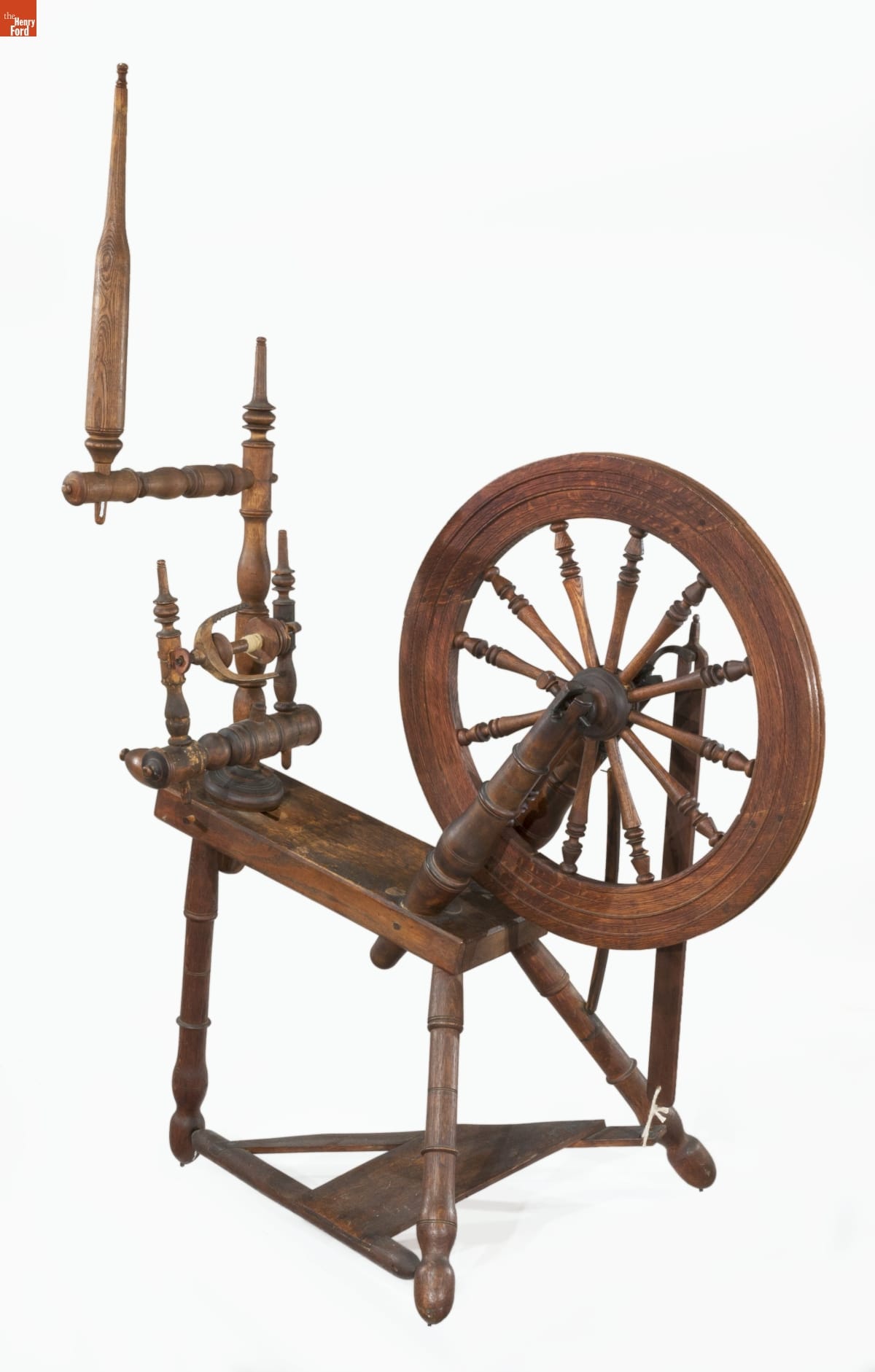
- Flax Wheel, Made by S. Hillard, 1800-1850 -
- 1800-1850
- Collections - Artifact
Flax Wheel, Made by S. Hillard, 1800-1850
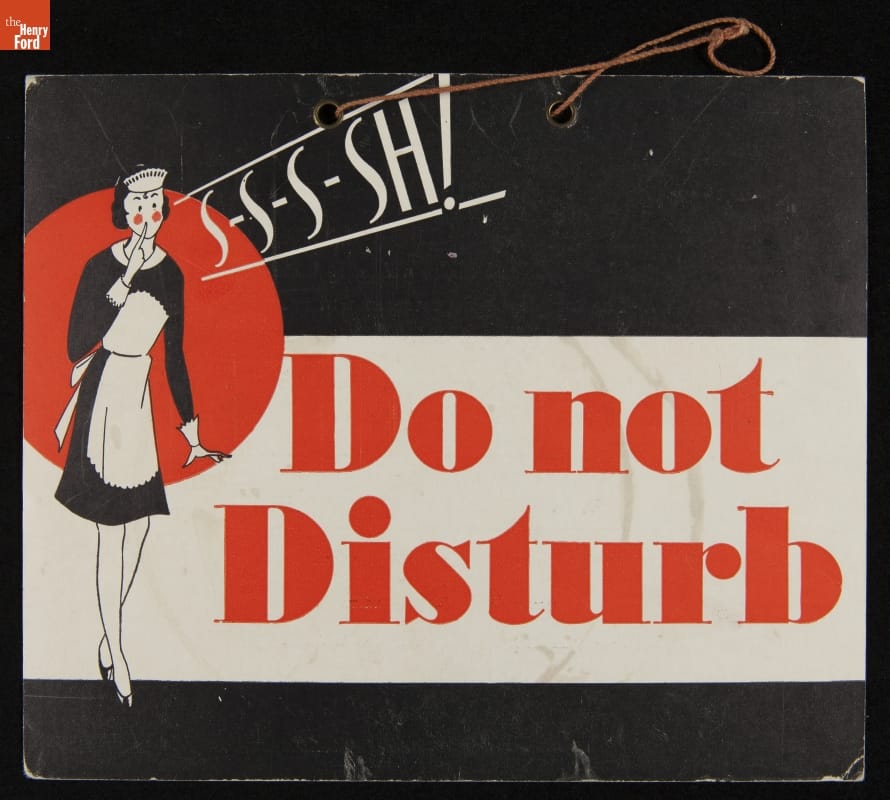
- Sign, "S-S-S-SH! Do Not Disturb," 1930-1945 - Like today, proprietors of mid-20th century hotels, motels and inns provided "Do Not Disturb" signs for weary travelers who wanted a restful stay. Guests placed the sign outside on their door to alert staff to please be quiet and not enter the room. This sign even included instructions that guests could use to stop unwanted telegrams or telephone calls.
- 1930-1945
- Collections - Artifact
Sign, "S-S-S-SH! Do Not Disturb," 1930-1945
Like today, proprietors of mid-20th century hotels, motels and inns provided "Do Not Disturb" signs for weary travelers who wanted a restful stay. Guests placed the sign outside on their door to alert staff to please be quiet and not enter the room. This sign even included instructions that guests could use to stop unwanted telegrams or telephone calls.
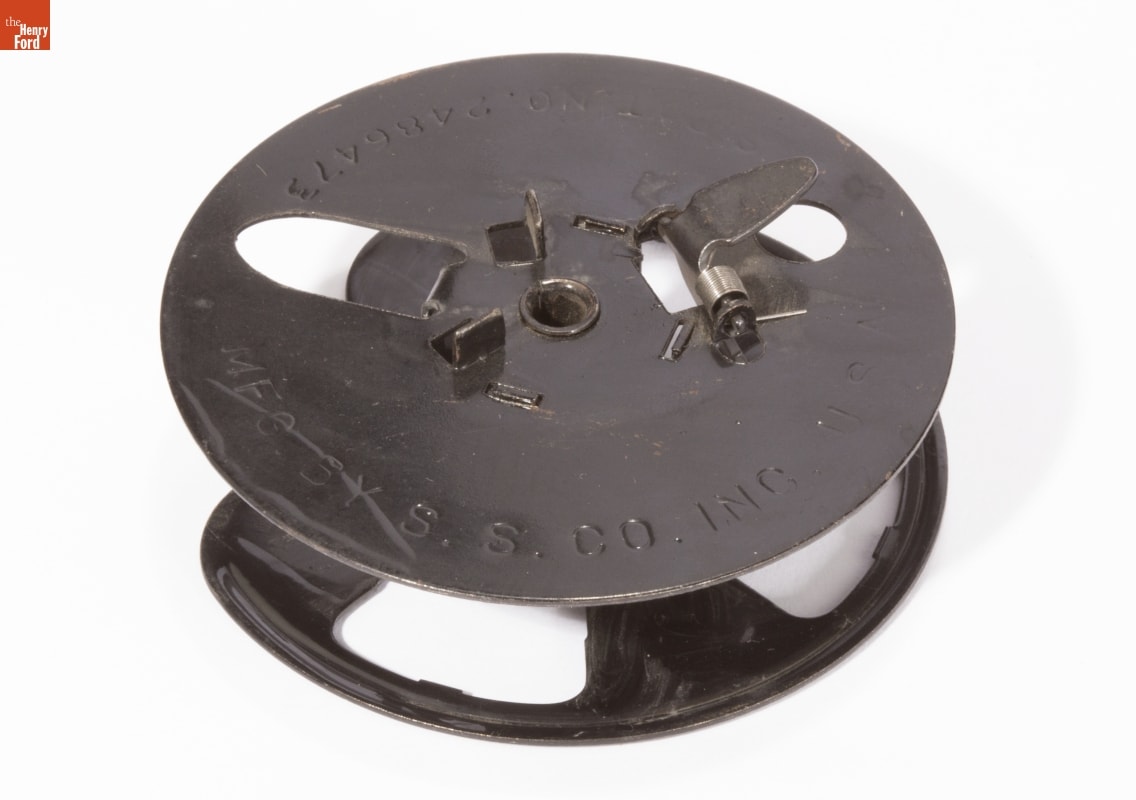
- S.S. Company Typewriter Spool, circa 1950 -
- circa 1950
- Collections - Artifact
S.S. Company Typewriter Spool, circa 1950
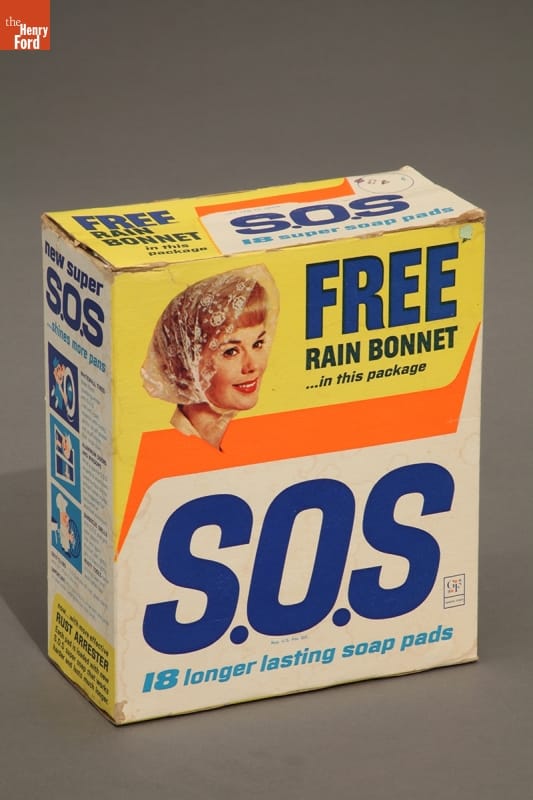
- S.O.S. Soap Pads, 1962-1968 -
- 1962-1968
- Collections - Artifact
S.O.S. Soap Pads, 1962-1968
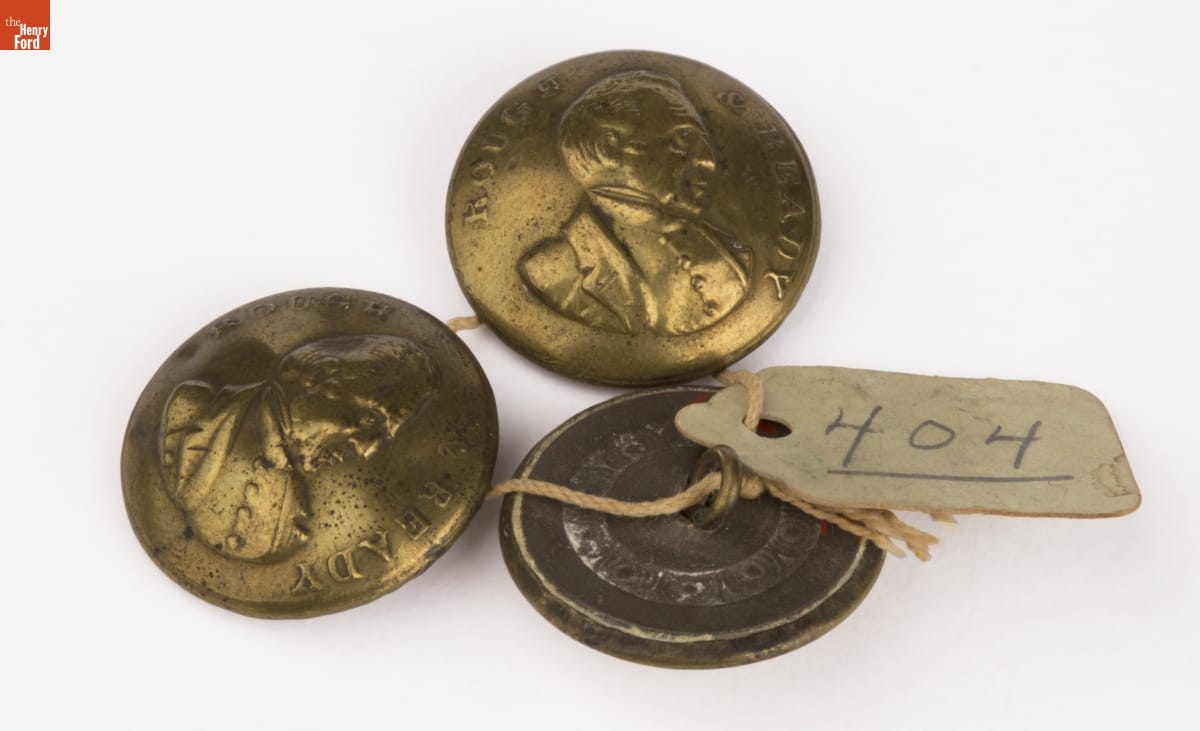
- Zachary Taylor Campaign Buttons, 1848 - Zachary Taylor served in the military most of his life and earned the nickname "Old Rough and Ready" from his men for his willingness to share in the hardships of field duty. The moniker became widespread after his victories during the Mexican-America War. In 1848, when Taylor ran for President, backers donned buttons such as these to show their support.
- 1848
- Collections - Artifact
Zachary Taylor Campaign Buttons, 1848
Zachary Taylor served in the military most of his life and earned the nickname "Old Rough and Ready" from his men for his willingness to share in the hardships of field duty. The moniker became widespread after his victories during the Mexican-America War. In 1848, when Taylor ran for President, backers donned buttons such as these to show their support.
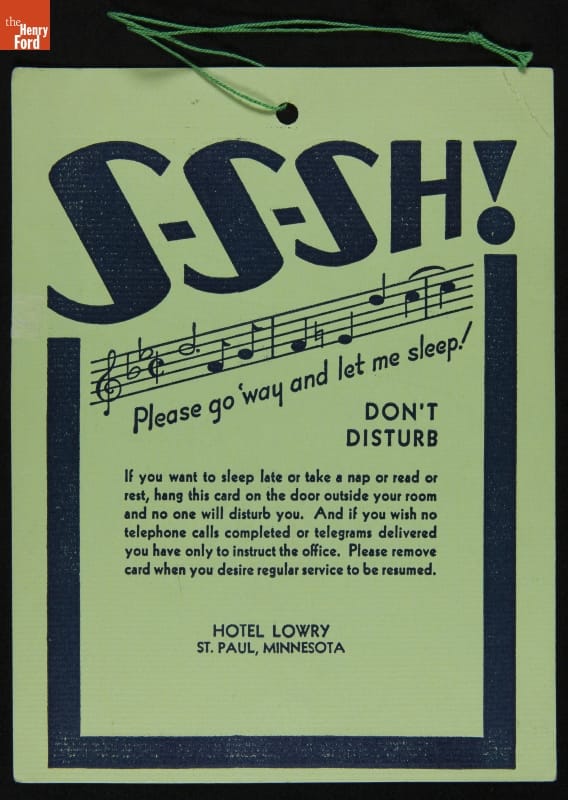
- Sign, "S-S-S-H! Please Go 'Way and Let Me Sleep!" 1938-1950 - Like today, proprietors of mid-20th century hotels, motels and inns provided "Do Not Disturb" signs for weary travelers who wanted a restful stay. Guests placed the sign outside on their door to alert staff to please be quiet and not enter the room. This sign even included instructions that guests could use to stop unwanted telegrams or telephone calls.
- 1938-1950
- Collections - Artifact
Sign, "S-S-S-H! Please Go 'Way and Let Me Sleep!" 1938-1950
Like today, proprietors of mid-20th century hotels, motels and inns provided "Do Not Disturb" signs for weary travelers who wanted a restful stay. Guests placed the sign outside on their door to alert staff to please be quiet and not enter the room. This sign even included instructions that guests could use to stop unwanted telegrams or telephone calls.
- Hallmark "U.S.S. Enterprise Magic" Poster, 1993 -
- 1993
- Collections - Artifact
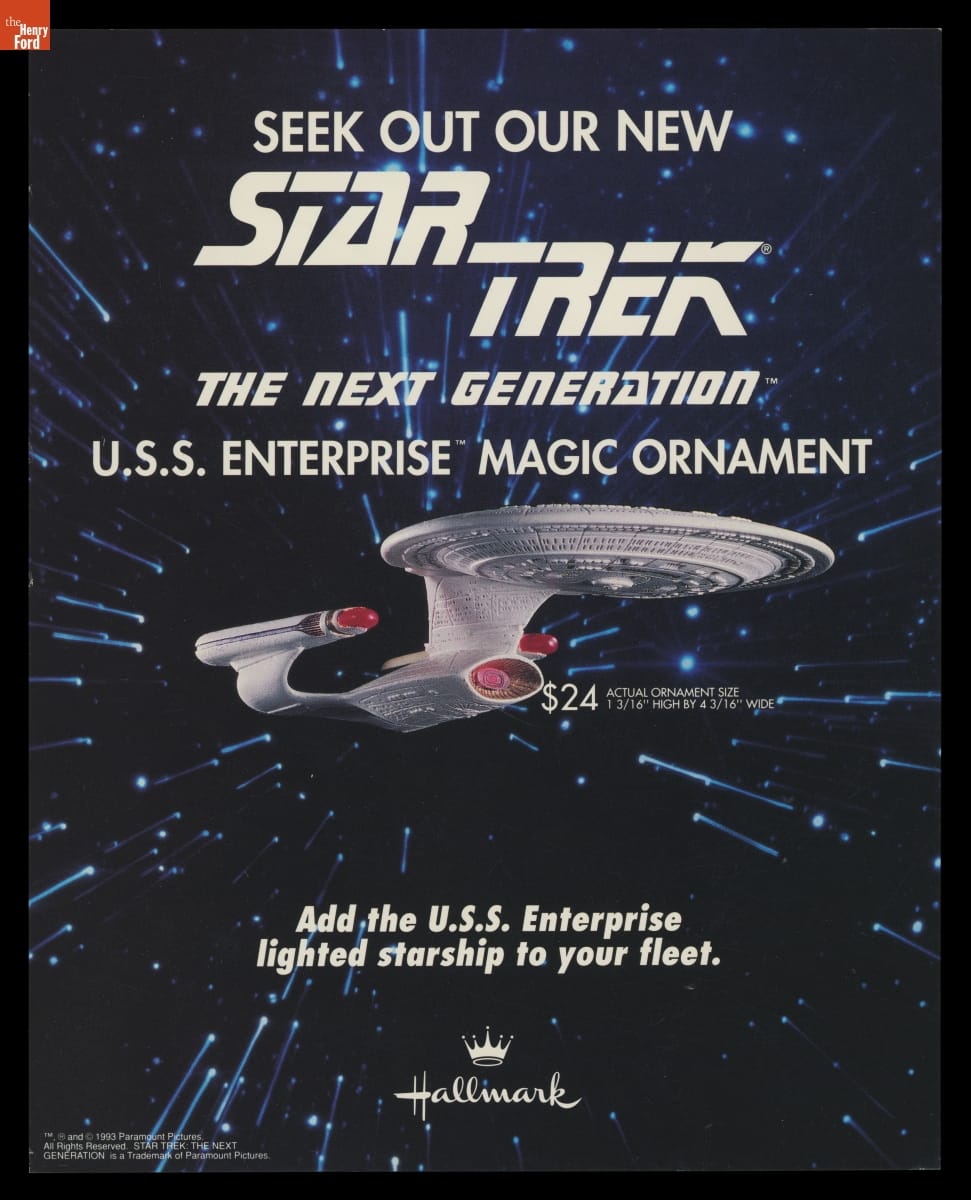
Hallmark "U.S.S. Enterprise Magic" Poster, 1993
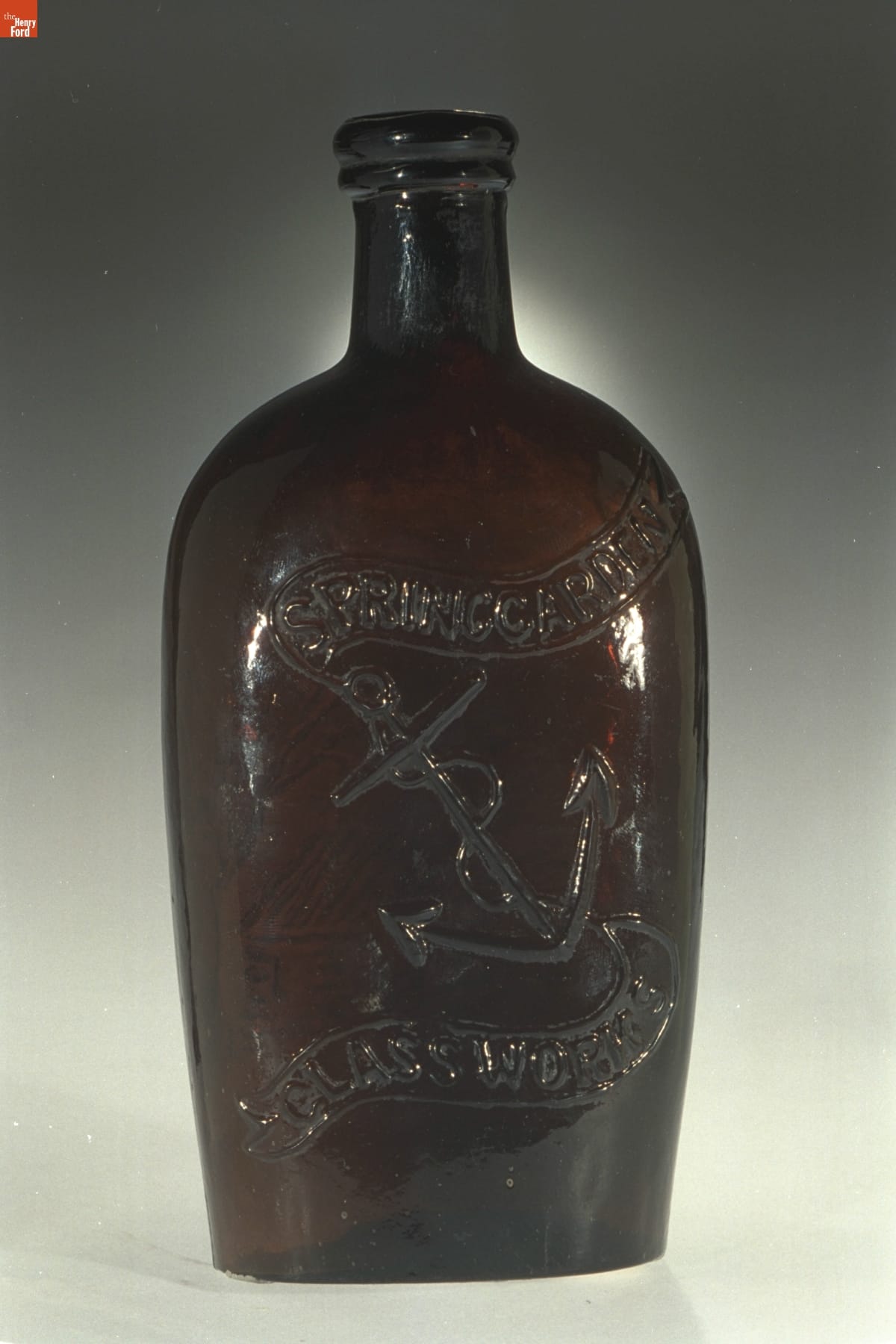
- Flask, 1850-1855 - Glass factories in America began producing inexpensive, mold-formed flasks in the early 1800s. These figured flasks often were decorated with symbols of national pride or political or cultural affiliation. The log cabin on this flask represented the simple and moderate life of many mid-19th-century Americans. This humble dwelling became a recognizable symbol of the common man--a prime purchaser of these flasks.
- 1850-1855
- Collections - Artifact
Flask, 1850-1855
Glass factories in America began producing inexpensive, mold-formed flasks in the early 1800s. These figured flasks often were decorated with symbols of national pride or political or cultural affiliation. The log cabin on this flask represented the simple and moderate life of many mid-19th-century Americans. This humble dwelling became a recognizable symbol of the common man--a prime purchaser of these flasks.
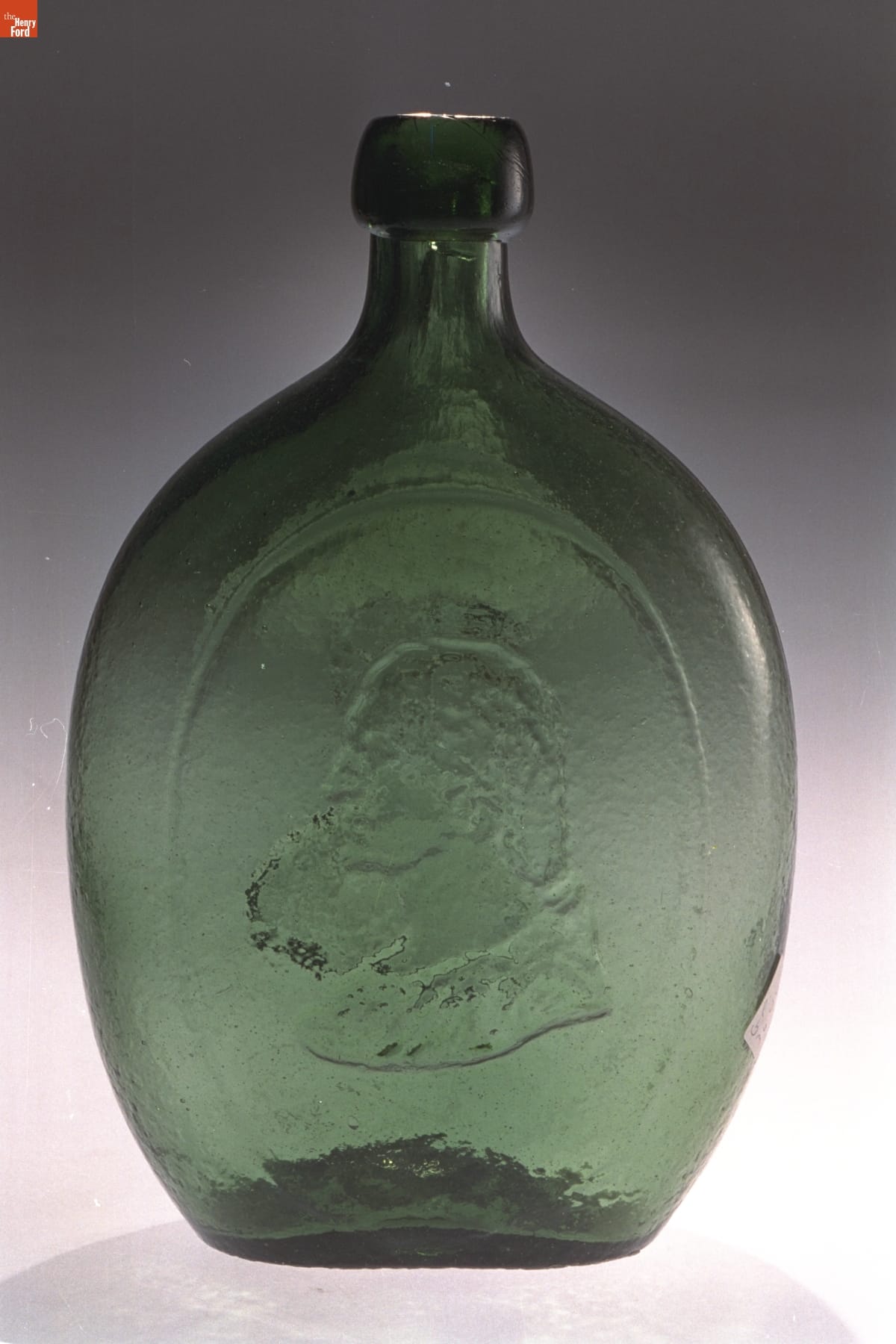
- Flask, 1846-1850 - Whether depicted as commander-in-chief, the first president of the United States, or a symbol of the republic, George Washington is a common likeness on early American flasks. Washington appears on 72 recorded flask designs--more than any other person. This example depicts Washington as a classical statesman with major general Zachary Taylor, who became the 12th United States president in 1849.
- 1846-1850
- Collections - Artifact
Flask, 1846-1850
Whether depicted as commander-in-chief, the first president of the United States, or a symbol of the republic, George Washington is a common likeness on early American flasks. Washington appears on 72 recorded flask designs--more than any other person. This example depicts Washington as a classical statesman with major general Zachary Taylor, who became the 12th United States president in 1849.
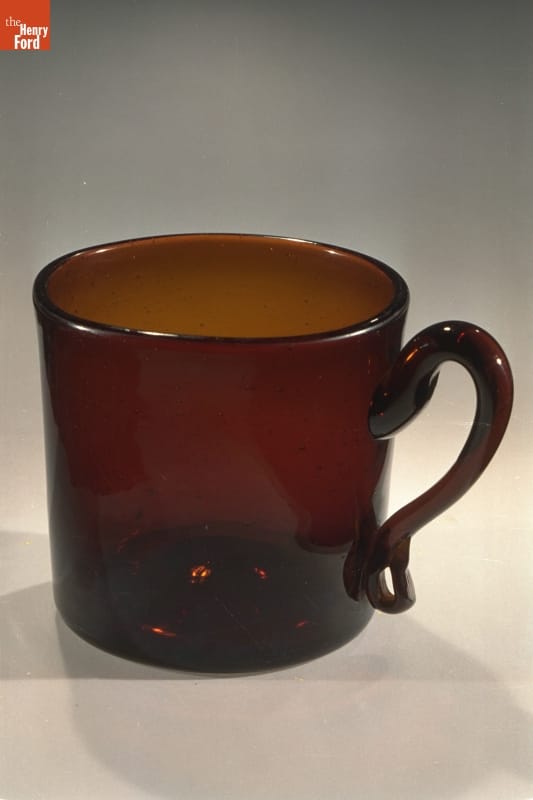
- Mug, 1800-1850 - American glass factories made a variety of glass products for the early-nineteenth-century consumer. Glassblowers turned out bottles, flasks, tableware and other household items. Earlier products were affordable only to the well-to-do. But by the second quarter of the 19th century, a growing number of manufacturers made reasonably priced blown-glass items available to the expanding middle class.
- 1800-1850
- Collections - Artifact
Mug, 1800-1850
American glass factories made a variety of glass products for the early-nineteenth-century consumer. Glassblowers turned out bottles, flasks, tableware and other household items. Earlier products were affordable only to the well-to-do. But by the second quarter of the 19th century, a growing number of manufacturers made reasonably priced blown-glass items available to the expanding middle class.