
Search
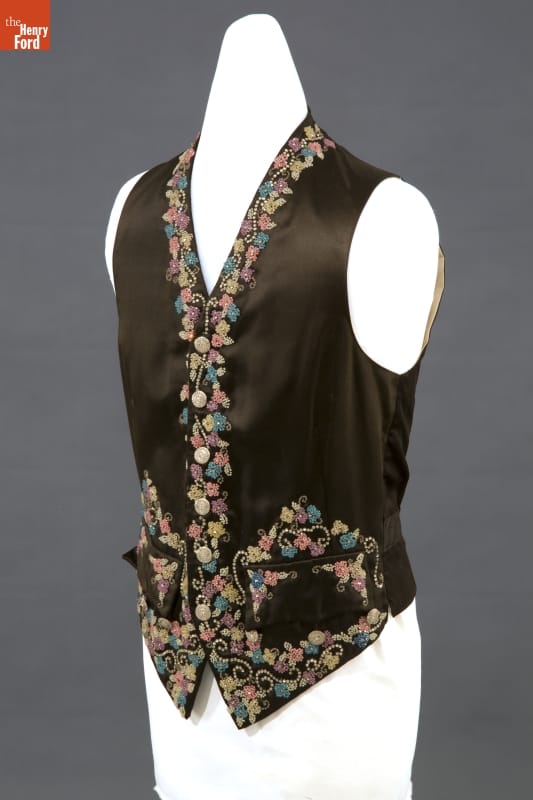
- 18th Century Style Vest, Made for Henry Ford - Henry Ford likely purchased this "18th century" style vest to wear at old-fashioned dancing parties. Ford likely only donned the costume for special occasions--not his weekly dances. The garment's maker, the Eaves Costume Company of New York, designed and rented costumes for a variety of plays and musical revues. They also provided costumes for masquerades and balls attended by wealthy socialites.
- 1925-1935
- Collections - Artifact
18th Century Style Vest, Made for Henry Ford
Henry Ford likely purchased this "18th century" style vest to wear at old-fashioned dancing parties. Ford likely only donned the costume for special occasions--not his weekly dances. The garment's maker, the Eaves Costume Company of New York, designed and rented costumes for a variety of plays and musical revues. They also provided costumes for masquerades and balls attended by wealthy socialites.
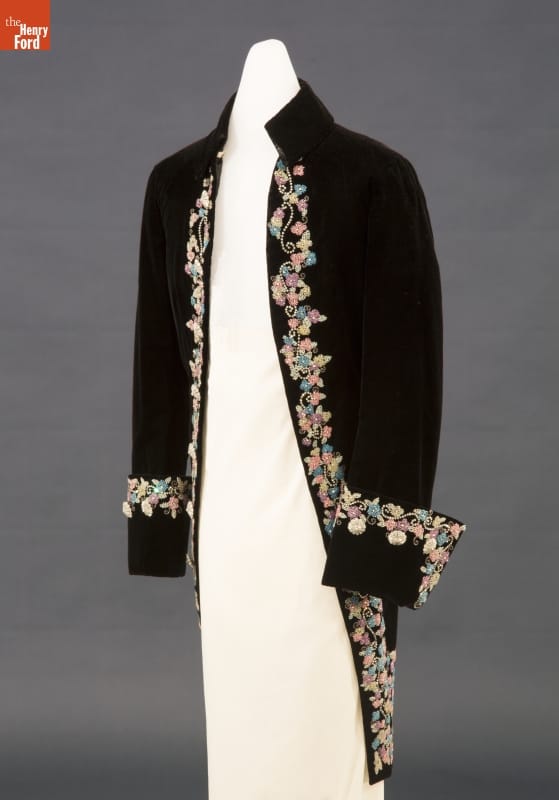
- 18th Century Style Coat, Made for Henry Ford - Henry Ford likely purchased this "18th century" style coat to wear at old-fashioned dancing parties. Ford likely only donned the costume for special occasions--not his weekly dances. The garment's maker, the Eaves Costume Company of New York, designed and rented costumes for a variety of plays and musical revues. They also provided costumes for masquerades and balls attended by wealthy socialites.
- 1925-1935
- Collections - Artifact
18th Century Style Coat, Made for Henry Ford
Henry Ford likely purchased this "18th century" style coat to wear at old-fashioned dancing parties. Ford likely only donned the costume for special occasions--not his weekly dances. The garment's maker, the Eaves Costume Company of New York, designed and rented costumes for a variety of plays and musical revues. They also provided costumes for masquerades and balls attended by wealthy socialites.
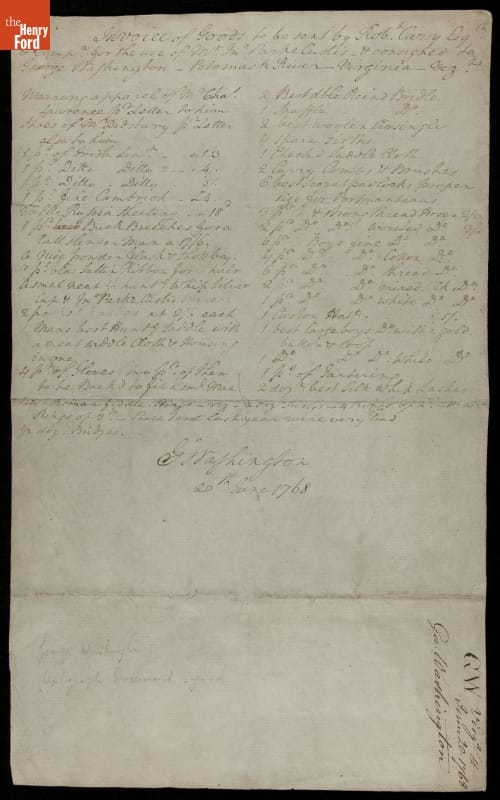
- Invoice, from George Washington to Robert Cary, 1768 -
- June 20, 1768
- Collections - Artifact
Invoice, from George Washington to Robert Cary, 1768
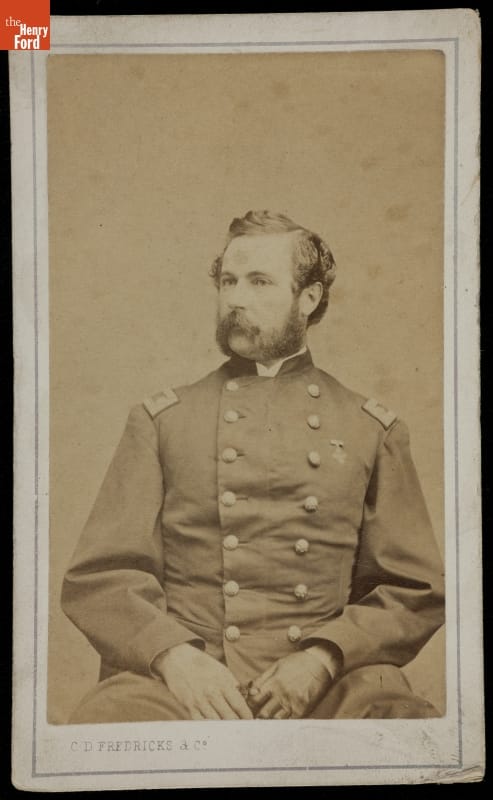
- Union Army Officer, 18th Corps, 1861-1865 - This carte-de-visite made by C.D. Fredricks & Co., New York, shows an unknown Union Army officer in his dress uniform. Carte-de-visite was a small photographic print on cardboard stock made by professional photographers. Popular in the United States from the Civil War in the 1860s through the 1880s, people exchanged and collected CdVs to help them remember family and celebrities.
- 1861-1865
- Collections - Artifact
Union Army Officer, 18th Corps, 1861-1865
This carte-de-visite made by C.D. Fredricks & Co., New York, shows an unknown Union Army officer in his dress uniform. Carte-de-visite was a small photographic print on cardboard stock made by professional photographers. Popular in the United States from the Civil War in the 1860s through the 1880s, people exchanged and collected CdVs to help them remember family and celebrities.
- 18th Century Worcester Porcelain Case in Decorative Arts Gallery in Henry Ford Museum, circa 1960 -
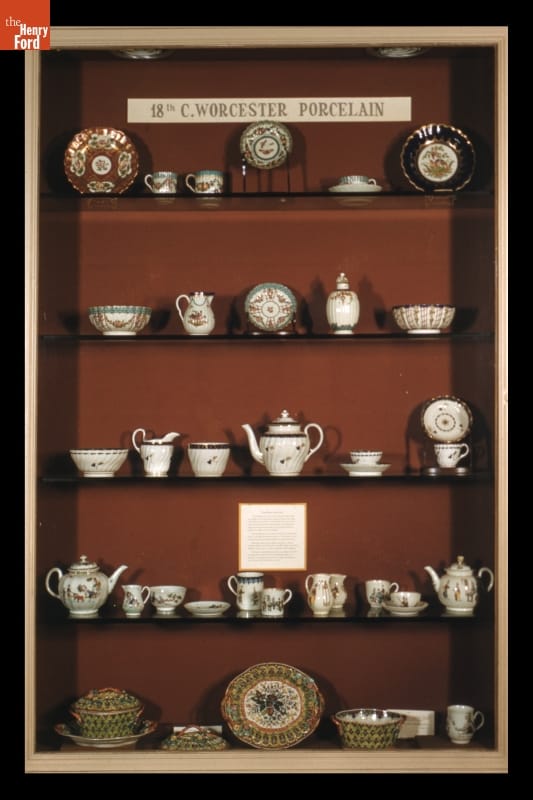
- circa 1960
- Collections - Artifact
18th Century Worcester Porcelain Case in Decorative Arts Gallery in Henry Ford Museum, circa 1960
- Woman's Relief Corps (W.R.C.) National Convention Delegate Ribbon, 1900 - In 1883, the Woman's Relief Corp (WRC) was recognized as an auxiliary organization to the Grand Army of the Republic (G.A.R.), a Civil War Union veterans' association. The WRC not only supported the G.A.R.'s mission to aid Union veterans, but also assisted former Army nurses and promoted patriotism through education. WRC conventions were usually held at the same time as the ones for the G.A.R.
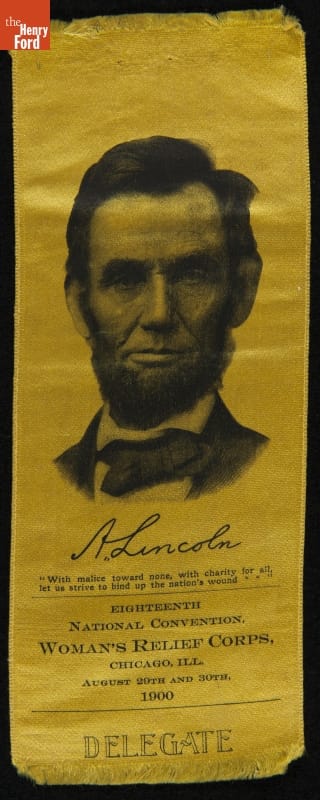
- 1900
- Collections - Artifact
Woman's Relief Corps (W.R.C.) National Convention Delegate Ribbon, 1900
In 1883, the Woman's Relief Corp (WRC) was recognized as an auxiliary organization to the Grand Army of the Republic (G.A.R.), a Civil War Union veterans' association. The WRC not only supported the G.A.R.'s mission to aid Union veterans, but also assisted former Army nurses and promoted patriotism through education. WRC conventions were usually held at the same time as the ones for the G.A.R.
- 18th Santa Barbara Road Races, September 1962 -
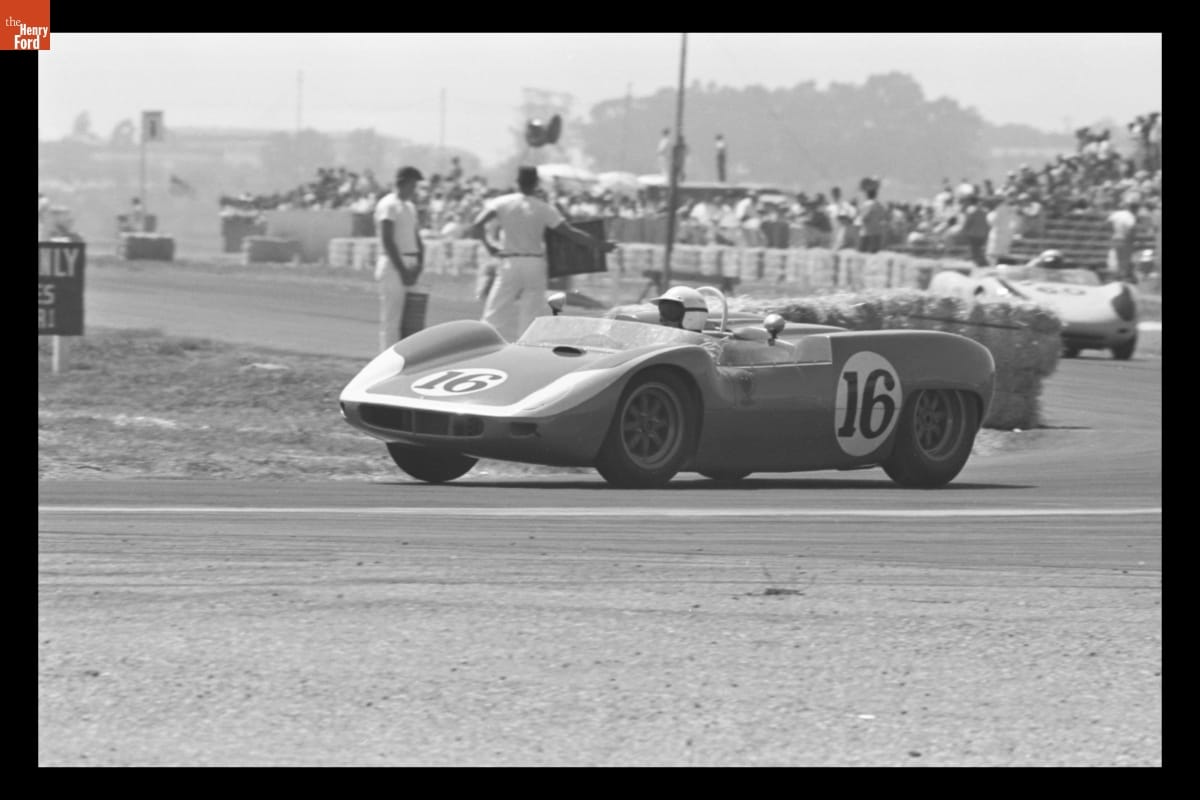
- 01 September 1962-02 September 1962
- Collections - Artifact
18th Santa Barbara Road Races, September 1962
- 18th Santa Barbara Road Races, September 1962 -
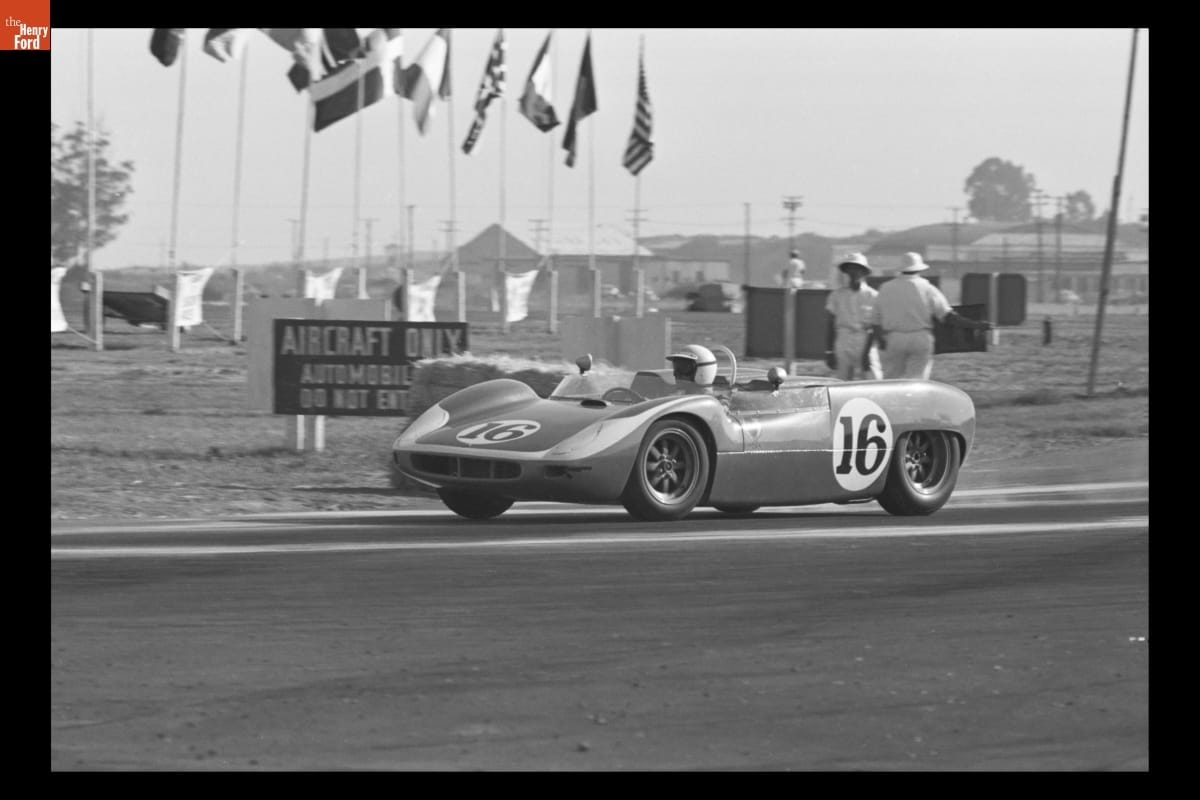
- 01 September 1962-02 September 1962
- Collections - Artifact
18th Santa Barbara Road Races, September 1962
- 18th Santa Barbara Road Races, September 1962 -
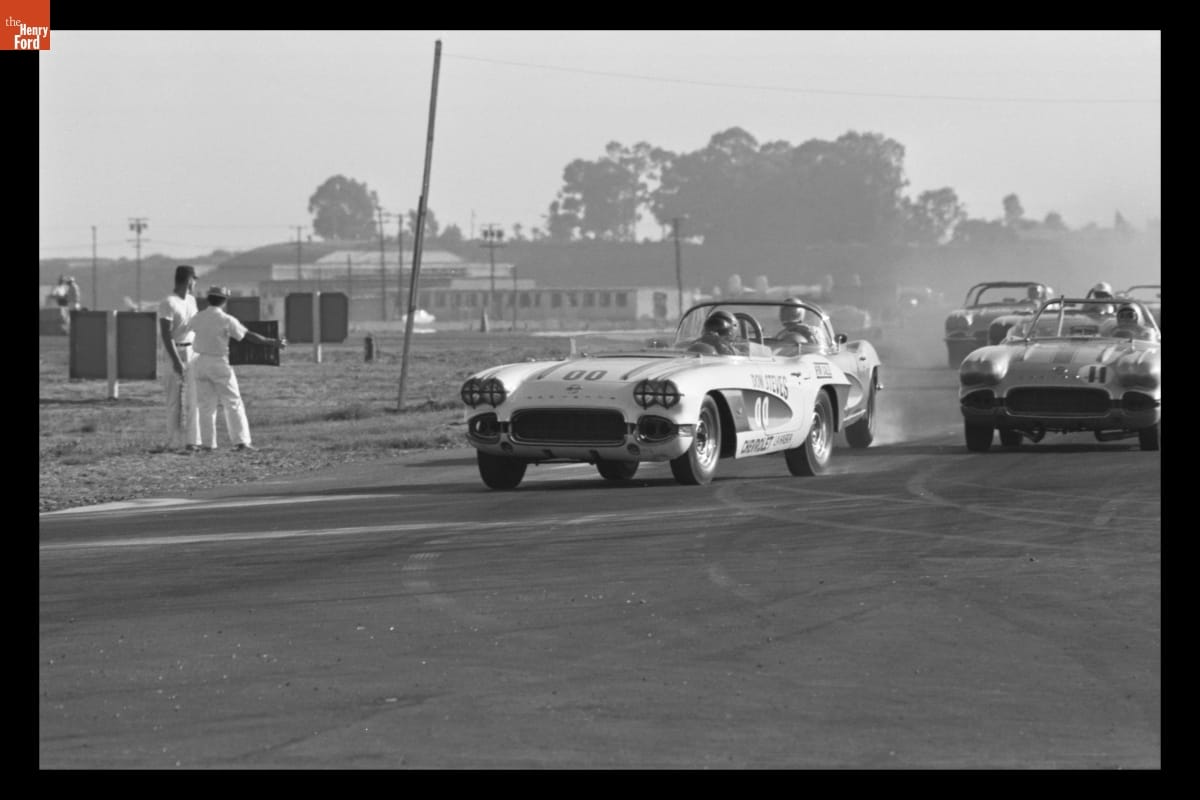
- 01 September 1962-02 September 1962
- Collections - Artifact
18th Santa Barbara Road Races, September 1962
- 18th Santa Barbara Road Races, September 1962 -
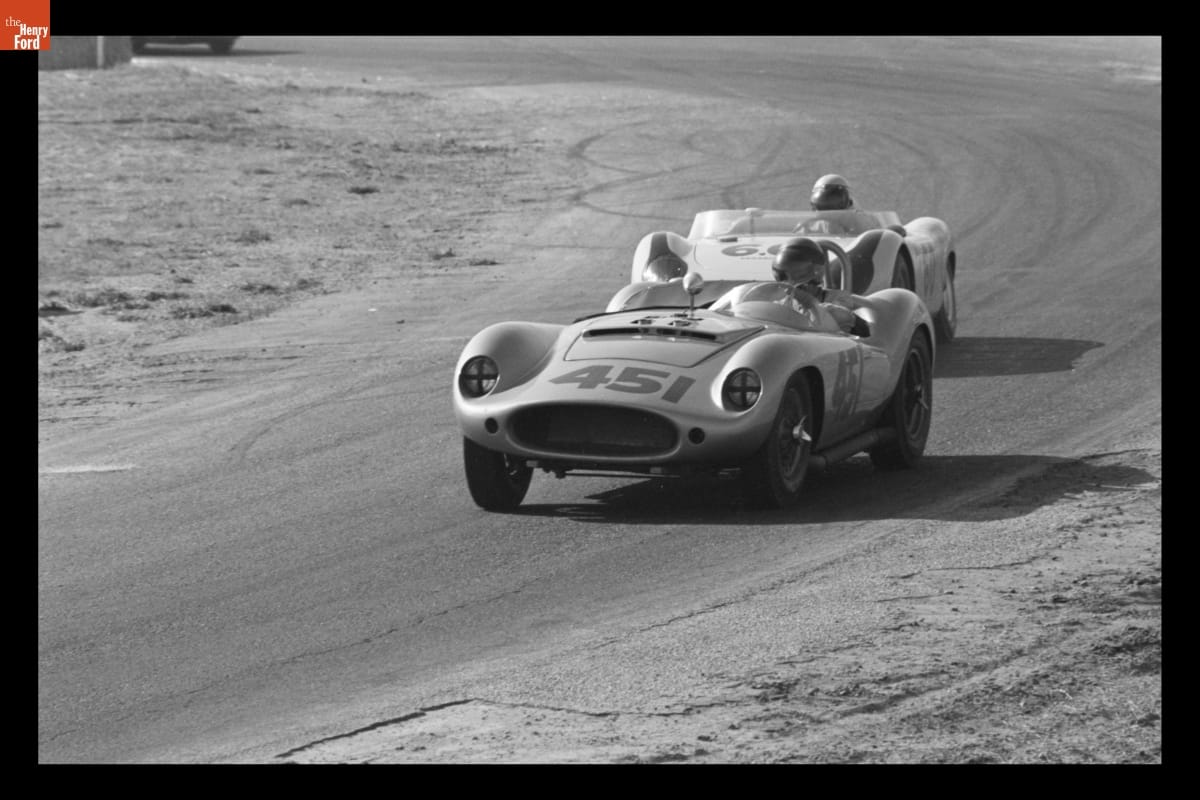
- 01 September 1962-02 September 1962
- Collections - Artifact
18th Santa Barbara Road Races, September 1962