
Search
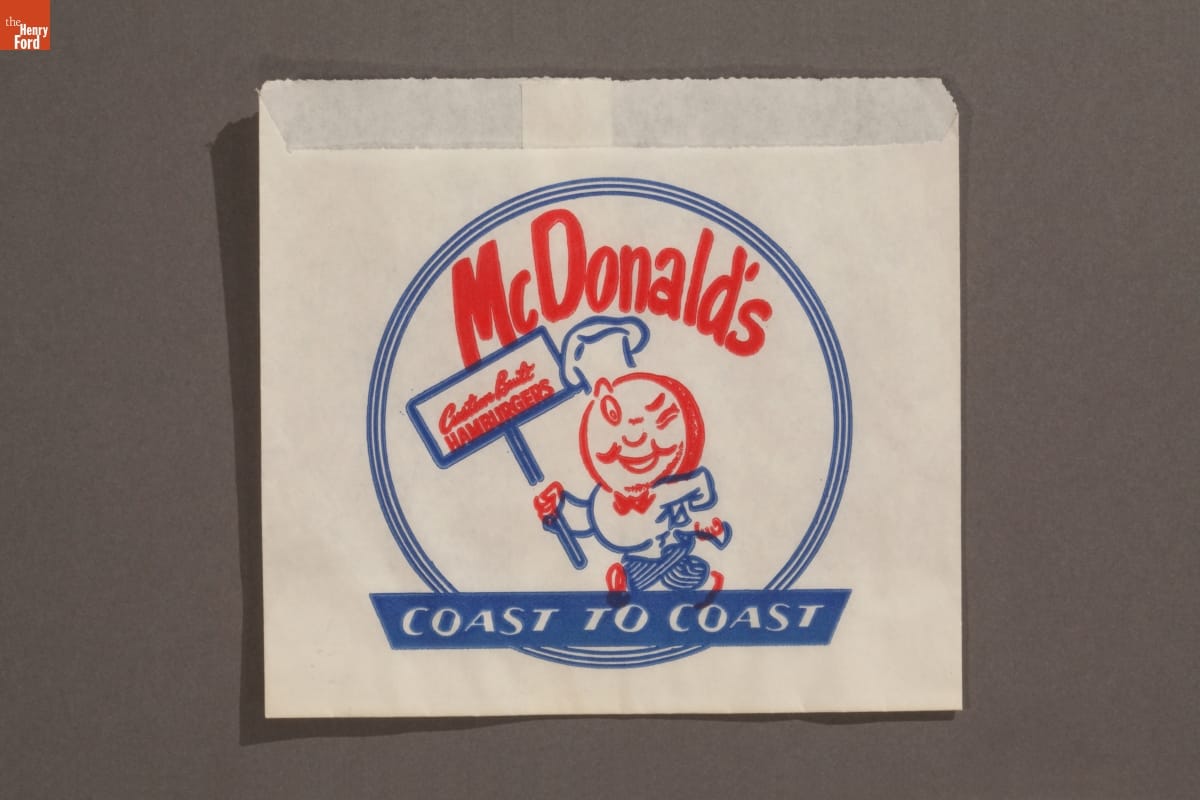
- McDonald's French Fry Packet, circa 1950s - The early success of McDonald's rested on a limited menu, cheap prices, and quick service. "Speedee," McDonald's original mascot, emphasized the quick service. This hamburger-headed chef, seen on this packaging, represented the fast food chain until replaced in the 1960s with the now familiar Ronald McDonald.
- 1955-1959
- Collections - Artifact
McDonald's French Fry Packet, circa 1950s
The early success of McDonald's rested on a limited menu, cheap prices, and quick service. "Speedee," McDonald's original mascot, emphasized the quick service. This hamburger-headed chef, seen on this packaging, represented the fast food chain until replaced in the 1960s with the now familiar Ronald McDonald.
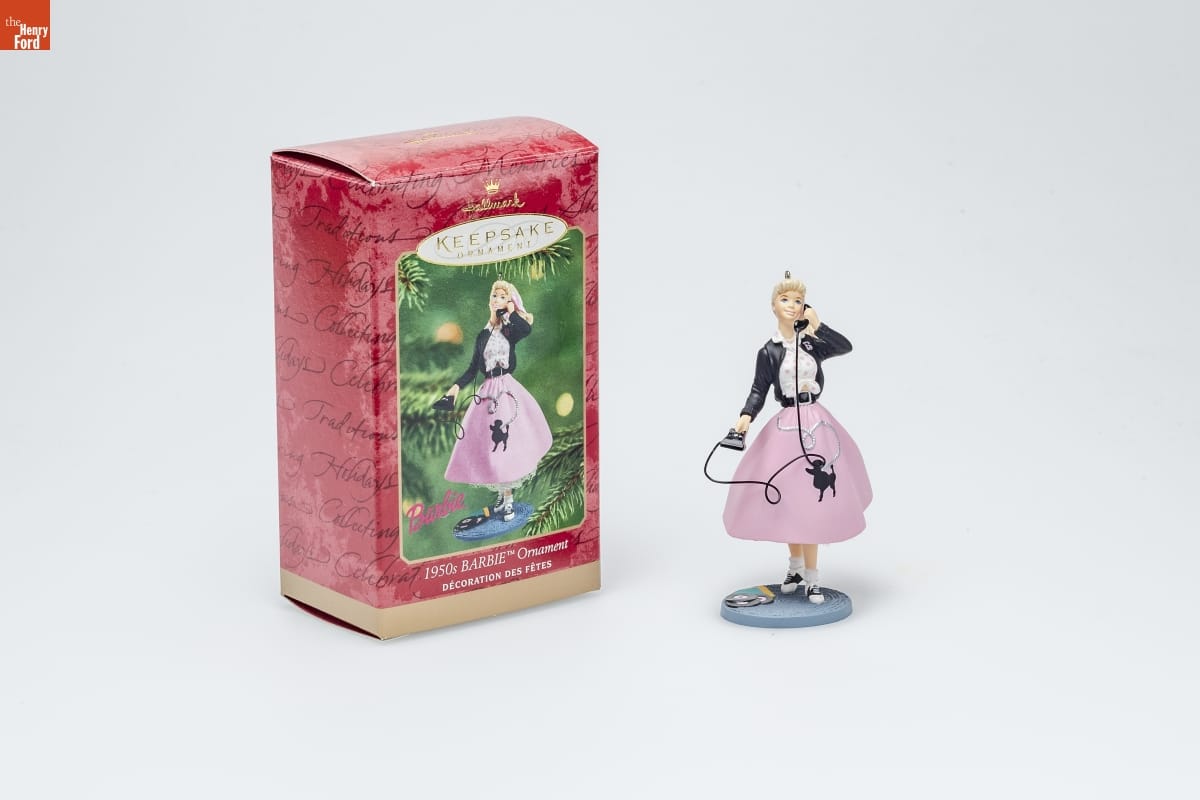
- Hallmark "1950s BARBIE" Christmas Ornament, 2001 - Already known for greeting cards, Hallmark introduced a line of Christmas ornaments in 1973. The company's annual release of an increasing array of ornaments revolutionized Christmas decorating, appealing to customers' interest in marking memories and milestones as well as expressing one's personality and unique tastes.
- 1950-1959
- Collections - Artifact
Hallmark "1950s BARBIE" Christmas Ornament, 2001
Already known for greeting cards, Hallmark introduced a line of Christmas ornaments in 1973. The company's annual release of an increasing array of ornaments revolutionized Christmas decorating, appealing to customers' interest in marking memories and milestones as well as expressing one's personality and unique tastes.
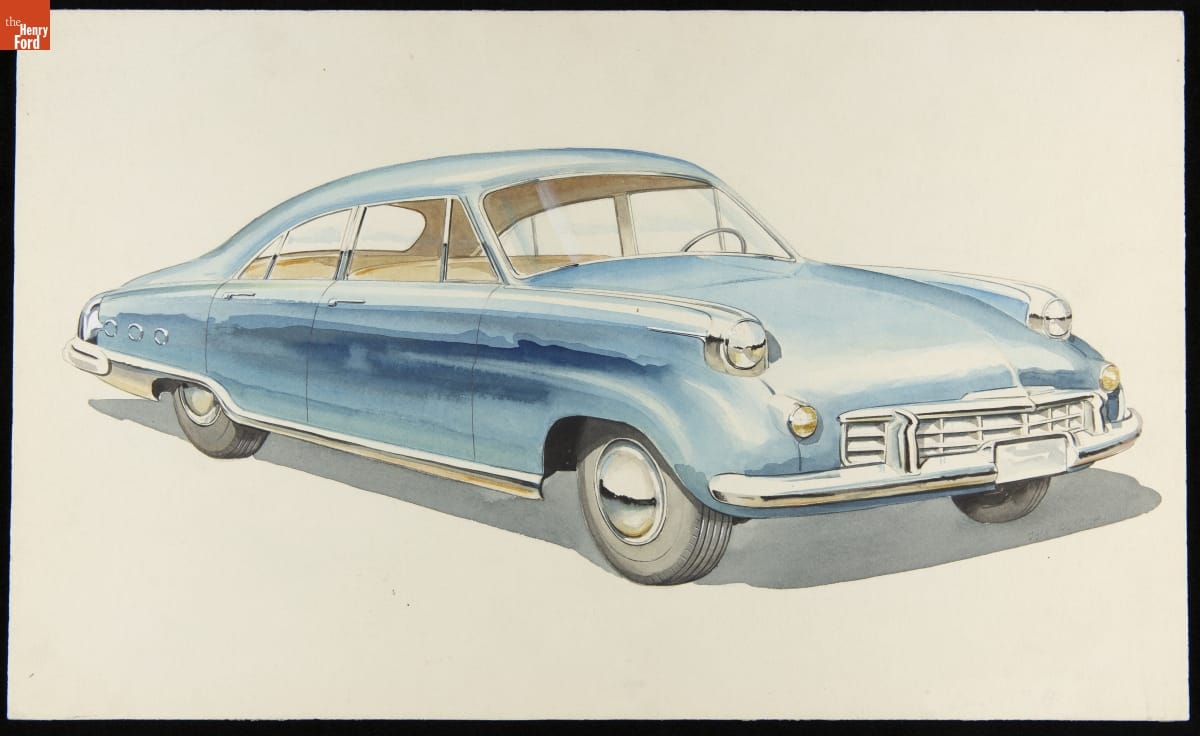
- Rendering, 1950s Lincoln, Three-quarter Side View - John G. "Jake" Aldrich joined General Motors' Art and Colour Section in 1931, where he worked on designs for Oldsmobile. He then spent time at Hudson and Studebaker before joining Ford's Design Department in 1946, where Aldrich focused on Lincoln and Mercury assignments. He retired from Ford in 1960.
- 1950-1959
- Collections - Artifact
Rendering, 1950s Lincoln, Three-quarter Side View
John G. "Jake" Aldrich joined General Motors' Art and Colour Section in 1931, where he worked on designs for Oldsmobile. He then spent time at Hudson and Studebaker before joining Ford's Design Department in 1946, where Aldrich focused on Lincoln and Mercury assignments. He retired from Ford in 1960.
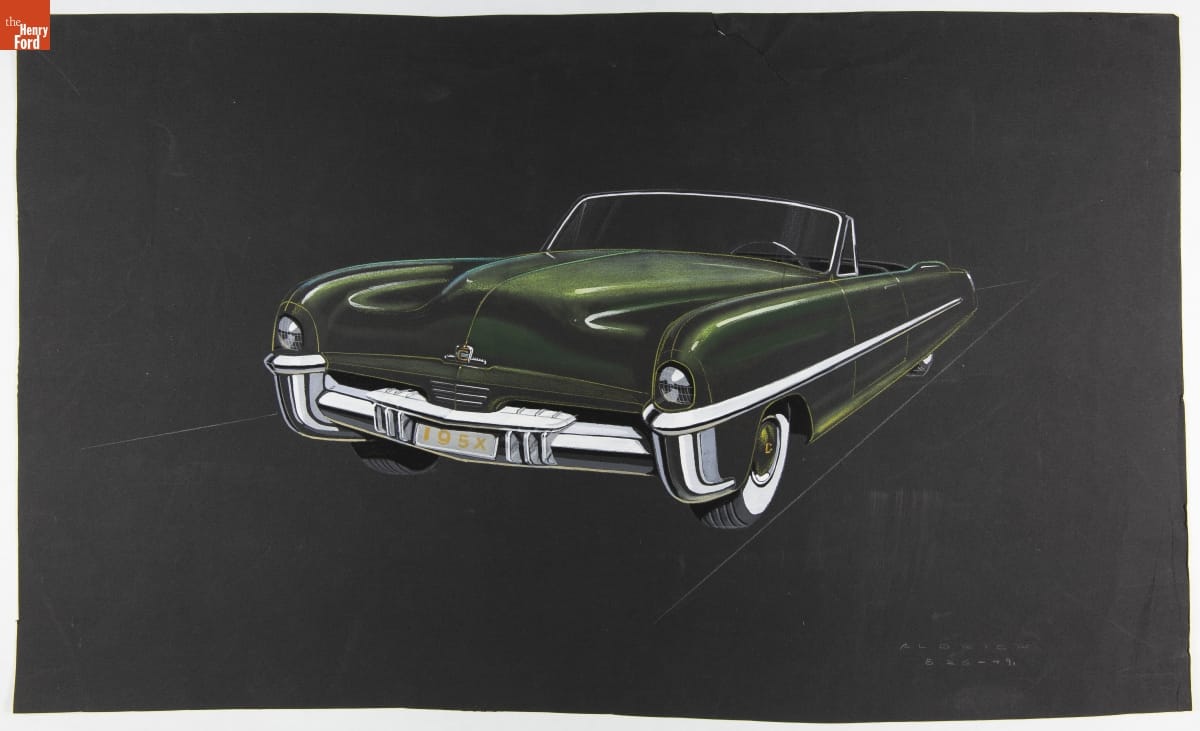
- Rendering, 1950s Lincoln Convertible, Front Quarter View - John G. "Jake" Aldrich joined General Motors' Art and Colour Section in 1931, where he worked on designs for Oldsmobile. He then spent time at Hudson and Studebaker before joining Ford's Design Department in 1946, where Aldrich focused on Lincoln and Mercury assignments. He retired from Ford in 1960.
- August 26, 1949
- Collections - Artifact
Rendering, 1950s Lincoln Convertible, Front Quarter View
John G. "Jake" Aldrich joined General Motors' Art and Colour Section in 1931, where he worked on designs for Oldsmobile. He then spent time at Hudson and Studebaker before joining Ford's Design Department in 1946, where Aldrich focused on Lincoln and Mercury assignments. He retired from Ford in 1960.
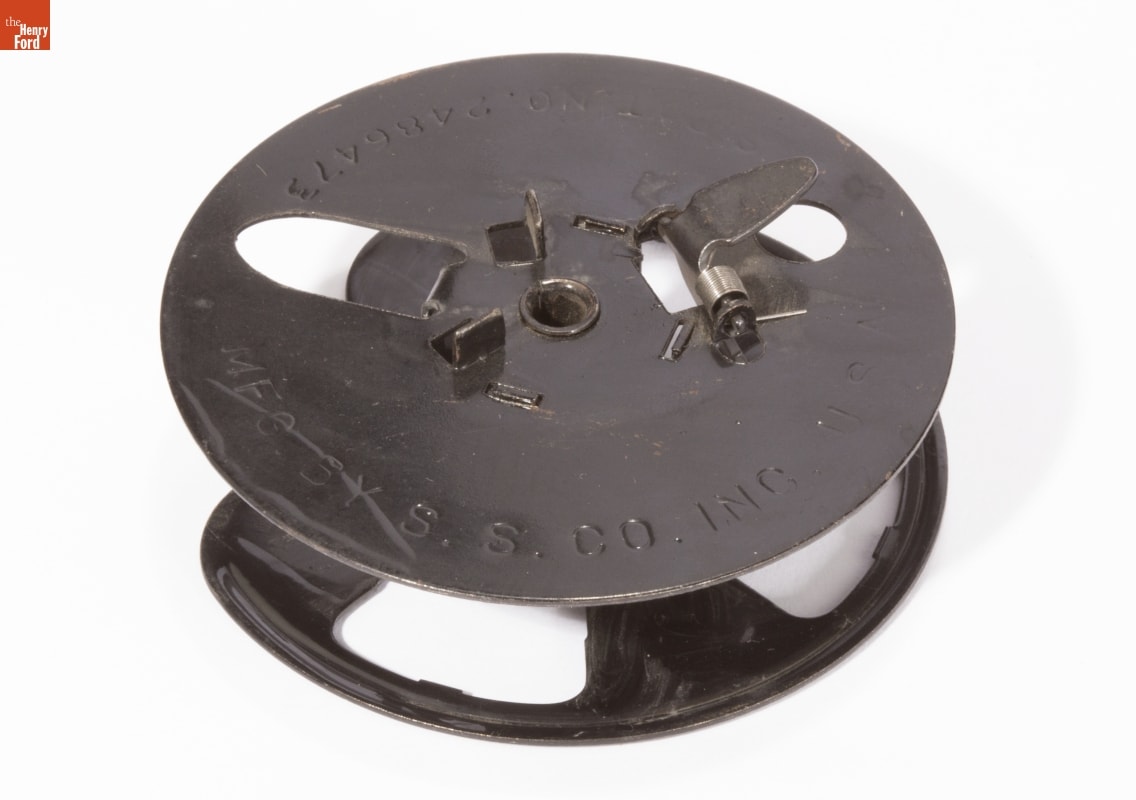
- S.S. Company Typewriter Spool, circa 1950 -
- circa 1950
- Collections - Artifact
S.S. Company Typewriter Spool, circa 1950
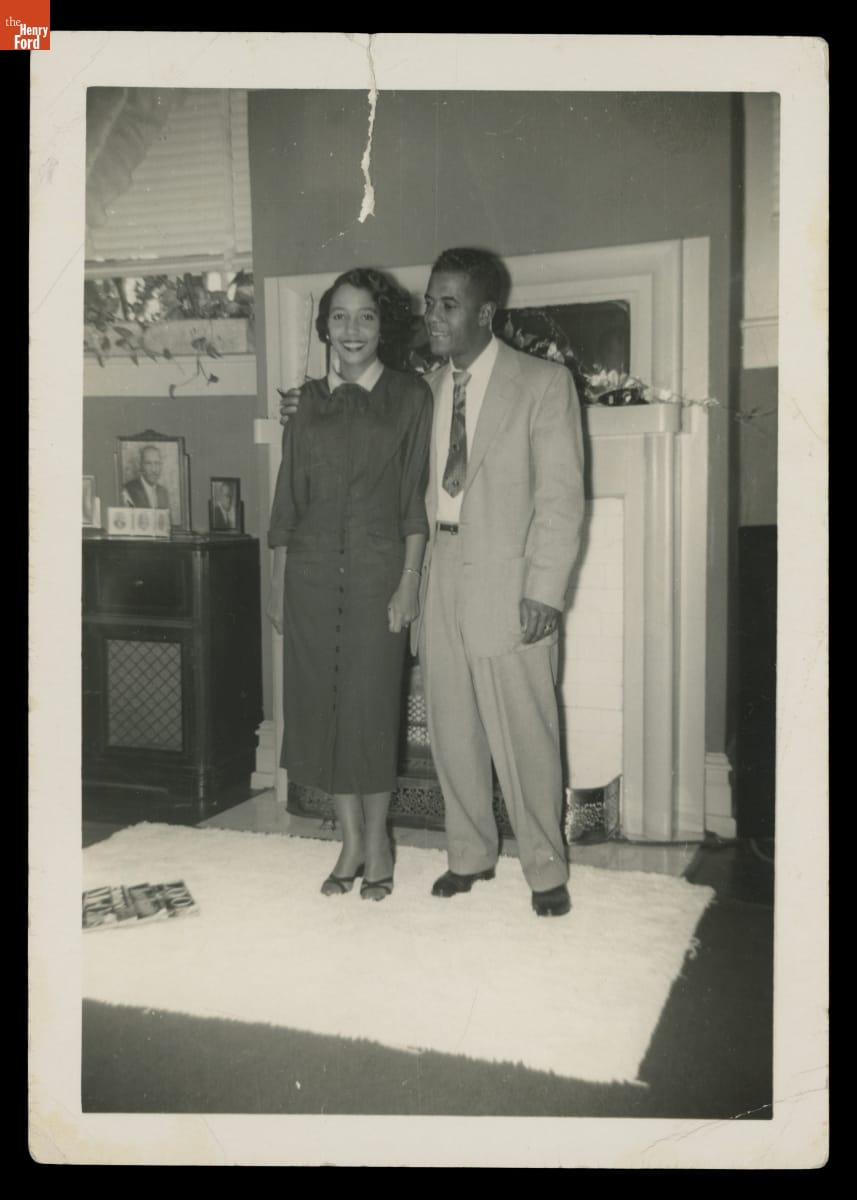
- Richie Jean Jackson and Sullivan Jackson in the Jackson Home, late 1950s -
- Collections - Artifact
Richie Jean Jackson and Sullivan Jackson in the Jackson Home, late 1950s
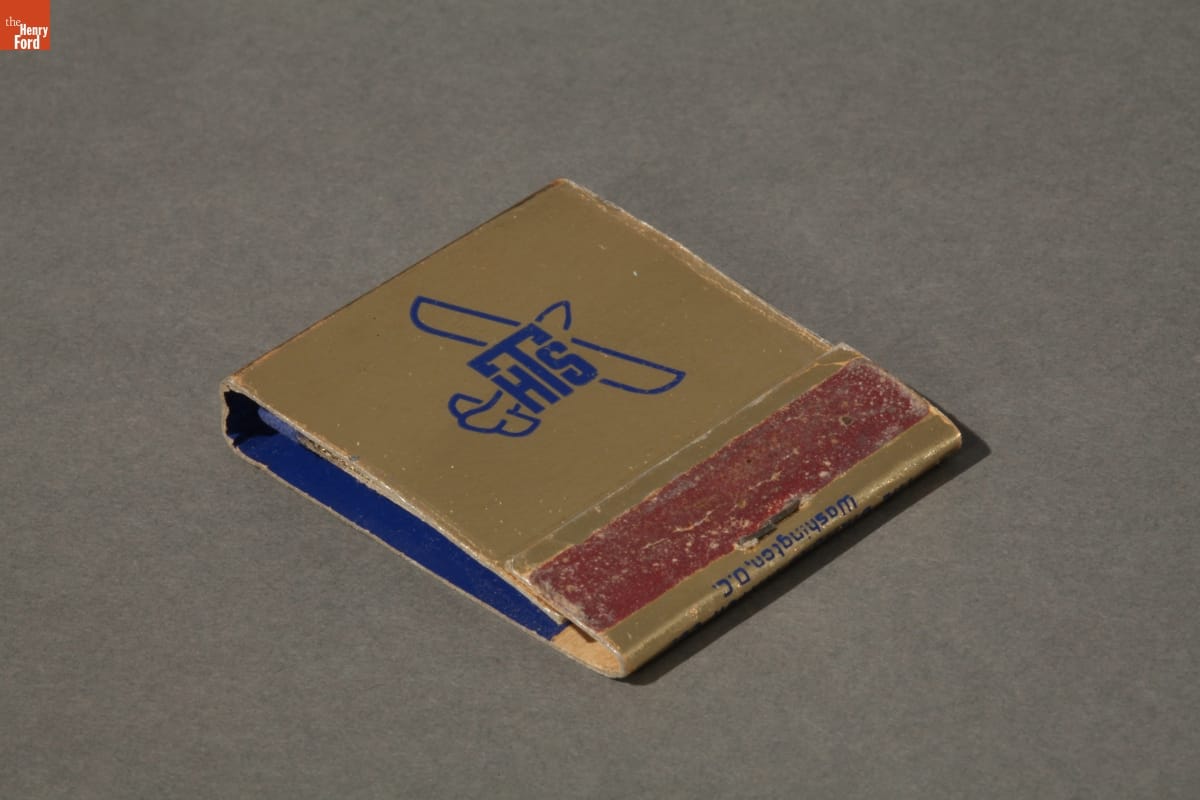
- Harry S. Truman Matchbook, circa 1950 - This matchbook belonged to United States Secret Service agent Morgan L. Gies. Gies served from 1941 until 1967. He oversaw the fleet of White House vehicles for five presidents -- Franklin D. Roosevelt, Harry S. Truman, Dwight D. Eisenhower, John F. Kennedy, and Lyndon B. Johnson.
- circa 1950
- Collections - Artifact
Harry S. Truman Matchbook, circa 1950
This matchbook belonged to United States Secret Service agent Morgan L. Gies. Gies served from 1941 until 1967. He oversaw the fleet of White House vehicles for five presidents -- Franklin D. Roosevelt, Harry S. Truman, Dwight D. Eisenhower, John F. Kennedy, and Lyndon B. Johnson.
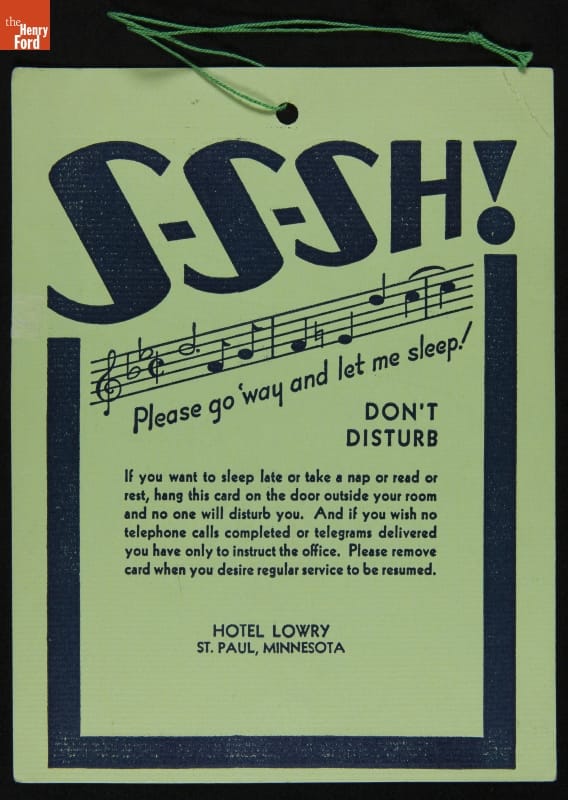
- Sign, "S-S-S-H! Please Go 'Way and Let Me Sleep!" 1938-1950 - Like today, proprietors of mid-20th century hotels, motels and inns provided "Do Not Disturb" signs for weary travelers who wanted a restful stay. Guests placed the sign outside on their door to alert staff to please be quiet and not enter the room. This sign even included instructions that guests could use to stop unwanted telegrams or telephone calls.
- 1938-1950
- Collections - Artifact
Sign, "S-S-S-H! Please Go 'Way and Let Me Sleep!" 1938-1950
Like today, proprietors of mid-20th century hotels, motels and inns provided "Do Not Disturb" signs for weary travelers who wanted a restful stay. Guests placed the sign outside on their door to alert staff to please be quiet and not enter the room. This sign even included instructions that guests could use to stop unwanted telegrams or telephone calls.
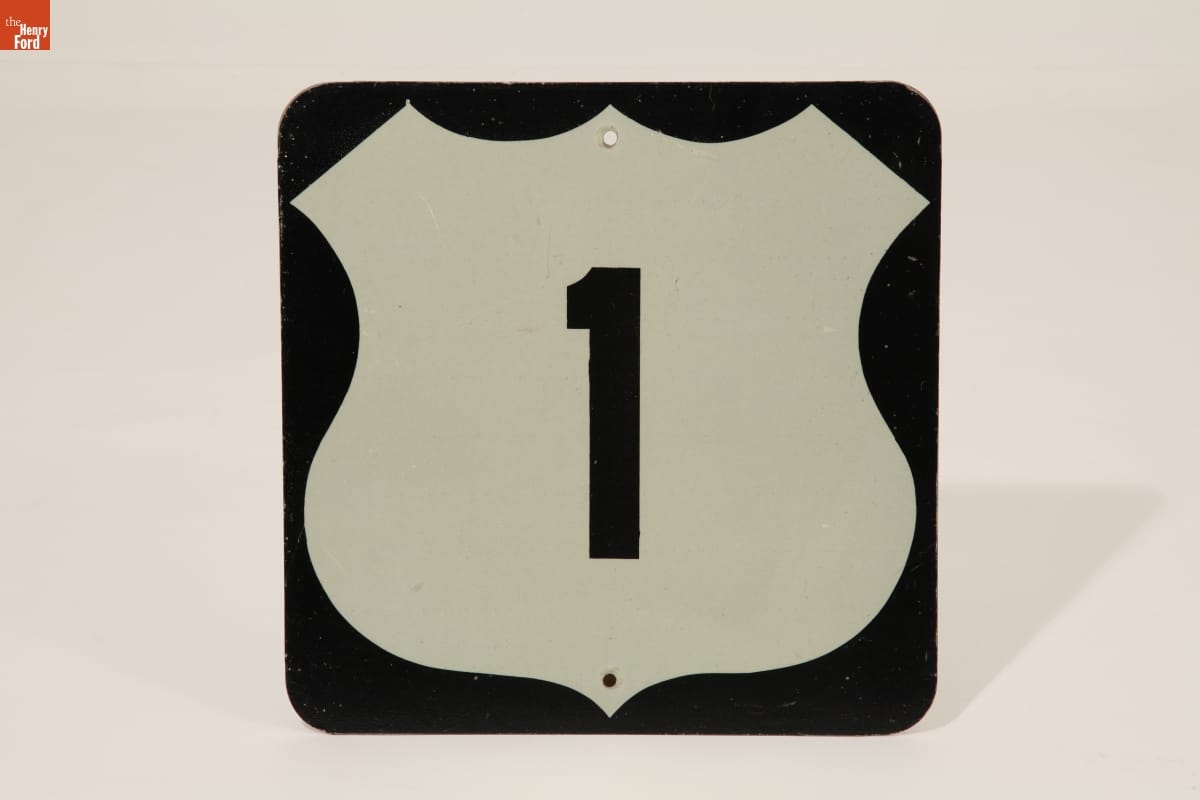
- U.S. Route 1 Sign, circa 1950 - U.S. Route 1, spanning the East Coast from Maine to Florida, is the longest north-south road in the United States. It began as an auto trail, the Quebec-Miami International Highway, established 1911. It was officially adopted as part of the U.S. national road system in 1926.
- circa 1950
- Collections - Artifact
U.S. Route 1 Sign, circa 1950
U.S. Route 1, spanning the East Coast from Maine to Florida, is the longest north-south road in the United States. It began as an auto trail, the Quebec-Miami International Highway, established 1911. It was officially adopted as part of the U.S. national road system in 1926.
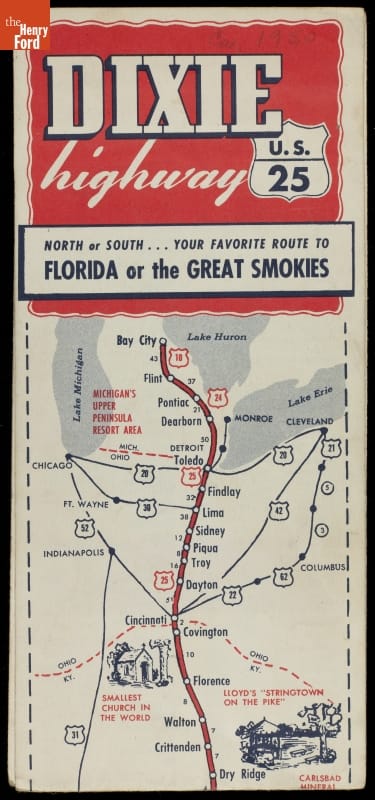
- "Dixie Highway, U.S. 25," circa 1950 - This brochure from about 1950 uses the more familiar trail name for Route 25 from Michigan to Florida -- the Dixie Highway.
- circa 1950
- Collections - Artifact
"Dixie Highway, U.S. 25," circa 1950
This brochure from about 1950 uses the more familiar trail name for Route 25 from Michigan to Florida -- the Dixie Highway.