
Search
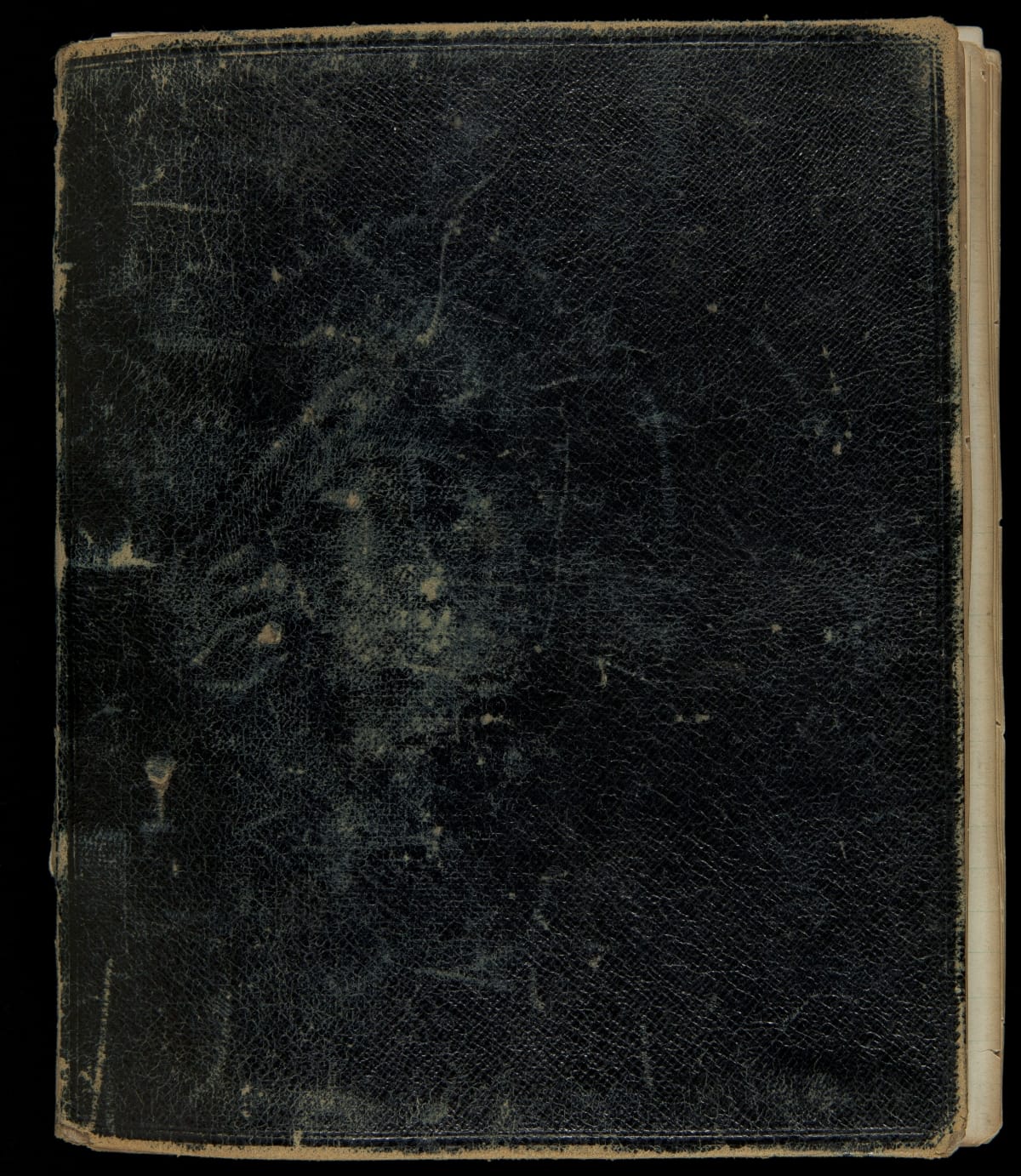
- Ada Dewey Autograph Album, 1874-1875 - In 1874, Ada Dewey of Kalamazoo, Michigan, wrote to famous individuals of the day asking for their autographs. She contacted writers, artists, politicians, military officers, and advocates for social movements such as abolition, temperance, and women's and civil rights, among others. Dewey compiled their replies, some of which include carte de visite photographs, in the pages of this album.
- 1874-1875
- Collections - Artifact
Ada Dewey Autograph Album, 1874-1875
In 1874, Ada Dewey of Kalamazoo, Michigan, wrote to famous individuals of the day asking for their autographs. She contacted writers, artists, politicians, military officers, and advocates for social movements such as abolition, temperance, and women's and civil rights, among others. Dewey compiled their replies, some of which include carte de visite photographs, in the pages of this album.
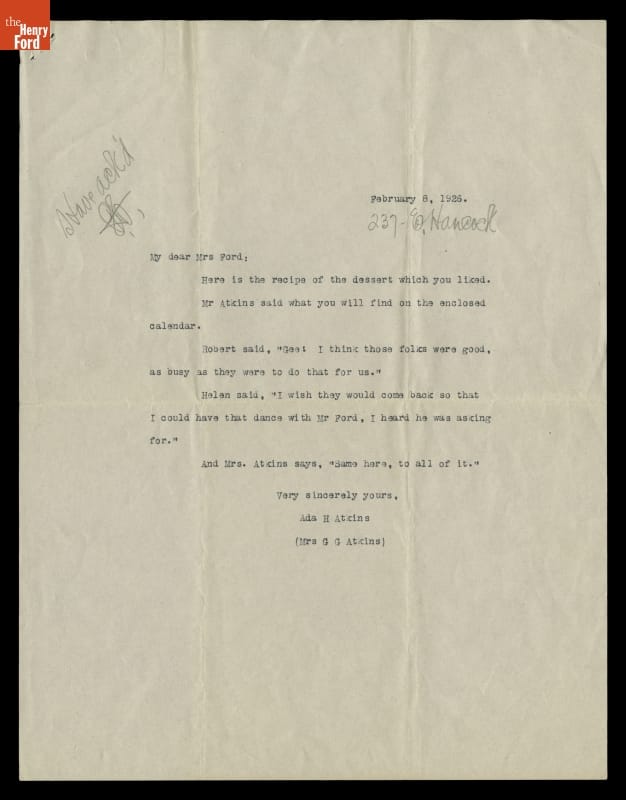
- Letter and Recipes from Ada Atkins to Clara Ford, "Cherry Delight," and "Heavenly Hash," 1926 -
- February 08, 1926
- Collections - Artifact
Letter and Recipes from Ada Atkins to Clara Ford, "Cherry Delight," and "Heavenly Hash," 1926
- Accessibility at The Henry Ford - On the 30th anniversary of the Americans with Disabilities Act (ADA), learn more about our work toward enhancing accessibility at The Henry Ford, particularly the strides we made prior to our closure during the COVID-19 pandemic and the ways our work

- July 24, 2020
- Collections - article
Accessibility at The Henry Ford
On the 30th anniversary of the Americans with Disabilities Act (ADA), learn more about our work toward enhancing accessibility at The Henry Ford, particularly the strides we made prior to our closure during the COVID-19 pandemic and the ways our work
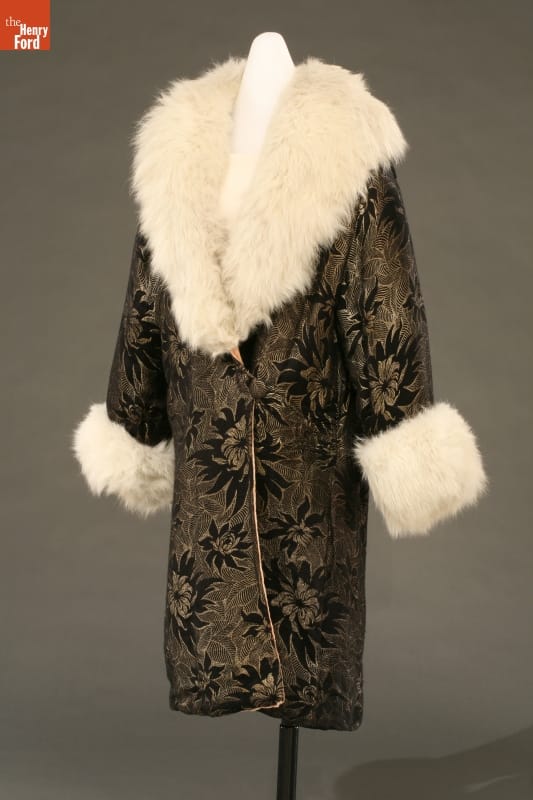
- Winter Coat, 1925-1930 -
- 1925-1930
- Collections - Artifact
Winter Coat, 1925-1930
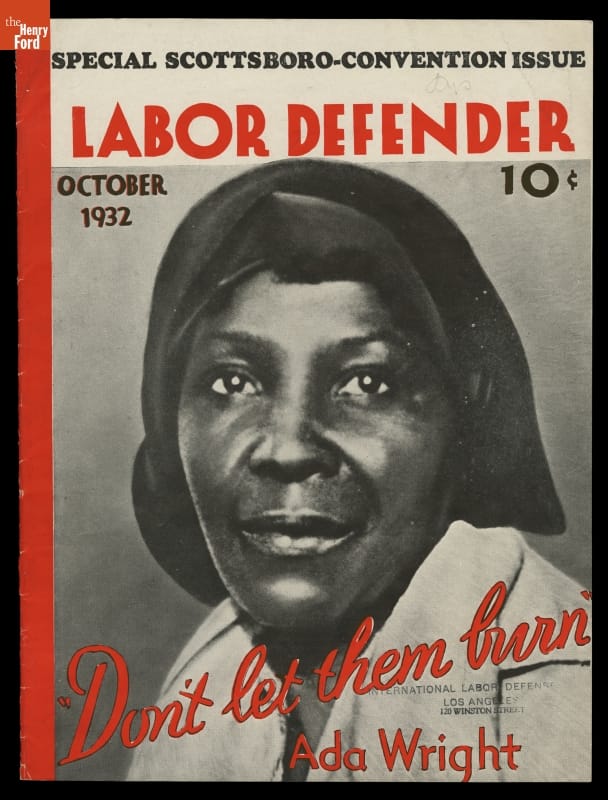
- Magazine, "Labor Defender; Special Scottsboro - Convention Issue," October 1932 - In 1931, nine black youths were unjustly accused of raping two white women in Alabama. White juries quickly convicted and sentenced eight of the defendants to death. The cover of this 1932 issue of the Labor Defender, a publication of the International Labor Defense, contains a plea for public support from the mother of two of the "Scottsboro Boys."
- October 01, 1932
- Collections - Artifact
Magazine, "Labor Defender; Special Scottsboro - Convention Issue," October 1932
In 1931, nine black youths were unjustly accused of raping two white women in Alabama. White juries quickly convicted and sentenced eight of the defendants to death. The cover of this 1932 issue of the Labor Defender, a publication of the International Labor Defense, contains a plea for public support from the mother of two of the "Scottsboro Boys."
- Working Toward Inspiration for ALL Our Guests - Learn how we're enhancing our experiences and offerings for our guests with special needs as part of our commitment to increasing accessibility for all of our guests.

- January 07, 2016
- Collections - article
Working Toward Inspiration for ALL Our Guests
Learn how we're enhancing our experiences and offerings for our guests with special needs as part of our commitment to increasing accessibility for all of our guests.
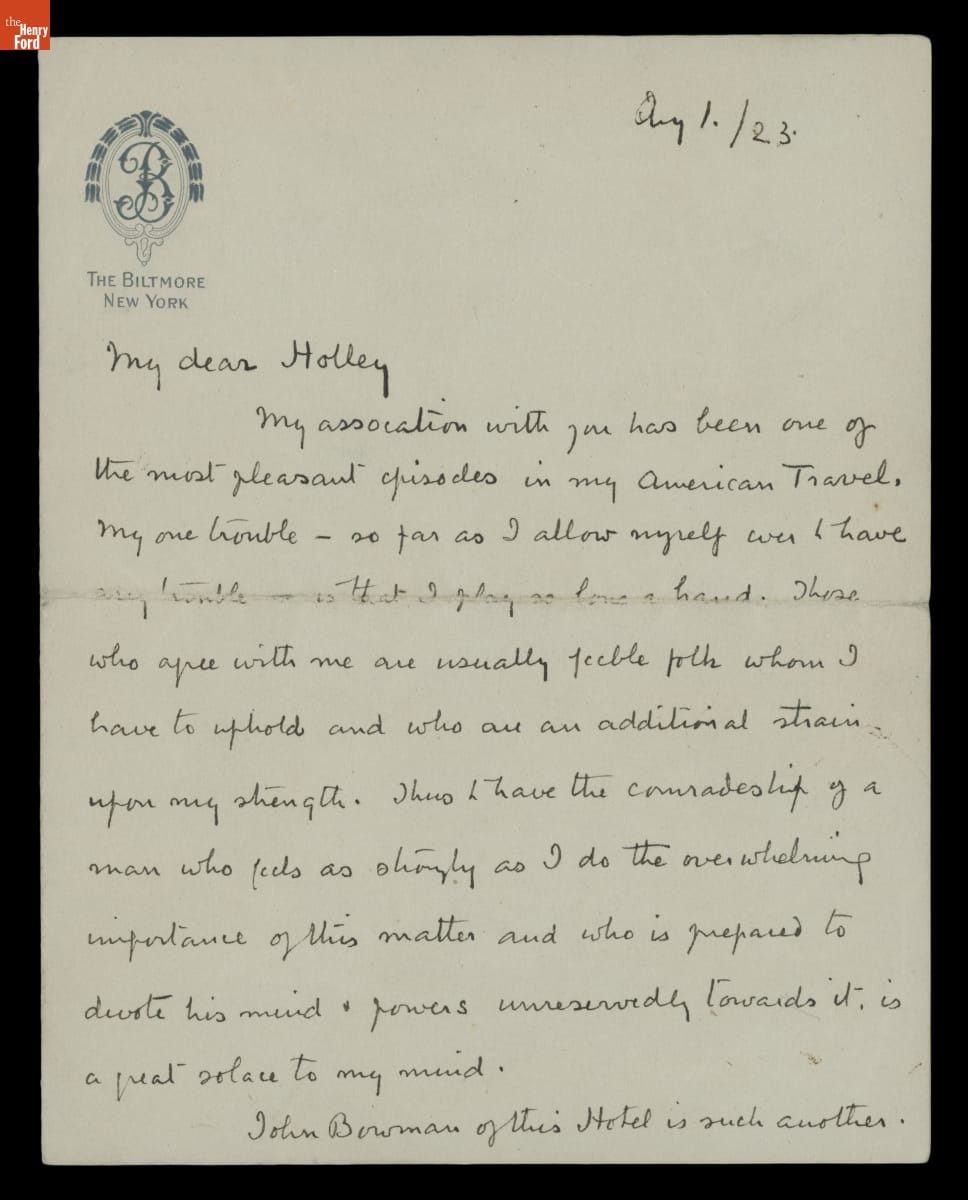
- Letter from Arthur Conan Doyle to George M. Holley, August 1, 1923 - George Holley, founder of Holley Motor Company, and Sir Arthur Conan Doyle, famed author, became acquainted after Holley attended one of Doyle's lectures in Detroit. From 1923 to 1929, the two maintained a robust correspondence. Spiritualism was a frequent topic as they traded recommendations of mediums, bemoaned skeptics like Harry Houdini, and discussed the state of belief on both sides of the Atlantic.
- August 01, 1923
- Collections - Artifact
Letter from Arthur Conan Doyle to George M. Holley, August 1, 1923
George Holley, founder of Holley Motor Company, and Sir Arthur Conan Doyle, famed author, became acquainted after Holley attended one of Doyle's lectures in Detroit. From 1923 to 1929, the two maintained a robust correspondence. Spiritualism was a frequent topic as they traded recommendations of mediums, bemoaned skeptics like Harry Houdini, and discussed the state of belief on both sides of the Atlantic.
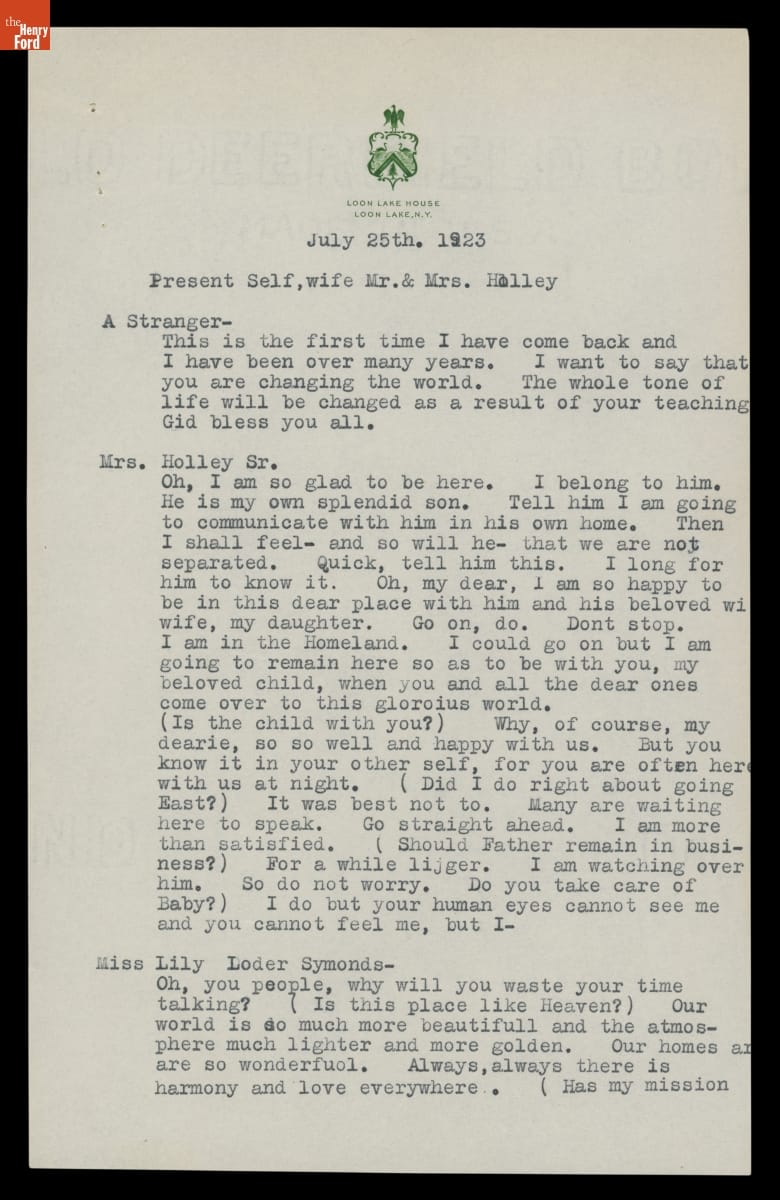
- Account of a Seance Performed by Rev. D.A. Herrick, July 25, 1923 -
- July 25, 1923
- Collections - Artifact
Account of a Seance Performed by Rev. D.A. Herrick, July 25, 1923
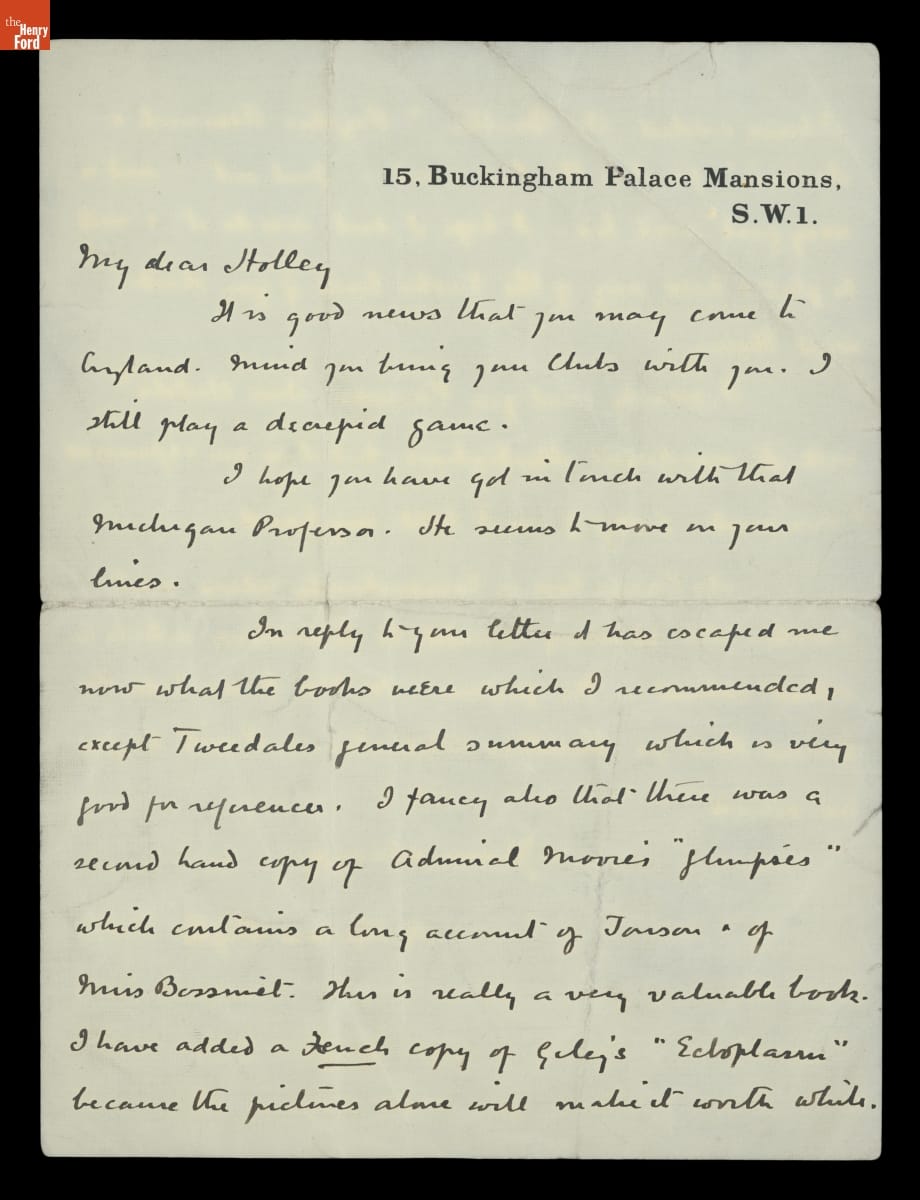
- Letter from Arthur Conan Doyle to George M. Holley - George Holley, founder of Holley Motor Company, and Sir Arthur Conan Doyle, famed author, became acquainted after Holley attended one of Doyle's lectures in Detroit. From 1923 to 1929, the two maintained a robust correspondence. Spiritualism was a frequent topic as they traded recommendations of mediums, bemoaned skeptics like Harry Houdini, and discussed the state of belief on both sides of the Atlantic.
- Collections - Artifact
Letter from Arthur Conan Doyle to George M. Holley
George Holley, founder of Holley Motor Company, and Sir Arthur Conan Doyle, famed author, became acquainted after Holley attended one of Doyle's lectures in Detroit. From 1923 to 1929, the two maintained a robust correspondence. Spiritualism was a frequent topic as they traded recommendations of mediums, bemoaned skeptics like Harry Houdini, and discussed the state of belief on both sides of the Atlantic.
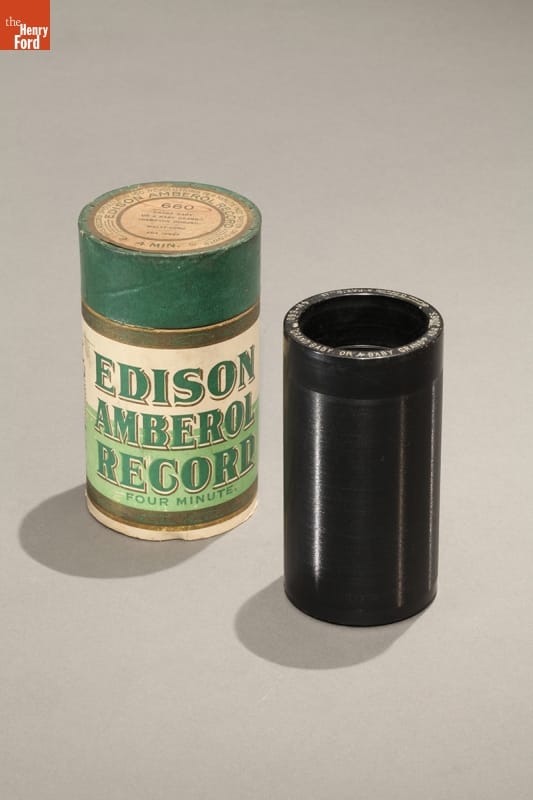
- Edison Amberol Record, "Grand Baby, or a Baby Grand?," 1911 - This humorous take on "class warfare" in urban America was sung in upper class and Irish dialects by Ada Jones. Here a lower class Irishwoman complains about the "high toned" lady in the apartment below whose loud piano playing wakes her baby. The upper class lady then complains that the baby's crying disturbs her. In reality, these two classes would never have shared an apartment building!
- 1911
- Collections - Artifact
Edison Amberol Record, "Grand Baby, or a Baby Grand?," 1911
This humorous take on "class warfare" in urban America was sung in upper class and Irish dialects by Ada Jones. Here a lower class Irishwoman complains about the "high toned" lady in the apartment below whose loud piano playing wakes her baby. The upper class lady then complains that the baby's crying disturbs her. In reality, these two classes would never have shared an apartment building!