
Search
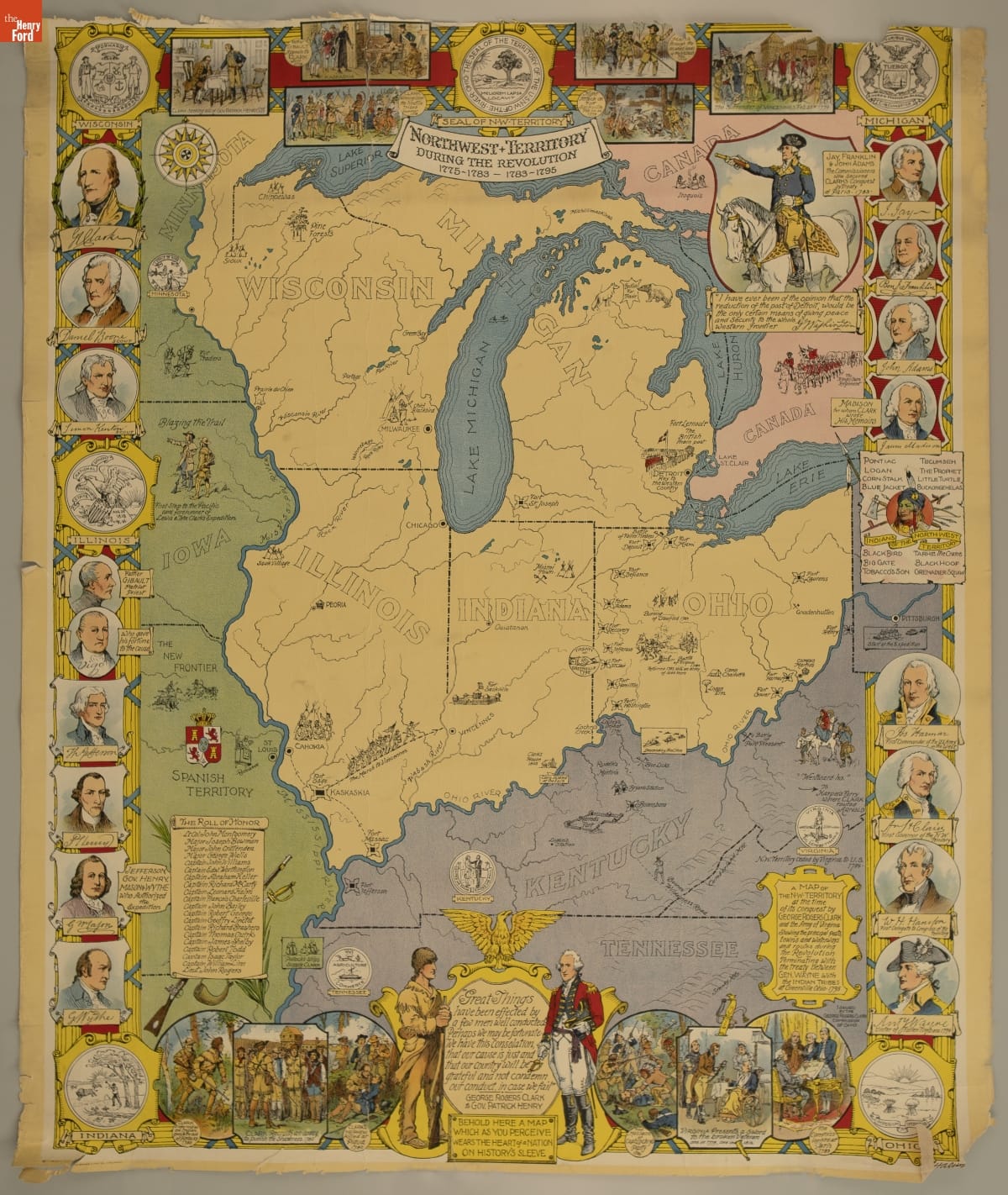
- Northwest Territory during the revolution : 1775-1783, 1783-1795 - White American settlers began displacing the Native American inhabitants of the Northwest Territory through forced expulsion in the late 18th century. This map, made many years after the original encounters, depicts the territory north of the Ohio River as nearly devoid of Native peoples during the late 1700s. Images present American leaders in a positive light, while the original occupants are stereotyped as "hostile."
- 1775-1795
- Collections - Artifact
Northwest Territory during the revolution : 1775-1783, 1783-1795
White American settlers began displacing the Native American inhabitants of the Northwest Territory through forced expulsion in the late 18th century. This map, made many years after the original encounters, depicts the territory north of the Ohio River as nearly devoid of Native peoples during the late 1700s. Images present American leaders in a positive light, while the original occupants are stereotyped as "hostile."
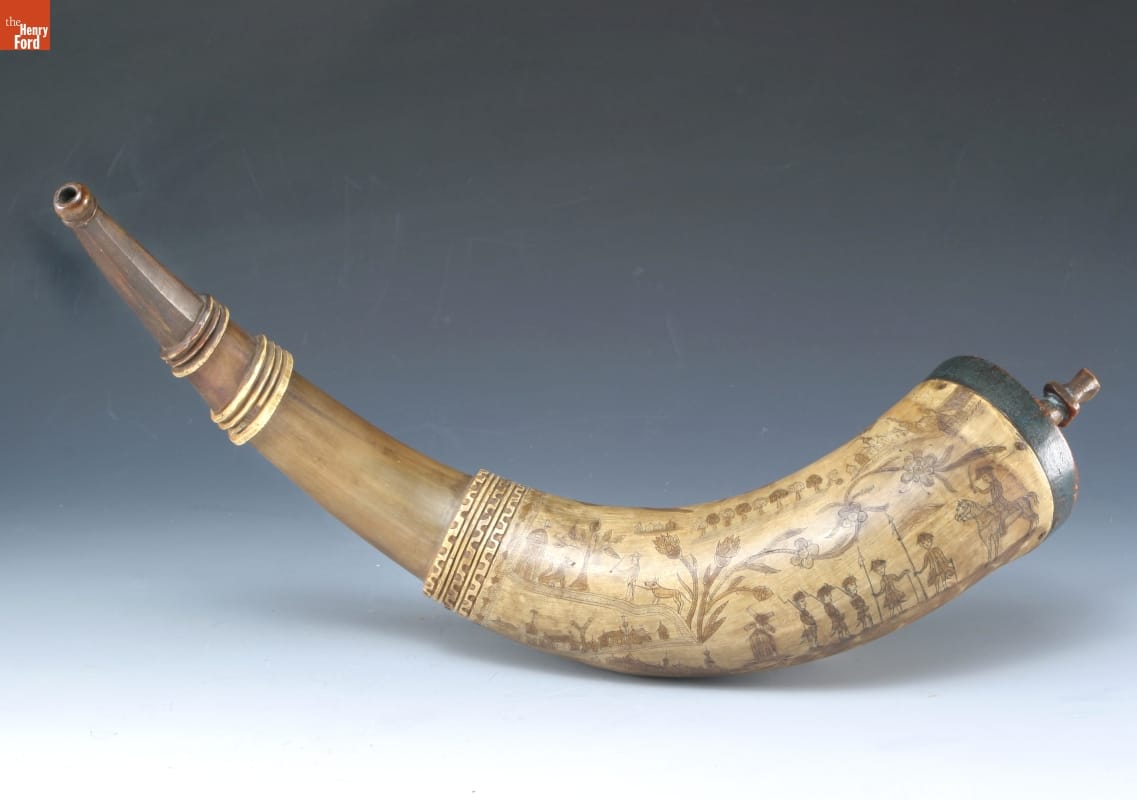
- Powder Horn, 1775-1783 - Lightweight, inexpensive, waterproof, and plentiful, hollowed animal horn was ideal for carrying gunpowder. These functional tools of war also became canvasses for creative expression. Engraved powder horns survive as both documents of their owners' experiences and unique pieces of colonial American art. This example illustrates the beginnings of the Revolutionary War through places, people, and symbolic imagery.
- 1775-1783
- Collections - Artifact
Powder Horn, 1775-1783
Lightweight, inexpensive, waterproof, and plentiful, hollowed animal horn was ideal for carrying gunpowder. These functional tools of war also became canvasses for creative expression. Engraved powder horns survive as both documents of their owners' experiences and unique pieces of colonial American art. This example illustrates the beginnings of the Revolutionary War through places, people, and symbolic imagery.
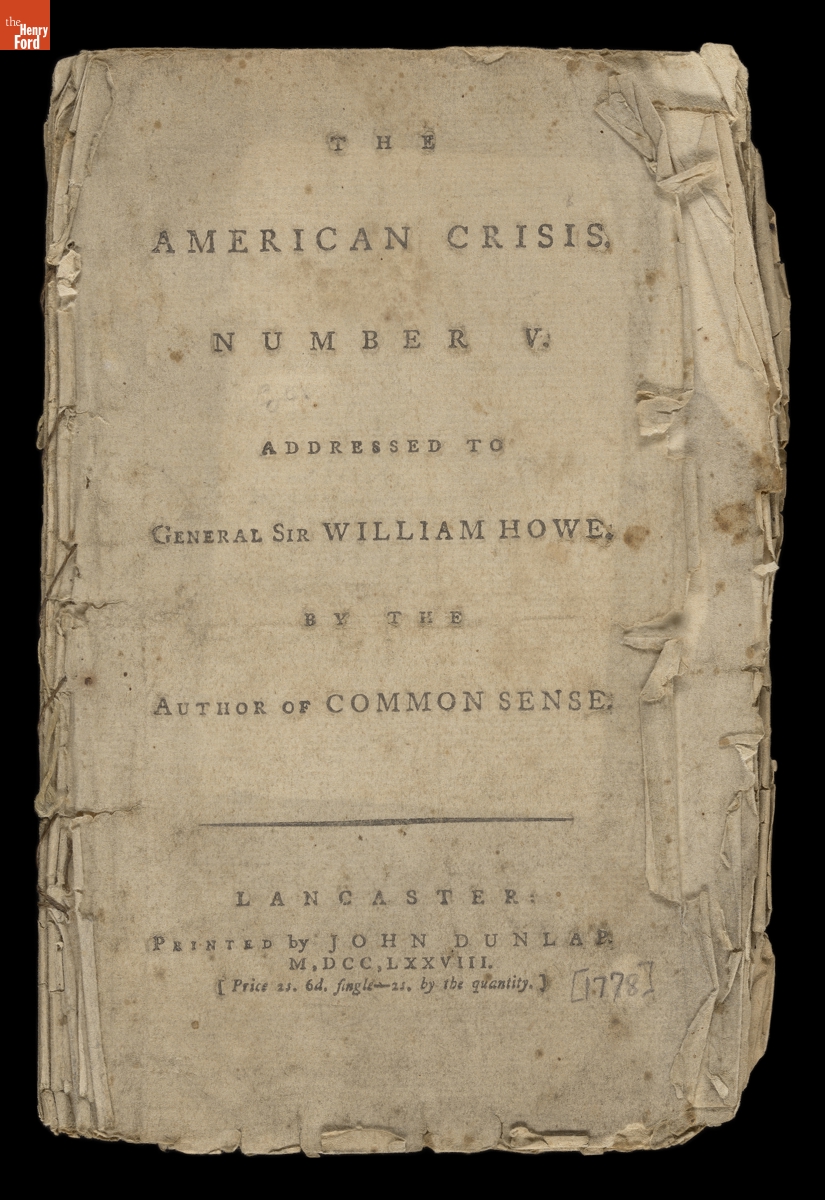
- "The American Crisis, Number V, Addressed to General Sir William Howe by the Author of 'Common Sense,'" 1778 - Between 1776 and 1783, Thomas Paine wrote a series of pamphlets entitled <i>The American Crisis</i>. These pamphlets explained, in language that the common person could understand, the reason to support the American cause in the Revolution. In pamphlet number five, published in March 1778, Paine attacked the recently knighted British General William Howe and called for more Americans to join the fight.
- 1778
- Collections - Artifact
"The American Crisis, Number V, Addressed to General Sir William Howe by the Author of 'Common Sense,'" 1778
Between 1776 and 1783, Thomas Paine wrote a series of pamphlets entitled The American Crisis. These pamphlets explained, in language that the common person could understand, the reason to support the American cause in the Revolution. In pamphlet number five, published in March 1778, Paine attacked the recently knighted British General William Howe and called for more Americans to join the fight.
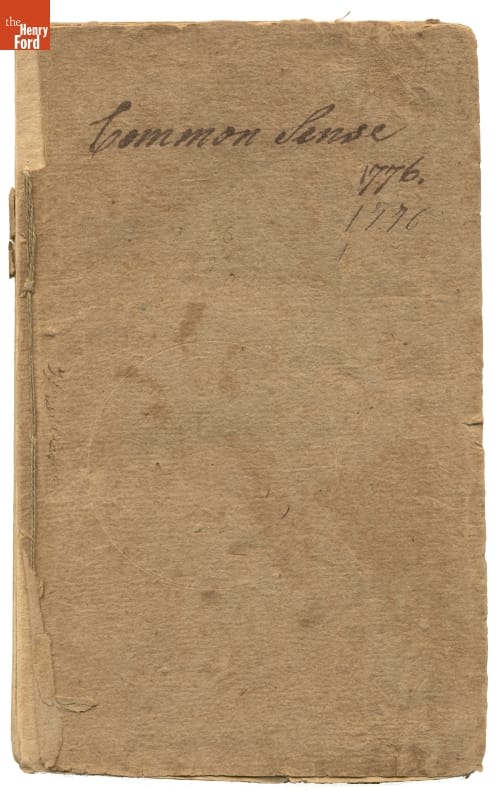
- "Common Sense; Addressed to the Inhabitants of America," February 1776 - Thomas Paine had tried many different jobs in England, but jumped at the chance to work in the printing business over in the American colonies. And there he found his voice. Not being a politician, he had nothing to lose with his little pamphlet. Although he made them sound like just "common sense," his arguments for independence were extremely radical at the time.
- February 14, 1776
- Collections - Artifact
"Common Sense; Addressed to the Inhabitants of America," February 1776
Thomas Paine had tried many different jobs in England, but jumped at the chance to work in the printing business over in the American colonies. And there he found his voice. Not being a politician, he had nothing to lose with his little pamphlet. Although he made them sound like just "common sense," his arguments for independence were extremely radical at the time.
- Powder Horn, 1777 - Lightweight, inexpensive, waterproof, and plentiful, hollowed animal horn was ideal for carrying gunpowder. These functional tools of war also became canvasses for creative expression. Engraved powder horns survive as both documents of their owners' experiences and unique pieces of colonial American art. The patriotic images and lettering on this example were probably copied from a currency note of the time.
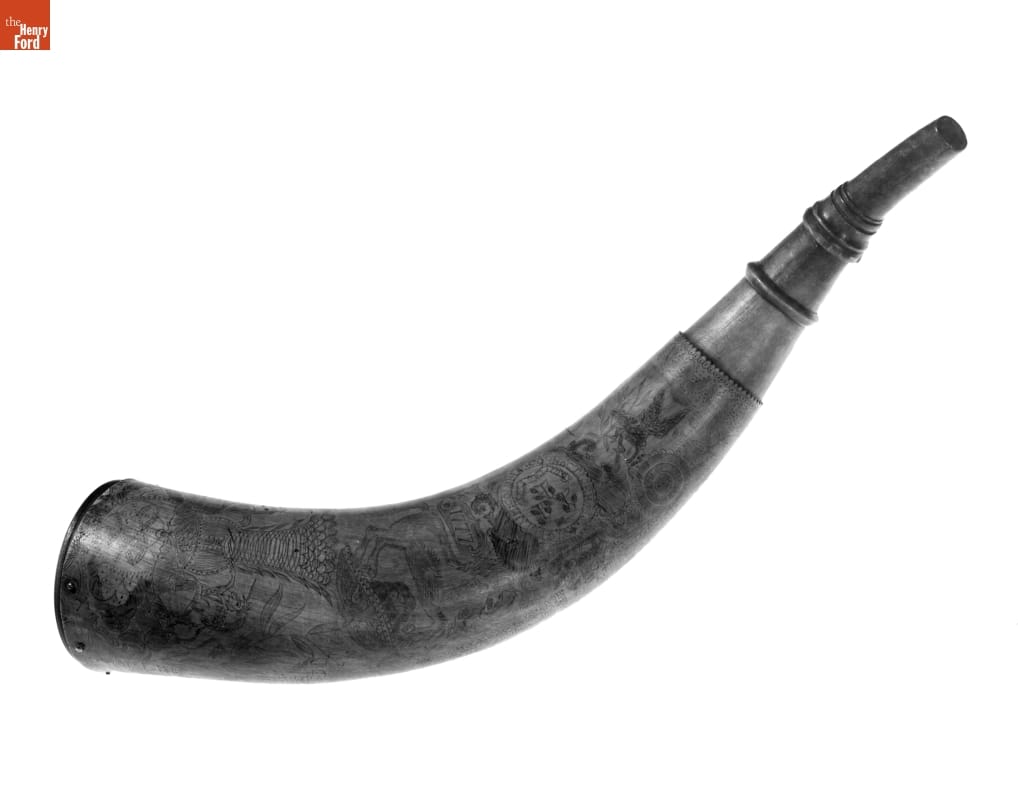
- 1777
- Collections - Artifact
Powder Horn, 1777
Lightweight, inexpensive, waterproof, and plentiful, hollowed animal horn was ideal for carrying gunpowder. These functional tools of war also became canvasses for creative expression. Engraved powder horns survive as both documents of their owners' experiences and unique pieces of colonial American art. The patriotic images and lettering on this example were probably copied from a currency note of the time.
- Paul Revere's Ride, 1907 -
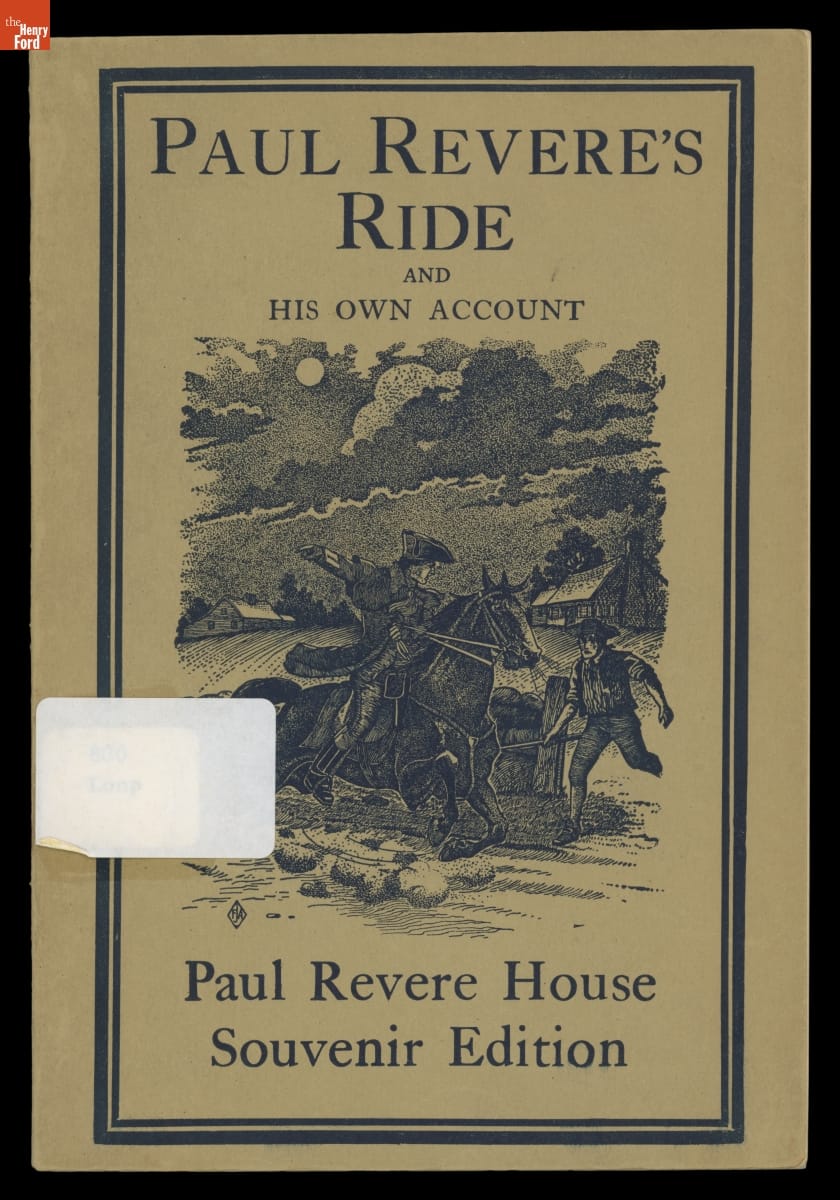
- 1907
- Collections - Artifact
Paul Revere's Ride, 1907
- Poster, "Declaration of Independence," 1976 - The 1976 Bicentennial of American Independence was a major cultural phenomenon. To celebrate, people across the nation purchased commemorative souvenirs, like this poster, and organized innumerable events -- from parades and fireworks displays to television programs and sporting events.
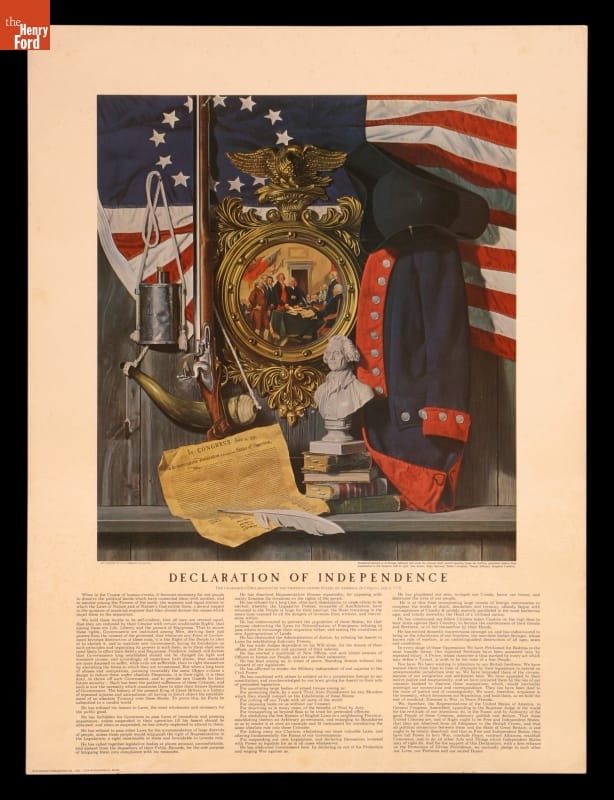
- 1976
- Collections - Artifact
Poster, "Declaration of Independence," 1976
The 1976 Bicentennial of American Independence was a major cultural phenomenon. To celebrate, people across the nation purchased commemorative souvenirs, like this poster, and organized innumerable events -- from parades and fireworks displays to television programs and sporting events.
- Trade Card for E. & T. Fairbanks & Co. Scales, 1870-1890 - In the last third of the nineteenth century, an unprecedented variety of consumer goods and services flooded the American market. Advertisers, armed with new methods of color printing, bombarded potential customers with trade cards. Americans enjoyed and often saved the vibrant little advertisements found in product packages or distributed by local merchants. Many survive as historical records of commercialism in the United States.
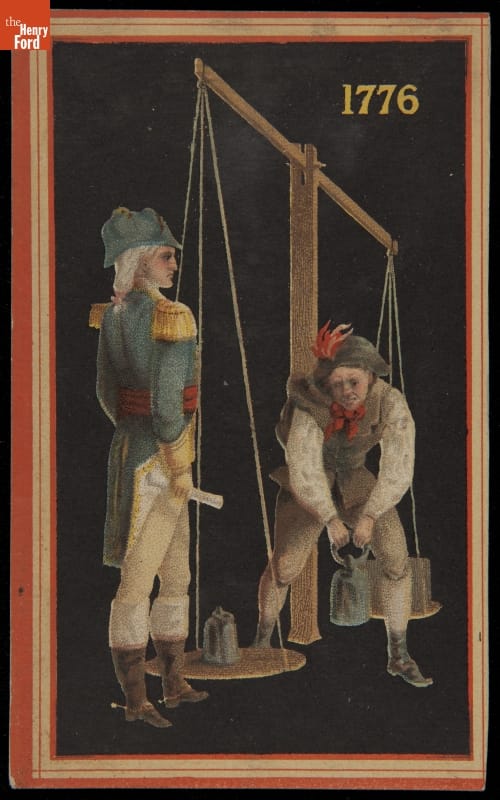
- 1870-1890
- Collections - Artifact
Trade Card for E. & T. Fairbanks & Co. Scales, 1870-1890
In the last third of the nineteenth century, an unprecedented variety of consumer goods and services flooded the American market. Advertisers, armed with new methods of color printing, bombarded potential customers with trade cards. Americans enjoyed and often saved the vibrant little advertisements found in product packages or distributed by local merchants. Many survive as historical records of commercialism in the United States.
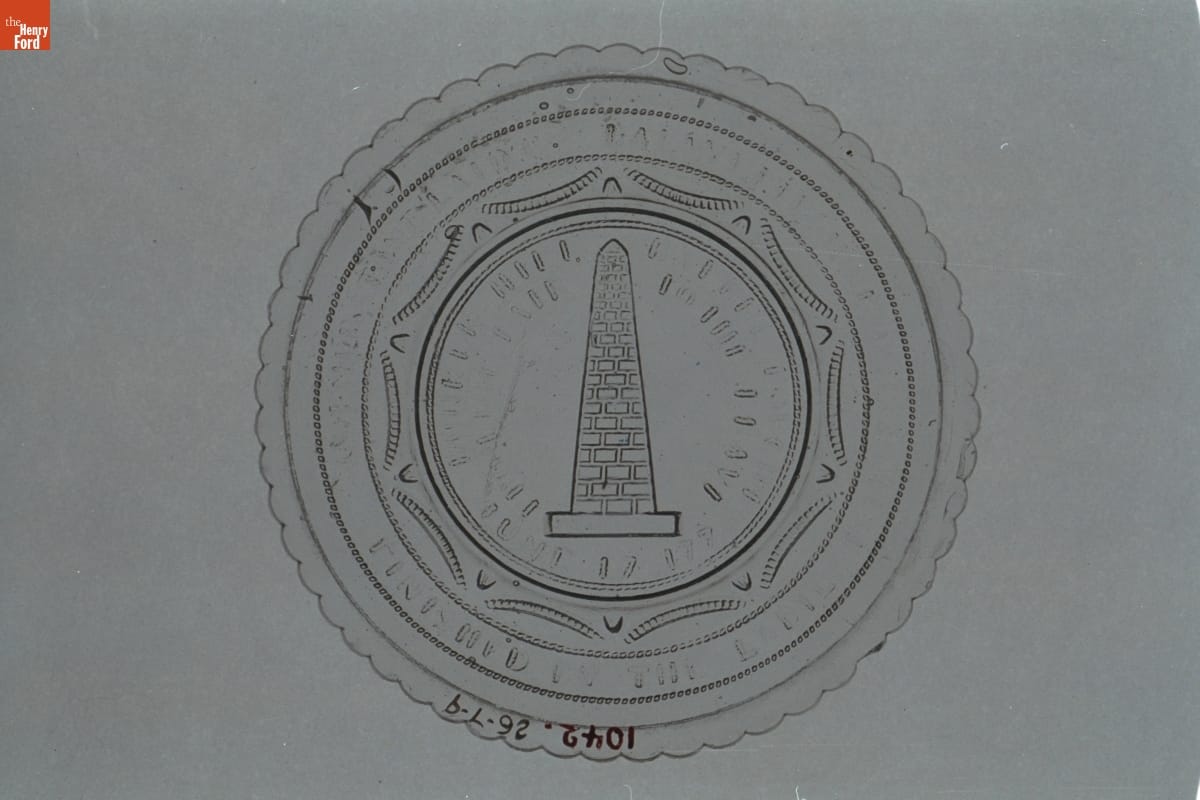
- Cup Plate, 1843 - Americans in the early 19th century poured hot tea into their saucers to cool -- leaving the staining liquid around the teacup's base. Hostesses would provide guests with cup plates to prevent damage to tablecloths and wood. Pressed glass cup plates were popular from the 1820s to the 1860s. Pressed designs varied from purely decorative to images of famous men, places and events.
- 1843
- Collections - Artifact
Cup Plate, 1843
Americans in the early 19th century poured hot tea into their saucers to cool -- leaving the staining liquid around the teacup's base. Hostesses would provide guests with cup plates to prevent damage to tablecloths and wood. Pressed glass cup plates were popular from the 1820s to the 1860s. Pressed designs varied from purely decorative to images of famous men, places and events.
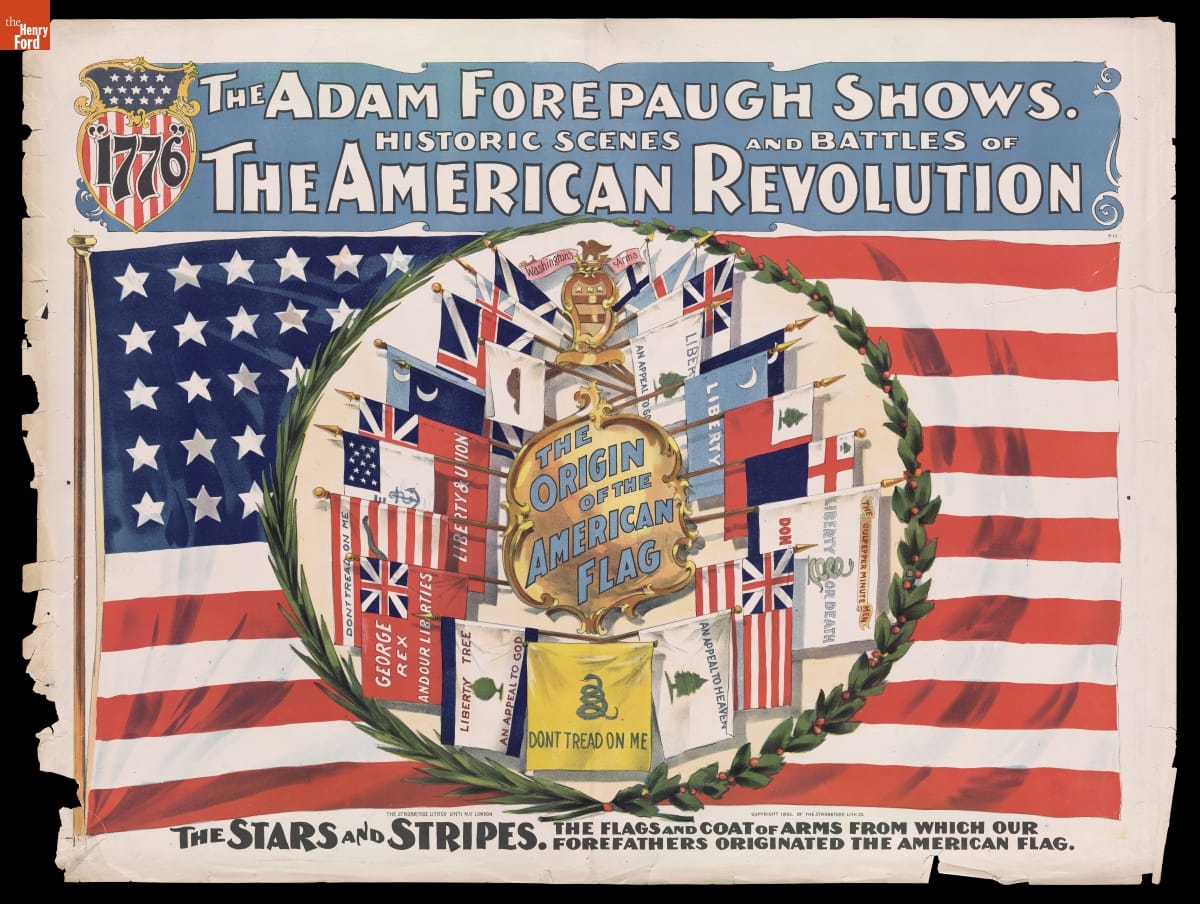
- Adam Forepaugh Shows - Historic Scenes and Battle of the American Revolution," circa 1893 - In the late nineteenth century, printers developed a lithograph method that produced brightly colored posters. In advance of a circus coming to town, general agents glued these eye-catching generic posters to building walls, fences, and in window displays. To announce when and where the performances would happen, local printers sometimes provided letterpress paper date strips to paste onto the posters' lower margin.
- Copyright 1893
- Collections - Artifact
Adam Forepaugh Shows - Historic Scenes and Battle of the American Revolution," circa 1893
In the late nineteenth century, printers developed a lithograph method that produced brightly colored posters. In advance of a circus coming to town, general agents glued these eye-catching generic posters to building walls, fences, and in window displays. To announce when and where the performances would happen, local printers sometimes provided letterpress paper date strips to paste onto the posters' lower margin.