
"Common Sense; Addressed to the Inhabitants of America," February 1776
THF7998 / "Common Sense; Addressed to the Inhabitants of America," February 1776 / cover
01
Artifact Overview
Thomas Paine had tried many different jobs in England, but jumped at the chance to work in the printing business over in the American colonies. And there he found his voice. Not being a politician, he had nothing to lose with his little pamphlet. Although he made them sound like just "common sense," his arguments for independence were extremely radical at the time.
Artifact Details
Artifact
Pamphlet
Date Made
1776
Subject Date
14 February 1776
Creator Notes
Written by Thomas Paine, Philadelphia, Pennsylvania; published by Judah P. Spooner, Norwich, Connecticut.
Location
at Henry Ford Museum in With Liberty & Justice for All
Object ID
2005.0.42.1
Credit
From the Collections of The Henry Ford.
Material
Paper (Fiber product)
Ink
Technique
Handwriting
Printing (Process)
Dimensions
Height: 7.625 in
Width: 4.75 in
Depth: 0.25 in
Inscriptions
Handwritten on front cover in ink: Common Sense / 1776
Keywords |
|---|
02
Related Content
 Set
SetCurators' Choice: American Democracy & Civil Rights
- 25 Artifacts
George Washington carried folding beds, tents, eating utensils, and other equipment to use while encamped on the field with his troops during the Revolutionary War. Washington likely used this bed when he traveled from his Newburgh, New York, headquarters in July 1783 -- as the war was winding down -- to tour upstate New York and the military installations located there.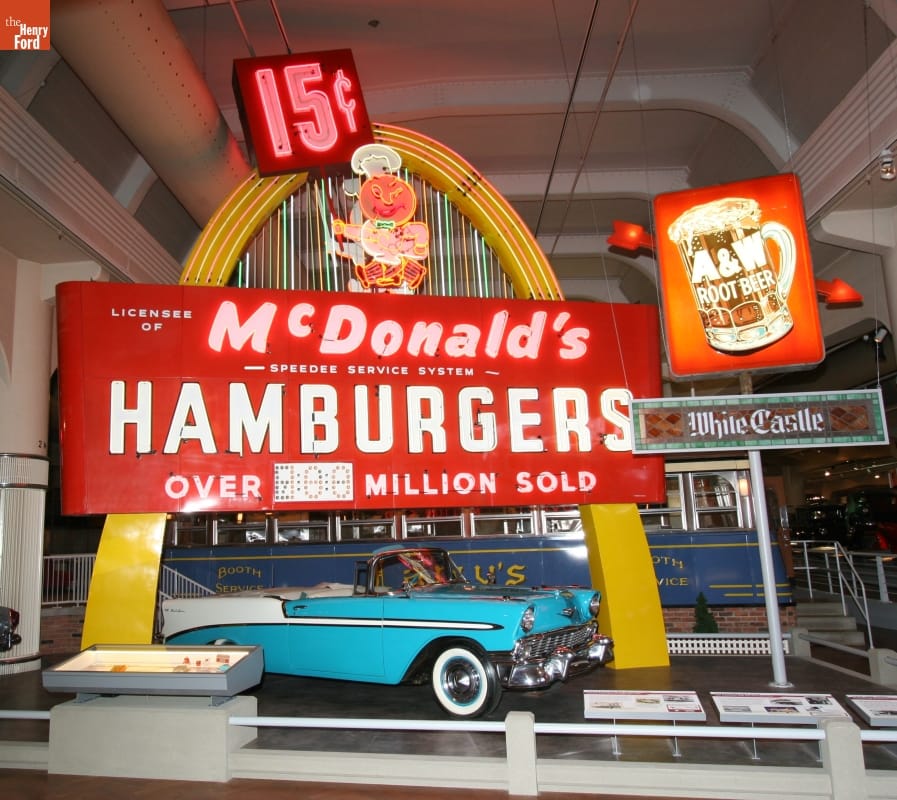 Set
SetSocial Transformation
- 50 Artifacts
In 1948, the McDonald brothers transformed their Southern California drive-in restaurant with their radical new "Speedee Service System"--assembly-line production of a limited menu at drastically reduced prices. Richard McDonald created this sign design in 1952. In 1955, milkshake machine salesman Ray Kroc franchised the McDonald's concept--prompting numerous imitators and ultimately turning America into a "fast food nation." article
Remembering a Patriot
Learn the story of the Revolutionary War attack by the British on Fort Freeland in Pennsylvania near dawn on July 28, 1779.