
Search
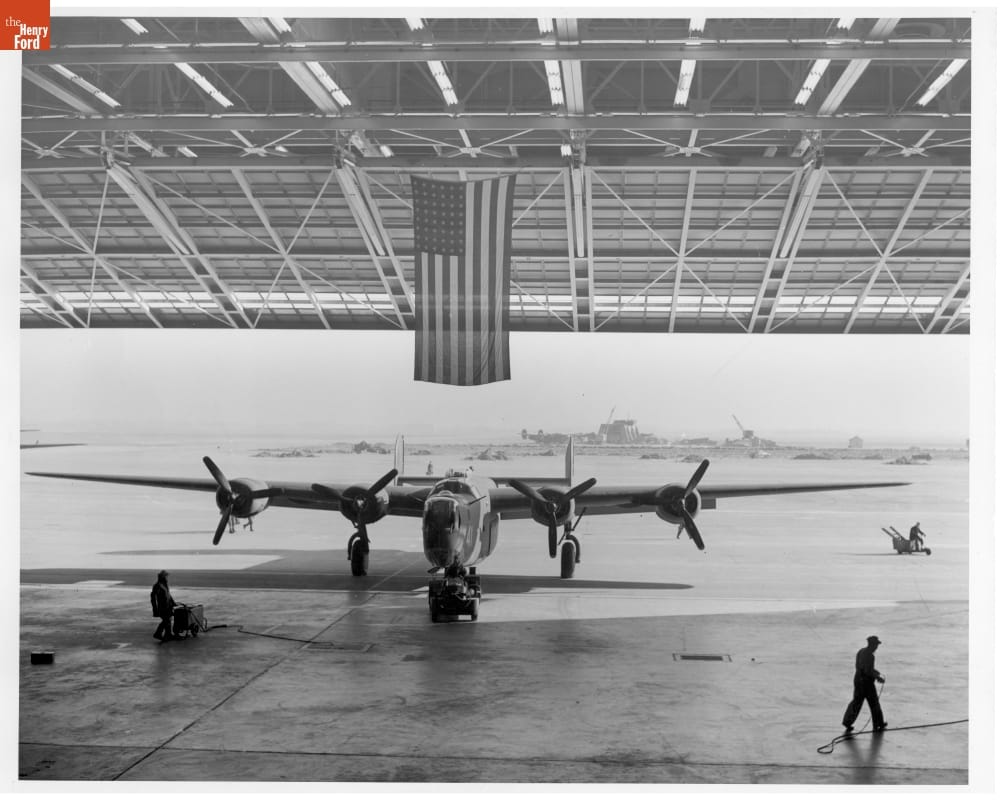
- B-24 Bomber at the Willow Run Bomber Plant, 1943 - Ford's Willow Run Bomber Plant, designed by Albert Kahn and constructed in 1941, undoubtedly contributed to the outcome of World War II. With 3.5 million square feet of factory space, 650 B-24 Liberators rolled off the line every month by the end of 1944. Before the plant closed in 1945, Willow Run produced 8,685 B-24 bombers.
- 1943
- Collections - Artifact
B-24 Bomber at the Willow Run Bomber Plant, 1943
Ford's Willow Run Bomber Plant, designed by Albert Kahn and constructed in 1941, undoubtedly contributed to the outcome of World War II. With 3.5 million square feet of factory space, 650 B-24 Liberators rolled off the line every month by the end of 1944. Before the plant closed in 1945, Willow Run produced 8,685 B-24 bombers.
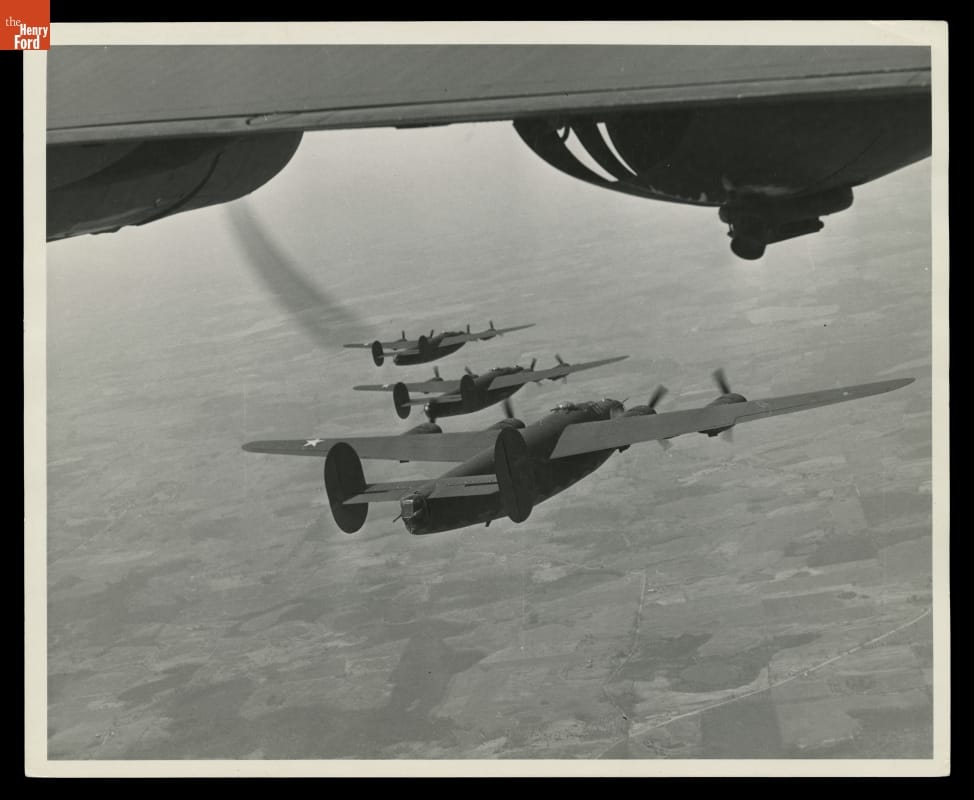
- B-24 Liberator Bombers in Flight, 1943 - During World War II, Ford Motor Company built B-24 bomber airplanes at its Willow Run plant. Alongside the B-17, the B-24 formed the backbone of the Allies' air war over Europe. The airplanes and their crews attacked factories, railroads, harbors and -- as the war progressed -- cities in Germany, Italy and occupied France. The bombings curbed Germany's military and manufacturing capabilities.
- 1943
- Collections - Artifact
B-24 Liberator Bombers in Flight, 1943
During World War II, Ford Motor Company built B-24 bomber airplanes at its Willow Run plant. Alongside the B-17, the B-24 formed the backbone of the Allies' air war over Europe. The airplanes and their crews attacked factories, railroads, harbors and -- as the war progressed -- cities in Germany, Italy and occupied France. The bombings curbed Germany's military and manufacturing capabilities.
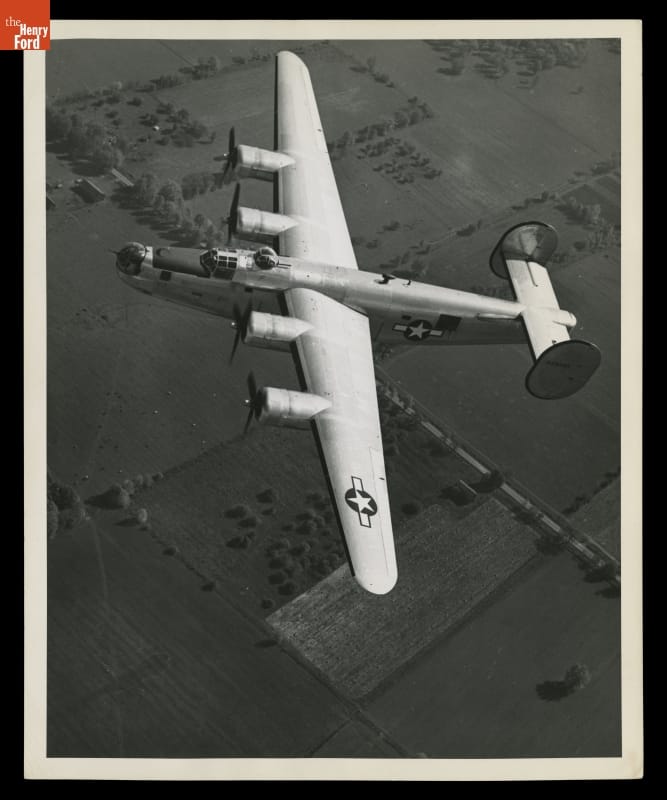
- B-24 Bomber in Flight, Willow Run Bomber Plant, 1944 - During World War II, Ford Motor Company built 8,685 B-24 Liberator bomber airplanes at its Willow Run plant. Most of them were complete airplanes flown away for delivery directly from the plant's on-site airport. The remaining bombers were shipped out by truck as "knock-down kits" for final assembly at Douglas Aircraft's plant in Tulsa, Oklahoma, or Consolidated Aircraft's plant in Fort Worth, Texas.
- October 12, 1944
- Collections - Artifact
B-24 Bomber in Flight, Willow Run Bomber Plant, 1944
During World War II, Ford Motor Company built 8,685 B-24 Liberator bomber airplanes at its Willow Run plant. Most of them were complete airplanes flown away for delivery directly from the plant's on-site airport. The remaining bombers were shipped out by truck as "knock-down kits" for final assembly at Douglas Aircraft's plant in Tulsa, Oklahoma, or Consolidated Aircraft's plant in Fort Worth, Texas.
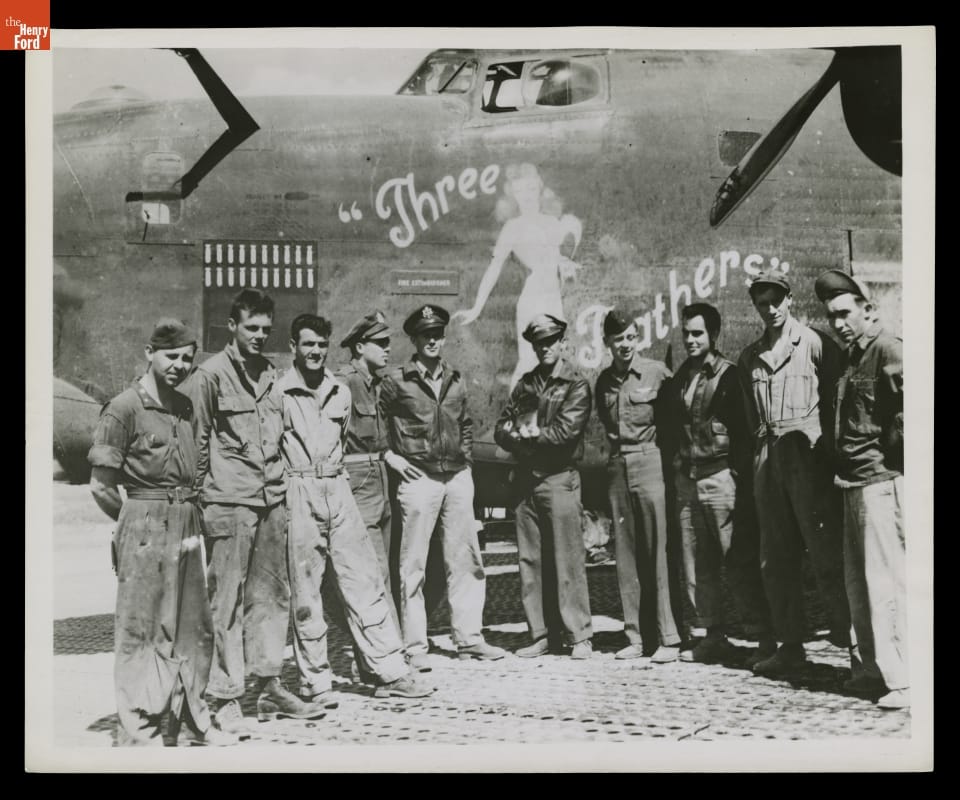
- B-24 Bomber "Three Feathers" with Crew, 1944 - During World War II, Ford Motor Company built B-24 bomber airplanes at its Willow Run plant. Alongside the B-17, the B-24 formed the backbone of the Allies' air war over Europe. The airplanes and their crews attacked factories, railroads, harbors and -- as the war progressed -- cities in Germany, Italy and occupied France. The bombings curbed Germany's military and manufacturing capabilities.
- 1944
- Collections - Artifact
B-24 Bomber "Three Feathers" with Crew, 1944
During World War II, Ford Motor Company built B-24 bomber airplanes at its Willow Run plant. Alongside the B-17, the B-24 formed the backbone of the Allies' air war over Europe. The airplanes and their crews attacked factories, railroads, harbors and -- as the war progressed -- cities in Germany, Italy and occupied France. The bombings curbed Germany's military and manufacturing capabilities.
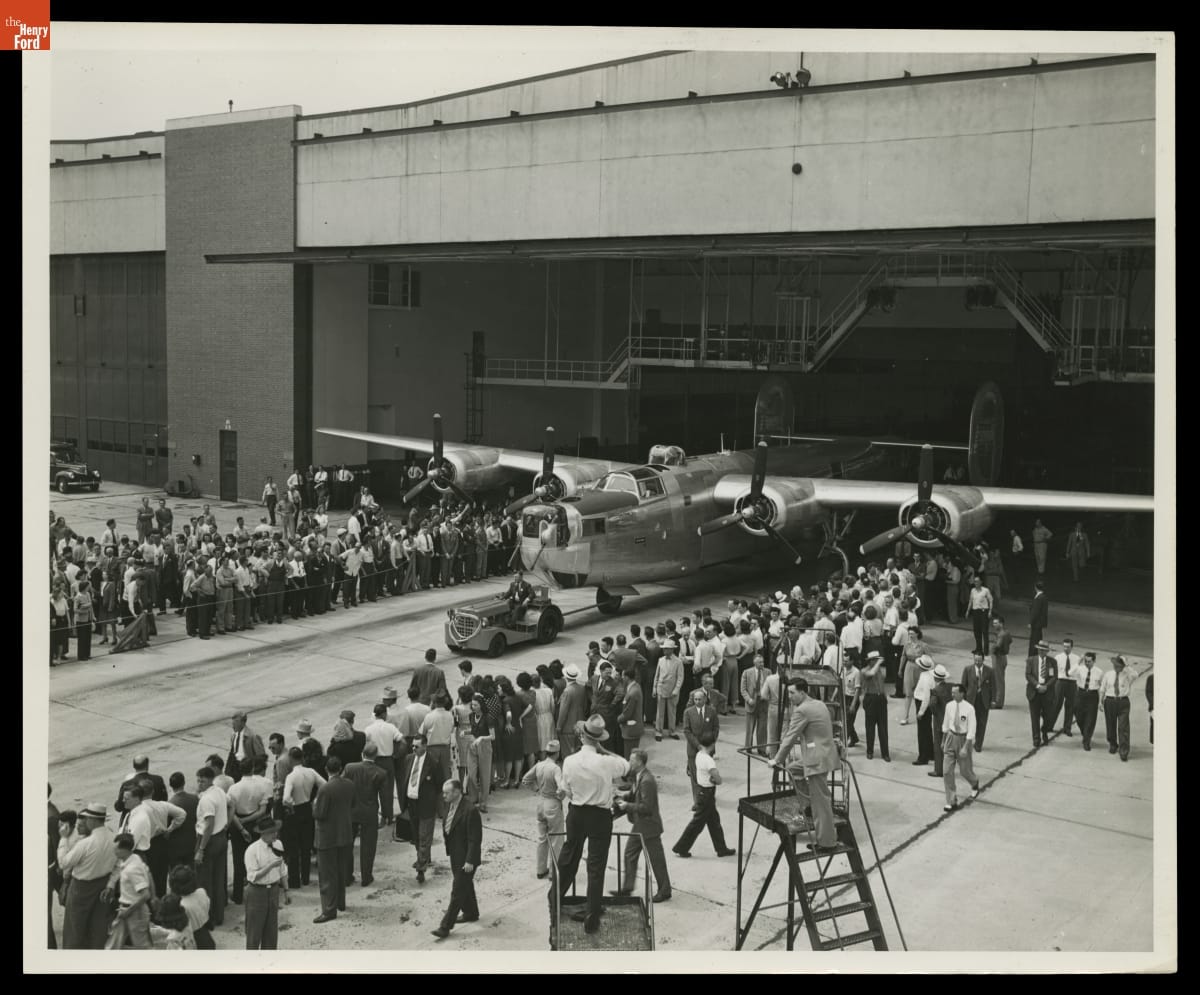
- Tractor Towing Last B-24 Bomber Built at Willow Run Bomber Plant, June 1945 - Ford Motor Company built 8,685 B-24 bomber airplanes at its Willow Run, Michigan, plant during World War II. Workers turned out the last bomber in late June 1945. Henry Ford II attended the ceremony as that last bomber was towed from its hangar. Some 42,000 people worked at Willow Run. At peak production, they finished one airplane every 63 minutes.
- June 28, 1945
- Collections - Artifact
Tractor Towing Last B-24 Bomber Built at Willow Run Bomber Plant, June 1945
Ford Motor Company built 8,685 B-24 bomber airplanes at its Willow Run, Michigan, plant during World War II. Workers turned out the last bomber in late June 1945. Henry Ford II attended the ceremony as that last bomber was towed from its hangar. Some 42,000 people worked at Willow Run. At peak production, they finished one airplane every 63 minutes.
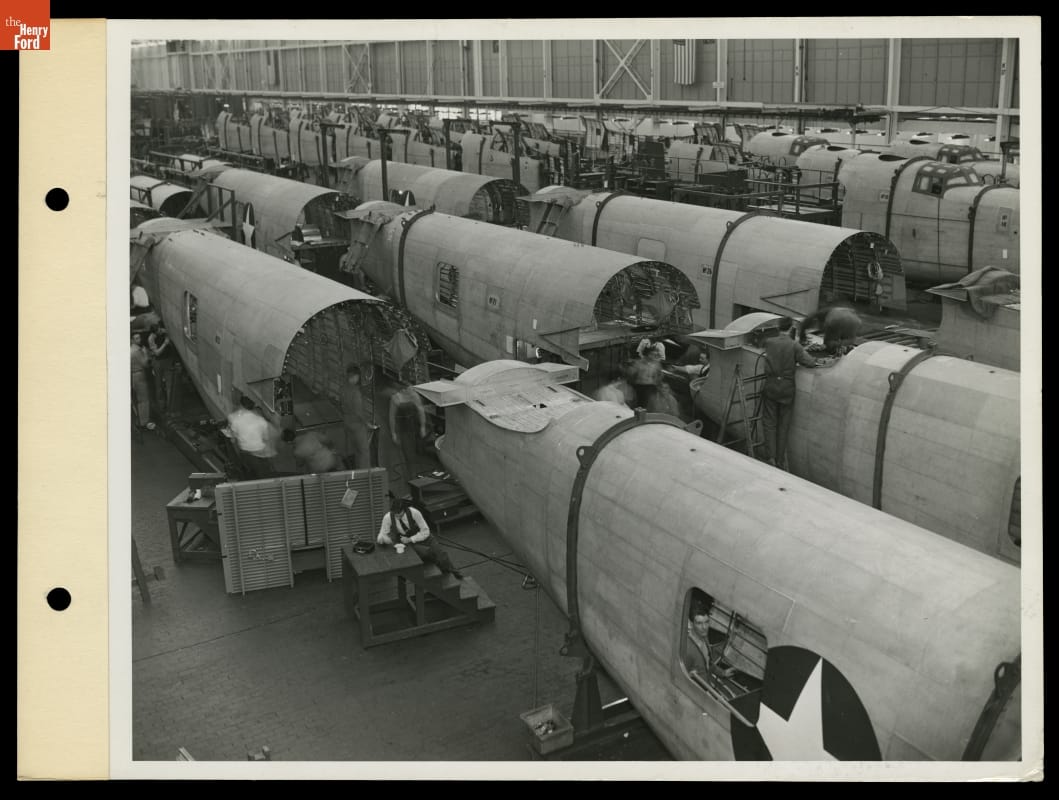
- B-24 Fuselage Assembly Line, Willow Run Bomber Plant, 1942 - At Willow Run, Ford Motor Company built B-24 bomber planes for World War II using automobile mass production techniques. Airplanes were much more complex than cars. They required constant design changes poorly suited to a standardized assembly line. Ford overcame these difficulties and, at the plant's peak, Willow Run crews produced an average of one bomber every 63 minutes.
- October 27, 1942
- Collections - Artifact
B-24 Fuselage Assembly Line, Willow Run Bomber Plant, 1942
At Willow Run, Ford Motor Company built B-24 bomber planes for World War II using automobile mass production techniques. Airplanes were much more complex than cars. They required constant design changes poorly suited to a standardized assembly line. Ford overcame these difficulties and, at the plant's peak, Willow Run crews produced an average of one bomber every 63 minutes.
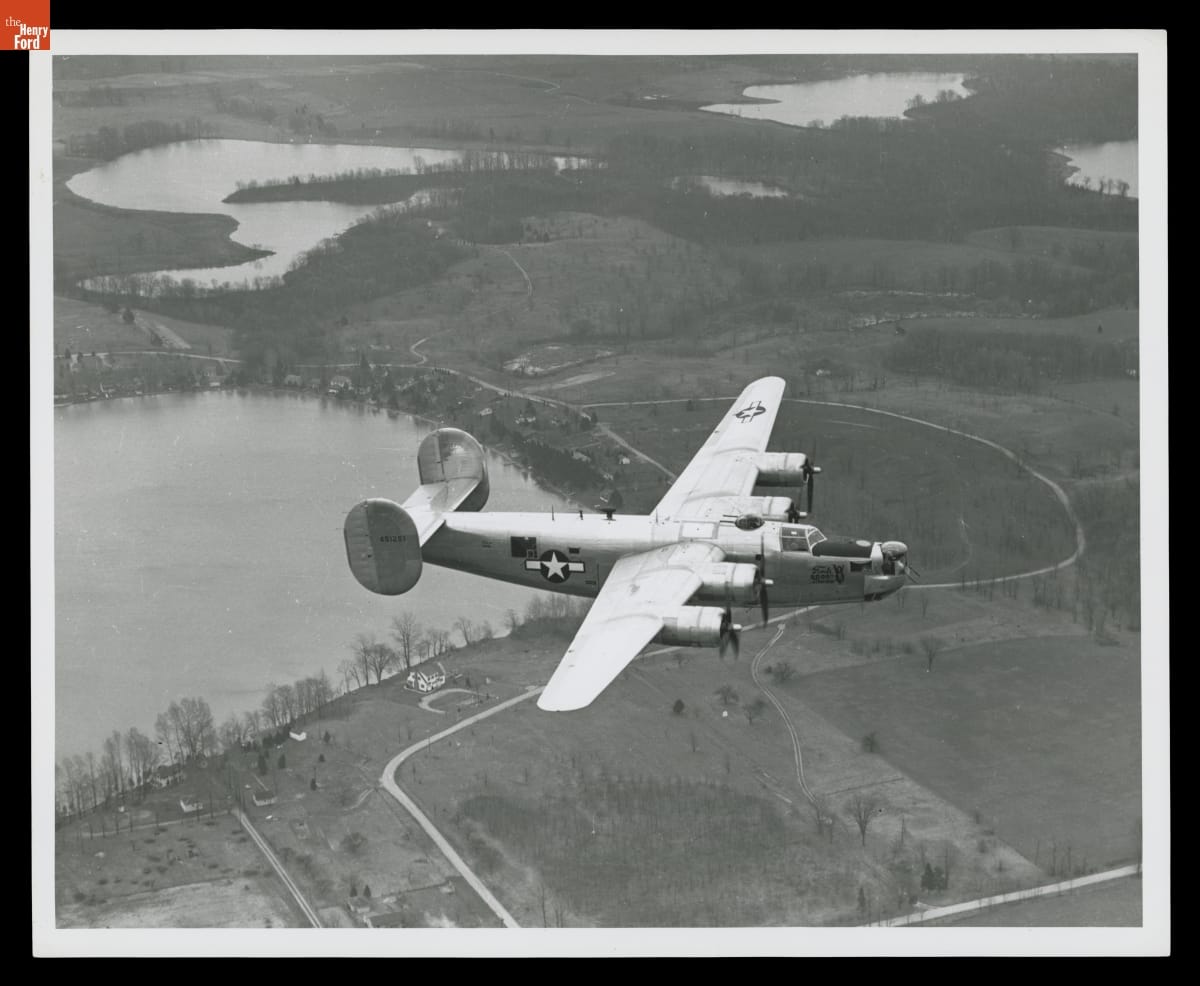
- 8,000th B-24 Liberator Bomber in Flight, 1945 - Mass producing B-24 bombers during World War II was no easy feat -- not even for the company that invented modern mass production. But Ford Motor Company was building one airplane every 63 minutes at its Willow Run plant by March 1944. Ford produced its 8,000th B-24 in March 1945. Another 685 were built before production ended in May 1945.
- March 26, 1945
- Collections - Artifact
8,000th B-24 Liberator Bomber in Flight, 1945
Mass producing B-24 bombers during World War II was no easy feat -- not even for the company that invented modern mass production. But Ford Motor Company was building one airplane every 63 minutes at its Willow Run plant by March 1944. Ford produced its 8,000th B-24 in March 1945. Another 685 were built before production ended in May 1945.
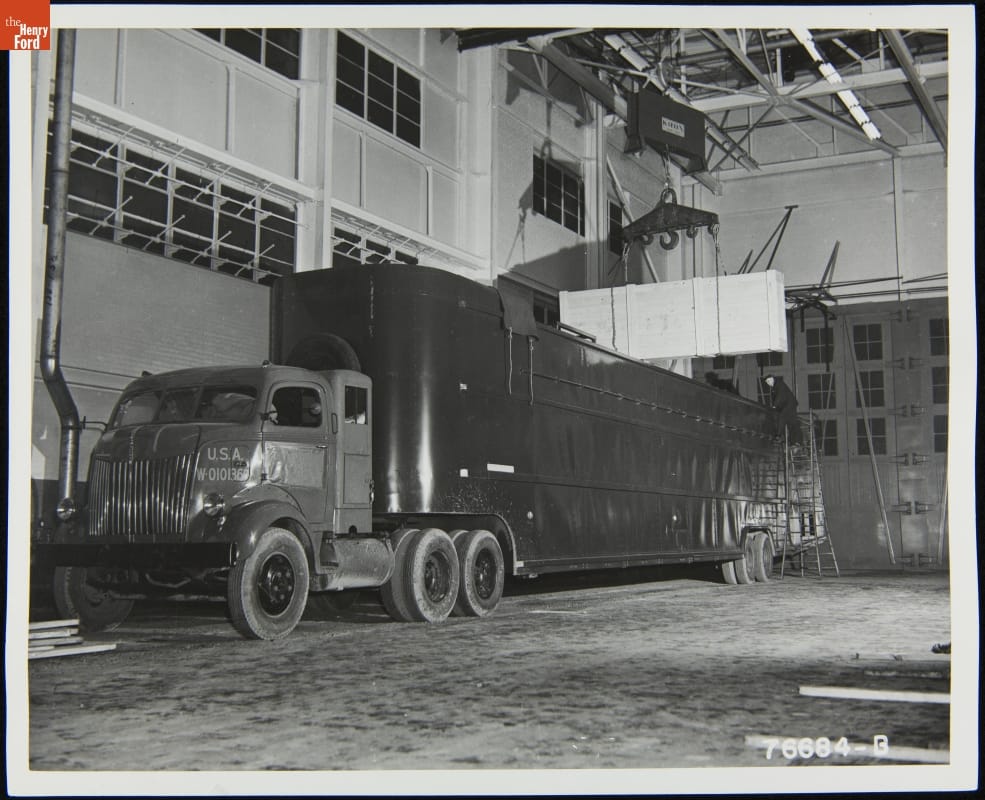
- B-24 Bomber Assemblies Being Loaded Into a Trailer, Willow Run Bomber Plant, circa 1943 - Not every B-24 bomber built at Ford Motor Company's Willow Run plant left the facility as a completed airplane. Some 1,800 bombers were sent as partially assembled kits to Consolidated Aircraft Corporation in Fort Worth, Texas, or Douglas Aircraft in Tulsa, Oklahoma. The components for each plane were packed into two specially designed semi-trailers for transport to these final assembly plants.
- circa 1943
- Collections - Artifact
B-24 Bomber Assemblies Being Loaded Into a Trailer, Willow Run Bomber Plant, circa 1943
Not every B-24 bomber built at Ford Motor Company's Willow Run plant left the facility as a completed airplane. Some 1,800 bombers were sent as partially assembled kits to Consolidated Aircraft Corporation in Fort Worth, Texas, or Douglas Aircraft in Tulsa, Oklahoma. The components for each plane were packed into two specially designed semi-trailers for transport to these final assembly plants.
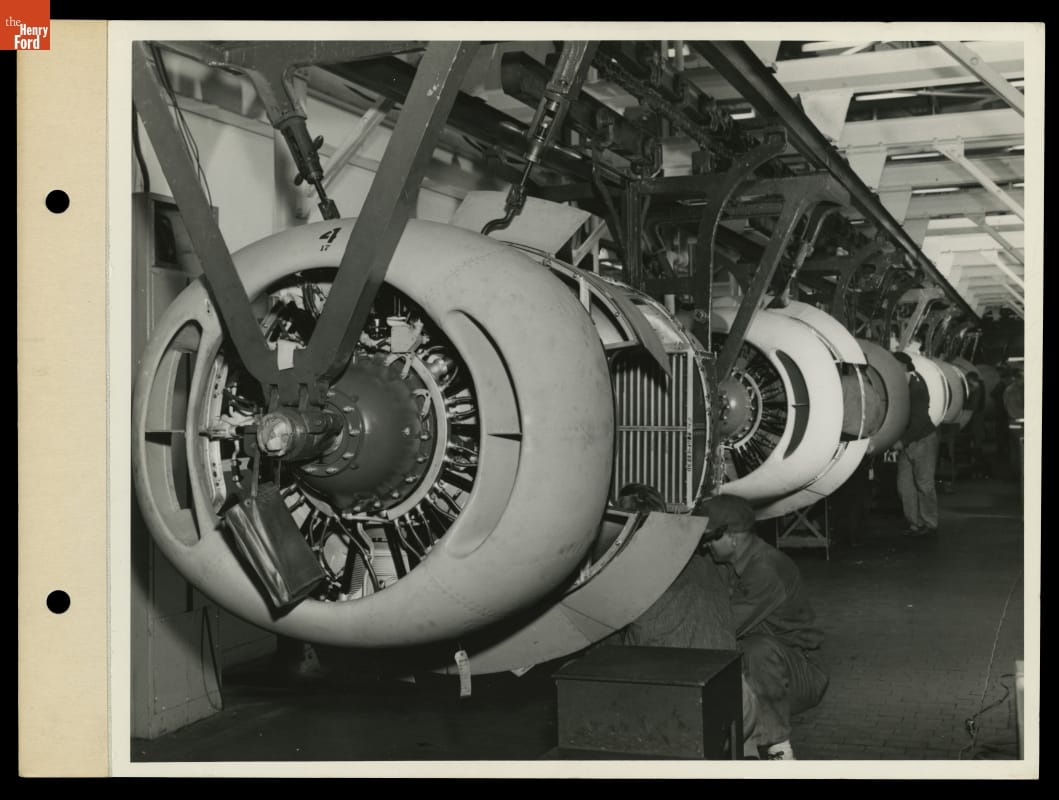
- B-24 Engine Assembly Line, Willow Run Bomber Plant, 1942 - At Willow Run, Ford Motor Company built B-24 bomber planes for World War II using automobile mass production techniques. Airplanes were much more complex than cars. They required constant design changes poorly suited to a standardized assembly line. Ford overcame these difficulties and, at the plant's peak, Willow Run crews produced an average of one bomber every 63 minutes.
- October 27, 1942
- Collections - Artifact
B-24 Engine Assembly Line, Willow Run Bomber Plant, 1942
At Willow Run, Ford Motor Company built B-24 bomber planes for World War II using automobile mass production techniques. Airplanes were much more complex than cars. They required constant design changes poorly suited to a standardized assembly line. Ford overcame these difficulties and, at the plant's peak, Willow Run crews produced an average of one bomber every 63 minutes.
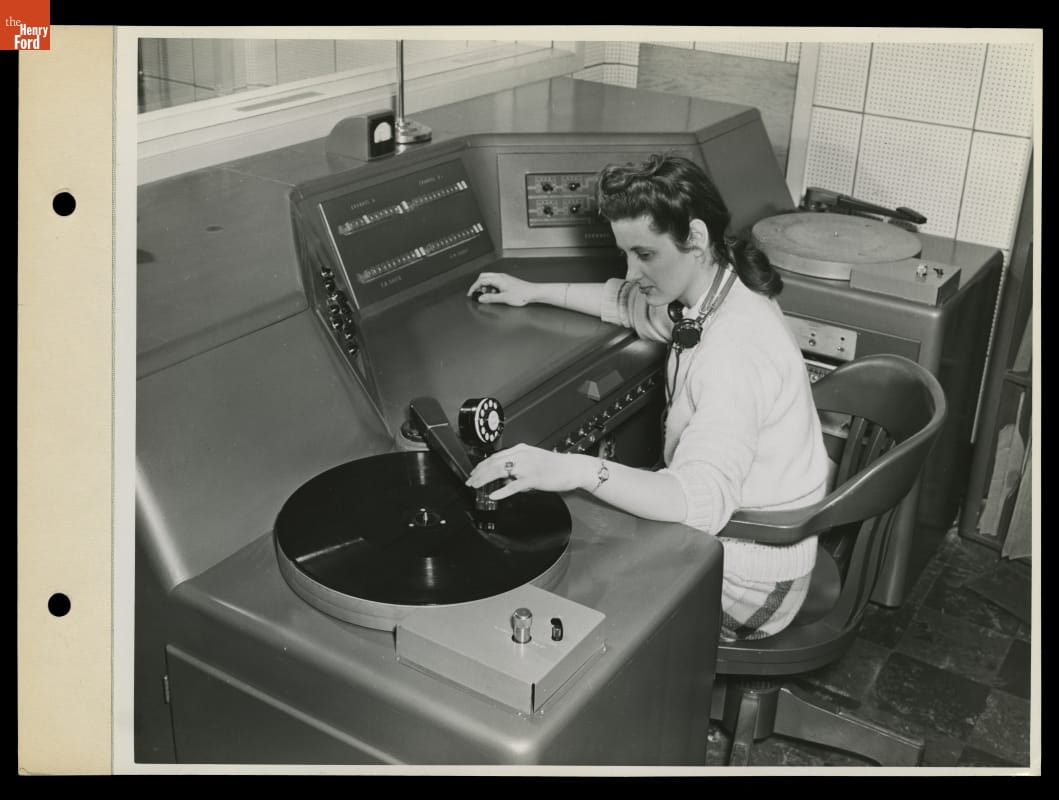
- B-24 Radio Station Recording Studio, Willow Run Bomber Plant, 1944 - At its peak, Ford Motor Company's Willow Run bomber plant employed more than 42,000 people. The factory's five million square feet of roofed workspace included everything needed to train and care for its workforce, including classrooms, a hospital, dining rooms, and recreational facilities. An on-site radio station provided news and entertainment programming to employees.
- April 17, 1944
- Collections - Artifact
B-24 Radio Station Recording Studio, Willow Run Bomber Plant, 1944
At its peak, Ford Motor Company's Willow Run bomber plant employed more than 42,000 people. The factory's five million square feet of roofed workspace included everything needed to train and care for its workforce, including classrooms, a hospital, dining rooms, and recreational facilities. An on-site radio station provided news and entertainment programming to employees.