
Search
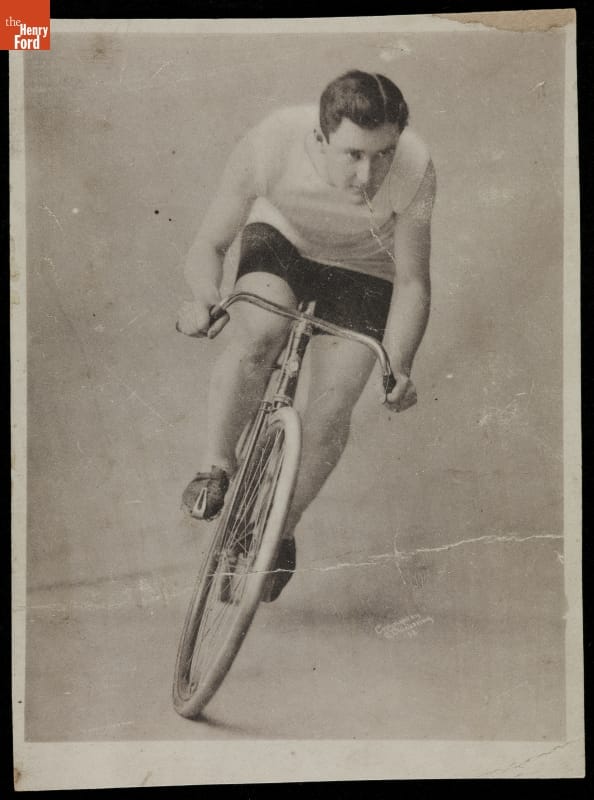
- Bicycle Racer, 1898 - An unidentified racer poses atop a bicycle in this studio photograph from the late 1890s. The image was taken by Boston photographer, Elmer Chickering, famed for his images of politicians, actors, athletes and other public figures.
- 1898
- Collections - Artifact
Bicycle Racer, 1898
An unidentified racer poses atop a bicycle in this studio photograph from the late 1890s. The image was taken by Boston photographer, Elmer Chickering, famed for his images of politicians, actors, athletes and other public figures.
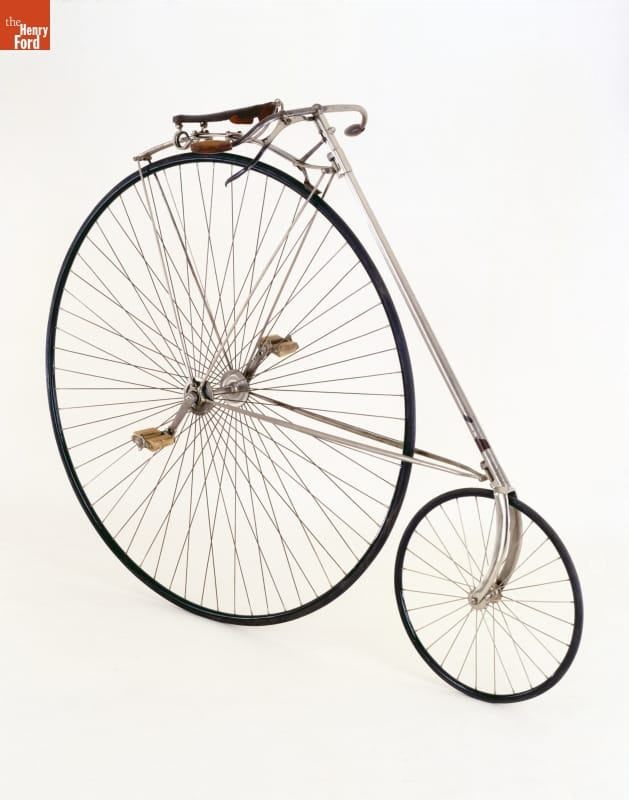
- Eagle Bicycle, 1891 - The Eagle Bicycle Manufacturing Company built this high-wheel safety in 1891. The Connecticut company copied other manufacturers by placing the small wheel up front and the large drive wheel in back -- preventing the dreaded "header." Still, it was difficult to mount; cyclists had to swing their leg over the large wheel. Low-mount safeties with equal-sized wheels solved this problem.
- 1891
- Collections - Artifact
Eagle Bicycle, 1891
The Eagle Bicycle Manufacturing Company built this high-wheel safety in 1891. The Connecticut company copied other manufacturers by placing the small wheel up front and the large drive wheel in back -- preventing the dreaded "header." Still, it was difficult to mount; cyclists had to swing their leg over the large wheel. Low-mount safeties with equal-sized wheels solved this problem.
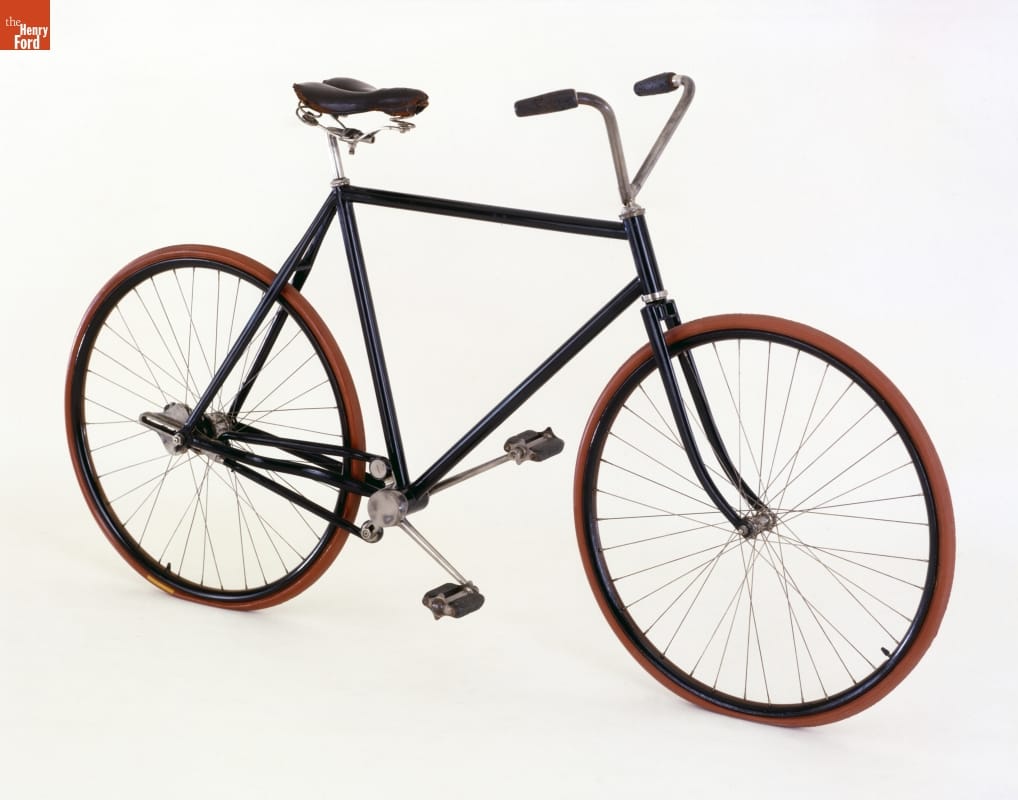
- "Regina" Bicycle, 1895 - Louis Ives of Dearborn, Michigan, applied a different drive system to the early safety bicycle. If you look closely at this 1890s bicycle it has no chain. The pedals operated a ratchet gear system to turn the back wheel. This drive system, like the shaft-drive chainless, failed to catch on and few were manufactured.
- 1895
- Collections - Artifact
"Regina" Bicycle, 1895
Louis Ives of Dearborn, Michigan, applied a different drive system to the early safety bicycle. If you look closely at this 1890s bicycle it has no chain. The pedals operated a ratchet gear system to turn the back wheel. This drive system, like the shaft-drive chainless, failed to catch on and few were manufactured.
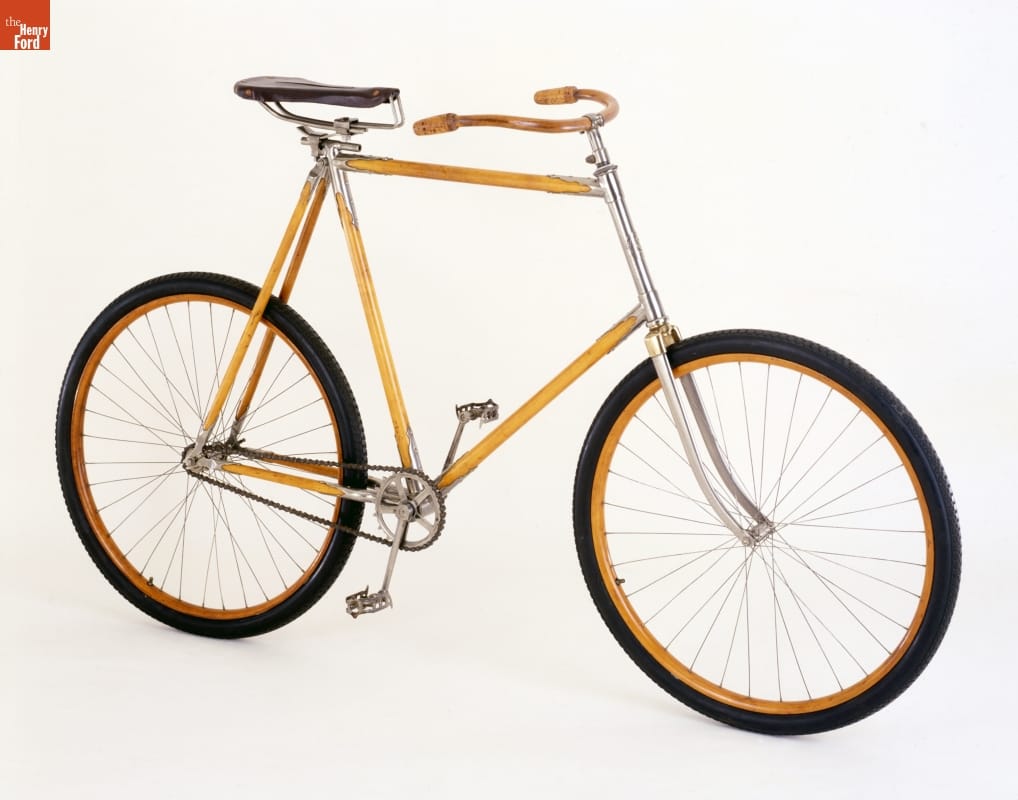
- Chilion Bicycle, 1897 - M.D. Stebbins Manufacturing Company of Springfield, Massachusetts, was one of the largest makers of wood-frame safety bicycles. This 1897 Chilion bicycle used polished-hickory frame rods connected with aluminum-bronze lugs. The company claimed this distinctive bike would not buckle when riders hit obstructions, as metal rods would. And, of course, the bike would not rust.
- 1897
- Collections - Artifact
Chilion Bicycle, 1897
M.D. Stebbins Manufacturing Company of Springfield, Massachusetts, was one of the largest makers of wood-frame safety bicycles. This 1897 Chilion bicycle used polished-hickory frame rods connected with aluminum-bronze lugs. The company claimed this distinctive bike would not buckle when riders hit obstructions, as metal rods would. And, of course, the bike would not rust.
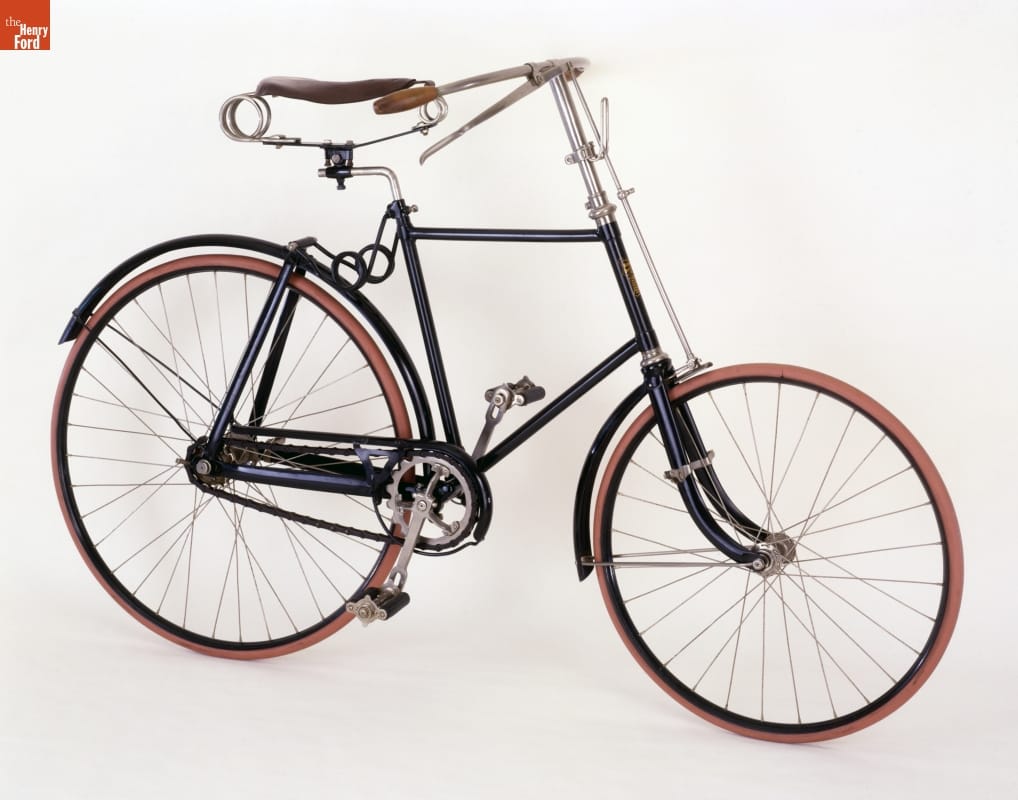
- Rambler Bicycle, 1892 - Gormully and Jeffery Manufacturing Company created the successful and popular Rambler brand. This early 1890s Diamond Rambler with its nearly same-sized wheels could be easily mounted by men, women, young, and old. Its spring frame and cushion tires also provided a more comfortable ride. These and other features made cycling more accessible and enjoyable to a growing number of Americans.
- 1892
- Collections - Artifact
Rambler Bicycle, 1892
Gormully and Jeffery Manufacturing Company created the successful and popular Rambler brand. This early 1890s Diamond Rambler with its nearly same-sized wheels could be easily mounted by men, women, young, and old. Its spring frame and cushion tires also provided a more comfortable ride. These and other features made cycling more accessible and enjoyable to a growing number of Americans.
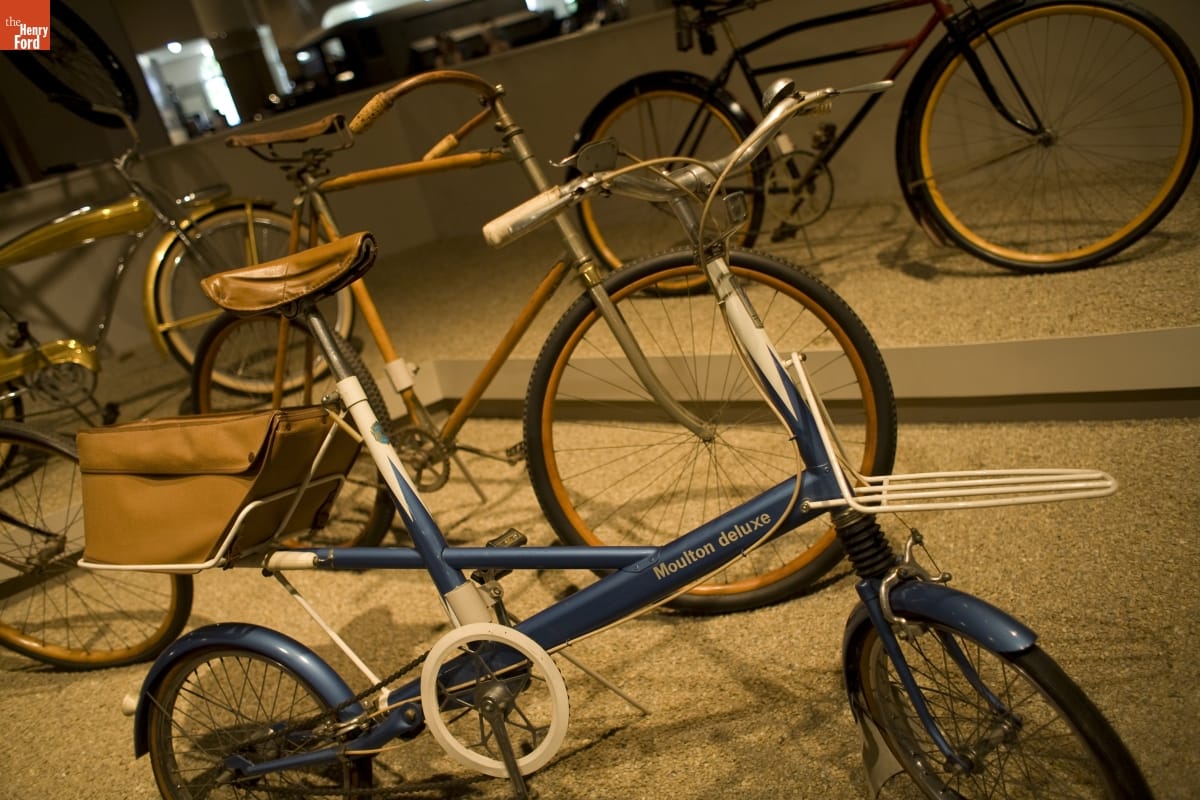
- Moulton Bicycle, 1963 - Dr. Alex Moulton took his knowledge of automobile shock absorbing systems (he worked on the suspension of the original Austin Mini) and applied it to a completely new bicycle design. The design integrated several innovative features -- a lightweight F-shaped frame, small wheels, high-pressure tires, advanced suspension -- with standard saddle, crank, pedals, and brakes.
- 1963
- Collections - Artifact
Moulton Bicycle, 1963
Dr. Alex Moulton took his knowledge of automobile shock absorbing systems (he worked on the suspension of the original Austin Mini) and applied it to a completely new bicycle design. The design integrated several innovative features -- a lightweight F-shaped frame, small wheels, high-pressure tires, advanced suspension -- with standard saddle, crank, pedals, and brakes.
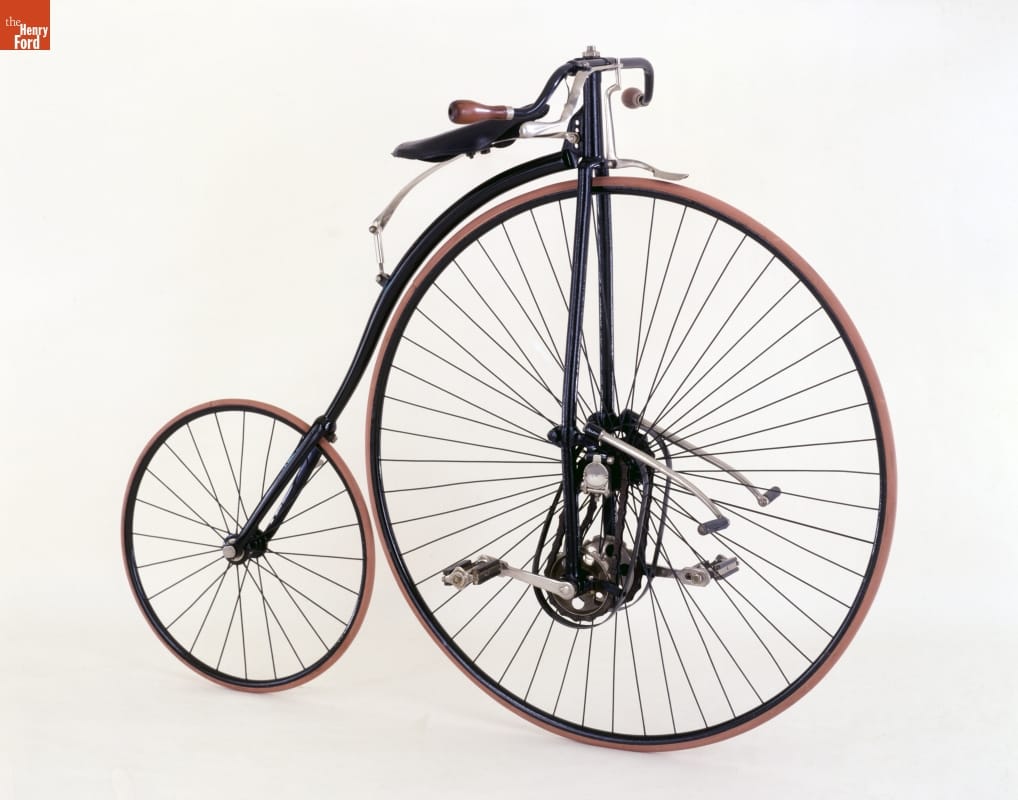
- Kangaroo Bicycle, 1885 - Cyclists in the early 1880s experienced a safer and faster ride on a British-made "Kangaroo." Its small 36-inch front wheel (compared to wheels over 50 inches on traditional bicycles) made the bicycle easier to mount -- and safer if the cyclist fell. Also, the innovative chain drive made the bicycle fast. A cyclist pedaling a "Kangaroo" traveled 100 miles in a little over seven hours -- a record in 1884.
- 1885
- Collections - Artifact
Kangaroo Bicycle, 1885
Cyclists in the early 1880s experienced a safer and faster ride on a British-made "Kangaroo." Its small 36-inch front wheel (compared to wheels over 50 inches on traditional bicycles) made the bicycle easier to mount -- and safer if the cyclist fell. Also, the innovative chain drive made the bicycle fast. A cyclist pedaling a "Kangaroo" traveled 100 miles in a little over seven hours -- a record in 1884.
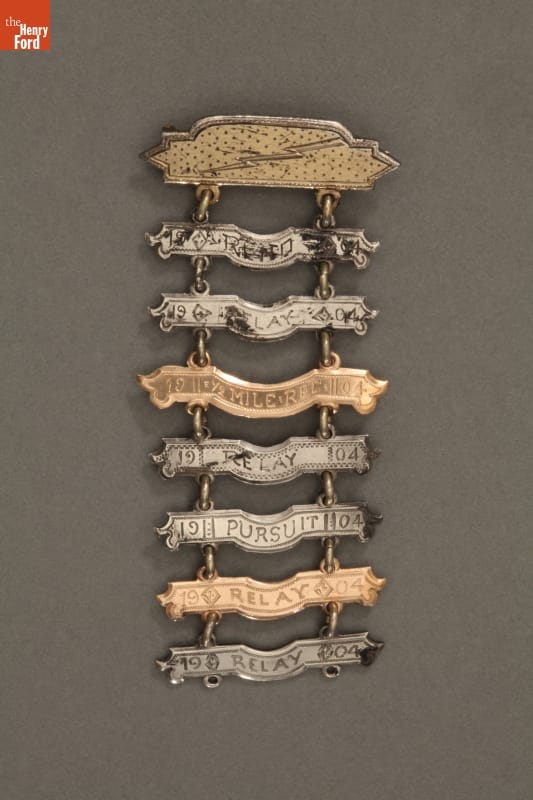
- Bicycling Medals, 1904 - Cyclists in the late 1800s and early 1900s joined clubs to promote bicycle issues, to tour the countryside, and -- for many athletic young men -- to race. Club members proudly displayed badges and medals that recalled their racing accomplishments. Henry McWhirter, a member of San Francisco's New Century Wheelmen, wore these competition bars.
- 1904
- Collections - Artifact
Bicycling Medals, 1904
Cyclists in the late 1800s and early 1900s joined clubs to promote bicycle issues, to tour the countryside, and -- for many athletic young men -- to race. Club members proudly displayed badges and medals that recalled their racing accomplishments. Henry McWhirter, a member of San Francisco's New Century Wheelmen, wore these competition bars.
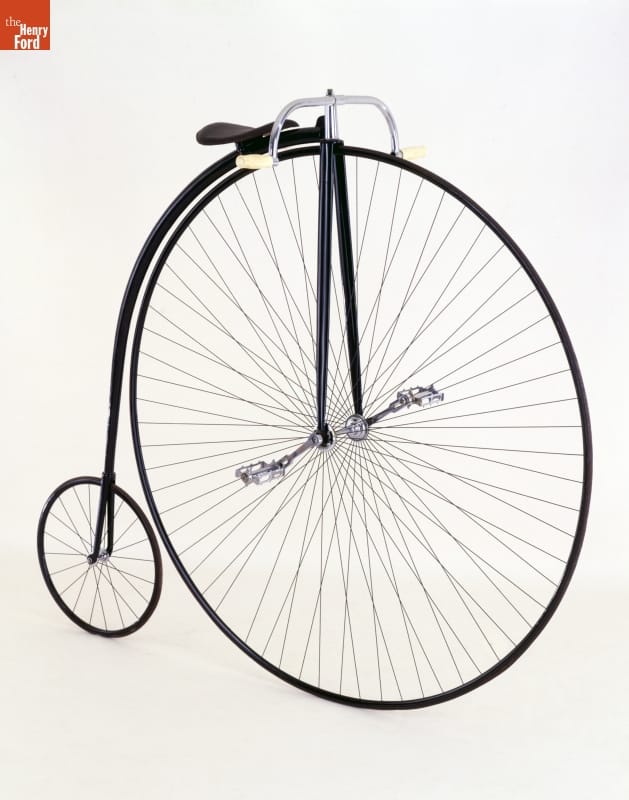
- Humber Racing Bicycle, 1886 - Many cyclists loved to race. This high-wheel racing model was made in 1886 by Humber and Company, an English firm. The cyclist would hump over the large front wheel -- this one is 55 inches tall -- trying to out-pedal competitors. By the early 1890s, a faster machine would prevail -- the low-mount safety with equal-sized wheels, chain drive, and pneumatic tires.
- 1886
- Collections - Artifact
Humber Racing Bicycle, 1886
Many cyclists loved to race. This high-wheel racing model was made in 1886 by Humber and Company, an English firm. The cyclist would hump over the large front wheel -- this one is 55 inches tall -- trying to out-pedal competitors. By the early 1890s, a faster machine would prevail -- the low-mount safety with equal-sized wheels, chain drive, and pneumatic tires.
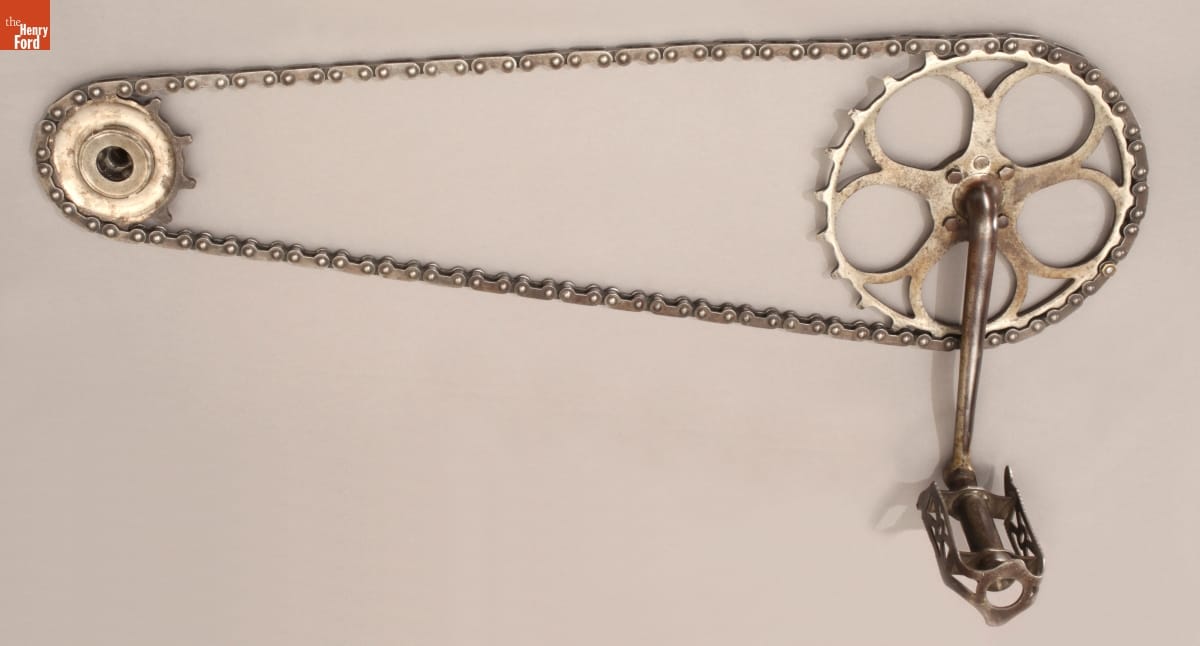
- Bicycle Drivetrain, 1890-1910 - The bicycle industry of the late 19th century became a model and resource for automobile builders everywhere. Inventors used bicycle technology -- such as chain drives, wire-spoked wheels, and pneumatic tires -- in many early autos. These drivetrain components came from an Iver Johnson bicycle made between 1890 and 1910.
- 1890-1910
- Collections - Artifact
Bicycle Drivetrain, 1890-1910
The bicycle industry of the late 19th century became a model and resource for automobile builders everywhere. Inventors used bicycle technology -- such as chain drives, wire-spoked wheels, and pneumatic tires -- in many early autos. These drivetrain components came from an Iver Johnson bicycle made between 1890 and 1910.