
Search
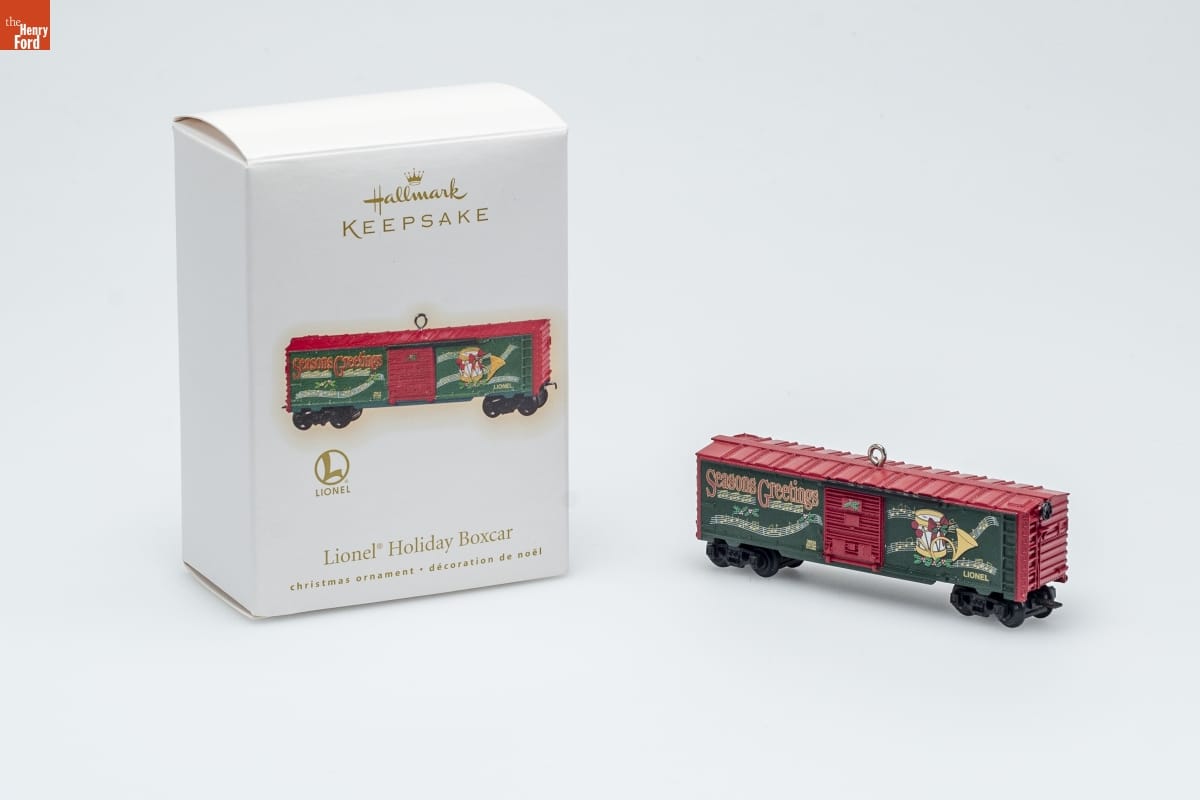
- Hallmark "Lionel Holiday Boxcar" Christmas Ornament, 2009 - Already known for greeting cards, Hallmark introduced a line of Christmas ornaments in 1973. The company's annual release of an increasing array of ornaments revolutionized Christmas decorating, appealing to customers' interest in marking memories and milestones as well as expressing one's personality and unique tastes.
- 2009
- Collections - Artifact
Hallmark "Lionel Holiday Boxcar" Christmas Ornament, 2009
Already known for greeting cards, Hallmark introduced a line of Christmas ornaments in 1973. The company's annual release of an increasing array of ornaments revolutionized Christmas decorating, appealing to customers' interest in marking memories and milestones as well as expressing one's personality and unique tastes.
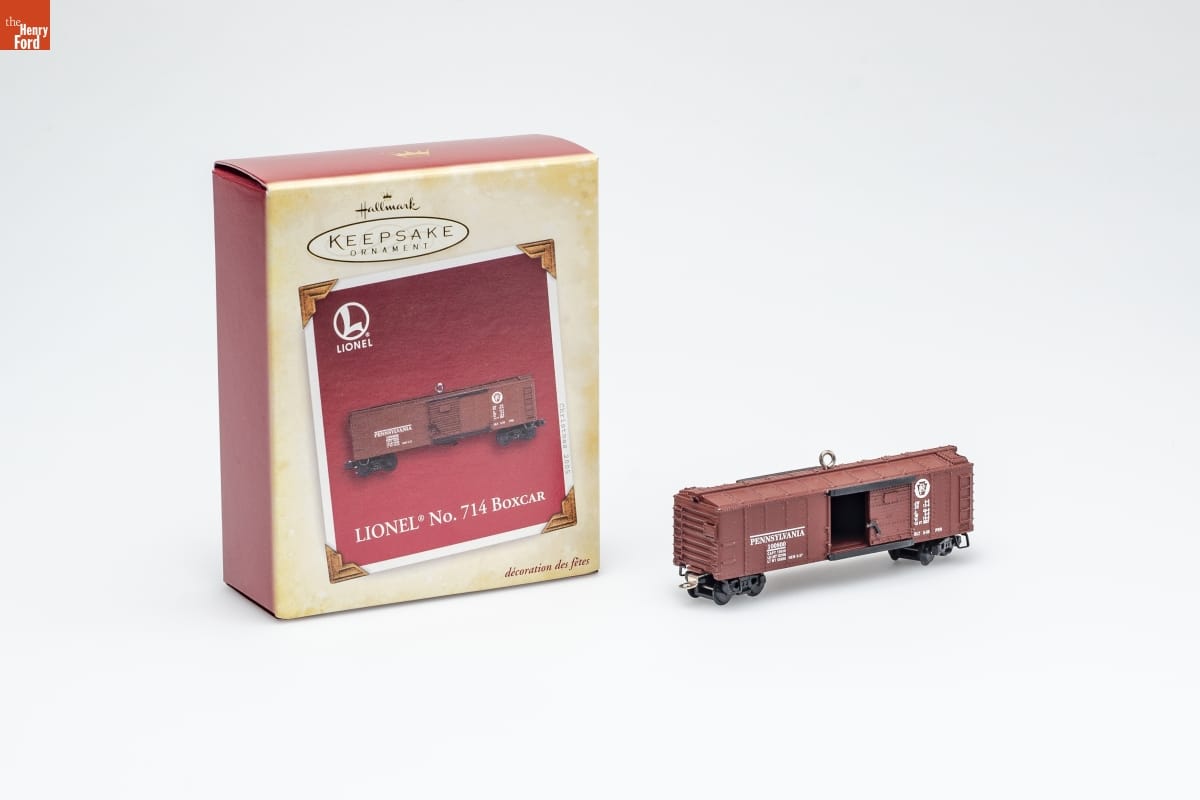
- Hallmark "LIONEL No. 714 Boxcar" Christmas Ornament, 2005 - Already known for greeting cards, Hallmark introduced a line of Christmas ornaments in 1973. The company's annual release of an increasing array of ornaments revolutionized Christmas decorating, appealing to customers' interest in marking memories and milestones as well as expressing one's personality and unique tastes.
- 2005
- Collections - Artifact
Hallmark "LIONEL No. 714 Boxcar" Christmas Ornament, 2005
Already known for greeting cards, Hallmark introduced a line of Christmas ornaments in 1973. The company's annual release of an increasing array of ornaments revolutionized Christmas decorating, appealing to customers' interest in marking memories and milestones as well as expressing one's personality and unique tastes.
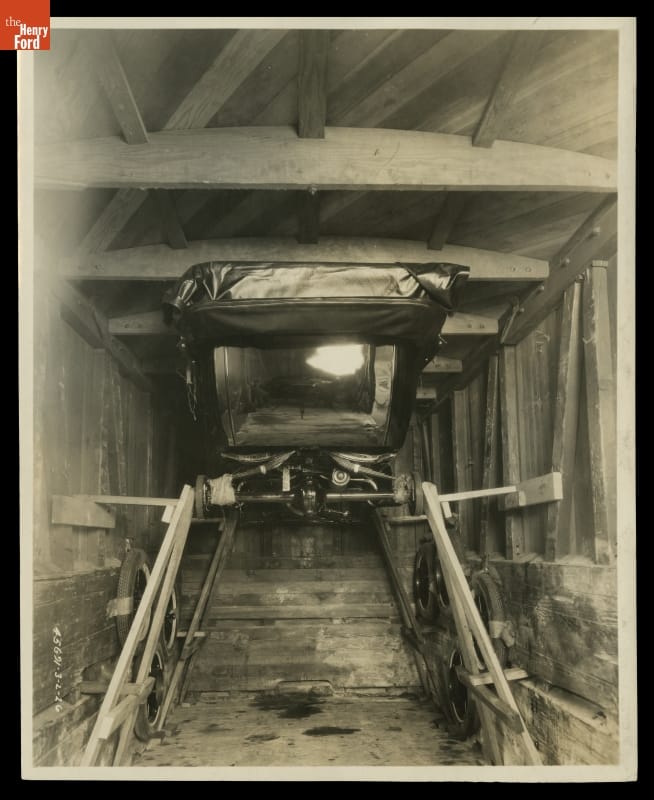
- Ford Model T Loaded into Boxcar for Shipment, 1926 - Ford Motor Company sent its Model T cars to destinations around the world. When moved by railroad, cars were partially disassembled to save space in boxcars. When going overseas, cars could either be partially disassembled and crated, or loaded into a ship's hold fully assembled. Gas, oil and water were usually drained from each vehicle to reduce weight.
- 1926
- Collections - Artifact
Ford Model T Loaded into Boxcar for Shipment, 1926
Ford Motor Company sent its Model T cars to destinations around the world. When moved by railroad, cars were partially disassembled to save space in boxcars. When going overseas, cars could either be partially disassembled and crated, or loaded into a ship's hold fully assembled. Gas, oil and water were usually drained from each vehicle to reduce weight.
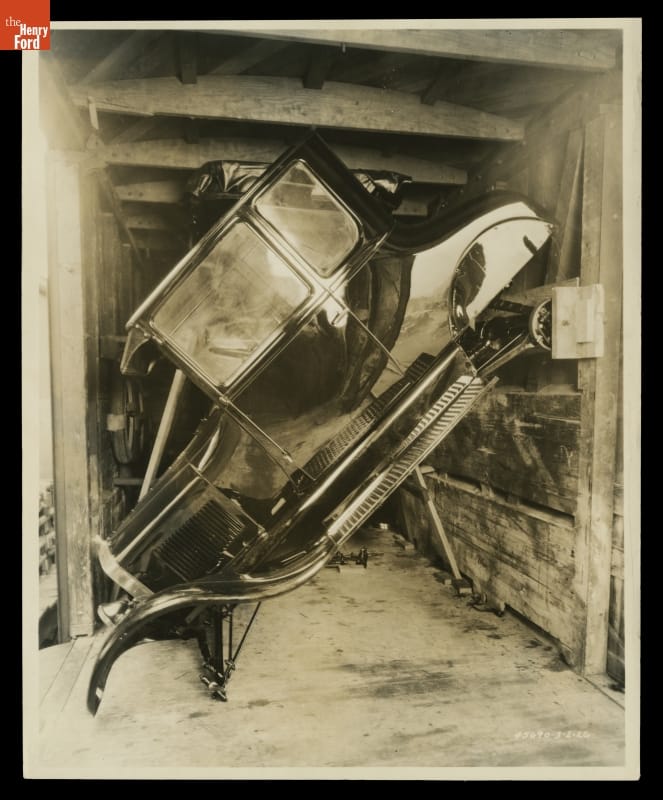
- Ford Model T Loaded into Boxcar for Shipment, Highland Park, Michigan, 1926 - Ford Motor Company sent its Model T cars to destinations around the world. When moved by railroad, cars were partially disassembled to save space in boxcars. When going overseas, cars could either be partially disassembled and crated, or loaded into a ship's hold fully assembled. Gas, oil and water were usually drained from each vehicle to reduce weight.
- March 01, 1926
- Collections - Artifact
Ford Model T Loaded into Boxcar for Shipment, Highland Park, Michigan, 1926
Ford Motor Company sent its Model T cars to destinations around the world. When moved by railroad, cars were partially disassembled to save space in boxcars. When going overseas, cars could either be partially disassembled and crated, or loaded into a ship's hold fully assembled. Gas, oil and water were usually drained from each vehicle to reduce weight.
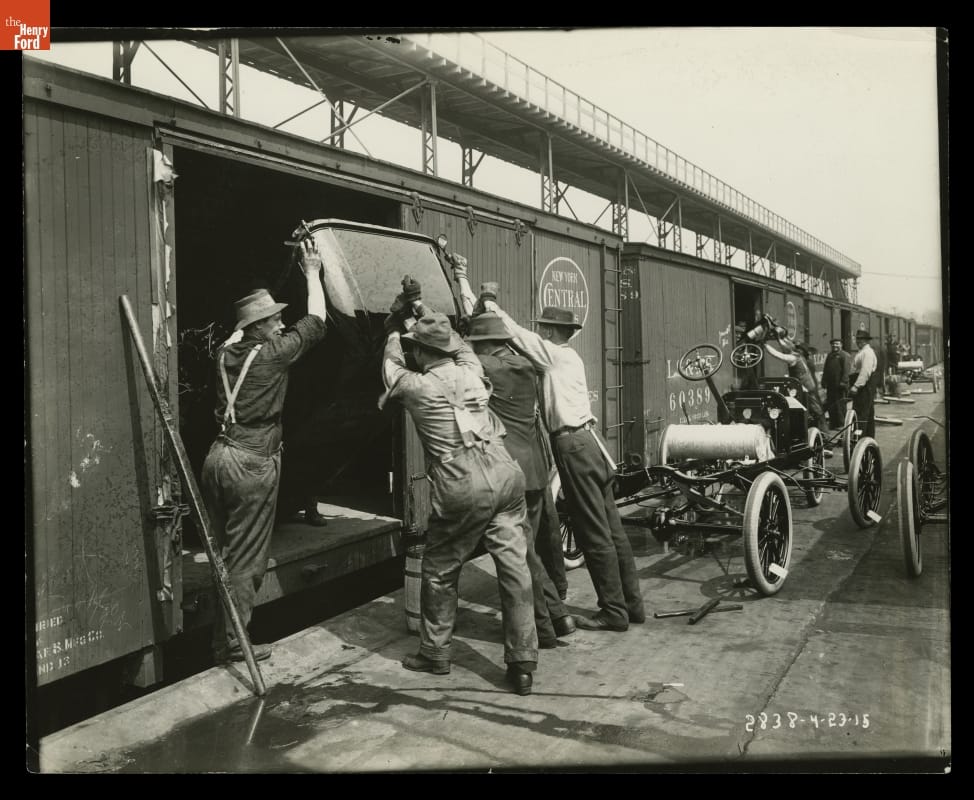
- Loading Ford Model T Parts into a Boxcar at the Highland Park Plant, Detroit, Michigan, 1915 - Four men were photographed loading a Model T body into a boxcar at Ford Motor Company's Highland Park plant in 1915. To save space, workers generally packed bodies and chassis separately. These boxcars belonged to the Lake Shore & Michigan Southern Railway, a subsidiary of the New York Central Railroad.
- April 23, 1915
- Collections - Artifact
Loading Ford Model T Parts into a Boxcar at the Highland Park Plant, Detroit, Michigan, 1915
Four men were photographed loading a Model T body into a boxcar at Ford Motor Company's Highland Park plant in 1915. To save space, workers generally packed bodies and chassis separately. These boxcars belonged to the Lake Shore & Michigan Southern Railway, a subsidiary of the New York Central Railroad.
- A Selection of Hallmark Ornaments: Railroad Freight Cars - <p>Hallmark's ornaments — with their original designs, increasing variety, and appeal to diverse customers — have revolutionized Christmas decorating and led to the popularity of ornament collecting. Trains are a perpetually popular subject for Hallmark ornaments. This set features a selection of railroad freight cars.</p>

- April 26, 2023
- Collections - Set
A Selection of Hallmark Ornaments: Railroad Freight Cars
Hallmark's ornaments — with their original designs, increasing variety, and appeal to diverse customers — have revolutionized Christmas decorating and led to the popularity of ornament collecting. Trains are a perpetually popular subject for Hallmark ornaments. This set features a selection of railroad freight cars.
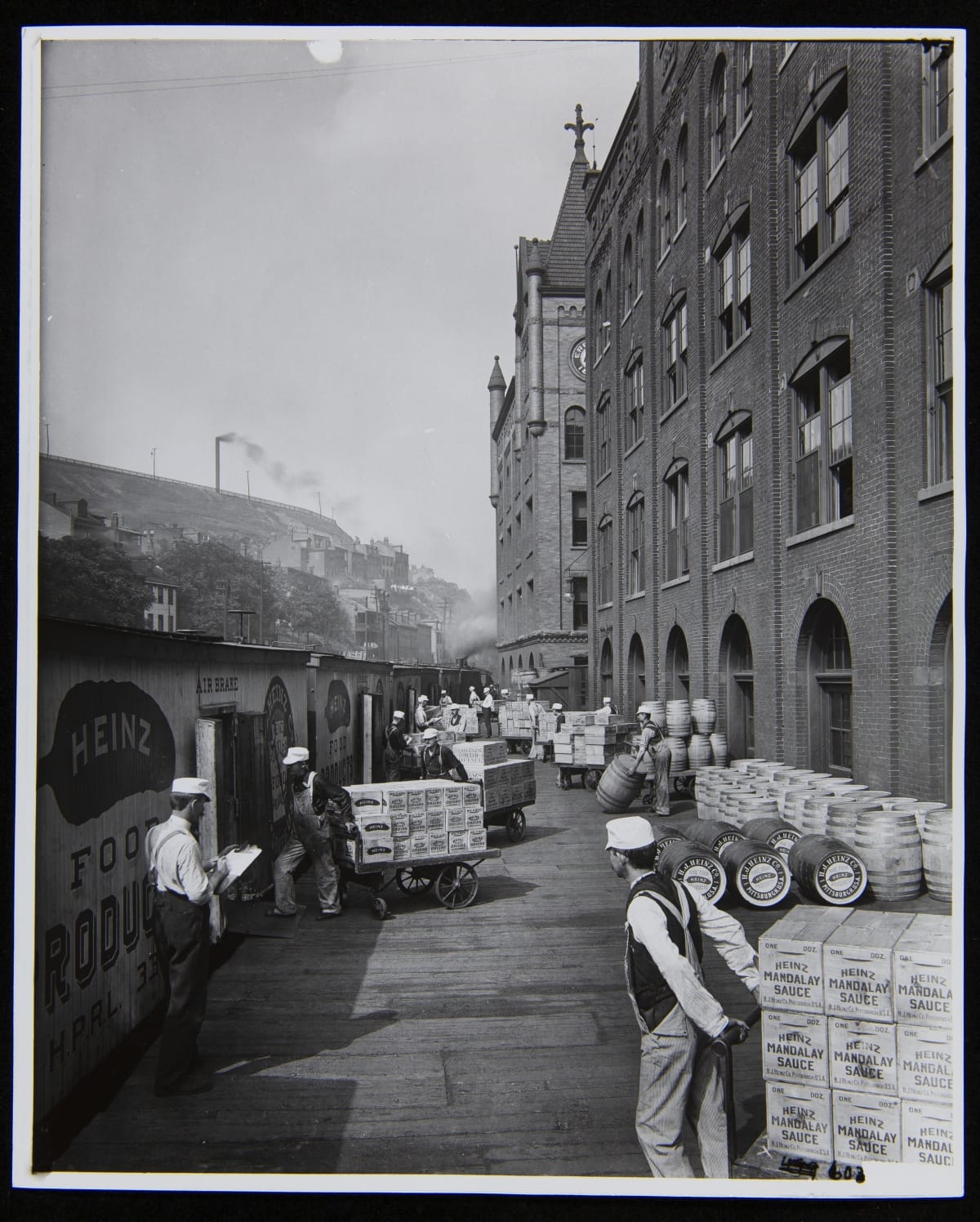
- Railroad Car Loading Platform at H. J. Heinz Company Main Plant, Pittsburgh, Pennsylvania, 1905 - The H.J. Heinz Company had its own line of railroad cars and designated tracks, which brought the trains to the loading platform alongside the main plant in Pittsburgh, Pennsylvania. This greatly reduced the time needed to load the cars as employees could bring boxes and crates right out of the factory and into the train cars. This photograph shows the loading platform at the main plant.
- 1905
- Collections - Artifact
Railroad Car Loading Platform at H. J. Heinz Company Main Plant, Pittsburgh, Pennsylvania, 1905
The H.J. Heinz Company had its own line of railroad cars and designated tracks, which brought the trains to the loading platform alongside the main plant in Pittsburgh, Pennsylvania. This greatly reduced the time needed to load the cars as employees could bring boxes and crates right out of the factory and into the train cars. This photograph shows the loading platform at the main plant.
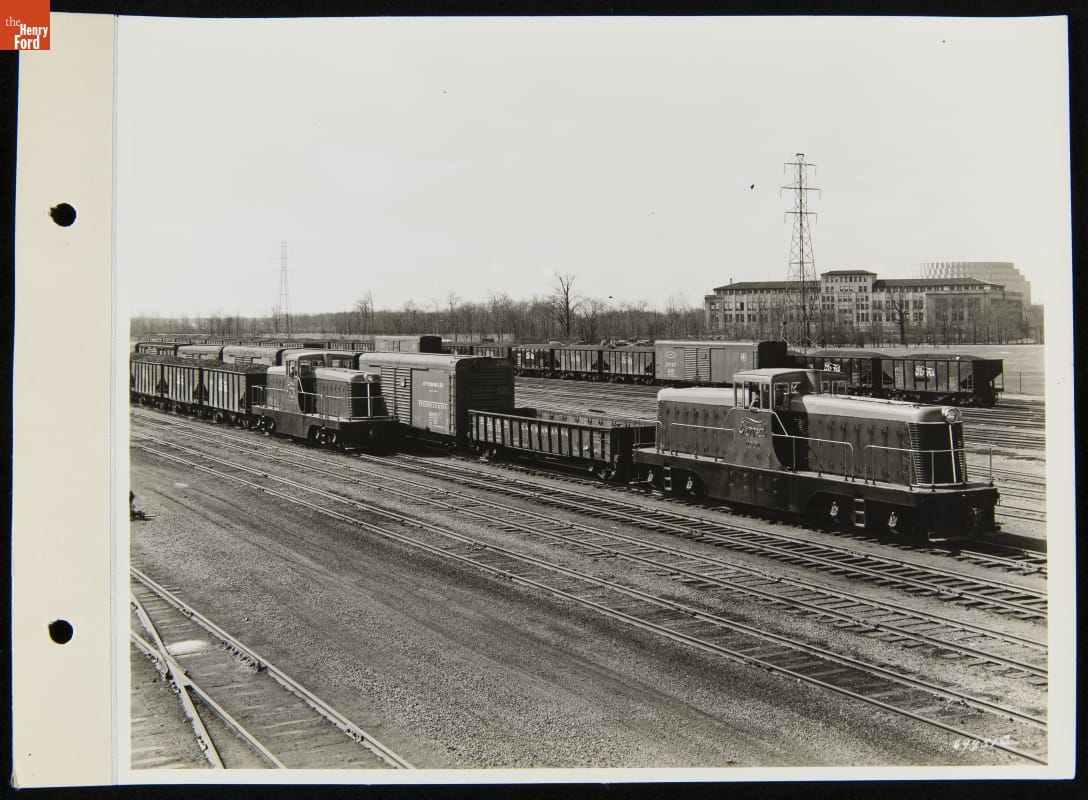
- Ford Rouge Railroad - Ford Motor Company operated its own industrial railroad at the Rouge factory. Ford-owned locomotives moved incoming railcars filled with raw materials, and outgoing railcars loaded with finished parts and vehicles. Ford employees crewed trains, cared for locomotives, and maintained 100 miles of track within the factory grounds. At its 1930s peak, Ford's Rouge railroad was one of the largest privately owned rail operations in the world.
- October 03, 2023
- Collections - Set
Ford Rouge Railroad
Ford Motor Company operated its own industrial railroad at the Rouge factory. Ford-owned locomotives moved incoming railcars filled with raw materials, and outgoing railcars loaded with finished parts and vehicles. Ford employees crewed trains, cared for locomotives, and maintained 100 miles of track within the factory grounds. At its 1930s peak, Ford's Rouge railroad was one of the largest privately owned rail operations in the world.
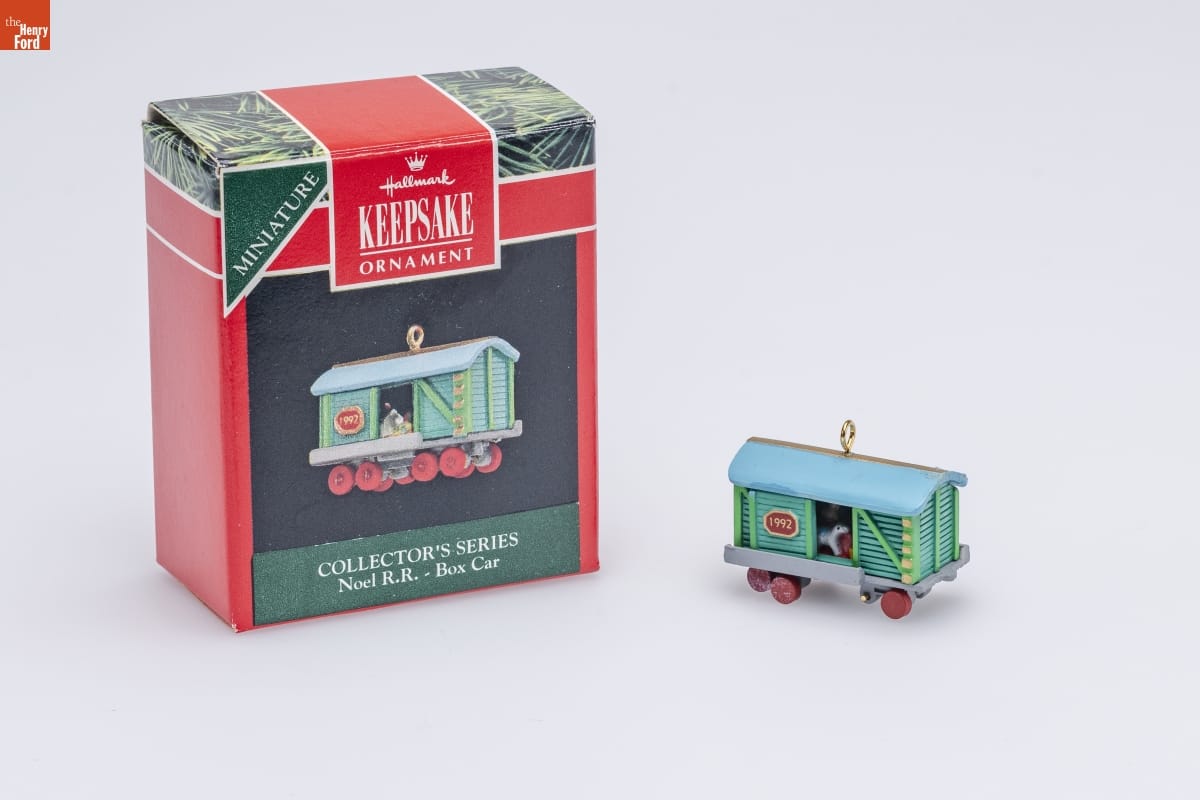
- Hallmark "Noel R.R. Series: Box Car" Miniature Christmas Ornament, 1992 - Already known for greeting cards, Hallmark introduced a line of Christmas ornaments in 1973. The company's annual release of an increasing array of ornaments revolutionized Christmas decorating, appealing to customers' interest in marking memories and milestones as well as expressing one's personality and unique tastes.
- 1992
- Collections - Artifact
Hallmark "Noel R.R. Series: Box Car" Miniature Christmas Ornament, 1992
Already known for greeting cards, Hallmark introduced a line of Christmas ornaments in 1973. The company's annual release of an increasing array of ornaments revolutionized Christmas decorating, appealing to customers' interest in marking memories and milestones as well as expressing one's personality and unique tastes.
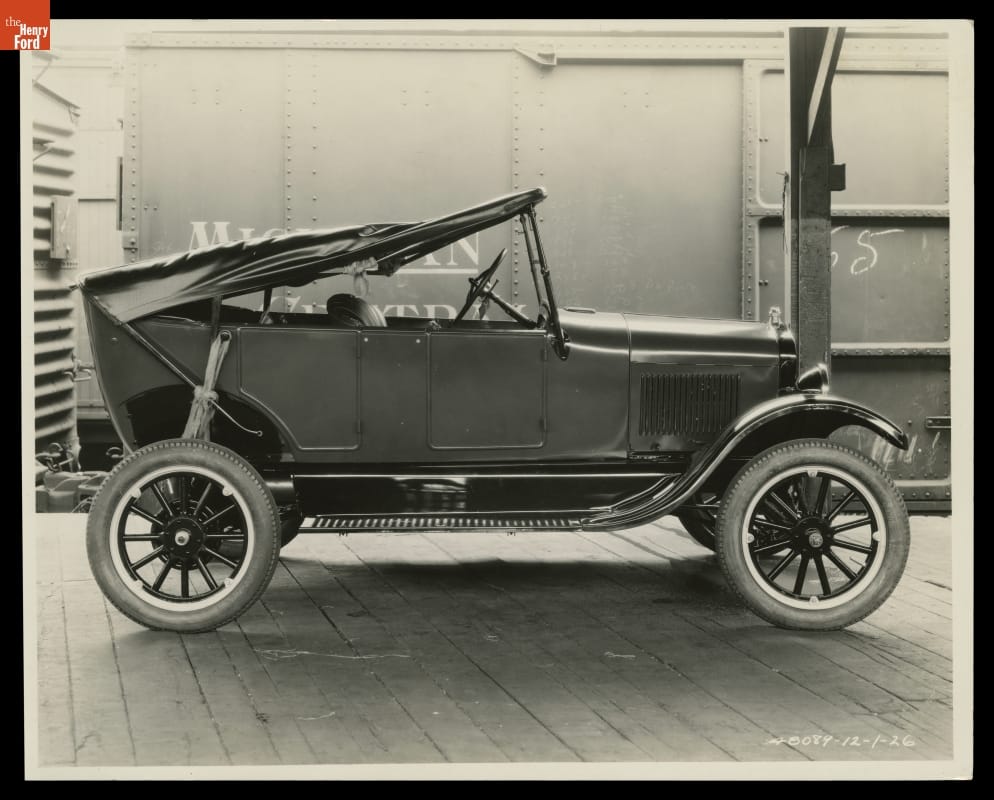
- Ford Model T Automobile Ready for Shipment, 1926 - Ford Motor Company sent its Model T cars to destinations around the world. When moved by railroad, cars were partially disassembled to save space in boxcars. When going overseas, cars could either be partially disassembled and crated, or loaded into a ship's hold fully assembled. Gas, oil and water were usually drained from each vehicle to reduce weight.
- 1926
- Collections - Artifact
Ford Model T Automobile Ready for Shipment, 1926
Ford Motor Company sent its Model T cars to destinations around the world. When moved by railroad, cars were partially disassembled to save space in boxcars. When going overseas, cars could either be partially disassembled and crated, or loaded into a ship's hold fully assembled. Gas, oil and water were usually drained from each vehicle to reduce weight.