
Search
- Printing Presses: Information Machines - In honor of our current exhibit House Industries: A Type of Learning, we take a closer look at printing presses in our collection.

- June 14, 2017
- Collections - article
Printing Presses: Information Machines
In honor of our current exhibit House Industries: A Type of Learning, we take a closer look at printing presses in our collection.
- "Victor & Young America Printing Presses, Type and Supplies," circa 1900 -
- circa 1900
- Collections - Artifact
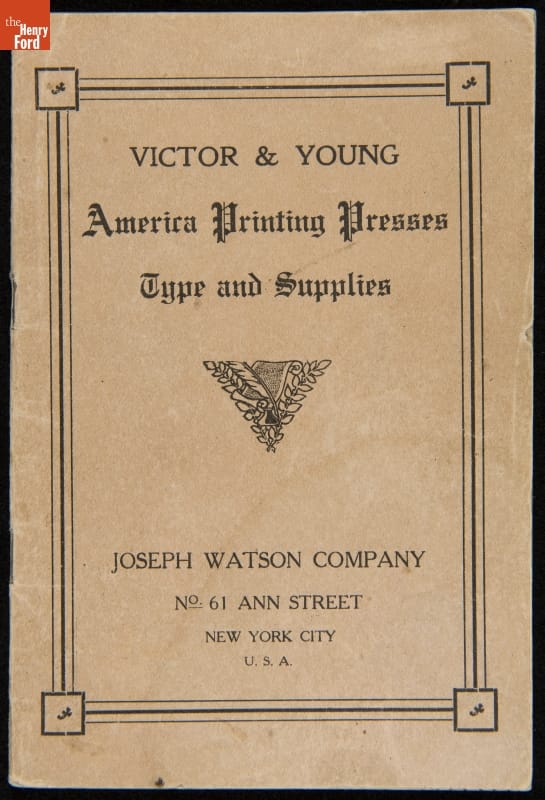
"Victor & Young America Printing Presses, Type and Supplies," circa 1900
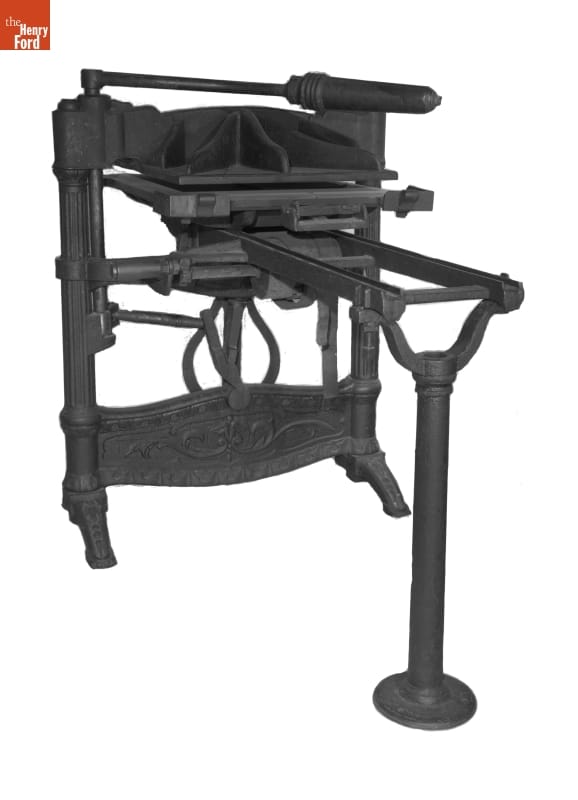
- Foster's Printing Press, 1852-1857 - This printing press turned the commonly accepted image of a press upside down. Instead of pressing paper down onto a bed of inked type, a lever pushed the inked type up to the paper. And while it functioned similarly to the widespread Washington press, the dramatic reversal of the Foster press caused printers to be skeptical of its practicality.
- 1852-1857
- Collections - Artifact
Foster's Printing Press, 1852-1857
This printing press turned the commonly accepted image of a press upside down. Instead of pressing paper down onto a bed of inked type, a lever pushed the inked type up to the paper. And while it functioned similarly to the widespread Washington press, the dramatic reversal of the Foster press caused printers to be skeptical of its practicality.
- Durant Printing Press Counter, 1880-1900 -
- 1880-1890
- Collections - Artifact
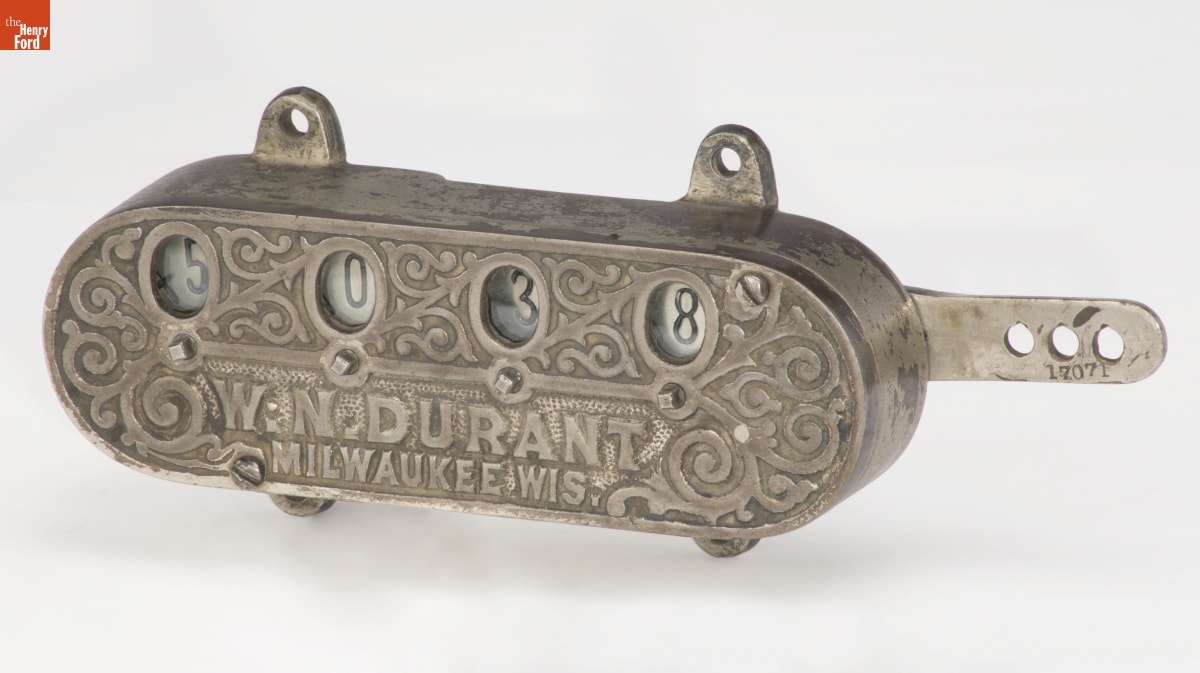
Durant Printing Press Counter, 1880-1900
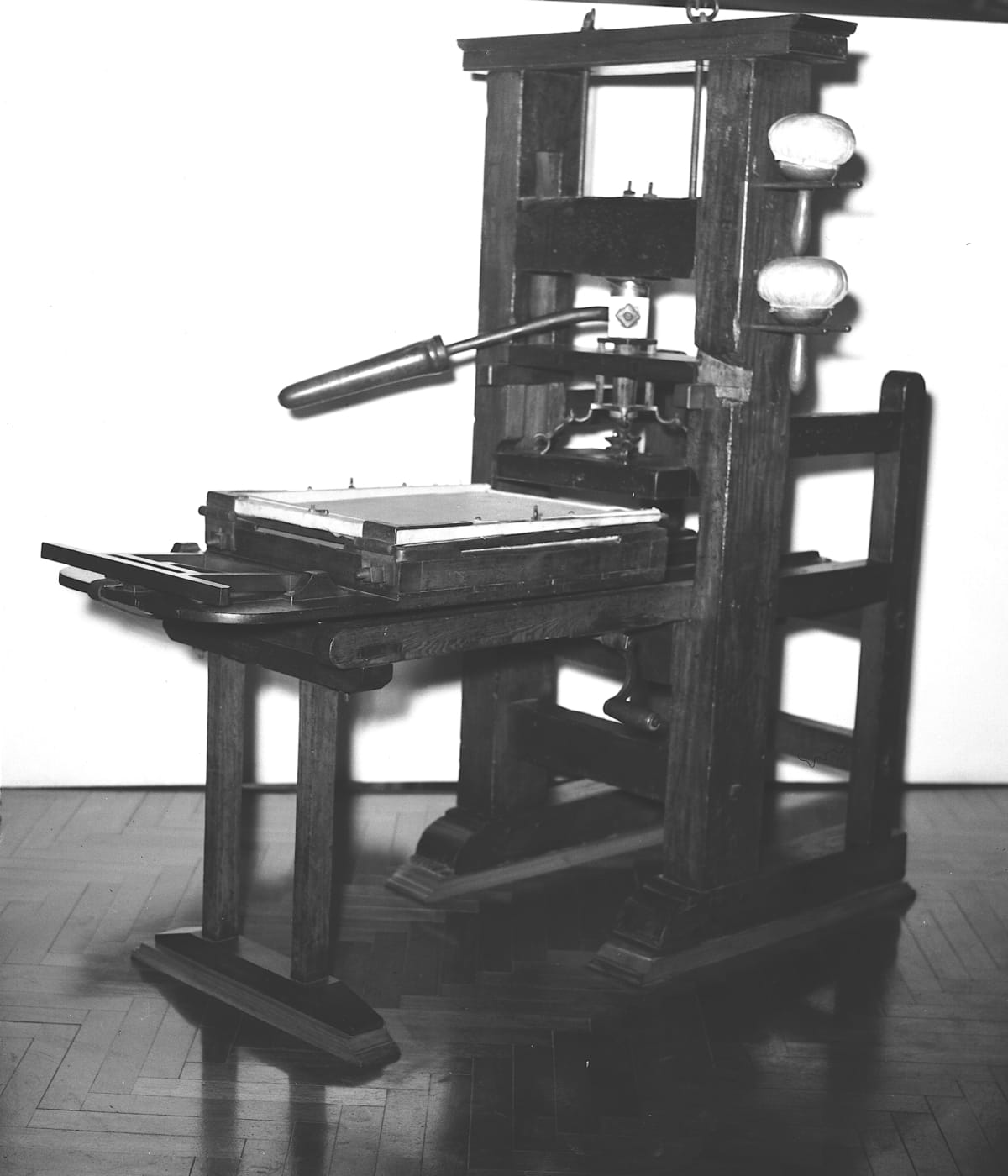
- Ramage Hand-lever Printing Press, circa 1809 - This hand-operated printing press is one of the oldest remaining in the United States. America's premier press maker, Adam Ramage, made it in Philadelphia in about 1809. He was the first American to improve printing presses and began a tradition of American innovations in printing press design. With this press, two journeymen printers printed about 250 one-sided sheets per hour.
- circa 1809
- Collections - Artifact
Ramage Hand-lever Printing Press, circa 1809
This hand-operated printing press is one of the oldest remaining in the United States. America's premier press maker, Adam Ramage, made it in Philadelphia in about 1809. He was the first American to improve printing presses and began a tradition of American innovations in printing press design. With this press, two journeymen printers printed about 250 one-sided sheets per hour.
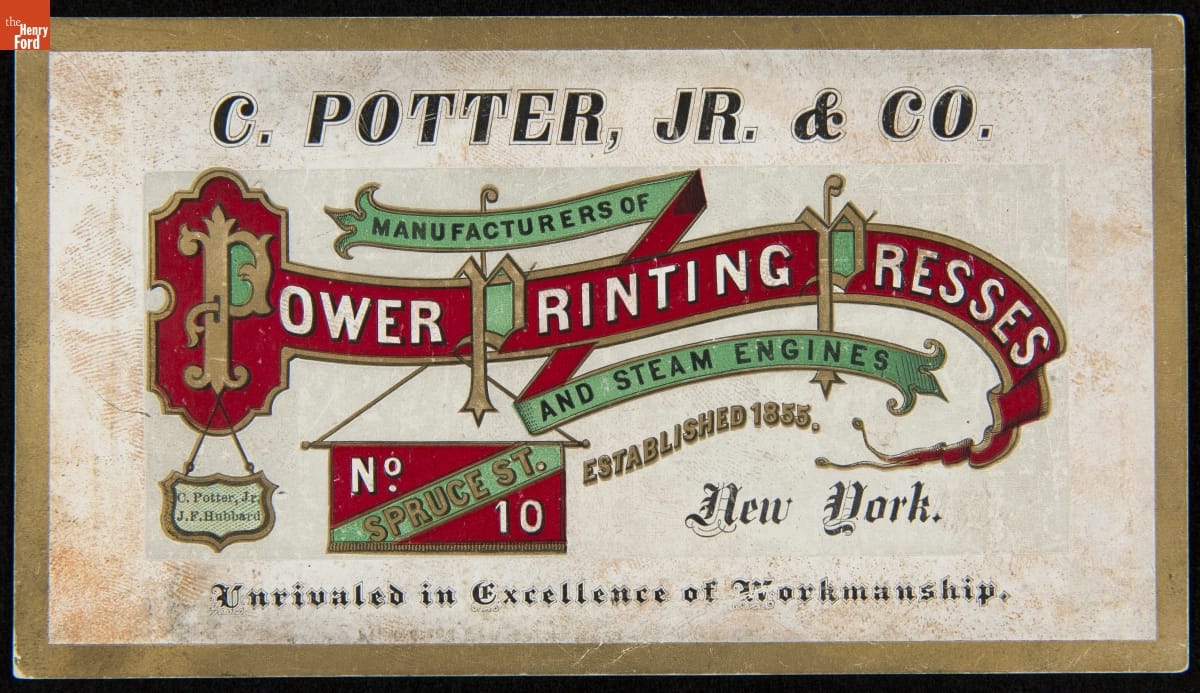
- "C. Potter, Jr. & Co. Manufacturers of Power Printing Presses and Steam Engines," circa 1890 - In the last third of the nineteenth century, an unprecedented variety of consumer goods and services flooded the American market. Advertisers bombarded potential customers with trade cards. Americans enjoyed and saved the often illustrated little advertisements found in product packages or distributed by local merchants. Many survive as historical records of commercialism in the United States.
- circa 1890
- Collections - Artifact
"C. Potter, Jr. & Co. Manufacturers of Power Printing Presses and Steam Engines," circa 1890
In the last third of the nineteenth century, an unprecedented variety of consumer goods and services flooded the American market. Advertisers bombarded potential customers with trade cards. Americans enjoyed and saved the often illustrated little advertisements found in product packages or distributed by local merchants. Many survive as historical records of commercialism in the United States.
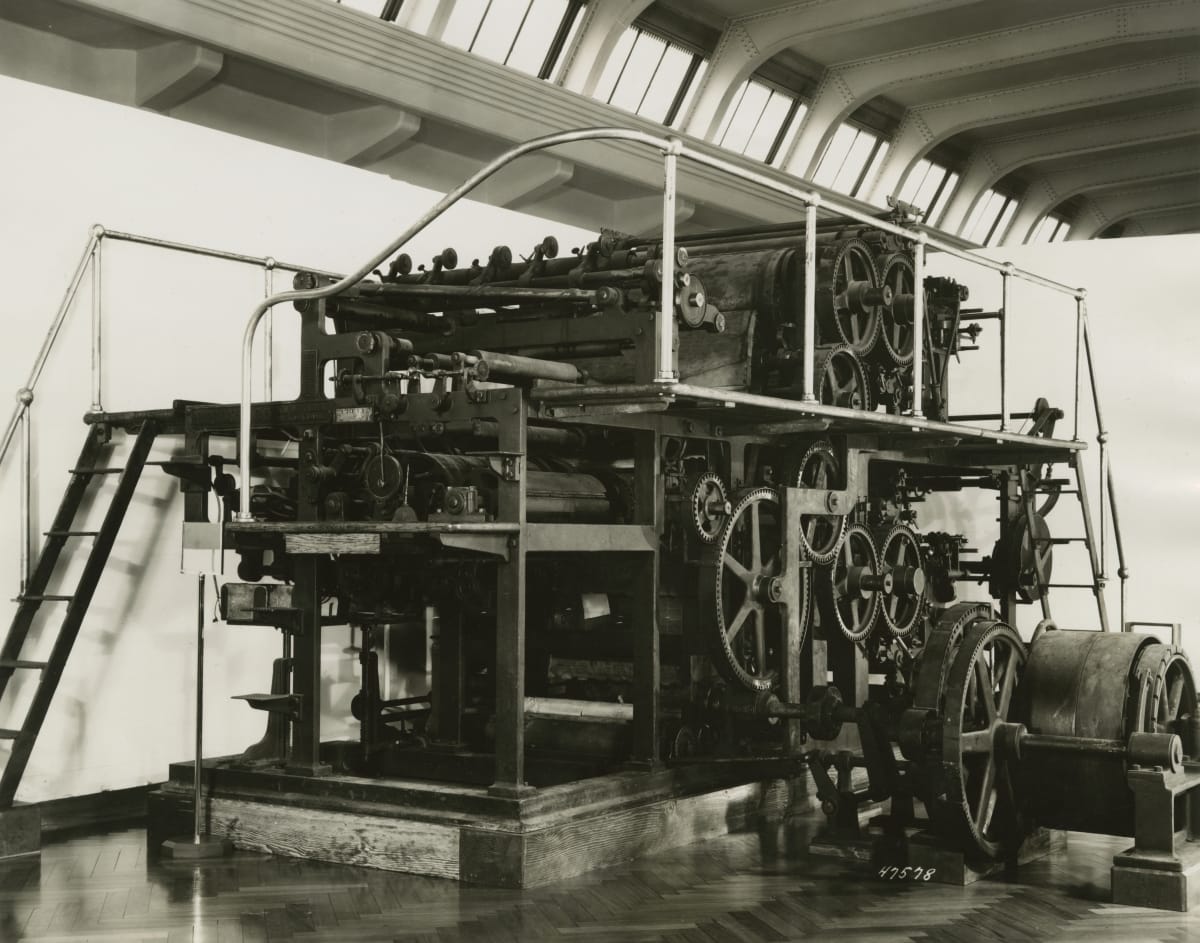
- Rotary Press, Used to Print the Dearborn Independent - This printing press was used to print <em>The Dearborn Independent</em>. Henry Ford purchased the weekly newspaper and published it under his name from 1919 to 1927. The <em>Independent</em> served as a forum for Ford's views, free from other media outlets that had attacked his work and values and were outside his control. <em>The Dearborn Independent</em> covered world events, business and economic news, and fiction from noted authors. Sadly, it also served as an outlet for Ford's anti-Semitic sentiments. Between 1920 and 1922, the paper ran a series of front-page articles that denounced all things Jewish. Even after this series, many articles contained anti-Jewish language. Though Ford later apologized and printed a retraction, these notoriously anti-Semitic editorials and articles forever tarnished the influential automaker's reputation.
- circa 1900
- Collections - Artifact
Rotary Press, Used to Print the Dearborn Independent
This printing press was used to print The Dearborn Independent. Henry Ford purchased the weekly newspaper and published it under his name from 1919 to 1927. The Independent served as a forum for Ford's views, free from other media outlets that had attacked his work and values and were outside his control. The Dearborn Independent covered world events, business and economic news, and fiction from noted authors. Sadly, it also served as an outlet for Ford's anti-Semitic sentiments. Between 1920 and 1922, the paper ran a series of front-page articles that denounced all things Jewish. Even after this series, many articles contained anti-Jewish language. Though Ford later apologized and printed a retraction, these notoriously anti-Semitic editorials and articles forever tarnished the influential automaker's reputation.
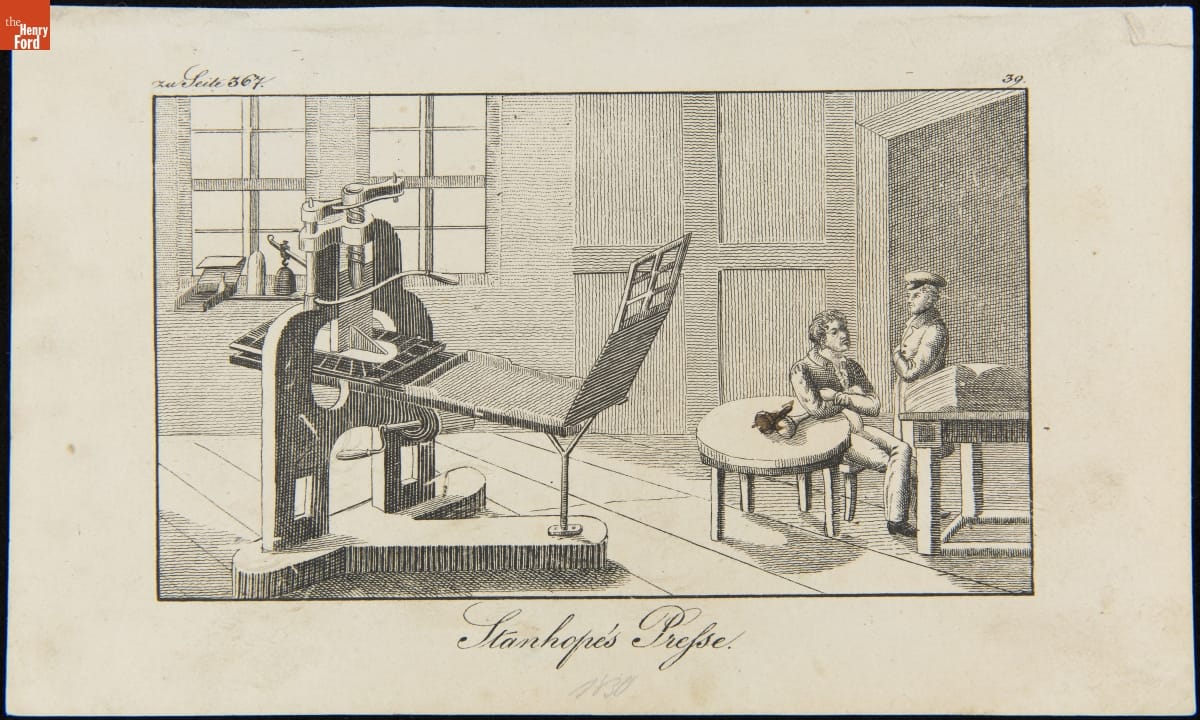
- Engraving Showing a Stanhope Printing Press, circa 1830 -
- circa 1830
- Collections - Artifact
Engraving Showing a Stanhope Printing Press, circa 1830
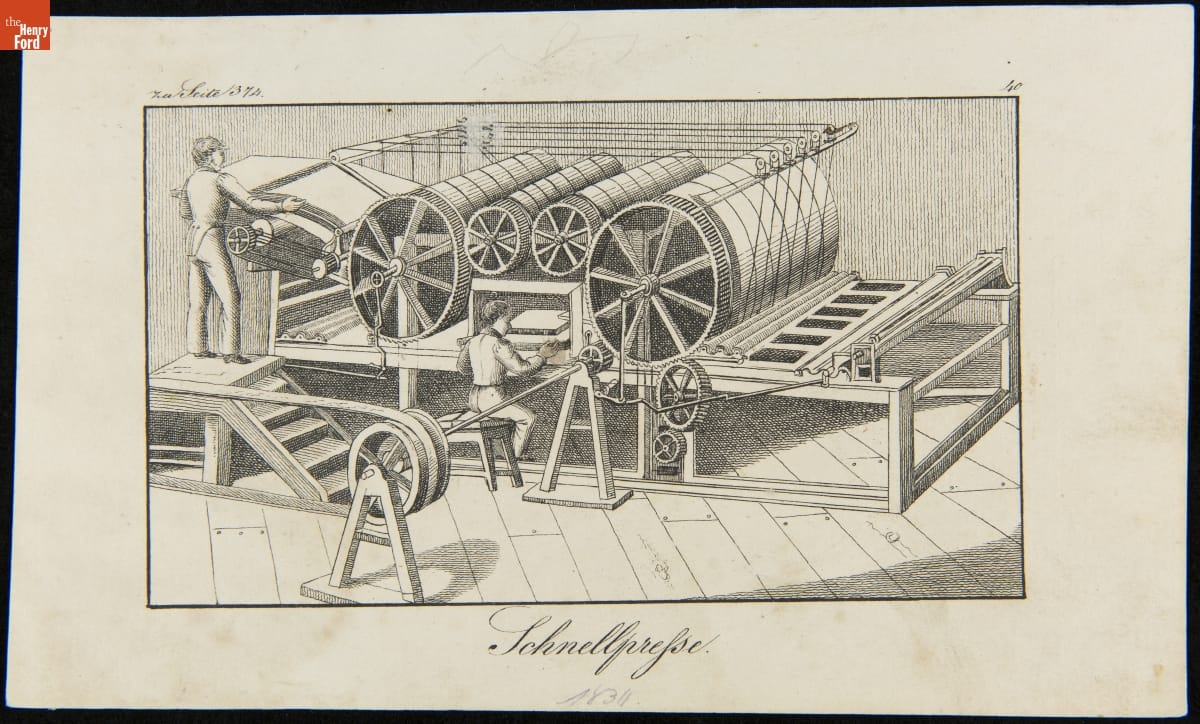
- Man Working at a Printing Press, "Schnellpresse," circa 1830 -
- circa 1830
- Collections - Artifact
Man Working at a Printing Press, "Schnellpresse," circa 1830
- Toy Printing Press, Used by James Greenhoe, 1939-1946 -
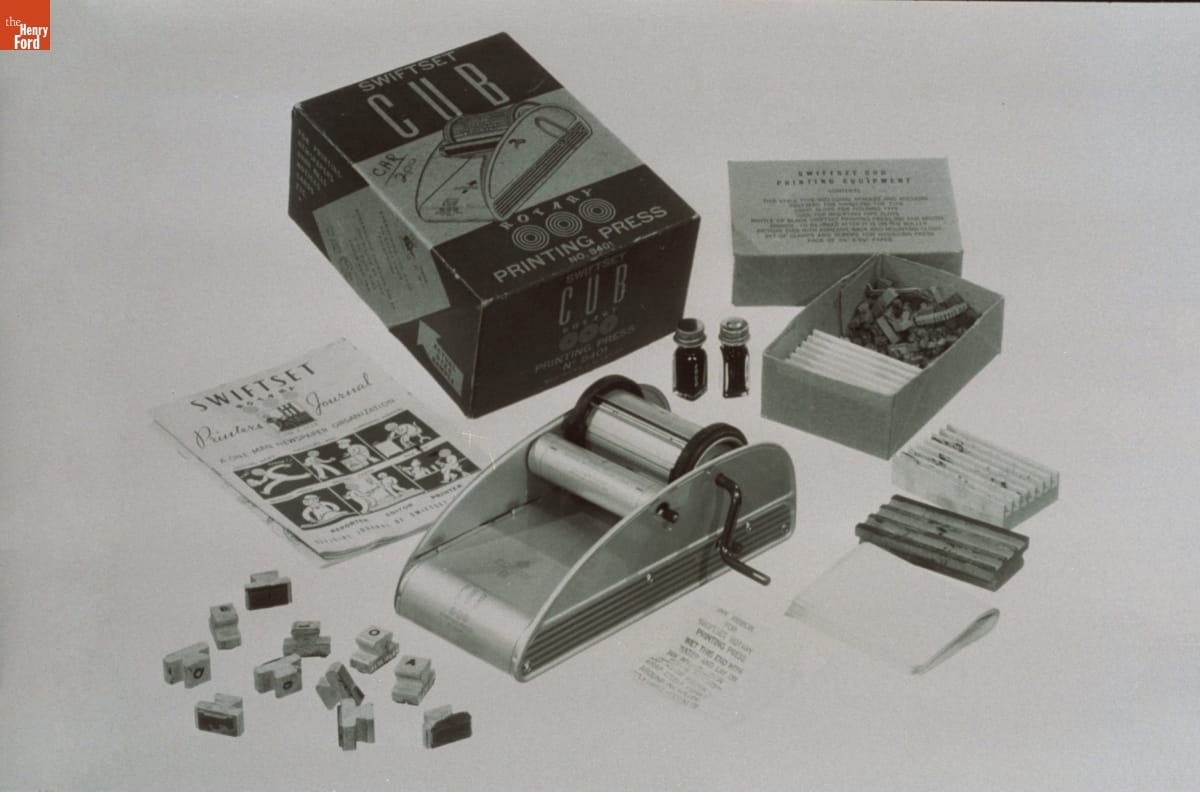
- 1939-1946
- Collections - Artifact
Toy Printing Press, Used by James Greenhoe, 1939-1946