
Search
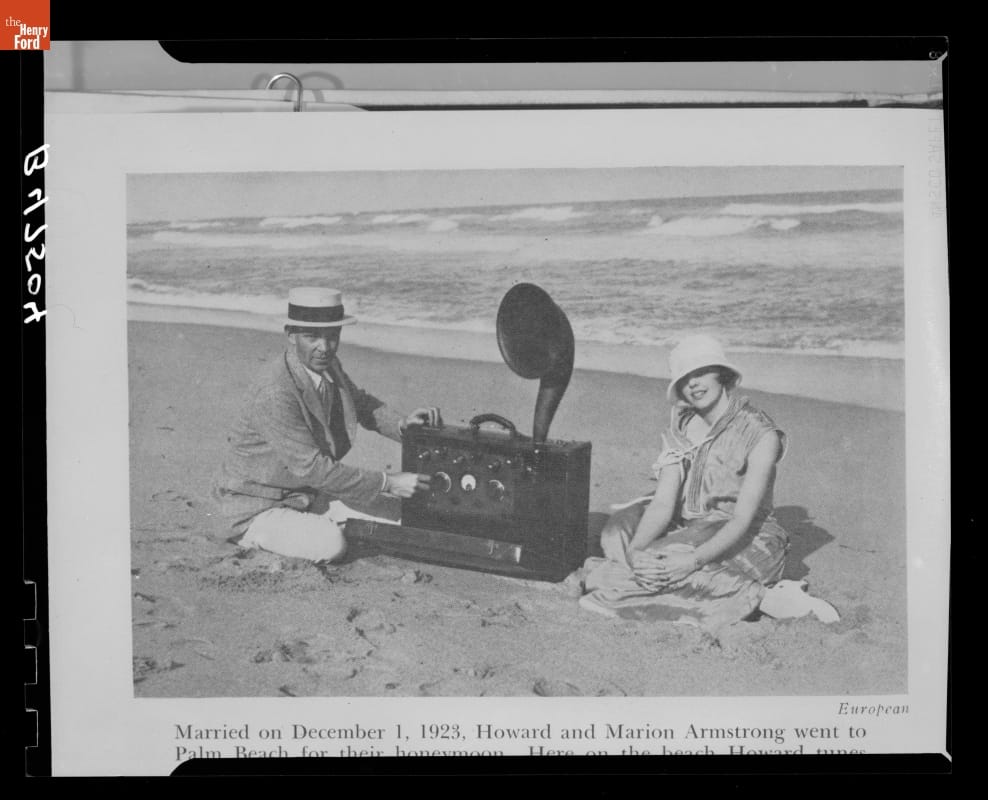
- Edwin H. Armstrong and Marion Armstrong with the First Portable Superheterodyne Radio Receiver, 1923 - Edwin H. Armstrong was a pioneer of radio engineering, credited as the inventor of FM radio. In 1918 he filed a patent for the superheterodyne radio circuit. This technology increased the sensitivity and selectivity of radio receivers. The radio depicted is the first portable superheterodyne radio receiver ever made. Armstrong gave it to his wife, Marion, on their 1923 honeymoon.
- January 01, 1923
- Collections - Artifact
Edwin H. Armstrong and Marion Armstrong with the First Portable Superheterodyne Radio Receiver, 1923
Edwin H. Armstrong was a pioneer of radio engineering, credited as the inventor of FM radio. In 1918 he filed a patent for the superheterodyne radio circuit. This technology increased the sensitivity and selectivity of radio receivers. The radio depicted is the first portable superheterodyne radio receiver ever made. Armstrong gave it to his wife, Marion, on their 1923 honeymoon.
- First Portable Superheterodyne Radio Receiver, Made by Edwin Howard Armstrong, 1923 - Edwin H. Armstrong was a pioneer of radio engineering, credited as the inventor of FM radio. In 1918 he filed a patent for the superheterodyne radio circuit. This technology increased the sensitivity and selectivity of radio receivers. The radio depicted is the first portable superheterodyne radio receiver ever made. Armstrong gave it to his wife, Marion, on their 1923 honeymoon.

- 1923
- Collections - Artifact
First Portable Superheterodyne Radio Receiver, Made by Edwin Howard Armstrong, 1923
Edwin H. Armstrong was a pioneer of radio engineering, credited as the inventor of FM radio. In 1918 he filed a patent for the superheterodyne radio circuit. This technology increased the sensitivity and selectivity of radio receivers. The radio depicted is the first portable superheterodyne radio receiver ever made. Armstrong gave it to his wife, Marion, on their 1923 honeymoon.
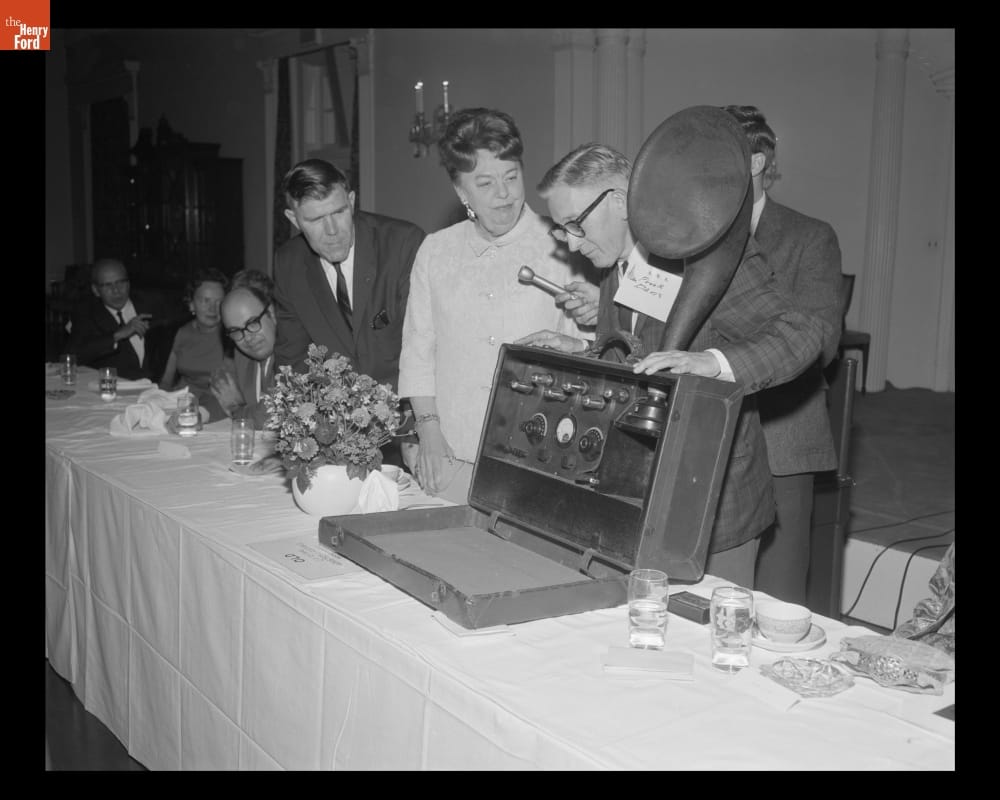
- Marion Armstrong Presents the First Portable Superheterodyne Radio Receiver to Henry Ford Museum, September 22, 1967 - This photograph shows the first portable superheterodyne radio receiver, designed by Edwin Armstrong. Superheterodying was a major communications discovery made by Armstrong. High and low frequencies were mixed to produce powerful, selective radio waves. Following his untimely death, Edwin's wife Marion Armstrong continued to preserve his legacy; she donated this radio to The Henry Ford museum in 1967.
- September 22, 1967
- Collections - Artifact
Marion Armstrong Presents the First Portable Superheterodyne Radio Receiver to Henry Ford Museum, September 22, 1967
This photograph shows the first portable superheterodyne radio receiver, designed by Edwin Armstrong. Superheterodying was a major communications discovery made by Armstrong. High and low frequencies were mixed to produce powerful, selective radio waves. Following his untimely death, Edwin's wife Marion Armstrong continued to preserve his legacy; she donated this radio to The Henry Ford museum in 1967.
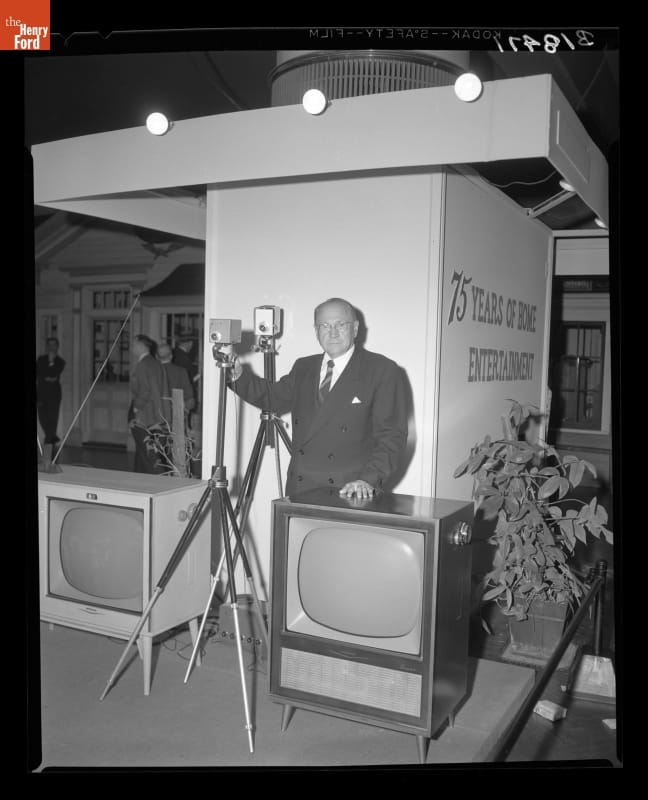
- Heroes of Radio and Television at The Henry Ford - Vladimir Zworykin was an early pioneer of television development, employed by Westinghouse and the Radio Corporation of America. Zworykin's iconoscope and kinescope picture tubes were breakthroughs in television history. Together they allowed electronic television to become a viable technology. Zworykin also headed the creation of the electron microscope and infrared tubes used in night vision "sniperscopes" during WWII.
- April 25, 2017
- Collections - Set
Heroes of Radio and Television at The Henry Ford
Vladimir Zworykin was an early pioneer of television development, employed by Westinghouse and the Radio Corporation of America. Zworykin's iconoscope and kinescope picture tubes were breakthroughs in television history. Together they allowed electronic television to become a viable technology. Zworykin also headed the creation of the electron microscope and infrared tubes used in night vision "sniperscopes" during WWII.
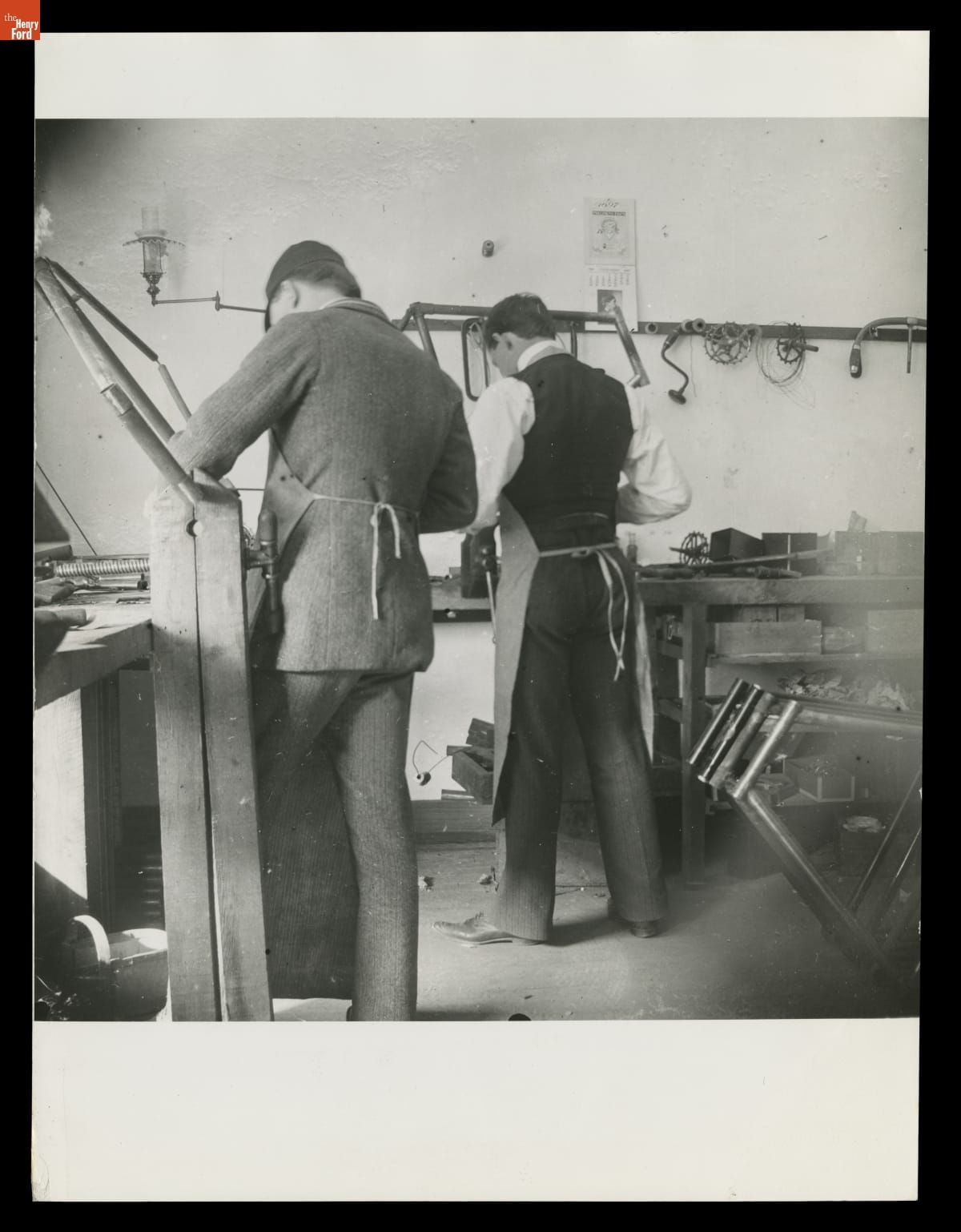
- Orville Wright and Edwin H. Sines in Wright Cycle Shop, Dayton, Ohio, 1897 - Orville Wright (right) was photographed alongside friend and former schoolmate Edwin H. Sines in the Wright brothers' Dayton, Ohio, bicycle shop. The Wrights' experiences building printing presses and bicycles sharpened their skills in precision machining. These talents were invaluable in their later efforts to build the first successful heavier-than-air, powered aircraft in 1903.
- September 01, 1897
- Collections - Artifact
Orville Wright and Edwin H. Sines in Wright Cycle Shop, Dayton, Ohio, 1897
Orville Wright (right) was photographed alongside friend and former schoolmate Edwin H. Sines in the Wright brothers' Dayton, Ohio, bicycle shop. The Wrights' experiences building printing presses and bicycles sharpened their skills in precision machining. These talents were invaluable in their later efforts to build the first successful heavier-than-air, powered aircraft in 1903.
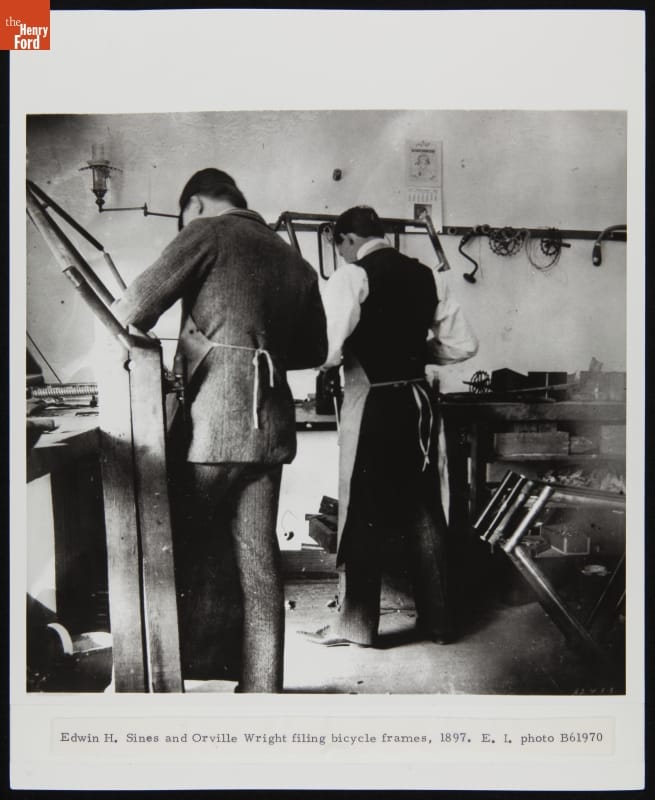
- Edwin H. Sines and Orville Wright Filing Bicycle Frames at Wright Cycle Shop, Dayton, Ohio, 1897 - Orville Wright (right) was photographed alongside friend and former schoolmate Edwin H. Sines in the Wright brothers' Dayton, Ohio, bicycle shop. The Wrights' experiences building printing presses and bicycles sharpened their skills in precision machining. These talents were invaluable in their later efforts to build the first successful heavier-than-air, powered aircraft in 1903.
- 1897
- Collections - Artifact
Edwin H. Sines and Orville Wright Filing Bicycle Frames at Wright Cycle Shop, Dayton, Ohio, 1897
Orville Wright (right) was photographed alongside friend and former schoolmate Edwin H. Sines in the Wright brothers' Dayton, Ohio, bicycle shop. The Wrights' experiences building printing presses and bicycles sharpened their skills in precision machining. These talents were invaluable in their later efforts to build the first successful heavier-than-air, powered aircraft in 1903.
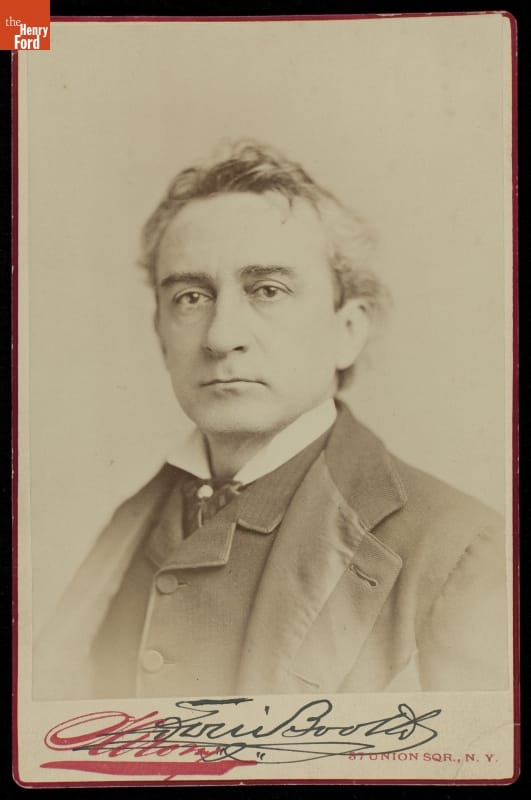
- Edwin Booth, 1885 - Professional photographers began producing cabinet cards in 1867. Consumers quickly preferred them over earlier cartes-de-visite, which were mounted on smaller cardboard stock. Through the early 1900s, Americans commonly exchanged and collected cabinet photographs of family, friends and celebrities. This 1885 example from Napoleon Sarony's New York City studio depicts Edwin Booth, a famous Shakespearean actor.
- 1885
- Collections - Artifact
Edwin Booth, 1885
Professional photographers began producing cabinet cards in 1867. Consumers quickly preferred them over earlier cartes-de-visite, which were mounted on smaller cardboard stock. Through the early 1900s, Americans commonly exchanged and collected cabinet photographs of family, friends and celebrities. This 1885 example from Napoleon Sarony's New York City studio depicts Edwin Booth, a famous Shakespearean actor.
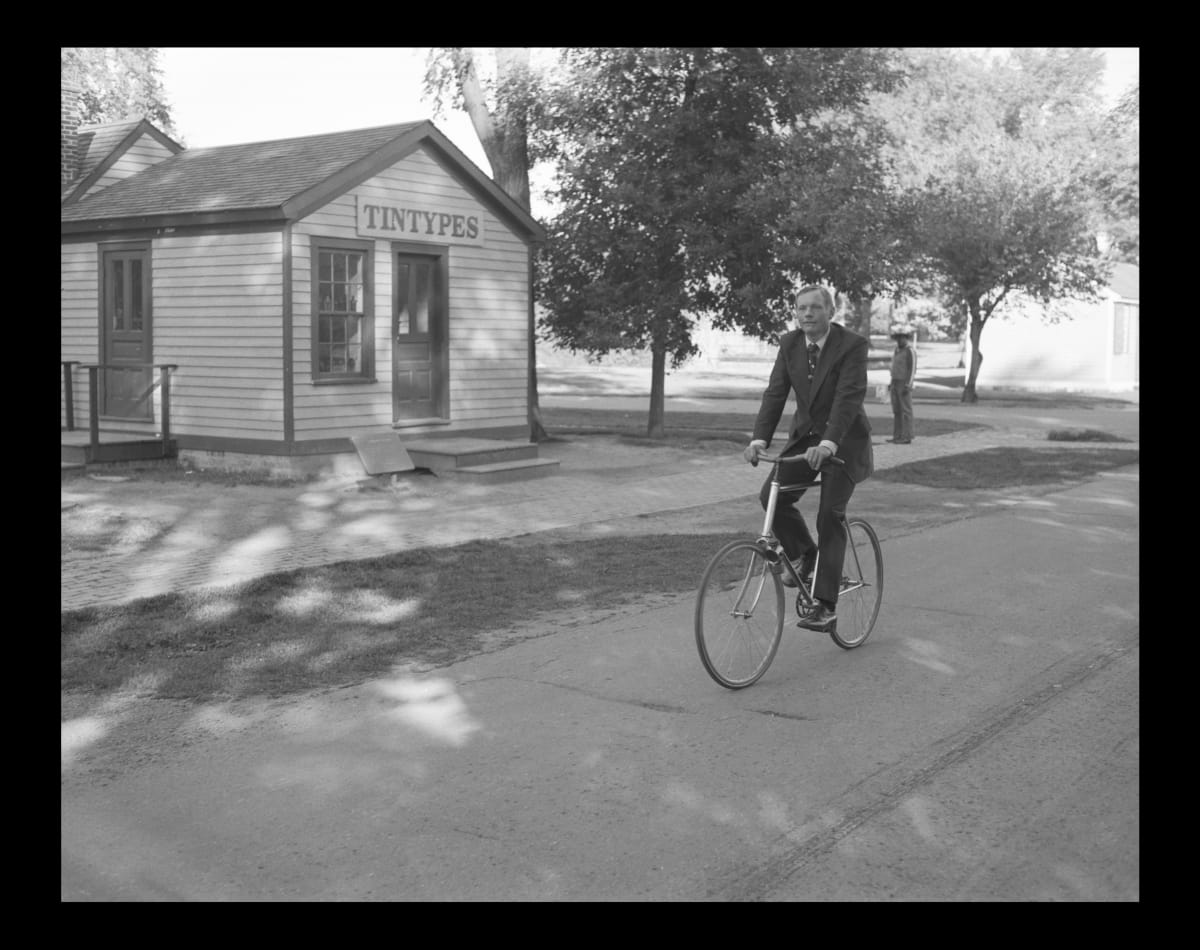
- Neil Armstrong Visiting Greenfield Village, August 16, 1979 - Astronaut Neil Armstrong, the first person to walk on the Moon, rode a bicycle around Greenfield Village during a 1979 visit. Armstrong and his Apollo 11 crewmates took pieces of the 1903 Wright Flyer on their 1969 mission -- to emphasize the incredible progress made in the 66 years between the Wright brothers' first flight and the lunar landing.
- August 16, 1979
- Collections - Artifact
Neil Armstrong Visiting Greenfield Village, August 16, 1979
Astronaut Neil Armstrong, the first person to walk on the Moon, rode a bicycle around Greenfield Village during a 1979 visit. Armstrong and his Apollo 11 crewmates took pieces of the 1903 Wright Flyer on their 1969 mission -- to emphasize the incredible progress made in the 66 years between the Wright brothers' first flight and the lunar landing.
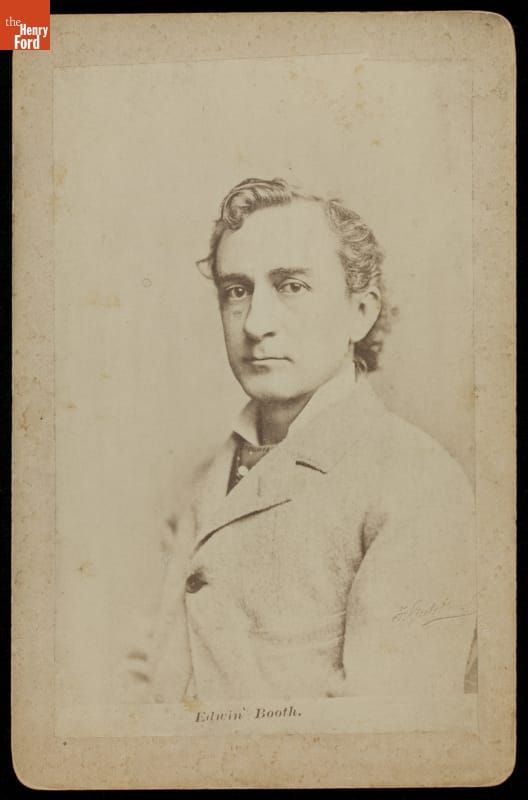
- Edwin Booth, circa 1875 - Professional photographers made cabinet card photographs from 1867 through the early 1900s. Mounted on a larger size of cardboard stock than the earlier cartes-de-visite, Americans soon preferred to exchange and collect cabinet photographs of family, friends and celebrities. This circa 1875 example from Frederick Gutekunst's Philadelphia studio depicts Edwin Booth, a famous Shakespearean actor.
- circa 1875
- Collections - Artifact
Edwin Booth, circa 1875
Professional photographers made cabinet card photographs from 1867 through the early 1900s. Mounted on a larger size of cardboard stock than the earlier cartes-de-visite, Americans soon preferred to exchange and collect cabinet photographs of family, friends and celebrities. This circa 1875 example from Frederick Gutekunst's Philadelphia studio depicts Edwin Booth, a famous Shakespearean actor.
- Portrait of Edwin M. Stanton, circa 1860 - Edwin McMasters Stanton, Secretary of War under Abraham Lincoln, posed for this carte-de-visite in Philadelphia, Pennsylvania, around 1860. The carte-de-visite was a small photographic print on cardboard stock made by professional photographers. People exchanged and collected portrait cartes-de-visite, popular in the United States from the Civil War in the 1860s through the 1880s, to help them remember family and celebrities.
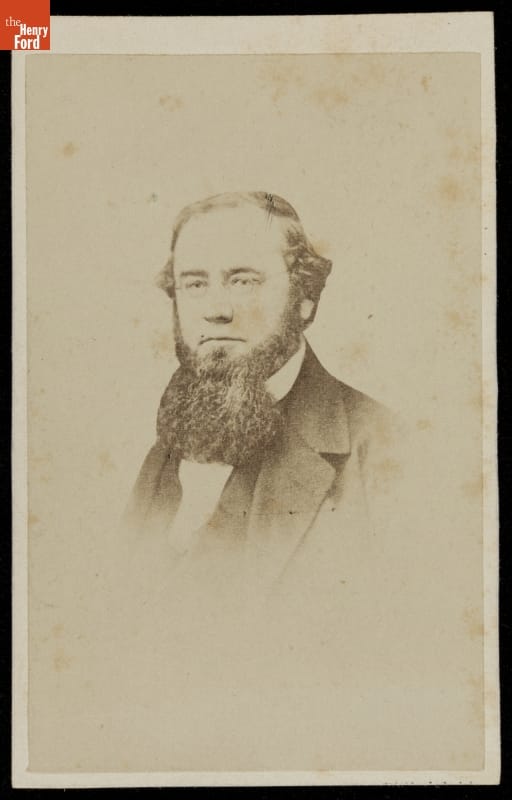
- circa 1860
- Collections - Artifact
Portrait of Edwin M. Stanton, circa 1860
Edwin McMasters Stanton, Secretary of War under Abraham Lincoln, posed for this carte-de-visite in Philadelphia, Pennsylvania, around 1860. The carte-de-visite was a small photographic print on cardboard stock made by professional photographers. People exchanged and collected portrait cartes-de-visite, popular in the United States from the Civil War in the 1860s through the 1880s, to help them remember family and celebrities.